
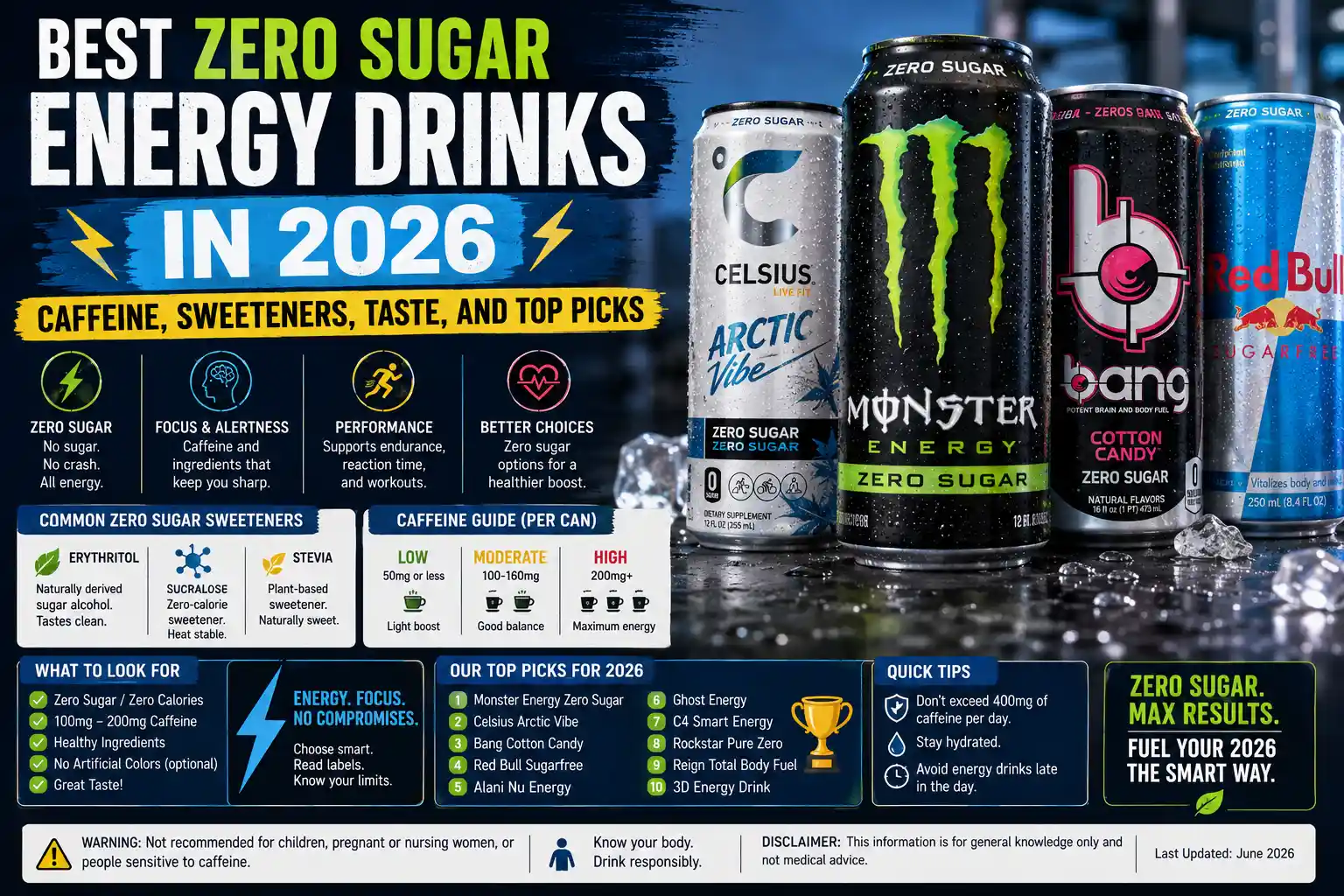
Best Zero Sugar Energy Drinks in 2026: Caffeine, Sweeteners, Taste & Top Picks
Compare the best zero sugar energy drinks by caffeine level, serving size, sweetener, flavor profile, intended use, and potential drawbacks.
Choosing a zero sugar energy drink sounds simple until you start comparing labels.
One can contains 80 milligrams of caffeine. Another contains 300 milligrams. Some use stevia, while others combine sucralose, erythritol, or acesulfame potassium. A few are formulated for workouts, while others are essentially highly caffeinated sparkling drinks.
That means the best option is not necessarily the strongest, sweetest, or most heavily marketed product. It is the one that provides a suitable caffeine dose, a sweetener you tolerate, and a flavor you will actually enjoy.
For most regular energy-drink users, Monster Zero Ultra offers a practical balance of flavor, availability, and a moderate-to-high 150-milligram caffeine dose.
Choose Zevia Energy to avoid sucralose, Red Bull Sugarfree for less caffeine, Celsius Sparkling Orange for a compact 200-milligram can, and C4 Performance Energy for workout-focused ingredients.
Key Takeaways
- Zero sugar does not mean caffeine-free, calorie-free, or automatically healthy.
- Caffeine varies dramatically, from approximately 80 mg to 300 mg per can.
- Zevia Energy is a clear mainstream choice for people avoiding sucralose.
- Red Bull Sugarfree provides about 80 mg in an 8.4-ounce can.
- Celsius, Ghost, Alani Nu, Prime Energy, and C4 generally sit near 200 mg.
- Reign, Bang, and some G Fuel cans can reach 300 mg.
- Energy drinks with electrolytes are not automatically substitutes for water or sports drinks.
Best Zero Sugar Energy Drinks at a Glance
This comparison focuses on established products with clearly disclosed caffeine amounts and recognizable U.S. availability.
| Product | Caffeine | Serving Size | Main Sweetener(s) | Best For | Main Drawback |
|---|---|---|---|---|---|
| Monster Zero Ultra | 150 mg | 16 oz | Erythritol, sucralose, Ace-K | Best mainstream balance | Large can and multiple sweeteners |
| Celsius Sparkling Orange | 200 mg | 12 oz | Sucralose | Flavor and compact size | Strong dose for sensitive users |
| Zevia Energy | 120 mg | 12 oz | Stevia | Avoiding sucralose | Noticeable stevia finish |
| Red Bull Sugarfree | 80 mg | 8.4 oz | Sucralose, Ace-K | Lower caffeine | Expensive per ounce |
| C4 Performance Energy | 200 mg | 16 oz | Sucralose, Ace-K | Pre-workout use | Specialized formula and intense flavors |
| Ghost Energy | 200 mg | 16 oz | Sucralose, Ace-K | Candy-inspired flavors | Can taste very sweet |
| ZOA Zero Sugar | 160 mg | 12 oz | Check current flavor label | Natural caffeine and functional ingredients | Less widely stocked than major brands |
| Rockstar Pure Zero | 240 mg | 16 oz | Erythritol, sucralose, Ace-K | Experienced caffeine users | High stimulant load |
| Reign Total Body Fuel | 300 mg | 16 oz | Sucralose | Maximum-strength category | Too strong for many people |
| Pureboost Energy Mix | 100 mg | About 16 oz prepared | Erythritol, stevia | Portable powder | Requires mixing |
How These Zero Sugar Energy Drinks Were Evaluated
This guide does not treat every zero sugar can as interchangeable. Recommendations were based on five practical criteria.
Caffeine Appropriateness
A stronger product is not automatically better. An 80 mg serving may suit an occasional user, while regular coffee drinkers may prefer 120 to 160 mg.
Sweetener Transparency
Products were evaluated for stevia, sucralose, Ace-K, erythritol, and combinations of multiple sweeteners.
Flavor Evidence
Flavor recommendations are based on ingredient profiles and published tasting comparisons rather than pretending every product was independently blind-tested.
Intended Use
Products were considered separately for work, study, workouts, lower caffeine needs, high tolerance, and portable use.
Label & Claim Quality
More weight was given to products that clearly disclose total caffeine, serving size, sweetener system, and warnings.
Monster Zero Ultra
Monster Zero Ultra is one of the most balanced mainstream options for regular energy-drink users who want more than a small caffeine boost without automatically jumping to a 200- or 300-milligram formula.
A 16-ounce can contains approximately 150 milligrams of caffeine. It also provides a larger volume to sip instead of delivering 200 milligrams in a compact 12-ounce can.
Why It Stands Out
- 150 mg is strong without reaching the highest category.
- Multiple citrus, peach, tropical, berry, and other flavors.
- Suitable for gradual sipping.
- Widely recognizable and commonly stocked.
What to Consider
Monster Ultra commonly uses erythritol, sucralose, and Ace-K. The large can can also encourage prolonged caffeine intake.
Celsius Sparkling Orange
Taste is subjective, but Celsius Sparkling Orange has performed well in multiple published tasting comparisons.
Its bittersweet orange profile can make the drink feel less candy-like than some aggressively sweet energy drinks.
Why It Stands Out
- Compact 12-ounce can.
- Citrus-forward rather than candy-forward.
- Light bitter-orange note helps balance sweetness.
- Available in several fruit and Vibe flavors.
What to Consider
200 milligrams is a strong serving. Coffee, tea, soda, chocolate, pre-workout, and medication may add more caffeine during the day.
Zevia Energy
Zevia Energy is one of the most straightforward mainstream options for consumers who want a zero sugar energy drink without sucralose or Ace-K.
Popular flavors include Raspberry Lime and Mango Ginger.
Why It Stands Out
- No sucralose.
- Moderate 120 mg caffeine dose.
- Comparatively simple ingredient profile.
- Fruit and ginger flavors rather than candy-style profiles.
What to Consider
Stevia can produce an herbal, slightly bitter, or licorice-like finish. Some people prefer it; others find the aftertaste more noticeable.
Other Sucralose-Free Options
- Pureboost Energy Mix: approximately 100 mg caffeine.
- True Lemon Energy Mix: approximately 120 mg.
- Kill Cliff Ignite: approximately 150 mg.
Red Bull Sugarfree
At approximately 80 milligrams per 8.4-ounce can, Red Bull Sugarfree provides one of the more manageable portions among major energy drink brands.
Why It Stands Out
- Easier to fit into a day that also includes coffee or tea.
- Small can helps portion control.
- Familiar classic energy-drink profile.
- Multiple can sizes are available.
What to Consider
Eighty milligrams is lower only in comparison with stronger energy drinks. It is not equivalent to a caffeine-free or decaffeinated beverage.
Other Lower-Caffeine Options
- V8 +Energy
- XS Energy
- Selected powdered drink mixes
- Smaller serving sizes of major brands
C4 Performance Energy
C4 Performance Energy is a specialized workout beverage rather than a general-purpose office drink.
Each 16-ounce can provides approximately 200 milligrams of caffeine, plus ingredients such as CarnoSyn beta-alanine, BetaPower betaine, niacin, and vitamin B12.
Why It Stands Out
- Designed around training and performance.
- Clearly disclosed 200 mg caffeine dose.
- Selected products carry third-party sport certification.
- Wide flavor selection.
What to Consider
Beta-alanine can cause a temporary tingling sensation known as paresthesia.
Best Flavor-Forward Zero Sugar Energy Drinks
Some people choose energy drinks primarily for taste and variety. These products lean heavily into fruit, candy, soda, or dessert-style flavors.
Ghost Energy
Approximately 200 mg caffeine per 16-ounce can, generally sweetened with sucralose and Ace-K.
Best for: Bold, sweet, nostalgic flavors.
Watch for: Sweetness may become tiring across a full can.
Alani Nu
Most cans provide approximately 200 mg caffeine in 12 ounces.
Best for: Bright flavors in a smaller can.
Watch for: Small size does not mean low caffeine.
Bloom Sparkling Energy
Approximately 180 mg caffeine in a 12-ounce can and commonly sweetened with sucralose.
Best for: Fruit-forward flavors.
Watch for: Not suitable for users avoiding sucralose.
Best High-Caffeine Zero Sugar Energy Drinks
High-caffeine energy drinks are designed for experienced users, not beginners. One can may supply 240 to 300 milligrams.
Rockstar Pure Zero
Approximately 240 mg caffeine in 16 ounces.
Best for: Experienced users wanting more than 200 mg.
Main drawback: High stimulant load.
Reign Total Body Fuel
Approximately 300 mg caffeine in a 16-ounce can.
Best for: Highly caffeine-tolerant adults.
Main drawback: Excessive for many casual users.
Bang Energy
Commonly sits near 300 mg per 16-ounce can.
Its high dose makes it a poor starting point for users transitioning from soda, tea, or lower-caffeine drinks.
G Fuel Cans
Some 16-ounce cans contain approximately 300 mg caffeine.
Do not assume canned and powdered versions contain the same dose.
Who Should Skip the 300-Milligram Category?
- People who rarely consume caffeine.
- People who experience anxiety or palpitations after coffee.
- Anyone who has already consumed significant caffeine that day.
- People exercising in extreme heat.
- Anyone who needs to sleep within several hours.
- People taking medication that may interact with stimulants.
- Anyone advised to restrict caffeine.
Best Zero Sugar Energy Drink Powders
Powdered energy drinks are useful for travel, work bags, gaming setups, and people who want to control water volume. Powder does not necessarily mean low caffeine.
Pureboost Energy Mix
Approximately 100 mg caffeine with an erythritol-stevia sweetener system.
Useful for moderate caffeine, portability, and people avoiding sucralose.
True Lemon Energy Mix
Approximately 120 mg caffeine and sweetened with stevia.
Especially suitable for people who prefer citrus-style drink mixes.
G Fuel Energy Drink Mix
Approximately 140 mg caffeine per standard prepared serving, although formulas and scoop sizes may vary.
Powder Safety Tips
- Use the included scoop or full packet.
- Do not estimate servings with a household spoon.
- Check whether caffeine is listed per scoop or per container.
- Do not combine energy powder with another caffeinated pre-workout.
- Keep concentrated powders away from children.
- Do not add extra powder simply because the flavor tastes weak.
Zero Sugar vs. Sugar-Free vs. Zero-Calorie
Zero Sugar
Contains no meaningful amount of sugar per labeled serving but may still contain sweeteners, a few calories, carbohydrates, and substantial caffeine.
Sugar-Free
Commonly used similarly to zero sugar. Always check the nutrition panel and serving size.
Zero-Calorie
Contains a negligible calorie amount per labeled serving. It does not mean stimulant-free or acid-free.
The Most Important Label Numbers
- Total caffeine per container
- Number of servings in the container
- Sugar and added sugar
- Sweetener type
- Sodium and potassium
- Other stimulants or workout ingredients
- Warnings and age restrictions
Sweeteners in Zero Sugar Energy Drinks
Sucralose
Common in Celsius, Ghost, C4, G Fuel, Bloom, Monster, Rockstar, and many other products.
It creates strong sweetness without meaningful sugar, but some people notice a lingering artificial finish.
Acesulfame Potassium
Usually called Ace-K and frequently paired with sucralose to produce a more rounded sweetness.
Stevia
Used in Zevia, True Lemon Energy, and selected powdered products. It may produce an herbal, licorice-like, or slightly bitter finish.
Erythritol
A sugar alcohol often combined with another sweetener. Larger amounts may cause digestive discomfort in some people.
Aspartame
Less common in newer energy drinks but still found in selected drink mixes and older formulas.
How Much Caffeine Is Right for You?
The ideal amount depends on tolerance, body size, medication use, health conditions, sleep, and previous caffeine intake. The ranges below are practical shopping categories rather than medical safety limits.
| Caffeine per Serving | General Intensity | Common Examples |
|---|---|---|
| 50–100 mg | Lower energy-drink range | Red Bull Sugarfree, V8 +Energy, selected powders |
| 110–160 mg | Moderate | Zevia Energy, Monster Zero Ultra, ZOA 12 oz |
| 170–200 mg | High | Bloom, Celsius, Ghost, C4, Alani Nu |
| 210–250 mg | Very high | Rockstar Pure Zero, larger ZOA cans |
| 300 mg or more | Extreme single-serving range | Reign, Bang, selected G Fuel cans |
A Better Way to Choose Your First Can
- Start around 80–120 mg when unsure of your tolerance.
- Consider 120–160 mg if you regularly tolerate coffee.
- Treat 200 mg as a strong serving.
- Reserve 240–300 mg for experienced users.
- Do not test a new high-caffeine drink before demanding driving or extreme exercise.
Zero Sugar Energy Drinks With Electrolytes
Some products contain sodium, potassium, magnesium, or other minerals and use terms such as hydration, electrolytes, or cellular hydration.
ZOA Zero Sugar
ZOA zero sugar drinks contain caffeine from green tea and green coffee sources, plus vitamins, electrolytes, and amino acids. A 12-ounce can provides approximately 160 mg caffeine, while larger 16-ounce cans may contain about 210 mg.
C4 Performance Energy
C4 includes BetaPower betaine and markets the formula around cellular hydration and performance. It remains an energy drink containing about 200 mg caffeine, not a complete sports hydration plan.
Energy Drinks Are Not Sports Drinks
Energy drinks are designed primarily around stimulation. Sports drinks are intended to help replace fluids, carbohydrates, and electrolytes during or after demanding activity.
For long workouts, heavy sweating, outdoor labor, or hot weather, evaluate:
- Total fluid volume
- Sodium per serving
- Potassium
- Carbohydrate needs
- Caffeine dose
- Exercise duration
Are Zero Sugar Energy Drinks Healthy?
A zero sugar energy drink can be a better nutritional fit than a sugar-heavy alternative for someone trying to reduce added sugar. That does not automatically make it a health beverage.
Potential Advantages
- No large dose of added sugar
- Few or no calories
- Clearly measured caffeine in many products
- Portable alternative to sweetened coffee
- Multiple caffeine levels and serving sizes
Potential Drawbacks
- High caffeine concentration
- Sleep disruption
- Anxiety or jitteriness
- Heart palpitations in sensitive users
- Dependence and withdrawal
- Acidic ingredients
- Very intense sweetness
Natural Caffeine Is Not Automatically Safer
Caffeine may come from coffee beans, green tea, guarana, yerba mate, or be added directly. Total dose remains the central consideration.
A drink marketed with natural caffeine can still provide 180 or 200 milligrams.
Do B Vitamins Create Energy?
B vitamins participate in normal energy metabolism, but they do not replace sleep, food, or calories. A heavily caffeinated drink does not become healthy simply because it contains niacin, B6, or B12.
How to Use Zero Sugar Energy Drinks Safely
Count Every Caffeine Source
Include caffeine from:
- Coffee
- Tea
- Soda
- Pre-workout supplements
- Energy shots
- Chocolate
- Medications
- Protein bars or caffeinated snacks
Do Not Stack Energy Drinks and Pre-Workout
Protect Your Sleep
Caffeine sensitivity varies. A practical starting point is avoiding energy drinks during the final six to eight hours before bedtime, then moving the cutoff earlier if sleep is affected.
Sip Instead of Chugging
- Eat normally.
- Start with part of the can.
- Wait before consuming more.
- Drink water separately.
- Stop when you notice jitters, nausea, anxiety, or a racing heartbeat.
Do Not Use Energy Drinks for Children or Teens
Ask a Healthcare Professional Before Use When Needed
Professional guidance is especially important for people who:
- Are pregnant, trying to become pregnant, or breastfeeding
- Have heart rhythm problems
- Have uncontrolled blood pressure
- Experience panic attacks or severe anxiety
- Take stimulant medication
- Take medication affecting caffeine metabolism
- Have been advised to restrict caffeine
Store the Product Correctly
Keep unopened cans and powders in a cool, dry location away from direct sunlight.
After opening a carbonated drink:
- Refrigerate it promptly.
- Cover it when possible.
- Consume it relatively soon for the best carbonation and flavor.
- Discard it if the smell, appearance, or taste seems abnormal.
Common Mistakes When Choosing a Zero Sugar Energy Drink
Assuming a Small Can Is Weak
A 12-ounce can can contain more caffeine than a 16-ounce competitor. Compare total caffeine, not container size.
Choosing the Highest Caffeine Number
More caffeine does not guarantee better concentration, exercise performance, or productivity.
Ignoring Other Caffeine Sources
Morning coffee, an afternoon energy drink, and evening pre-workout can accumulate quickly.
Believing Zero Sugar Means Healthy
Zero sugar describes only one part of the nutrition label.
Confusing Electrolytes With Hydration
A small mineral blend does not automatically make an energy drink ideal for endurance exercise or heat exposure.
Failing to Check the Sweetener
A product saying “zero sugar” may still contain sucralose, Ace-K, erythritol, stevia, or another substitute.
Buying by Brand Instead of Exact Product
Monster Ultra and Monster Zero Sugar differ. Red Bull Zero and Red Bull Sugarfree differ. G Fuel powder and canned versions may also differ.
Frequently Asked Questions
What is the best zero sugar energy drink overall?
Monster Zero Ultra is a strong mainstream choice because its 150-milligram dose sits below many 200- to 300-milligram competitors. Celsius Sparkling Orange is a flavor-focused option, while Zevia Energy is preferable for people avoiding sucralose.
Which zero sugar energy drink has the least caffeine?
Among major mainstream cans, Red Bull Sugarfree contains approximately 80 milligrams in an 8.4-ounce can. V8 +Energy and selected drink mixes also sit near this range.
Which zero sugar energy drinks do not contain sucralose?
Options may include Zevia Energy, Pureboost Energy Mix, True Lemon Energy Mix, and Kill Cliff Ignite. Always check the newest ingredient panel.
What zero sugar energy drink has the most caffeine?
Popular high-caffeine products including Reign Total Body Fuel, Bang Energy, and selected G Fuel cans can contain approximately 300 milligrams per container.
Are zero sugar energy drinks keto-friendly?
Many contain little or no sugar and may fit a low-carbohydrate diet. Check total carbohydrates, sugar alcohols, and serving size before deciding whether a specific product fits your plan.
Do zero sugar energy drinks break a fast?
It depends on the purpose of the fast. A nearly calorie-free beverage may fit some calorie-control approaches but not a strict water-only, religious, medical, or laboratory fast.
Can zero sugar energy drinks help with weight loss?
They may reduce calorie and added-sugar intake when replacing a sugary drink, but they do not directly cause meaningful fat loss.
Are zero sugar energy drinks better than coffee?
Not necessarily. Black coffee generally has a simpler ingredient list, while energy drinks offer measured caffeine, portability, carbonation, and flavor variety.
Is it safe to drink a zero sugar energy drink every day?
Daily use may be tolerated by some healthy adults, but suitability depends on caffeine dose, other caffeine sources, medication use, sleep, and individual health factors.
What is the best zero sugar energy drink for workouts?
C4 Performance Energy is one of the clearest workout-focused choices because it combines approximately 200 milligrams of caffeine with ingredients such as beta-alanine and betaine.
Can people with caffeine sensitivity drink zero sugar energy drinks?
A smaller dose or complete avoidance may be more appropriate. A product containing 50 to 80 milligrams is a more conservative starting point than a 200- or 300-milligram product.
Final Verdict
The best zero sugar energy drink is not the product with the biggest caffeine number.
For many established energy-drink users, Monster Zero Ultra provides a practical middle ground at 150 milligrams. Celsius Sparkling Orange is a strong flavor-focused choice, but its 200-milligram dose requires planning.
Zevia Energy is a leading option for consumers avoiding sucralose, while Red Bull Sugarfree offers better caffeine portion control. For training, C4 Performance Energy has the most relevant workout-oriented formula among the products discussed.
Products such as Rockstar Pure Zero, Reign, Bang, and high-caffeine G Fuel cans belong in a stronger stimulant category and may be inappropriate for casual users.
Whatever product you choose, focus on three numbers: caffeine per container, serving size, and total daily caffeine. Zero sugar can remove a large added-sugar load, but it does not remove the need for moderation, hydration, adequate food, and consistent sleep.