Find out what energy drinks can do to your body, how much caffeine is too much, whether daily use is a problem, and how Bloom Energy compares with coffee, tea, sports drinks, and other popular options.
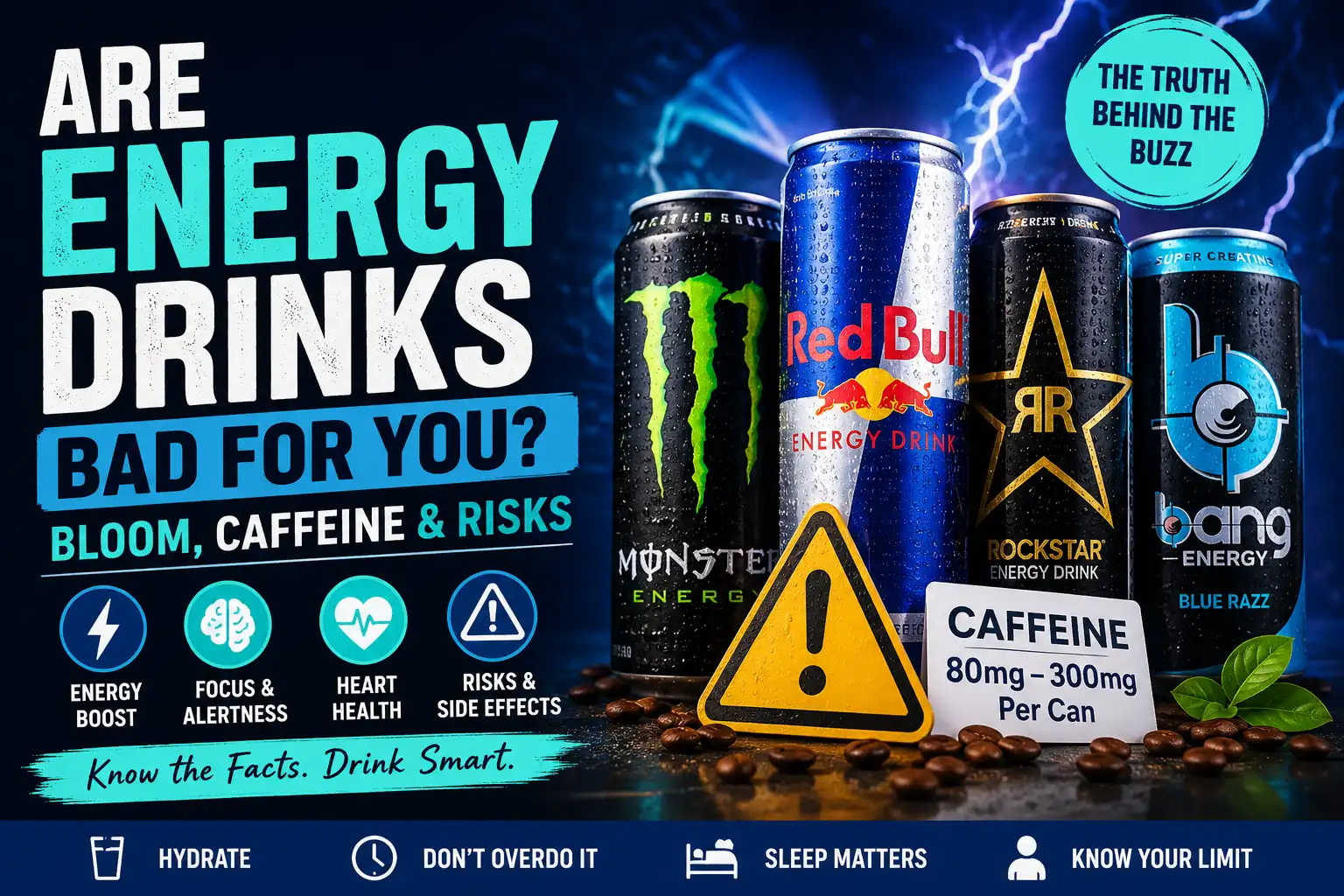
If you’re wondering are energy drinks bad for you, the honest answer depends on the drink, dose, frequency, and your health. A healthy adult may tolerate an occasional energy drink, but frequent use can create problems.
The biggest concerns involve caffeine, added sugar, sleep disruption, heart effects, anxiety, and dependence. We’ll also examine Bloom Energy, compare it with coffee and other drinks, and explain when cutting back makes sense.
Quick Answer
Energy drinks aren’t automatically dangerous for every healthy adult, but they aren’t a health drink either. Their main concern is usually the amount of caffeine, especially when consumption is frequent or combined with other caffeine sources.
TL;DR
- Check caffeine first, not just calories or sugar.
- Avoid daily reliance when possible.
- Zero sugar doesn’t remove caffeine-related concerns.
- Children and teens should avoid energy drinks.
- Bloom has 180 mg caffeine in its standard 12-ounce can.
- Coffee, tea, water, and sleep can be better alternatives.
Are Energy Drinks Bad for You?
Energy drinks can be problematic because they deliver caffeine quickly, often alongside several other active ingredients. The risks increase when people drink large amounts or use them repeatedly.
For healthy adults, an occasional serving isn’t automatically harmful. The bigger concern is making a highly caffeinated drink part of your everyday routine.
- Caffeine can raise alertness but also cause jitters or nervousness.
- Heart rate may increase after consuming caffeinated energy drinks.
- Blood pressure can rise temporarily, particularly after higher caffeine doses.
- Sleep can suffer when caffeine is consumed too late.
- Sugar-heavy versions add substantial calories and added sugar.
- Zero-sugar versions still contain caffeine and other stimulants.
- Frequent use can contribute to caffeine tolerance and withdrawal.
- Children and adolescents should avoid energy drinks.
- People with certain health conditions may face greater risks.
- Combining energy drinks with other caffeine sources can raise total intake quickly.
Why Are Energy Drinks Considered Unhealthy?
The phrase “energy drink” doesn’t describe one standard formula. Products vary dramatically in caffeine, sugar, calories, serving size, and additional ingredients.
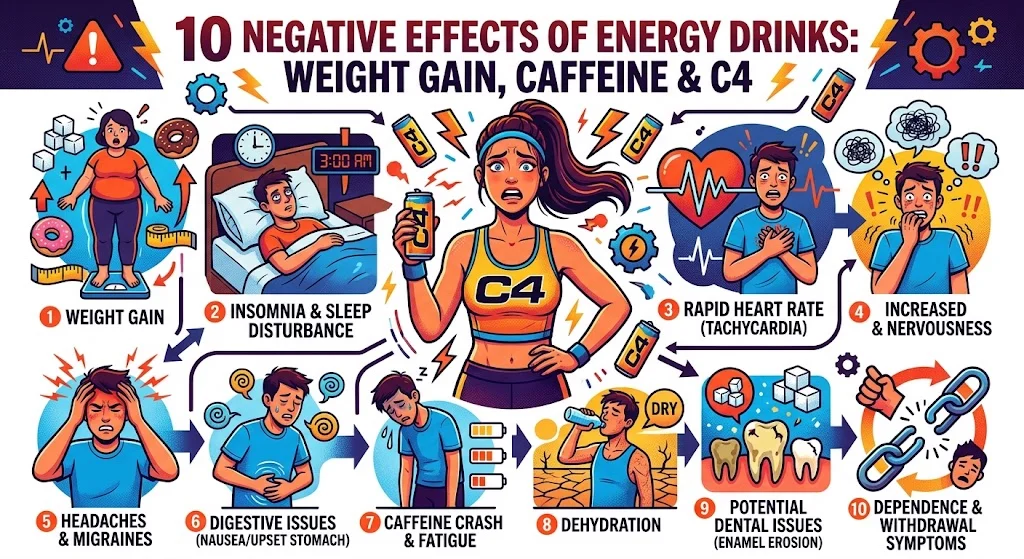
- High caffeine can cause jitters, headaches, nausea, or palpitations.
- Added sugar can increase the drink’s calorie and sugar burden.
- Large servings can contain more caffeine than consumers expect.
- Herbal stimulants can complicate the overall stimulant load.
- Vitamins don’t automatically make an energy drink nutritious.
- “Natural caffeine” is still caffeine.
- “Zero sugar” does not mean zero health considerations.
- A low-calorie drink may still be unsuitable for someone sensitive to caffeine.
- Drinking one quickly can produce a stronger effect than sipping slowly.
- Marketing terms such as clean energy don’t establish medical safety.
Short-Term Effects of Energy Drinks
Short-term effects usually appear within hours and depend on caffeine dose, personal sensitivity, food intake, and previous caffeine exposure.
Some people feel more alert and focused. Others experience shakiness, anxiety, stomach discomfort, or a racing heart.
- Increased alertness from caffeine stimulation.
- Temporary concentration improvement in some people.
- Jitters or tremors after a larger dose.
- Faster heartbeat or noticeable palpitations.
- Headaches, especially in caffeine-sensitive people.
- Nausea or stomach discomfort.
- Restlessness or anxiety.
- Trouble falling asleep.
- Energy crashes as stimulating effects fade.
- Frequent urination, particularly with larger caffeine intake.
Long-Term Effects of Energy Drinks
Research on the long-term effects of energy drinks is less straightforward than research on caffeine itself. Formulas differ, and long-term studies cannot always separate energy drinks from other lifestyle factors.
Still, frequent high-caffeine consumption can create a cycle of tolerance, poor sleep, daytime fatigue, and repeated caffeine use. Cardiovascular research also continues to examine acute changes in heart rate, blood pressure, and electrical activity.
- Caffeine dependence can make cutting back uncomfortable.
- Withdrawal headaches may occur after regular use stops.
- Poor sleep can contribute to next-day fatigue.
- Repeated high caffeine intake may maintain a cycle of stimulation and fatigue.
- Sugary energy drinks can add significant calories over time.
- Frequent caffeine use can make the same serving feel less effective.
- Heavy consumption can increase exposure to multiple stimulants.
- Long-term cardiovascular effects remain an active research area.
- Individual risk depends on health status and total caffeine intake.
- Daily use should not be confused with the maximum caffeine amount tolerated by some adults.
How Much Caffeine Is Too Much?
- Count caffeine from energy drinks, coffee, tea, soda, chocolate, and supplements.
- Check the entire container rather than assuming one can equals one serving.
- Remember that larger cans can contain multiple servings.
- Don’t assume “natural caffeine” is weaker.
- Watch for guarana or other caffeine-containing ingredients.
- Avoid stacking an energy drink with a high-caffeine pre-workout.
- Reduce intake if you develop jitters, headaches, anxiety, or palpitations.
- Earlier caffeine use is usually easier on sleep than late-day use.
- People who are pregnant should discuss caffeine intake with their healthcare professional.
- Children and teens should not use the adult 400-mg figure as a target.
Is One Energy Drink a Day Bad?
One energy drink a day isn’t automatically dangerous for every healthy adult, but daily use deserves a closer look.
The important question isn’t simply “one can.” Consider its caffeine content, your other caffeine sources, your sensitivity, and whether the drink is affecting sleep or creating dependence.
- One 80-mg drink is very different from one 300-mg drink.
- A 180-mg Bloom can uses nearly half the general adult daily caffeine ceiling.
- Adding two coffees can push total intake much higher.
- Daily use can make caffeine feel less effective.
- Headaches on caffeine-free days can signal dependence.
- Poor sleep may encourage another drink the following morning.
- A sugar-free drink removes sugar but not caffeine exposure.
- If you need caffeine every day to function, examine sleep and diet first.
- People with heart conditions should seek individual medical guidance.
- If side effects appear, cutting back is more sensible than increasing the dose.
Are Energy Drinks Bad for Your Heart?
Heart health is one of the most important reasons to be cautious with energy drinks. Caffeine and other stimulants can temporarily increase heart rate and blood pressure.
A 2025 systematic review of 37 studies involving 1,597 participants found cardiovascular changes across the research, including increases in heart rate and blood pressure and QTc prolongation in some studies.
⚠️ When to Take Symptoms Seriously
Don’t ignore chest pain, fainting, severe shortness of breath, or serious palpitations. Seek urgent medical care for severe or alarming symptoms.
- Heart palpitations can occur after high caffeine intake.
- Heart rate may rise temporarily.
- Blood pressure may increase.
- Some people may notice stronger or irregular-feeling heartbeats.
- Risk may be greater in people with underlying cardiovascular problems.
- High doses taken quickly deserve more caution than small amounts.
- Combining several stimulants can increase total exposure.
- Exercise can add another layer of cardiovascular stress.
Energy Drinks, Anxiety, Jitters, and Headaches
Caffeine affects the nervous system, so a drink that feels energizing to one person can feel uncomfortable to another.
People who are caffeine-sensitive may notice anxiety, shaking, nervousness, headaches, restlessness, or a racing heart even after moderate amounts.
- Jitters often mean the caffeine dose is too high for your tolerance.
- Anxiety can become more noticeable after stimulant intake.
- Headaches can occur during both caffeine use and withdrawal.
- Nausea may be worse when caffeine is consumed on an empty stomach.
- Trembling can signal excessive stimulation.
- Stress can make stimulant-related symptoms feel stronger.
- Poor sleep can amplify next-day anxiety and fatigue.
- Don’t add more caffeine simply because the first drink caused fatigue later.
- Switching to tea can reduce caffeine exposure.
- Water and food may help when fatigue comes from dehydration or missed meals.
Energy Drinks and Sleep
Caffeine can stay active for hours, so late-day energy drinks can interfere with sleep even when you don’t feel wired.
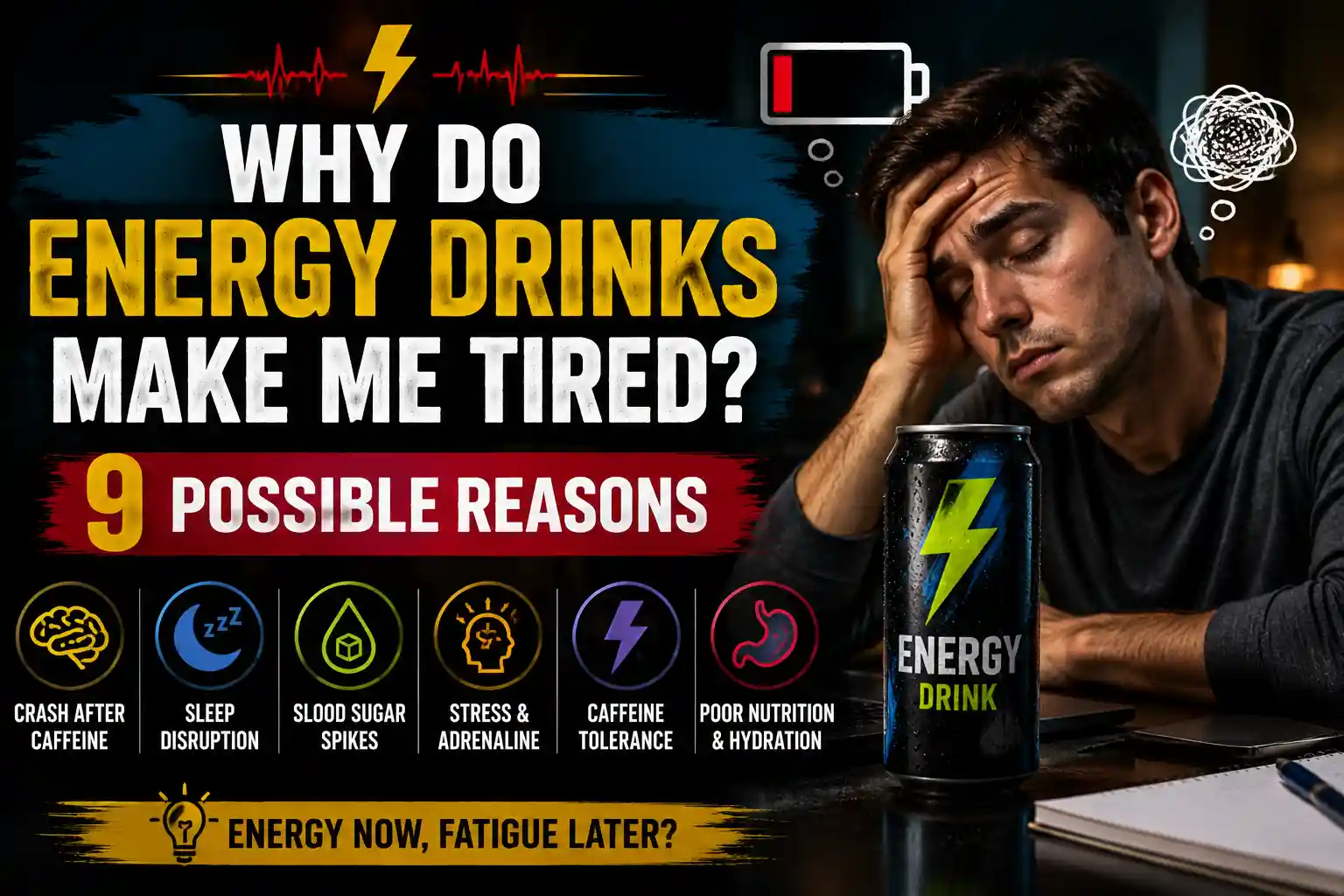
Poor sleep can create the exact fatigue that prompted the energy drink in the first place. That can turn caffeine use into a repeating cycle.
- Avoid large caffeine doses close to bedtime.
- Track whether afternoon caffeine changes your sleep.
- Don’t judge caffeine only by whether you feel sleepy.
- A caffeine crash can feel like sudden afternoon fatigue.
- Poor sleep can increase the urge for another morning stimulant.
- People with insomnia may benefit from reducing caffeine.
- Sensitivity varies considerably between individuals.
- A smaller serving can be easier to tolerate.
- Coffee, tea, or half-caffeinated drinks may provide a lower dose.
- If sleep problems persist, discuss them with a healthcare professional.
Are Sugary, Sugar-Free, and Zero-Sugar Energy Drinks Different?
Sugar and caffeine are separate issues. Removing sugar can reduce calories and added sugar, but it doesn’t remove caffeine or every potential concern.
- Sugary energy drinks can provide substantial added sugar.
- Sugar-free energy drinks usually reduce or eliminate added sugar.
- Zero-sugar energy drinks can still contain significant caffeine.
- Low-calorie products may still be highly caffeinated.
- Artificial sweeteners may matter to people who prefer avoiding them.
- Natural sweeteners don’t automatically make a caffeinated drink healthier.
- Check calories, sugar, caffeine, and serving size together.
- Don’t choose solely by calorie count.
- A sugar-free drink can be preferable to a sugary one for sugar reduction.
- Water remains the simplest everyday hydration choice.
Is Bloom Energy Drink Bad for You?
Bloom Energy Drink is not automatically “bad,” but it is still an energy drink. Its current Sparkling Energy formula contains substantial caffeine despite having very little sugar and calories.
Bloom Sparkling Energy at a Glance
Key nutrition and caffeine details for the standard product.
Bloom Nutrition currently lists 180 mg of natural caffeine from green coffee bean extract in its standard can, while its 7.5-ounce cans contain 100 mg. The company also lists 10 calories and zero sugar for the standard Sparkling Energy product.
- Standard Bloom Sparkling Energy: 180 mg caffeine.
- Bloom 7.5-ounce can: 100 mg caffeine.
- Calories: 10 per standard can.
- Sugar: 0 grams.
- Caffeine comes from green coffee bean extract.
- The formula includes L-theanine and ginseng.
- Bloom also highlights prebiotic fiber, lychee, green tea extract, and B vitamins.
- The product uses sucralose rather than sugar.
- Bloom states that its product contains no aspartame, artificial colors, or artificial flavors.
- “Natural caffeine” does not mean caffeine-free or risk-free.
Bloom Energy Ingredients, Caffeine, Calories, and Sweeteners
The most useful way to judge Bloom is to separate its nutrition profile from its stimulant profile.
Bloom has a major advantage over many sugary energy drinks because it contains zero sugar and only 10 calories. But its 180 mg caffeine dose remains meaningful, especially for people who also drink coffee, tea, soda, or pre-workout products.
Caffeine
180 mg in the standard 12-ounce product.
Sweetener
Sucralose instead of sugar.
Sugar
0 grams in the standard product.
Calories
10 calories per standard can.
Functional Ingredients
L-theanine, ginseng, green tea extract and B vitamins.
Fiber
The Sparkling Energy formula includes prebiotic fiber.
Is Bloom Energy Safe to Drink Every Day?
There is no universal answer that makes daily Bloom consumption safe for everyone. One standard can contains 180 mg caffeine, which fits below the general 400-mg adult daily ceiling but leaves only 220 mg for every other caffeine source.
- One Bloom plus several coffees can push caffeine intake high.
- Bloom should not be treated like flavored water.
- Daily use is more concerning if it disrupts sleep.
- Daily use is also concerning if it causes headaches or jitters.
- People with caffeine sensitivity may need much less.
- People with cardiovascular conditions should ask their clinician.
- Pregnant people should discuss caffeine intake with their healthcare professional.
- Children and adolescents should avoid energy drinks.
- Don’t combine Bloom casually with a high-caffeine pre-workout.
- If you rely on Bloom daily for normal alertness, investigate the underlying fatigue.
Bloom Energy Side Effects and Who Should Be Careful
Bloom’s zero-sugar profile does not guarantee that every person will tolerate it well. The most relevant concern is still caffeine sensitivity and total stimulant exposure.
If Bloom causes symptoms, reducing the amount or stopping it is more sensible than trying to push through them.
- Jitters may indicate excessive caffeine for your tolerance.
- Anxiety can become more noticeable after stimulant intake.
- Headaches can occur with caffeine excess or withdrawal.
- Nausea may occur in sensitive users.
- Heart palpitations deserve attention.
- Sleep problems can follow late-day use.
- Sucralose may be undesirable for people who avoid artificial sweeteners.
- People taking medications should check for relevant caffeine or ingredient interactions.
- People with heart, blood-pressure, kidney, or other conditions should ask their clinician.
- Severe symptoms require prompt medical attention.
Energy Drinks vs Coffee, Soda, Sports Drinks, and Pre-Workout
The best comparison depends on why you’re drinking it. Coffee and tea can provide caffeine without the complex ingredient blends found in many energy products.
Sports drinks and electrolyte drinks serve a different purpose. They are designed around fluid, carbohydrate, and electrolyte replacement, especially during prolonged activity, while energy drinks are stimulant-focused.
| Drink | Main Purpose | Main Consideration |
|---|---|---|
| Energy drink | Stimulation and alertness | Caffeine and stimulant load |
| Bloom Energy | Stimulation with zero sugar | 180 mg caffeine per standard can |
| Coffee | Caffeine and beverage enjoyment | Caffeine dose and additions |
| Tea | Lower-to-moderate caffeine | Caffeine sensitivity |
| Soda | Flavor and refreshment | Sugar plus caffeine in some products |
| Sports drink | Carbohydrate and electrolyte replacement | Often unnecessary for routine hydration |
| Electrolyte drink | Fluid and electrolyte support | Ingredients vary |
| Pre-workout | Exercise-focused stimulation | Often high stimulant exposure |
Energy Drinks, Exercise, and Hydration
Energy drinks are not the same as sports drinks or electrolyte drinks. That distinction matters when you’re choosing what to drink before, during, or after exercise.
Caffeine can affect exercise performance in adults, but a caffeinated energy drink isn’t automatically the best hydration choice. During routine activity, water is usually the simplest option.
- Before exercise: consider your total caffeine intake first.
- During short workouts: water is usually sufficient.
- During prolonged intense exercise: hydration and electrolyte needs become more important.
- Don’t assume an energy drink replaces an electrolyte beverage.
- Avoid stacking energy drinks with high-caffeine pre-workouts.
- Caffeine-sensitive athletes may experience jitters or stomach upset.
- High caffeine can make some workouts feel uncomfortable.
- Energy drinks shouldn’t replace meals or adequate recovery nutrition.
- Sports drinks have a different purpose from stimulant-heavy energy drinks.
- If exercise causes unusual chest symptoms, stop and seek medical advice.
Are Energy Drinks Bad for Kids, Teens, and Young Adults?
Important: Children & Teens
Children and adolescents should not use energy drinks. The American Academy of Pediatrics has long advised against stimulant-containing energy drinks for this age group.
The concern isn’t limited to caffeine. Young people may be more vulnerable to sleep disruption, nervous-system effects, and excessive sugar intake, while energy drinks are often marketed around sports, school, alertness, and social activities.
- Children: avoid energy drinks.
- Teenagers: avoid energy drinks.
- Adolescents: shouldn’t use adult caffeine limits as a target.
- Young athletes: should not confuse energy drinks with sports hydration.
- Parents: check caffeine sources beyond energy drinks.
- Coaches: encourage water and appropriate sports hydration.
- College students: should watch combined caffeine from coffee and energy products.
- Caffeine-sensitive young adults: may experience symptoms at lower doses.
- Sleep-deprived students: shouldn’t use repeated energy drinks as a substitute for sleep.
- Energy drinks should never be treated as a requirement for athletic performance.
Energy Drink Dependence, Withdrawal, and Quitting
Regular caffeine use can lead to tolerance, meaning the same amount may feel less effective. Some people then increase their intake to reproduce the original effect.
Stopping suddenly can produce withdrawal symptoms. Headaches, fatigue, irritability, and difficulty concentrating are commonly reported after regular caffeine use stops.
- Reduce gradually if sudden withdrawal feels difficult.
- Lower the number of energy drinks first.
- Switch some servings to lower-caffeine tea.
- Avoid replacing one energy drink with several coffees.
- Drink water regularly throughout the day.
- Eat regular meals instead of relying on stimulants.
- Protect sleep during the transition.
- Expect temporary fatigue if your body is accustomed to caffeine.
- Don’t interpret withdrawal fatigue as proof that you need more caffeine.
- Seek professional guidance if caffeine use feels difficult to control.
Healthier Alternatives to Energy Drinks
The best alternative depends on what you’re actually trying to solve. If you’re tired because you slept poorly, another stimulant may only hide the problem temporarily.
💧 Water
Best for everyday hydration.
☕ Coffee
A straightforward caffeine source when used appropriately.
🍵 Green Tea
A lower-caffeine option for many people.
🫖 Black Tea
Moderate caffeine with plenty of flavor options.
✨ Sparkling Water
Useful when you want carbonation without stimulant ingredients.
🥤 Electrolyte Drink
Most useful when prolonged exercise or heavy sweating creates a real electrolyte need.
- Water for everyday hydration.
- Sparkling water when you want carbonation.
- Black coffee for a straightforward caffeine source.
- Green tea for a lower-caffeine option.
- Black tea for moderate caffeine and flavor.
- Matcha for a tea-based caffeinated drink.
- Decaf coffee when you want coffee flavor without much caffeine.
- Fruit-infused water for a naturally flavored option.
- Milk or a balanced smoothie when hunger contributes to fatigue.
- Electrolyte drinks when prolonged exercise or heavy sweating creates a real electrolyte need.
Frequently Asked Questions
Are energy drinks bad to drink every day?
Daily use isn’t automatically dangerous for every adult, but it can create a high and repeated caffeine exposure. Risk depends on the product, total caffeine, individual sensitivity, and health conditions. If you need an energy drink every day to stay functional, examine sleep, food intake, stress, and other causes of fatigue.
Is one energy drink a day unhealthy?
One serving may fit within an adult’s overall caffeine intake, depending on the product. However, one energy drink can contain a large caffeine dose, and daily use isn’t the same as occasional use. Check the label and count caffeine from every source that day.
Are sugar-free energy drinks bad for you?
Sugar-free versions can reduce added sugar and calories, which may be useful. They still contain caffeine and may contain other stimulants. Sugar-free doesn’t automatically mean healthy or risk-free.
Can energy drinks hurt your heart?
Energy drinks can temporarily increase heart rate and blood pressure, and research has reported changes in cardiac electrical activity. People with cardiovascular conditions or concerning symptoms should get individualized medical guidance rather than relying on a general caffeine limit.
Is Bloom Energy healthy?
Bloom is lower in calories and sugar than many traditional energy drinks, but it still contains a meaningful caffeine dose. The standard Sparkling Energy can contains 180 mg caffeine and zero sugar. That makes it a lower-sugar option, not a caffeine-free or universally healthy beverage.
Can Bloom Energy cause side effects?
It can cause caffeine-related effects in sensitive people, including jitters, anxiety, headaches, nausea, palpitations, or sleep problems. If you notice these symptoms after drinking Bloom, reduce or stop your caffeine intake and discuss persistent or severe symptoms with a healthcare professional.
What can I drink instead of an energy drink?
Good alternatives include water, coffee, green tea, black tea, sparkling water, and appropriate electrolyte drinks. The right choice depends on whether you need hydration, moderate caffeine, exercise support, or simply a drink you enjoy.
Conclusion: Are Energy Drinks Bad for You?
If you’re asking are energy drinks bad for you, the most accurate answer isn’t a simple yes or no. Occasional use may be tolerated by some healthy adults, while frequent high-caffeine consumption can create problems involving sleep, anxiety, heart rate, blood pressure, and dependence.
Bloom Energy has zero sugar and only 10 calories per standard can, but its 180 mg caffeine still matters. Check your total caffeine, avoid stacking stimulants, and choose water, tea, coffee, or another simpler option when appropriate.
Read More:
What Can I Drink After a Tooth Extraction
100 Fruit Drink Recipes: Juices, Smoothies & Mocktails
16 Best Non-Alcoholic After Dinner Drinks for Any Evening
Best Places for Non-Alcoholic Drinks in Las Vegas: 2026 Guide
Bob Marley Mocktail: Easy Non-Alcoholic Layered Drink
Liquid Maria Juana Drink: Easy Tropical Cocktail Recipe
Gasolina Drink: Flavors, ABV, Ingredients & More