If you drink an energy drink expecting to feel alert but end up sleepy, drained, or foggy, you’re not alone. Here’s what caffeine, sleep, tolerance, timing, sugar, hydration, and individual sensitivity can have to do with it.
If you drink an energy drink expecting to feel alert but end up sleepy, drained, or foggy, the experience can be confusing. It can happen even when the drink contains a substantial amount of caffeine.
The main issue is that caffeine can temporarily reduce the feeling of tiredness without replacing sleep. When its effects fade, existing fatigue may become more noticeable. Other factors, including caffeine tolerance, poor sleep, timing, sugar, and individual sensitivity, can also play a role.
Energy drinks can make you tired because caffeine temporarily masks sleepiness, while tolerance, poor sleep, caffeine timing, and sometimes sugar can contribute to fatigue later.
An energy drink may make you feel more awake temporarily without correcting the reason you’re tired.
If this happens regularly, look at your caffeine intake, sleep schedule, drink timing, and total daily caffeine rather than simply drinking another can.
TL;DR
- Caffeine masks sleepiness rather than replacing lost sleep.
- Caffeine tolerance can make energy drinks feel less effective.
- Late caffeine can reduce sleep quality and contribute to next-day fatigue.
- Sugary drinks may contribute to an energy slump in some people.
- Some people are more sensitive to caffeine than others.
- Persistent fatigue deserves attention beyond simply adding more caffeine.
Why Do Energy Drinks Make You Tired?
Energy drinks mainly rely on caffeine to increase alertness. Caffeine works partly by blocking adenosine receptors, reducing the brain’s perception of sleep pressure.
That effect can be useful temporarily, but it doesn’t erase the underlying need for sleep. When the stimulant effect becomes weaker, your original tiredness can become obvious again.
You already have sleep debt
Caffeine may temporarily make you feel more alert, but it cannot replace the sleep your body has missed.
The stimulant effect fades
As caffeine’s noticeable effects decline, the fatigue that was already there can become easier to notice.
You have caffeine tolerance
Regular caffeine use can make the same dose feel less noticeable than it once did.
You drank it too late
Caffeine later in the day can interfere with sleep and potentially contribute to fatigue the following day.
The dose is too strong for you
A large dose can cause uncomfortable stimulation or jitteriness without making you feel mentally refreshed.
You skipped food or water
Dehydration or going too long without eating can contribute to feeling drained even after consuming caffeine.
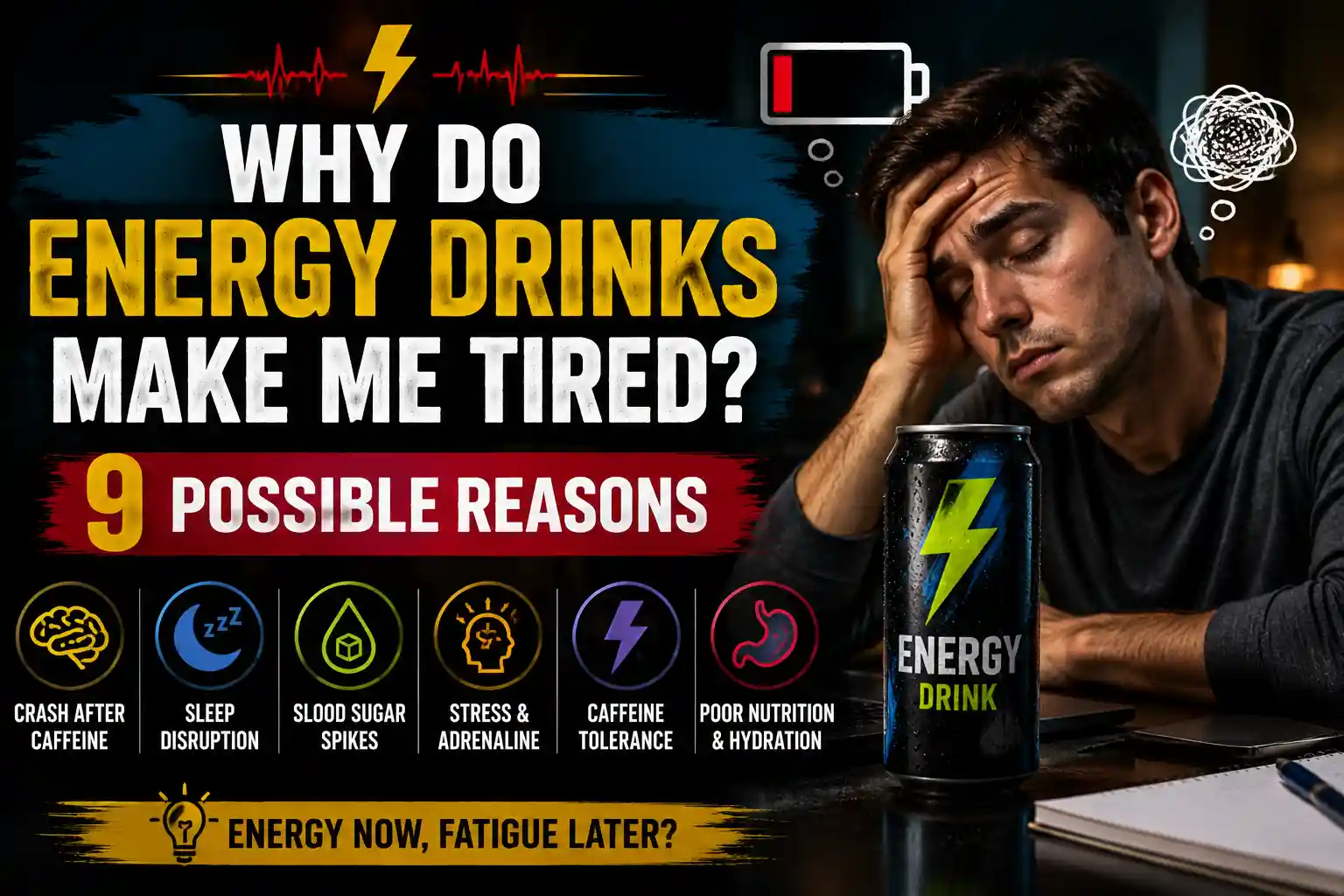
- You may already be carrying sleep debt before drinking the can.
- The caffeine effect can wear down while fatigue remains.
- A large caffeine dose can leave some people feeling jittery but mentally tired.
- Regular caffeine use can reduce the noticeable alertness effect.
- Drinking caffeine late can interfere with the following night’s sleep.
- Stress or anxiety can create tiredness despite feeling stimulated.
- Dehydration or skipping meals can add to the drained feeling.
- Individual caffeine metabolism can change how long the effects last.
- A particularly strong drink can produce unpleasant sensations that feel like fatigue.
Caffeine Can Mask Tiredness Instead of Fixing It
The simplest explanation is often the most important: caffeine doesn’t provide the same thing as sleep.
Caffeine blocks adenosine, a chemical involved in sleep pressure. You may therefore feel more alert even though your body still needs rest. Once caffeine’s effect declines, the underlying sleepiness can become much easier to notice.
This can create a frustrating pattern. You feel tired, drink caffeine, feel temporarily better, then feel tired again later.
Adults generally need at least seven hours of sleep each night. Yet 30.5% of U.S. adults reported getting less than seven hours on average in 2024, according to the CDC.
Caffeine Tolerance Can Make Energy Drinks Feel Useless
If you drink caffeine every day, your response can change over time. The same energy drink that once felt powerful may eventually seem much weaker.
That doesn’t necessarily mean the drink stopped working completely. Instead, your body may have adapted to regular caffeine exposure.
- Daily caffeine can reduce its noticeable stimulant effect.
- You may need more caffeine to notice the same alertness.
- Increasing the dose can increase unwanted side effects.
- Several energy drinks can push your total caffeine intake higher.
- Coffee, tea, soda, pre-workout, and supplements also count toward daily caffeine.
- Cutting caffeine suddenly can cause withdrawal symptoms.
The FDA says 400 mg of caffeine per day is an amount not generally associated with negative effects for most healthy adults. Individual sensitivity varies widely, so this should not be treated as a target or universal limit.
Can a Caffeine Crash Make You Feel Suddenly Tired?
People often use the phrase “caffeine crash” for the tired feeling that follows an earlier stimulant effect.
The term is useful for describing the experience, but it doesn’t mean everyone’s body responds through one identical mechanism. Sleep debt, caffeine tolerance, dose, timing, and sensitivity can all influence what happens.
- You feel noticeably more alert after the drink.
- Several hours pass as caffeine levels decline.
- Your original sleepiness becomes harder to ignore.
- You may feel sluggish or unfocused.
- A large dose can make the contrast feel stronger.
- Poor sleep can make later fatigue much more noticeable.
This is one reason another energy drink isn’t always the best response. More caffeine can temporarily mask the problem while extending the cycle.
Can Sugar in Energy Drinks Cause an Energy Slump?
Some energy drinks contain substantial amounts of added sugar. A sugary drink can provide quickly available carbohydrate, but the overall effect isn’t the same for everyone.
It’s also important not to oversimplify the issue as a guaranteed “sugar crash.” Feeling tired after a sugary energy drink doesn’t prove that blood glucose suddenly dropped below normal.
A sugar-free energy drink can remove the added-sugar variable, but it doesn’t remove caffeine or its possible effects on sleep.
Drinking an Energy Drink Too Late Can Hurt Sleep
This is one of the most important explanations when you feel tired the next day.
You might drink an energy drink at 3 or 4 p.m., feel fine that evening, and still sleep worse that night. Caffeine can remain active long after you stop noticing its obvious stimulant effect.
A controlled sleep study found that 400 mg of caffeine taken six hours before bedtime reduced total sleep time.
More recent research also indicates that caffeine’s sleep effects depend on both dose and timing, with larger doses creating greater concern when consumed closer to bedtime.
- Late-afternoon caffeine may affect nighttime sleep.
- You may fall asleep normally but still get less total sleep.
- Poorer sleep can produce next-day grogginess.
- The effect can be stronger with larger caffeine doses.
- Your personal sensitivity matters.
- A practical starting point is to avoid substantial caffeine for at least six hours before bed.
If late caffeine may be contributing to fatigue, try moving substantial caffeine earlier in the day and observe whether your sleep and next-day alertness improve.
You May Be Tired Because You Aren’t Sleeping Enough
Sometimes the energy drink isn’t the real cause. Lack of sleep was the problem before the drink ever entered the picture.
Caffeine can temporarily make you feel more functional, but it cannot substitute for adequate sleep. If you’re routinely sleeping six hours while relying on energy drinks, fatigue can persist despite increasing caffeine intake.
- Track your sleep for several days.
- Keep bedtime and wake time relatively consistent.
- Avoid using caffeine to routinely compensate for very short nights.
- Watch whether weekend sleep differs sharply from weekday sleep.
- Pay attention to daytime sleepiness, not just total hours.
- Consider whether your sleep feels restorative when you wake.
If you regularly wake tired despite spending enough time in bed, the issue may deserve a closer look rather than simply increasing caffeine.
Why Do Some People Feel Sleepy After Caffeine?
Caffeine doesn’t affect everyone in exactly the same way. Genetics, habitual intake, medications, sleep status, and individual sensitivity can influence the response.
Some people report feeling calm, sleepy, or unusually tired after caffeine. That experience is real, but it doesn’t automatically point to one specific medical explanation.
- Your normal caffeine tolerance may be high.
- You may be particularly sensitive to stimulant side effects.
- You could already be severely sleep deprived.
- The dose may be too large for your personal tolerance.
- Anxiety or physical tension can leave you mentally exhausted.
- Your response can differ from someone else’s response to the same drink.
Avoid assuming that an unusual caffeine response automatically means you have a particular condition. If the reaction is persistent or concerning, discuss it with a healthcare professional.
Energy Drink Caffeine Can Vary Widely
Not all energy drinks are remotely equal. Can size and caffeine content matter, so comparing products by brand reputation alone can be misleading.
| What to Check | Why It Matters |
|---|---|
| Caffeine per serving | Shows how much caffeine you’re actually consuming. |
| Number of servings | A container can contain more than one serving. |
| Can size | Larger containers may contain substantially more caffeine. |
| Other caffeine sources | Coffee, tea, soda, pre-workout, and supplements also contribute. |
| Timing | Late caffeine can interfere with nighttime sleep. |
The FDA notes that energy drinks can contain widely varying amounts of caffeine. Some U.S. products contain more than 200 mg in a single serving.
A useful habit is to calculate your total daily caffeine, not just the caffeine in one can.
Dehydration and Skipped Meals Can Add to Fatigue
An energy drink may become part of a larger routine problem. You might grab caffeine instead of drinking water, eating breakfast, or having a proper lunch.
That can leave you feeling tired for reasons that have little to do with caffeine itself.
If you’re exercising heavily, working outdoors, or sweating significantly, fluid and food needs can be higher.
Are Sugar-Free Energy Drinks Better for Fatigue?
Sugar-free energy drinks aren’t automatically a solution for fatigue.
They can eliminate the added sugar found in many regular versions, but they usually still contain caffeine. If caffeine is interfering with your sleep, switching from regular to zero-sugar may not solve the underlying problem.
| If Your Goal Is… | What to Pay Attention To |
|---|---|
| Reduce added sugar | Compare regular and zero-sugar labels. |
| Improve sleep | Look at caffeine amount and timing. |
| Reduce caffeine | Choose a lower-caffeine option rather than focusing only on sugar. |
| Understand your fatigue | Look at sleep, food, hydration, timing, and total caffeine. |
How to Stop Feeling Tired After Energy Drinks
The goal shouldn’t always be finding a stronger stimulant. Start by identifying what happens before and after you drink one.
If you’re trying to figure out why energy drinks leave you tired, changing one factor at a time—such as caffeine timing or dose—can make it easier to identify what affects you.
When Tiredness After Energy Drinks Needs Medical Attention
Occasional tiredness after caffeine isn’t automatically a sign of a serious problem. Persistent or severe fatigue is different.
If you repeatedly need energy drinks just to stay awake, it’s worth looking beyond the beverage itself. Sleep problems and other health issues can cause persistent daytime fatigue.
⚠️ Get Prompt Medical Care for Concerning Symptoms
- Chest pain
- Fainting or near-fainting
- Severe or persistent heart palpitations
- Significant shortness of breath
- Confusion or unusual weakness
- Severe symptoms after a large caffeine intake
Talk with a healthcare professional if you’re consistently exhausted despite adequate sleep, or if daytime sleepiness interferes with driving, work, school, or normal activities.
How Much Caffeine Is Too Much?
There isn’t one caffeine limit that works perfectly for everyone. The FDA cites 400 mg per day as an amount not generally associated with negative effects for most healthy adults.
Someone who experiences insomnia, anxiety, palpitations, or other symptoms at a lower intake shouldn’t try to reach 400 mg.
- Count caffeine from all sources, not only energy drinks.
- Check the label before drinking another can.
- Consider caffeine timing as well as total intake.
- Pregnant or breastfeeding people should discuss caffeine limits with a healthcare provider.
- People taking certain medications may be more sensitive.
- Children and teens should not use energy drinks as a routine source of caffeine.
The FDA notes that medical experts advise against energy drinks for children and teens because of their caffeine and sugar content.
Energy Drinks vs. Coffee for Feeling Tired
Coffee and energy drinks can both provide caffeine, so neither automatically solves the underlying cause of fatigue.
The practical difference is dose, serving size, added ingredients, and how easily you consume more than intended.
| Factor | Energy Drink | Coffee |
|---|---|---|
| Caffeine | Varies widely by product and serving size. | Varies by coffee type, preparation, and serving. |
| Sugar | May be substantial in regular versions; some are sugar-free. | Usually depends on what is added. |
| Added ingredients | May include multiple functional or flavor ingredients. | Often a simpler caffeine source. |
| Main consideration | Check caffeine, serving size, sugar, and timing. | Check caffeine, additions, portion, and timing. |
- Compare caffeine in milligrams rather than judging by drink type.
- Check added sugar when comparing regular products.
- Watch serving sizes.
- Avoid combining coffee and energy drinks without calculating total caffeine.
- Consider unsweetened coffee or tea if you want a simpler caffeine source.
- Remember that caffeine timing can affect sleep regardless of the beverage.
The FDA states that your body handles naturally occurring caffeine and added caffeine in the same basic way.
Frequently Asked Questions About Energy Drinks Making You Tired
Why do energy drinks make me tired immediately?
Immediate tiredness can happen for several reasons, including existing sleep deprivation, individual caffeine sensitivity, or feeling uncomfortable after a large stimulant dose. If it happens every time you drink caffeine, track the dose and timing. A healthcare professional can help if the reaction is persistent or severe.
Can an energy drink make you more tired later?
Yes. Caffeine can temporarily mask sleepiness, while its later effects can interfere with nighttime sleep. That can contribute to more fatigue the following day, especially when caffeine is consumed late or in large amounts.
Why does caffeine sometimes make me sleepy?
People respond differently to caffeine. Tolerance, sleep deprivation, individual sensitivity, and timing can all influence how you feel after drinking it. Feeling sleepy after caffeine doesn’t automatically identify a specific condition.
Do sugar-free energy drinks prevent the crash?
Not necessarily. Sugar-free products remove the added sugar variable, but they can still contain significant caffeine. If caffeine is disrupting your sleep, switching to zero sugar may not address the main problem.
How long does caffeine stay in your system?
Caffeine’s clearance varies considerably between people. Research commonly describes a caffeine half-life of roughly 3–6 hours, although individual differences can make it longer or shorter. You may therefore still have a meaningful amount of caffeine in your system hours after drinking an energy drink.
Should I drink another energy drink if the first one made me tired?
Usually, don’t use another can as your automatic solution. First consider sleep, caffeine timing, total intake, hydration, and food. Adding more caffeine can increase your total exposure without fixing the reason you’re tired.
How can I feel more awake without another energy drink?
Start with basic needs: adequate sleep, water, regular food, daylight, and physical movement. If daytime sleepiness remains strong despite enough sleep, consider discussing it with a healthcare professional instead of continually increasing caffeine.
Conclusion: Why Do Energy Drinks Make Me Tired?
So, why do energy drinks make me tired? The answer is usually more complicated than a simple caffeine crash.
Caffeine can temporarily hide sleepiness, while tolerance, late-day caffeine, poor sleep, individual sensitivity, and other factors can leave you feeling drained.
Instead of reaching for a stronger drink, check your sleep, caffeine timing, total caffeine, meals, and hydration first. If the fatigue keeps happening or affects your daily life, make the next step a conversation with a healthcare professional.
Read More:
What Can I Drink After a Tooth Extraction
100 Fruit Drink Recipes: Juices, Smoothies & Mocktails
16 Best Non-Alcoholic After Dinner Drinks for Any Evening
Best Places for Non-Alcoholic Drinks in Las Vegas: 2026 Guide
Bob Marley Mocktail: Easy Non-Alcoholic Layered Drink
Liquid Maria Juana Drink: Easy Tropical Cocktail Recipe
Gasolina Drink: Flavors, ABV, Ingredients & More