Key Takeaways
- Comfortable movement usually depends more on regular position changes than on holding one “perfect” posture.
- Brief walking, stretching, and standing breaks can help interrupt long periods of sitting, driving, or screen use.
- A practical desk setup keeps frequently used items close and reduces unnecessary reaching or neck bending.
- Planning a lift, keeping an item close, and avoiding twists can make everyday carrying tasks more manageable.
- Strength, mobility, balance, sleep, and recovery all contribute to daily movement capacity.
- Persistent pain, numbness, weakness, or symptoms after an injury deserve professional attention.
Why Daily Habits Matter
Spine care is part of ordinary life, not just something to think about during exercise. Sitting at work, driving, carrying groceries, doing laundry, gardening, and looking down at a phone can all shape how the neck, shoulders, and back feel by the end of the day. A repeated head tilt toward a screen, for example, may become uncomfortable when it is held for long stretches without a break.
Small, repeatable habits are often easier to maintain than occasional intense efforts. That does not mean daily habits can prevent every injury or condition. Pain can be influenced by health history, work demands, stress, sleep, activity levels, and many other factors. For chronic low back pain, the WHO guidance emphasizes care that is holistic, person-centered, and tailored to the individual.
Why Posture Is About Variety
There is no single position that every person must hold all day. Instead of forcing a rigid posture, aim for a comfortable, supported position and change it regularly. Keep the head generally balanced over the shoulders, let the shoulders relax, support both feet when seated, and avoid staying fixed in one position until stiffness becomes severe.
A desk worker might begin the morning sitting upright, shift slightly during a meeting, stand to take a call, and walk briefly before returning to the computer. That natural variety is often more realistic than trying to maintain one exact pose for hours.
How to Add More Movement
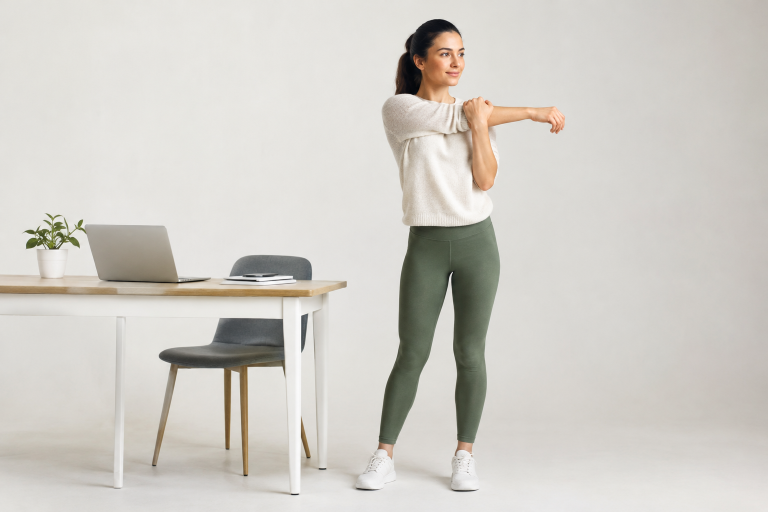
Movement breaks don’t need to be long or complicated. Stand after meetings, walk during audio messages, stretch during TV breaks, or take short walks after long drives. Use a timer until these become routine. Weekly activity can be done in smaller blocks. Adults should aim for at least 150 minutes of moderate activity weekly, plus muscle-strengthening on two or more days. Walking, cycling, yard work, and active errands all count.
Simple Desk and Screen Adjustments
A poorly arranged workspace can encourage constant leaning, reaching, or downward neck bending. Place the main screen near eye level and directly in front of the body. Keep the keyboard and mouse close enough that the elbows can remain comfortably near the sides. Support the lower back if it feels helpful, and keep both feet supported when possible.
Phone use deserves the same attention. Raise the device closer to eye level when practical, rather than continually bending the neck toward it. An ergonomic chair or standing desk can be useful, but neither replaces regular changes between sitting, standing, and walking.
Safer Lifting and Carrying
- Check the weight, shape, and path before lifting.
- Move close to the object, then bend through the hips and knees when practical.
- Keep the load close to the body while standing and carrying it.
- Turn with the feet rather than twisting through the trunk.
- Divide an awkward load or ask for help when needed.
These steps apply to grocery bags, laundry baskets, garden tools, luggage, and household boxes. Rushing often creates more strain than the task itself, so pause long enough to clear the path and plan the movement.
Strength, Mobility, and Balance
Strength helps the body handle daily tasks. Mobility is the ability to move comfortably through a useful range of motion. Flexibility is part of mobility, while balance supports steady movement and reduces missteps. Beginner options include walking, gentle movements, sit-to-stand, light resistance, and balance near a stable surface. Progress gradually—avoid large jumps in weight, distance, or time. Stop exercises causing sharp or worsening pain. Those recovering from injury or surgery should consult a healthcare professional.
Sleep and Daily Recovery
Sleep allows the body to recover from daily demands. Choose a supported, comfortable position; some find a pillow between knees helpful, though preferences vary. Frequent or severe morning stiffness should be discussed with a clinician. Other recovery tips include drinking water, cooling down after activity, resting between workouts, and avoiding prolonged screen time at night.
When Pain Needs Attention
Mild, short-term stiffness may improve with gentle movement and sensible routine changes. However, seek professional guidance for new weakness in an arm or leg, numbness or tingling that continues or spreads, pain traveling into an arm or leg, trouble walking or balancing, loss of bladder or bowel control, severe pain after a fall or crash, fever, unexplained weight loss, worsening pain, or pain that disrupts sleep or does not improve after several weeks.
A Simple Seven-Day Spine Care Plan
- Day One: Notice how long sitting and standing periods last.
- Day Two: Adjust the screen, chair, phone, or driving position.
- Day Three: Add two short walking or movement breaks.
- Day Four: Practice lifting a light object without twisting.
- Day Five: Try gentle mobility or light strength work.
- Day Six: Review sleep comfort and evening screen habits.
- Day Seven: Keep the habits that feel realistic and repeat them.
Common Questions
Can better posture prevent all back pain?
No. Posture is only one factor among injuries, activity levels, sleep, stress, health conditions, and work demands.
Is sitting always bad for the back?
No. Sitting can be part of a normal day. The larger concern is often remaining in one position for too long without support or movement.
Is a standing desk enough?
No. Standing all day can also be tiring. Alternating among sitting, standing, walking, and other comfortable positions is usually more practical.
When should someone seek professional advice?
Seek advice for recurring pain, reduced mobility, symptoms after an accident, nerve-related symptoms, or discomfort that does not improve with sensible self-care. General wellness guidance is not a diagnosis.
Conclusion
Healthy spine habits do not need to be complicated. Regular movement, comfortable positioning, safer lifting, gradual strength work, and quality recovery can support daily mobility. The goal is not perfect posture. It is building realistic habits that help the body move and rest well through everyday demands.
Read more: Healthy Dunkin Drinks: Low-Sugar, Sugar-Free & More