Explore adaptogenic drinks including mushroom coffee, creamy lattes, smoothies, herbal teas, sparkling tonics, mocktails, hot chocolate, and ready-to-drink options—plus practical guidance on ingredients, labels, flavor, caffeine, sugar, and safety.
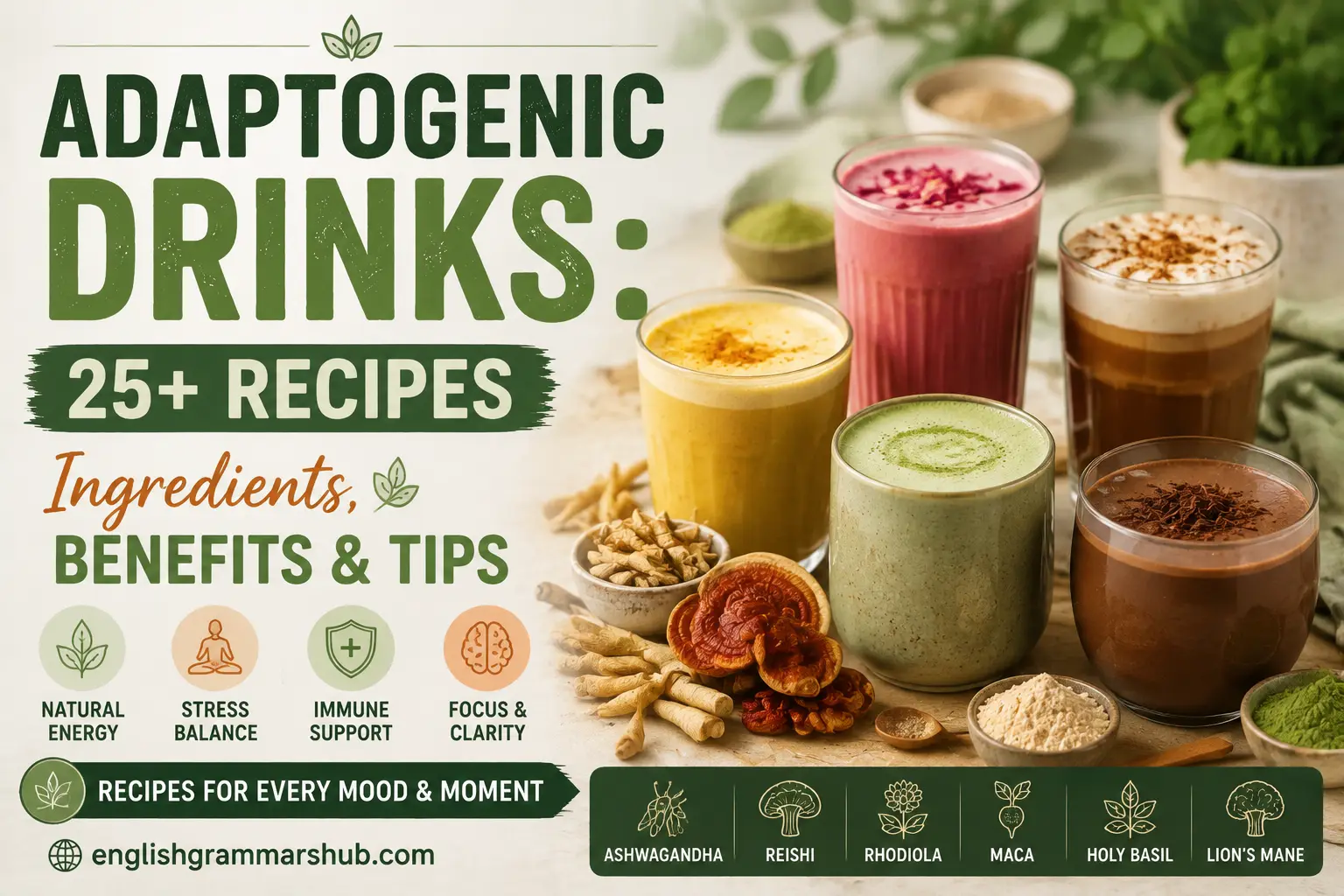
Adaptogenic drinks are beverages made with herbs, roots, mushrooms, or other botanicals commonly described as adaptogens. Common ingredients include ashwagandha, rhodiola, holy basil, maca, reishi, lion’s mane, cordyceps, and ginseng.
Adaptogenic Drinks at a Glance
| Drink | Best For | Caffeine | Flavor | Difficulty |
|---|---|---|---|---|
| Reishi Cacao Latte | Cozy evenings | None | Chocolatey, earthy | Easy |
| Mushroom Coffee | Morning ritual | Usually yes | Coffee, earthy | Easy |
| Maca Berry Smoothie | Breakfast | None | Fruity, creamy | Easy |
| Tulsi Lemon Tea | Light beverage | Usually none | Herbal, citrusy | Easy |
| Botanical Spritz | Parties | Varies | Bright, fizzy | Easy |
| Golden Latte | Cold-weather mornings | None | Spiced, creamy | Easy |
| Adaptogenic Hot Chocolate | Dessert-style drink | None | Rich, chocolatey | Easy |
| Ginger Berry Fizz | Brunch | None | Fruity, spicy | Easy |
Choose an adaptogenic beverage based on flavor, caffeine level, ingredient transparency, and occasion—not simply because the package uses the word “adaptogen.”
What Does “Adaptogen” Actually Mean?
The term adaptogen is commonly used for certain plants and fungi traditionally associated with helping the body respond to stress. Modern beverage companies may use the term more broadly, so the label alone does not establish how effective a particular product is.
A drink can also contain ingredients that aren’t adaptogens at all. Functional beverages may include caffeine, amino acids, vitamins, minerals, probiotics, electrolytes, CBD, or other botanicals.
Adaptogenic Drink vs. Functional Drink
Adaptogenic Drink
Usually emphasizes herbs, roots, or mushrooms associated with the adaptogen category.
Functional Drink
A broader category that can include protein, electrolytes, probiotics, caffeine, vitamins, botanicals, or other functional ingredients.
Most adaptogenic drinks can be considered functional beverages, but not every functional beverage is an adaptogenic drink.
Do Adaptogenic Drinks Actually Work?
The honest answer is: it depends on the ingredient, preparation, dose, and product.
Research on an individual botanical does not automatically prove that every canned drink containing that botanical will produce the same result. Studies may use a specific extract, dose, duration, or preparation that differs substantially from a commercial beverage.
Ashwagandha is one example. Research has investigated preparations for areas including stress and sleep, but evidence varies across uses and preparations.
- Which ingredient is responsible for the claim?
- How much of that ingredient is included per serving?
- Is the amount clearly disclosed?
- Was the ingredient studied in a similar form?
- Was the research conducted in humans?
- Does the drink contain multiple ingredients that complicate evaluation?
- Is the company relying on a proprietary blend?
Popular Adaptogens Used in Drinks
Different ingredients have very different flavors and evidence profiles. Some work naturally with coffee and cacao, while others are better suited to tea or fruit-based drinks.
Ashwagandha
Earthy and slightly bitter. Commonly used in creamy lattes, cacao drinks, and powdered beverage mixes.
Reishi
Pronounced earthy and bitter notes. Cacao, cinnamon, vanilla, and creamy milk bases can balance the flavor.
Lion’s Mane
Comparatively mild and earthy. Frequently found in coffee and powdered beverage blends.
Maca
Malty and nutty, making it a natural match for banana, cacao, cinnamon, oats, and milk.
Rhodiola
Can be bitter, so citrus, berries, ginger, or stronger tea bases can help balance the flavor.
Tulsi
Also called holy basil, tulsi has a distinctive herbal profile that works well with lemon, mint, ginger, and sparkling water.
Cordyceps
Earthy and commonly included in coffee, cacao, and mushroom beverage blends.
Ginseng
Earthy and slightly bitter, with ginger, citrus, honey, and tea making useful flavor partners.
Best Adaptogenic Drinks to Buy
Ready-to-drink products make the category convenient if you don’t want to measure powders or prepare a beverage every morning.
The U.S. market includes products positioned around alcohol alternatives, mushroom blends, coffee-style beverages, sparkling drinks, and functional formulations. Rather than choosing based solely on brand recognition, compare the actual formula.
What Makes a Better Product?
Clearly Listed Ingredients
Look for straightforward ingredient information and a clearly stated serving size.
Ingredient Amounts
Amounts per serving are useful when comparing similar products.
Caffeine Disclosure
Check whether coffee, tea, matcha, guayusa, or added caffeine is present.
Added Sugar
A botanical drink can still contain substantial sugar from syrups, juice, or sweeteners.
Allergen Information
Check for dairy, soy, nuts, coconut, mushrooms, and other relevant ingredients.
Testing Information
Look for meaningful testing or certification information where relevant.
How to Read an Adaptogenic Drink Label
The front of a can is marketing. The ingredient panel tells you what you’re actually buying.
1. Serving Size
A container may appear to be one serving while actually containing multiple servings.
2. Ingredient Amounts
A product listing many botanicals isn’t automatically stronger than one containing fewer ingredients.
3. Proprietary Blends
These may make it difficult to determine exactly how much of each ingredient you’re consuming.
4. Caffeine
Coffee, matcha, green tea, guayusa, and other ingredients can contribute caffeine.
5. Added Sugar
Check the nutrition panel rather than assuming a botanical beverage is automatically low in sugar.
6. Allergens
Review the full ingredient list for allergens and ingredients you may need to avoid.
Adaptogenic Latte Recipes
Lattes are one of the easiest formats for earthy ingredients because milk, cacao, vanilla, and cinnamon can soften strong botanical flavors.
Reishi Cacao Latte
Ingredients
- 1 cup unsweetened oat milk
- 1 tablespoon unsweetened cacao powder
- Cinnamon to taste
- Vanilla extract
- Reishi powder according to the product label
- Optional maple syrup
Method
Warm the milk without boiling it. Whisk in cacao, cinnamon, vanilla, and reishi until smooth.
Chocolatey • Earthy • CozyMaca Cinnamon Latte
Ingredients
- 1 cup milk or unsweetened soy milk
- Maca powder according to the product label
- ½ teaspoon cinnamon
- A few drops of vanilla
- Optional maple syrup
Method
Warm the milk, whisk everything together, and serve immediately.
Creamy • Malty • SpicedAdaptogenic Coffee Drinks
Coffee is one of the strongest entry points into the category because it preserves a familiar morning ritual.
Simple Mushroom Coffee
Ingredients
- 1 cup brewed coffee
- Mushroom powder according to its label
- ¼ cup milk or plant milk
- Cinnamon
- Optional vanilla
Method
Stir the powder into hot coffee until fully dispersed. Add milk and cinnamon.
Check the coffee and mushroom blend separately. A product can contain both caffeine and botanical ingredients.
Maca Mocha
Ingredients
- 1 cup brewed coffee
- 1 tablespoon cacao
- Maca powder according to the product label
- ¼ cup milk
- Cinnamon
Method
Mix cacao and maca with a small amount of hot coffee first. Add the remaining coffee and milk.
Chocolatey • Malty • Coffee-forwardAdaptogenic Tea Recipes
Tea works well when you want a lighter, less creamy beverage. Herbal teas can also give you more control over caffeine.
Tulsi Lemon Tea
Ingredients
- 1 cup brewed tulsi tea
- Fresh lemon juice
- Honey or another sweetener if desired
- Fresh mint
Method
Brew the tea according to package directions. Add lemon and mint after brewing.
Herbal • Citrus • FreshGinger Citrus Tea
Ingredients
- Fresh ginger slices
- Herbal tea
- Lemon
- Orange peel
- Optional honey
Method
Steep the ginger with the tea. Add lemon and orange peel before serving.
Bright • Spicy • CitrusyAdaptogenic Smoothie Recipes
Smoothies are useful for earthy ingredients because fruit, yogurt, and milk provide strong flavor and texture partners.
Berry Maca Smoothie
Ingredients
- 1 cup frozen berries
- 1 small banana
- ½ cup Greek yogurt
- ¾ cup milk or soy milk
- Maca powder according to the product label
- Ice if needed
Method
Blend until creamy. Add more milk if the smoothie is too thick.
Fruity • Creamy • Mildly MaltyChocolate Banana Mushroom Smoothie
Ingredients
- 1 banana
- 1 tablespoon cacao
- ¾ cup milk
- Mushroom powder according to the product label
- ½ cup Greek yogurt
- Ice
Method
Blend everything until smooth.
Chocolatey • Creamy • EarthyCheck ingredients carefully when preparing smoothies for others, especially for common allergens such as dairy, peanuts, and tree nuts.
Adaptogenic Mocktails and Alcohol Alternatives
One interesting development in the category is the overlap between adaptogenic beverages and alcohol-free social drinks.
These products range from sparkling tonics to non-alcoholic aperitif-style beverages. The appeal is often the ritual of having something interesting to pour into a glass during dinner, parties, or other social occasions.
Berry Botanical Spritz
Ingredients
- ¼ cup crushed berries
- 1 tablespoon lime juice
- Fresh mint
- Ice
- Sparkling water
Method
Muddle berries and lime in a glass. Add ice, mint, and sparkling water.
Fruity • Tart • FizzyGinger Citrus Fizz
Ingredients
- 2 tablespoons orange juice
- 1 tablespoon lime juice
- Fresh ginger
- Sparkling water
- Ice
Method
Combine juices and ginger over ice. Top with sparkling water.
Citrusy • Spicy • RefreshingSparkling Adaptogenic Drinks
Sparkling drinks are easy to serve and naturally feel more festive than plain water. Earthy or bitter ingredients can become more noticeable in a thin carbonated drink, so citrus, fruit, ginger, and herbs often work well.
Add sparkling water last so the finished drink retains more of its carbonation.
Adaptogenic Hot Chocolate
Hot chocolate can be an easy way to enjoy earthy mushroom ingredients if you dislike their natural flavor. Cacao’s roasted character can pair well with earthy ingredients.
Basic Adaptogenic Hot Chocolate
Ingredients
- 1 cup milk
- 1 tablespoon unsweetened cacao
- Cinnamon
- Vanilla
- Botanical powder according to the product label
- Optional maple syrup
Method
Warm the milk gently. Whisk in cacao, cinnamon, vanilla, and the botanical ingredient.
Rich • Warm • Chocolate-forwardMorning vs. Evening Adaptogenic Drinks
Not every adaptogenic drink belongs at the same time of day. The most important distinction is often caffeine, not the word “adaptogen.”
Better Morning Choices
- Mushroom coffee
- Maca mocha
- Cacao latte
- Berry maca smoothie
- Green tea-based botanical drinks
- Iced coffee blends
Caffeine-Free Evening Choices
- Reishi cacao
- Tulsi tea
- Rooibos botanical tea
- Warm cinnamon milk
- Caffeine-free hot chocolate
- Herbal citrus tea
Don’t assume a product marketed for nighttime is automatically caffeine-free. Check the ingredient and nutrition information.
Flavor Pairing Guide for Adaptogens
| Ingredient | Flavor | Good Pairings |
|---|---|---|
| Reishi | Earthy, bitter | Cacao, cinnamon, vanilla |
| Maca | Malty, nutty | Banana, cacao, oats |
| Ashwagandha | Earthy, bitter | Cinnamon, cacao, vanilla |
| Tulsi | Herbal, peppery | Lemon, mint, ginger |
| Rhodiola | Bitter | Citrus, berries, ginger |
| Lion’s Mane | Mild, earthy | Coffee, cacao, vanilla |
| Cordyceps | Earthy | Coffee, cacao, cinnamon |
| Ginseng | Earthy, bitter | Ginger, citrus, honey |
Try one strong botanical + two familiar flavors. This keeps the drink easier to understand and prevents too many ingredients from competing with one another.
Adaptogenic Drinks for Brunch and Parties
For groups, flavor and convenience often matter more than making every drink intensely functional. Sparkling drinks, pitchers of herbal tea, fruit mocktails, and customizable lattes are easy options.
Berry-Lime Sparkling Punch
Bright fruit flavors with a refreshing sparkling finish.
Ginger-Orange Spritz
A citrus-forward drink with a spicy ginger note.
Pomegranate Rosemary Fizz
Tart pomegranate balanced by aromatic rosemary.
Peach Herbal Iced Tea
A lighter, fruit-forward option for daytime gatherings.
Cucumber Mint Cooler
Crisp cucumber and fresh mint create a clean profile.
Pineapple Ginger Punch
Sweet tropical pineapple with warming ginger.
Cranberry Citrus Spritz
A tart combination suitable for parties and dinners.
Tulsi Lemonade
Herbal tulsi paired with bright lemon.
For a mixed group, serve the botanical ingredient separately when practical. This gives guests more control over what they consume.
How to Make Adaptogenic Drinks Taste Better
The biggest mistake beginners make is treating the botanical ingredient as the entire recipe. Build the drink around flavor first.
If It’s Too Bitter
- Cacao
- Banana
- Citrus
- Vanilla
- Cinnamon
- Ginger
- A small amount of sweetener
If It’s Too Earthy
- Chocolate
- Coffee
- Coconut milk
- Vanilla
- Cinnamon
- Strong fruit flavors
If It’s Too Sweet
- Lemon
- Lime
- Unsweetened tea
- Sparkling water
- Fresh herbs
If It’s Too Thin
- Greek yogurt
- Oat milk
- Soy milk
- Banana
- Coconut milk
Safety: Who Should Be Careful With Adaptogenic Drinks?
“Natural” does not automatically mean safe. Concentrated botanicals and dietary supplements can contain biologically active ingredients that interact with medicines, affect health conditions, or create concerns around surgery.
The safety profile depends heavily on the specific ingredient, amount, preparation, and individual circumstances.
Be Especially Careful With Concentrated Botanical Products If You:
- Take prescription medications
- Take several supplements
- Are pregnant or breastfeeding
- Have a thyroid or autoimmune condition
- Have liver disease
- Have an upcoming surgery
- Have known allergies to mushrooms or botanicals
- Are unsure about an ingredient’s safety
Ashwagandha can interact with certain medications and is not appropriate for everyone. Safety concerns are particularly important during pregnancy and breastfeeding, and people with medical conditions or regular medication use should seek individualized advice.
Concentrated botanical products should not be treated as the default beverage choice for children or teenagers. Their use should be considered carefully with an appropriate healthcare professional.
Caffeine, Sugar, and Other Ingredients to Watch
An adaptogenic drink can still be a caffeinated, sugary, or highly processed beverage. Check the complete nutrition and ingredient information.
Watch for Caffeine Sources
Coffee, matcha, green tea, black tea, guayusa, yerba mate, and added caffeine can all contribute caffeine.
Check Added Sugar
Sparkling beverages and mocktails can contain significant amounts of juice, syrup, or sweetener.
Review Allergens
Common concerns include milk, soy, almonds and other tree nuts, coconut, mushrooms, and botanical ingredients.
Watch Proprietary Blends
A proprietary blend may list ingredients without making each individual amount obvious.
How to Store Homemade Adaptogenic Drinks
Most homemade beverages are best consumed fresh. Drinks containing dairy, plant milk, fresh fruit, or other perishable ingredients should be handled and refrigerated appropriately.
| Drink Type | Practical Storage Approach |
|---|---|
| Smoothies | Best immediately; refrigerate only when necessary. |
| Milk-Based Lattes | Refrigerate promptly and reheat gently if appropriate. |
| Herbal Tea | Refrigerate in a covered container and use promptly. |
| Fruit Mocktails | Add sparkling water shortly before serving. |
| Batch Drinks | Keep chilled and add ice shortly before serving. |
| Fresh Citrus Drinks | Smaller batches generally provide better flavor. |
The Smartest Way to Choose an Adaptogenic Drink
You don’t need the most complicated formula. For many people, a good starting point is a drink with a clear purpose, familiar flavors, transparent ingredients, and a format you’ll actually enjoy.
Want a Coffee Ritual?
Try mushroom coffee or a maca mocha.
Want Something Without Caffeine?
Choose tulsi, rooibos, herbal tea, or a caffeine-free cacao drink.
Want a Creamy Drink?
Try a reishi cacao latte or a golden-style latte.
Want a Fruit-Based Option?
Make a berry maca smoothie.
Want an Alcohol-Free Party Drink?
Choose a sparkling botanical mocktail.
Want a Ready-to-Drink Product?
Compare ingredient amounts, caffeine, sugar, serving size, and available testing information.
Are Adaptogenic Drinks Better Than Coffee?
Not automatically. Coffee provides a familiar source of caffeine, while adaptogenic beverages may focus on herbs, mushrooms, or other functional ingredients.
Some mushroom coffees still contain coffee and caffeine, so switching to one doesn’t necessarily mean eliminating caffeine.
If you’re experimenting with a new beverage, you can start by replacing one serving rather than assuming an adaptogenic drink needs to completely replace your existing routine.
Are Adaptogenic Drinks Better Than Alcohol?
For people looking for an alcohol-free option, adaptogenic-style beverages can provide a more interesting social ritual than plain soda or water.
They should not, however, be treated as a guaranteed replacement for alcohol’s effects. Some products are designed specifically as alcohol alternatives, including sparkling aperitif-style beverages.
Look for something that tastes good, fits the occasion, and makes realistic claims rather than choosing solely because the product promises a particular effect.
Frequently Asked Questions About Adaptogenic Drinks
Do adaptogenic drinks get you high?
Most adaptogenic drinks are not intoxicating. They are generally formulated around botanicals, mushrooms, tea, coffee, or other functional ingredients rather than an intoxicating substance. Always read the complete label because products can differ substantially.
Can I drink adaptogenic drinks every day?
It depends on the specific ingredients and amounts. A simple herbal beverage is different from a concentrated botanical supplement. If you take medication, have a medical condition, are pregnant or breastfeeding, or plan regular use of concentrated ingredients, seek individualized professional advice.
Do adaptogenic drinks contain caffeine?
Some do and some don’t. Coffee, matcha, green tea, black tea, guayusa, and other ingredients can contribute caffeine. Check the label rather than assuming a drink is caffeine-free.
What is the best adaptogenic drink for beginners?
A simple cacao latte, maca smoothie, or herbal tea can be an approachable starting point because familiar flavors make earthy ingredients easier to enjoy.
Are adaptogenic drinks safe during pregnancy?
You should not assume they are safe simply because they are herbal or natural. Specific ingredients can have pregnancy-related safety concerns. Speak with a qualified healthcare professional about the exact product and ingredient list.
What should I look for when buying an adaptogenic drink?
Prioritize clear ingredient lists, serving information, caffeine disclosure, sugar content, allergen information, and transparent ingredient amounts when available.
Are mushroom drinks the same as adaptogenic drinks?
Not necessarily. Mushroom drinks are a broader category, and different mushroom ingredients may be included for different reasons. Look at the actual mushroom species and complete formula rather than treating every mushroom beverage as identical.
Final Thoughts on Adaptogenic Drinks
Adaptogenic drinks are best viewed as a beverage category, not a magic health shortcut. The most useful choices combine good flavor with sensible ingredients, clear labeling, and realistic expectations.
Start with one drink that fits your routine. Try a maca smoothie for breakfast, mushroom coffee in the morning, tulsi tea in the afternoon, or a sparkling botanical mocktail for dinner.
When buying a concentrated product, spend as much time reading the label as you do reading the claims on the front. Ingredient transparency, appropriate serving information, and safety matter more than a long list of trendy botanicals.
If you have medical conditions, take medications, are pregnant or breastfeeding, or have questions about regular use, get individualized advice from a qualified healthcare professional before adding concentrated botanical products to your routine.
Read More:
What Can I Drink After a Tooth Extraction
100 Fruit Drink Recipes: Juices, Smoothies & Mocktails
16 Best Non-Alcoholic After Dinner Drinks for Any Evening
Best Places for Non-Alcoholic Drinks in Las Vegas: 2026 Guide
Bob Marley Mocktail: Easy Non-Alcoholic Layered Drink
Liquid Maria Juana Drink: Easy Tropical Cocktail Recipe
Gasolina Drink: Flavors, ABV, Ingredients & More