Finding the healthiest drinks does not mean giving up flavor or drinking plain water every minute of the day. The best healthy drinks fit your routine, help with hydration, and provide useful nutrients without excessive added sugar.
This guide compares drinks that are good for you, from water and unsweetened tea to coffee, milk, smoothies, and 100% juice. You’ll also find practical ideas for low-sugar beverages, healthy alternatives to soda, plant-based drinks, electrolyte options, breakfast drinks, summer refreshments, and family-friendly choices.
Quick Answer
Healthy drinks include water, sparkling water, unsweetened tea, plain coffee, unsweetened milk, fortified soy beverages, infused water, balanced smoothies, 100% juice, and coconut water. For most people, water is the best everyday choice because it hydrates without added sugar or calories.
TL;DR: The Healthiest Drinks at a Glance
- Water is the best everyday hydration choice.
- Choose unsweetened tea or plain coffee when you want caffeine.
- Milk and fortified soy beverages provide protein and key nutrients.
- Try sparkling or infused water instead of sugary soda.
- Build balanced smoothies with fruit, protein, and fiber.
- Choose 100% juice in modest portions because it lacks whole-fruit fiber.
- Check labels for added sugar, caffeine, sodium, and serving size.
- The best drink is one that fits your needs, preferences, and daily routine.
What Makes a Drink Healthy?
A healthy beverage is more than a drink with a “natural” label. Look at its hydration value, nutritional value, added sugar, calories, caffeine content, protein, sodium, and serving size.
Some nutritious drinks mainly provide fluid, while others contribute protein, calcium, vitamins, minerals, electrolytes, or other nutrients. That means the best choice can change depending on the occasion.
A Simple Beverage Checklist
The Nutrition Facts label is especially useful for packaged beverages. Check the serving size, added sugar, sodium, protein, calories, and caffeine when listed rather than relying only on front-of-package claims.
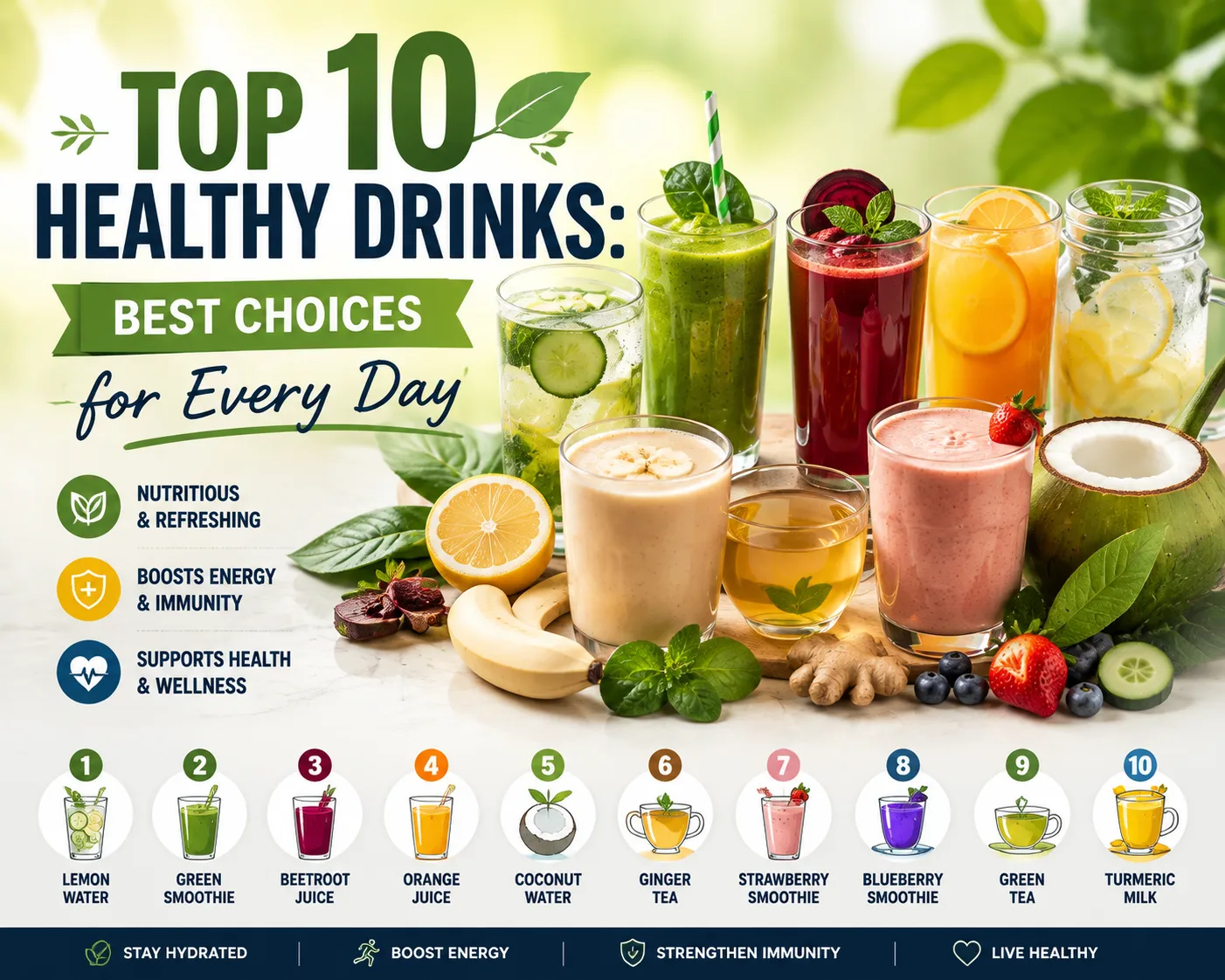
Top 10 Healthy Drinks
The best healthy beverages are not necessarily expensive, unusual, or marketed as wellness products. Many of the strongest everyday choices are simple drinks you can find at almost any grocery store.
Here are ten useful options, each with a different purpose.
| Rank | Healthy Drink | Best For | Main Advantage | Main Watch-Out |
|---|---|---|---|---|
| 1 | Water | Daily hydration | No added sugar or calories | Can feel repetitive |
| 2 | Sparkling Water | Soda alternatives | Carbonation without added sugar | Check flavored varieties |
| 3 | Unsweetened Tea | Flavor and hydration | Many varieties with little sugar | Caffeine varies |
| 4 | Black Coffee | Morning caffeine | Little sugar when served plain | Caffeine can add up |
| 5 | Low-Fat Milk | Protein and calcium | Nutrient-rich beverage | Dairy allergies or intolerance |
| 6 | Unsweetened Soy Milk | Plant-based nutrition | Protein plus fortification | Choose unsweetened |
| 7 | Infused Water | Flavor variety | Makes water more appealing | Limited nutrition from fruit |
| 8 | Balanced Smoothies | Breakfast or snacks | Combines several ingredients | Portions can become large |
| 9 | 100% Juice | Small nutrient-rich serving | Provides fruit or vegetable nutrients | Less fiber than whole produce |
| 10 | Coconut Water | Flavorful hydration | Naturally contains electrolytes | Some products contain added sugar |
These choices cover several categories of hydrating drinks, low-sugar drinks, nutrient-rich drinks, natural beverages, and better-for-you drinks without suggesting that one beverage is ideal for everyone.
Water: The Best Everyday Drink
Water is the simplest healthy beverage for everyday hydration. It provides fluid without added sugar, caffeine, or calories, making it an easy default with meals, between meals, and during normal daily activity.
You can choose tap water, filtered water, spring water, or mineral water based on taste and availability. The important point is regular fluid intake rather than chasing a particular type of bottled water.
Easy Ways to Make Water More Appealing
- Add lemon or lime for a bright citrus flavor.
- Make lemon water with fresh lemon slices and cold water.
- Try cucumber water with cucumber ribbons and mint.
- Add strawberries, blueberries, raspberries, or blackberries.
- Keep a reusable bottle nearby throughout the day.
- Serve chilled water with meals.
- Add ice for a colder texture.
- Mix a small splash of 100% juice with sparkling or still water.
What About Alkaline and Electrolyte Water?
Alkaline water has a higher pH than ordinary drinking water, but that does not make it automatically healthier for everyday use.
Electrolyte water may contain minerals such as sodium, potassium, or magnesium. It can be useful in specific situations, but most people do not need specialty electrolyte water for ordinary daily hydration.
Sparkling Water and Seltzer: Better Choices for Soda Lovers
Sparkling water and seltzer water are useful when carbonation is the main thing you enjoy about soda. Plain versions generally provide bubbles without the added sugar found in regular soft drinks.
The terms can describe somewhat different production methods, but the practical shopping rule is simple: check the Nutrition Facts label and ingredient list.
Easy Sparkling Water Combinations
- Lime seltzer with fresh lime wedges.
- Strawberry sparkling water with sliced berries.
- Cucumber-mint fizz served over ice.
- Orange-basil sparkling water for brunch.
- Grapefruit sparkling water with a citrus wedge.
- Pineapple spritzer made with a small splash of 100% juice.
- Ginger-lime sparkling water with fresh ginger.
- Berry-lemon bubbles served with crushed ice.
Unsweetened Tea: Flavor Without Added Sugar
Tea is one of the easiest ways to build variety into a healthy beverage routine. Green tea, black tea, white tea, oolong tea, and herbal tea all offer different flavors without requiring added sugar.
Tea also contains naturally occurring compounds such as polyphenols, flavonoids, and catechins. These compounds contribute to tea’s distinctive chemical profile, but they should not be treated as disease cures or guarantees of better health.
Tea Options to Try
For bottled tea, check the added sugar. Unsweetened brewed tea and sweetened bottled tea can be very different beverages.
Black Coffee: A Simple Caffeinated Choice
Black coffee can fit comfortably into a balanced beverage routine when you keep added sugar and high-calorie extras modest.
There are many ways to prepare it. Cold brew, iced coffee, espresso, Americano, decaf coffee, and traditional brewed coffee all offer different experiences while keeping coffee at the center.
Better Coffee Choices
- Black coffee for the simplest option.
- Americano for espresso with added water.
- Cold brew for a smooth, chilled drink.
- Iced coffee for warm-weather mornings.
- Decaf coffee when you want less caffeine.
- Espresso when a small concentrated serving suits you.
- Unsweetened coffee with milk for added creaminess.
- Coffee with unsweetened soy milk for a plant-based option.
Coffee naturally contains antioxidant compounds, but the biggest practical consideration for many people is caffeine.
Low-Fat Milk: A Nutrient-Rich Everyday Beverage
Low-fat milk and skim milk provide protein and important nutrients, including calcium and vitamin D when fortified or otherwise present.
Milk also contains naturally occurring lactose. That means its total sugar is not the same thing as added sugar in a sweetened beverage.
Simple Ways to Use Milk
- Drink a glass with breakfast.
- Add it to oatmeal.
- Blend it into a smoothie.
- Use it in coffee.
- Combine it with unsweetened cocoa.
- Choose lactose-free milk if needed.
- Use it as a base for a protein-rich breakfast drink.
- Pair it with meals instead of sugary beverages.
Milk can support protein and calcium intake, making it more nutritionally substantial than many sweetened beverages.
What About Chocolate Milk?
Chocolate milk provides protein and calcium, but it also usually contains added sugar. It can fit into some diets, but plain or unsweetened milk is the better everyday choice when your goal is to minimize added sugar.
Unsweetened Soy Milk and Other Plant-Based Drinks
Unsweetened soy milk is one of the stronger plant-based beverage choices because it can provide substantial protein while also being fortified with nutrients such as calcium and vitamin D.
Other plant-based beverages can work too, but their nutritional profiles vary considerably.
Compare Plant-Based Milk
| Type | Typical Strength | What to Check |
|---|---|---|
| Soy milk | Often provides useful protein. | Added sugar and fortification. |
| Almond milk | Usually low in calories. | Protein and fortification. |
| Oat milk | Creamy and often higher in carbohydrates. | Added sugar and calories. |
| Cashew milk | Mild and creamy. | Protein and fortification. |
| Coconut-based drinks | Often low in protein. | Protein and added ingredients. |
| Fortified plant milk | Can provide calcium and vitamin D. | Nutrition Facts label. |
| Unsweetened plant milk | Helps reduce added sugar. | Overall nutrient profile. |
When comparing non-dairy drinks, check protein, calcium, vitamin D, calories, added sugar, and allergens.
Some products are calcium-fortified milk alternatives or vitamin D-fortified drinks, which can make them more nutritionally useful.
Fruit-Infused Water: Flavor Without a Sugary Drink
Fruit-infused water is a simple homemade drink that adds flavor and aroma to ordinary water. It is especially useful for people who find plain water boring.
Keep expectations realistic. Infused water does not contain the same amount of fiber, vitamins, and fruit nutrients as eating the whole fruit.
Flavor Combinations
Smoothies: Nutritious Drinks That Can Become a Meal
Fruit smoothies and vegetable smoothies can be nutrient-dense, but the ingredients matter more than the word “smoothie.”
A balanced smoothie can combine whole fruits, vegetables, protein, fiber, healthy fats, and an unsweetened liquid. A drink made mostly from juice, sweetened yogurt, syrup, and large portions of fruit is a different story.
A Simple Smoothie Formula
Smoothie Ideas
Chia seeds and flax seeds can add fiber and healthy fats. Greek yogurt can increase protein. Whole fruits contribute fiber that juice does not provide in the same way.
Smoothie Mistakes to Avoid
- Using juice as the main liquid.
- Adding several sweeteners at once.
- Choosing heavily sweetened yogurt.
- Making unnecessarily large portions.
- Treating smoothies as unlimited servings of fruit.
- Adding several calorie-dense ingredients without considering the total.
100% Fruit and Vegetable Juice
100% fruit juice can provide vitamins and minerals, but it should not replace whole fruit as the main way you eat fruit.
Options include orange juice, pomegranate juice, tart cherry juice, cranberry juice, apple juice, grapefruit juice, and fresh juice. Vegetable choices include tomato juice, carrot juice, beet juice, and green juice.
The important distinction is between 100% juice and sweetened fruit drinks. A fruit-flavored beverage may contain added sugar while providing less actual fruit.
Juice Choices to Compare
Because juice contains less fiber than whole fruit, portion control matters.
Coconut Water: A Flavorful Source of Electrolytes
Coconut water naturally contains electrolytes such as potassium and sodium. That makes it different from ordinary water, although it does not automatically make it the best choice for everyone.
For everyday thirst, water remains the simplest hydration option. Coconut water is better viewed as a flavorful alternative that can contribute electrolytes.
What to Check
- Choose unsweetened coconut water when available.
- Check for added sugar.
- Compare sodium and potassium.
- Pay attention to serving size.
- Don’t confuse coconut water with coconut milk.
- Consider your overall diet when choosing electrolyte drinks.
Healthy Drinks Besides Water
Water is the foundation of daily hydration, but healthy beverage options can provide variety, nutrients, caffeine, or flavor.
The best choice depends on what you want from the drink.
| Goal | Good Option |
|---|---|
| Daily hydration | Water |
| Carbonation | Sparkling water |
| Caffeine | Green tea or coffee |
| Protein | Milk or soy milk |
| Plant-based nutrition | Fortified soy milk |
| Fruit flavor | Infused water |
| Breakfast | Balanced smoothie |
| Warm beverage | Herbal tea |
| Electrolytes | Coconut water or an appropriate electrolyte drink |
| Small juice serving | 100% fruit or vegetable juice |
This approach is more useful than searching for one drink that supposedly provides every health benefit.
Healthy Alternatives to Soda and Sugary Drinks
The easiest healthy alternative to soda is one that replaces the feature you actually enjoy.
If you want bubbles, choose sparkling water. If you want strong flavor, try iced tea. If you want fruitiness, use citrus, berries, or a small amount of 100% juice.
Regularly replacing sugar-sweetened beverages with low- or no-added-sugar options can reduce added sugar intake without requiring you to eliminate flavored drinks entirely.
Healthy Morning and Breakfast Drinks
Morning drinks usually serve one of two purposes: hydration or caffeine. Some also provide enough nutrients to complement breakfast or act as a snack.
Start with water if you’re thirsty, then choose coffee, tea, milk, or a balanced smoothie based on your routine.
For a more filling breakfast drink, combine protein and fiber instead of relying only on fruit.
Healthy Summer Drinks
Hot weather can increase fluid needs, particularly during physical activity. Water and other hydrating drinks should remain central to your routine.
Summer is also a good time to use fruit, herbs, tea, and sparkling water for homemade beverages.
Refreshing Summer Drinks
Healthy Hot and Bedtime Drinks
A comforting winter or bedtime drink does not need to contain large amounts of syrup or sugar.
Herbal tea, chamomile tea, peppermint tea, rooibos, and ginger tea are naturally caffeine-free choices. For people sensitive to caffeine, they may be preferable to coffee or black tea later in the day.
Healthy Drinks for Kids and Families
For children, water and unsweetened beverages should form the foundation of everyday drink choices.
Milk and appropriate fortified soy beverages can provide nutrients, while fruit-infused water can make plain water more appealing without turning it into a sugary drink.
Family-Friendly Choices
For infants, beverage needs are different. Breast milk or infant formula should remain the primary source of nutrition during the first year, and parents should follow pediatric guidance when introducing other beverages.
Low-Sugar and Sugar-Free Healthy Beverages
Low-sugar drinks are not automatically healthy, just as natural drinks are not automatically low in calories.
Start by separating natural sugar from added sugar. Milk naturally contains lactose, while sweetened milk contains additional sugar. Whole fruit contains natural sugar along with fiber, while many fruit drinks contain added sugar with little whole-fruit content.
Good Low-Sugar Choices
Sugar-free beverages can sometimes help people reduce sugar intake, but sugar-free does not automatically mean nutrient-rich. Artificial sweeteners such as stevia and monk fruit are different from added sugar, while honey remains a source of sugar despite being a natural sweetener.
Functional and Probiotic Drinks: What to Know
The term functional beverages covers drinks marketed for a particular nutritional or wellness purpose. Examples include probiotic drinks, prebiotic drinks, fermented drinks, electrolyte drinks, recovery drinks, and some wellness shots.
These products can vary widely, so evaluate the actual label instead of assuming that “functional” means better.
Protein, Dairy, and Nutrient-Rich Drinks
Some nutritious drinks do more than provide fluid. They can contribute protein, calcium, vitamin D, vitamin B12, vitamin B, potassium, magnesium, iron, and other essential nutrients.
That makes drinks such as milk, fortified soy beverages, kefir, Greek yogurt drinks, and carefully formulated protein shakes useful in certain eating patterns.
Protein drinks should complement a balanced diet rather than replace whole foods unnecessarily.
Electrolyte Drinks, Sports Drinks, and Exercise
Electrolytes such as sodium, potassium, and magnesium help regulate fluid balance and support normal body functions.
For ordinary daily activity, most people can rely primarily on water and a balanced diet. During prolonged or strenuous exercise, especially in heat, electrolyte and carbohydrate needs can become more relevant.
| Beverage | Primary Role |
|---|---|
| Water | Strong everyday option. |
| Electrolyte water | May provide selected minerals. |
| Sports drinks | Can provide fluid, electrolytes, and carbohydrate. |
| Coconut water | Naturally contains potassium and some sodium. |
| Recovery drinks | May combine protein, carbohydrate, and fluids. |
| Protein shakes | More focused on protein than hydration. |
Drinks for Weight Management Without the Hype
There is no beverage that reliably causes weight loss on its own. However, low-calorie drinks and calorie-free drinks can make it easier to manage total calorie intake when they replace high-calorie beverages.
The most useful strategy is substitution rather than chasing a “fat-burning” drink.
A drink can be filling because it contains protein, fiber, or other nutrients, but liquid calories can still add up quickly.
Drinks to Limit
A strong list of healthiest drinks should also explain which beverages deserve more moderation.
The issue is not that one occasional drink ruins a healthy lifestyle. The concern is when beverages high in added sugar, calories, caffeine, or other ingredients become daily defaults.
Beverages to Keep Occasional
- Regular soda
- Sugar-sweetened beverages
- Sweet tea
- Sweetened fruit drinks
- Large specialty coffee drinks
- Sugary energy drinks
- Large sports drinks outside relevant exercise situations
- Sweetened flavored milk
- High-calorie dessert beverages
- Highly concentrated caffeine products
The FDA warns against pure or highly concentrated caffeine products because very small amounts can contain extremely large caffeine doses.
How to Read a Beverage Nutrition Label
The front of a package is designed to attract attention. The Nutrition Facts label and ingredient list give you more useful information.
Check the Serving Size
A bottle that looks like one drink can contain multiple servings. Always compare the nutrition information with the amount you actually plan to drink.
Check Added Sugar
Added sugar is one of the quickest ways to distinguish many sweetened beverages from unsweetened options.
Check Total Sugar
Total sugar can include naturally occurring sugar. For example, milk contains naturally occurring lactose.
Check Caffeine
Look for the caffeine amount when it is listed. Coffee, tea, energy drinks, and some other beverages can vary considerably.
Check Protein
Protein content can help distinguish nutrient-rich beverages from drinks that mainly provide calories and flavor.
Check Sodium
Sodium deserves attention when comparing sports drinks, electrolyte drinks, vegetable juices, and recovery beverages.
Check the Ingredients
Look for added sugars, syrups, sweeteners, creamers, and ingredients relevant to allergies or dietary restrictions.
FAQs About Healthy Drinks
What Is the Healthiest Drink to Have Every Day?
Plain water is the best everyday beverage for most people. It provides hydration without added sugar, caffeine, or calories.
Other healthy drink options can add variety or nutrients, including unsweetened tea, black coffee, low-fat milk, and fortified soy milk.
What Is the Healthiest Drink Besides Water?
There is no single winner for everyone. Unsweetened tea, black coffee, sparkling water, low-fat milk, and fortified soy milk each serve different purposes.
Choose according to whether you want hydration, caffeine, protein, calcium, flavor, or carbonation.
What Are the Best Healthy Drinks for Weight Management?
Water, sparkling water, unsweetened tea, and plain coffee are useful low-calorie choices. They can replace beverages that provide large amounts of added sugar or calories.
A balanced smoothie can also fit, but portion size and ingredients matter.
Are Electrolyte Drinks Healthy?
They can be useful when you have substantial fluid and electrolyte losses, such as during prolonged strenuous exercise or heavy sweating.
They are not automatically necessary for everyday hydration. Check sodium, added sugar, calories, and serving size before choosing one.
Is Coconut Water Better Than Water?
Not for ordinary hydration. Water is the simpler everyday choice, while coconut water provides a flavored option containing naturally occurring electrolytes.
Coconut water can fit into a balanced diet, but it does not need to replace water.
Are Smoothies Healthy?
They can be. A well-built smoothie can combine whole fruits, vegetables, protein, fiber, and an unsweetened liquid in one convenient drink.
The nutritional profile changes when you add sweetened yogurt, syrups, juice, or very large portions.
How Much Caffeine Is Too Much?
The FDA cites 400 milligrams of caffeine per day as an amount not generally associated with negative effects for most healthy adults.
Individual tolerance varies. Pregnancy, breastfeeding, certain health conditions, medications, and caffeine sensitivity can change what is appropriate.
Final Takeaway
The best healthy drinks are usually simple, practical choices rather than miracle beverages. Water, unsweetened tea, black coffee, low-fat milk, fortified soy milk, sparkling water, infused water, and balanced smoothies can all have a place in a varied routine.
Focus on hydration, added sugar, calories, nutrients, caffeine, serving size, and ingredient quality. Choose water most often, use nutrient-rich beverages when they serve a purpose, and make sugary drinks occasional choices.
Read More:
What Can I Drink After a Tooth Extraction
100 Fruit Drink Recipes: Juices, Smoothies & Mocktails
16 Best Non-Alcoholic After Dinner Drinks for Any Evening
Best Places for Non-Alcoholic Drinks in Las Vegas: 2026 Guide
Bob Marley Mocktail: Easy Non-Alcoholic Layered Drink
Liquid Maria Juana Drink: Easy Tropical Cocktail Recipe
Gasolina Drink: Flavors, ABV, Ingredients & More