A practical guide to energy drink side effects, caffeine, sugar, weight gain, C4 Energy, heart health, sleep, digestion, and daily use.
If you’re asking what are 10 negative effects of energy drinks, the answer depends on the drink, serving size, caffeine dose, sugar content, and your personal sensitivity. This guide covers energy drinks side effects, health risks, daily use, weight gain, and C4 Energy in practical terms.
You’ll also learn what happens when you drink energy drinks, whether energy drinks can make you gain weight, how sugar-free versions compare, and what to know about caffeine, heart health, sleep, and digestion.
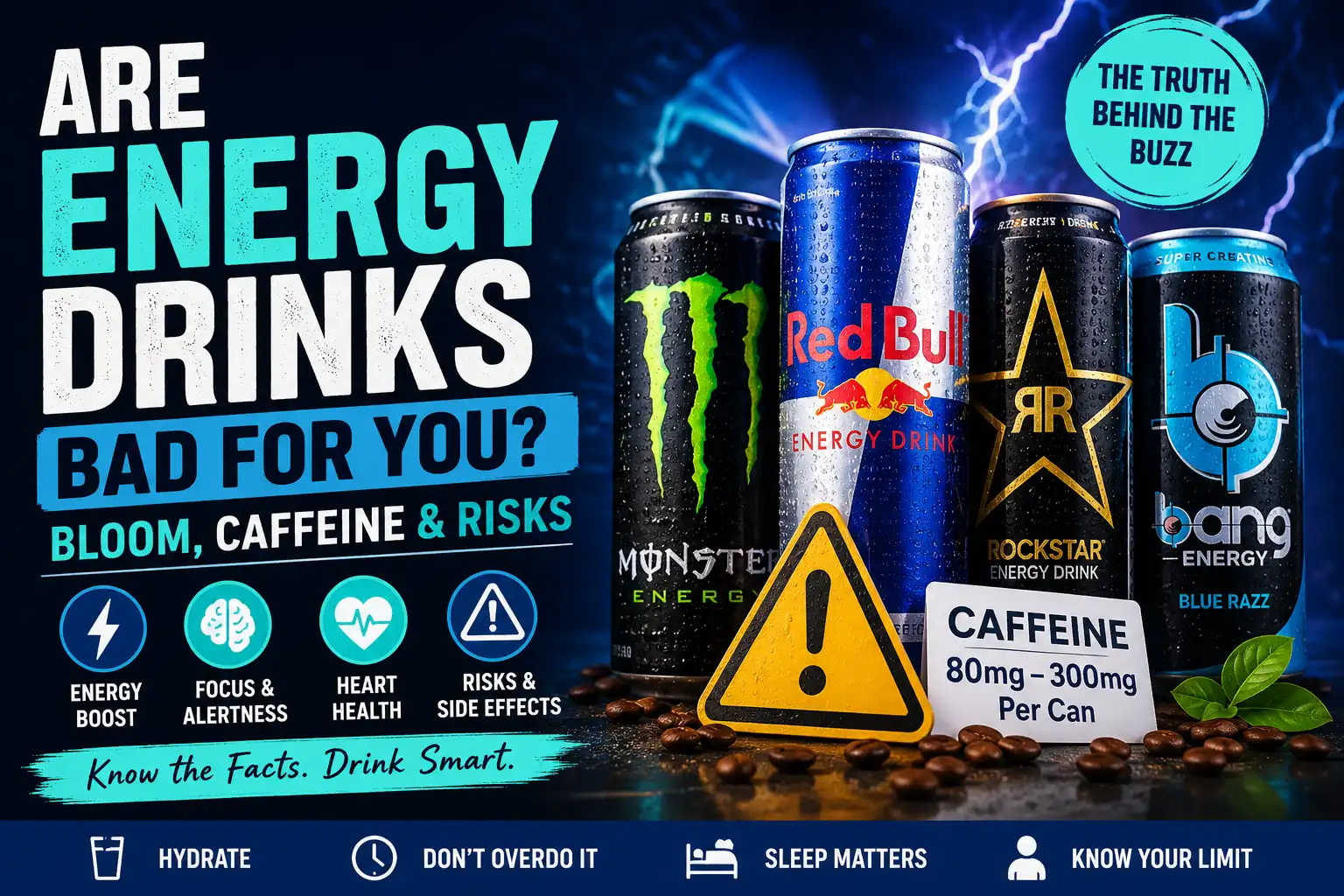
Quick Answer: Are Energy Drinks Bad for You?
Energy drinks can be unhealthy when consumed excessively, particularly because many contain high amounts of caffeine and some contain substantial added sugar. Common energy drink negative effects include increased heart rate, jitters, anxiety, headaches, stomach problems, sleep disruption, and increased calorie intake.
For most healthy adults, the FDA says up to 400 mg of caffeine per day is an amount not generally associated with negative effects, although sensitivity varies considerably. That total includes caffeine from energy drinks, coffee, soda, tea, supplements, and other caffeinated beverages.
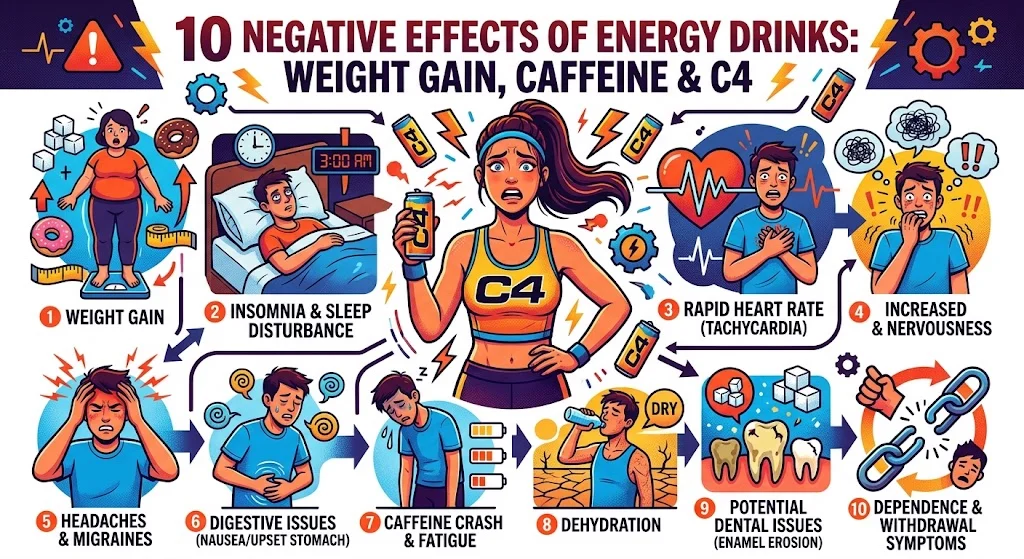
What Are 10 Negative Effects of Energy Drinks?
The negative effects of energy drinks range from short-term caffeine reactions to longer-term concerns associated with frequent high-sugar or high-caffeine consumption. Not everyone experiences every effect.
The following list covers the most important energy drink health risks and explains why they can occur.
Increased Heart Rate
Energy drinks can temporarily increase heart rate because of their caffeine and other stimulant ingredients. Some people may notice a rapid heartbeat or stronger-than-usual heartbeat.
The response depends on caffeine dose, tolerance, sensitivity, and other factors.
Higher Blood Pressure
Caffeine can temporarily raise blood pressure, especially in people who don’t regularly consume it or who are sensitive to caffeine.
Research has found acute cardiovascular effects after energy-drink consumption, including changes in heart rate and blood pressure.
Anxiety and Nervousness
High caffeine intake can stimulate the nervous system and cause anxiety, nervousness, restlessness, and jitters.
If an energy drink makes you feel unusually tense or shaky, consuming more caffeine isn’t likely to improve the situation.
Headaches and Dizziness
Headaches and dizziness can occur after excessive caffeine consumption. They can also appear when someone who regularly consumes caffeine suddenly reduces their intake.
Other factors, including dehydration, lack of food, poor sleep, or an underlying health problem, can also contribute.
Stomach and Digestive Problems
Energy drinks may cause nausea, stomach discomfort, or other gastrointestinal effects in sensitive people.
Caffeine, carbonation, acidity, large servings, and some sweeteners may all contribute to digestive issues.
Insomnia and Sleep Disruption
Caffeine can make it harder to fall asleep and may reduce sleep quality.
An energy drink before bed or late at night can be particularly problematic because caffeine remains active for hours.
Caffeine Dependence
Regular high caffeine intake can lead to caffeine tolerance and dependence.
You may find that you need more caffeine to achieve the same alertness. Suddenly stopping can then cause caffeine withdrawal, including headaches, fatigue, irritability, and difficulty concentrating.
Blood Sugar and Added Sugar Concerns
High-sugar energy drinks can deliver a large amount of added sugar and carbohydrates in one serving.
That can increase blood glucose and calorie intake, particularly when sugary drinks are consumed frequently.
Dental Problems
Many energy drinks are acidic, and sugary versions add another dental concern.
Frequent exposure to sugar and citric acid can contribute to tooth decay and enamel erosion, making dental health another consideration.
Increased Calorie Intake
Full-sugar energy drinks can add hundreds of calories to your daily diet depending on the serving.
Regularly consuming those calories without reducing calories elsewhere can contribute to weight gain and obesity risk.
Short-Term Effects of Energy Drinks
The short term effects of energy drinks are usually connected to caffeine and other stimulating ingredients. They can begin relatively soon after consumption and vary considerably between people.
Someone with high caffeine tolerance may notice little beyond alertness, while a caffeine-sensitive person may experience several uncomfortable symptoms.
Common effects of drinking energy drinks include:
- Increased alertness
- Increased concentration
- Increased heart rate
- Temporary blood-pressure increase
- Jitters
- Nervousness
- Restlessness
- Anxiety
- Headaches
- Dizziness
- Nausea
- Stomach discomfort
- Increased urination
- Difficulty sleeping
- An eventual energy drink crash
The feeling of increased alertness doesn’t mean the drink has removed the body’s need for sleep.
Long-Term Effects of Energy Drinks
The long term effects of energy drinks depend heavily on frequency, caffeine dose, sugar content, and the rest of your diet.
It is important not to treat every reported association as proof that energy drinks directly cause a particular disease. Research is stronger for some short-term effects than for many long-term outcomes.
Frequent excessive consumption can contribute to:
- Persistent high caffeine intake
- Caffeine tolerance
- Caffeine dependence
- Caffeine withdrawal
- Poor sleep quality
- Regularly increased calorie intake
- High added sugar consumption
- Dental problems
- Repeated cardiovascular stimulation
- Displacement of healthier beverage choices
A 2021 systematic review covering 32 studies and 96,549 participants found reported adverse effects involving sleep, the nervous system, gastrointestinal system, and cardiovascular system.
What Happens If You Drink Energy Drinks Every Day?
Drinking energy drinks every day isn’t automatically dangerous for every adult, but daily consumption makes your total caffeine, sugar, and calorie intake much more important.
The biggest issue is often what else you’re consuming. A person drinking one zero-sugar energy drink may have a very different intake from someone drinking two high-sugar energy drinks plus coffee and pre-workout supplements.
One Energy Drink a Day
One energy drink can be reasonable for some adults depending on its caffeine content and their total daily intake.
However, one energy drink a day becomes more concerning if it causes insomnia, anxiety, palpitations, headaches, or other symptoms.
Two Energy Drinks a Day
Two energy drinks a day can quickly provide several hundred milligrams of caffeine.
For example, two 200-mg cans provide 400 mg of caffeine before counting coffee, tea, soda, chocolate, or supplements.
That’s why asking “how many energy drinks can you drink a day?” isn’t as useful as calculating your total caffeine intake.
How Much Caffeine Is Too Much?
The FDA cites 400 mg of caffeine per day as an amount not generally associated with negative effects for most healthy adults. It isn’t a recommended target, and some people experience side effects at much lower amounts.
Your daily caffeine intake includes everything you consume, not just energy drinks.
Watch Your Total Caffeine
- Energy drinks
- Coffee
- Tea
- Soda and soft drinks
- Pre-workout supplements
- Caffeine tablets
- Caffeinated medications
- Other caffeinated beverages
What Counts as Excessive Caffeine?
There isn’t one universal amount that causes symptoms in everyone.
Caffeine sensitivity, tolerance, body size, medications, pregnancy, and individual metabolism can all affect how someone responds.
If 150 or 200 mg causes severe anxiety, palpitations, or insomnia, your personal safe limit may be considerably lower than the general adult reference.
Do Energy Drinks Make You Gain Weight?
Yes, energy drinks can contribute to weight gain, but they don’t automatically make you gain weight.
The main issue is energy drinks and calories. A sugary drink adds calories without necessarily making you feel as full as a meal.
If those calories create a sustained calorie surplus, they can contribute to increased body weight.
Energy Drinks and Weight Gain
Consider two otherwise identical drinks:
The second option can reduce calorie intake, but it doesn’t turn an energy drink into a weight-loss product.
Can Energy Drinks Make You Fat or Cause Belly Fat?
No single beverage automatically causes belly fat.
However, regularly consuming high-calorie, high-sugar energy drinks can contribute to overall weight gain if they increase your total calorie intake.
When body fat increases, where it accumulates depends on factors such as genetics, hormones, age, sex, and overall energy balance. You can’t use energy drinks for weight loss or selectively prevent belly fat by changing one beverage.
Energy Drinks and Obesity
Frequent consumption of high-sugar beverages is one reason nutrition experts encourage people to limit added sugar.
The practical concern isn’t that an energy drink has a unique ability to create fat. It’s that liquid calories are easy to consume repeatedly.
Energy Drinks, Sugar, and Calories
Sugar content varies considerably between products.
Some energy drinks contain little or no sugar, while others are essentially high-sugar caffeinated beverages.
What to Check on the Label
- Serving size
- Calories
- Total carbohydrate
- Added sugar
- Caffeine
- Sweeteners
- Other stimulants
A can that appears modest may contain more than one serving, so don’t assume the front of the package tells the whole story.
Are Sugar-Free Energy Drinks Healthy?
Sugar-free energy drinks can be a better choice for reducing sugar and beverage calories, but “sugar-free” doesn’t mean risk-free.
Zero-sugar products can still contain substantial caffeine, acidity, artificial sweeteners, and other active ingredients.
Sugar-Free Energy Drink Side Effects
Possible concerns include:
- Jitters
- Anxiety
- Increased heart rate
- Sleep disruption
- Headaches
- Caffeine dependence
- Stomach discomfort
- Dental concerns from acidity
Sweeteners such as sucralose and acesulfame potassium can replace sugar, but the absence of sugar doesn’t eliminate caffeine-related effects.
For someone focused specifically on weight, sugar-free and low-calorie energy drinks can reduce direct calorie intake. For someone sensitive to caffeine, they may not solve the main problem.
What Is C4 Energy?
C4 Energy is a line of performance-oriented energy products from Cellucor. The important detail is that C4 is not one single formula.
C4 products differ in ingredients and caffeine content, so consumers should check the exact product label rather than assuming every C4 can is identical.
The current standard C4 Performance Energy lists 200 mg of caffeine per 16-ounce can, along with beta-alanine and other ingredients.
C4 Energy Ingredients
Depending on the specific C4 product, you may encounter:
- Caffeine
- Beta-alanine
- L-citrulline
- Betaine
- Tyrosine
- B vitamins
- Vitamin B6
- Vitamin B12
- Niacin
- Taurine in some energy formulas
- Artificial sweeteners
- Sucralose
- Acesulfame potassium
- Citric acid
- Carbonated water
Other energy drinks may contain ingredients such as guarana, L-carnitine, glucuronolactone, herbal extracts, and additional stimulants.
The exact formula matters. Always check the nutrition and ingredient label for the product you’re actually drinking.
C4 Energy Side Effects
The most relevant C4 Energy side effects depend on the particular formula and your response to caffeine and beta-alanine.
For the standard C4 Performance Energy product, the 200-mg caffeine dose can produce typical caffeine-related effects in sensitive people.
Possible C4 Energy drink side effects include:
- Jitters
- Nervousness
- Anxiety
- Restlessness
- Increased heart rate
- Heart palpitations
- Headaches
- Sleep disruption
- Stomach discomfort
- Temporary tingling from beta-alanine
These effects don’t mean C4 is automatically unsafe. They mean the dose and individual response matter.
Is C4 Energy Bad for You?
C4 Energy isn’t automatically bad for every healthy adult. The answer depends on the exact product, caffeine dose, frequency, and your individual tolerance.
Standard C4 Performance Energy is currently marketed as zero sugar and zero calories, which can make it different from high-sugar energy drinks when comparing calorie intake.
However, zero sugar doesn’t mean zero caffeine. A 200-mg serving remains a substantial caffeine dose.
For healthy adults who tolerate caffeine, a standard C4 serving can fit within general caffeine guidance. However, safe caffeine intake is individual, and product labels should be checked before consumption.
C4 products aren’t intended for everyone. Children and adolescents should avoid energy drinks, and people who are pregnant, nursing, caffeine-sensitive, or dealing with certain medical conditions should discuss caffeine use with a healthcare professional.
C4 Ultimate Energy Side Effects
C4 Ultimate Energy is a different C4 product, so don’t assume it has the same caffeine content or ingredient profile as standard C4 Performance Energy.
Potential side effects can include the same general stimulant-related symptoms:
- Jitters
- Restlessness
- Anxiety
- Faster heartbeat
- Headaches
- Sleep problems
- Stomach discomfort
Always check the current label for C4 Ultimate Energy before comparing it with another C4 product.
C4 Zero Sugar and C4 Smart Energy
C4 Zero Sugar products can reduce sugar and calorie intake compared with full-sugar energy drinks, but the exact formulation depends on the product.
C4 Smart Energy is another product variation and should be evaluated separately rather than grouped with standard C4.
When comparing C4 products, look at:
- Caffeine content
- Calories
- Sugar
- Sweeteners
- Beta-alanine
- Other stimulants
- Serving size
The phrase “C4 Energy” alone isn’t enough to determine the exact nutritional profile.
Energy Drinks and Heart Health
The relationship between energy drinks and heart rate, blood pressure, and cardiovascular health deserves particular attention because energy drinks can deliver caffeine quickly.
Research has documented acute cardiovascular changes after energy-drink consumption. A 2025 systematic review found changes involving heart rate, blood pressure, and QTc measurements across 37 studies.
Energy Drinks and Palpitations
Some people notice heart palpitations or a rapid heartbeat after consuming high-caffeine beverages.
Occasional mild changes aren’t the same as an arrhythmia or heart disease. Still, symptoms such as persistent palpitations, irregular heartbeat, chest discomfort, fainting, or shortness of breath shouldn’t be ignored.
Energy Drinks and Hypertension
People with high blood pressure or hypertension should be particularly thoughtful about high caffeine intake.
Caffeine can temporarily increase blood pressure, although individual responses vary.
Energy Drinks, Anxiety, and Mental Health
The connection between energy drinks and anxiety is largely explained by their caffeine content and individual sensitivity.
Caffeine stimulates the nervous system, which can increase alertness and concentration at moderate doses but produce nervousness, stress, restlessness, or jitters at higher doses.
Energy Drinks and Concentration
Energy drinks can temporarily increase alertness and perceived concentration because caffeine reduces feelings of tiredness.
That doesn’t replace sleep. If caffeine becomes necessary simply to function after poor sleep, increasing caffeine consumption can create a cycle of fatigue and stimulant use.
The Energy Drink Crash
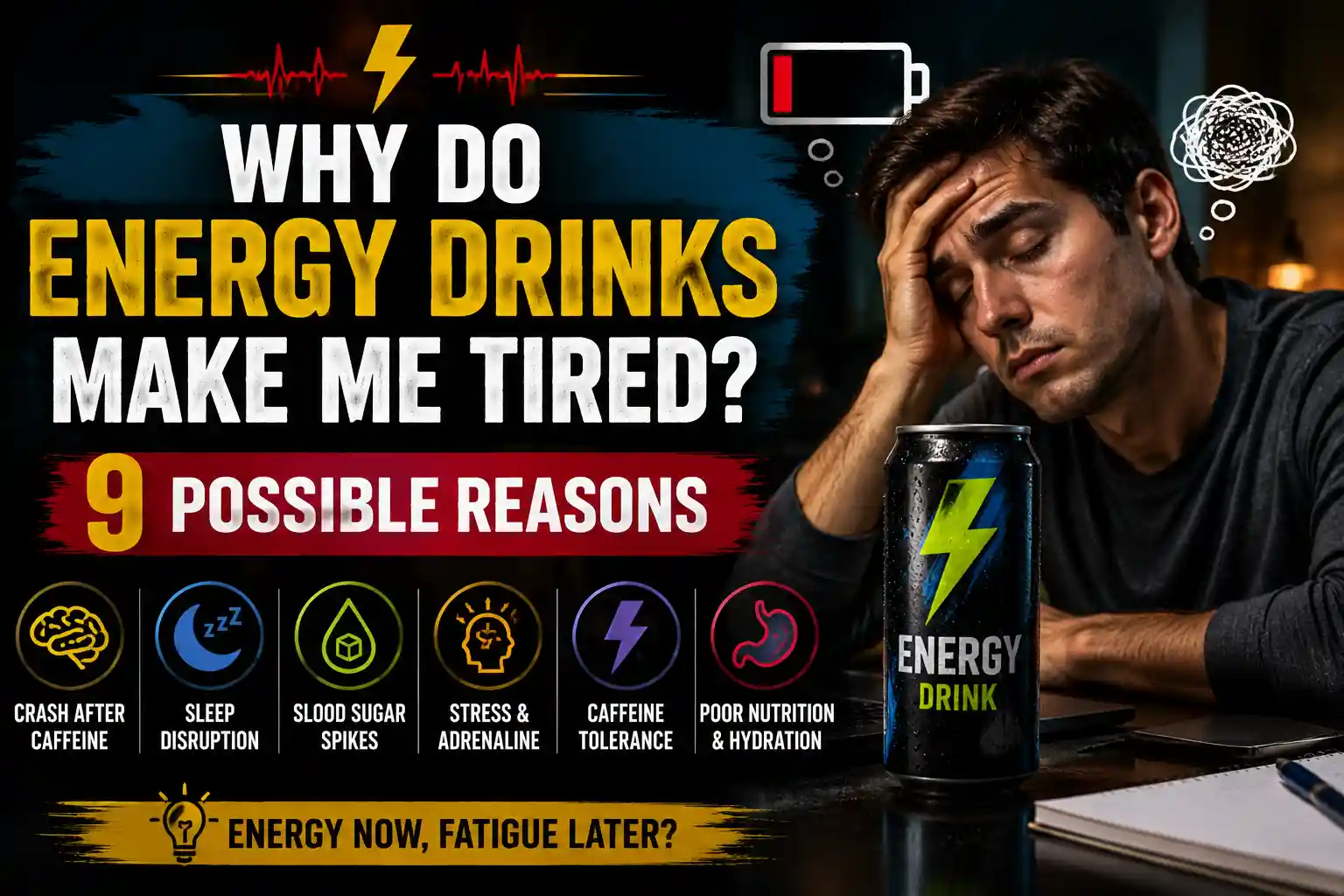
Some people experience an energy drink crash after the initial stimulant effect fades.
The feeling may involve:
- Fatigue
- Sleepiness
- Irritability
- Difficulty concentrating
- Desire for more caffeine
Not every “crash” is caused by caffeine itself. Poor sleep, hunger, dehydration, and a high-sugar drink can also affect how you feel.
Energy Drinks and Sleep
Energy drinks and insomnia are closely connected when caffeine is consumed late or in large amounts.
Having energy drinks at night or drinking one before bed can make it harder to fall asleep and may reduce overall sleep quality.
If sleep is your priority, the simplest approach is to avoid high-caffeine energy drinks close to bedtime.
Energy Drinks and Dehydration
Caffeine can increase urine production, but that doesn’t mean ordinary caffeinated drinks automatically cause dehydration.
The greater concern is excessive caffeine intake combined with inadequate fluid intake, particularly during heat, prolonged exercise, or heavy sweating.
For everyday hydration, water remains the simplest choice.
Can Energy Drinks Cause Caffeine Dependence?
Yes. Regular caffeine consumption can produce tolerance and dependence.
Caffeine tolerance means the same dose may feel less effective over time. Dependence means your body has adapted to regular caffeine exposure.
If you suddenly stop, caffeine withdrawal may cause:
- Headaches
- Fatigue
- Irritability
- Sleepiness
- Difficulty concentrating
- Low energy
Gradually reducing caffeine may be easier for people who consume large amounts every day.
Who Should Avoid Energy Drinks?
Energy drinks aren’t appropriate for everyone.
The CDC notes that the American Academy of Pediatrics recommends that adolescents avoid energy drinks.
- Children and teenagers
- People highly sensitive to caffeine
- People with certain heart conditions
- People experiencing caffeine-related anxiety
- Pregnant individuals needing personalized caffeine guidance
- People taking medications that may interact with caffeine
- Anyone experiencing concerning symptoms after caffeine
Athletes should also distinguish energy drinks from sports drinks. Sports drinks are designed primarily around fluid and electrolyte replacement, while energy drinks commonly contain stimulants.
When Should You Seek Medical Help?
Most caffeine side effects are uncomfortable rather than emergencies. However, serious symptoms should not be dismissed as an ordinary energy drink side effect.
Seek urgent medical attention for symptoms such as:
- Chest pain or significant chest discomfort
- Fainting or loss of consciousness
- Severe shortness of breath
- Severe or persistent heart palpitations
- A markedly irregular heartbeat
- Severe confusion or neurological symptoms
- Symptoms suggesting a serious allergic reaction
If you believe you consumed an excessive amount of caffeine, contact a healthcare professional or Poison Control for appropriate guidance.
Energy Drinks vs. Coffee and Soda
Energy drinks, coffee, and soda are all caffeinated beverages, but their formulations can be very different.
| Beverage | Main consideration | Sugar/calorie variability | Caffeine variability |
|---|---|---|---|
| Energy drinks | Caffeine and added ingredients | High to zero | Often substantial |
| Coffee | Caffeine and additions | Low to high | Moderate to high |
| Soda | Sugar and caffeine | Often moderate to high | Usually lower |
| Sports drinks | Fluids and electrolytes | Often contains sugar | Usually little or none |
A black coffee and a high-sugar energy drink shouldn’t be treated as nutritionally identical simply because both contain caffeine.
How to Reduce Energy Drink Risks
You don’t necessarily need to eliminate caffeine completely. The goal is to keep your intake appropriate for your body and daily routine.
Practical Steps
- Check caffeine before opening the can.
- Count caffeine from every source.
- Avoid stacking energy drinks with pre-workout supplements.
- Avoid high-caffeine drinks late in the day.
- Choose zero-sugar versions if reducing beverage calories.
- Drink water regularly.
- Don’t use energy drinks to replace adequate sleep.
- Reduce caffeine gradually if withdrawal is a problem.
- Stop using a product that repeatedly causes concerning symptoms.
- Keep energy drinks away from children and adolescents.
FAQs
Are energy drinks unhealthy?
They can be, particularly when consumed excessively or when they provide large amounts of caffeine and added sugar. The specific product, dose, frequency, and individual response all matter.
A zero-sugar energy drink has a different calorie profile from a high-sugar version, but both can contain substantial caffeine.
What happens when you drink energy drinks every day?
Daily consumption can increase your overall caffeine exposure and may lead to tolerance or dependence. Frequent sugary versions can also increase added sugar and calorie intake.
Watch for sleep problems, anxiety, headaches, palpitations, and other recurring symptoms.
Do sugar-free energy drinks cause weight gain?
Not directly from their lack of sugar or calories. Zero-sugar drinks generally contribute far fewer calories than comparable full-sugar versions.
However, they can still contain caffeine and other ingredients. Weight change ultimately depends on your overall calorie balance and eating pattern.
Can energy drinks cause heart problems?
Energy drinks can cause acute changes in heart rate and blood pressure, and research continues to examine their cardiovascular effects. That doesn’t mean every energy drink causes heart disease in every person.
People with cardiovascular conditions or significant symptoms should discuss caffeine intake with a healthcare professional.
Is C4 Energy good for you?
C4 can fit into some adults’ diets, but calling it simply “good” or “bad” misses the important details. Standard C4 Performance Energy is currently zero sugar and zero calories but contains 200 mg of caffeine per 16-ounce can.
If you tolerate caffeine well, that may be acceptable within your overall daily intake. If caffeine causes anxiety, insomnia, palpitations, or other symptoms, C4 may not be a good choice for you.
How many energy drinks can you drink a day?
There isn’t a universal number because energy drinks vary widely in caffeine content. The FDA’s general reference of 400 mg caffeine per day for most healthy adults applies to total caffeine from all sources, not a number of energy-drink cans.
Always check the caffeine per serving and add caffeine from coffee, tea, soda, supplements, and other products.
Are energy drinks safe for teenagers?
Major health guidance recommends that adolescents avoid energy drinks. The CDC notes that the American Academy of Pediatrics recommends against energy drinks for adolescents because of their caffeine and stimulant content.
Energy drinks should not be treated as ordinary sports drinks or routine hydration beverages for teenagers.
Conclusion
The harmful effects of energy drinks are mainly linked to caffeine, added sugar, acidity, frequency, and personal sensitivity. Common concerns include jitters, anxiety, sleep disruption, headaches, digestive problems, increased heart rate, blood-pressure changes, dental problems, caffeine dependence, and weight gain from excess calories.
If you’re comparing C4 with other energy drinks, check the exact product rather than relying on the brand name. Keep track of your caffeine intake, sugar, calories, sleep, and symptoms, and choose lower-caffeine or caffeine-free alternatives when your body isn’t responding well.
Read More:
What Can I Drink After a Tooth Extraction
100 Fruit Drink Recipes: Juices, Smoothies & Mocktails
16 Best Non-Alcoholic After Dinner Drinks for Any Evening
Best Places for Non-Alcoholic Drinks in Las Vegas: 2026 Guide
Bob Marley Mocktail: Easy Non-Alcoholic Layered Drink
Liquid Maria Juana Drink: Easy Tropical Cocktail Recipe
Gasolina Drink: Flavors, ABV, Ingredients & More