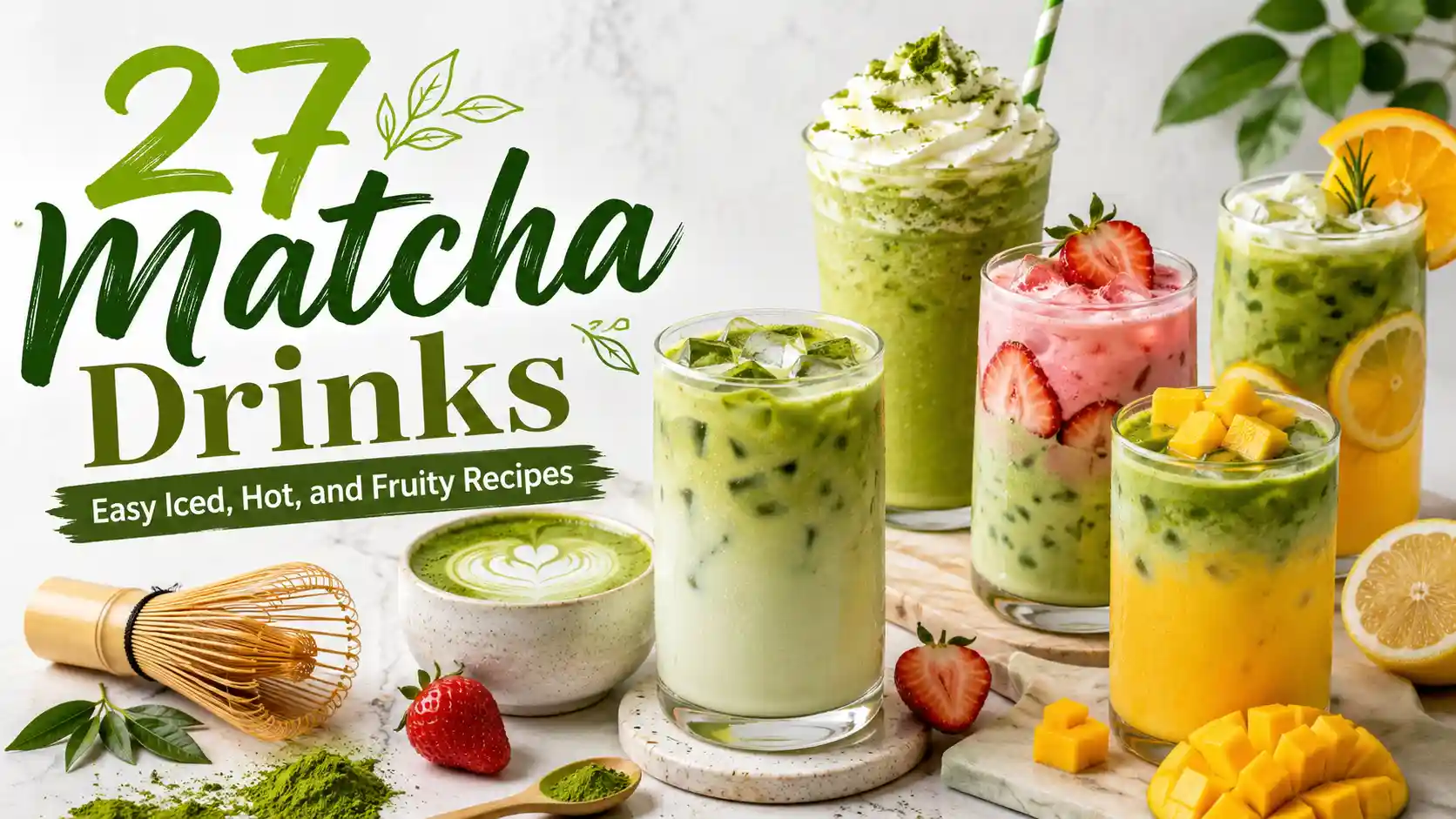
27 Best Matcha Drinks to Make at Home in 2026: Easy Lattes, Fruity Sips & Café-Style Favorites
Master the matcha base once, then turn it into creamy lattes, fruit-layered drinks, sparkling refreshers, smoothies, hot drinks, and trend-inspired café favorites.
Matcha drinks can be creamy, fruity, sparkling, frozen, or gently sweet. The key is learning how to prepare the matcha before adding milk, fruit, ice, or foam.
This guide covers dependable home methods and 27 practical matcha drink recipes. You will also learn how to choose matcha, prevent clumps, control bitterness, layer drinks, and store ingredients safely.
Quick Answer
The best matcha drinks start with sifted matcha whisked into warm water. Add milk for a latte, fruit for a layered drink, lemonade for a brighter sip, or ice and frozen fruit for a smoothie.
TL;DR
- Use warm water rather than boiling water.
- Sift matcha before whisking to prevent clumps.
- Start with one teaspoon per 12-ounce drink.
- Oat and whole milk create the creamiest texture.
- Add fruit purée before milk for clean layers.
- Check your total caffeine intake throughout the day.
Matcha Drinks at a Glance
| Drink | Main Flavor | Serving Style | Sweetness | Difficulty |
|---|---|---|---|---|
| Classic matcha latte | Earthy and creamy | Hot or iced | Adjustable | Easy |
| Strawberry matcha | Fruity and creamy | Iced | Medium | Easy |
| Matcha lemonade | Tart and grassy | Iced | Medium | Easy |
| Brown sugar matcha | Caramel-like | Iced | Medium | Easy |
| Horchata matcha | Cinnamon and vanilla | Iced | Medium | Moderate |
| Banana bread matcha | Warm spice and banana | Iced | Sweet | Moderate |
| Sparkling yuzu matcha | Citrus and earthy | Iced | Light | Easy |
| Matcha smoothie | Fruity and thick | Frozen | Adjustable | Easy |
What Is Matcha?
Matcha is powdered green tea made from tencha leaves. The leaves are shaded before harvest, steamed, dried without rolling, and ground into a fine powder.
This differs from powdered sencha, which comes from leaves processed for regular brewed green tea. The Japan Matcha Association specifically describes matcha as powdered tencha rather than powdered sencha.
Because the powder remains in the drink, matcha behaves differently from steeped tea. It forms a fine suspension rather than fully disappearing into the water.
That is why matcha may slowly settle at the bottom of a glass. A quick stir before drinking is normal.
What Does Matcha Taste Like?
- Earthy flavor
- Fresh grassy notes
- Gentle bitterness
- Natural sweetness
- Savory umami
Lower-quality or stale powder may taste harsh, dusty, flat, or strongly bitter.
How to Choose Matcha for Drinks
You do not need the most expensive matcha for every latte. However, poor powder can make even a sweet drink taste dull or bitter.
Choose matcha based on how much milk, fruit, syrup, or ice the recipe contains.
Look for Pure Matcha
The ingredient list should usually contain matcha green tea powder only.
Some instant latte mixes contain sugar, milk powder, flavoring, or powdered creamer. These blends require different measurements and may already be sweetened.
Check the Color
Fresh matcha often has a lively green color. Dull yellow-green or brownish powder may be older, oxidized, or intended mainly for baking.
Color alone does not prove quality, but it is a useful first check.
Match the Powder to the Drink
| Matcha Type | Best Use |
|---|---|
| Smooth, low-bitterness matcha | Plain tea and lightly sweetened drinks |
| Latte-focused matcha | Milk-based iced and hot drinks |
| Strong culinary matcha | Smoothies, fruit drinks, and dessert-style recipes |
| Sweetened matcha mix | Fast café-style drinks when adjusted carefully |
Check the Package
- Country or region of origin
- Harvest or packing date
- Recommended use
- Storage directions
- Pure matcha ingredient list
- Resealable, light-resistant packaging
Quality Tip
Do not rely only on labels such as ceremonial, premium, or culinary. Compare the ingredient list, origin, freshness, aroma, and intended use.
Essential Matcha Tools and Whisk Alternatives
Traditional tools make matcha preparation easier, but they are not required for a good home drink.
The best method is the one that breaks up dry powder and creates an even suspension.
Traditional Tools
- Chasen: Bamboo whisk designed for matcha.
- Chawan: Wide bowl that gives the whisk room to move.
- Chashaku: Narrow bamboo scoop used to measure matcha.
- Fine-mesh sifter: Breaks up compacted powder before mixing.
Practical Kitchen Alternatives
- Handheld milk frother
- Small wire whisk
- Lidded mason jar
- Protein shaker bottle
- Blender
- French press
- Electric milk frother
Which Tool Works Best?
A bamboo whisk gives excellent control and fine foam. A handheld frother is faster for daily lattes.
Safety Note
A sealed jar works well for iced drinks. Do not shake hot liquid in a tightly closed container because pressure can build inside.
How to Make a Master Matcha Base
A dependable matcha base prevents weak flavor, floating powder, and dry clumps. Use it before making almost any recipe below.
This formula makes enough concentrate for one 10- to 12-ounce drink.
Master Matcha Base
A smooth, flexible concentrate for lattes, fruit drinks, lemonade, and café-style recipes.
Ingredients
- 1 teaspoon matcha powder
- 2 ounces water heated to about 160–175°F
- 1–2 teaspoons sweetener, optional
Method
- Sift the matcha into a wide bowl or cup.
- Add one tablespoon of warm water.
- Stir into a smooth paste.
- Add the remaining warm water.
- Whisk briskly for 15–20 seconds.
- Add sweetener while the mixture is still warm.
No-Whisk Method
Add the sifted matcha and cool or warm water to a sealed jar. Shake firmly for 20–30 seconds.
Important
This method works best for iced drinks. Open the jar slowly after shaking, and avoid sealing very hot liquid.
Stronger Matcha Base
Use 1½ teaspoons matcha when adding:
- Eight ounces or more of milk
- Thick fruit purée
- Chocolate
- Banana
- Coconut cream
- Large amounts of ice
Increase the matcha gradually. More powder can also create more bitterness.
Best Milk and Sweeteners for Matcha Drinks
Milk changes the flavor, body, color, and foam of a matcha drink. A rich milk softens bitterness, while a lighter milk lets more earthy flavor through.
Sweeteners also affect texture. Syrups blend easily into cold drinks, while granulated sugar works better in warm matcha.
Milk Comparison
| Milk | Flavor With Matcha | Texture | Foaming | Key Note |
|---|---|---|---|---|
| Whole milk | Rich and mellow | Creamy | Strong | Contains dairy |
| Oat milk | Mild and naturally sweet | Creamy | Good | Check for gluten certification |
| Soy milk | Clean and slightly nutty | Medium | Very good | Contains soy |
| Almond milk | Light and nutty | Thin | Moderate | Contains tree nuts |
| Coconut milk beverage | Tropical | Medium | Moderate | Can hide delicate matcha |
| Macadamia milk | Buttery and mild | Creamy | Good | Contains tree nuts |
| Cashew milk | Soft and rich | Creamy | Moderate | Contains tree nuts |
Best Sweeteners
- Simple syrup: Blends easily into iced drinks.
- Maple syrup: Adds warm caramel notes.
- Honey: Works well in hot matcha and citrus drinks.
- Brown sugar syrup: Suits banana, cinnamon, and oat milk.
- Vanilla syrup: Softens strong matcha flavor.
- Date syrup: Adds a deep, fruity sweetness.
- Stevia or monk fruit: Useful when reducing added sugar.
Start with one teaspoon of sweetener. Taste before adding more.
Classic Iced Matcha Drinks
Iced matcha is smooth, easy to customize, and suitable for warm days. Prepare the matcha base first; pouring dry matcha directly into cold milk usually creates stubborn clumps.
1. Classic Iced Matcha Latte
Taste: Creamy, grassy, and lightly sweet.
Ingredients
- 1 master matcha base
- 6 ounces cold milk
- 1–2 teaspoons simple syrup
- 1 cup ice
Method
Fill a glass with ice and milk. Stir in the sweetener, then pour the matcha over the top.
2. Vanilla Oat Milk Matcha
Taste: Mild, creamy, and beginner-friendly.
Ingredients
- 1 master matcha base
- 6 ounces oat milk
- ½ teaspoon vanilla extract
- 1–2 teaspoons maple syrup
- Ice
Method
Mix the vanilla and maple syrup into the oat milk. Add ice and finish with the matcha base.
3. Brown Sugar Shaken Matcha
Taste: Earthy with warm caramel notes.
Ingredients
- 1 master matcha base
- 6 ounces milk
- 1 tablespoon brown sugar syrup
- Ice
- Pinch of cinnamon
Method
Shake the matcha, syrup, cinnamon, and ice in a sealed jar. Pour into a glass and add milk.
4. Coconut Cloud Matcha
Taste: Creamy, tropical, and slightly rich.
Ingredients
- 1 master matcha base
- 5 ounces coconut milk beverage
- 1 ounce coconut cream
- 1 teaspoon vanilla syrup
- Ice
Method
Froth the coconut cream with vanilla syrup. Pour the coconut milk over ice, add matcha, and spoon the foam on top.
Hot Matcha Drinks
Hot matcha drinks feel softer and more aromatic than iced versions. Warm milk also helps maple syrup, honey, and spices blend smoothly.
Heat Control
Do not boil the milk. Excessive heat can flatten the flavor and damage the foam.
5. Classic Hot Matcha Latte
Taste: Smooth, earthy, and balanced.
Ingredients
- 1 master matcha base
- 6 ounces warm milk
- 1 teaspoon honey or syrup
Method
Stir the sweetener into the matcha. Add warm frothed milk and spoon foam over the top.
6. Honey Cinnamon Matcha Latte
Taste: Warm, lightly spiced, and mellow.
Ingredients
- 1 master matcha base
- 6 ounces warm milk
- 1–2 teaspoons honey
- ⅛ teaspoon cinnamon
Method
Whisk the honey and cinnamon into the warm matcha base. Add steamed or frothed milk.
7. Maple Vanilla Matcha
Taste: Sweet, soft, and gently aromatic.
Ingredients
- 1 master matcha base
- 6 ounces warm oat or dairy milk
- 2 teaspoons maple syrup
- ¼ teaspoon vanilla extract
Method
Combine the maple syrup and vanilla with the matcha. Finish with warm milk.
8. Toasted Rice Matcha Latte
Taste: Nutty, roasted, and earthy.
Ingredients
- 1 master matcha base
- 4 ounces warm milk
- 2 ounces strong brewed genmaicha
- 1 teaspoon honey
Method
Stir the genmaicha and honey into the matcha base. Add warm milk and foam.
Fruit Matcha Drinks
Fruit adds color, acidity, sweetness, and aroma. Berries are especially useful because their tartness balances creamy milk. Use purées rather than large fruit pieces, and strain seeds when you want a smoother café-style texture.
9. Layered Strawberry Matcha Latte
Taste: Fruity, creamy, and lightly earthy.
Ingredients
- 3 strawberries
- 1–2 teaspoons sugar
- 6 ounces milk
- 1 master matcha base
- Ice
Method
Mash the strawberries with sugar. Spoon the mixture into a glass, add ice and milk, then slowly pour the matcha on top.
10. Blueberry Lemon Matcha
Taste: Tart, jammy, and bright.
Ingredients
- 2 tablespoons blueberry purée
- 1 teaspoon lemon juice
- 5 ounces oat milk
- 1 master matcha base
- Ice
Method
Mix the blueberry purée and lemon juice. Add them to the glass before the ice, oat milk, and matcha.
11. Mango Matcha Latte
Taste: Tropical, smooth, and naturally sweet.
Ingredients
- ¼ cup ripe mango
- 5 ounces coconut or oat milk
- 1 master matcha base
- Ice
Method
Blend or mash the mango until smooth. Layer it with ice, milk, and matcha.
12. Peach Ginger Matcha
Taste: Juicy, warm, and lightly spicy.
Ingredients
- ¼ cup ripe peach
- ¼ teaspoon grated fresh ginger
- 5 ounces oat milk
- 1 master matcha base
- Ice
Method
Blend the peach and ginger. Pour over ice, add milk, and finish with matcha.
13. Raspberry Rose Matcha
Taste: Floral, tart, and creamy.
Ingredients
- 2 tablespoons strained raspberry purée
- 1–2 drops food-grade rose water
- 5 ounces milk
- 1 master matcha base
- Ice
Method
Stir the rose water into the raspberry purée. Layer it beneath the milk and matcha.
Matcha Lemonade and Sparkling Drinks
Milk is not required for a satisfying matcha drink. Lemonade and sparkling water create lighter options with a sharper finish. Matcha settles faster in thin drinks, so stir gently before serving.
14. Classic Matcha Lemonade
Taste: Tart, grassy, and lightly sweet.
Ingredients
- 1 master matcha base, cooled
- 4 ounces lemonade
- 2 ounces cold water
- Ice
Method
Fill a glass with ice and lemonade. Add water, then pour in the matcha base.
15. Sparkling Yuzu-Lime Matcha
Taste: Citrusy, aromatic, and crisp.
Ingredients
- 1 master matcha base, cooled
- 1 tablespoon yuzu juice or yuzu syrup
- 1 teaspoon lime juice
- 4 ounces sparkling water
- Ice
Method
Mix the citrus ingredients in a glass. Add ice and sparkling water, then slowly add matcha.
16. Cucumber Mint Matcha Fizz
Taste: Cool, herbal, and light.
Ingredients
- 3 cucumber slices
- 4 mint leaves
- 1 teaspoon honey syrup
- 1 master matcha base
- 4 ounces sparkling water
- Ice
Method
Gently press the cucumber and mint with syrup. Add ice, matcha, and sparkling water.
17. Pineapple Ginger Matcha Soda
Taste: Tropical, tart, and spicy.
Ingredients
- 2 ounces pineapple juice
- Pinch of grated ginger
- 1 master matcha base
- 4 ounces sparkling water
- Ice
Method
Stir the pineapple and ginger together. Add ice, matcha, and sparkling water.
Matcha Smoothies and Frozen Drinks
Smoothies are useful when you prefer a thicker drink or need to soften strong matcha. Frozen fruit provides texture without requiring much added sweetener. Add liquids to the blender first so the blades move freely.
18. Banana Matcha Smoothie
Taste: Creamy, mellow, and lightly sweet.
Ingredients
- 1 frozen banana
- 1 teaspoon matcha
- ¾ cup milk
- ¼ teaspoon vanilla
- Pinch of salt
Method
Blend until completely smooth. Add more milk when the smoothie is too thick.
19. Mango Pineapple Matcha Smoothie
Taste: Bright, tropical, and fruity.
Ingredients
- ½ cup frozen mango
- ½ cup frozen pineapple
- 1 teaspoon matcha
- ¾ cup coconut water or milk
Method
Blend until thick and even. Add a small amount of liquid as needed.
20. Berry Oat Matcha Smoothie
Taste: Tangy, creamy, and earthy.
Ingredients
- ½ cup frozen mixed berries
- 1 teaspoon matcha
- ¾ cup oat milk
- 1 tablespoon rolled oats
- 1 teaspoon maple syrup, optional
Method
Blend thoroughly and rest for one minute. Blend again if the oats remain grainy.
21. Avocado Coconut Frozen Matcha
Taste: Rich, smooth, and mildly tropical.
Ingredients
- ¼ ripe avocado
- 1 teaspoon matcha
- ¾ cup coconut milk beverage
- 1 cup ice
- 1–2 teaspoons syrup
Method
Blend until thick and creamy. Serve immediately.
Trending Café-Style Matcha Drinks for 2026
Matcha menus in 2026 are moving beyond the plain latte. Fruit layers, flavored cold foams, baked-good flavors, horchata, coconut, pistachio, and dessert-style drinks are especially visible.
Reporting on Yelp’s 2026 trend data cited a 210% year-over-year rise in searches for ceremonial matcha. Major café releases have also featured permanent banana bread and double berry matcha drinks.
The recipes below use those broader flavor directions without copying branded formulas.
22. Banana Bread Matcha
Taste: Banana, brown sugar, cinnamon, and matcha.
Ingredients
- 1 master matcha base
- 5 ounces oat milk
- 2 tablespoons banana purée
- 1 teaspoon brown sugar syrup
- Pinch of cinnamon
- Ice
Method
Blend the banana, oat milk, syrup, and cinnamon. Pour over ice and add matcha.
23. Double Berry Cold-Foam Matcha
Taste: Tart berries with a creamy finish.
Ingredients
- 1 tablespoon strawberry purée
- 1 tablespoon raspberry purée
- 1 master matcha base
- 5 ounces milk
- 2 ounces cold foam
- Ice
Method
Add the berry mixture to the glass. Layer with ice, milk, matcha, and cold foam.
24. Horchata Matcha
Taste: Cinnamon, vanilla, rice, and earthy tea.
Ingredients
- 1 master matcha base
- 6 ounces chilled horchata
- Ice
- Ground cinnamon
Method
Pour horchata over ice and slowly add the matcha base. Finish with a small pinch of cinnamon.
25. Pistachio Chocolate Matcha
Taste: Nutty, earthy, and dessert-like.
Ingredients
- 1 master matcha base
- 5 ounces milk
- 1 teaspoon pistachio butter
- 1 teaspoon chocolate syrup
- Ice
Method
Blend the pistachio butter into the milk. Add ice and matcha, then drizzle with chocolate.
26. Blue Coconut Matcha
Taste: Tropical, vanilla-like, and creamy.
Ingredients
- 1 master matcha base
- 5 ounces coconut milk beverage
- 1 teaspoon vanilla syrup
- 1–2 drops natural blue food coloring, optional
- Ice
Method
Mix the coconut milk, vanilla, and coloring. Pour over ice and add the matcha.
27. Matcha Affogato
Taste: Creamy, bittersweet, and rich.
Ingredients
- 1 teaspoon matcha
- 2 ounces warm water
- 1 scoop vanilla ice cream
Method
Whisk the matcha with warm water. Pour it over the ice cream immediately before serving.
Dairy-Free and Low-Sugar Matcha Drinks
Most matcha recipes are easy to make without dairy. Oat, soy, almond, coconut, cashew, and macadamia milk all work, but each changes the drink.
Low-sugar matcha should still taste balanced. Reduce sweetness gradually rather than removing it from a highly bitter powder.
Best Dairy-Free Pairings
- Oat milk with vanilla, strawberry, brown sugar, or cinnamon
- Soy milk with hot lattes and toasted rice matcha
- Coconut milk with mango, pineapple, banana, or chocolate
- Almond milk with honey-style syrups, vanilla, or blueberry
- Macadamia milk with pistachio, maple, or plain matcha
Ways to Reduce Sugar
- Choose ripe fruit instead of extra syrup.
- Use unsweetened milk.
- Start with half the listed sweetener.
- Add vanilla, cinnamon, or citrus zest for aroma.
- Use a lower-bitterness matcha.
- Avoid presweetened matcha latte powders.
- Measure syrup rather than pouring freely.
- Use monk fruit or stevia sparingly.
Simple Unsweetened Iced Matcha
- 1 master matcha base without sweetener
- 6 ounces unsweetened oat or soy milk
- Plenty of ice
- A drop of vanilla, optional
A pinch of salt can soften harsh edges without adding sugar.
Party and Brunch Matcha Drinks
Matcha can work well for brunches, showers, garden parties, and alcohol-free drink stations. The main challenge is keeping it mixed and preventing ice from diluting the batch.
Prepare the matcha concentrate and fruit bases separately. Assemble close to serving time for the best color and foam.
Best Matcha Drinks for a Group
- Strawberry matcha lattes
- Matcha lemonade
- Mango matcha lattes
- Brown sugar oat matcha
- Sparkling yuzu matcha
- Horchata matcha
- Banana matcha smoothies
- Vanilla iced matcha
Eight-Serving Matcha Latte Batch
Ingredients
- 8 teaspoons matcha
- 2 cups warm water
- 6 cups cold milk
- ⅓–½ cup simple syrup
- Ice served separately
Batch Method
- Sift the matcha into a large bowl.
- Whisk it with the warm water.
- Stir in the syrup.
- Refrigerate the concentrate.
- Add milk shortly before serving.
- Pour over fresh ice.
Party Serving Tips
- Keep the concentrate in a covered pitcher.
- Stir before each round of pouring.
- Label dairy, soy, and nut allergens.
- Serve ice separately to prevent dilution.
- Keep milk-based drinks refrigerated.
- Offer one unsweetened option.
- Provide fruit purées as optional add-ins.
- Do not prepare sparkling batches too early.
How to Layer Matcha Drinks
A clean layered drink depends on density, temperature, ice, and pouring speed. Heavier sweetened fruit mixtures usually belong at the bottom.
Ice creates a barrier between layers. A slow pour helps prevent immediate mixing.
Basic Three-Layer Order
- Fruit purée or syrup
- Ice and milk
- Matcha base
How to Get Cleaner Layers
- Chill every ingredient first.
- Use a tall, narrow glass.
- Add enough ice to slow movement.
- Pour the milk over the back of a spoon.
- Add the matcha slowly.
- Make the bottom fruit layer slightly sweet.
- Avoid watery purées.
- Serve immediately.
Why the Layers Mixed
- Ingredients were warm.
- The glass had too little ice.
- The fruit base was too thin.
- The matcha was poured too quickly.
- The milk and matcha had similar densities.
Layering changes appearance more than flavor. Stirring the drink before sipping usually gives the best balance.
How to Fix Bitter, Clumpy, or Watery Matcha
Matcha problems often come from preparation rather than the recipe. Small adjustments to water temperature, powder amount, and mixing can transform the drink.
Troubleshooting Rule
Use the guide below before adding more syrup. Extra sweetness may hide a problem without fixing it.
Why Is My Matcha Clumpy?
- The matcha was not sifted.
- Water was added too quickly.
- Dry powder was poured into cold milk.
- The whisking cup was too narrow.
Fix: Sift the powder and first mix it with one tablespoon of water. Once smooth, whisk in the remaining water.
Why Does My Matcha Taste Bitter?
- The water was boiling.
- Too much powder was used.
- The powder is stale or low quality.
- The drink has too little milk or water.
Fix: Lower the water temperature, use slightly less powder, or add more liquid.
Why Is My Matcha Watery?
- Too much ice melted.
- The matcha base was weak.
- The fruit contained excess water.
- A thin plant milk was used.
Fix: Use a stronger base, frozen fruit, less ice, or creamier milk.
Why Is the Color Dull?
- The matcha is old.
- The powder was exposed to light or heat.
- Dark fruit or chocolate changed the appearance.
- Too much milk diluted the green color.
Fix: Use fresher powder and store it in an airtight, light-resistant container.
Why Did My Citrus Matcha Latte Separate?
Fresh citrus is acidic and can cause dairy milk to curdle or split.
Fix: Use oat or coconut milk, replace juice with zest or syrup, or keep the citrus layer separate until serving.
Why Will My Milk Not Foam?
Foam depends on milk composition, temperature, and equipment.
Fix: Use barista-style plant milk or dairy milk with enough protein. Froth it before adding syrup or fruit.
Storage, Make-Ahead, Caffeine, and Allergy Notes
Matcha tastes best soon after mixing. Air, light, moisture, and heat can dull its color and aroma.
Store the powder carefully and prepare only as much finished drink as you expect to serve.
How to Store Matcha Powder
- Keep it in an airtight container.
- Protect it from sunlight.
- Store it away from the stove.
- Use a dry spoon every time.
- Reseal the package quickly.
- Follow the manufacturer’s refrigeration guidance.
Condensation Note
When refrigerated matcha is opened while very cold, condensation may enter the container. Let the sealed package sit briefly before opening.
How Long Do Matcha Drinks Last?
| Item | Recommended Storage |
|---|---|
| Plain matcha concentrate | Refrigerate and use within 24 hours |
| Milk-based matcha drink | Best immediately; refrigerate briefly if needed |
| Fruit purée | Usually 2–3 days refrigerated |
| Homemade syrup | Often about 1 week refrigerated |
| Smoothie | Best immediately |
| Sparkling matcha | Serve immediately |
| Cooked boba | Best within a few hours |
Food Safety
Discard milk or fruit mixtures that smell unusual, show mold, or have remained at unsafe room temperature.
Caffeine Note
Matcha naturally contains caffeine, but the amount varies by powder, measurement, harvest, and serving size. Check package information when caffeine intake matters.
The FDA cites 400 milligrams per day as an amount not generally associated with negative effects for most adults. Individual sensitivity, pregnancy, medications, and certain health conditions can change what is appropriate.
Do not assume matcha is caffeine-free because it is tea. Consider coffee, soda, chocolate, energy drinks, and medications when tracking total daily caffeine.
Children and Matcha
Matcha should not automatically be treated as a children’s drink because it contains caffeine.
Parents and caregivers should ask a healthcare professional about caffeine for children or teens. A caffeine-free fruit, milk, or herbal drink is the safer default.
Allergy Notes
- Dairy
- Soy
- Tree nuts
- Coconut
- Gluten in oat milk
- Citrus sensitivity
- Shared-equipment warnings
Serious Allergies
Use separate tools when preparing drinks for someone with a serious allergy.
Frequently Asked Questions
How Much Matcha Should I Use in One Drink?
Start with one teaspoon of matcha for a 10- to 12-ounce drink. Use up to 1½ teaspoons when adding thick fruit, chocolate, or a large amount of milk.
The ideal amount depends on the powder’s strength. Increase it gradually to avoid unnecessary bitterness.
What Water Temperature Is Best for Matcha?
Water around 160–175°F works well for most home matcha drinks. It should be hot but not boiling.
When you do not have a thermometer, boil the water and let it cool for several minutes before whisking.
Can I Use Culinary Matcha for Lattes?
Yes. A good culinary or latte-focused matcha can work well with milk, fruit, syrup, and ice.
Very bitter baking matcha may require more sweetener. Choose a powder specifically recommended for beverages when possible.
Why Does Matcha Not Dissolve Completely?
Matcha is finely ground leaf powder rather than a water-soluble instant tea. It stays suspended in liquid and may settle over time.
Whisk thoroughly and stir the drink again when needed.
Can Matcha Drinks Be Prepared Ahead of Time?
You can prepare matcha concentrate, syrup, and fruit purée separately. Keep them covered and refrigerated.
Assemble milk-based, sparkling, layered, or frozen drinks close to serving time for better texture and appearance.
What Is the Best Matcha Drink for Beginners?
A vanilla oat milk matcha latte is a good starting point. Oat milk and vanilla soften the grassy and bitter notes.
Start with one teaspoon of matcha and one teaspoon of sweetener. Adjust after tasting.
What Are the Most Popular Matcha Drink Flavors in 2026?
Classic iced lattes, strawberry matcha, mango cream, double berry, banana bread, pistachio, horchata, yuzu, and cold-foam drinks are prominent flavor directions in 2026.
Choose trends that still allow the matcha to remain noticeable rather than burying it beneath syrup.
Conclusion
The best matcha drinks balance earthy tea with the right amount of milk, fruit, sweetness, or acidity. Start with a smooth master base, then adjust one ingredient at a time.
Begin with a classic iced latte, strawberry matcha, or matcha lemonade. Once the base tastes right, explore layered fruit drinks, cold foam, smoothies, and seasonal flavors.