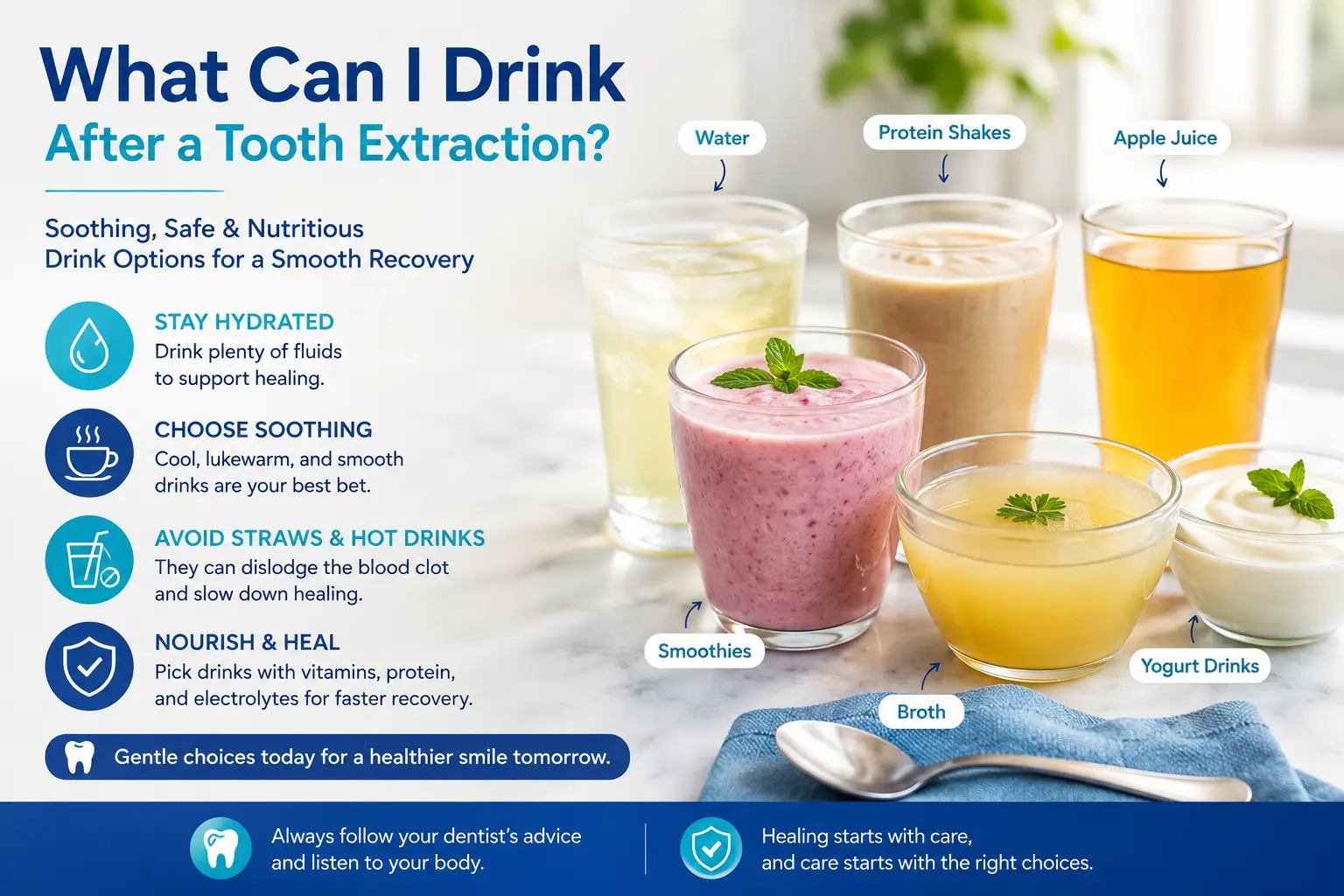
Learn what to drink after a tooth extraction, which beverages support comfortable hydration, when coffee and smoothies are okay, and which drinks can interfere with healing.
After a tooth extraction, water is usually the best first drink because it is gentle, hydrating, and unlikely to irritate the healing socket. Cool or room-temperature drinks are generally more comfortable during the early recovery period.
The main goal is to protect the blood clot while keeping yourself hydrated. Avoid very hot beverages, alcohol, straws, forceful sucking, and drinks that cause burning or stinging. Smooth options such as milk, seed-free smoothies, and mild non-acidic drinks can also work if they are comfortable for you.
Your dentist or oral surgeon’s instructions should always take priority, especially after a surgical extraction or wisdom-tooth removal.
Quick Answer: What Can You Drink After a Tooth Extraction?
The best drink after a tooth extraction is usually cool or room-temperature water. You can also choose mild, smooth drinks such as milk, seed-free smoothies, or caffeine-free tea at a comfortable temperature if they do not irritate the extraction site.
During early healing, avoid straws, very hot drinks, alcohol, carbonated beverages, and highly acidic drinks that cause discomfort. Take gentle sips from a regular cup and avoid forceful sucking, swishing, or spitting that could disturb the blood clot.
Best choices: Water, cool milk, smooth seed-free smoothies, mild non-acidic drinks, and other beverages approved by your dental team.
Avoid: Straws, very hot beverages, alcohol, irritating acidic drinks, and anything that causes pain or stinging.
TL;DR
- Water is the safest first choice after a tooth extraction.
- Choose cool or room-temperature drinks that feel comfortable.
- Drink from a regular cup instead of a straw.
- Smoothies can work well when they are seed-free, chunk-free, and smooth.
- Milk and mild dairy-free beverages are options if you tolerate them.
- Avoid very hot drinks, especially while your mouth is numb.
- Avoid alcohol during early recovery unless your dental team says otherwise.
- Skip acidic, carbonated, or irritating drinks if they cause burning or stinging.
- Avoid forceful sucking, swishing, or spitting that could disturb the blood clot.
- Follow your dentist or oral surgeon’s specific instructions.
- Seek dental advice for persistent bleeding, severe or worsening pain, increasing swelling, fever, or other concerning symptoms.
What Can You Drink After a Tooth Extraction?
Water is the simplest first choice after a tooth extraction. Cool or room-temperature water can help you stay hydrated without adding strong flavors or acidity.
During the early recovery period, protect the blood clot in the socket. Avoid very hot drinks, forceful sucking, and anything that irritates the area.
💧 Plain Water
Cool or room-temperature water is the simplest option for comfortable hydration.
🥛 Mild Milk
Cool milk can be suitable if you normally tolerate dairy.
🥤 Smoothies
Choose completely smooth, seed-free, chunk-free smoothies.
🍵 Mild Tea
Caffeine-free tea can be an option when served at a comfortable temperature.
Water Is Usually the Best First Drink
Water is easy to sip and doesn’t contain ingredients that commonly irritate a healing extraction site. Keep a glass nearby so you can drink without making recovery complicated.
Use a normal cup rather than a straw. Take gentle sips, and avoid forceful swishing around the extraction site.
- Keep water cool or at room temperature.
- Take small, comfortable sips.
- Use a regular glass or cup.
- Keep water nearby during meals.
- Avoid forcefully sucking liquid into your mouth.
- Don’t deliberately swish water around the socket.
- Follow any fluid instructions from your dentist.
- Choose plain water if other drinks sting.
Cool and Lukewarm Drinks Are Usually Easier
Drink temperature matters most during the early recovery period. Several dental services advise avoiding hot food and drinks because heat can cause discomfort or contribute to bleeding.
You don’t need to make every drink ice-cold. A comfortably cool or lukewarm drink is often easier to tolerate, especially while your mouth is tender or partly numb.
| Drink Temperature | General Choice | Why |
|---|---|---|
| Cool | Usually suitable | Often comfortable and less likely to irritate a tender area. |
| Room temperature | Usually suitable | Simple, gentle, and easy to tolerate. |
| Lukewarm | Often suitable | Can be comfortable once your dental team permits it. |
| Very hot | Avoid early on | May irritate the site and can burn a numb mouth. |
Drinks to Avoid During Early Healing
The safest approach is to avoid beverages that could interfere with healing or irritate the extraction area. Very hot drinks, alcohol, and drinks consumed through straws are common concerns in dental aftercare instructions.
Your dentist or oral surgeon may give you more specific restrictions based on the extraction. Follow those instructions even if general advice elsewhere sounds different.
- Very hot coffee
- Very hot tea
- Very hot chocolate
- Alcoholic beverages during recovery
- Drinks that cause burning or stinging
- Highly acidic drinks that irritate the site
- Drinks containing seeds or hard pieces
- Beverages consumed through a straw
- Anything your dental team specifically tells you to avoid
Can You Drink Through a Straw After Tooth Extraction?
A straw creates suction when you drink. That suction can disturb the blood clot that forms inside the extraction socket, so dental and oral-surgery guidance commonly recommends avoiding straws during early healing.
A regular cup is the easier option. If you need a different method because of limited movement or another issue, ask your dental team what they recommend.
- Drink from a normal cup.
- Take gentle sips.
- Avoid strong sucking motions.
- Don’t repeatedly pull liquid through a narrow opening.
- Avoid straw use during the period your dentist recommends.
- Don’t use suction to clear liquid from the socket.
- Follow specific instructions after surgical extraction.
- Ask your dental team when normal drinking methods are appropriate again.
What Smoothies Can You Have After Tooth Extraction?
Smoothies can be useful when chewing is uncomfortable. Choose a smooth texture and avoid seeds, chunks, tough fruit pieces, or anything that causes irritation.
AAOMS includes smoothies among soft-food options after oral surgery and recommends drinking plenty of fluids.
Banana Milk Drink
Blend a ripe banana with cool milk until completely smooth.
Best for: A creamy, mild option.Banana Yogurt Drink
Blend banana with plain yogurt until there are no chunks.
Best for: A soft-food companion.Mango Yogurt Drink
Use very ripe mango and plain yogurt. Blend thoroughly for a smooth texture.
Best for: A naturally sweet option.Banana Oat Drink
Blend banana with a familiar oat beverage until smooth.
Best for: People who prefer dairy-free drinks.Other possible combinations include smooth peach and yogurt, pear and yogurt, seed-free melon, smooth avocado and milk, strained fruit without seeds, and plain yogurt blended with banana.
Is Milk Okay After a Tooth Extraction?
Milk can be a comfortable choice if you normally tolerate dairy. It is mild and can be served cool, making it easy to include with soft foods.
If dairy bothers you, choose a familiar alternative instead. Check labels carefully if you have a milk, soy, or nut allergy.
🥛 Cool Plain Milk
A mild option when dairy is normally tolerated.
🥛 Lactose-Free Milk
A practical alternative for people who do not tolerate regular lactose well.
🌾 Oat Beverage
Choose an unsweetened version if you already tolerate it.
🌱 Soy Beverage
Suitable for people who already tolerate soy.
Can You Drink Juice After Tooth Extraction?
Juice can be more irritating than water because some fruit juices are acidic. If juice causes burning or stinging, stop drinking it and choose something milder.
Diluting a mild juice with water can reduce its intensity. Avoid drinks containing seeds or pulp pieces that could become uncomfortable around the extraction site.
| Juice Option | General Approach | Important Note |
|---|---|---|
| Diluted apple juice | Reasonable option | Stop if it causes irritation. |
| Mild pear juice | Reasonable option | Choose a smooth, seed-free version. |
| Diluted white grape juice | Reasonable option | Keep it mild and comfortably cool. |
| Citrus juice | Use caution | Acidity may cause burning or stinging. |
| Seed-containing juice | Avoid | Seeds and pulp can be uncomfortable near the socket. |
What About Coffee and Tea?
Coffee and tea require extra care because they are often served hot. Dental aftercare guidance commonly advises avoiding hot drinks during the early period after an extraction.
Once your dental team says normal drinks are appropriate, temperature still matters. A comfortably warm beverage is less likely to cause problems than one that is very hot.
- Let coffee cool before drinking.
- Avoid very hot tea.
- Choose caffeine-free tea if preferred.
- Don’t drink through a straw.
- Avoid coffee while your mouth remains numb.
- Stop if a beverage causes pain or stinging.
- Keep added sugar moderate.
- Drink water as your main fluid.
Are Sparkling Drinks Okay After an Extraction?
Sparkling drinks are not usually the simplest option immediately after oral surgery. AAOMS nutrition guidance advises avoiding carbonated beverages during oral-surgery recovery because they may interfere with the healing process.
Still water is a simpler choice while the socket is healing. If carbonation causes discomfort, there’s little reason to push through it.
Best First Choice
Still water is simpler than carbonated beverages during early healing.
Use Caution
Highly acidic fizzy drinks may be particularly irritating if they sting the extraction site.
How Do You Stay Hydrated During the First 24 Hours?
The first day is mainly about protecting the extraction site while maintaining comfortable hydration. Your dental provider’s instructions should take priority because procedures and recovery needs differ.
Keep fluids easy to reach and take gentle sips. Don’t try to compensate with large gulps or forceful drinking.
- Keep water beside you.
- Sip regularly throughout the day.
- Use a normal cup.
- Choose cool or comfortable-temperature fluids.
- Avoid very hot drinks.
- Avoid straws.
- Don’t forcefully swish or spit.
- Choose mild drinks if plain water becomes unappealing.
- Stop anything that causes significant irritation.
- Contact your dental team if drinking becomes unusually difficult.
What Should You Drink With Soft Foods?
Soft foods are commonly recommended during the first few days after extraction. Examples include yogurt, mashed potatoes, eggs, pasta, smoothies, and other foods that require little chewing.
Pair these foods with mild drinks that don’t require strong suction or create irritation. Water is often enough, but several other options can work.
| Soft Food | Drink Pairing | Why It Works |
|---|---|---|
| Mashed potatoes | Water | Simple hydration without acidity. |
| Soft pasta | Water | Mild and easy to sip. |
| Scrambled eggs | Milk | A mild pairing when dairy is tolerated. |
| Soft oatmeal | Banana drink | Smooth and easy to consume. |
| Soft breakfast | Diluted juice | Works if the drink does not sting. |
Easy Homemade Drinks for Recovery
Homemade drinks give you control over texture, temperature, and ingredients. Keep the recipes simple rather than loading them with seeds, tough fruit, or acidic ingredients.
Wash fresh produce carefully and blend drinks until completely smooth. Serve them at a comfortable temperature and use a cup rather than a straw.
Banana Milk Drink
Ingredients: 1 ripe banana + cool milk.
Method: Blend until completely smooth and serve comfortably cool.
Mango Yogurt Drink
Ingredients: Ripe mango + plain yogurt.
Method: Blend thoroughly until smooth with no pieces remaining.
Pear Drink
Ingredients: Soft pear + water.
Method: Blend until smooth and strain if seeds or pulp remain.
Banana Oat Drink
Ingredients: Banana + oat beverage.
Method: Blend until completely smooth and serve cool.
Peach Yogurt Drink
Ingredients: Peeled soft peach + plain yogurt.
Method: Blend until smooth and free of tough pieces.
Melon Drink
Ingredients: Ripe seedless melon + water.
Method: Blend until smooth and serve at a comfortable temperature.
When Can You Return to Normal Drinks?
There isn’t one universal recovery schedule for every extraction. A simple extraction, surgical extraction, and wisdom-tooth procedure can involve different aftercare instructions.
Your provider may also consider bleeding, stitches, medications, swelling, pain, and the condition of the extraction site. UCLH notes that recovery after wisdom-tooth surgery can continue for weeks even though normal activities often resume sooner.
- Follow the written instructions from your dentist.
- Ask when you can return to your usual beverages.
- Wait for numbness to wear off before consuming hot drinks.
- Reintroduce irritating drinks cautiously.
- Continue avoiding straws for the recommended period.
- Keep drinking water during recovery.
- Don’t assume one person’s recovery timeline applies to you.
- Contact the dental team if recovery seems to worsen.
What About Alcohol, Smoking, and Other Irritants?
Alcohol and smoking are commonly discouraged during early recovery because they can interfere with healing and increase the risk of complications. AAOMS specifically advises avoiding alcohol during recovery after oral surgery.
The exact instructions can vary between procedures. For example, one NHS service updated its guidance in July 2026 and advises avoiding alcohol for at least 48 hours after certain dental extractions.
Recovery instructions vary by procedure. Use the instructions provided by your own dentist or oral surgeon rather than assuming a fixed number of hours applies to everyone.
How Do You Protect the Blood Clot?
A blood clot forms in the extraction socket after the tooth is removed. That clot is an important early part of healing, so activities that disturb the site can cause problems.
Dry socket can occur when the clot is lost or does not remain properly in place. AAOMS recommends avoiding straws and vigorous rinsing while the area heals.
- Don’t use a straw during early healing.
- Avoid forceful spitting.
- Don’t vigorously rinse the mouth immediately after extraction.
- Don’t poke the socket with your tongue or fingers.
- Avoid smoking and vaping.
- Follow your provider’s instructions for brushing.
- Use saltwater rinses only when instructed.
- Keep hard foods away from the extraction site.
- Attend follow-up appointments when scheduled.
What Are Warning Signs After a Tooth Extraction?
Some soreness and swelling are expected after an extraction. These symptoms should generally improve rather than become steadily worse.
Get dental advice when symptoms seem unusual, severe, or increasingly difficult to manage. Prompt attention can help identify bleeding, infection, dry socket, or another complication.
- Bleeding that doesn’t stop
- Severe or worsening pain
- Swelling that suddenly becomes worse
- Fever or feeling unwell
- Bad taste with increasing pain
- Foul odor from the extraction area
- Persistent or worsening symptoms after initial improvement
- Difficulty drinking enough fluids
- Any concern specifically listed in your discharge instructions
FAQs About Drinking After a Tooth Extraction
What Is the Best Drink After a Tooth Extraction?
Water is usually the simplest choice. Cool or room-temperature water is easy to sip and doesn’t contain ingredients that commonly cause irritation.
Use a regular cup and follow the drinking instructions supplied by your dental team.
Can I Drink Cold Drinks After Tooth Extraction?
Cool drinks are commonly included in dental aftercare guidance. Some people find very cold beverages uncomfortable, so choose a temperature that feels manageable.
Avoid using a straw, especially during the early healing period.
When Can I Drink Hot Coffee or Tea?
Avoid very hot drinks during the early recovery period. Heat can burn a numb mouth and may contribute to bleeding around the extraction site.
When your dental team permits normal drinks, let coffee or tea cool to a comfortable temperature before drinking.
Can I Have a Smoothie After Tooth Extraction?
Yes, a smooth smoothie can be a convenient soft option. Avoid seeds, chunks, and ingredients that sting the extraction site.
Drink it from a cup rather than through a straw.
Why Should You Avoid a Straw After Tooth Extraction?
Using a straw creates suction inside the mouth. That suction can disturb the blood clot in the extraction socket and interfere with healing.
Dental and oral-surgery guidance commonly recommends avoiding straws during early recovery.
When Should I Call My Dentist After an Extraction?
Contact your dental provider if you have persistent bleeding, severe or worsening pain, rapidly increasing swelling, fever, or a bad taste with worsening symptoms.
If your own discharge instructions give a specific emergency number or procedure, use that information first.
How Long Does It Take for an Extraction Site to Heal?
Healing happens in stages rather than on one fixed day. AAOMS describes an initial healing phase lasting roughly one to two weeks, followed by continued healing over the following weeks.
Your recovery can differ depending on the tooth, extraction method, and your overall situation. Your dentist or oral surgeon can give you the most relevant timeline.
Conclusion: Choose Gentle Drinks While You Heal
The simplest drinks after a tooth extraction are usually water and other mild, comfortable-temperature beverages. Avoid straws, very hot drinks, and anything that irritates the extraction site while it heals.
Most importantly, follow the written instructions from your dentist or oral surgeon. If bleeding, pain, swelling, or other symptoms become severe or worsen, contact your dental provider rather than trying to manage the problem yourself.
Read More:
What Can I Drink After a Tooth Extraction
100 Fruit Drink Recipes: Juices, Smoothies & Mocktails
16 Best Non-Alcoholic After Dinner Drinks for Any Evening
Best Places for Non-Alcoholic Drinks in Las Vegas: 2026 Guide
Bob Marley Mocktail: Easy Non-Alcoholic Layered Drink
Liquid Maria Juana Drink: Easy Tropical Cocktail Recipe



23 Comments on “What Can I Drink After a Tooth Extraction?”