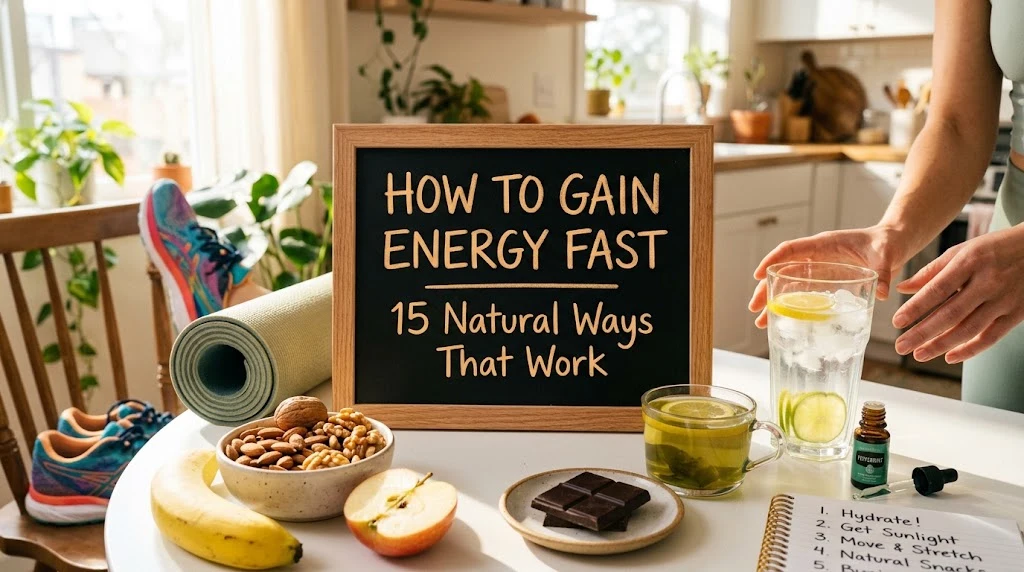
Practical ways to feel more energetic, improve alertness, support hydration, choose better foods and drinks, and build steadier energy throughout the day.
When your energy disappears halfway through the day, reaching for another coffee can feel like the fastest solution. Sometimes it helps. Other times, low energy comes from dehydration, hunger, too little sleep, inactivity, stress, or another cause caffeine cannot fix.
If you’re wondering how to gain energy fast, start by identifying what your body actually needs. Water supports hydration, food supplies calories, caffeine increases alertness, movement promotes wakefulness, and sleep supports recovery. They are different tools for different problems.
This guide explains how to get more energy quickly and how to maintain better energy levels throughout the day. You’ll also find practical foods, drinks, caffeine-free choices, morning habits, afternoon strategies, and signs that persistent fatigue deserves professional attention.
Quick Answer: How Can You Get Energy Fast?
For a quick reset, drink water, move for five minutes, get bright daytime light, and eat if you have skipped a meal. If you still feel sleepy, a moderate serving of coffee or tea may improve alertness if caffeine agrees with you.
For lasting energy, focus on adequate sleep, regular meals, physical activity, hydration, stress management, and nutrient-dense foods. No single food, vitamin, or drink can replace those foundations.
The Four Things People Mean by “Energy”
Before looking for natural energy boosters, it helps to understand what “energy” means in everyday life.
Your body and brain can feel depleted for several different reasons. The right response depends on whether you need fuel, hydration, alertness, or recovery.
| What You Need | What It Means | Useful First Step |
|---|---|---|
| Fuel | Your body needs calories and nutrients | Eat a meal or balanced snack |
| Hydration | You may be short on fluids | Drink water |
| Alertness | You feel sleepy or mentally dull | Light, movement, coffee, or tea |
| Recovery | You are sleep-deprived or exhausted | Rest and improve sleep |
Key Distinction
This distinction explains why coffee does not actually replace food energy. It can make you feel more awake, but it cannot correct missed meals or chronic sleep loss.
Why Do I Have No Energy?
Occasional tiredness is normal. A demanding day, poor night’s sleep, missed meal, long workout, stressful week, or too little water can temporarily lower how energetic you feel.
However, fatigue is not exactly the same as sleepiness. MedlinePlus describes fatigue as weariness, tiredness, or lack of energy, while drowsiness refers more specifically to needing sleep.
Common everyday reasons for low energy include:
- Not getting enough sleep
- Poor sleep quality
- Dehydration
- Skipping meals
- Long gaps between meals
- Too little physical activity
- Heavy or prolonged exercise
- Mental fatigue
- Stress
- Excess alcohol
- Too much caffeine, especially late
- Irregular daily routines
When Fatigue Persists
Persistent fatigue can also occur with medical conditions, sleep disorders, medications, anemia, thyroid disease, and other problems.
If you feel exhausted for weeks despite adequate sleep and nutrition, do not keep trying to solve the problem with stimulants.
How to Get Energy Fast in the Next 5 to 15 Minutes
When you’re asking how to get instant energy, you usually want something practical you can do right now.
There is no universal switch that creates immediate energy. However, this short routine targets several common causes of temporary sluggishness.
Drink Some Water
Have a normal glass of water, especially if you have not been drinking regularly.
Dehydration can contribute to tiredness, so correcting poor fluid intake may help you feel more normal.
Get Out of Your Chair
Walk briskly, climb stairs, stretch, or move around for several minutes.
Even small amounts of physical activity are better than none, and CDC guidance notes that activity can be broken into smaller chunks throughout the day.
Seek Bright Daytime Light
Open the curtains or step outdoors if conditions are suitable.
Morning sunlight and daytime light help provide timing signals to your circadian rhythm, the internal system involved in sleep and wakefulness.
Check When You Last Ate
If you’ve gone many hours without food, another coffee may not be what you need.
Choose a quick snack containing carbohydrates plus protein or fat.
- Banana with peanut butter
- Apple with cheese
- Greek yogurt with berries
- Oats with milk
- Whole-grain crackers with hummus
- Nuts with fruit
Decide Whether You Really Need Caffeine
If you still feel sleepy and caffeine fits your health and schedule, coffee or tea may help increase alertness and concentration.
That is a much better approach than automatically reaching for an energy drink whenever you feel tired.
How Food Gives Your Body Energy
Your body’s actual energy comes from the calories supplied by food and beverages.
Carbohydrates, protein, and dietary fat all contribute to nutrition and energy metabolism, although they play different roles.
Carbohydrates and Glucose
Carbohydrates are broken down into forms your body can use, including glucose.
Your cells ultimately capture usable chemical energy in molecules such as ATP, or adenosine triphosphate. ATP is often described as a primary cellular energy currency.
Your body can also store carbohydrate as glycogen, mainly in muscles and the liver, for later use.
That does not mean you need sugary drinks every time you feel tired.
Foods with complex carbohydrates and fiber can fit better into a balanced eating pattern because they also provide other nutrients.
Useful carbohydrate sources include:
- Whole grains
- Oats
- Fruit
- Beans
- Lentils
- Potatoes
- Vegetables
Protein
Protein provides calories, but its roles also include building and maintaining tissues and making many important compounds in the body.
Pairing protein with carbohydrate can make a snack or meal more substantial.
Examples include:
- Eggs and whole-grain toast
- Greek yogurt and berries
- Oats and milk
- Apple and peanut butter
- Banana and yogurt
- Nuts and fruit
Dietary Fat
Dietary fat provides concentrated calories and helps with the absorption of certain vitamins.
Foods such as nuts, seeds, almonds, peanut butter, chia seeds, avocado, and other healthy fat sources can help make meals more satisfying.
The current Dietary Guidelines for Americans, 2025–2030 prioritize nutrient-dense foods such as protein foods, dairy, vegetables, fruits, healthy fats, and whole grains while recommending less reliance on highly processed foods and excess added sugar.
Best Foods That Give You Energy
There is no magical list of high-energy foods that will make every person feel instantly energized.
The best foods for sustained energy are usually foods that help you meet your nutritional needs and avoid long stretches without eating.
A small piece of dark chocolate can fit a normal diet too, but it should not be marketed as a treatment for fatigue.
Best Breakfast for Energy
A good breakfast for energy does not need to be complicated.
If you do not enjoy breakfast or are not hungry early, you do not need to force a huge meal. Your overall nutrition, regular meals, and energy balance matter more than following one rigid meal schedule.
Best Snacks for Quick and Sustained Energy
A useful quick energy snack should be easy to eat and substantial enough for your situation.
When possible, combine carbohydrate with protein, fiber, or fat.
These options are generally more useful for actual nourishment than trying to fight fatigue with another highly sweetened beverage.
Best Drinks for Energy
The best drink for energy depends on what you mean by energy.
Some beverages hydrate you. Some contain calories. Others contain caffeine and mainly increase alertness.
| Drink | Main Role | Caffeine? | Best Use |
|---|---|---|---|
| Water | Hydration | No | Everyday hydration |
| Coffee | Alertness | Yes | Morning or appropriate daytime use |
| Green tea | Hydration + alertness | Yes | Lighter caffeine option |
| Black tea | Hydration + alertness | Yes | Coffee alternative |
| Matcha | Alertness | Yes | Tea-based caffeinated drink |
| Yerba mate | Alertness | Yes | Alternative caffeinated beverage |
| Smoothie | Fluids + calories | Usually no | Breakfast or snack |
| Protein shake | Protein + calories | Usually no | When food intake needs support |
| Electrolyte drink | Fluid/electrolyte replacement | Varies | Prolonged sweating |
| Coconut water | Fluid + some electrolytes/carbohydrate | No | Optional hydration beverage |
Water for Energy
Water does not contain calories, but it can be one of the best drinks when inadequate hydration contributes to sluggishness.
If you’re asking, “Does drinking water increase energy?”, think of it this way: water does not create calories, but normal hydration supports normal body function.
Plain water should usually be the first choice for everyday hydration.
Lemon water is fine if the flavor encourages you to drink more, but lemon itself does not turn water into an energy supplement.
Coffee for Energy
Coffee is one of the most familiar drinks for increasing wakefulness because it contains caffeine.
Black coffee provides very few calories unless you add milk, cream, sugar, or flavored syrups. Its main immediate effect is therefore stimulation, not nutritional fuel.
The FDA currently cites 400 milligrams of caffeine per day as an amount not generally associated with negative effects for most healthy adults. Sensitivity varies significantly.
Green Tea, Black Tea, Matcha, and Yerba Mate
These beverages can serve as coffee alternatives for energy because they naturally contain caffeine.
They are useful when you want a different flavor or potentially a different caffeine dose.
Remember
- Green tea contains caffeine.
- Black tea contains caffeine.
- Matcha contains caffeine.
- Yerba mate contains caffeine.
Do not classify them as caffeine-free simply because they are plant-based drinks.
Smoothies for Energy
A smoothie can provide something coffee cannot: actual food energy.
A balanced smoothie may contain:
- Fruit
- Oats
- Greek yogurt
- Milk
- Fortified soy beverage
- Peanut butter
- Chia seeds
Banana Oat Smoothie
Blend:
- Banana
- Oats
- Milk or fortified soy beverage
- Cinnamon
- Ice
Berry Yogurt Smoothie
Blend:
- Berries
- Greek yogurt
- Milk or water
- Banana if needed for sweetness
Green Smoothie
Blend:
- Banana
- Berries or mango
- Mild leafy greens
- Yogurt or milk
- Water and ice
A protein shake can also be useful when it helps you meet normal food needs, but protein powder itself should not be treated as an instant fatigue remedy.
What About Orange Juice and Beet Juice?
Orange juice provides carbohydrate and vitamin C, but it is easy to drink quickly. A modest portion can fit a balanced diet, while whole fruit usually supplies more fiber.
Beet juice is more commonly discussed in the context of exercise and endurance than everyday fatigue. It should not be presented as a universal drink for instant energy.
How to Get Energy Without Caffeine
You can absolutely get more energy without coffee.
Caffeine increases wakefulness, but it is not a nutrient your body requires for normal energy.
The best natural energy boosters without caffeine include:
For caffeine-free energy drinks, consider beverages that provide hydration or normal nutrition rather than stimulation:
- Water
- Sparkling water
- Milk
- Fortified soy beverage
- Fruit smoothie
- Yogurt smoothie
- Caffeine-free herbal tea
- Coconut water
- Homemade fruit-and-yogurt drinks
If you want to reduce caffeine and still have energy, tapering your intake can be easier than suddenly quitting after heavy daily use.
How to Wake Yourself Up Without Coffee
When you need to stay awake naturally, combine several mild wakefulness signals instead of looking for one dramatic fix.
Stretching and deep breathing may help you feel more engaged during a sedentary day, although neither should be presented as a cure for true fatigue.
Safety First
If you are dangerously sleepy, especially while driving, do not rely on tricks to force yourself awake. Stop and prioritize safety.
How to Get More Energy in the Morning
A better morning routine for more energy starts the night before.
If you consistently wake after too little sleep, no morning drink can fully repair that deficit.
When you wake:
- Get out of bed rather than repeatedly snoozing.
- Open the curtains.
- Seek morning sunlight when practical.
- Drink water.
- Stretch or walk.
- Eat breakfast if you are hungry.
- Use caffeine thoughtfully.
CDC guidance says adults ages 18 to 60 generally need seven or more hours of sleep per night.
In U.S. survey data published in April 2026, 30.5% of adults reported averaging less than seven hours of sleep in a 24-hour period in 2024.
Why This Matters
That statistic matters because many people searching for a morning energy booster may actually need more sleep rather than a stronger beverage.
How to Beat the Afternoon Slump
The afternoon slump can happen after hours of work, poor sleep, a large lunch, too little movement, dehydration, or normal fluctuations in alertness.
Instead of immediately adding another large coffee, run through a quick checklist.
Your Afternoon Reset
- Drink water.
- Walk for five minutes.
- Get some daylight.
- Stretch your shoulders and back.
- Eat a balanced snack if hungry.
- Change tasks briefly if mental fatigue is building.
- Consider tea or modest coffee only if it will not interfere with sleep.
Useful afternoon snacks for energy include:
This strategy also helps reduce reliance on the sugar crash → caffeine crash → more caffeine cycle.
How to Maintain Energy Throughout the Day
People often search for how to have energy all day, but completely flat energy levels are not realistic.
Your goal should be steadier energy, not nonstop stimulation.
The most useful daily habits are:
- Maintain a consistent sleep schedule.
- Eat enough food for your needs.
- Avoid routinely skipping meals.
- Stay hydrated.
- Move throughout the day.
- Exercise regularly.
- Use caffeine strategically.
- Manage stress.
- Take breaks during mentally demanding work.
- Avoid regularly using alcohol as a sleep aid.
- Give yourself adequate recovery after hard physical activity.
Consistent healthy habits usually matter more than any single “energy hack.”
Exercise, Walking, and Physical Energy
It sounds counterintuitive to move when you already feel tired, but regular exercise supports physical and mental health.
CDC guidance recommends that adults get at least 150 minutes of moderate-intensity activity per week plus muscle-strengthening activities on at least two days. Importantly, some activity is better than none.
You can build movement into the day through:
A quick walk may help with immediate alertness, while consistent physical activity supports longer-term stamina, endurance, physical energy, and overall health.
How to Improve Mental Energy and Focus
Not every energy problem is physical.
After hours of concentrated work, you may experience mental fatigue, poorer concentration, slower thinking, and reduced motivation.
To restore mental energy:
- Take a short screen break.
- Stand and walk.
- Drink water.
- Eat if you are hungry.
- Work near natural daylight when possible.
- Break large tasks into smaller pieces.
- Reduce constant notifications.
- Switch briefly to a less demanding task.
- Protect your sleep.
Caffeine may temporarily increase alertness and focus, but more caffeine does not automatically create better concentration.
Once you are overstimulated, anxious, or severely sleep-deprived, additional caffeine may make productive work harder.
Sleep Is the Most Underrated Energy Booster
You cannot discuss how to stop feeling tired without discussing sleep.
Both sleep duration and sleep quality matter. Your sleep schedule also helps regulate your circadian rhythm, including the normal timing of sleepiness and wakefulness.
CDC recommends seven or more hours for adults ages 18–60, with somewhat different recommendations for older adults.
Better Sleep Habits
- Keep bedtime reasonably consistent.
- Wake at a similar time most days.
- Make the bedroom dark and comfortable.
- Limit caffeine later in the day.
- Avoid heavy alcohol use.
- Give yourself enough time in bed.
- Address ongoing sleep problems.
Your body also uses hormones such as melatonin as part of sleep-wake regulation. Randomly taking supplements is not a substitute for fixing poor sleep habits.
Can a Power Nap Increase Energy?
A short power nap can be useful when genuine sleepiness is the problem.
Keep naps relatively brief when you want to return to your day without prolonged grogginess.
A common practical target is around 20 minutes or less, especially if longer daytime sleep interferes with your nighttime schedule.
A nap can support temporary alertness, but it should not become a daily workaround for severe chronic sleep deprivation.
Caffeine: Alertness Is Not the Same as Energy
Caffeine works largely by affecting signaling involving adenosine, a chemical involved in sleep pressure and wakefulness.
That is why coffee can make you feel less sleepy even though it does not erase your physiological need for sleep.
How Much Caffeine Is Too Much?
For most adults, the FDA cites 400 mg per day as an amount not generally associated with negative effects.
However, that is not a target you need to reach.
Some people experience:
- Anxiety
- Shakiness
- Headaches
- Upset stomach
- Palpitations
- Difficulty sleeping
at considerably lower amounts.
Pregnancy, certain medications, medical conditions, and individual sensitivity can also change how caffeine affects you.
How to Avoid a Caffeine Crash
The phrase caffeine crash often describes the return of tiredness as stimulation wears off.
To reduce dependence on repeated doses:
- Do not use caffeine instead of sleep.
- Eat regular meals.
- Stay hydrated.
- Avoid stacking caffeine sources.
- Use smaller amounts when possible.
- Protect your nighttime sleep.
- Consider decaf later in the day.
Most importantly, do not interpret the return of normal tiredness as proof that you need another energy drink.
Electrolytes, Sodium, Potassium, and Hydration
Electrolytes such as sodium and potassium are involved in fluid balance and normal body function.
They do not magically create energy.
During ordinary daily life, water is usually enough for hydration. Specialized drinks become more relevant after significant fluid and electrolyte losses.
CDC/NIOSH guidance updated on July 16, 2026 recommends water for moderate activity in heat lasting under two hours. If sweating continues for several hours, balanced electrolyte sports drinks may be appropriate.
| Water Usually Makes Sense When: | Electrolyte Drinks May Make More Sense When: |
|---|---|
| You are working at a desk. | You’ve been sweating heavily for several hours. |
| You are doing a short workout. | You’re doing prolonged exercise. |
| You are mildly thirsty. | You’re performing demanding physical work in heat. |
| You simply need routine daily hydration. | Appropriate medical or sports guidance recommends replacement. |
Coconut water contains carbohydrate and electrolytes such as potassium, but it is not required for normal daily hydration.
Individual Hydration Needs
People with conditions requiring limits on sodium, potassium, or fluids should follow individualized medical advice.
Vitamins and Minerals: Do They Actually Give You Energy?
Terms such as energy-boosting vitamins, B vitamins, vitamin B12, iron, vitamin D, magnesium, and folate appear frequently on supplements.
The Important Distinction
Correcting a real deficiency can matter enormously. Taking extra nutrients when you are already sufficient does not automatically create extra energy.
Vitamin B12
Vitamin B12 is important for blood and nerve health and DNA production.
A deficiency can cause tiredness and weakness. However, the NIH Office of Dietary Supplements states that vitamin B12 supplements do not improve energy or endurance in people who already get enough B12.
Iron
Iron helps your body make hemoglobin, the protein in red blood cells that carries oxygen.
When iron deficiency anemia develops, reduced oxygen transport can contribute to weakness, tiredness, poor concentration, and low energy.
Do not take high-dose iron “for energy” without knowing you need it. Iron can interact with medications, and excessive amounts can be dangerous.
Magnesium
Magnesium participates in many normal body processes. A true magnesium deficiency can include fatigue and weakness among its symptoms.
That does not mean magnesium supplements are universal natural remedies for tiredness.
Vitamin D, Folate, and Other Nutrients
Vitamin D, folate, B vitamins, iron, magnesium, and other nutrients all have important physiological roles.
The safest approach is to maintain a balanced diet and investigate suspected deficiencies appropriately rather than buying a large stack of “energy supplements.”
Natural Energy Supplements: Be Careful With the Promise
A product labeled natural is not automatically effective or risk-free.
Supplements can contain vitamins, minerals, herbs, caffeine, or other ingredients. Some may interact with medications or provide much larger doses than needed.
Before Taking Supplements
If persistent fatigue makes you wonder whether you need vitamin B12, iron, vitamin D, magnesium, or another supplement, discuss it with a qualified healthcare professional.
Testing can sometimes identify a deficiency.
Guessing cannot.
How to Get Energy Fast Before Exercise
If you’re wondering how to get energy fast before a workout, start with the basics.
Ask:
- Did I eat enough today?
- Am I hydrated?
- How long will I exercise?
- Is the workout intense?
- Do I tolerate food before training?
- Am I already using caffeine?
For a normal workout, useful options can include:
For prolonged exercise or heavy sweating, carbohydrate and electrolyte needs may become more important.
Workout Caffeine Safety
Avoid trying unfamiliar high-caffeine products immediately before an important workout.
How to Stay Energized at Work
Work fatigue often combines mental fatigue, prolonged sitting, screen exposure, stress, irregular meals, and poor sleep.
Instead of depending on coffee all day:
For many people, the best way to get more energy at work is not finding a stronger stimulant. It is reducing the habits that drain energy in the first place.
Stress, Cortisol, and Feeling Drained
Stress can leave you feeling mentally and physically exhausted.
The hormone cortisol is involved in the body’s stress response, but everyday fatigue should not be reduced to claims that you simply have “high cortisol.”
Stress management is broader than one hormone.
Helpful approaches can include:
- Regular exercise
- Walking
- Adequate sleep
- Social connection
- Relaxation practices
- Breathing exercises
- Realistic workloads
- Regular breaks
If stress, anxiety, or low mood is persistent and seriously affecting daily life, professional support may be appropriate.
Habits That Can Make Low Energy Worse
Some apparent energy boosters can work against you when overused.
Excessive Caffeine
Too much caffeine may worsen anxiety, shakiness, headaches, and sleep.
Poor sleep can then make you more tired the next day.
Energy Drinks
Some energy drinks contain substantial amounts of caffeine and sugar.
Check the caffeine content rather than assuming one can, bottle, or serving equals another.
The FDA notes that medical experts advise against energy drinks for children and teens because of their caffeine and sugar content.
Large Amounts of Added Sugar
Sugary drinks provide carbohydrate, but they should not become your main strategy for maintaining steady energy levels.
Alcohol
Alcohol can impair alertness and interfere with sleep.
Skipping Meals
Repeatedly skipping meals and then relying on stimulants can leave you without the actual nutrition your body needs.
Too Little Movement
Hours of uninterrupted sitting can contribute to feeling sluggish.
Stand, walk, and move throughout the day.
What to Do When You Feel Exhausted After No Sleep
If you barely slept, there is no safe trick that truly replaces that lost recovery.
Water, food, daylight, movement, and caffeine may help you function temporarily. They do not restore sleep that never happened.
When possible:
- Reduce unnecessary demanding tasks.
- Avoid driving when dangerously sleepy.
- Use caffeine conservatively.
- Consider a brief nap.
- Eat and hydrate normally.
- Prioritize adequate sleep the following night.
Repeatedly trying to get energy fast after no sleep can create a cycle of heavy caffeine use and disrupted sleep.
When Low Energy Needs Medical Attention
Everyday tiredness usually improves after the underlying issue improves.
Persistent Fatigue Is Different
Persistent fatigue is different.
MedlinePlus notes that fatigue lasting weeks can be associated with many causes, including anemia, thyroid disease, sleep apnea, infections, chronic diseases, mental health conditions, certain medications, insufficient sleep, alcohol use, and excessive caffeine.
Talk with a healthcare professional if:
- You are always tired without understanding why.
- Fatigue lasts for weeks.
- You feel exhausted despite adequate sleep.
- Your ability to work or complete normal activities is declining.
- You have unexplained weakness.
- Your sleep is regularly interrupted.
- You snore loudly or gasp during sleep.
- You suspect a medication is causing tiredness.
- You have unexplained weight changes or other persistent symptoms.
Seek urgent medical care for severe fatigue accompanied by serious symptoms such as chest pain, severe breathing difficulty, fainting, or other signs of an emergency.
Do not stop or change prescription medications on your own because you think they are making you tired.
A Simple Daily Plan for More Energy
If your goal is how to have more energy throughout the day, consistency matters more than chasing dramatic boosts.
Morning
- Wake at a consistent time.
- Get daylight.
- Drink water.
- Eat if hungry.
- Move your body.
- Use coffee or tea thoughtfully.
Midday
- Eat a balanced meal.
- Keep drinking water.
- Walk after prolonged sitting.
- Take short mental breaks.
Afternoon
- Check hunger before adding caffeine.
- Choose a balanced snack.
- Get light and movement.
- Avoid automatically reaching for sugar.
Evening
- Reduce caffeine.
- Allow your body to wind down.
- Prepare for adequate sleep.
- Keep your sleep schedule consistent.
These simple energy-boosting habits are less exciting than a miracle supplement, but they are far more useful.
FAQs
What gives you energy fast?
Food gives your body calories, water supports hydration, caffeine increases alertness, and movement can help wake you up. The best choice depends on why you feel tired.
If you skipped a meal, food may be more useful than coffee. If you’re thirsty, start with water.
How can I get energy right now?
Drink water, walk or stretch for five minutes, seek bright daytime light, and check whether you need food.
If you remain sleepy and tolerate caffeine, a moderate serving of coffee or tea can increase alertness.
What food gives you energy fast?
Fruit, oats, whole grains, yogurt, and other carbohydrate-containing foods provide usable food energy.
For a more balanced snack, combine carbohydrate with protein or fat, such as banana with peanut butter or berries with Greek yogurt.
What is the best drink for energy?
There is no universal winner.
Water is best when you need hydration. Coffee, green tea, black tea, matcha, or yerba mate can provide caffeine. A smoothie can provide calories and nutrients when you need actual food.
How do I get energy without caffeine?
Use water, food, movement, morning sunlight, short breaks, regular exercise, better sleep, and stress management.
For beverages, try water, milk, fortified soy drinks, herbal tea, coconut water, or a fruit-and-protein smoothie.
Does coffee actually give you energy?
Coffee mainly helps by supplying caffeine, which increases alertness. Black coffee provides very few calories, so it does not supply much food energy.
Its effect can make you feel more awake without fixing sleep deprivation, dehydration, or inadequate food intake.
Does water help with fatigue?
Water may help when dehydration or inadequate fluid intake contributes to tiredness.
It contains no calories, so it is best viewed as a hydration tool rather than an instant source of food energy.
Does exercise increase energy?
Regular physical activity supports health and may help improve how energetic you feel.
Current CDC guidance recommends at least 150 minutes of moderate-intensity activity each week for adults, plus muscle-strengthening activity on two days.
How long should you nap for energy?
A brief nap is usually more practical for daytime alertness than a long sleep that leaves you groggy or interferes with bedtime.
Around 20 minutes or less is a common target for a short power nap.
What vitamins help with energy?
Vitamins and minerals help normal body functions, but supplements are not universal stimulants.
For example, vitamin B12 deficiency can cause weakness and tiredness, yet NIH guidance states B12 supplementation does not improve energy or endurance in people who already get enough.
Why am I always tired?
Persistent tiredness can have many causes, including inadequate sleep, stress, anemia, sleep disorders, thyroid problems, medications, and other health issues.
If low energy or fatigue continues for weeks, seek medical evaluation instead of repeatedly increasing caffeine.
Conclusion
Learning how to gain energy fast starts with understanding what kind of energy you are missing. If you are dehydrated, drink water. If you have not eaten, choose real food. If you are sleepy, light, movement, rest, or moderate caffeine may help. If you are chronically exhausted, another energy drink is unlikely to solve the underlying problem.
The best natural energy boosters are surprisingly basic: adequate sleep, balanced nutrition, regular meals, hydration, physical activity, daylight, sensible caffeine use, recovery, and stress management. Together, these habits can help you feel more energetic, maintain steadier energy throughout the day, improve focus, and reduce dependence on quick fixes.
Most importantly, pay attention to patterns. Occasional tiredness is part of normal life. Fatigue that persists, worsens, or interferes with everyday activities deserves proper evaluation rather than another cup of coffee.
Evidence and Medical Information
This article was updated on August 31, 2026 and uses current guidance and information from the U.S. Food and Drug Administration, Centers for Disease Control and Prevention, National Institutes of Health Office of Dietary Supplements, MedlinePlus, and the Dietary Guidelines for Americans, 2025–2030.
Read More:
What Can I Drink After a Tooth Extraction
100 Fruit Drink Recipes: Juices, Smoothies & Mocktails
16 Best Non-Alcoholic After Dinner Drinks for Any Evening
Best Places for Non-Alcoholic Drinks in Las Vegas: 2026 Guide
Bob Marley Mocktail: Easy Non-Alcoholic Layered Drink
Liquid Maria Juana Drink: Easy Tropical Cocktail Recipe
Gasolina Drink: Flavors, ABV, Ingredients & More


14 Comments on “How to Gain Energy Fast: 15 Natural Ways That Work”