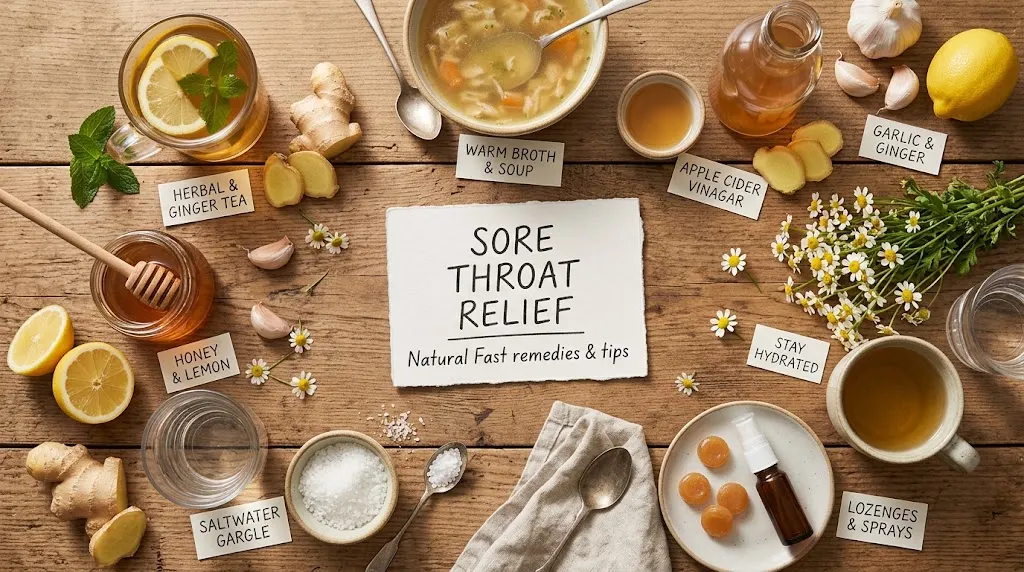
Practical ways to soothe throat pain quickly, including home remedies, honey, saltwater gargles, soothing drinks, OTC options, and warning signs.
If you’re searching for what kills a sore throat fast, you probably want relief now, not another vague promise that you’ll feel better someday. While no home remedy can reliably cure a sore throat in two minutes, several options can make throat pain and irritation feel better quickly.
The best approach depends on the cause. Warm or cold drinks, honey, saltwater gargles, throat lozenges, humidified air, rest, fluids, and appropriate over-the-counter medicine can provide fast sore throat relief while your body recovers. Most sore throats are caused by viruses and improve on their own.
Quick Answer: What Kills a Sore Throat Fast?
There is no proven way to kill a sore throat instantly or guarantee that it will disappear overnight. However, you can often get fast sore throat relief by combining a soothing drink, honey, a saltwater gargle, ice chips or a lozenge, and appropriate pain relief.
If your sore throat comes with trouble breathing, inability to swallow, severe swelling, dehydration, or rapidly worsening symptoms, home treatment isn’t enough. Seek medical care promptly.
What Kills a Sore Throat Fast in 2 Minutes?
If you’re looking for what kills a sore throat fast in 2 minutes, the realistic goal is immediate symptom relief rather than a cure. A soothing action can temporarily calm throat pain, dryness, or irritation.
Try the option that matches your symptoms. Cold can numb discomfort for some people, while warmth feels better for others.
- Let an ice chip melt slowly in your mouth.
- Take small sips of cool water.
- Try a teaspoon of honey if you’re over age 1.
- Gargle warm saltwater for temporary soothing.
- Use an appropriate throat lozenge.
- Sip warm caffeine-free tea with honey.
- Rest your voice for several minutes.
- Move away from smoke or other throat irritants.
- Avoid extremely hot drinks that can further irritate tissue.
- Choose whichever temperature feels more comfortable.
These approaches provide quick sore throat relief, but they don’t remove an underlying viral or bacterial infection.
How to Get Rid of a Sore Throat Fast
Learning how to get rid of a sore throat fast starts with identifying what may be causing it. A sore throat from a cold needs different attention from one caused by allergies, dry air, reflux, or strep.
For most mild cases, focus on comfort, hydration, rest, and avoiding irritation. Viral sore throats commonly improve without specific treatment.
- Drink plenty of water throughout the day.
- Try warm liquids or cold drinks based on comfort.
- Use honey to soothe throat irritation.
- Gargle with warm saltwater.
- Use a clean humidifier when indoor air is dry.
- Rest your voice.
- Try ice pops or ice chips.
- Use throat lozenges when safe for your age.
- Consider appropriate OTC pain medicine.
- Avoid cigarette smoke and secondhand smoke.
- Sleep enough while you’re recovering.
- Avoid foods or drinks that clearly make symptoms worse.
The fastest way to get rid of a sore throat isn’t necessarily the most aggressive remedy. Matching the treatment to the cause usually makes more sense.
How to Soothe a Sore Throat Fast at Home
For sore throat relief at home, simple measures often work better than complicated mixtures. The goal is to keep the throat moist and reduce irritation while you recover.
These are useful forms of sore throat home treatment for adults and older children who can safely use them.
- Gargle warm saltwater.
- Drink warm water with honey.
- Try caffeine-free herbal tea.
- Sip cool water when cold feels better.
- Suck on an age-appropriate lozenge.
- Eat soft, cool foods.
- Use a humidifier.
- Take a warm shower if steam feels soothing.
- Rest your voice.
- Keep drinking fluids even when swallowing is uncomfortable.
These simple sore throat remedies can be used without medication when symptoms are mild. They are designed for comfort, not to cure an infection.
Best Home Remedies for Sore Throat
The best home remedy for a sore throat depends on what your throat feels like. A dry, scratchy throat may respond well to moisture, while inflamed pain may feel better with something cold.
For natural sore throat relief, focus on low-risk options with a clear soothing purpose. Evidence for many herbal products is limited, so don’t assume that “natural” automatically means effective or safe.
coats and soothes an irritated throat.
can temporarily reduce irritation and soreness.
provide moisture and comfort.
may ease painful inflammation.
offer cooling throat pain relief.
helps when dry air causes irritation.
reduces strain on your throat and body.
are easier to swallow when your throat hurts.
provides fluid without relying on caffeine.
offers a gentle, easy-to-swallow option.
A good sore throat remedy should make symptoms easier to tolerate without creating new irritation.
Honey for Sore Throat: Does It Help?
Honey for sore throat discomfort is one of the simplest home options. Its thick texture can coat irritated tissues, while its sweetness may help reduce coughing and throat discomfort.
You can use honey alone or add it to tea or warm water. However, never give honey to a child younger than 1 year because of the risk of infant botulism. Honey also contains sugar, so people monitoring blood glucose should use it appropriately.
- Add honey to warm water.
- Stir honey into herbal tea.
- Combine honey with warm lemon water if citrus doesn’t sting.
- Take a small amount by itself if preferred.
- Avoid adding honey to boiling-hot liquid.
- Don’t use honey for infants under 1.
- Choose plain honey rather than assuming expensive varieties are necessary.
A honey sore throat remedy can soothe symptoms, but honey doesn’t replace treatment for confirmed bacterial infections.
Tea, Ginger, and Other Soothing Drinks
When deciding what to drink for a sore throat, choose liquids that feel comfortable and help maintain hydration. Warm drinks are popular, but cold drinks can work just as well for some people.
Tea for sore throat discomfort can be especially useful when combined with honey. Ginger tea, chamomile tea, peppermint tea, and other caffeine-free herbal teas are options, although individual herbs can have medication interactions or other safety considerations.
- Honey tea: gentle and easy to customize.
- Ginger tea: warm and naturally spicy; avoid it if it irritates you.
- Chamomile tea: mild and caffeine-free.
- Peppermint tea: cooling and soothing for some people.
- Warm water: simple when you don’t want flavored drinks.
- Broth: useful when you also want something savory.
- Cool herbal tea: helpful when warmth feels irritating.
- Warm milk: an option if dairy feels comfortable.
- Lemon and honey: soothing for some people but acidic for others.
- Plain water: essential when you’re trying to stay hydrated.
If you take medication, are pregnant, or have a medical condition, check before using concentrated herbal products such as slippery elm or marshmallow root.
Warm or Cold Drinks for a Sore Throat?
Both warm liquids for sore throat discomfort and cold drinks can be useful. There isn’t one temperature that works for everyone.
Warm drinks may feel soothing when your throat is dry or coated with mucus. Cold water, ice chips, and frozen foods may feel better when your throat feels inflamed or painful.
- Choose warm tea when warmth feels soothing.
- Choose cold water when cooling reduces pain.
- Try ice chips for short-term cooling.
- Use broth when you prefer something savory.
- Avoid drinks that sting or burn.
- Let very hot drinks cool before drinking.
- Keep water nearby throughout the day.
- Alternate temperatures if both feel comfortable.
Your personal response matters more than following a strict warm-versus-cold rule.
Salt Water Gargle for Sore Throat
A salt water gargle for sore throat irritation is inexpensive, simple, and widely recommended for temporary symptom relief. It can help soothe swelling and irritation without requiring medication.
For adults and children who can safely gargle, Mayo Clinic recommends ¼ to ½ teaspoon of table salt in 4 to 8 ounces of warm water. Gargle and spit it out rather than swallowing it.
- Use warm, not scalding, water.
- Dissolve the salt completely.
- Take a comfortable mouthful.
- Tilt your head back slightly.
- Gargle for several seconds.
- Spit the solution out.
- Repeat as needed.
- Don’t swallow the saltwater.
- Young children shouldn’t gargle if they can’t do it safely.
How to Gargle for a Sore Throat
Take a small sip, gently gargle toward the back of your throat, then spit it out. Don’t force the gargle if it causes choking or discomfort.
A baking soda gargle for sore throat irritation is another option sometimes used at home, but saltwater is the simpler, more established choice. If you’re unsure which option is appropriate, ask a pharmacist or healthcare professional.
Other Natural Remedies for Sore Throat
Several natural sore throat remedies can provide comfort, but they shouldn’t be treated as cures. Evidence varies considerably between herbs and homemade preparations.
Cleveland Clinic recommends practical measures such as warm or cold drinks, honey, frozen foods, saltwater or baking-soda gargles, and steam or humidity.
- Try steam or a warm shower when humidity feels soothing.
- Use a clean humidifier in dry rooms.
- Try ginger in tea if it doesn’t irritate you.
- Consider chamomile tea for a caffeine-free drink.
- Use peppermint tea if its cooling sensation feels comfortable.
- Try slippery elm only after checking for interactions.
- Ask a professional before using marshmallow root.
- Avoid concentrated essential oils in the throat.
- Don’t swallow homemade gargling solutions.
- Stop any remedy that causes burning, rash, or worsening symptoms.
There is little proof for many alternative sore throat treatments, and some can interact with medications or be unsuitable during pregnancy, breastfeeding, childhood, or certain medical conditions.
Humidifier and Steam for Sore Throat
A humidifier for sore throat irritation can help when dry indoor air is making your throat scratchy or raw. Adding moisture may make breathing and swallowing more comfortable.
Steam can also feel soothing, especially during a cold. However, avoid very hot steam or placing your face directly over boiling water because burns can happen.
- Use a clean cool-mist humidifier.
- Clean the humidifier regularly.
- Keep room humidity comfortable.
- Take a warm shower for gentle steam.
- Drink fluids alongside humidification.
- Avoid direct contact with boiling water.
- Don’t use dirty humidifiers.
- Stop if humidity makes breathing uncomfortable.
Dry air and sore throat symptoms often occur together during heating or air-conditioning seasons. Moisture can help when dryness is part of the problem.
Foods That Soothe a Sore Throat
When swallowing hurts, soft and moist foods are usually easier to tolerate than dry or crunchy foods. You don’t need to force yourself to eat a normal meal if your throat is very painful.
The best foods for sore throat discomfort are generally mild, soft, and easy to swallow.
For soothing foods for sore throat, temperature matters too. Cold foods can feel numbing, while warm foods can feel comforting.
If swallowing is extremely painful, focus on fluids and seek medical advice if you’re unable to drink enough.
Foods and Drinks to Avoid With a Sore Throat
Some foods don’t cause a sore throat, but they can make existing irritation feel worse. The main rule is simple: avoid anything that burns, scratches, dries, or repeatedly irritates your throat.
This can include certain spicy foods, acidic drinks, alcohol, smoke exposure, and very hot liquids.
- Avoid spicy foods if they cause burning.
- Limit acidic foods if they sting.
- Avoid alcohol while your throat is irritated.
- Avoid smoking and secondhand smoke.
- Limit caffeine if it seems to worsen dryness.
- Skip extremely hot drinks.
- Avoid hard, crunchy foods when swallowing hurts.
- Avoid highly irritating sauces.
- Don’t force foods that cause pain.
- Choose water when you’re unsure.
Alcohol and sore throat symptoms can be an especially poor combination when you’re already struggling to stay hydrated. Cleveland Clinic also advises limiting caffeine, alcohol, smoking, and acidic foods when they aggravate symptoms.
Sore Throat From a Cold, Flu, or Cough
A sore throat and cold commonly occur together. A sore throat from a cold may come with congestion, runny nose, coughing, sneezing, or fatigue.
A sore throat from flu can also occur, usually alongside other influenza symptoms. Supportive care focuses on hydration, rest, symptom relief, and monitoring for complications.
- Drink fluids regularly.
- Try honey for cough-related irritation if you’re over 1.
- Use warm or cold drinks.
- Try saline measures for nasal congestion.
- Rest your voice.
- Use a humidifier when air is dry.
- Consider appropriate OTC pain relief.
- Avoid smoke.
- Get adequate sleep.
- Seek medical advice if symptoms become severe.
A sore throat and cough can create a cycle of irritation because coughing repeatedly stresses already-sensitive throat tissues.
Sore Throat From Allergies, Postnasal Drip, or Dry Air
A sore throat isn’t always caused by an infection. Allergies, postnasal drip, dry air, mouth breathing, and environmental irritation can all contribute to throat discomfort.
If mucus continually drains down the back of your throat, treating the nasal or allergy trigger may provide more lasting relief than repeatedly soothing the throat.
- Drink enough water.
- Use a humidifier when indoor air is dry.
- Consider saline nasal spray when appropriate.
- Reduce known allergy triggers.
- Avoid cigarette smoke.
- Keep bedroom air comfortably humid.
- Rest your voice.
- Try honey for temporary throat soothing.
- Choose soothing drinks.
- Ask a professional about persistent allergy symptoms.
Sore throat from allergies may occur with sneezing, itchy eyes, congestion, or postnasal drip. In contrast, a sore throat from dry air often feels dry, scratchy, or irritated without other infection symptoms.
Sore Throat at Night and Before Bed
If you’re searching for how to sleep with a sore throat, focus on keeping your throat comfortable and reducing nighttime irritation. A simple bedtime routine can make the night easier even when the underlying illness still needs time to resolve.
Sore throat relief before bed can include fluids, honey, humidity, and whichever warm or cold drink feels best.
- Drink water before going to sleep.
- Try caffeine-free tea with honey.
- Keep water beside your bed.
- Use a clean humidifier if the air is dry.
- Rest your voice during the evening.
- Avoid smoking before bed.
- Avoid alcohol while recovering.
- Avoid foods that trigger nighttime reflux.
- Choose soft foods if you’re hungry.
- Use appropriate OTC medicine according to the label.
For sore throat relief while sleeping, comfort is the goal. There is no dependable overnight sore throat remedy that guarantees the infection itself will disappear before morning.
Over-the-Counter Sore Throat Relief
When home remedies aren’t enough, over-the-counter sore throat relief can help control pain and fever. Common options include acetaminophen and ibuprofen, while lozenges and some sprays provide local relief.
The right sore throat medication depends on age, health conditions, other medicines, and the product’s active ingredients.
can reduce pain and fever.
can reduce pain and inflammation.
may soothe local irritation.
may provide temporary local relief.
may contain anesthetic or anti-inflammatory ingredients.
carefully.
before combining cold medicines.
if you’re unsure about interactions.
Mayo Clinic notes that antibiotics don’t treat viral sore throats, while confirmed bacterial infections such as strep may require antibiotics.
Sore Throat Relief for Adults, Children, and Toddlers
Sore throat relief for adults can include the full range of home measures discussed above. Children and toddlers need additional safety precautions because some common remedies can create choking or medication risks.
For sore throat relief for children, age matters. Honey is unsafe for children under 1, and hard candies or lozenges can be choking hazards for young children. Mayo Clinic also warns against giving aspirin to children or teenagers.
- Give honey only to children over 1 year.
- Avoid lozenges for young children who may choke.
- Don’t ask young children to gargle if they can’t do it safely.
- Use child-specific medicine according to directions.
- Check dosing carefully.
- Don’t give children adult medication doses.
- Never give aspirin to children or teenagers.
- Encourage appropriate fluids.
- Use cool or warm drinks based on comfort.
- Contact a pediatric professional when symptoms are concerning.
For sore throat relief for toddlers, ask a pediatric healthcare professional about appropriate comfort measures rather than experimenting with herbal products or adult medicines.
What Causes a Sore Throat?
Understanding what causes a sore throat helps you choose more sensible relief. Viruses are the most common cause, but bacterial infections and noninfectious irritation can also produce similar symptoms.
Common causes include:
- Common cold viruses.
- Influenza.
- COVID-19 and other respiratory viruses.
- Group A strep bacteria.
- Allergies.
- Postnasal drip.
- Dry air.
- Mouth breathing.
- Smoking.
- Voice overuse.
- Reflux.
- Tonsillitis.
- Laryngitis.
A sore throat without fever can still result from a virus, allergies, dry air, reflux, or irritation. A sore throat with fever may occur with several infections, so fever alone cannot identify the cause.
Sore Throat Symptoms and Warning Signs
Common sore throat symptoms include pain, scratchiness, redness, swollen glands, painful swallowing, and irritation when talking. You may also have a cough, mucus, phlegm, congestion, or a runny nose depending on the cause.
A very painful sore throat, persistent symptoms, or symptoms that are rapidly worsening deserve more attention than mild irritation.
Get Medical Help Promptly If You Have
- x?
- trouble breathing.
- Inability to swallow liquids.
- Drooling because you cannot swallow.
- Severe or rapidly worsening symptoms.
- Significant swelling in the throat or neck.
- Signs of dehydration.
- A concerning rash.
- Persistent high fever.
- Severe pain that isn’t improving.
- Repeated or persistent sore throats.
These are important sore throat warning signs because they can indicate a condition requiring professional assessment.
Could It Be Strep Throat?
Strep throat is a bacterial infection caused by group A Streptococcus. Most sore throats are not strep, but recognizing the possibility matters because confirmed strep can be treated with antibiotics.
CDC guidance published in 2026 says roughly 1 in 10 adults and 3 in 10 children with a sore throat have strep throat. Common signs include sudden throat pain, painful swallowing, fever, swollen neck lymph nodes, red or swollen tonsils, and white patches.
Strep Testing May Include
- A rapid antigen detection test.
- A throat culture.
- A physical examination.
- Review of your symptoms and exposure history.
If strep is confirmed, antibiotics can shorten illness, reduce symptoms, lower transmission, and help prevent serious complications. Antibiotics should be taken exactly as prescribed.
How Long Does a Sore Throat Last?
If you’re wondering how long does a sore throat last, the answer depends on the cause. A typical viral sore throat often improves within several days and commonly resolves within about a week.
Mayo Clinic says viral sore throats generally go away on their own within 5 to 7 days. Some cases can last longer, especially when another condition is responsible.
A Rough Guide
- Viral sore throat: often improves within 5 to 7 days.
- Strep throat: requires appropriate testing and treatment.
- Allergy-related irritation: can continue while exposure persists.
- Dry-air irritation: may improve when humidity improves.
- Reflux-related irritation: may recur until the trigger is addressed.
- Persistent sore throat: should be evaluated rather than repeatedly self-treated.
If your sore throat is lasting several days without improvement, is repeatedly returning, or is getting worse, consider speaking with a healthcare professional.
The Fastest Sore Throat Relief Routine
If you need a practical plan, don’t throw twenty remedies at the problem. Start with the symptoms that bother you most, then build a simple routine around them.
For fast relief for throat pain, combine hydration with one or two soothing measures. If pain is significant, consider an appropriate OTC pain reliever after checking that it is safe for you.
During the Day
- Drink water regularly.
- Use honey when appropriate.
- Try warm or cold drinks.
- Gargle warm saltwater.
- Use ice chips when cooling helps.
- Rest your voice.
- Use a humidifier when air is dry.
- Choose soft foods.
- Avoid smoke and irritating foods.
- Take appropriate OTC medicine if needed.
Before Bed
- Drink water.
- Try honey tea or another soothing beverage.
- Keep water beside the bed.
- Use a clean humidifier.
- Avoid alcohol and smoking.
- Avoid foods that worsen reflux.
- Get enough sleep.
This approach provides quick home relief for a sore throat without pretending that an instant cure exists.
FAQs
What is the fastest way to get rid of a sore throat?
The fastest sore throat relief usually comes from treating the discomfort rather than trying to eliminate the cause instantly. Fluids, honey, saltwater gargles, ice chips, lozenges, humidity, rest, and suitable OTC pain relief can help.
If the cause is bacterial strep throat, professional testing and appropriate antibiotics may be necessary.
What helps a sore throat fast?
What helps a sore throat fast varies by symptom. Try honey, warm or cold fluids, saltwater gargling, ice chips, a throat lozenge, humidified air, or appropriate pain medicine.
You can combine several gentle measures instead of relying on one supposed miracle remedy.
How can I get rid of a sore throat overnight?
There is no dependable way to cure a sore throat overnight. You can, however, improve nighttime comfort with hydration, honey, soothing drinks, humidity, rest, and appropriate pain relief.
If you’re having trouble swallowing or breathing, don’t wait until morning to seek medical help.
What should I drink for a sore throat?
The best drinks for sore throat discomfort are usually those that feel soothing and help maintain hydration. Try water, caffeine-free tea, warm broth, honey water, or cool drinks.
If lemon or other acidic drinks sting your throat, leave them out.
What is the best natural remedy for a sore throat?
There isn’t one universal best natural remedy for sore throat symptoms. Honey, warm or cold fluids, saltwater gargles, ice chips, humidity, and rest are practical options with established use for symptom relief.
Can saltwater get rid of a sore throat?
A saltwater gargle can soothe irritation and soreness, but it doesn’t guarantee that the underlying infection will disappear. Gargle the solution and spit it out rather than swallowing it.
When should I see a doctor for a sore throat?
Seek medical care for difficulty breathing, inability to swallow, drooling, severe swelling, dehydration, or rapidly worsening symptoms. You should also get medical advice for persistent, recurring, or unusually severe throat pain.
Conclusion
If you’re searching for how to soothe a sore throat fast, start with simple measures that target pain, dryness, and irritation. Honey, saltwater gargles, warm or cold drinks, ice chips, humidified air, rest, and suitable OTC medicine can provide meaningful relief.
There is no guaranteed instant sore throat relief or overnight cure. The safest approach is to manage symptoms while watching for signs that point to strep or another condition requiring professional care. If your symptoms are severe or worsening, seek medical attention rather than relying on another home remedy.
Medical note: This article provides general educational information and does not replace individualized medical advice. Medication safety and dosing should be confirmed with a healthcare professional or pharmacist when you’re unsure.
Last reviewed: August 31, 2026
Read More:
What Can I Drink After a Tooth Extraction
100 Fruit Drink Recipes: Juices, Smoothies & Mocktails
16 Best Non-Alcoholic After Dinner Drinks for Any Evening
Best Places for Non-Alcoholic Drinks in Las Vegas: 2026 Guide
Bob Marley Mocktail: Easy Non-Alcoholic Layered Drink
Liquid Maria Juana Drink: Easy Tropical Cocktail Recipe
Gasolina Drink: Flavors, ABV, Ingredients & More