Discover practical, evidence-based drinks that can support calorie control, hydration, satiety, and healthier beverage choices.
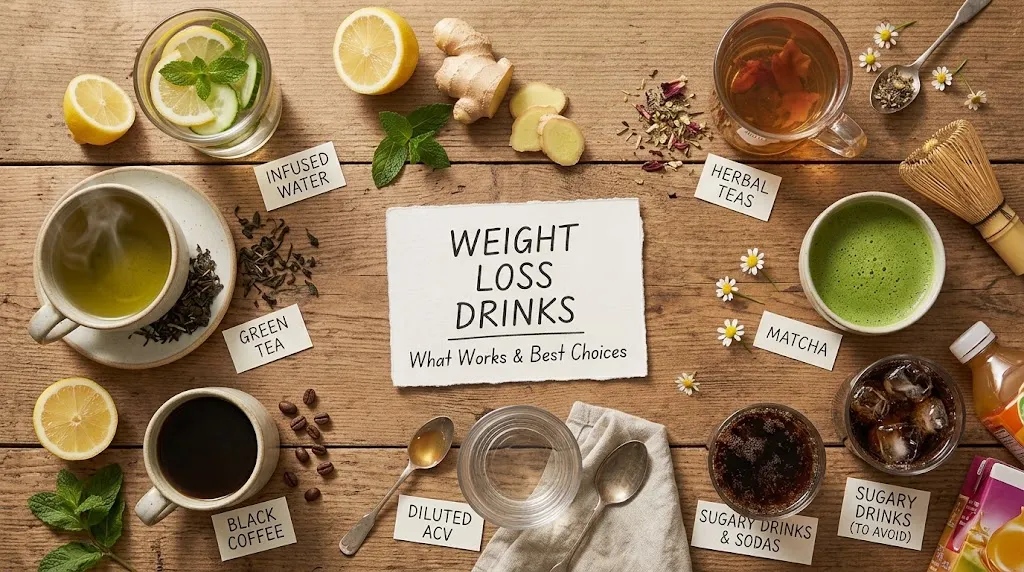
Finding the right weight loss drinks can make a calorie-controlled eating plan easier, but beverages do not melt body fat by themselves. The most useful choices help you stay hydrated, reduce added sugar, manage calorie intake, or feel satisfied between meals.
That distinction matters. The Centers for Disease Control and Prevention reported in April 2026 that sugary beverages are a leading source of added sugars in the American diet. About 24% of added sugar comes from sugary drinks, while another 11% comes from sweetened coffee and tea.
So, if you’re wondering what to drink to lose weight, start with beverages that improve your overall eating pattern. Plain water, unsweetened tea, simple coffee, and balanced protein drinks offer far more practical value than products promising effortless fat burning or rapid detox results.
Quick Answer: What Is the Best Drink for Weight Loss?
For most people, plain water is the best beverage for weight loss because it has zero calories and can replace sugar-sweetened beverages. Unsweetened tea, black coffee, sparkling water, balanced smoothies, and protein shakes can also support a calorie deficit when used wisely.
There are no proven fat burning drinks that selectively melt body fat. Green tea and caffeine may have small effects on energy expenditure, but the effect is not large enough to replace a balanced diet, physical activity, sleep, and sustainable calorie control.
Best Weight Loss Drinks at a Glance
| Drink | Calories | Best Use | Evidence/Practical Value | Main Watch-Out |
|---|---|---|---|---|
| Plain water | 0 | Everyday hydration | Excellent | Individual fluid needs vary |
| Sparkling water | 0 if unsweetened | Soda replacement | Excellent | Check flavored versions for sugar |
| Green tea | Very low | Hot or iced drink | Useful swap; small direct effect | Caffeine |
| Black tea | Very low | Coffee alternative | Useful | Caffeine and added sugar |
| Black coffee | Very low | Morning beverage | Useful | Creamers, syrups, caffeine |
| Herbal tea | Usually 0 | Evening hydration | Excellent low-calorie option | Ingredients vary |
| Protein shake | Varies | Meal/snack support | Can improve satiety | Portions and added sugar |
| High-fiber smoothie | Varies | Breakfast/snack | Useful when balanced | Easy to oversize |
| Zero-calorie drink | Usually 0–10 | Soda replacement | May help reduce calories | Long-term evidence is nuanced |
| Infused water | Very low | More flavorful hydration | Excellent | No special fat-burning effect |
| Vegetable juice | Varies | Occasional nutrient-rich drink | Can fit | Sodium and portions |
| Apple cider vinegar drink | Very low | Optional | Weak weight-loss evidence | Acidity and drug interactions |
How Drinks Actually Support Weight Loss
The best drinks that help with weight loss work through ordinary nutrition principles, not special cleansing or fat-flushing mechanisms.
Body weight is influenced by energy balance. If calorie intake stays below energy expenditure over time, body weight can decrease. The National Institute of Diabetes and Digestive and Kidney Diseases, part of the National Institutes of Health, uses this principle in its Body Weight Planner, which combines calorie intake and physical activity when estimating weight changes.
Helping Create a Calorie Deficit
One of the easiest ways drinks can support a calorie deficit is by replacing beverages with added sugar.
The CDC lists a typical 12-ounce regular soda at roughly 155 calories and 10 teaspoons of sugar. Plain water and unsweetened tea provide zero calories in the same comparison.
This makes water, tea, sparkling water, and other low calorie drinks for weight loss valuable even without any special effect on metabolism.
Supporting Satiety and Appetite Control
Some beverages are more filling than others.
Protein may increase satiety and reduce hunger in some people. A systematic review involving 1,079 adults with overweight or obesity found that several higher-protein interventions increased feelings of fullness, although researchers rated the overall evidence as limited.
This is why protein drinks for weight loss or carefully prepared smoothies can be helpful when they replace a less satisfying snack or meal.
Supporting Hydration
Hydration supports normal body function, but it does not directly burn stored fat.
Water has no calories. Replacing sugary beverages with water can therefore reduce calorie intake without relying on stimulants or expensive ingredients.
What About Metabolism Boosting Drinks?
Terms such as metabolism boosting drinks, best metabolism drinks, and drinks to support metabolism are popular online.
Your metabolic rate is influenced by many factors, including body size, age, muscle mass, genetics, food intake, and physical activity. Caffeine can temporarily affect thermogenesis and energy expenditure, but drinking more caffeine does not create unlimited fat loss.
A sustainable weight-management plan should protect lean body mass and muscle mass through adequate nutrition and exercise rather than trying to manipulate metabolism with beverages.
Water for Weight Loss: Does It Really Help?
If you’re asking, “Does water help with weight loss?”, the answer is that it can help indirectly.
Water contains no calories. Its greatest value comes from replacing soda, sweet tea, fruit drinks, and other calorie-containing beverages. The CDC specifically recommends plain water, sparkling water, and unsweetened options when reducing sugary drinks.
How Much Water to Drink for Weight Loss
There is no universal amount of water that guarantees weight loss.
Your ideal water intake varies according to:
- Body size
- Physical activity
- Climate
- Diet
- Pregnancy or breastfeeding
- Illness
- Medications
- Individual health conditions
The Academy of Nutrition and Dietetics also notes that fluid requirements depend on factors such as age, size, and activity. A registered dietitian nutritionist can help estimate individual fluid needs when necessary.
Warm Water vs Cold Water for Weight Loss
Neither warm water for weight loss nor cold water for weight loss has a meaningful advantage for reducing body fat.
Choose whichever temperature encourages you to drink enough.
Cold water may feel better during exercise or hot weather. Warm water may be more comfortable in the morning or during colder months.
The difference that matters is usually water versus a higher-calorie beverage, not warm versus cold.
Sparkling and Mineral Water
Sparkling water for weight loss is useful for people who miss soda’s carbonation.
Plain mineral water and unsweetened seltzer are also reasonable hydration choices. Always check flavored products because some contain added sugar.
Lemon Water and Infused Water for Weight Loss
Lemon water for weight loss is one of the most searched homemade drink ideas. It can be useful, but not because lemon burns abdominal fat.
Adding lemon simply gives water more flavor. If that helps you replace lemonade, soda, or sweetened tea, it can support lower calorie and sugar intake.
Does Lemon Water Help You Lose Weight?
There is no convincing evidence that lemon and water for weight loss produces greater fat loss than plain water.
Likewise, claims about lemon water for belly fat should be treated cautiously. Lemon does not selectively target visceral or subcutaneous abdominal fat.
Other Easy Infused Waters
These homemade weight loss drinks can make plain water less boring:
- Cucumber water — mild and crisp
- Cucumber lemon water — fresh with a tart finish
- Mint water — cooling and naturally unsweetened
- Fruit infused water — berries, citrus, or melon add light flavor
- Ginger water — spicy and warming
- Lemon-mint water — bright and easy for summer
- Cucumber-mint water — a simple soda alternative
- Berry-lime sparkling water — naturally colorful without syrup
These are sometimes described as healthy detox drinks or natural fat burning drinks, but a more accurate description is flavored hydration.
They do not cleanse stored fat from the body.
Green Tea, Black Tea, Oolong, and Herbal Tea for Weight Loss
Tea is one of the easiest healthy drinks for losing weight when it is served without large amounts of sugar or honey.
Different teas offer different flavors, but none should be treated as a guaranteed fat-loss treatment.
Green Tea for Weight Loss
Green tea for weight loss receives the most attention because it contains caffeine and catechins, including compounds often discussed in relation to thermogenesis.
However, the effect is small.
A Cochrane review involving 1,945 participants found that green tea preparations produced only a very small amount of weight loss that was unlikely to be clinically important. The review also found little meaningful effect on BMI or waist circumference.
Therefore, the best green tea for weight loss is simply an unsweetened variety you enjoy enough to drink instead of a sugary beverage.
Black Tea for Weight Loss
Black tea for weight loss can serve the same practical purpose.
Plain black tea contains very few calories. The problem appears when it becomes sweet tea loaded with sugar.
Drink it hot, iced, or with lemon.
Oolong Tea for Weight Loss
Oolong tea sits between green and black tea in how it is processed.
It can be a low-calorie option, but claims that oolong tea for weight loss dramatically accelerates metabolism go beyond what readers should expect from a beverage.
Ginger Tea for Weight Loss
Ginger tea offers a warming, spicy flavor and works well without sugar.
Using ginger tea for weight loss makes sense when it replaces higher-calorie drinks, not because ginger guarantees fat loss.
Peppermint Tea
Peppermint tea for weight loss is another caffeine-free option.
Its main advantages are flavor and very low calorie content when unsweetened. It does not directly burn body fat.
Hibiscus Tea
Unsweetened hibiscus tea is tart, colorful, and useful as a hot or iced alternative to sweet drinks.
Claims about hibiscus tea for weight loss should still be kept realistic.
Cinnamon Tea
Cinnamon tea for weight loss is popular among people looking for natural homemade drinks.
It can provide flavor without sugar, but adding cinnamon does not turn water or tea into a proven fat-burning treatment.
Coffee for Weight Loss: Keep the Cup Simple
Coffee for weight loss can fit easily into a calorie-conscious diet.
Plain black coffee contains very few calories. Large specialty coffee drinks can be completely different because syrups, sweet cream, whipped toppings, chocolate, caramel, and sugar can quickly increase calorie intake.
The CDC reports that sweetened coffee and tea account for about 11% of added sugar intake in the American diet.
So, if you’re wondering “Does coffee help you lose weight?”, focus less on coffee’s metabolism claims and more on how you prepare it.
Better choices include:
- Black coffee
- Americano
- Unsweetened iced coffee
- Cold brew without sweet foam
- Coffee with a modest amount of milk
- Coffee flavored with cinnamon
- Decaf later in the day
Caffeine and Weight Management
Caffeine can temporarily increase alertness and affect energy expenditure. However, caffeine is not an effective substitute for calorie control.
The FDA states that 400 milligrams of caffeine per day is an amount not generally associated with negative effects for most adults, although sensitivity varies.
Too much can contribute to sleep problems, anxiety, headaches, nausea, or heart palpitations.
Sleep matters for healthy weight management, so drinking large amounts of coffee late in the day can become counterproductive if it regularly disrupts rest.
Protein Shakes, Chia Drinks, and High-Fiber Drinks
Drinks containing protein or dietary fiber differ from water and tea because they can contribute meaningful calories and nutrients.
That is not necessarily a problem.
A beverage can fit a weight-loss diet when its calories serve a useful purpose.
Protein Shakes for Weight Loss
Protein shakes for weight loss may help with appetite control when they replace a higher-calorie meal or less filling snack.
A practical shake can contain:
- Plain Greek yogurt or protein powder
- Unsweetened milk or fortified soy milk
- Berries
- Chia seeds or ground flax
- Ice
- Cinnamon or unsweetened cocoa
A shake added on top of a full diet does not automatically create weight loss.
Meal Replacement Drinks for Weight Loss
Meal replacement shakes can be convenient, but read the label carefully.
Look at total calories, protein, added sugar, serving size, fiber, and micronutrients.
A drink marketed for weight control may still contain more calories than expected.
Chia Seed Water for Weight Loss
Chia seed water and other chia drinks for weight loss have become popular because chia seeds provide dietary fiber.
However, chia seeds also contain calories. Drinking more is not automatically better.
If you use chia, allow it to hydrate properly and consume it as part of your overall calorie and fiber intake.
Fiber Drinks for Weight Loss
A high fiber drink may help promote fullness, particularly when fiber comes from whole-food ingredients such as fruit, vegetables, chia, oats, or flax.
Increase fiber gradually and drink adequate fluids. A sudden large increase can cause digestive discomfort.
Smoothies for Weight Loss: Build Them for Fullness
Smoothies for weight loss can be useful or surprisingly calorie-dense.
The difference usually comes down to portion control and ingredients.
A good smoothie combines protein + fiber + produce + an unsweetened liquid.
High-Protein Berry Smoothie
Ingredients
- Frozen berries
- Plain Greek yogurt
- Chia or flaxseed
- Water or unsweetened milk
- Ice
This is a better example of a high protein smoothie for weight loss than a drink based on fruit juice and syrup.
Green Smoothie
Ingredients
- Spinach
- Berries or a small amount of banana
- Plain yogurt or soy milk
- Ground flaxseed
- Ice
A green smoothie does not need to taste like vegetables to add fiber and volume.
Low-Calorie Peach Smoothie
Ingredients
- Frozen peaches
- Plain yogurt
- Cinnamon
- Ice
- Water or unsweetened milk
Keep nut butters, honey, juice, and other calorie-dense additions modest if your goal is a low calorie smoothie for weight loss.
Juice and Vegetable Drinks: Healthy Does Not Mean Unlimited
Juice can contain vitamins and minerals, but liquid fruit is less filling than whole fruit for many people.
The Academy of Nutrition and Dietetics recommends emphasizing whole fruits and vegetables because they provide dietary fiber and are generally more satisfying than juice.
Fruit Juice
A small amount of 100% juice can fit into a balanced diet.
However, a low calorie juice for weight loss should still be portioned appropriately.
Fruit drinks with added sugar are different from 100% juice.
Vegetable Juice
Vegetable juice for weight loss can provide nutrients, but check sodium.
Whole vegetables offer more chewing and fiber.
Green Juice
A green juice made from vegetables may contain fewer calories than many fruit-heavy juices.
Still, juicing removes much of the fiber found in intact produce.
For fullness, a green smoothie often has an advantage over strained green juice.
Low-Calorie, Zero-Calorie, and Sugar-Free Drinks
People searching for low calorie drinks for weight loss, zero calorie drinks for weight loss, and no sugar drinks for weight loss often want an alternative to soda.
Several choices fit:
- Water
- Sparkling water
- Unsweetened tea
- Black coffee
- Unsweetened flavored seltzer
- Sugar-free flavored water
- Diet soda
- Zero-sugar soda
The CDC includes water, sparkling water, sugar-free flavored water, and unsweetened coffee or tea among lower-sugar beverage options.
Can Diet Soda Help With Weight Loss?
Diet drinks for weight loss are controversial because they often contain non-nutritive sweeteners or high-intensity sweeteners.
These may include ingredients such as:
- Sucralose
- Stevia-derived sweeteners
- Monk fruit sweeteners
- Other approved low- or no-calorie sweeteners
A 2024 analysis of 78 randomized trials involving 4,168 adults found low-certainty evidence that low- or no-calorie sweetened beverages could produce small weight differences when replacing other beverages. Stronger sensitivity analyses weakened some results.
The practical conclusion is simple:
A zero-sugar soda can help if it replaces regular soda, but water remains the better default hydration drink.
You do not need to drink diet soda to lose weight.
Electrolyte Drinks for Weight Loss
Electrolyte drinks for weight loss are often marketed as essential for hydration.
Electrolytes such as sodium, potassium, and magnesium have important functions in the body. However, most people doing ordinary daily activities do not need a specialty electrolyte drink simply because they are dieting.
Water is usually suitable for routine hydration.
Electrolyte drinks may become more relevant during prolonged exercise, heavy sweating, hot conditions, vomiting, diarrhea, or situations where a healthcare professional recommends them.
Some sports and electrolyte drinks also contain substantial added sugar. Check the label rather than assuming an electrolyte beverage is automatically a healthy weight loss drink.
Homemade Weight Loss Drinks You Can Make at Home
You do not need expensive powders to make easy weight loss drinks.
The best weight loss drinks at home are often basic beverages that replace something sweeter.
Cucumber Lemon Water
Add sliced cucumber and lemon to cold water.
Chill before serving. Mint works well as an optional addition.
Ginger Tea
Steep fresh ginger in hot water.
Add lemon if desired, but skip large amounts of honey when minimizing added sugar.
Berry Sparkling Water
Lightly crush a few berries in a glass.
Add ice and unsweetened sparkling water.
Iced Green Tea
Brew green tea, cool it, and serve over ice.
Add lemon or mint instead of syrup.
Cinnamon Herbal Tea
Steep cinnamon with a caffeine-free tea.
This works well as a warm evening beverage.
Cucumber Mint Water
Add cucumber and mint to a pitcher of cold water.
Refrigerate and use it the same day for the freshest flavor.
These DIY weight loss drinks are not magic formulas. They work mainly as simple, low-sugar alternatives to higher-calorie beverages.
Do Detox and Fat Burning Drinks Work?
Searches for detox drinks for weight loss, weight loss detox drinks, morning detox drinks for weight loss, and homemade fat burning drinks are common.
The marketing is much stronger than the evidence.
Your body does not require lemon, cucumber, ginger, vinegar, or tea to “flush out” stored fat.
A beverage marketed as a natural fat burning drink may still be nothing more than flavored water or caffeinated tea.
Be especially skeptical of:
- Flat-belly teas
- Seven-day cleanses
- Laxative slimming teas
- Metabolism detoxes
- Fat-flushing drinks
- Juice-only cleanses
- Drinks promising several pounds of fat loss in days
Temporary changes in bowel contents or body water do not equal body-fat loss.
Apple Cider Vinegar for Weight Loss
An apple cider vinegar drink for weight loss, sometimes called an ACV drink, is another popular home remedy.
Apple cider vinegar contains acetic acid, but that does not establish meaningful fat-loss effects.
Mayo Clinic states that research has not proved apple cider vinegar causes meaningful weight loss or reliable long-term hunger control. Many studies have been small or otherwise limited.
Safety note: ACV can also irritate the throat and affect tooth enamel because it is highly acidic. It may interact with medications such as insulin and some diuretics.
Never drink concentrated vinegar straight.
Using vinegar in food may be a simpler option if you enjoy it.
What to Drink to Lose Belly Fat
People searching what to drink to lose belly fat usually want a faster answer than biology can provide.
No drink can instruct the body to remove fat only from the abdomen.
Belly fat includes both subcutaneous fat, which sits beneath the skin, and visceral fat, which lies deeper around abdominal organs. Mayo Clinic notes that excess visceral fat is strongly associated with increased health risks.
This matters because abdominal fat loss and visceral fat reduction come from broader changes in body fat and lifestyle, not one special beverage.
What Drinks Help With Visceral Fat?
There is no proven drink that directly targets visceral fat.
The more useful approach is to choose beverages that support:
- Lower total calorie intake
- Less added sugar
- Better hydration
- Balanced nutrition
- Regular physical activity
- Adequate sleep
- Sustainable weight management
Water, unsweetened tea, and simple coffee can fit that plan.
They should not be marketed as belly fat drinks.
What to Drink to Lose Belly Fat in 1 Week
If your question is “What to drink to lose belly fat in 1 week?”, there is no safe drink that can produce major targeted fat loss in seven days.
You may notice temporary changes in waist appearance due to digestion, food volume, water retention, or bloating. That is different from losing substantial abdominal fat.
A better seven-day beverage challenge is:
- Replace regular soda with water.
- Choose unsweetened tea instead of sweet tea.
- Simplify high-calorie coffee drinks.
- Keep fruit juice portions moderate.
- Avoid laxative “flat belly” teas.
- Skip detox programs.
- Use water during routine exercise.
- Keep alcohol and sugary drinks occasional.
Calling lemon water, green tea, ginger tea, chia water, black coffee, cucumber water, or ACV the best drink to lose belly fat in 1 week would overstate the evidence.
They may fit a lower-calorie routine, but they do not selectively burn belly fat.
Weight Loss Drinks for Women
The best weight loss drinks for women follow the same basic principles as those for men: hydration, appropriate calorie intake, adequate nutrition, and fewer sugar-sweetened drinks.
There is no scientifically established category of fat burning drinks for women that works differently simply because the drinker is female.
Individual needs, however, can change with age, health, activity, pregnancy, breastfeeding, and menopause.
Healthy Weight Loss Drinks for Women
Practical choices include:
- Water
- Sparkling water
- Unsweetened tea
- Simple coffee
- Unsweetened milk or fortified soy milk
- High-protein drinks when useful
- High-fiber smoothies
- Caffeine-free herbal teas
- Low-sugar beverages
- Sugar-free drinks when they replace sugary alternatives
CDC data from 2026 show that U.S. adult women consume around 15 teaspoons of added sugar per day on average. Reducing sweetened beverages can therefore be a practical place to start.
Drinks for Women Over 40 and 50
Searches for drinks for women over 40 to lose weight, weight loss drinks for women over 50, and menopause weight loss drinks deserve a more useful answer than another detox recipe.
As women age, preserving muscle, staying active, getting adequate protein, and managing overall calorie intake become increasingly important.
Mayo Clinic’s July 2026 guidance notes that women often notice more abdominal fat with aging and menopause. Changes in estrogen appear to influence where body fat is stored, while age-related muscle loss can make weight management more challenging.
Therefore, drinks for weight management during menopause should focus on practical nutrition rather than hormone-cleansing claims.
Useful choices include:
- Water for hydration
- Protein shakes when they help meet nutrition needs
- Milk or fortified soy beverages for protein and key nutrients
- Unsweetened coffee or tea
- High-fiber smoothies built from whole foods
- Caffeine-free evening drinks if sleep is affected
There is no proven special menopause fat-burning drink.
Women with specific weight, blood glucose, medication, bone-health, or nutrition concerns may benefit from guidance from a healthcare professional or registered dietitian nutritionist.
Morning Weight Loss Drinks
You do not need a special beverage immediately after waking to activate metabolism.
The best morning weight loss drinks depend on your routine.
Water
Useful if you wake up thirsty.
Black Coffee
Low in calories and convenient for people who tolerate caffeine.
Green or Black Tea
Useful when unsweetened.
Protein Shake
Can make sense when breakfast needs to be portable and filling.
Balanced Smoothie
Provides more nutritional value when it contains protein, fiber, and whole fruit.
Lemon or Ginger Water
Adds flavor to hydration but does not create special morning fat loss.
So, if you ask “What can I drink first thing in the morning for weight loss?”, the answer does not need to be complicated.
Choose something that supports hydration or breakfast without adding unnecessary sugar.
Night Weight Loss Drinks
There is also no night drink for weight loss that burns body fat while you sleep.
The best healthy evening drinks for weight loss are simple beverages that do not add large amounts of sugar, calories, or caffeine late in the day.
Good options include:
- Water
- Chamomile tea
- Peppermint tea
- Rooibos tea
- Unsweetened ginger tea
- Decaffeinated tea
- A modest serving of milk or fortified soy milk when appropriate
If you are asking “What can I drink before bed for weight loss?”, prioritize sleep over metabolism claims.
Caffeine late in the day can interfere with sleep in sensitive people. Poor sleep can make healthy eating and appetite management more difficult.
For the same reason, there is no proven night drink to lose belly fat in one week.
Best Drinks Before, Between, and After Meals
Timing can matter for convenience and appetite, but it does not turn a normal drink into a fat burner.
Before Meals
Water is the simplest choice.
Some people find it helps them arrive at a meal feeling comfortably hydrated.
Between Meals
The best drinks between meals for weight loss include:
- Water
- Sparkling water
- Unsweetened tea
- Coffee in moderation
- Herbal tea
If genuine hunger is present, endlessly drinking zero-calorie beverages to suppress appetite may not solve the problem. A balanced snack may be more appropriate.
After Meals
The best drinks after meals for weight management are usually water or unsweetened tea.
There is no need for a digestive detox, vinegar shot, or fat-burning tea after eating.
Drinks to Replace Soda for Weight Loss
Changing soda habits can provide more benefit than adding another trendy beverage.
The CDC reports that a typical 12-ounce regular soda contains roughly 10 teaspoons of added sugar.
Good healthy soda alternatives for weight loss include:
- Plain sparkling water
- Lime sparkling water
- Berry-infused seltzer
- Unsweetened iced tea
- Lemon water
- Cucumber water
- Sugar-free flavored water
- Diet or zero-sugar soda as a transition option
If carbonation is what you enjoy, sparkling water is often one of the best drinks instead of soda for weight loss.
What Drinks Should You Avoid When Trying to Lose Weight?
No single beverage needs to be forbidden forever.
However, drinks with lots of added sugar and little satiety can make maintaining a calorie deficit harder.
The CDC identifies soft drinks, fruit drinks, sports drinks, energy drinks, sweetened waters, flavored coffee, and sweetened tea as common sugary beverages.
Pay particular attention to:
Regular Soda
High in added sugar and easy to consume quickly.
Sweetened Coffee Drinks
Coffee can become dessert when large amounts of syrup, cream, and toppings are added.
Sweet Tea
Unsweetened tea is very low calorie; heavy sugar changes the equation.
Fruit Drinks
Fruit-flavored beverages may contain considerable added sugar.
Energy Drinks
Some combine substantial caffeine with sugar.
Oversized Smoothies
Even nutritious ingredients can create a large calorie load when portions become excessive.
“Healthy” Bottled Drinks
Words such as natural, wellness, energy, green, or detox do not tell you how many calories or grams of added sugar are inside.
How to Read a Weight Loss Drink Label
When comparing weight loss beverages, ignore the marketing on the front for a moment.
Read the Nutrition Facts panel.
The FDA regulates the Nutrition Facts Label, which includes serving size and information about nutrients such as added sugars and sodium.
Check these areas first.
Calories
Think about how the drink fits your total calorie intake.
Serving Size
One bottle may represent more food energy than you expect.
Added Sugar
This is especially important for sweetened coffee, tea, soda, juice drinks, and flavored waters.
Protein
Higher-protein drinks can be useful for satiety when they fit the rest of your diet.
Dietary Fiber
Fiber can add staying power to smoothies and blended beverages.
Sodium
Check this carefully in sports drinks, electrolyte beverages, and vegetable juices.
Caffeine
Consider your total intake across coffee, tea, soda, pre-workout products, and energy drinks.
Sweeteners
A sugar-free product may use non-nutritive sweeteners rather than added sugar.
That can reduce calories, but “sugar free” does not automatically mean the drink has special weight-loss properties.
A Realistic Daily Weight Loss Drink Plan
You do not need a refrigerator full of specialty weight management drinks.
A useful routine can be simple.
Morning
Start with water if thirsty.
Choose unsweetened coffee or tea if you enjoy caffeine.
If breakfast is rushed, a balanced protein shake may work.
With Breakfast
Water, coffee, tea, plain milk, or fortified unsweetened soy milk can fit.
Before Lunch
Water is an easy option.
With Lunch
Choose water, sparkling water, or unsweetened iced tea.
Afternoon
Coffee or tea can fit if caffeine does not disturb sleep.
If hunger appears, consider whether you need food rather than another stimulant drink.
During Routine Exercise
Water is suitable for most ordinary activity.
More demanding training or heavy sweating may change hydration and electrolyte needs.
Dinner
Water or sparkling water keeps the choice simple.
Evening
Choose water or caffeine-free herbal tea.
This approach creates practical daily weight loss drinks without pretending that drink timing controls fat loss.
Weight Loss Drinks and the Bigger Health Picture
Beverages are only one part of healthy weight management.
NIDDK emphasizes that individual calorie needs depend on factors including age, body size, metabolism, sex, and physical activity.
Sustainable changes usually involve several areas:
- Balanced diet
- Portion control
- Physical activity and exercise
- Adequate protein
- Dietary fiber
- Sleep
- Stress management
- Realistic calorie intake
- Preserving muscle mass
- Consistent habits
Weight is also only one measure of health. BMI, waist circumference, blood glucose, blood pressure, body composition, and cardiometabolic health may provide additional context depending on the individual.
People with diabetes, insulin treatment, blood-sugar concerns, kidney disease, heart disease, pregnancy, or other medical conditions should not make major diet or hydration changes based only on general online advice.
Frequently Asked Questions About Weight Loss Drinks
What is the best drink for weight loss?
Plain water is the strongest everyday choice because it contains no calories or added sugar and can replace sugary drinks.
Unsweetened tea, black coffee, sparkling water, and balanced protein beverages can also fit a weight-loss diet.
Which drink burns the most fat?
No beverage reliably burns large amounts of body fat.
Products promoted as best fat burning drinks generally overstate the effect of ingredients such as caffeine, tea, ginger, lemon, or vinegar.
What should I drink to lose weight?
Start with water and unsweetened beverages.
If you need something more filling, a balanced protein shake or high-fiber smoothie may be useful when it fits your overall calorie intake.
What drinks can help with a calorie deficit?
Zero-calorie and lower-calorie options include water, sparkling water, unsweetened tea, and black coffee.
A lower-calorie drink helps only if it reduces total energy intake rather than being added on top of your usual beverages.
What drink has the fewest calories?
Plain water and most unsweetened sparkling waters contain zero calories.
Plain unsweetened tea and black coffee also contain very few calories.
Can drinking water help you lose weight?
Water can support weight management mainly by replacing calorie-containing drinks.
It does not directly dissolve body fat.
Can green tea help you lose weight?
Any direct weight-loss effect appears small.
A Cochrane review found that green tea preparations produced only very small changes unlikely to be clinically meaningful.
Can black coffee help with weight loss?
Plain black coffee is low calorie and can fit a weight-loss plan.
Avoid assuming caffeine itself will create substantial fat loss, and keep sweeteners, creamers, and syrups in perspective.
Can lemon water help with weight loss?
Lemon water may help if it makes water more appealing and replaces sugary beverages.
There is no good evidence that lemon itself burns belly fat.
Can apple cider vinegar help with weight loss?
Current research does not show reliable, meaningful weight loss from ACV.
Mayo Clinic also cautions about acidity and potential medication interactions.
Can protein shakes help with weight loss?
They can when they improve satiety or replace a higher-calorie meal or snack.
Protein shakes still contain calories, so context and portions matter.
Can smoothies help with weight loss?
Yes, when they contain reasonable portions of whole fruit, vegetables, protein, and fiber.
A syrup-heavy, juice-based smoothie can provide far more calories than expected.
Are zero-calorie drinks good for weight loss?
They can reduce calorie intake when they replace sugar-sweetened beverages.
Evidence on their long-term role remains nuanced, so water should remain the main hydration choice.
Are electrolyte drinks good for weight loss?
Electrolyte drinks do not directly promote fat loss.
They may be useful for particular hydration needs, but many people can hydrate adequately with water during routine activity.
What drinks help you feel full?
Protein-rich drinks and smoothies containing protein and fiber can be more filling than soda, juice, or plain water.
However, a filling beverage should still fit your overall calorie needs.
What homemade drink is good for weight loss?
Try cucumber water, lemon water, ginger tea, unsweetened iced tea, mint water, or fruit-infused sparkling water.
Their main benefit is replacing sugary beverages, not producing a special fat-burning effect.
Evidence and Trust Note
Reliable nutrition guidance should distinguish what is established from what is marketed.
This guide prioritizes evidence and guidance from organizations and research sources including the Centers for Disease Control and Prevention, National Institutes of Health/NIDDK, U.S. Food and Drug Administration, Academy of Nutrition and Dietetics, Mayo Clinic, Cochrane, and peer-reviewed research indexed in PubMed.
For personalized weight-loss planning, especially with obesity, diabetes, menopause-related concerns, medication use, pregnancy, or chronic disease, consult a qualified healthcare professional. A registered dietitian nutritionist can provide individualized advice based on your health, nutrition needs, food preferences, and lifestyle.
Conclusion
The most effective weight loss drinks are usually the least mysterious. Water, unsweetened tea, black coffee, sparkling water, protein-rich drinks, and balanced smoothies can all support a weight-management plan when they improve hydration, reduce added sugar, or help control overall calorie intake.
You do not need special fat burning drinks, detox water, a seven-day belly-fat recipe, or a metabolism-boosting tonic. Lemon, ginger, cucumber, mint, chia, green tea, and apple cider vinegar can all be used appropriately, but none can bypass energy balance or selectively remove abdominal fat.
For women, including those over 40 or 50 and those going through menopause, there is also no secret female weight-loss beverage. Focus instead on healthy aging, adequate protein, muscle-preserving activity, sleep, hydration, and sustainable eating habits.
If you want a simple starting point, look at everything you normally drink for one day. Identify the beverage contributing the most added sugar or unnecessary calories, then replace or modify that one drink consistently. A repeatable beverage swap is more useful than any “miracle” drink you only try for a week.
Read More:
What Can I Drink After a Tooth Extraction
100 Fruit Drink Recipes: Juices, Smoothies & Mocktails
16 Best Non-Alcoholic After Dinner Drinks for Any Evening
Best Places for Non-Alcoholic Drinks in Las Vegas: 2026 Guide
Bob Marley Mocktail: Easy Non-Alcoholic Layered Drink
Liquid Maria Juana Drink: Easy Tropical Cocktail Recipe
Gasolina Drink: Flavors, ABV, Ingredients & More