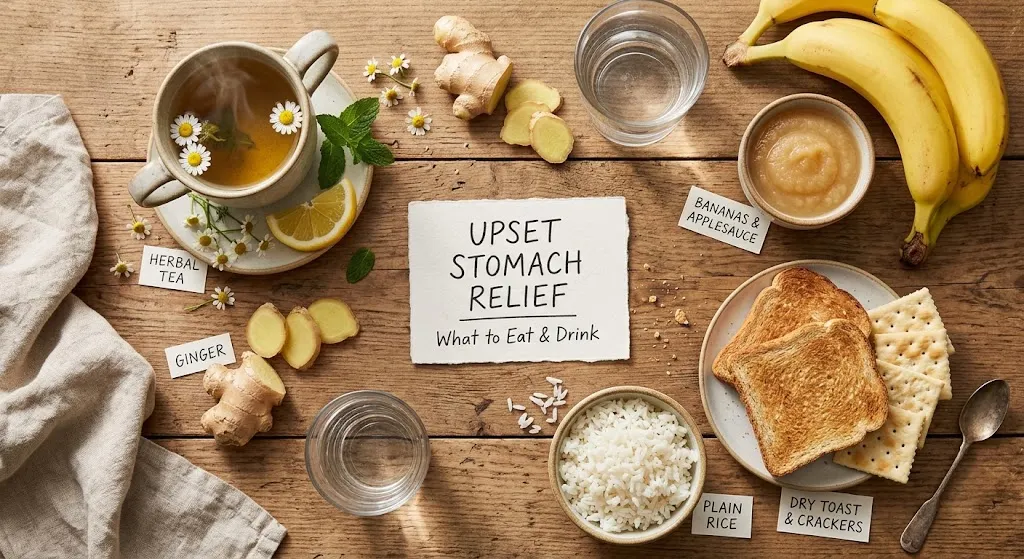
Practical ways to feel better from an upset stomach, including foods, drinks, home remedies, hydration, and important warning signs.
An upset stomach can leave you dealing with nausea, bloating, gas, indigestion, cramping, diarrhea, or a sour feeling. This guide explains practical ways to feel better, including foods, drinks, home remedies, and signs that need medical attention.
For mild symptoms, simple changes often make the biggest difference. The right approach depends on whether your discomfort comes from overeating, indigestion, gas, reflux, food, infection, or another cause.
For upset stomach relief, start with small sips of water, rest, and light foods when you can tolerate them. Ginger tea may help with nausea, while an oral rehydration solution can help replace fluids after vomiting or diarrhea. Avoid alcohol, caffeine, heavy meals, and foods that worsen your symptoms.
- Sip water slowly to stay hydrated.
- Try ginger tea if nausea is bothering you.
- Choose bananas, rice, toast, or applesauce when eating.
- Avoid fatty, spicy, alcoholic, and trigger foods.
- Use electrolytes after significant vomiting or diarrhea.
- Seek medical help for severe or persistent symptoms.
What Helps an Upset Stomach Quickly?
If you’re wondering how to relieve an upset stomach, start with the simplest option that matches your symptoms. There isn’t a universal remedy that provides instant relief for every stomach problem.
For mild discomfort, give your digestive system a break and avoid adding another trigger. Small amounts of fluid, lighter foods, and rest can be useful starting points.
- Take small sips of water rather than drinking quickly.
- Stop eating temporarily if food makes nausea worse.
- Sit upright if you have indigestion or reflux.
- Try ginger tea when nausea is the main problem.
- Eat smaller portions when you start feeling better.
- Avoid alcohol, caffeine, and foods that trigger symptoms.
- Try a warm, caffeine-free drink if it feels soothing.
- Rest instead of exercising while symptoms are active.
- Use an oral rehydration solution after substantial fluid loss.
- Seek medical help when pain is severe or unusual.
Quick upset stomach relief should focus on comfort and hydration, not a promise of an instant cure.
What Causes an Upset Stomach?
The phrase upset stomach covers many digestive symptoms, so the cause can vary considerably. A stomach ache after eating too much is different from abdominal pain caused by an infection.
Common causes include overeating, eating quickly, indigestion, gas, food intolerance, infections, reflux, constipation, medications, and certain digestive conditions.
- Overeating: A large meal can leave you feeling overly full, bloated, or uncomfortable.
- Fatty foods: Heavy meals can trigger indigestion in some people.
- Spicy foods: Strong spices may aggravate existing digestive symptoms.
- Gas: Trapped gas can cause pressure, bloating, and stomach discomfort.
- Indigestion: Dyspepsia can cause upper-abdominal burning, fullness, nausea, or belching.
- Acid reflux: Stomach contents moving upward can cause burning and sour sensations.
- Food poisoning: Contaminated food can cause vomiting, diarrhea, cramps, and nausea.
- Viral gastroenteritis: A stomach infection may cause vomiting and diarrhea.
- Food intolerance: Certain foods can repeatedly cause digestive symptoms.
- Medications: Some medicines can irritate the digestive tract or change bowel habits.
If your symptoms repeatedly appear after the same foods, keep a simple food and symptom diary. That pattern can be useful when discussing recurring digestive discomfort with a healthcare professional.
Upset Stomach Symptoms to Watch For
An upset stomach doesn’t always feel like a traditional stomachache. Your symptoms can provide clues about what type of digestive problem you’re experiencing.
Nausea, bloating, gas, heartburn, diarrhea, and vomiting can all occur with different digestive conditions.
- Nausea or a feeling that you may vomit
- Upper-abdominal discomfort
- Stomach cramps
- Bloating or excessive fullness
- Burping and gas
- Heartburn
- A sour feeling in your stomach
- Loose or watery stools
- Vomiting
- Reduced appetite
The combination matters. For example, sour stomach and nausea may feel different from stomach pain caused by gas.
Likewise, upset stomach and diarrhea creates a greater dehydration concern than mild indigestion alone.
What to Eat for an Upset Stomach
When your stomach hurts, heavy food usually isn’t the best place to start. Choose small portions of mild, easy-to-tolerate foods and gradually return to your normal meals.
The best foods for an upset stomach vary from person to person. If a particular food clearly makes your symptoms worse, leave it out even if it’s commonly recommended.
Soft, simple, and easy to portion.
Plain white rice can be a gentle carbohydrate.
Plain toast is a simple option when your appetite returns.
Soft and easy to eat in a small serving.
Plain oatmeal can work well for some people.
Plain crackers are convenient when nausea is mild.
Keep sauces and heavy seasonings to a minimum.
Broth-based soup can provide both food and fluid.
Keep them plain and avoid heavy toppings.
Add small amounts once lighter foods are comfortable.
What About the BRAT Diet?
You may have heard of the BRAT diet for an upset stomach, which stands for bananas, rice, applesauce, and toast.
These foods can be easy to tolerate, but the BRAT diet is too restrictive as a complete diet for prolonged use. As your appetite returns, gradually add other nutritious foods instead of eating only these four items.
What to Drink for an Upset Stomach
Choosing the right beverage can make hydration easier when your stomach feels unsettled. Water is usually the simplest starting point, especially when you aren’t losing large amounts of fluid.
If vomiting or diarrhea is present, your fluid needs change. An oral rehydration solution can help replace both fluid and electrolytes.
The most straightforward hydration choice.
A gentle option when you prefer something warm.
A popular choice when nausea accompanies stomach discomfort.
May feel soothing for some people, but can worsen reflux.
A mild, caffeine-free option.
Provides fluid and some sodium.
Useful when fluid and electrolyte replacement is needed.
Especially useful after substantial vomiting or diarrhea.
An option if you tolerate juice.
Helpful when drinking a full glass feels difficult.
These stomach soothing drinks aren’t cures. Their main benefit is providing fluids while avoiding unnecessary irritation.
Best Teas for an Upset Stomach
Tea can be an easy way to drink something warm without adding heavy ingredients. However, not every herbal tea suits every digestive symptom.
Ginger is often chosen for nausea, while peppermint may be less suitable when reflux is involved. Chamomile provides a naturally caffeine-free alternative.
Ginger Tea for an Upset Stomach
Ginger for an upset stomach is commonly used when nausea is the main complaint. A mild cup of ginger tea may be easier to tolerate than a strong, concentrated preparation.
If ginger increases burning or heartburn, stop using it.
Peppermint Tea
Peppermint tea for an upset stomach may feel comfortable when bloating or general digestive discomfort is present. However, peppermint can aggravate reflux symptoms in some people.
Chamomile Tea
Chamomile tea for an upset stomach is a caffeine-free option with a mild flavor. Keep the preparation simple and avoid excessive sweeteners.
Other Herbal Tea
A mild herbal tea for an upset stomach can provide fluids without caffeine. Check blended tea labels if you have allergies or take medications.
Natural Upset Stomach Relief at Home
Many people search for natural upset stomach relief because they want something simple before reaching for medication. Home care can be reasonable for mild, short-lived symptoms when no warning signs are present.
The safest upset stomach home remedies generally involve hydration, rest, gentle foods, and avoiding known triggers.
- Sip water slowly throughout the day.
- Try ginger tea for nausea if you tolerate ginger.
- Eat smaller meals.
- Avoid alcohol while symptoms continue.
- Reduce caffeine if it aggravates your stomach.
- Avoid very fatty meals.
- Rest after vomiting or diarrhea.
- Stay upright after eating if reflux is involved.
- Keep meals simple while your appetite is low.
- Gradually return to your usual diet as you improve.
There is no need to create complicated homemade mixtures. Simple remedies are often easier to tolerate and easier to stop if symptoms worsen.
Upset Stomach and Indigestion
Upset stomach from indigestion often causes upper-abdominal discomfort, fullness, bloating, belching, nausea, or burning. It may appear during or shortly after a meal.
Indigestion can be triggered by overeating, eating quickly, fatty foods, certain beverages, stress, and some medications. Recurring symptoms should be evaluated rather than repeatedly treated at home.
- Eat smaller meals.
- Slow down while eating.
- Avoid personal trigger foods.
- Limit alcohol if it causes symptoms.
- Reduce caffeine if it worsens discomfort.
- Avoid lying down immediately after eating.
- Keep late-night meals smaller.
- Sip water instead of consuming large drinks.
- Consider an appropriate OTC antacid for occasional acid-related symptoms.
- Speak with a healthcare professional when symptoms keep returning.
For occasional indigestion relief at home, removing the trigger may be more useful than adding another remedy.
Sour Stomach Relief: What Helps?
A sour stomach can describe an acidic, unsettled, burning, or generally uncomfortable feeling. Some people use the phrase when they experience indigestion, reflux, nausea, or a sour feeling after eating.
If you have sour stomach after eating or notice symptoms repeatedly after meals, look for patterns rather than assuming excess acid is always responsible.
- Choose smaller meals.
- Drink water in small amounts.
- Avoid foods that consistently trigger symptoms.
- Limit alcohol.
- Reduce caffeine if it causes burning.
- Avoid acidic drinks when they worsen reflux.
- Limit carbonated drinks if they increase bloating.
- Stay upright after meals.
- Avoid very large meals close to bedtime.
- Consider an OTC antacid for occasional acid-related symptoms when appropriate.
If you frequently experience sour stomach and indigestion, ask a healthcare professional about possible causes.
Upset Stomach After Eating or Overeating
An upset stomach after eating can happen when you eat too quickly, consume a very large meal, or choose foods that your digestive system doesn’t tolerate well.
A stomach ache after overeating often comes with fullness, bloating, burping, or discomfort. Giving your digestive system time to settle may be more useful than immediately eating more.
- Stop eating when you’re comfortably full.
- Take a gentle walk if movement feels comfortable.
- Sip water slowly.
- Avoid another heavy meal.
- Skip alcohol for the rest of the day.
- Avoid lying flat immediately after eating.
- Keep your next meal smaller.
- Notice which foods repeatedly cause discomfort.
- Eat more slowly at future meals.
- Seek advice if pain happens after most meals.
Stomach pain after eating that is severe, persistent, or repeatedly triggered deserves professional evaluation.
Upset Stomach, Gas, and Bloating
Gas can create pressure, cramping, and a swollen feeling that people often describe as an upset stomach. Carbonated beverages and certain foods can make bloating worse for some people.
If your stomach ache from gas is mild, focus on reducing swallowed air and avoiding foods or drinks that clearly trigger symptoms.
- Eat slowly.
- Avoid drinking through straws if they make you swallow air.
- Limit carbonated drinks when they cause bloating.
- Avoid very large meals.
- Take a gentle walk.
- Drink water slowly.
- Notice foods that repeatedly increase gas.
- Reduce chewing gum if it increases swallowed air.
- Avoid heavy meals late at night.
- Seek medical advice for persistent or severe abdominal swelling.
Upset Stomach in the Morning or at Night
An upset stomach in the morning can have many possible causes, including reflux, hunger, medication effects, stress, pregnancy, infection, or other digestive issues.
An upset stomach at night may also be associated with eating heavily close to bedtime or lying down soon after eating.
For either situation:
- Keep meals moderate.
- Avoid personal trigger foods.
- Limit alcohol.
- Reduce caffeine when it causes symptoms.
- Avoid large meals before bed.
- Stay upright after eating.
- Keep water nearby for small sips.
- Don’t repeatedly self-treat unexplained symptoms.
- Track when the symptoms occur.
- Get professional advice when the pattern continues.
A repeated stomach ache after meals is worth discussing with a clinician, particularly when other symptoms appear.
What to Take for an Upset Stomach
The right treatment depends on the symptom. There is no single upset stomach treatment that fits nausea, reflux, diarrhea, and abdominal pain equally well.
For occasional indigestion, some adults may use OTC products such as antacids. Bismuth subsalicylate and other products have different uses and precautions, so always follow the label.
Medication Safety
- Antacids: May provide temporary relief from occasional acid-related indigestion.
- Oral rehydration solution: Helps replace fluids and electrolytes after significant losses.
- Bismuth subsalicylate: May help certain digestive symptoms but isn’t appropriate for everyone.
- Anti-diarrheal medicines: May be appropriate in some situations but shouldn’t be used blindly.
- Prescription medicines: May be necessary when an underlying condition is identified.
Ask a pharmacist or healthcare professional if you’re unsure whether an OTC product is suitable.
Don’t repeatedly take medication for unexplained stomach pain without finding out why it keeps happening.
How to Relieve Stomach Pain Safely
When people search for stomach pain relief, they may actually be describing anything from mild gas to serious abdominal disease. That makes the phrase much broader than ordinary indigestion.
For mild discomfort without warning signs, simple home care may be reasonable. Severe abdominal pain is different and should not be managed solely with home remedies.
- Rest and monitor how the pain changes.
- Drink small amounts of water if tolerated.
- Avoid alcohol.
- Avoid foods that clearly worsen symptoms.
- Don’t take more medication than the label allows.
- Don’t use repeated painkillers to mask unexplained pain.
- Watch for vomiting, fever, bleeding, or dehydration.
- Note where the pain occurs.
- Note whether meals trigger it.
- Get medical help when the pain is severe or persistent.
The fastest way to relieve stomach pain is not always another remedy. Sometimes the safest step is identifying when home treatment is no longer appropriate.
When to See a Doctor for Stomach Pain
Mild digestive discomfort often improves on its own. Persistent, severe, or worsening symptoms require more attention, especially when they interfere with eating, drinking, sleeping, or normal activities.
Seek Urgent Medical Attention For
- Severe or rapidly worsening abdominal pain
- Blood in vomit
- Black or bloody stools
- Persistent vomiting
- Inability to keep fluids down
- Severe dehydration
- Fainting or severe weakness
- Significant abdominal swelling
- Difficulty swallowing
- Unexplained weight loss
- Chest pressure or pain
- Shortness of breath
If you’re wondering when to seek help for stomach pain, use the severity and accompanying symptoms as your guide. Don’t assume persistent abdominal pain is simply gas or indigestion.
Upset Stomach Relief for Children and During Pregnancy
Children and pregnant people need extra care because medication choices and hydration needs can differ.
For children with vomiting or diarrhea, age-appropriate oral rehydration solutions may be more suitable than sports drinks or homemade electrolyte mixtures. Infants and young children can become dehydrated quickly.
During pregnancy, nausea is common, especially early on. Small meals, frequent fluids, and simple foods may help some people, but medications and concentrated herbal products should be discussed with a healthcare professional first.
Get Medical Advice When
- A child cannot keep fluids down.
- A child is urinating much less than usual.
- Vomiting or diarrhea is persistent.
- Pregnancy-related vomiting prevents adequate hydration.
- There is blood in vomit or stool.
- Severe abdominal pain develops.
- Symptoms are becoming worse instead of better.
FAQs
What is the best remedy for an upset stomach?
There isn’t one best upset stomach remedy for everyone. For mild symptoms, start with hydration, smaller meals, rest, and avoiding foods or drinks that clearly trigger discomfort.
How can I settle an upset stomach naturally?
For natural stomach relief, try small sips of water, mild ginger tea if tolerated, simple foods, and rest. Avoid alcohol, heavy meals, and known triggers while your symptoms settle.
How do you get rid of a stomach ache in 5 minutes?
There is no dependable way to get rid of a stomach ache in 5 minutes because abdominal pain has many possible causes. For mild discomfort, small sips of water, rest, and avoiding the suspected trigger may help while you monitor your symptoms.
What should I drink when my stomach hurts?
Water, ginger tea, chamomile tea, clear broth, and oral rehydration solutions can be useful choices depending on your symptoms. If you have reflux, caffeine, alcohol, acidic drinks, or carbonation may make you feel worse.
What foods help an upset stomach?
Common foods for an upset stomach include bananas, rice, toast, applesauce, oatmeal, crackers, plain noodles, and simple soups. Start with small portions and add other foods as your appetite returns.
What helps a sour stomach after eating?
If you experience sour stomach after meals, try smaller portions and avoid foods or drinks that repeatedly trigger symptoms. Staying upright after eating can also be useful when reflux contributes to the discomfort.
When should stomach pain be checked by a doctor?
Get medical attention for severe, persistent, or worsening stomach pain, especially when it occurs with bleeding, repeated vomiting, dehydration, chest symptoms, fainting, difficulty swallowing, or unexplained weight loss.
Conclusion
Read More:
What Can I Drink After a Tooth Extraction
100 Fruit Drink Recipes: Juices, Smoothies & Mocktails
16 Best Non-Alcoholic After Dinner Drinks for Any Evening
Best Places for Non-Alcoholic Drinks in Las Vegas: 2026 Guide
Bob Marley Mocktail: Easy Non-Alcoholic Layered Drink
Liquid Maria Juana Drink: Easy Tropical Cocktail Recipe
Gasolina Drink: Flavors, ABV, Ingredients & More