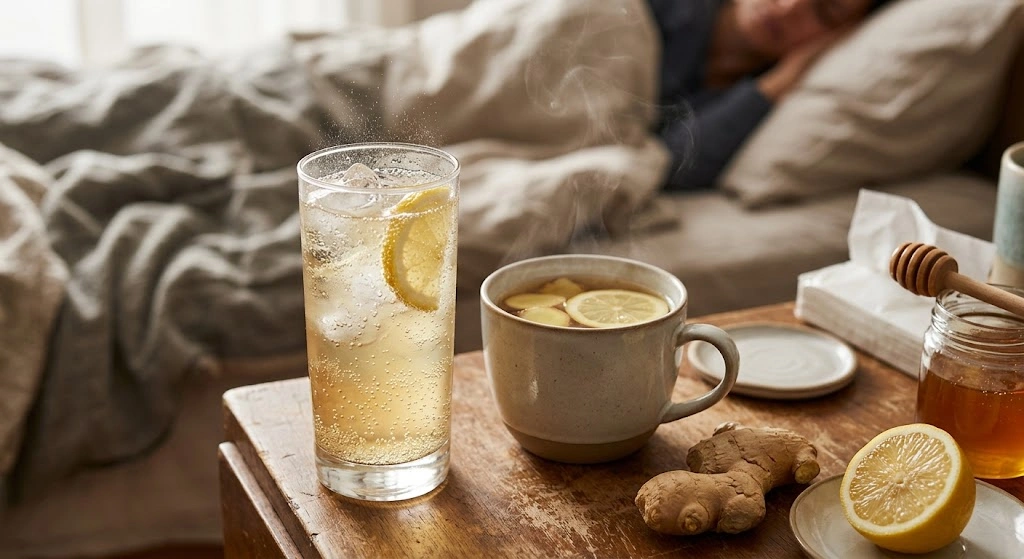
Find out whether ginger ale can soothe a sore throat, when carbonation may make symptoms worse, and which drinks are better for hydration, cough, nausea, fever, and dehydration.
If swallowing hurts, you may wonder, is ginger ale good for a sore throat? Ginger ale is a traditional sick-day drink in many American households, especially for nausea and an upset stomach. However, its reputation is stronger than the evidence behind the soda itself.
Ginger ale can be okay with a sore throat if it feels comfortable, but it does not treat the cause of throat pain. The cold temperature may feel soothing, and any tolerated beverage can contribute to fluid intake. On the other hand, carbonation, acidic ingredients, and added sugar may make an irritated throat or sensitive stomach feel worse.
For most people, water, ginger tea, caffeine-free tea, broth, ice chips, or warm water with honey are simpler sick-day choices. The right drink depends on whether you are dealing with a sore throat, cough, congestion, fever, nausea, vomiting, diarrhea, or dehydration.
Does Ginger Ale Help a Sore Throat?
Ginger ale may temporarily soothe a sore throat for some people, but it is not a treatment.
Cold ginger ale can feel pleasant and help you take in fluids. However, commercial ginger ale is a carbonated soft drink, and many brands contain significant added sugar and only a small amount of ginger extract.
If the bubbles sting, trigger reflux, or increase swallowing discomfort, choose a noncarbonated beverage instead.
The CDC and Mayo Clinic recommend maintaining fluid intake and using comforting warm or cold liquids for sore-throat symptoms. Mayo Clinic lists broth, caffeine-free tea, warm water with honey, and cold treats as options.
Ginger Ale vs Other Drinks When You Are Sick
The best beverage depends more on your symptoms than on the drink’s reputation.
| Drink | Main Advantage | Possible Drawback | Best Fit |
|---|---|---|---|
| Water | Simple hydration | May seem unappealing with nausea | Most illnesses |
| Ginger tea | Contains real ginger | Strong ginger can irritate some people | Nausea, warm throat comfort |
| Tea with honey | Warm and soothing | Honey is unsafe under age 1 | Sore throat and cough |
| Clear broth | Fluid plus savory flavor | Can contain substantial sodium | Low appetite, cold symptoms |
| Regular ginger ale | Familiar and easy to sip | Sugar, acid, carbonation | Occasional comfort drink |
| Zero-sugar ginger ale | No added sugar | Carbonation and sweeteners remain | People avoiding sugar |
| Sparkling water | Hydrates without sugar | Bubbles may irritate | If carbonation feels comfortable |
| Oral rehydration solution | Replaces fluid and electrolytes | Not needed for every minor illness | Vomiting, diarrhea, dehydration |
Water is usually the best place to start. Add other drinks for comfort, calories, electrolytes, or flavor as your symptoms require.
Why Do People Drink Ginger Ale When Sick?
The connection between ginger ale and sickness has been passed through families for generations. It is especially common to hear recommendations for ginger ale for nausea, stomach bugs, colds, or flu symptoms.
Part of the tradition makes sense. Ginger itself has a long history of use for digestive discomfort, while a sweet drink can be easier to sip when someone has little appetite.
There is an important distinction, however:
Evidence involving ginger is not automatically evidence for ginger ale.
The National Center for Complementary and Integrative Health, part of the National Institutes of Health, notes that Zingiber officinale has been studied for several forms of nausea. Research results differ by condition, and many studies use ginger supplements rather than ginger-flavored soda.
Cleveland Clinic family physician Matthew Goldman, MD, also points out that commercial ginger ale may contain little meaningful ginger. He notes that carbonation and high sugar levels may aggravate gas, bloating, or indigestion in some people.
So, does ginger ale actually help when sick? Sometimes it helps someone drink something they tolerate. That is different from treating the illness.
Does Ginger Ale Have Real Ginger?
Some ginger ales contain ginger extract, while others rely on natural flavors. The amount also varies significantly between brands.
Ginger root, scientifically called Zingiber officinale, naturally contains compounds called gingerols. These compounds help explain why researchers study real ginger for nausea and other gastrointestinal symptoms.
What Is Actually in Regular Ginger Ale?
Current U.S. product labels provide useful context.
As of August 31, 2026, a 12-ounce serving of Canada Dry Ginger Ale lists:
- 140 calories
- 33 grams of sugar
- 50 milligrams of sodium
- Carbonated water
- High-fructose corn syrup
- Less than 2% ginger extract
- Natural flavors
- Citric acid
A 12-ounce Schweppes Ginger Ale currently lists:
- 120 calories
- 33 grams of added sugar
- 60 milligrams of sodium
- Carbonated water
- High-fructose corn syrup
- Citric acid
- Natural flavors
Its displayed ingredient list does not separately identify ginger extract.
Formulas can change, so check the Nutrition Facts panel and ingredient list on the bottle you purchase.
The practical takeaway is simple: ginger ale and ginger tea are not interchangeable sources of ginger.
Ginger Tea vs Ginger Ale: Which Is Better for a Sore Throat?
If you specifically want real ginger, ginger tea is the more direct option.
With homemade ginger tea, you control:
- How much ginger is added
- How strong the flavor becomes
- Whether you add honey
- Whether you use lemon
- How warm the drink is
- How much sugar it contains
Ginger ale provides much less control.
| Feature | Ginger Tea | Ginger Ale |
|---|---|---|
| Real ginger | Easy to confirm | Varies |
| Carbonation | No | Yes |
| Added sugar | Optional | Often substantial |
| Temperature | Warm or cold | Usually cold |
| Ginger strength | Adjustable | Fixed |
| Good for nausea | Ginger itself has research | Soda itself has limited evidence |
| Sore-throat comfort | Often gentle when mild | Depends on carbonation tolerance |
Cleveland Clinic suggests using fresh ginger in warm water or decaffeinated tea when you want actual ginger.
Easy Ginger Tea When Sick
Ingredients
- 1 cup water
- 3–5 thin slices of fresh ginger
- A small amount of honey, optional
- A little lemon, optional
Method
- Heat the water.
- Add the sliced ginger.
- Steep for several minutes.
- Cool until comfortably warm.
- Add honey if desired.
Keep the tea mild if your throat is sensitive. The NIH notes that ginger itself can sometimes cause heartburn or mouth and throat irritation, so stronger is not always better.
Never give honey to a child younger than 12 months.
Can Ginger Ale Make a Sore Throat Worse?
Yes. Ginger ale can irritate a sore throat in some people, although others drink it without problems.
Three features matter most.
Carbonation
The carbon dioxide dissolved in carbonated water creates the familiar fizz.
If you have significant throat irritation or throat pain, those bubbles may feel sharp or uncomfortable. This is why questions such as “are carbonated drinks bad for a sore throat?” do not have one universal answer.
If fizz hurts, avoid it.
Acidity
Popular ginger ales can contain citric acid or other acidic ingredients. Acidic drinks may sting sensitive tissue.
The same issue can occur with citrus juices and strongly flavored lemon drinks.
Reflux and Cough
Carbonated beverages can trigger reflux symptoms in some people. Reflux itself can irritate the throat and sometimes contribute to coughing.
Therefore, if soda consistently worsens your reflux, ginger soda is unlikely to be your best comfort drink during a sore throat.
Is Cold, Warm, or Flat Ginger Ale Better?
The temperature question is mostly about personal comfort.
Cold Ginger Ale
Cold ginger ale may temporarily feel soothing because cool temperatures can reduce the sensation of throat discomfort.
Cold drinks are not inherently bad for a sore throat. Mayo Clinic and the American Academy of Family Physicians include cold liquids or frozen options among measures that some people find soothing.
Warm Ginger Ale
There is no special reason to heat ginger ale.
If you want a warm ginger drink, fresh ginger tea generally makes more sense because it avoids carbonation and lets you control the ingredients.
Flat Ginger Ale
Flat ginger ale may be easier to tolerate when bubbles bother your throat or stomach.
Letting soda lose carbonation does not remove:
- Added sugar
- High-fructose corn syrup
- Citric acid
- Artificial sweeteners
- Caffeine, if present in another soda
Flat soda is still soda.
Is Diet or Zero-Sugar Ginger Ale Good for a Sore Throat?
Zero-sugar ginger ale removes the added-sugar issue, but that does not automatically make it better for sore-throat comfort.
For example, current Canada Dry Zero Sugar Ginger Ale contains 0 grams of sugar, but remains carbonated and contains ginger extract, citric acid, malic acid, aspartame, and acesulfame potassium.
Zero-sugar ginger ale may suit you if:
- You want ginger-ale flavor without added sugar.
- Carbonation does not bother you.
- You tolerate artificial sweeteners well.
Regular ginger ale may suit you if:
- You prefer its flavor.
- You only want a small amount.
- Added sugar is not a concern for you.
Neither version treats a sore throat, cold, influenza, nausea, or dehydration.
Is Ginger Beer Good for a Sore Throat?
Ginger beer is not automatically better than ginger ale.
Nonalcoholic ginger beer often has a stronger, spicier ginger flavor. That can be appealing if you enjoy ginger, but strong ginger may also feel sharp on an irritated throat.
Ginger beer can also contain:
- Added sugar
- Carbonation
- Acidic ingredients
- Strong ginger flavor
Some products called ginger beer contain alcohol, so always check the label. Alcohol is not a good sick-day hydration choice.
If you want real ginger without strong carbonation or alcohol, mild ginger tea is usually simpler.
Does Ginger Ale Help Nausea or an Upset Stomach?
This is where ginger ale has its strongest reputation.
Research suggests that real ginger may help certain types of nausea, but the evidence varies by condition and preparation. A 2024 overview of systematic reviews found potentially useful effects in several nausea settings while also noting limitations in the quality of the underlying evidence.
That does not prove that a bottle of ginger ale will settle your stomach.
Commercial ginger ale may contain too little ginger to provide the same exposure used in research. In addition, sugar and carbonation may worsen bloating, gas, or indigestion for some people.
If you feel nauseous, consider:
- Small sips of water
- Ice chips
- Mild ginger tea
- Clear broth
- An appropriate electrolyte beverage
- An oral rehydration solution when fluid losses are significant
If ginger ale is the only drink that sounds tolerable, a small amount is reasonable for many people.
Do not force yourself to finish a whole can.
Is Ginger Ale Hydrating When Sick?
Technically, ginger ale contains water and contributes to fluid intake.
That does not make it the best hydration drink.
When asking what to drink for hydration when sick, the key distinction is between ordinary hydration and replacing substantial fluid and electrolyte losses.
For a mild common cold or sore throat:
Water is usually enough for basic hydration.
For significant vomiting or diarrhea:
You may need fluids containing sodium, potassium, glucose, and other electrolytes.
NIDDK recommends replacing lost fluids and electrolytes during diarrhea. It notes that water, broth, sports drinks, and oral rehydration solutions containing glucose and electrolytes can play a role.
Ginger Ale vs Oral Rehydration Solution
These are not equivalent.
Ginger ale:
- Primarily a soft drink
- Often high in sugar
- Carbonated
- Not specifically formulated for rehydration
Oral rehydration solution:
- Designed to replace fluids and electrolytes
- Contains carefully balanced glucose and electrolytes
- Used when dehydration risk is more significant
People with kidney disease, diabetes, weakened immunity, or other medical conditions may need individualized guidance about rehydration products.
What to Drink When Sick: Best Choices by Symptom
There is no single best drink when sick.
A person with a dry cough has different needs from someone who has been vomiting all morning. Match your drink to the symptom.
| Symptom | Drinks to Try | Drinks That May Be Less Comfortable |
|---|---|---|
| Sore throat | Water, honey tea, broth, ice water | Fizzy or acidic drinks if they sting |
| Dry cough | Warm water with honey, tea | Alcohol, irritating acidic drinks |
| Congestion/stuffy nose | Water, warm tea, broth | Anything that reduces fluid intake |
| Nausea | Small water sips, ginger tea, ice chips | Large amounts of fizzy soda |
| Vomiting | Small frequent sips, rehydration solution | Chugging large drinks |
| Diarrhea | Water plus electrolyte replacement | Relying only on soft drinks |
| Fever | Water, broth, appropriate electrolytes | Alcohol |
| Low appetite | Broth, smoothies if tolerated | Heavy drinks that worsen nausea |
| Recovery | Water plus normal nutritious drinks and food | “Detox” or cure claims |
The goal is not to find a magical comfort drink. It is to maintain oral hydration, support normal nutrition, and choose beverages that do not worsen symptoms.
Best Drinks for a Sore Throat and Cough
If your main problem is throat pain, swallowing discomfort, or a dry cough, simple drinks usually work best.
Water
Water is the most dependable hydration choice when sick.
Try:
- Cold water
- Room-temperature water
- Warm water
- Ice chips
Use whichever temperature feels easiest to swallow.
Warm Water With Honey
Honey can make warm water or tea soothing for adults and children over age 1.
The American Academy of Family Physicians also includes hot tea and honey among comfort measures for sore throats.
Caffeine-Free Herbal Tea
Useful choices include:
- Ginger tea
- Chamomile tea
- Rooibos tea
- Peppermint tea, if mint does not worsen your reflux
Green Tea and Black Tea
Green tea and black tea are fine for many adults, but both naturally contain caffeine unless decaffeinated.
If you already drink several caffeinated beverages, switch some servings to water or decaffeinated beverages.
Broth
Chicken broth, bone broth, vegetable broth, and other clear broths provide fluid and a savory alternative when sweet drinks sound unpleasant.
Check sodium if you have been advised to limit it.
What to Drink for a Cold, Flu, Cough, or Congestion
The common cold and influenza (flu) are respiratory illnesses. Drinks do not kill the virus or cure the infection.
However, staying hydrated can prevent dry mouth and throat dryness, while warm beverages may simply feel comforting during cold and flu season.
Good choices include:
- Water
- Warm water
- Chicken broth
- Clear broth
- Herbal tea
- Honey tea for people over age 1
- Ginger tea
- Decaffeinated tea
If a runny nose, stuffy nose, mucus, cough, or congestion accompanies your illness, focus on steady fluid intake and rest.
Do not expect ginger ale to clear congestion or cure an upper respiratory infection.
Likewise, no beverage can instantly “boost” the immune system or eliminate a viral infection.
Hydration, nutrition, and rest support normal recovery, but they are not substitutes for appropriate medical care.
What to Drink With Fever
A fever can make drinking more important, especially if you are sweating or eating and drinking less than usual.
Start with:
- Water
- Cold water
- Warm water
- Broth
- Decaffeinated tea
- Appropriate electrolyte beverages when fluid loss is substantial
Ginger ale can contribute fluid if you tolerate it, but it offers no special fever benefit.
If fever is severe, persistent, or accompanied by concerning symptoms, seek medical advice rather than relying on home remedies.
Best Drinks for a Stomach Bug, Vomiting, or Diarrhea
A stomach bug or gastroenteritis can cause nausea, vomiting, diarrhea, appetite loss, and rapid fluid loss.
The priority is preventing or correcting dehydration.
If You Feel Nauseous
Try:
- One or two small sips at a time
- Ice chips
- Cold water
- Mild ginger tea
- Clear liquids you tolerate
After Vomiting
Avoid immediately drinking a large glass.
Start slowly and increase intake as your stomach tolerates it.
With Diarrhea
Water remains important, but diarrhea also causes electrolyte loss.
An oral rehydration solution may be more appropriate than ordinary soda when losses are significant. NIDDK specifically recommends replacing fluids and electrolytes during diarrhea.
Seek medical care if you cannot keep fluids down or develop signs of significant dehydration.
Drinking Soda When Sick: Is It Actually Helpful?
Drinking soda when sick is usually a comfort choice, not a treatment.
The idea that there must be a best soda when sick comes largely from family tradition.
Ginger Ale vs Sprite or 7UP
Sprite, 7UP, and other lemon-lime sodas are often used for an upset stomach because they have a light flavor and are typically caffeine-free.
They do not contain meaningful ginger.
Compared with ginger ale, they share several characteristics:
- Carbonation
- Sweet flavor
- Added sugar in regular versions
- Acidic ingredients
- No special ability to treat nausea or infection
If the real question is ginger ale vs Sprite when sick, neither is automatically the healthier treatment.
Choose the one you tolerate, or skip both.
Cola and Coke When Sick
Cola and Coke add caffeine to the equation.
Caffeinated soda is not necessarily forbidden when sick, but it should not replace water as your main drink. Caffeine can also interfere with sleep if consumed late in the day, and rest matters during recovery.
Diet Soda and Zero-Sugar Soda
These remove added sugar but still contain carbonation and other ingredients.
A zero-sugar soda is not the same thing as an electrolyte drink.
Flat Soda
Flat Sprite, flat 7UP, or flat ginger ale may feel easier on the stomach because much of the carbonation is gone.
Again, flattening soda does not transform it into a rehydration solution.
Are Fizzy Water and Sparkling Water Okay for a Sore Throat?
Sparkling water hydrates because it is water, but carbonation changes how it feels.
If fizzy water feels comfortable, there is no need to avoid it simply because it contains bubbles.
If carbonation:
- Stings your throat
- Causes uncomfortable belching
- Worsens reflux
- Makes coughing feel worse
choose plain water instead.
The same logic applies to carbonated beverages generally.
Your throat’s response matters more than the label.
What About Juice, Coconut Water, Milk, Coffee, and Smoothies?
Several other drinks appear frequently in sick-day advice. Their usefulness depends on your symptoms.
Orange Juice
Orange juice provides fluid and nutrients, but it is acidic.
If citrus stings your sore throat or worsens reflux, skip it.
Apple Juice
Apple juice has a milder flavor than orange juice for many people.
It can contribute fluid and calories when appetite is low, although regular juice contains natural sugar. Diluting it may make it easier to sip.
Cranberry Juice and Other Fruit Juice
Cranberry juice and fruit juice can be part of your fluid intake if tolerated.
They do not cure colds, influenza, or sore throats.
Lemon Water
Warm lemon water or honey-lemon water is popular during a cold.
The warmth and honey may be pleasant, but lemon’s acidity can sting some throats. Use less lemon or leave it out if needed.
Coconut Water
Coconut water contains fluid and naturally occurring electrolytes, including potassium.
It can be a reasonable beverage if you enjoy it, but it is not automatically superior to water or a properly formulated oral rehydration solution.
Milk
Milk is okay when sick if you tolerate dairy normally.
If nausea makes creamy drinks unpleasant, choose something lighter.
Coffee
A normal amount of coffee may be fine for an adult who already drinks it regularly.
However, water should remain available, and too much caffeine can interfere with rest. Choose decaf if you want the warmth without as much caffeine.
Smoothies
Smoothies may help when your appetite is low because they can provide fluid, calories, fruit, yogurt, or other foods in an easy-to-consume form.
Avoid very acidic smoothies if they irritate your throat.
Protein Shakes
Protein shakes can support nutrition when you are recovering and struggling to eat.
They are not primarily hydration drinks, and a thick or rich shake may worsen nausea in some people.
What Drinks Should You Avoid When Sick?
You do not need a long list of banned beverages.
Instead, reduce drinks that make your symptoms worse or interfere with hydration and recovery.
Consider limiting:
- Alcohol
- Scalding-hot drinks
- Very acidic drinks that sting
- Highly carbonated drinks if they irritate your throat
- Large amounts of sugary soda
- Energy drinks
- Excess caffeine
- Very rich shakes during nausea
- Any drink that worsens reflux
Mayo Clinic advises people with sore throats to drink more fluids and notes that caffeine and alcohol can be drying.
Alcohol should be avoided when you are dehydrated, and it can interact with medications or impair recovery.
How Much Should You Drink When Sick?
There is no universal number of ounces that works for everyone.
Your fluid needs depend on:
- Body size
- Age
- Fever
- Sweating
- Vomiting
- Diarrhea
- Pregnancy
- Activity level
- Food intake
- Kidney or heart conditions
- Medications
Instead of forcing large amounts at once, sip fluids regularly throughout the day.
When nausea is present, frequent small sips can be easier.
Watch for possible dehydration signs such as:
- Very dark urine
- Urinating much less than usual
- Dry mouth
- Strong thirst
- Dizziness
- Unusual weakness
- Difficulty keeping fluids down
Children, older adults, and people with certain medical conditions can become vulnerable to dehydration more quickly.
Is Ginger Ale Better Than Water When Sick?
For routine hydration, water is the better default.
Water contains:
- No added sugar
- No artificial sweeteners
- No carbonation
- No acid flavoring
- No caffeine
- No unnecessary calories
Ginger ale may win in one practical situation:
You dislike water so much during nausea that ginger ale is one of the only drinks you can comfortably sip.
In that situation, some fluid may be better than refusing all fluids. But as your stomach settles, return to water and other suitable beverages.
How to Choose Ginger Ale If You Still Want It
There is nothing wrong with choosing ginger ale as an occasional comfort drink.
Just know what you are buying.
Check for Ginger
Look at the ingredient list for:
- Ginger extract
- Ginger
- Ginger flavor
- Natural flavors
Do not assume every brand contains the same amount.
Check Added Sugar
Read the Added Sugars line on the Nutrition Facts label.
Regular ginger ales may contain more than 30 grams of sugar per 12-ounce serving, as current Canada Dry and Schweppes labels demonstrate.
Check Caffeine
Traditional ginger ale is commonly caffeine-free, but always check unfamiliar products.
Test Your Carbonation Tolerance
If the bubbles hurt, let some carbonation escape or choose tea.
Keep the Serving Reasonable
You do not need to finish a full bottle to get the flavor you wanted.
When a Sore Throat Is More Than a Drink Problem
A beverage can provide symptom relief and comfort. It cannot determine why your throat hurts.
Most sore throats are caused by viruses. However, group A Streptococcus can cause strep throat.
The CDC reported in its January 15, 2026 guidance that approximately 1 in 10 adults and 3 in 10 children with a sore throat have strep throat.
Possible strep symptoms include:
- Sudden sore throat
- Pain when swallowing
- Fever
- Red, swollen tonsils
- Swollen lymph nodes in the front of the neck
- White patches or pus on the tonsils
A healthcare professional can perform a strep test.
The CDC recommends treating confirmed group A strep throat with antibiotics. Ginger ale, ginger tea, honey, juice, or another home remedy does not replace appropriate treatment.
The American Academy of Family Physicians similarly advises testing when bacterial strep throat is suspected and notes that warm tea, honey, and fluids can be used for comfort alongside appropriate care.
- Trouble breathing
- Serious difficulty swallowing
- Inability to keep fluids down
- Signs of significant dehydration
- Excessive drooling in a young child
- Severe or rapidly worsening symptoms
- Blood in saliva or mucus
- A concerning rash
- Persistent symptoms that are not improving
Do not delay care because a home drink temporarily makes your throat feel better.
FAQs
Is ginger ale good for sore throat and cough?
Ginger ale may feel soothing, but it does not treat a sore throat or cough. Its cold temperature and fluid can provide temporary comfort.
For someone over age 1, warm tea or water with honey may be a more useful choice when throat irritation and coughing occur together.
Does ginger ale soothe a sore throat?
It can for some people.
Cold fluid may temporarily reduce discomfort, but carbonation or acidity can irritate other people’s throats. Stop drinking it if the fizz stings.
Is ginger ale bad for a sore throat?
Not automatically.
If you tolerate it, a small serving is generally just another beverage. It becomes a poor choice when carbonation, acidity, sugar, or reflux makes symptoms worse.
Should I drink ginger ale with a sore throat?
You can if it feels comfortable, but you do not need it.
Water, warm tea, broth, honey water, and cold fluids are usually simpler options for maintaining hydration.
Does ginger ale help with a cold or flu?
Ginger ale does not treat the common cold or influenza.
It may contribute to fluid intake, but it will not eliminate a viral infection, stop congestion, or shorten flu symptoms.
Does ginger ale help coughing or congestion?
There is no good reason to expect commercial ginger ale to directly relieve congestion or a cough.
Warm liquids may feel comforting, and honey may help some coughs in adults and children over age 1. Focus on hydration and appropriate symptom care.
Does ginger ale help nausea?
Real ginger has evidence for some types of nausea, but ginger ale is not equivalent to ginger.
Many commercial versions contain small or uncertain amounts of ginger, while sugar and carbonation can worsen stomach discomfort in some people.
What can I drink if water makes me nauseous?
Try small amounts of:
- Ice chips
- Mild ginger tea
- Clear broth
- An electrolyte beverage
- Oral rehydration solution when appropriate
- A different temperature of water
Sometimes small, frequent sips are easier than changing the drink itself.
What is the best drink after throwing up?
When vomiting has stopped enough to tolerate fluids, start with small sips.
Water may be adequate after mild vomiting. Continued vomiting or substantial fluid loss may require an oral rehydration solution or other appropriate electrolyte replacement.
What is the best drink for a sore throat?
There is no single winner.
For most people, water, caffeine-free tea, warm broth, honey-containing drinks for ages 1+, cold water, or ice chips are sensible choices. Choose the temperature that feels best.
Is ginger tea better than ginger ale?
If your goal is actual ginger, yes.
Fresh ginger tea contains ginger directly and lets you control the sugar and strength. It also avoids carbonation.
Does honey help a sore throat?
Honey can be soothing when added to warm water or tea and may help with coughing.
Never give honey to a child under 1 year old. Mayo Clinic and the American Academy of Family Physicians include honey among comfort measures for appropriate ages.
Is lemon good for a sore throat?
Lemon can add flavor to warm water or tea.
However, lemon is acidic. If it burns or stings your throat, reduce the amount or skip it completely.
Are cold drinks bad for a sore throat?
No.
Some people find cold drinks, ice chips, or ice pops especially soothing. Others prefer warm beverages. Both approaches can be reasonable.
Should you drink electrolytes when sick?
Not every illness requires an electrolyte drink.
They become more useful when vomiting, diarrhea, heavy sweating, or poor fluid intake causes meaningful electrolyte loss. Oral rehydration solutions are specifically designed for this situation.
Conclusion
So, is ginger ale good for a sore throat? It can be an acceptable comfort drink when you enjoy it and the carbonation does not irritate your throat. A cold serving may feel soothing, and it contributes some fluid, but ginger ale does not treat a sore throat, cold, flu, cough, congestion, or infection.
Commercial ginger ale also should not be confused with real ginger. Current U.S. labels show that regular products can contain about 33 grams of sugar per 12-ounce serving, while the amount of actual ginger varies widely. If you want ginger itself, mild ginger tea gives you much more control.
When deciding what to drink when sick, start with your symptoms. Water is the best everyday hydration baseline. Warm tea and broth can be comforting, while cold water and ice chips may soothe a sore throat. Significant vomiting or diarrhea may call for proper electrolyte replacement or an oral rehydration solution.
Most importantly, use drinks for hydration and comfort—not as substitutes for medical treatment. If throat pain comes with breathing trouble, serious swallowing difficulty, dehydration, worsening symptoms, or signs of strep throat, seek appropriate medical care.
Medical and Editorial Sources
This article was fact-checked using current or authoritative information from the Centers for Disease Control and Prevention, Mayo Clinic, Cleveland Clinic, National Institutes of Health/NCCIH, NIDDK, and the American Academy of Family Physicians, along with current U.S. manufacturer nutrition labels.
Product-label information: Current Canada Dry and Schweppes U.S. nutrition and ingredient information was checked on August 31, 2026. Product formulas and nutrition information can change, so readers should verify the label on the product they purchase.
Read More:
What Can I Drink After a Tooth Extraction
100 Fruit Drink Recipes: Juices, Smoothies & Mocktails
16 Best Non-Alcoholic After Dinner Drinks for Any Evening
Best Places for Non-Alcoholic Drinks in Las Vegas: 2026 Guide
Bob Marley Mocktail: Easy Non-Alcoholic Layered Drink
Liquid Maria Juana Drink: Easy Tropical Cocktail Recipe
Gasolina Drink: Flavors, ABV, Ingredients & More




26 Comments on “Is Ginger Ale Good for a Sore Throat? Best Drinks When Sick”