What Is in Energy Drinks? Ingredients, Caffeine, Sugar, and Safety
Energy drink cans often promise focus, performance, alertness, or all-day energy. Turn the can around, however, and you may find a long list of stimulants, sweeteners, vitamins, acids, amino acids, and plant extracts.
The ingredient responsible for most of the noticeable effect is usually caffeine. Sugar may provide calories, but ingredients such as taurine, guarana, B vitamins, and ginseng play different roles.
This guide explains what is in energy drinks, why each ingredient is used, how much caffeine a can may contain, and what to check before drinking one.
Quick Answer
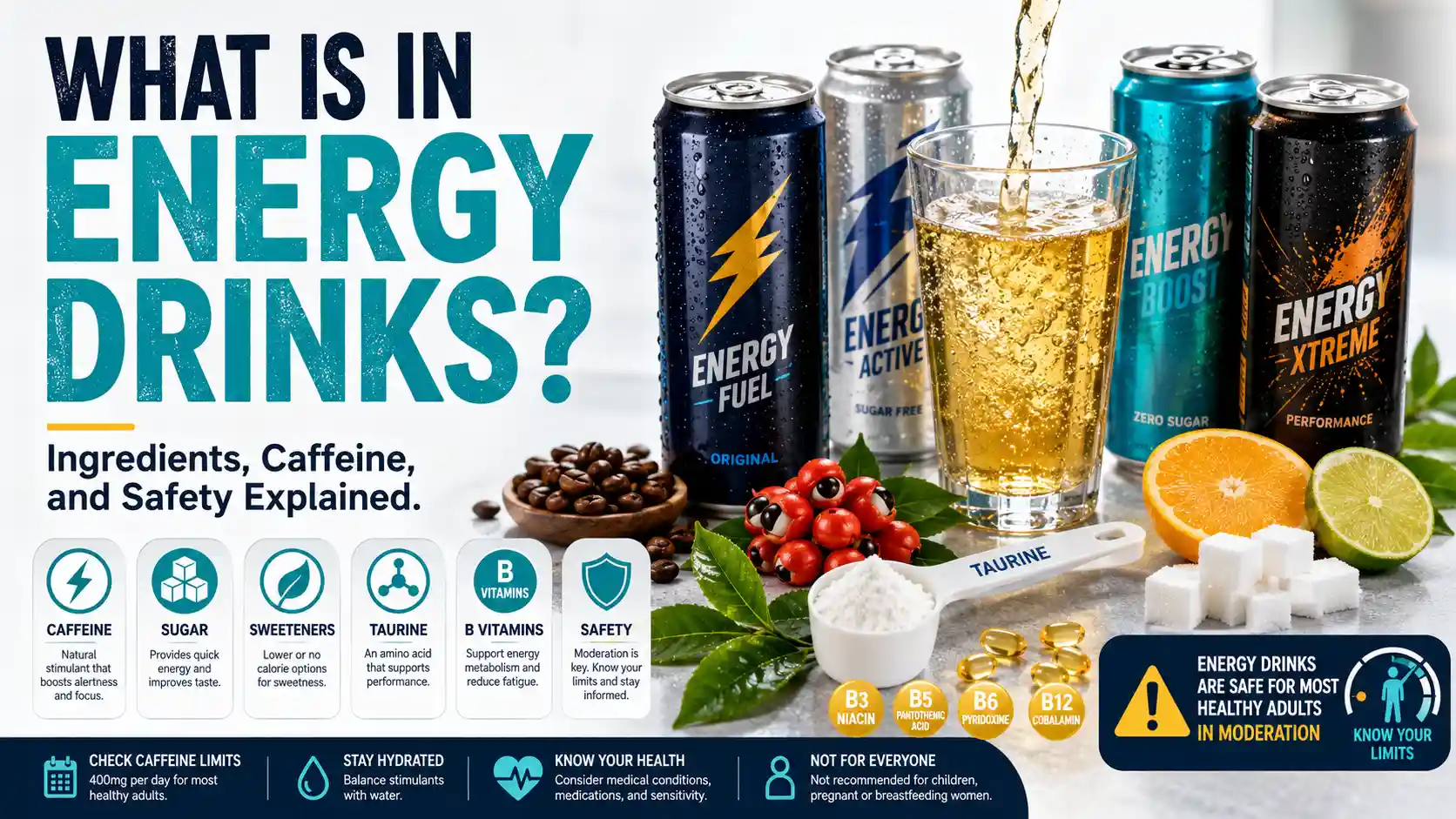
Most energy drinks contain water, caffeine, sweeteners, acids, flavors, and B vitamins. Many also contain taurine, guarana, green tea extract, ginseng, amino acids, electrolytes, colors, or preservatives.
Caffeine creates most of the immediate alertness. Sugar provides calories, while vitamins and other functional ingredients support normal biological processes but do not replace food, hydration, or sleep.
Energy Drink Ingredients at a Glance
| Ingredient | Why It Is Added | What Readers Should Know |
|---|---|---|
| Caffeine | Alertness and reduced drowsiness | Usually causes the most noticeable effect |
| Sugar | Sweetness, calories, and body | Amounts may be high in full-sugar products |
| Artificial sweeteners | Sweetness without much sugar | Sugar-free does not mean caffeine-free |
| Taurine | Functional beverage formulation | It is not caffeine or a stimulant |
| Guarana | Plant-based caffeine source | Counts toward total caffeine intake |
| B vitamins | Normal nutrient metabolism | They do not create instant energy |
| Ginseng and herbs | Marketing and functional blends | Benefits and doses vary widely |
| Amino acids | Exercise or focus positioning | Effects depend on dose and context |
| Electrolytes | Fluid and mineral balance | Do not automatically make it a sports drink |
| Acids and flavors | Taste and product stability | Often responsible for the sharp flavor |
| Colors | Appearance | May be natural or synthetic |
| Preservatives | Shelf stability | Common in acidic canned beverages |
What Is Actually in Energy Drinks?
There is no universal energy drink recipe. One product may contain five main ingredients, while another may use a long proprietary blend.
Most ready-to-drink energy beverages contain a combination of the following:
- Carbonated or still water
- Caffeine
- Sugar or low-calorie sweeteners
- Citric acid or other food acids
- Natural or artificial flavors
- B vitamins
- Taurine
- Guarana or tea extracts
- Herbal ingredients
- Amino acids or workout compounds
- Colors and preservatives
The exact formula depends on the product’s target audience. A traditional energy drink may emphasize sugar and taurine, while a fitness-focused can may include electrolytes, green tea extract, amino acids, or higher caffeine.
The CDC describes energy drinks as beverages that typically contain large amounts of caffeine, added sugars, legal stimulants, and ingredients such as taurine, guarana, and L-carnitine.
What Does “Energy” in Energy Drinks Really Mean?
The word energy can mean three different things on a beverage label. Confusing these meanings makes energy drinks seem more powerful than they are.
Calories Are Chemical Energy
Sugar contains calories. Those calories can be used as fuel by the body.
A full-sugar energy drink may therefore provide actual dietary energy through carbohydrates. A zero-sugar product supplies little or no carbohydrate energy.
Caffeine Changes How Alert You Feel
Caffeine does not create calories or repair sleep loss. It works mainly by blocking adenosine receptors involved in drowsiness.
This can make you feel more awake for a period, but it does not remove your biological need for sleep.
B Vitamins Support Normal Metabolism
B vitamins help enzymes process carbohydrates, fats, and proteins. That role is important, but it does not mean a large dose creates instant energy.
Caffeine Is the Main Active Ingredient
Caffeine is the most important ingredient to check when comparing energy drinks. It is responsible for most of the short-term increase in alertness and reduced drowsiness.
Caffeine may be added directly as caffeine anhydrous or supplied through ingredients such as guarana, coffee extract, green tea, or yerba mate.
What Caffeine Does
At common dietary amounts, caffeine blocks adenosine receptors in the brain. Adenosine normally contributes to increasing sleep pressure as the day progresses.
Blocking that signal can temporarily make a person feel more alert. It does not correct the underlying cause of fatigue.
Common Caffeine Effects
Depending on the amount and the person, caffeine may cause:
- Greater alertness
- Reduced feelings of tiredness
- Improved concentration
- Increased restlessness
- Shakiness or jitters
- Faster heartbeat
- Difficulty sleeping
- Headaches
- Stomach discomfort
- Anxiety or irritability
How Much Is Too Much?
The FDA says up to 400 milligrams of caffeine per day is not generally associated with negative effects for most healthy adults. This is a general reference point, not a target.
Some people develop unpleasant symptoms at far lower amounts. Body size, medications, pregnancy, heart conditions, anxiety, sleep habits, and normal caffeine use can all affect tolerance.
Sugar and Other Caloric Sweeteners
Traditional energy drinks often contain substantial amounts of added sugar. Sugar sweetens the beverage, softens acidic flavors, adds body, and supplies carbohydrates.
Common caloric sweeteners include:
- Sucrose
- Glucose
- Dextrose
- Fructose
- Corn syrup
- High-fructose corn syrup
- Cane sugar
- Fruit juice concentrate
- Maltodextrin
These ingredients may appear under different names, but they all contribute carbohydrates and calories.
Total Sugar vs Added Sugar
Total Sugars includes all sugar in the beverage.
Added Sugars identifies sugar added during manufacturing, including syrups, honey, sucrose, dextrose, and concentrated juice used as a sweetener.
The FDA requires added sugar to appear in grams and as a percentage of Daily Value on the Nutrition Facts label.
Why the Full Can Matters
Always check whether the label describes:
- One serving
- The entire can
- Two or more servings per container
A 16- or 20-ounce can may contain far more sugar than the smaller serving displayed prominently on the front.
What Is in Sugar-Free Energy Drinks?
Sugar-free energy drinks usually replace sugar with one or more high-intensity sweeteners. These ingredients create strong sweetness in very small amounts.
Common examples include:
- Sucralose
- Acesulfame potassium or Ace-K
- Aspartame
- Steviol glycosides
- Monk fruit extract
- Erythritol
- Allulose
A beverage may combine two or three sweeteners to create a flavor closer to sugar and reduce aftertaste.
Sugar-Free Does Not Mean Stimulant-Free
This is one of the most common consumer mistakes.
A zero-sugar drink may contain the same caffeine as the regular version. For example, current Red Bull Original and Red Bull Sugarfree products both list 80 milligrams of caffeine in an 8.4-ounce can.
Sugar-free primarily describes the sweetener system. It does not tell you whether the drink is low in caffeine, suitable for children, or appropriate before bedtime.
The FDA permits several high-intensity sweeteners under defined conditions of use. They must be identified by name in the ingredient list.
What Is Taurine?
Taurine is one of the most recognizable energy drink ingredients. It is often misunderstood because of its name and its close association with highly caffeinated beverages.
Taurine is a sulfur-containing compound found naturally in the body and in foods such as meat, fish, and dairy products. It contributes to processes involving cell hydration, bile salts, nerves, muscles, and electrolyte balance.
Is Taurine Made From Bulls?
No. Taurine used in commercial energy drinks is generally manufactured synthetically.
Its name comes from the Latin word for bull because scientists first isolated the compound from ox bile in the 1800s. That history does not describe how modern beverage taurine is produced.
Is Taurine a Stimulant?
Taurine is not caffeine. It is not the main ingredient responsible for the immediate “buzz” associated with an energy drink.
Manufacturers often combine taurine with caffeine, which makes it easy to assume the two compounds have the same purpose. They do not.
Mayo Clinic notes that taurine occurs naturally in the body and participates in several biological functions. However, research on the long-term effects of repeatedly consuming complex combinations of taurine, caffeine, herbs, and other additives remains less complete.
Guarana and Other Hidden Sources of Caffeine
A label may contain more caffeine than the word “caffeine” alone suggests. Several plant extracts naturally contain the stimulant.
Common Botanical Caffeine Sources
- Guarana
- Green tea extract
- Black tea extract
- Yerba mate
- Green coffee bean extract
- Coffee fruit extract
- Kola nut
- Cocoa extract
Guarana
Guarana is a South American plant whose seeds naturally contain caffeine. It is commonly used in energy drinks, shots, powders, and pre-workout products.
The important point is not whether the caffeine comes from a plant. The important point is the total number of milligrams consumed.
Does Natural Caffeine Work Differently?
Caffeine has the same basic chemical structure whether it is manufactured or extracted from coffee, tea, or guarana.
A botanical source may contain other compounds that influence flavor or absorption, but “natural caffeine” is not automatically weaker or safer. Red Bull states that naturally derived and synthetic caffeine are identical in structure and effect.
Label Problem to Watch
Added caffeine must appear in the ingredient list when used as a stand-alone ingredient. However, U.S. companies are not always required to display the total milligram amount prominently.
Many manufacturers provide the amount voluntarily, but consumers should be cautious when a product lists several caffeinated botanicals without a clear total.
Why Energy Drinks Contain B Vitamins
Many energy drinks contain large percentages of B3, B5, B6, and B12. Some also contain thiamin, riboflavin, folate, or biotin.
These nutrients support normal processes that allow the body to use food.
| Vitamin | Common Label Name | Main Role |
|---|---|---|
| B1 | Thiamin | Helps process carbohydrates |
| B2 | Riboflavin | Supports cellular energy reactions |
| B3 | Niacin | Helps metabolize food |
| B5 | Pantothenic acid | Supports coenzyme production |
| B6 | Pyridoxine | Supports amino-acid metabolism |
| B7 | Biotin | Assists nutrient-processing enzymes |
| B9 | Folate | Supports new cell production |
| B12 | Cobalamin | Supports blood and nerve function |
Do B Vitamins Give You Energy?
B vitamins help the body release and use energy already present in food. They do not contain calories and do not behave like caffeine.
Unless someone has a deficiency, consuming a very high percentage of the Daily Value does not automatically create stronger alertness or better performance.
Why Are the Percentages So High?
B-vitamin requirements are relatively small, so a modest added amount may produce a large Daily Value percentage.
Water-soluble vitamins are not stored in the same way as fat-soluble vitamins. However, “water-soluble” should not be interpreted as “unlimited amounts are always useful.”
Amino Acids and Functional Compounds
Modern energy drinks may include several compounds associated with exercise, metabolism, or mental focus.
Their usefulness depends on the ingredient, dose, total diet, and intended purpose.
L-Carnitine
L-carnitine helps transport fatty acids within cells, where they can be used during normal metabolism.
Its biological role does not mean a small beverage dose instantly burns body fat or produces stimulant energy.
L-Tyrosine
L-tyrosine is an amino acid used by the body to produce proteins and certain signaling chemicals.
It appears in some focus-oriented energy products and pre-workout formulas.
Inositol
Inositol is a naturally occurring compound involved in cellular signaling. It is sometimes described as a vitamin-like substance, although it is not an essential vitamin in the usual sense.
Glucuronolactone
Glucuronolactone is a naturally occurring compound found in connective tissues. It has been used in energy drink formulations for decades.
Its presence does not reveal how stimulating a beverage will be.
Other Possible Additions
- Beta-alanine
- Branched-chain amino acids
- Citrulline
- Creatine
- Choline
- Betaine
- N-acetyl L-tyrosine
- Alpha-GPC
Many of these ingredients are more common in pre-workout products than traditional energy drinks. The caffeine amount usually remains the best first indicator of immediate stimulant strength.
Ginseng and Other Herbal Extracts
Herbal ingredients give brands a way to market energy drinks around focus, stress, endurance, or wellness.
However, the presence of an herb does not prove that the finished beverage provides a meaningful clinical effect.
Common Herbal Ingredients
- Panax ginseng
- American ginseng
- Ginkgo biloba
- Ginger root
- Rhodiola
- Turmeric
- Green tea
- Ashwagandha
- Milk thistle
- Quercetin
The Dose Problem
A label may name a recognizable plant without disclosing a clinically meaningful amount. Some products group ingredients inside a proprietary blend, making comparison difficult.
Questions worth asking include:
- How many milligrams are present?
- Is the extract standardized?
- Is the amount per serving or per container?
- Is there evidence for that dose?
- Could it interact with medication?
Electrolytes and Workout Ingredients
Some energy drinks are marketed for gyms, sports, or active lifestyles. They may contain sodium, potassium, magnesium, or calcium.
Electrolytes and caffeine perform different functions.
Electrolytes Support Fluid Balance
Electrolytes help regulate:
- Fluid movement
- Nerve signaling
- Muscle contraction
- Acid-base balance
They can be useful during long, intense exercise or heavy sweating. Most ordinary daily activities do not require a special electrolyte beverage.
Caffeine Supports Alertness
Caffeine stimulates the nervous system. It does not replace the water and minerals lost through sweat.
A can containing both caffeine and electrolytes is still an energy drink unless hydration is its primary purpose.
Energy Drink vs Sports Drink
A traditional sports drink usually focuses on:
- Water
- Carbohydrates
- Sodium
- Potassium
- Flavor
An energy drink usually focuses on:
- Caffeine
- Stimulant positioning
- Sweeteners
- Functional additives
- Alertness or performance claims
This difference matters for young athletes. The American Academy of Pediatrics separates energy drinks from sports drinks and advises that stimulant-containing energy drinks are inappropriate for children and adolescents.
Acids, Flavors, Colors, and Preservatives
Not every ingredient is included for stimulation or nutrition. Many ingredients simply make the drink taste, look, and remain stable the way the manufacturer intends.
Common Food Acids
- Citric acid
- Malic acid
- Phosphoric acid
- Tartaric acid
- Ascorbic acid
- Sodium citrate
Citric and malic acids create the sharp, sour flavor found in many fruit-flavored energy drinks.
Natural and Artificial Flavors
“Natural flavors” and “artificial flavors” may represent mixtures of several flavor compounds.
The label does not usually identify every component of a flavor system because flavor formulations may be proprietary.
Colors
Energy drinks may use:
- Fruit and vegetable colors
- Beta-carotene
- Caramel color
- Certified synthetic colors
- Turmeric-derived colors
- Spirulina-derived colors
The color of a drink does not indicate caffeine strength or nutritional quality.
Preservatives
Common preservatives include:
- Potassium sorbate
- Sodium benzoate
- Calcium disodium EDTA
- Dimethyl dicarbonate
These ingredients help protect flavor, color, and shelf stability.
Carbonation
Carbon dioxide creates bubbles and a sharper mouthfeel. It does not add caffeine or stimulant effects.
Because many energy drinks are acidic, repeatedly sipping them over several hours can increase tooth exposure to acid. Drinking the beverage in one sitting, avoiding swishing, and rinsing with water afterward may reduce prolonged exposure.
How Much Caffeine and Sugar Are in Energy Drinks?
Energy drinks vary more than many shoppers realize. Can size alone does not tell you how much caffeine is inside.
According to the FDA, 16-ounce energy drinks generally contain about 54 to 328 milligrams of caffeine. Some 12-ounce products contain approximately 41 to 246 milligrams.
Current Product Examples
The following examples show why the full label matters. These figures were verified from official brand information available on August 7, 2026.
| Product Line | Container | Caffeine | Sugar Information |
|---|---|---|---|
| Red Bull Original | 8.4 fl oz | 80 mg | About 26–27 g |
| Red Bull Sugarfree | 8.4 fl oz | 80 mg | Sugar-free |
| CELSIUS | One can | 200 mg | Zero sugar |
| CELSIUS Essentials | One can | 270 mg | Check current label |
Red Bull currently lists 80 milligrams of caffeine and approximately 26–27 grams of sugar in an 8.4-ounce Original can. CELSIUS states that its standard beverages contain 200 milligrams, while CELSIUS Essentials contains 270 milligrams per can.
These examples are not rankings or endorsements. Formulas can change, so always check the can you are buying.
Put the Numbers in Context
An 8-ounce cup of brewed coffee contains roughly 95 milligrams of caffeine on average, although preparation methods vary.
An energy drink may contain:
- Less caffeine than coffee
- About the same amount
- Twice as much
- Three times as much
The category is too varied for statements such as “energy drinks have less caffeine than coffee” or “all energy drinks are extremely strong.”
How to Read an Energy Drink Label
The front of the can tells a marketing story. The back tells you what you are actually consuming.
Use this order when comparing products.
- Check the Container Size. Look at the number of fluid ounces or milliliters. Do not compare an 8.4-ounce can directly with a 16-ounce can without adjusting for volume.
- Find the Serving Size. Determine whether the can is one serving and whether you plan to drink the whole container. Use full-container numbers when that is your plan.
- Find Total Caffeine. Look for statements such as 80 mg caffeine per can, 200 mg natural caffeine, 300 mg caffeine per serving, or simply “contains caffeine.”
- Check Added Sugar. Review both grams of Added Sugars and percentage of Daily Value. The FDA considers 5% Daily Value or less low and 20% or more high for a nutrient.
- Identify the Sweeteners. Look for sucralose, Ace-K, aspartame, stevia, monk fruit, erythritol, and allulose.
- Scan for Additional Stimulants. Pay attention to guarana, yerba mate, green tea extract, coffee extract, bitter orange, synephrine, and yohimbe or yohimbine.
- Review the Warning Statement. Some labels state that a product is intended only for healthy adults or advise against use during pregnancy. These warnings should not be treated as decorative text.
- Read Ingredients in Order. U.S. food ingredients are generally listed in descending order by weight. Potent ingredients such as caffeine and high-intensity sweeteners may still appear later because small amounts can be effective.
Energy Drinks vs Coffee, Soda, Sports Drinks, and Pre-Workout
Energy drinks overlap with several beverage categories, but they are not identical.
| Beverage | Main Purpose | Typical Caffeine | Sugar | Common Additions |
|---|---|---|---|---|
| Energy drink | Alertness and stimulation | Low to very high | Varies | Taurine, vitamins, herbs |
| Coffee | Flavor and alertness | Varies | None unless added | Milk, cream, syrups |
| Soda | Sweet flavored beverage | None to moderate | Often high | Acids, flavors, colors |
| Sports drink | Hydration during exercise | Usually none | Often moderate | Sodium and potassium |
| Pre-workout | Exercise performance | Often high | Usually low | Amino acids and creatine |
| Energy shot | Concentrated stimulation | Often high | Varies | Vitamins and functional blends |
Energy Drinks vs Coffee
Plain coffee usually has fewer ingredients. However, coffee caffeine varies by bean, serving size, and preparation.
An energy drink may offer exact caffeine disclosure, while a café drink may not.
Energy Drinks vs Soda
Some sodas contain caffeine, but generally in lower amounts than high-caffeine energy drinks.
Soda normally does not contain taurine, amino acids, or complex stimulant blends.
Energy Drinks vs Sports Drinks
Sports drinks are designed primarily for fluid and carbohydrate replacement during sustained activity.
Energy drinks are designed primarily around caffeine and alertness.
Energy Drinks vs Pre-Workout
Pre-workout formulas may contain larger doses of exercise-focused compounds such as beta-alanine, citrulline, creatine, and tyrosine.
Both categories can contain high caffeine, so using them together can raise total intake quickly.
Who Should Avoid or Limit Energy Drinks?
Energy drinks do not affect every person equally. Some groups should avoid them, while others should discuss caffeine use with a healthcare professional.
Children and Teenagers
The American Academy of Pediatrics states that caffeine and other stimulants in energy drinks have no place in the diets of children and adolescents.
Energy drinks can interfere with sleep and may contribute to anxiety, restlessness, headaches, digestive symptoms, and cardiovascular effects in younger consumers.
Pregnant People
ACOG states that moderate caffeine consumption during pregnancy is less than 200 milligrams per day.
That total includes caffeine from coffee, tea, soda, chocolate, medication, and energy drinks. A single high-caffeine can may reach or exceed the daily amount.
People With Caffeine Sensitivity
People who experience the following after small caffeine amounts should be cautious:
- Jitters
- Panic or anxiety
- Palpitations
- Tremors
- Headaches
- Insomnia
- Digestive discomfort
People With Medical Conditions
Professional guidance may be needed for people with:
- Heart rhythm disorders
- High blood pressure
- Anxiety or panic disorders
- Seizure disorders
- Diabetes
- Kidney conditions
- Sleep disorders
- Gastroesophageal reflux
People Taking Medication
Caffeine and herbs may interact with:
- Stimulant medication
- Decongestants
- Certain antibiotics
- Thyroid medication
- Blood thinners
- Blood pressure medicine
- Some psychiatric medication
A pharmacist can help check a specific product against a medication list.
Anyone Drinking Alcohol
Caffeine may reduce feelings of drowsiness, but it does not restore judgment, coordination, or reaction time. People mixing alcohol and caffeine may feel less impaired while remaining just as unsafe.
How to Choose a More Sensible Energy Drink
No energy drink is suitable for every person. A lower-risk choice depends on your caffeine tolerance, health, timing, and reason for using it.
Use this practical checklist:
- Choose clearly labeled caffeine. Avoid products that hide the total.
- Start below your usual limit. Do not test an unfamiliar 300-milligram drink when you normally consume little caffeine.
- Check the full container. Do not rely on per-serving numbers alone.
- Avoid stimulant stacking. Count coffee, tea, soda, pre-workout, medication, and supplements.
- Compare added sugar. A small can may still contain a large amount.
- Treat natural caffeine as caffeine. Guarana and tea extracts still count.
- Avoid late-day use. Caffeine may affect sleep even when you feel able to fall asleep.
- Skip unnecessary blends. More herbs and amino acids do not guarantee better results.
- Do not replace meals or water. Energy drinks are not complete nutrition.
- Do not use them to cover chronic exhaustion. Persistent fatigue deserves attention, not repeated stimulant use.
Better Alternatives for Different Situations
| Situation | More Practical Option |
|---|---|
| Mild morning tiredness | Coffee or tea with known caffeine |
| Missed meal | Water plus a balanced snack |
| Dehydration | Water or an appropriate electrolyte drink |
| Long workout | Water, food, or a sports drink when needed |
| Poor sleep | Rest and an earlier bedtime |
| Afternoon habit | Decaf coffee, herbal tea, or sparkling water |
| Need for flavor | Flavored water or a low-sugar beverage |
Frequently Asked Questions
What is the main ingredient in energy drinks?
Water is usually the largest ingredient by weight, but caffeine is the main active stimulant.
Sugar may also be one of the largest ingredients in full-sugar versions. Other common ingredients include taurine, B vitamins, acids, flavors, and guarana.
What ingredient makes energy drinks work?
Caffeine causes most of the immediate increase in alertness. It blocks adenosine signaling, which delays feelings of drowsiness.
Sugar provides calories, but taurine, vitamins, and herbs do not usually create the same immediate stimulant effect.
Are energy drinks full of chemicals?
Everything in food and the human body is made of chemicals, including water, caffeine, sugar, and vitamins.
The more useful question is whether each ingredient is approved for its intended use, present in a reasonable amount, clearly labeled, and suitable for the person drinking it.
Is taurine bull sperm or bull urine?
No. This is a persistent internet myth.
Commercial taurine is manufactured synthetically. It is also found naturally in the human body and in several animal-based foods.
Is guarana stronger than caffeine?
Guarana is not a separate alternative to caffeine. It is a plant that naturally contains caffeine.
A guarana-containing product may be strong because the guarana adds to the beverage’s total caffeine.
Do B vitamins provide instant energy?
No. B vitamins help the body process nutrients from food.
They do not supply calories, erase fatigue, or work like caffeine. Large percentages on the label do not guarantee a stronger effect.
Are sugar-free energy drinks better?
They contain less added sugar and fewer sugar-derived calories, but they may still contain substantial caffeine.
Whether they are a better choice depends on caffeine dose, sweeteners, other ingredients, health status, and frequency of use.
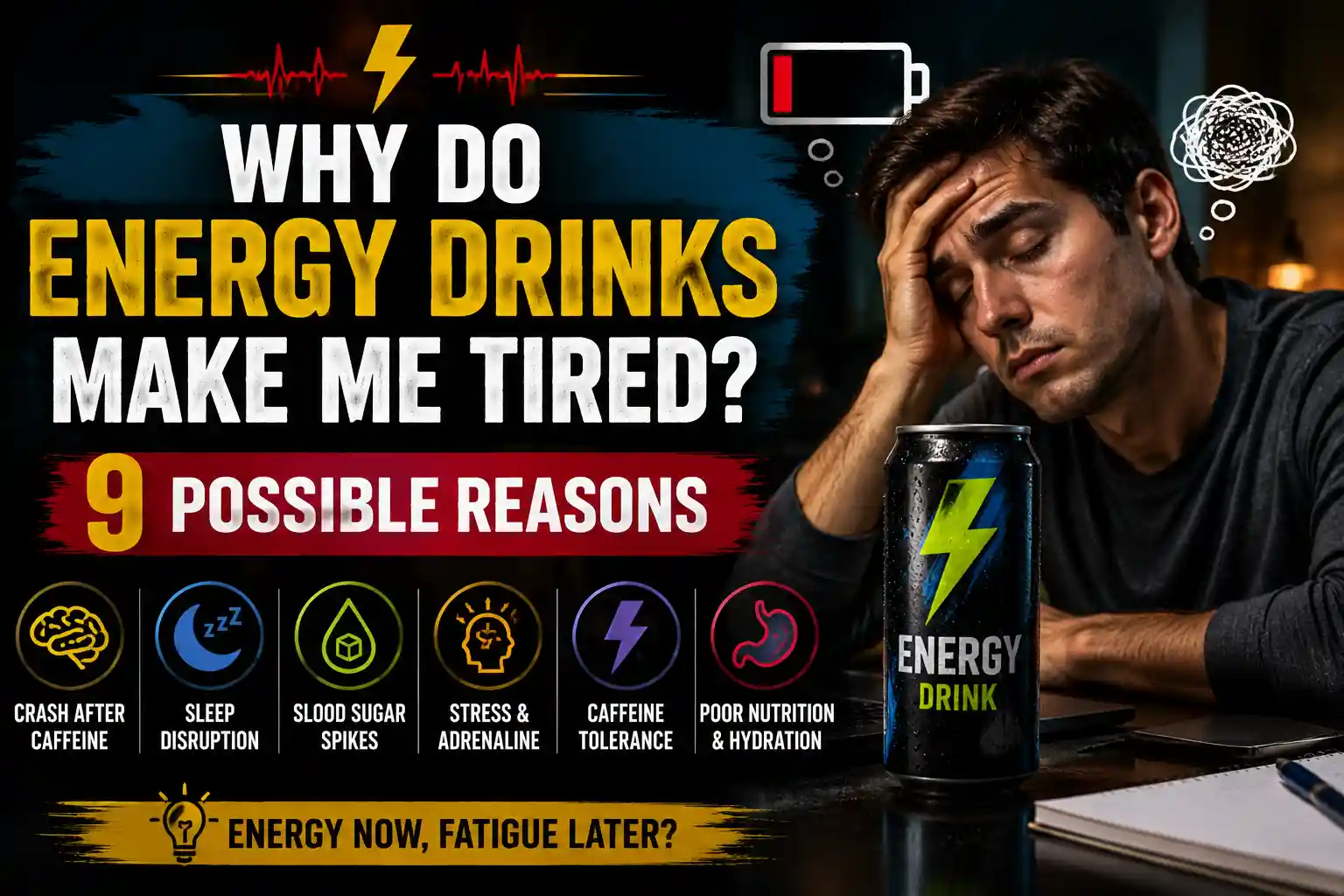
Can energy drinks cause a crash?
Some people report feeling tired, irritable, or unfocused after the stimulant effect fades.
Possible contributors include sleep loss, caffeine withdrawal, a high initial dose, dehydration, skipped meals, or a rapid rise and fall in blood sugar after a sweetened drink.
Do energy drinks dehydrate you?
Moderate caffeine intake does not automatically cancel the fluid in a beverage. However, an energy drink is not always the best hydration choice, especially during heat or prolonged exercise.
Water remains the simplest option for ordinary hydration.
How many energy drinks can you have per day?
There is no safe universal number of cans because caffeine content varies widely.
Count milligrams rather than containers. The FDA’s general reference for most healthy adults is up to 400 milligrams of caffeine per day, but many people need considerably less.
Can you drink energy drinks every day?
Daily use increases the chance of tolerance, dependence, sleep disruption, and accidentally stacking caffeine from several sources.
Someone who relies on an energy drink every day to function should review sleep, food intake, hydration, workload, medication, and possible health causes of fatigue.
Conclusion
So, what is in energy drinks? Most contain water, caffeine, sweeteners, acids, flavors, and B vitamins. Depending on the formula, they may also contain taurine, guarana, herbs, amino acids, electrolytes, colors, and preservatives.
The longest ingredient list is not necessarily the strongest or best. Caffeine per container, added sugar, serving size, botanical stimulants, and personal tolerance provide far more useful information than front-label promises.
Before opening a can, turn it around. Check the caffeine, read the full serving information, identify the sweeteners, and consider what else you have consumed that day. An energy drink may temporarily reduce drowsiness, but it cannot replace sleep, food, hydration, or medical care for persistent fatigue.