Most Popular Energy Drinks in 2026: Top Brands, Caffeine Levels & Best Picks
Discover the energy drinks Americans are reaching for now—from Red Bull and Monster to Celsius, Alani Nu, GHOST, C4, Reign, PRIME, Bloom and Liquid Death. Compare popularity, caffeine strength, sugar, market momentum and the best use for each brand.
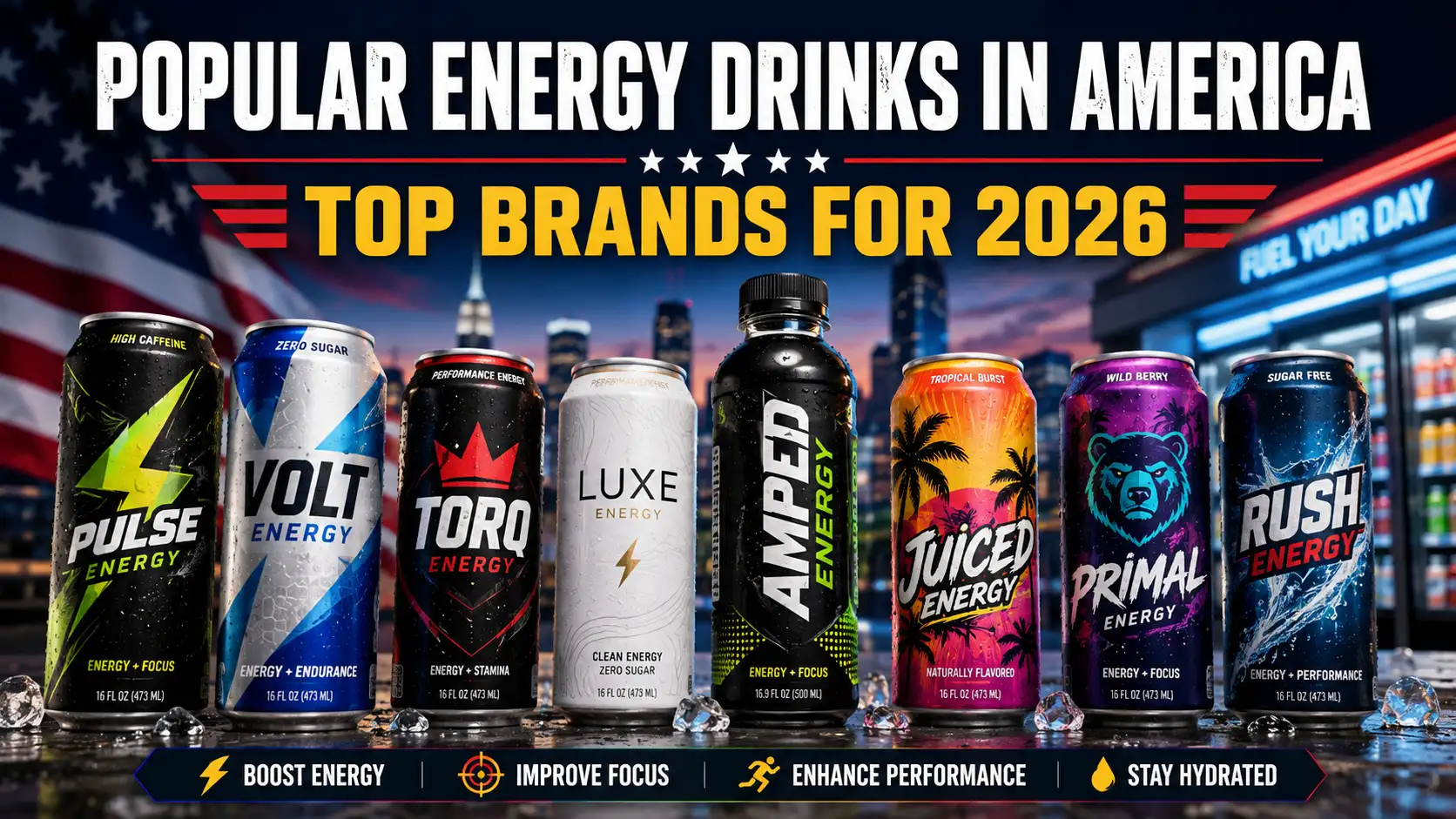
The popular energy drinks Americans reach for now look very different from the category a decade ago. Red Bull and Monster remain the giants, but Celsius has become a clear third force. Alani Nu is growing quickly, while brands such as GHOST, C4, Bloom, NOS, Reign, PRIME and Liquid Death compete with different flavors, caffeine levels and formats.
This guide does not confuse “popular” with “best tasting.” Instead, it looks at consumer awareness, recent U.S. sales trends, national visibility, current product labels, caffeine strength and brand momentum. That makes it easier to see which names truly lead in 2026 and which drinks make sense for different caffeine preferences.
Quick Answer: What Are the Most Popular Energy Drinks?
Red Bull, Monster and Celsius are the clearest U.S. energy drink leaders in 2026. Morning Consult research puts Red Bull first in mental market share at about 23%, followed by Monster at 17% and Celsius at about 8.5%.
Alani Nu is one of the strongest rising brands, while GHOST, C4, Rockstar, Reign, NOS, 5-hour Energy, PRIME and Bloom remain relevant for specific audiences. Liquid Death Sparkling Energy is also notable as a newer lower-caffeine entrant.
Popular Energy Drinks at a Glance
| Brand / Drink | Caffeine | Main Reason It Stands Out |
|---|---|---|
| Red Bull | 80 mg per 8.4 oz | Top-of-mind category leader |
| Monster Zero Ultra | 150 mg per 16 oz | Huge lineup and broad availability |
| Celsius | 200 mg per can | Clear challenger to the two leaders |
| Alani Nu | 200 mg per 12 oz | Rapid sales growth |
| GHOST Energy | 200 mg | Bold candy and sour flavors |
| C4 Performance Energy | 200 mg | Performance-focused positioning |
| Rockstar Original | 160 mg per 16 oz | Long-running mainstream brand |
| Reign Total Body Fuel | 300 mg | Very high-caffeine performance option |
| NOS Original | 160 mg per 16 oz | Classic tropical-citrus profile |
| PRIME Energy | 200 mg | High recognition despite weaker sales momentum |
| Bloom Sparkling Energy | 180 mg | Zero sugar and coffee-derived caffeine |
| Liquid Death Sparkling Energy | 100 mg per 12 oz | New lower-caffeine alternative |
| 5-hour Energy Regular Strength | 200 mg per 2 oz | Compact energy-shot format |
How We Determined Which Energy Drinks Are Popular
There is no single official ranking that answers every meaning of “popular.” Sales, brand awareness, consumer recall, retail availability and cultural visibility measure different things.
That distinction matters. Morning Consult finds Red Bull is the brand most likely to come to mind, while current retail reporting identifies Monster as the company with the largest dollar share. Both can reasonably be described as leaders depending on the metric.
What This Guide Weighs
- 2026 U.S. consumer-awareness and mental-market-share data
- Recent retail sales and year-over-year growth
- National product availability
- Current caffeine information from manufacturers
- Flavor and format variety
- Brand growth, stability or decline
- Usefulness for different caffeine preferences
Taste-test rankings are treated separately. A drink can win a tasting without being the country’s most popular brand.
The Three Biggest Energy Drink Names in 2026
Red Bull: The Top-of-Mind Leader
If “most popular” means the brand Americans most readily associate with energy drinks, Red Bull has the strongest case.
Morning Consult puts its mental market share at roughly 23%, ahead of every competitor. Brand awareness was about 82%.
- 80 mg caffeine in 8.4 oz
- 114 mg in 12 oz
- 151 mg in 16 oz
- 198 mg in 20 oz
Monster: The Retail Powerhouse
Monster sits directly beside Red Bull at the top of the category, but its strength looks slightly different.
Morning Consult gives Monster about 17% mental market share and approximately 75% awareness.
Monster’s biggest competitive advantage is range, covering traditional energy drinks, Monster Ultra, juice blends, coffee drinks, tea-style beverages and zero-sugar products.
Celsius: The Clear No. 3
Celsius is no longer simply a fitness-store alternative. It is now the clear third brand in consumer mental market share, at approximately 8.5%.
Standard Celsius and Celsius Vibe contain 200 mg caffeine per can. Celsius Essentials moves to 270 mg, while Celsius Hydration contains no caffeine.
Celsius products also posted close to 9% sales growth during the latest reported period.
Alani Nu Is the Breakout Brand to Watch
Among newer competitors, Alani Nu has one of the strongest growth stories in the category.
Morning Consult found only about one in five consumers knew the brand, yet roughly 72% of those aware of it connected Alani Nu to a buying or usage occasion. Its emotional-connection score was also especially strong.
Sales data makes that even more significant.
Current 12-ounce drinks such as Breezeberry contain 200 mg caffeine and zero sugar. Other flavors lean into fruit, candy and dessert-inspired profiles.
Other Popular Energy Drink Brands Worth Knowing
GHOST Energy
GHOST built its identity around bold collaborations and flavors inspired by sour candy, grape juice, lemonade and orange cream.
Its current energy formula uses 200 mg caffeine and zero sugar.
C4 Energy
C4 has a strong performance and gym association. Standard carbonated products commonly provide 200 mg caffeine, while C4 Ultimate reaches 300 mg.
Rockstar
Rockstar remains one of the category’s most recognizable established names. Rockstar Original contains 160 mg caffeine in 16 ounces.
Recent sales, however, declined about 7% year over year.
Reign
Reign targets people comfortable with high caffeine. Current U.S. Reign Total Body Fuel products contain 300 mg caffeine.
NOS
NOS remains a recognizable convenience-store option. NOS Original contains 160 mg caffeine in 16 ounces and uses a tropical citrus profile.
5-hour Energy
Regular Strength contains 200 mg caffeine in a 2-ounce shot, while Extra Strength contains 230 mg.
PRIME Energy
Current PRIME Energy products list 200 mg caffeine and zero sugar. However, sales fell nearly 65% year over year in the latest reported period.
Bloom Sparkling Energy
Bloom Sparkling Energy contains 180 mg caffeine from green coffee bean extract and zero sugar.
Fastest-Growing Energy Drink Trends in 2026
U.S. energy drink sales reached about $24.8 billion during the year ending March 7, 2026. Sales increased almost 14% year over year.
Zero Sugar Has Become Mainstream
Zero-sugar energy is no longer a niche category. Red Bull Zero, Monster, Celsius, Alani Nu, GHOST, C4, Reign, PRIME and Bloom all compete heavily in this space.
200–300 mg Is No Longer Unusual
Many newer performance drinks sit around 200 mg caffeine, while Reign and C4 Ultimate reach 300 mg.
Candy and Nostalgia Flavors
Blue raspberry, gummy candy, sour watermelon, orange cream and frozen-pop profiles are increasingly common across the category.
Coffee-Based Energy
Energy drinks increasingly compete with canned coffee, cold brew, espresso beverages and other grab-and-go caffeine formats.
Popular Energy Drinks by Caffeine Level
Caffeine strength may be the most useful way to narrow a crowded shelf.
| Caffeine Range | Popular Examples | Who It May Suit |
|---|---|---|
| 80–120 mg | Red Bull 8.4 oz, Liquid Death Sparkling Energy, Red Bull 12 oz | People seeking a more moderate serving |
| 150–180 mg | Monster Zero Ultra, Rockstar Original, NOS Original, Bloom | People wanting a middle ground |
| 200–230 mg | Celsius, Alani Nu, GHOST, C4, PRIME, 5-hour Energy | Adults accustomed to stronger caffeine |
| 270–300 mg | Celsius Essentials, Reign, C4 Ultimate | High-caffeine users who tolerate it |
Which Popular Energy Drink Is Best for Different Needs?
Best Smaller Caffeine Serving: Red Bull 8.4 oz
At 80 mg caffeine, the small Red Bull is easier to fit into a moderate-caffeine day than a 200- or 300-mg can.
Best Lower-Caffeine Newcomer: Liquid Death
Its 100 mg caffeine level is unusual among newer energy brands. It also avoids sugar and artificial sweeteners.
Best for Maximum Flavor Variety: Monster
Monster covers citrus, berry, tropical fruit, juice blends, coffee, tea, original formulas and numerous zero-sugar products.
Best Rising Brand: Alani Nu
Alani Nu stands out for its strong current sales momentum and unusually high consumer connection relative to awareness.
Best for Candy-Style Flavors: GHOST
Sour candy, grape, orange cream and lemonade-style profiles make GHOST a clear choice for bold flavor fans.
Best for Very High Caffeine: Reign or C4 Ultimate
Both currently reach 300 mg per container. That strength is not automatically better or necessary for everyone.
Sugar-Free Energy Drinks: What Does Zero Sugar Actually Mean?
Many of today’s most popular energy drinks are sugar-free, but sugar and caffeine are separate issues.
A zero-sugar Celsius still contains 200 mg caffeine. Alani Nu and GHOST products also commonly contain 200 mg. Reign reaches 300 mg while remaining sugar-free.
- Caffeine per entire container
- Added sugar
- Serving size
- Sweeteners
- Calories
- Sodium
- Other stimulant-containing ingredients
- Total caffeine from the rest of your day
Does Natural Caffeine Make an Energy Drink Better?
Not automatically.
Caffeine may come from sources such as coffee beans, tea, yerba mate or guarana, while other products add caffeine directly.
The FDA states that the body does not handle naturally occurring caffeine differently from added caffeine from a safety standpoint. Total caffeine from all sources is what matters.
Natural Caffeine Examples
- Bloom — 180 mg
- GHOST — 200 mg
- Other coffee-derived formulas
The Key Point
Do not use the word “natural” as a substitute for reading the actual caffeine number on the label.
Energy Drinks Are Not the Same as Sports Drinks
An energy drink usually centers on caffeine and alertness. A sports drink is generally designed around fluid, carbohydrates or electrolytes.
Some modern products blur those categories by adding electrolytes or workout-focused ingredients. That does not mean an energy drink should replace water.
Before Combining Caffeine With Exercise
- Check your pre-workout powder first.
- Avoid accidentally stacking multiple stimulant products.
- Drink water separately.
- Consider the time of day.
- Choose caffeine based on tolerance, not the biggest number.
How Much Caffeine Is Too Much?
The FDA cites 400 mg per day for most adults as an amount not generally associated with negative effects.
That is not a target or a guarantee. Sensitivity varies based on the person, medications, certain conditions, pregnancy status and other factors.
| Drink | Caffeine | Approx. Share of 400 mg |
|---|---|---|
| Red Bull 8.4 oz | 80 mg | 20% |
| Celsius | 200 mg | 50% |
| Reign | 300 mg | 75% |
- Jitters
- Insomnia
- Anxiety
- Nausea
- Headache
- Increased heart rate
- Heart palpitations
Who Should Avoid Energy Drinks?
Energy drinks are not appropriate for children and teenagers. The FDA notes that medical experts, including the American Academy of Pediatrics, advise against energy drinks for children and teens because of their caffeine and sugar content.
How to Choose an Energy Drink Without Falling for the Marketing
1. Check the Caffeine
Do not assume one brand always contains one caffeine amount. Red Bull alone ranges from 80 mg to 198 mg across common U.S. can sizes.
2. Check the Sugar
If you want to avoid added sugar, look for the actual grams on the nutrition label. Zero-sugar options are now widely available.
3. Ask Whether You Need 200–300 mg
Someone accustomed to one cup of coffee may prefer 80–150 mg over a 300-mg performance drink.
4. Choose Flavor or Function
Alani Nu, GHOST, C4 and Celsius offer strong fruit and candy-style variety, while Red Bull, Monster, Rockstar and NOS offer more traditional profiles.
What Is Changing in the U.S. Energy Drink Market?
The strongest 2026 story is not simply that people are buying more caffeine. It is that the middle of the market is changing quickly.
Red Bull and Monster remain dominant, Celsius is becoming more established, Alani Nu is growing rapidly, zero-sugar products are increasingly normal, coffee-based energy products are expanding and lower-caffeine newcomers such as Liquid Death are challenging the assumption that every new drink needs 200–300 mg.
At the same time, previously viral brands can cool quickly. That makes current sales momentum and current labels more useful than old “most popular” lists that simply recycle famous brand names.
Frequently Asked Questions About Popular Energy Drinks
What is the number one energy drink in the USA?
It depends on how popularity is measured. Red Bull leads Morning Consult’s 2026 mental-market-share measure at about 23%, making it the top-of-mind brand. Monster, however, has a strong claim based on retail sales share.
What are the top three most popular energy drink brands?
Based on Morning Consult’s 2026 U.S. consumer research, the clear top three are Red Bull, Monster and Celsius. Their approximate mental market shares are 23%, 17% and 8.5%.
Is Celsius more popular than Monster?
No. Celsius is growing, but current consumer-awareness data still places Monster well ahead of Celsius. Monster has about 17% mental market share compared with roughly 8.5% for Celsius.
Which popular energy drink has the least caffeine?
Among the mainstream products compared here, a standard 8.4-ounce Red Bull has 80 mg caffeine. Liquid Death Sparkling Energy is another lower-caffeine option at 100 mg per 12-ounce can.
Is 200 mg of caffeine a lot?
200 mg is a substantial single serving because it equals half of the FDA’s 400-mg daily level cited for most adults. Individual caffeine sensitivity varies considerably.
Which popular energy drinks have 300 mg of caffeine?
Reign Total Body Fuel and C4 Ultimate are two widely available examples containing 300 mg caffeine per can. Celsius Essentials sits slightly below them at 270 mg.
Are sugar-free energy drinks better than regular energy drinks?
Sugar-free versions can be useful when you want to avoid added sugar. However, they can still contain high caffeine levels. Compare the entire label rather than treating “zero sugar” as a complete measure.
Conclusion
The most popular energy drinks in America are not all competing in the same way. Red Bull leads top-of-mind awareness, Monster remains a retail powerhouse, Celsius is the clear challenger and Alani Nu is one of 2026’s strongest growth stories.
Beyond popularity, the most important difference may be caffeine. Current mainstream products range from about 80 mg in a small Red Bull to 300 mg in Reign or C4 Ultimate. Check the entire can, count caffeine from the rest of your day and choose the strength that fits your tolerance instead of assuming more is better.