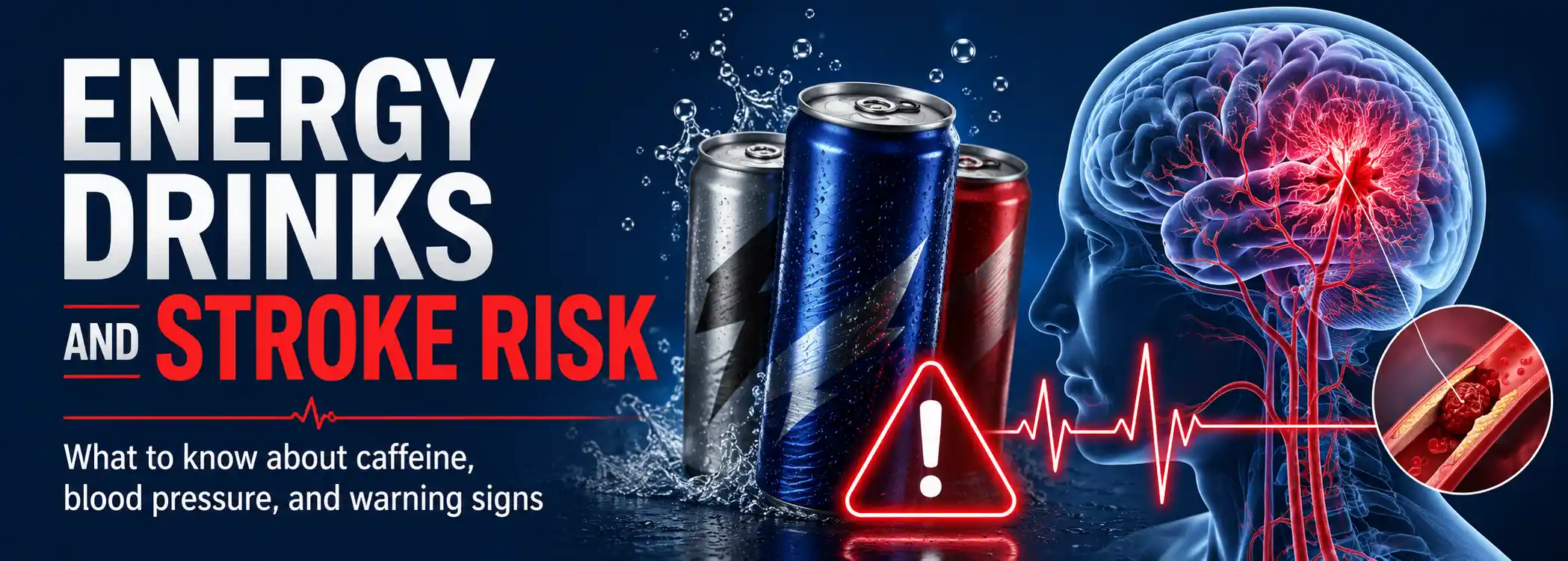
Energy drinks are everywhere. Students drink them through finals week. Shift workers, gamers, and delivery drivers lean on them to stay sharp. For most people, an occasional can is a minor habit, not a medical event.
But a growing body of clinical evidence — including a peer-reviewed case report published in December 2025 — has renewed scrutiny of how energy drinks affect blood pressure, heart rhythm, and stroke risk, particularly with heavy or repeated consumption.
Quick Answer
Energy drinks do not directly cause most strokes, but heavy or repeated use can raise blood pressure, disturb heart rhythm, and stress blood vessels — all established stroke risk factors. A December 2025 case published in BMJ Case Reports documented a healthy man in his 50s who suffered a stroke after drinking eight energy drink cans daily. A 2019 Journal of the American Heart Association trial found energy drinks altered heart rhythm (QTc interval) and blood pressure beyond what caffeine alone explains. Risk rises sharply with high-volume intake, alcohol mixing, dehydration, and existing cardiovascular conditions.
This guide breaks down what the current research actually shows, who faces elevated risk, the warning signs that demand emergency care, and what cardiologists recommend before you reach for another can.
Can Energy Drinks Cause a Stroke?
Energy drinks have not been proven to directly cause stroke in healthy people who drink them occasionally. But excessive intake has been clinically linked to the conditions that do cause stroke: elevated blood pressure, abnormal heart rhythm, and vascular stress.
The clearest documented case comes from the University of Nottingham and Nottingham University Hospitals NHS Trust, published December 9, 2025, in BMJ Case Reports (DOI: 10.1136/bcr-2025-267441). Doctors treated an otherwise healthy man in his 50s who had been drinking eight cans of high-caffeine energy drinks daily. He arrived at the hospital with extremely high blood pressure and was diagnosed with a stroke, presenting with left-side weakness, numbness, and difficulty walking, swallowing, and speaking. His blood pressure only normalized after he stopped drinking energy drinks entirely — it spiked again when he resumed.
The case report’s authors were careful to note that one case does not prove causation. But they argued the pattern fits a growing body of literature, and they called for stricter regulation of energy drink marketing, especially to younger consumers.
What controlled clinical research shows
A 2019 randomized controlled trial published in the Journal of the American Heart Association, led by Dr. Sachin A. Shah of the University of the Pacific, gave 34 healthy adults ages 18–40 either 32 ounces of a commercial energy drink or a caffeine-matched placebo. The energy drink groups showed measurable changes in QTc interval (a marker of heart electrical activity) and blood pressure that could not be explained by caffeine content alone — suggesting other ingredients (taurine, guarana, glucuronolactone) may independently affect cardiovascular function.
That distinction matters: the cardiovascular effects of energy drinks are not simply “caffeine effects.” The ingredient combination appears to matter.
Is one energy drink dangerous?
No. A single energy drink is unlikely to cause a stroke in a healthy adult with no underlying cardiovascular conditions. The documented risks involve sustained heavy intake — multiple cans per day, often for months or years — combined with other stressors like dehydration, poor sleep, or alcohol.
Does caffeine raise blood pressure?
Yes, temporarily. According to Dr. Frank Hu, professor of nutrition and epidemiology at the Harvard T.H. Chan School of Public Health, high caffeine intake can disrupt sleep and worsen existing health conditions. The FDA considers up to 400 mg of caffeine daily safe for most healthy adults — but a single energy drink can contain 100 mg or more in one serving, and some 32-ounce servings exceed 300 mg.
How Energy Drinks Affect the Cardiovascular System
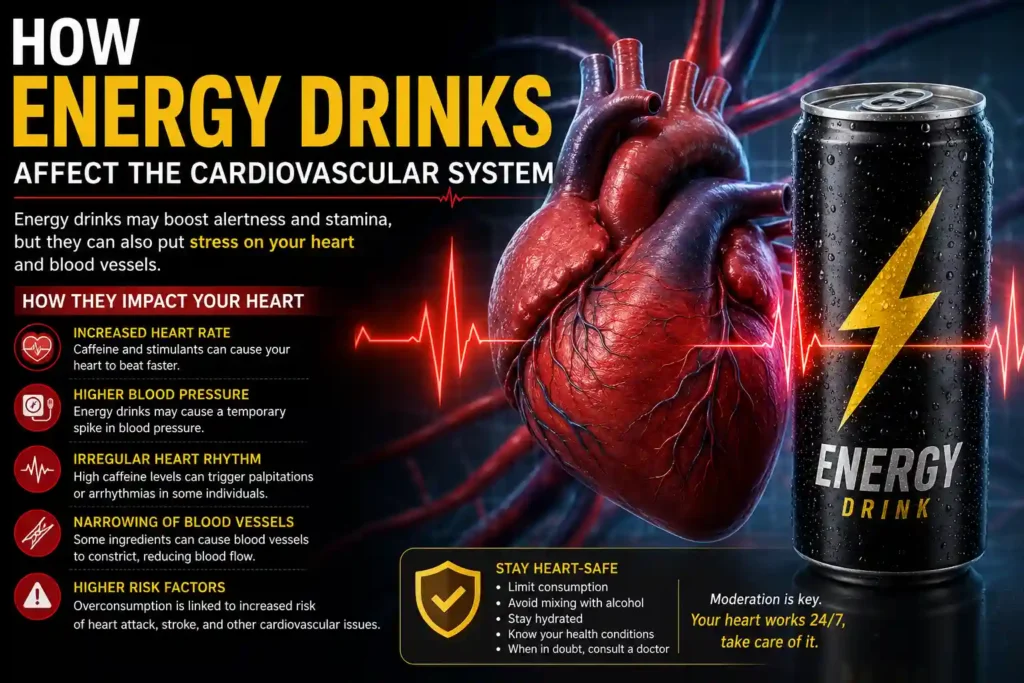
Energy drinks combine several stimulant compounds that act on the body simultaneously, which is part of why researchers don’t treat them as “just caffeine.”
Common stimulant and active ingredients
| Ingredient | Primary Effect | Typical Amount |
|---|---|---|
| Caffeine | Raises alertness, heart rate, blood pressure | 80–300+ mg per can |
| Taurine | Amino acid; cardiovascular effects still under study | 1,000 mg |
| Guarana | Contains additional natural caffeine | Varies (hidden caffeine source) |
| Glucuronolactone | Found in connective tissue; effects on heart rhythm unclear | 600 mg |
| Sugar or sweeteners | Spikes blood glucose; adds metabolic stress | 27–54 g per can |
Guarana is a frequently overlooked risk factor. It naturally contains caffeine, meaning a product listing “200 mg caffeine” plus guarana may deliver meaningfully more stimulant load than the label implies.
What happens inside the body after a high-stimulant dose
- Adrenaline release increases — the body shifts into a stress response.
- Heart rate and cardiac workload rise.
- Blood vessels may constrict (vasoconstriction) — narrowing the pathways that deliver oxygen to the brain.
- Blood pressure rises, sometimes sharply with rapid, high-volume intake.
- Heart rhythm can become irregular, as shown in the 2019 JAHA trial’s QTc interval findings.
Why blood pressure is the central concern
High blood pressure is the single largest modifiable risk factor for stroke worldwide. According to data published in the Journal of the American Heart Association, a sustained systolic blood pressure increase of just 2 mmHg is associated with a 10% increase in stroke mortality risk. Energy drinks capable of producing measurable blood pressure spikes — particularly in high volumes or with repeated daily use — fit directly into this risk pathway.
Understanding the Types of Stroke
Not all strokes happen the same way, and the mechanism matters for understanding energy drink risk.
What is an ischemic stroke?
An ischemic stroke — the most common type, accounting for about 87% of all strokes — occurs when a blood clot blocks blood flow to part of the brain. Risk factors include high blood pressure, diabetes, smoking, and irregular heart rhythms (atrial fibrillation). Energy drink-related blood pressure spikes and rhythm disturbances connect directly to this risk pathway.
What is a hemorrhagic stroke?
A hemorrhagic stroke happens when a blood vessel in the brain ruptures and bleeds into surrounding tissue. Severely elevated blood pressure — the exact effect documented in the December 2025 BMJ case report — is a primary driver of this stroke type.
What is a transient ischemic attack (TIA)?
A TIA, or “mini-stroke,” temporarily blocks blood flow to the brain. Symptoms often resolve within minutes, but a TIA is a medical emergency — it’s one of the strongest predictors of a full stroke within the following days or weeks.
How Much Caffeine Is Too Much?
The FDA considers up to 400 mg of caffeine per day safe for most healthy adults — roughly four to five 8-ounce cups of coffee. But energy drinks complicate this math.
| Beverage | Typical Caffeine Content |
|---|---|
| 8 oz coffee | 95–165 mg |
| 8 oz green or black tea | 30–50 mg |
| 12 oz caffeinated soda | 30–40 mg |
| 8 oz energy drink | 40–250 mg |
| 16–32 oz energy drink (single can/bottle) | Up to 300+ mg |
This means a single large energy drink can approach or exceed the FDA’s full daily caffeine guidance in one serving. Drinking two in a short window can push well past it.
Caffeine sensitivity varies by individual
Caffeine metabolism is partly genetic — variations in the CYP1A2 gene affect how quickly the liver breaks caffeine down. Sensitivity is also shaped by:
- Body weight and size
- Pregnancy (caffeine clearance slows significantly)
- Existing cardiovascular conditions
- Medication interactions (certain antibiotics and antidepressants slow caffeine metabolism)
- Sleep debt and chronic stress
- Regular caffeine tolerance versus infrequent use
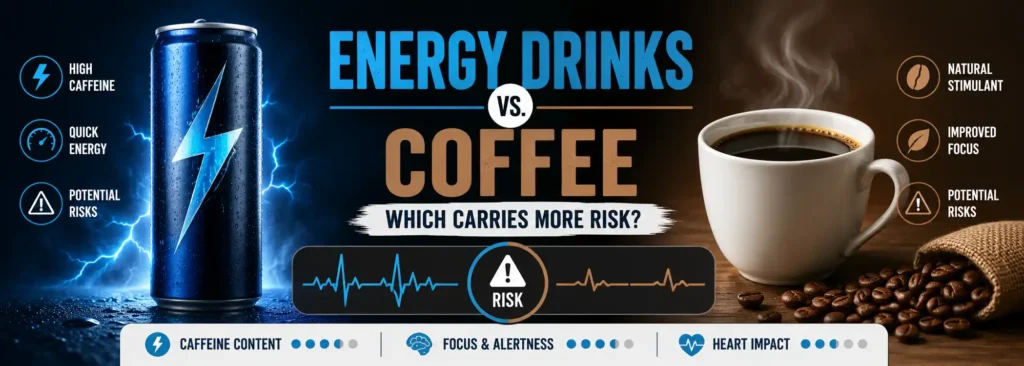
Energy Drinks vs. Coffee: Which Carries More Risk?
| Factor | Energy Drinks | Coffee |
|---|---|---|
| Stimulant sources | Often multiple (caffeine + guarana + taurine) | Caffeine only, typically |
| Sugar content | Frequently 27–54g per can | Near zero if black |
| Caffeine predictability | Variable; hidden sources common | Generally consistent |
| Typical consumption speed | Often rapid (whole can in minutes) | Usually sipped over time |
| Cardiovascular research signal | Documented rhythm + BP changes beyond caffeine alone (JAHA, 2019) | Caffeine-related effects only |
The key difference isn’t caffeine — it’s the ingredient stack and consumption pattern. Drinking a 32-ounce energy drink in 20 minutes delivers a stimulant load far faster than sipping a cup of coffee over an hour, and the 2019 JAHA trial specifically tested that rapid-consumption pattern.
Who Faces Higher Stroke Risk From Energy Drinks?
Risk is not evenly distributed. The following groups face elevated concern based on existing cardiovascular and neurological research:
- People with hypertension — energy drinks compound an already elevated baseline
- Individuals with arrhythmias or atrial fibrillation — QTc-altering effects are clinically significant here
- People with diabetes — added cardiovascular stress compounds existing vascular risk
- Pregnant individuals — slower caffeine clearance increases fetal exposure
- Teenagers and adolescents — the American Academy of Pediatrics has long recommended against energy drink use in minors due to higher relative caffeine sensitivity
- People taking stimulant medications (ADHD medications, certain decongestants) — additive stimulant effect
- Anyone with a prior stroke or TIA — recurrence risk is substantially elevated by any additional cardiovascular stressor
- People with migraine involving neurological symptoms (migraine with aura) — some research links vasoconstriction triggers to aura episodes
If you fall into any of these categories, talk to a physician before regularly consuming energy drinks — this is the single most consistent recommendation across the research reviewed for this guide.
The Most Dangerous Combination: Energy Drinks and Alcohol
Mixing energy drinks with alcohol remains one of the most studied risk patterns in this space, and for good reason.
Why it’s dangerous: The stimulant effect masks alcohol’s sedating impact, creating a false sense of soberness while alcohol continues impairing coordination, judgment, and reaction time. This combination has been linked to:
- Increased total alcohol consumption (people drink more, longer, because they don’t feel as impaired)
- Greater dehydration, which thickens blood and increases cardiovascular strain
- Elevated blood pressure beyond either substance alone
- Higher rates of risk-taking behavior
- Disrupted recovery sleep, compounding next-day cardiovascular stress
This pattern is especially common in nightlife and college environments, where pre-mixed caffeinated alcoholic beverages and energy drink mixers are widely available.
Exercise, Heat, and Energy Drinks: A Risky Combination
Many people use energy drinks as a pre-workout stimulant, but combining stimulants with intense exercise multiplies cardiovascular demand rather than simply adding to it.
Risk increases significantly when energy drink use is combined with:
- Heat exposure — vasodilation from heat plus vasoconstriction from stimulants creates conflicting cardiovascular signals
- Dehydration — already-thickened blood under additional stimulant load
- High-intensity cardio — heart rate and blood pressure are already elevated before the drink is added
- Sleep deprivation — common among athletes training before early competitions
- Stacking with pre-workout supplements — many pre-workouts already contain 200+ mg of caffeine; adding an energy drink can push total stimulant intake well past recommended limits
Sports medicine physicians frequently caution against energy drinks before prolonged high-intensity training specifically because of this compounding effect.
Warning Signs That Require Immediate Medical Attention
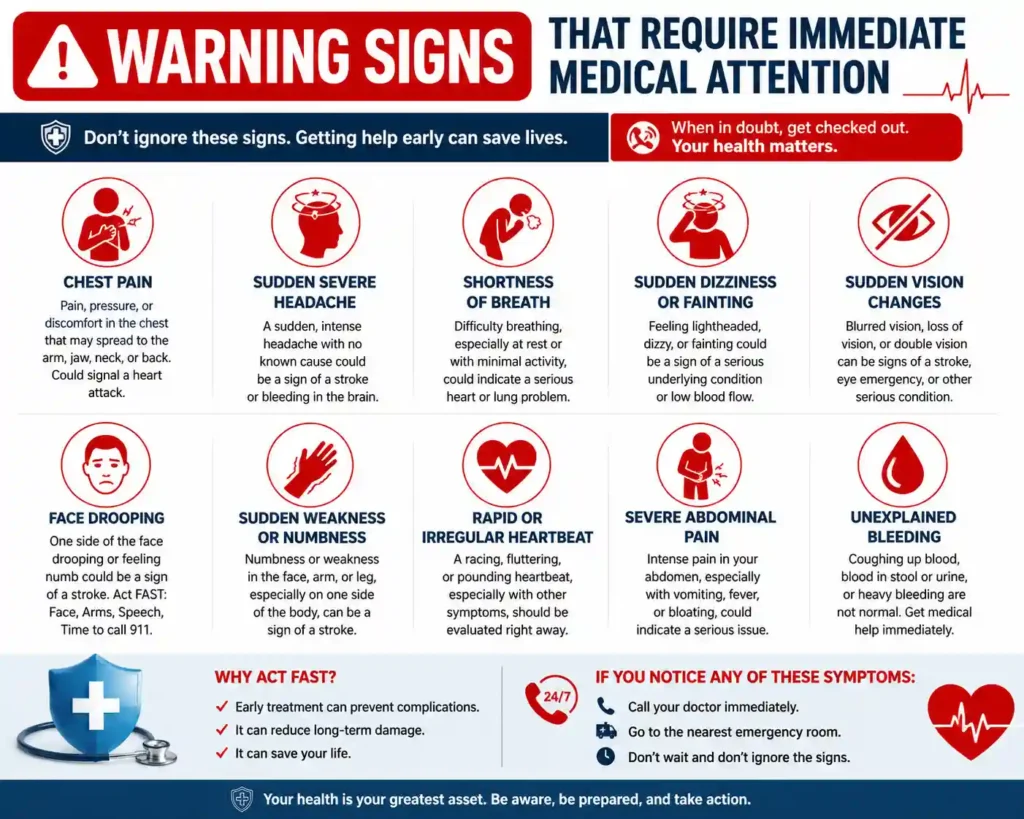
Some symptoms after energy drink consumption should never be monitored “to see if they pass.” Call emergency services immediately if you or someone else experiences:
- Sudden weakness or numbness, especially on one side of the body
- Facial drooping
- Slurred or garbled speech
- Sudden, severe headache unlike any before
- Sudden confusion or trouble understanding speech
- Difficulty walking, dizziness, or loss of balance
- Vision changes in one or both eyes
- Fainting or loss of consciousness
- Chest pain combined with any of the above
Remember the FAST stroke warning signs
| Letter | Meaning |
|---|---|
| F | Face drooping — does one side droop when the person smiles? |
| A | Arm weakness — does one arm drift downward when raised? |
| S | Speech difficulty — is speech slurred or strange? |
| T | Time to call emergency services — every minute matters |
Treatment delivered within the first 3–4.5 hours of stroke onset dramatically improves outcomes for ischemic stroke, according to American Stroke Association guidelines. This is why recognizing FAST signs immediately — rather than waiting to see if symptoms resolve — is critical.
Common Myths About Energy Drinks and Stroke
Myth: One energy drink will cause a stroke
False. The documented risk pattern involves heavy, repeated consumption — the BMJ case report involved a daily eight-can habit sustained over time, not a single drink.
Myth: Sugar-free energy drinks are completely safe
False. Removing sugar doesn’t remove caffeine, taurine, guarana, or glucuronolactone. Many sugar-free formulations contain equal or higher stimulant concentrations than their sugared counterparts.
Myth: Young, healthy people can’t have stroke risk from energy drinks
False. The case report’s subject was an otherwise healthy man with no prior cardiovascular diagnosis. Age and apparent fitness don’t eliminate risk from sustained high-stimulant intake.
Myth: Natural ingredients make energy drinks harmless
False. Guarana and yerba mate are “natural,” but they’re natural caffeine sources. Marketing language around “natural” or “plant-based” stimulants doesn’t change their cardiovascular effects.
Safer Alternatives to High-Stimulant Energy Drinks
For people looking to reduce stimulant load without losing energy and focus:
- Green tea or matcha — 30–70 mg caffeine with L-theanine, which may smooth the alertness curve
- Cold brew coffee in moderate servings — more predictable caffeine dosing than energy drinks
- Electrolyte beverages (without added stimulants) — address dehydration-related fatigue directly
- Coconut water — natural electrolytes without stimulants
- Protein-forward smoothies — sustained energy from macronutrients rather than stimulant spikes
Building energy without stimulant overload
The most consistent recommendation across cardiology and sleep medicine sources: address the underlying cause of fatigue rather than masking it with stimulants. This means prioritizing consistent sleep schedules, regular hydration, and managing chronic stress — interventions that don’t carry cardiovascular trade-offs.
Practical Safety Tips If You Still Drink Energy Drinks
Complete elimination isn’t realistic for everyone. These habits meaningfully reduce risk:
- Read the full label, including hidden caffeine sources like guarana
- Never drink more than one can within a short window — spread intake across hours, not minutes
- Stay hydrated — dehydration amplifies every cardiovascular risk listed above
- Never mix with alcohol
- Avoid use immediately before intense exercise, especially in heat
- Don’t stack with pre-workout supplements containing additional caffeine
- Stop immediately if you notice palpitations, chest discomfort, or dizziness
- Choose smaller serving sizes (8–12 oz) over 24–32 oz bottles
- Avoid energy drinks within 6 hours of bedtime — caffeine’s half-life is roughly 5–6 hours
- Track your total daily caffeine from all sources, not just energy drinks
When to See a Doctor
Schedule a medical evaluation — not an emergency visit, but a planned appointment — if you experience any of the following on a recurring basis:
- Frequent heart palpitations or a racing heartbeat after caffeine
- Chest discomfort that occurs specifically after energy drink use
- Recurring severe headaches
- Dizziness tied to caffeine intake
- Elevated home blood pressure readings
- Anxiety symptoms that worsen after stimulant use
- Any fainting episode, regardless of apparent cause
A physician can run an ECG, check blood pressure trends over time, and determine whether your symptoms point to caffeine sensitivity, an underlying arrhythmia, or another cardiovascular issue that needs direct treatment.
Key Takeaways
- Energy drinks don’t directly cause stroke in most healthy people, but heavy, sustained use is clinically linked to the blood pressure spikes and rhythm disturbances that do cause stroke.
- A December 2025 BMJ Case Reports case documented a stroke in a healthy man tied to an eight-can-daily habit — proof that risk isn’t limited to people with pre-existing conditions.
- A single 32-oz energy drink can contain 300+ mg of caffeine — close to the FDA’s full 400 mg daily limit for healthy adults.
- The biggest danger multipliers are mixing with alcohol, intense exercise in heat, dehydration, and existing cardiovascular conditions.
- FAST warning signs (Face, Arm, Speech, Time) require an immediate emergency call — don’t wait to see if symptoms pass.
- Moderation, hydration, and avoiding stacking with other stimulants meaningfully reduce risk for people who choose to keep drinking energy drinks.
Frequently Asked Questions
Can energy drinks directly cause a stroke?
There’s no proof that energy drinks directly cause stroke in every person who drinks them. However, a December 2025 case report in BMJ Case Reports documented a stroke in a healthy man linked to heavy daily energy drink consumption, and clinical trials have shown energy drinks can raise blood pressure and disturb heart rhythm — both established stroke risk factors.
How much caffeine in energy drinks is considered dangerous?
The FDA considers up to 400 mg of caffeine daily safe for most healthy adults. A single large energy drink (24–32 oz) can contain 300 mg or more in one serving, meaning just one or two large cans can approach or exceed the full daily recommended limit.
Are sugar-free energy drinks safer for stroke risk?
Not necessarily. Sugar-free formulations remove sugar but typically retain the same or similar levels of caffeine, taurine, and guarana — the ingredients most associated with cardiovascular stress in research.
Can mixing energy drinks with alcohol increase stroke risk?
Yes. The stimulant effect of energy drinks can mask alcohol’s sedative impact, leading people to drink more alcohol while experiencing increased dehydration, elevated blood pressure, and greater cardiovascular strain than either substance alone.
Is coffee a safer alternative to energy drinks?
Generally, yes. Coffee typically contains caffeine as its only major stimulant, with more predictable dosing and slower consumption patterns. Energy drinks often combine multiple stimulants (caffeine, guarana, taurine) consumed rapidly, which clinical research has linked to cardiovascular effects beyond what caffeine alone produces.
What are the warning signs of a stroke after drinking an energy drink?
Use the FAST method: Face drooping, Arm weakness, Speech difficulty, and Time to call emergency services. Additional warning signs include sudden numbness, severe headache, vision changes, confusion, and difficulty walking. Call emergency services immediately if any of these occur.
Should teenagers avoid energy drinks?
Most pediatric health experts recommend that teenagers and children avoid energy drinks. Adolescents tend to have higher relative caffeine sensitivity, and energy drinks are not regulated as tightly as pharmaceutical stimulants despite delivering significant doses to a still-developing cardiovascular system.
Can dehydration make energy drinks more dangerous?
Yes. Dehydration thickens the blood and increases cardiovascular strain on its own. Combined with the vasoconstricting and blood-pressure-raising effects of energy drink stimulants, dehydration significantly amplifies cardiovascular risk — particularly during exercise or heat exposure.
How many energy drinks per day is considered high-risk?
There’s no universally agreed-upon “safe” number, but the documented BMJ case report involved eight cans daily. Most cardiologists would consider more than one to two standard cans (8–16 oz) per day, especially sustained over weeks or months, to represent meaningfully elevated risk.
Do energy drinks affect heart rhythm even in healthy people?
Yes. A 2019 randomized controlled trial in the Journal of the American Heart Association found that healthy adults ages 18–40 experienced measurable changes in QTc interval (a heart rhythm marker) after consuming 32 oz of a commercial energy drink — changes not fully explained by caffeine content alone.
Conclusion
The science on energy drinks and stroke risk is still evolving, but the direction of the evidence is consistent: heavy, repeated, high-volume consumption places real and measurable stress on the cardiovascular system — stress that overlaps directly with the established risk factors for stroke. The December 2025 case report didn’t prove that energy drinks cause stroke in everyone who drinks them, but it did show that “healthy” and “young” aren’t automatic protection against the consequences of sustained stimulant overload.
If you drink energy drinks occasionally, in moderate amounts, without mixing them with alcohol or intense unhydrated exercise, current evidence doesn’t suggest significant danger. If you’re drinking several cans daily, mixing them with other stimulants or alcohol, or you have any existing cardiovascular risk factor, this is worth a direct conversation with your doctor — not because one drink is dangerous, but because the pattern of heavy use has a documented connection to serious outcomes.
If you or someone near you shows FAST warning signs after any caffeine or energy drink use, call emergency services immediately. Minutes matter.