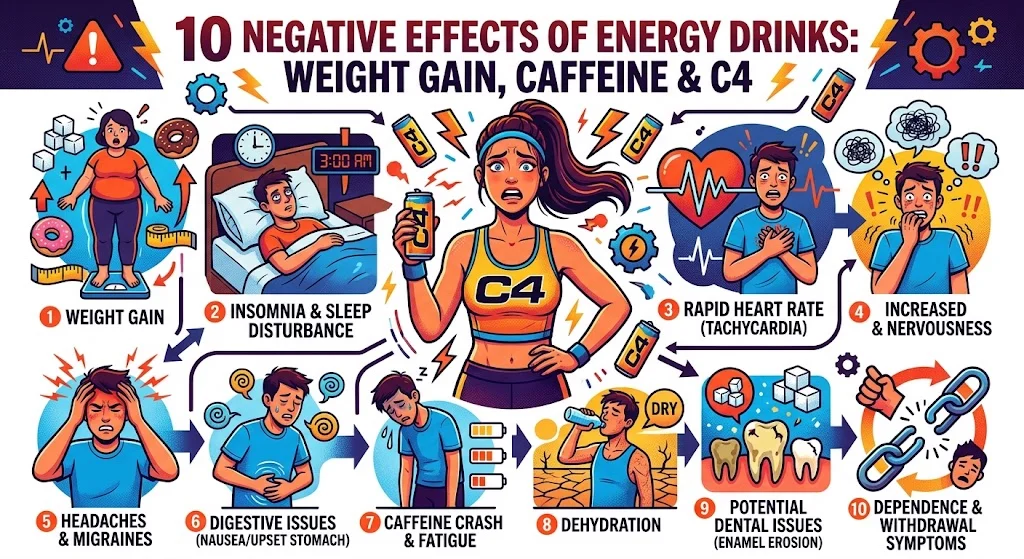
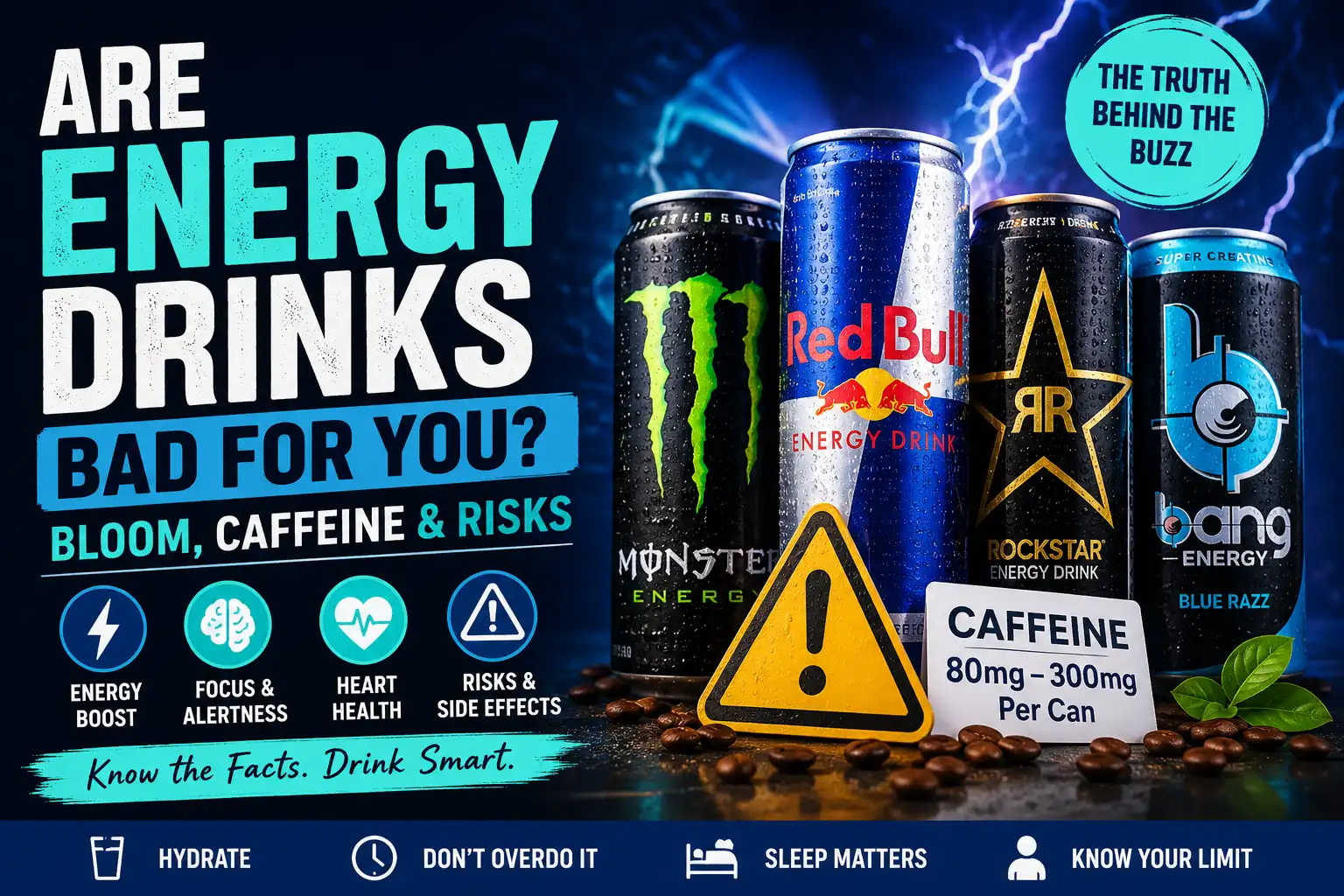
The energy drink aisle has changed dramatically. Red Bull and Monster still dominate awareness, but newer brands now compete with zero-sugar formulas, fruit-forward flavors, plant-sourced caffeine, workout positioning, and caffeine levels ranging from about 80 mg to 300 mg per container.
That variety is useful, but it also makes comparison harder. A small Red Bull, a Celsius, a Monster, and a Reign can look like similar products while delivering very different caffeine doses.
This guide compares leading energy drink brands in the USA by caffeine, sugar style, serving size, product positioning, and everyday use. It also includes newer names worth knowing in 2026, including Bloom Sparkling Energy, Liquid Death Sparkling Energy, GORGIE, ZOA, and UPTIME.
Quick Answer
For mainstream recognition, Red Bull, Monster, and Celsius currently lead the U.S. category. Morning Consult’s June 2026 research gave Red Bull roughly 23% mental market share, Monster about 17%, and Celsius about 8.5%.
For caffeine, there is a much bigger range. Red Bull and V8 Energy can start around 80 mg, Liquid Death Sparkling Energy has 100 mg, many modern brands sit around 150–200 mg, Celsius Essentials reaches 270 mg, and Reign Total Body Fuel provides 300 mg.
TL;DR
- Red Bull: classic option with manageable smaller-can caffeine.
- Monster: broad product range and familiar energy-drink profile.
- Celsius: major zero-sugar brand with 200 mg standard cans.
- Alani Nu: 200 mg, zero sugar, strong flavor-led positioning.
- C4 and GHOST: popular 200 mg options with fitness/lifestyle appeal.
- Reign: one of the strongest mainstream choices at 300 mg.
- V8 Energy and Aspire: useful lower-caffeine options around 80 mg.
- Liquid Death Sparkling Energy: newer 100 mg zero-sugar middle ground.
How This Guide Was Evaluated
This guide uses current U.S. manufacturer information reviewed in August 2026, current company disclosures, FDA caffeine guidance, American Academy of Pediatrics guidance, and fresh U.S. category research.
Caffeine values refer to the specific product and serving size named, not every product sold by that brand. Formulas and sizes can change, so the package in your hand remains the final reference.
Taste is subjective. This guide does not invent personal taste-testing claims or unsupported flavor scores. Where flavor is discussed, it is based on product positioning and clearly described flavor families rather than pretending every can was tested side by side.
Energy Drink Brands at a Glance
The fastest way to compare energy drinks is to ignore the logo for a moment and look at the caffeine per entire container.
| Brand / Product | Typical Size | Caffeine | Sugar Style | Best Fit |
|---|---|---|---|---|
| Red Bull Original | 8.4 oz | 80 mg | Regular; Sugarfree/Zero available | Smaller caffeine serving |
| V8 Energy | 8 oz | 80 mg | No added sugar | Lower caffeine |
| Aspire | Can / stick | 80 mg | Zero sugar | Moderate everyday use |
| Liquid Death Sparkling Energy | Can | 100 mg | Zero sugar | Middle-ground caffeine |
| UPTIME Zero Sugar | Bottle | 142 mg | Zero sugar | Moderate caffeine |
| GORGIE | Can | 150 mg | Zero sugar | Green-tea caffeine |
| Monster Zero Sugar | 16 oz | 160 mg | Zero sugar | Classic-style zero sugar |
| Rockstar Sugar Free | Can | 160+ mg | Sugar free | Classic energy category |
| ZOA Energy | 12 oz | 160 mg | Zero sugar | Plant-sourced caffeine |
| Bloom Sparkling Energy | Can | 180 mg | Zero sugar | Modern lifestyle category |
| Celsius | Can | 200 mg | Zero sugar | Fitness/lifestyle |
| Alani Nu | Can | 200 mg | Zero sugar | Flavor variety |
| C4 Energy | 16 oz | 200 mg | Zero sugar | Workout positioning |
| GHOST Energy | Can / stick | 200 mg | Zero sugar | Bold flavors |
| PRIME Energy | 16 oz | 200 mg | Zero sugar | Adult energy line |
| Celsius Essentials | Can | 270 mg | Check current label | Stronger caffeine |
| Reign Total Body Fuel | Can | 300 mg | Zero sugar | Very high caffeine |
Red Bull confirms 80 mg in its 8.4-ounce can, while larger Red Bull sizes contain more caffeine. Monster Zero Sugar lists 160 mg per 16 ounces, and standard Celsius beverages contain 200 mg per can.
Alani Nu lists 200 mg and zero sugar, Reign lists 300 mg with zero sugar, and PRIME Energy currently lists 200 mg in its 16-ounce Energy product.
The lower-to-middle range has expanded as well. V8 Energy offers 80 mg formats, Aspire lists 80 mg, UPTIME lists 142 mg, GORGIE lists 150 mg, and 12-ounce ZOA contains 160 mg.
Most Popular Energy Drink Brands in the USA
Popularity and quality are not the same thing, but popularity helps explain which brands consumers are most likely to recognize, consider, and find in stores.
Morning Consult’s June 2026 category research placed Red Bull first at roughly 23% mental market share, followed by Monster at 17% and Celsius at about 8.5%. The gap helps explain why Red Bull and Monster still function as the category’s default reference points even as modern brands grow.
Red Bull
Red Bull remains the clearest classic benchmark. The standard 8.4-ounce Original contains 80 mg of caffeine and 27 grams of sugar, while Sugarfree and Zero versions offer alternatives without the same sugar load. Larger Red Bull cans carry proportionally more caffeine.
Best for: someone who prefers a smaller serving and does not automatically want 200–300 mg.
Monster Energy
Monster remains a broad mainstream brand with Original, Zero Sugar, Ultra, Juice Monster, Java Monster, Rehab, Nitro, and other lines. Original Green lists 160 mg of caffeine per 16 ounces, while Monster Zero Sugar also lists 160 mg with zero grams of sugar.
Best for: shoppers who want extensive flavor and format variety inside one familiar brand.
Celsius
Celsius occupies a different lane from old-school energy drinks. Standard Celsius and Celsius Vibe beverages contain 200 mg per can, while Celsius Essentials contains 270 mg. The company’s Hydration powder is caffeine-free, showing why brand-level comparisons should always identify the exact product line.
Morning Consult’s 2026 research places Celsius as the clear third brand in mental market share behind Red Bull and Monster.
Alani Nu
Alani Nu has grown quickly around colorful branding, strong flavor variety, and zero-sugar energy drinks. Its Breezeberry product, for example, lists 200 mg caffeine, zero sugar, and B vitamins.
Celsius Holdings acquired Alani Nu on April 1, 2025. In its August 2026 financial update, Celsius Holdings said Alani Nu held approximately 8.7% dollar share of the U.S. ready-to-drink energy category for the 13 weeks ended June 28, 2026.
Best Energy Drink Brands by Need
There is no universal “best energy drink.” A more useful question is: best for what?
| What You Want | Brands to Compare | Why |
|---|---|---|
| Lowest caffeine among these picks | V8 Energy, Aspire, small Red Bull | Around 80 mg |
| Around 100 mg | Liquid Death Sparkling Energy | 100 mg, zero sugar |
| Moderate 140–160 mg | UPTIME, GORGIE, ZOA, Monster | Middle ground |
| Zero sugar + 200 mg | Celsius, Alani Nu, C4, GHOST, PRIME | Common modern strength |
| Very high caffeine | Celsius Essentials, Reign | 270–300 mg |
| Plant-sourced caffeine | V8, Aspire, GORGIE, ZOA | Tea/coffee-derived sources |
| Classic energy-drink style | Red Bull, Monster, Rockstar, NOS | Established category names |
| Workout positioning | C4, Reign, Celsius, ZOA+ | Fitness-focused product lines |
| Bold flavor variety | Alani Nu, GHOST, C4, Monster | Large flavored portfolios |
| Newer 2026-relevant choices | Liquid Death, Bloom, GORGIE | Newer category alternatives |
A useful rule is to choose the lowest caffeine amount that fits your purpose, rather than treating the highest number as better.
Someone who drinks coffee in the morning and tea later may find an 80–150 mg product easier to fit into the day than a single 300 mg can.
Red Bull vs Monster vs Celsius vs Alani Nu
These four brands represent different eras and styles within the category.
Red Bull: Best Starting Point for Smaller Portions
An 8.4-ounce Red Bull contains 80 mg of caffeine, making the standard small can much easier to compare with coffee than many 200 mg competitors. The same product family also comes in larger 12-, 16-, and 20-ounce cans containing more caffeine.
The tradeoff is sugar in Original. The standard 8.4-ounce Original contains 27 grams of sugars, although Sugarfree and Zero alternatives are available.
Monster: Best for Product Variety
Monster’s advantage is range. Its portfolio includes classic carbonated drinks as well as Ultra, Juice Monster, Java Monster, Rehab, Nitro, and other lines.
The standard Original Green 16-ounce can lists 160 mg caffeine and 230 calories. Monster Zero Sugar maintains the 160 mg caffeine level while listing zero grams of sugar and 10 calories.
Celsius: Best-Known Modern 200 mg Brand
Standard Celsius and Celsius Vibe cans deliver 200 mg caffeine, putting them well above an 8.4-ounce Red Bull but below Reign’s 300 mg level. Celsius Essentials raises that amount to 270 mg.
That makes product-line awareness especially important. “A Celsius” does not always mean the same caffeine dose.
Alani Nu: Strong Flavor-Led Alternative
Alani Nu sits in the same general 200 mg zero-sugar tier as standard Celsius. Its branding and flavor selection give it a different consumer identity, but caffeine-sensitive drinkers should notice that the compact can still contains a significant dose.
Alani Nu is now part of Celsius Holdings, although it remains a distinct consumer brand. Celsius Holdings also owns Rockstar Energy in the United States and Canada.
Best Zero-Sugar Energy Drink Brands
Zero sugar does not mean low caffeine. That is one of the most important distinctions in the entire category.
Many of today’s zero-sugar products actually sit toward the higher end of the caffeine scale.
Monster Zero Sugar
Monster Zero Sugar lists 160 mg caffeine, zero grams of sugar, and 10 calories per 16-ounce serving.
It makes sense for someone who likes Monster’s classic category identity but wants to remove the sugar found in traditional formulas.
Celsius
Standard Celsius offers 200 mg per can, and the brand heavily emphasizes zero-sugar products across its modern energy line.
Alani Nu
Current Alani Nu energy products such as Breezeberry list zero sugar and 200 mg caffeine.
C4 Energy
C4’s standard carbonated energy products are commonly formulated around 200 mg caffeine with zero sugar, while stronger C4 lines may contain more.
GHOST Energy
GHOST states that its Energy Sticks use the formula consumers know from its cans and provide 200 mg of natural caffeine with zero sugar.
PRIME Energy
PRIME Energy currently lists zero sugar and 200 mg caffeine in its 16-ounce energy drink. The brand also labels its Energy product for ages 18+.
Reign Total Body Fuel
Reign combines zero sugar with 300 mg caffeine, making it much stronger than typical 160–200 mg products.
GORGIE
GORGIE sits lower at 150 mg caffeine, with current products listing zero grams of sugar and five calories.
The takeaway is simple: choose zero sugar for sugar preference, not as a proxy for caffeine moderation.
Lower-Caffeine Energy Drink Brands
The modern market often celebrates stronger drinks, but lower-caffeine options can be more practical.
They leave more room for coffee, tea, chocolate, supplements, or another caffeinated product later in the day.
V8 Energy — 80 mg
V8 Energy offers 80 mg of caffeine from black and green tea in its 8-ounce and 12-ounce Sparkling formats. Its 11.5-ounce V8 Energy format can contain 115 mg, so package size still matters.
Aspire — 80 mg
Aspire lists 80 mg of plant-based caffeine, with current zero-sugar options available. The brand says its caffeine comes from ingredients including green tea and guarana.
Red Bull — 80 mg in 8.4 ounces
Standard Red Bull starts at 80 mg in the 8.4-ounce can. A 12-ounce can contains 114 mg, a 16-ounce can 151 mg, and a 20-ounce can 198 mg.
This is an excellent example of why “Red Bull has 80 mg” is incomplete without naming the serving size.
Liquid Death Sparkling Energy — 100 mg
Liquid Death Sparkling Energy provides 100 mg caffeine, zero sugar, and five calories.
That gives it an unusual middle position: stronger than an 80 mg drink but far below many 200–300 mg cans.
UPTIME — 142 mg
UPTIME’s current zero-sugar products list 142 mg of natural caffeine.
For adults who find 80 mg too light and 200 mg unnecessarily strong, the 100–150 mg range may be worth comparing.
Energy Drink Brands With Around 200 Mg of Caffeine
Two hundred milligrams has become one of the defining caffeine levels in the modern energy-drink market.
That amount is found across brands with very different identities.
Celsius
Standard Celsius and Celsius Vibe contain 200 mg per can.
Alani Nu
Alani Nu energy drinks such as Breezeberry contain 200 mg per serving with zero sugar.
C4 Energy
C4’s standard carbonated line uses 200 mg caffeine in typical 16-ounce cans.
GHOST Energy
GHOST’s energy formula uses 200 mg caffeine, including its non-carbonated Energy Sticks.
PRIME Energy
Current PRIME Energy cans provide 200 mg caffeine.
ZOA+
ZOA’s standard 12-ounce Energy drink contains 160 mg, while its ZOA+ pre-workout line contains 200 mg.
A single 200 mg product represents half of the FDA’s cited 400 mg daily amount not generally associated with negative effects for most adults. That 400 mg figure is not a daily goal, and individual sensitivity varies.
Strong Energy Drinks With 270–300 Mg of Caffeine
The strongest mainstream products deserve their own category because the jump from 80 mg to 300 mg is substantial.
A 300 mg Reign contains nearly four times the caffeine of an 8.4-ounce Red Bull.
Celsius Essentials — 270 mg
Celsius Essentials currently contains 270 mg caffeine per can, compared with 200 mg in standard Celsius and Celsius Vibe products.
Reign Total Body Fuel — 300 mg
Reign Total Body Fuel lists 300 mg natural caffeine and zero sugar.
At 300 mg, one Reign uses most of the FDA’s cited 400 mg daily benchmark for most adults before coffee, tea, chocolate, supplements, or other caffeine sources are counted.
Bang Energy
Bang remains part of Monster Beverage’s current energy-drink portfolio alongside Monster, Reign, NOS, and Full Throttle.
Because formulations can change and Bang has had multiple products, check the exact caffeine statement on the current can rather than relying on an older comparison chart.
Critical takeaway: caffeine is a dose, not a quality score. More caffeine does not mean better quality.
New and Trending Energy Drink Brands to Watch in 2026
The energy-drink market is no longer split only between Red Bull and Monster-style products.
Newer brands are filling the space between sparkling water, functional beverages, fitness drinks, and traditional energy products.
Liquid Death Sparkling Energy
Liquid Death now sells Sparkling Energy with 100 mg caffeine, zero sugar, and five calories.
Its 100 mg positioning is notable because it sits well below the 180–300 mg range used by many modern competitors.
Bloom Sparkling Energy
Bloom Sparkling Energy lists 180 mg of natural caffeine from green coffee bean extract, zero sugar, and 10 calories per can.
That places Bloom just below the crowded 200 mg tier occupied by Celsius, Alani Nu, C4, GHOST, and PRIME.
GORGIE
GORGIE currently offers 150 mg of caffeine from green tea, zero grams of sugar, and five calories in its standard energy line.
ZOA
ZOA offers several caffeine strengths. Its 12-ounce energy drinks contain 160 mg, 16-ounce versions contain 210 mg, and ZOA+ contains 200 mg.
UPTIME
UPTIME takes another middle-range approach at 142 mg of caffeine in current products.
These brands matter because they break the old assumption that an energy drink must contain either about 80 mg or 200–300 mg. The market now offers more useful steps between those extremes.
Natural and Plant-Sourced Caffeine Energy Drink Brands
Terms such as natural caffeine or plant-sourced caffeine describe the source of caffeine. They do not make caffeine stop behaving like caffeine.
Red Bull itself notes that naturally derived and synthetic caffeine are identical in structure and effect.
V8 Energy
V8 Energy uses caffeine from black and green tea, with many formats providing 80 mg.
Aspire
Aspire lists caffeine from sources including green tea and guarana seed extract, with 80 mg in its standard products.
GORGIE
GORGIE lists 150 mg of green-tea caffeine in its current energy drinks.
ZOA
ZOA says its caffeine comes from green tea and green coffee beans.
Bloom
Bloom’s current Sparkling Energy uses green coffee bean extract as its caffeine source and contains 180 mg per can.
The useful comparison is therefore not “natural versus chemical.” It is source + total caffeine + serving size + everything else in the formula.
Best Energy Drink Brands for Workouts and Active Days
Energy drinks and workout products overlap, but they are not interchangeable with hydration.
C4, Celsius, Reign, ZOA, and GHOST all have strong connections to fitness or performance positioning.
C4 Energy
C4’s standard energy drink contains about 200 mg caffeine, while the company’s stronger products can go higher.
Some C4 performance products also contain beta-alanine. That ingredient can cause a temporary tingling sensation in some users, so reading the ingredient panel matters if you are new to pre-workout-style beverages.
Reign
Reign Total Body Fuel combines 300 mg caffeine with zero sugar, BCAAs, CoQ10, and electrolytes according to the brand’s current product information.
Its caffeine level makes it a poor starting point for someone who does not already know how they respond to high caffeine.
Celsius
Standard Celsius provides 200 mg, while Essentials increases that to 270 mg.
ZOA+
ZOA+ is the brand’s pre-workout option and contains 200 mg caffeine, compared with 160 mg in a standard 12-ounce ZOA Energy.
GHOST
GHOST’s energy formula delivers 200 mg caffeine and zero sugar.
For exercise, caffeine and hydration solve different problems. An energy drink should not automatically replace water or a genuine sports drink.
Flavor-Forward Energy Drink Brands
Taste cannot be ranked credibly without controlled side-by-side testing, but brands clearly differ in how heavily they emphasize flavor variety.
Alani Nu
Alani Nu frequently uses fruit, candy-like, and seasonal profiles. Its Breezeberry product is described around blue raspberry and citrus, while the core formula contains 200 mg caffeine and zero sugar.
GHOST
GHOST has built much of its identity around bold branded flavors and collaborations, alongside a zero-sugar 200 mg formula.
Monster
Monster offers one of the broadest style ranges because consumers can move between Original, Zero Sugar, Ultra, Juice Monster, Nitro, coffee-energy products, and other lines without leaving the brand.
Its Nitro Super Dry, for example, uses a citrus profile and nitro texture, while Juice Monster products move into fruit-punch, apple, mango, and lemonade territory.
Celsius
Celsius spans sparkling, Vibe, Essentials, and other flavor families, including tropical, citrus, berry, slush-style, and dessert-inspired profiles.
C4
C4 frequently leans into fruit, frozen-drink, and candy-inspired flavor positioning across its performance lines.
For a first purchase, try an individual can before committing to a large case. A flavor you enjoy once may not be the flavor you want twelve times.
How to Compare Energy Drink Prices and Value
The cheapest can is not automatically the best value, especially when package sizes and caffeine levels differ.
Retail prices change too frequently to build a useful long-term ranking around one store’s sale price. Instead, compare value using the same framework each time you shop.
Compare Price Per Can
Divide the case price by the number of cans.
A $24 twelve-pack works out to $2 per can. A $30 twelve-pack costs $2.50 per can.
Compare Price Per Ounce
This helps when one brand sells 8.4-ounce cans and another sells 16-ounce cans.
Do Not Use Price Per Milligram of Caffeine as Your Only Metric
That method can accidentally reward extremely high-caffeine drinks simply because they provide more stimulant for the money.
A 300 mg product is not inherently a better deal than an 80 mg product if 80 mg is the amount that suits you.
Consider Waste
Buying a 16-ounce can you only drink halfway can be worse value than buying a smaller container you actually finish.
Buy Variety Before Bulk
For flavor-heavy brands such as GHOST, C4, Alani Nu, Monster, Celsius, and Bloom, a variety pack can make more sense before purchasing a full case of one flavor.
Common Ingredients in Energy Drinks
Caffeine gets most of the attention, but modern formulas often contain several other ingredients.
Caffeine
This is the main stimulant in most products. The dose can range significantly between brands and product lines.
Guarana
Guarana is a plant ingredient that naturally contains caffeine. A product with guarana can therefore receive caffeine from more than one ingredient source.
Taurine
Taurine appears in many traditional energy-drink formulas, including classic brands.
B Vitamins
B vitamins appear across many mainstream energy products. They are nutrients involved in normal body processes, but their presence should not be interpreted as proof that a highly caffeinated drink is necessary.
Green Tea and Green Coffee Extracts
Brands including V8 Energy, Aspire, GORGIE, ZOA, and Bloom use tea or coffee-derived caffeine sources.
Electrolytes
Some products include sodium, potassium, magnesium, or other electrolytes. That does not automatically turn them into sports drinks or make them a substitute for hydration.
Sweeteners
Zero-sugar energy drinks may use non-sugar sweeteners. Check the ingredient list when you have a specific sweetener preference or sensitivity.
The ingredient panel is more useful than front-of-can buzzwords. Start with caffeine, serving size, sugar, and ingredients you personally need to monitor.
Energy Drinks vs Sports Drinks: They Are Not the Same
The words energy and hydration are often placed close together in beverage marketing, but an energy drink and a sports drink serve different purposes.
Energy drinks are primarily defined by caffeine and other stimulant-style ingredients, while sports drinks are designed around fluid, carbohydrate, and electrolyte replacement.
The American Academy of Pediatrics’ HealthyChildren guidance specifically distinguishes sports drinks from energy drinks. It notes that water is generally sufficient for shorter exercise, while sports drinks may have a role during prolonged activity or very hot conditions.
A good example is PRIME. PRIME Energy and PRIME Hydration are different products. Current PRIME Energy lists 200 mg caffeine and is marked for adults 18+, so shoppers should not assume that every product carrying the PRIME name is simply a hydration drink.
The same logic applies to Celsius, which sells caffeinated energy beverages and also offers caffeine-free Celsius Hydration powder.
Check the exact product name, not only the brand logo.
Energy Drink Safety: How Much Caffeine Is Too Much?
Energy drinks are not automatically dangerous for every healthy adult, but caffeine dose matters.
The FDA cites 400 mg of caffeine per day as an amount not generally associated with negative effects for most adults. It also stresses that people differ substantially in caffeine sensitivity and how quickly their bodies eliminate it.
That 400 mg total includes all caffeine, not just energy drinks.
A day could include:
- coffee
- tea
- soda
- chocolate
- energy drinks
- pre-workout powder
- caffeine tablets
- some medications or supplements
Pay Attention to Strong Single Servings
A Reign at 300 mg already represents three-quarters of the FDA’s cited 400 mg level. A standard Celsius at 200 mg represents half.
This is why stacking a high-caffeine drink with coffee or pre-workout can push intake upward quickly.
Children and Teens Should Avoid Energy Drinks
American Academy of Pediatrics guidance advises children and adolescents away from caffeinated energy drinks. HealthyChildren also emphasizes that caffeine is not a substitute for adequate sleep.
This distinction is especially important because colorful cans and fruit flavors can make some products look similar to ordinary sparkling beverages.
Do Not Mix Caffeine With Alcohol to “Cancel Out” Intoxication
Caffeine does not neutralize alcohol.
The CDC warns that mixing caffeine and alcohol can contribute to heavier drinking and other health risks because caffeine does not remove alcohol’s impairment.
Consider Your Own Sensitivity
Some people experience unwanted effects at caffeine doses well below 400 mg.
If caffeine regularly causes jitteriness, racing heartbeat, anxiety, digestive discomfort, headaches, or sleep problems, reducing intake makes more sense than forcing yourself to “build tolerance.”
People with medical conditions, those taking medications that may interact with caffeine, or anyone with specific pregnancy-related caffeine questions should discuss their intake with an appropriate healthcare professional.
How to Choose the Right Energy Drink Brand
Brand loyalty should come after the label, not before it.
Use this simple process.
1. Decide How Much Caffeine You Actually Want
For a lighter serving, compare:
- V8 Energy — 80 mg
- Aspire — 80 mg
- Red Bull 8.4 oz — 80 mg
- Liquid Death Sparkling Energy — 100 mg
For a middle range:
- UPTIME — 142 mg
- GORGIE — 150 mg
- Monster — around 160 mg in key products
- ZOA 12 oz — 160 mg
- Bloom — 180 mg
For stronger caffeine:
- Celsius — 200 mg
- Alani Nu — 200 mg
- C4 — 200 mg
- GHOST — 200 mg
- PRIME Energy — 200 mg
- Celsius Essentials — 270 mg
- Reign — 300 mg
Current manufacturer information supports these representative caffeine levels.
2. Decide Whether Sugar Matters to You
If you want zero sugar, you have far more choices than a few years ago.
Monster Zero Sugar, Celsius, Alani Nu, C4, GHOST, PRIME Energy, Reign, GORGIE, Bloom, and other brands all have relevant options.
3. Compare Serving Size
An 8.4-ounce Red Bull and a 16-ounce Monster are not equivalent portions.
Look at caffeine per entire can, not simply caffeine per eight ounces.
4. Decide Whether You Want Classic or Modern Flavor Styling
Red Bull, Monster, Rockstar, and NOS represent more traditional energy-drink territory.
Alani Nu, GHOST, C4, Bloom, Celsius, PRIME, and similar brands lean more heavily into fruit, candy, tropical, sparkling, or lifestyle-oriented flavor concepts.
5. Check Timing
A product that feels reasonable at 8 a.m. may be a poor fit late in the evening.
Caffeine can remain in the body for hours, so people who struggle with sleep may benefit from moving caffeinated drinks earlier.
6. Check Your Other Caffeine Sources
A 200 mg can on a no-coffee day is different from a 200 mg can after two coffees.
Think in daily totals, not isolated drinks.
FAQs
What are the most popular energy drink brands in America?
Red Bull, Monster, and Celsius currently stand out in U.S. consumer awareness and mental availability. Morning Consult’s June 2026 research placed Red Bull at roughly 23% mental market share, Monster around 17%, and Celsius around 8.5%.
Other prominent U.S. names include Alani Nu, C4, GHOST, Rockstar, Reign, Bang, PRIME, NOS, ZOA, and newer lifestyle-oriented brands.
Which energy drink has the least caffeine?
Among the products compared here, V8 Energy, Aspire, and an 8.4-ounce Red Bull each provide about 80 mg of caffeine in representative formats.
Always check size. Larger Red Bull and V8 formats can contain more caffeine.
Is Celsius stronger than Red Bull?
A standard Celsius contains 200 mg caffeine, while an 8.4-ounce Red Bull contains 80 mg. Standard Celsius therefore contains 2.5 times as much caffeine as that specific Red Bull serving.
However, Red Bull also sells larger cans containing more than 80 mg.
Is Monster stronger than Red Bull?
A standard 16-ounce Monster Original contains 160 mg caffeine, while an 8.4-ounce Red Bull contains 80 mg. In those specific sizes, Monster contains twice the total caffeine.
The Monster can is also nearly twice the volume, so serving size is part of the comparison.
Which energy drinks have 200 mg of caffeine?
Popular products around 200 mg include standard Celsius, Alani Nu, C4 Energy, GHOST Energy, PRIME Energy, and ZOA+.
For caffeine-sensitive users, 200 mg can already be a substantial single serving.
What energy drink has 300 mg of caffeine?
Reign Total Body Fuel contains 300 mg caffeine per can in its current U.S. product line.
That is a high single-serving dose and leaves relatively little room beneath the FDA’s cited 400 mg daily amount for most adults.
Which energy drink brands have zero sugar?
Major zero-sugar choices include Monster Zero Sugar, Celsius, Alani Nu, C4, GHOST, PRIME Energy, Reign, GORGIE, Bloom, and sugar-free Rockstar products.
Remember that zero sugar does not mean low caffeine.
What are some newer energy drink brands or products to know in 2026?
Liquid Death Sparkling Energy, Bloom Sparkling Energy, and GORGIE are useful alternatives to the established category leaders. Their representative caffeine levels are 100 mg, 180 mg, and 150 mg, respectively.
They also illustrate the category’s move toward more varied caffeine levels instead of making every modern can a 200–300 mg product.
Can teenagers drink energy drinks?
American Academy of Pediatrics guidance recommends that children and adolescents avoid caffeinated energy drinks. Caffeine can also interfere with sleep, which is particularly important during adolescence.
Energy drinks should not be confused with ordinary hydration beverages or sports drinks.
Can I drink an energy drink every day?
There is no single answer for everyone because products and caffeine sensitivity vary.
For most adults, the FDA cites 400 mg of caffeine per day as an amount not generally associated with negative effects, but some people experience unwanted effects at considerably lower levels. Your total should include caffeine from every food, drink, medication, or supplement source.
Conclusion
The best energy drink brand depends far more on the product label than the logo. Today’s market stretches from 80 mg options such as V8 Energy, Aspire, and small Red Bull cans to 300 mg products such as Reign, with a crowded middle tier of 150–200 mg zero-sugar drinks.
For mainstream popularity, Red Bull and Monster remain category leaders, while Celsius and Alani Nu represent the rapid growth of newer functional and lifestyle-oriented energy brands. Fresh alternatives such as Liquid Death Sparkling Energy, Bloom, GORGIE, ZOA, and UPTIME give shoppers more control over caffeine strength and product style than the old market offered.
Before choosing a can, check caffeine per container, sugar, serving size, ingredients, and your other caffeine sources that day. The smartest choice is rarely the strongest drink on the shelf; it is the one whose dose and format actually fit your routine.