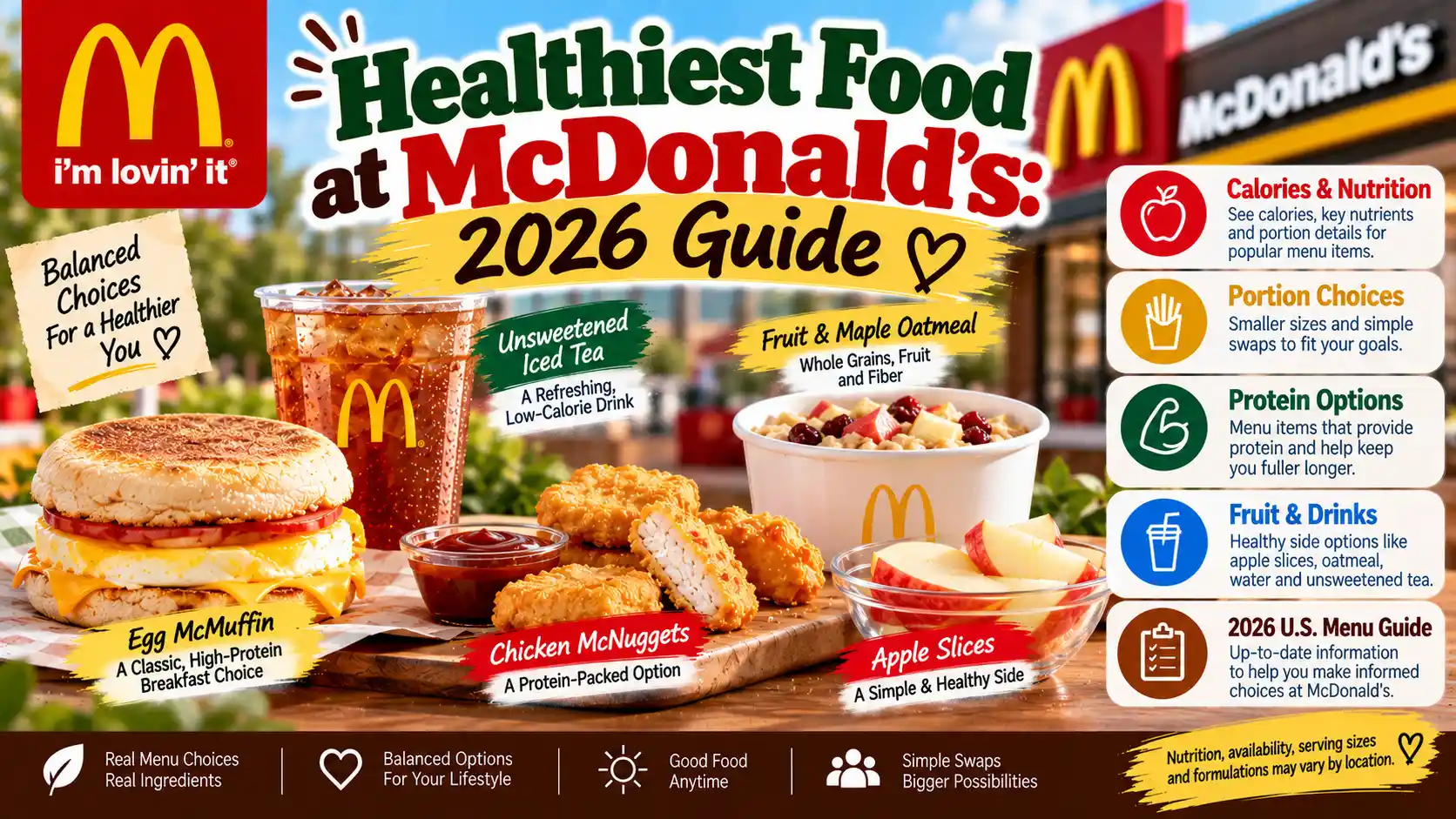
If you’re looking for the healthiest food at McDonald’s, the best choice depends on what you want from your meal. Protein, fiber, sodium, calories, sugar, and overall balance can all matter.
This guide covers breakfast, burgers, chicken, sides, drinks, and complete meals. You’ll also find simple ordering tips, customization ideas, nutrition checks, and food-allergy guidance.
Quick Answer
The healthiest food at McDonald’s depends on your nutrition priorities. Options such as the Egg McMuffin, Fruit & Maple Oatmeal, smaller McNugget portions, apple slices, and simpler burgers can fit different balanced eating goals.
The easiest approach is to look at the whole meal, not just one menu item.
TL;DR
• Choose a main with useful protein or whole-grain ingredients.
• Compare sodium instead of looking at calories alone.
• Add fruit or another simple side when available.
• Choose drinks based on added sugar and caffeine.
• Check current nutrition information before ordering.
• Build the meal around your own nutrition needs.
What Makes a McDonald’s Food Choice More Nutritious?
There isn’t one McDonald’s item that is automatically the healthiest for everyone. Different foods provide different combinations of protein, carbohydrates, fat, fiber, sodium, and calories.
A more useful approach is to decide what you want from the meal. Then compare menu items using the nutrition information instead of relying on a “healthy” label.
• For protein: Compare protein grams with calories and sodium.
• For fiber: Look for whole grains, fruit, and other fiber-containing ingredients.
• For sodium: Check the sodium number before adding sauces or sides.
• For lower added sugar: Pay attention to sweet drinks, desserts, and flavored additions.
• For a balanced meal: Combine a satisfying main with a suitable side and drink.
• For breakfast: Compare breakfast sandwiches, oatmeal, and available fruit options.
• For lunch or dinner: Look at burgers, chicken, McNuggets, and sides together.
• For allergies: Read the current ingredient and allergen information before ordering.
Healthiest McDonald’s Breakfast Options
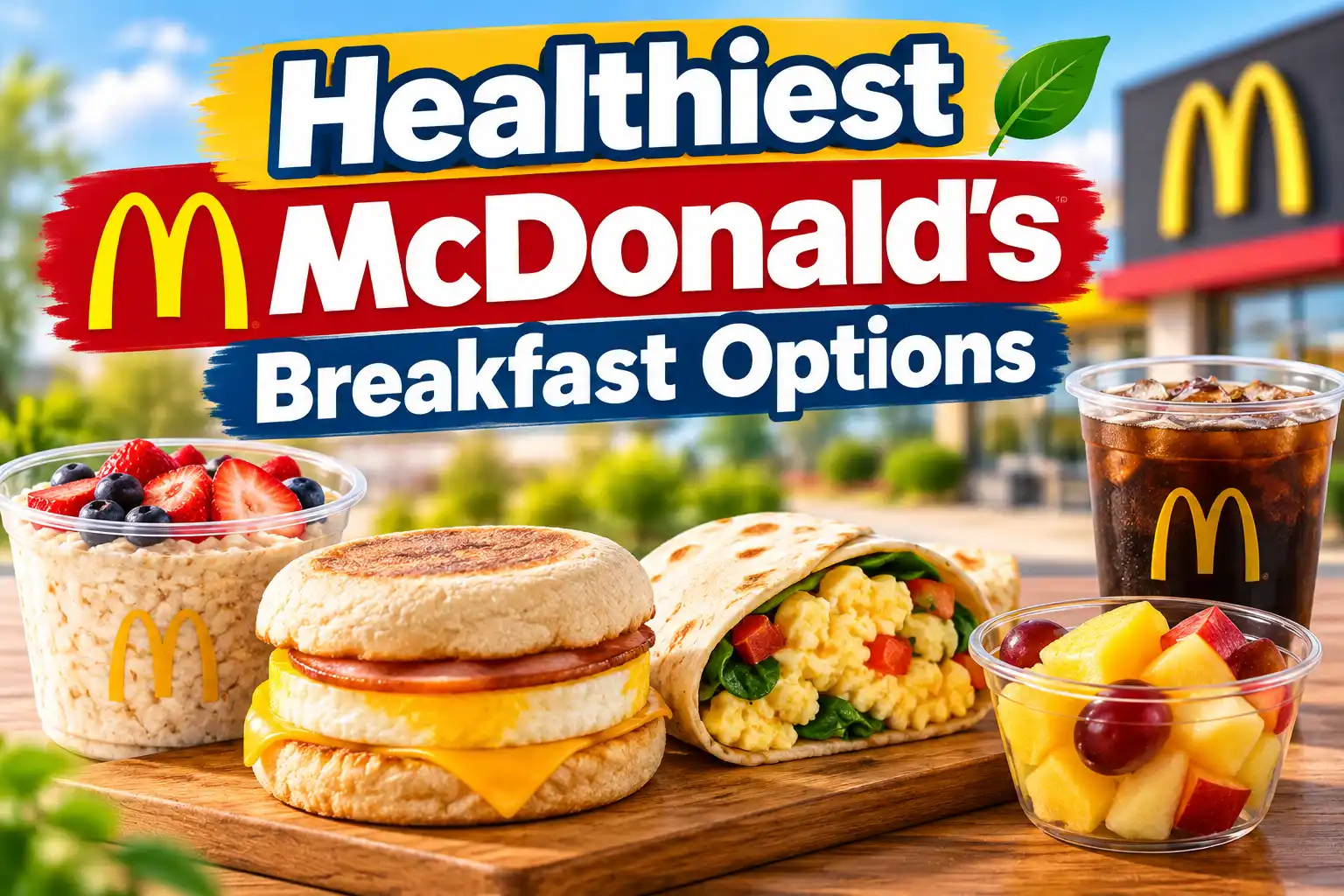
Breakfast is one of the easiest places to find substantial choices at McDonald’s. The Egg McMuffin and Fruit & Maple Oatmeal are two options worth comparing for different nutrition priorities.
The Egg McMuffin provides a protein-containing breakfast sandwich, while oatmeal offers whole-grain oats and fruit. Neither needs to be treated as universally better.
• Egg McMuffin: A compact breakfast sandwich with egg, Canadian bacon, cheese, and an English muffin.
• Fruit & Maple Oatmeal: A warm option built around whole-grain oats and fruit.
• Egg McMuffin with coffee: A simple breakfast combination when you want a drink without adding much sugar.
• Oatmeal with water: A practical option when you want a warm breakfast and a lighter beverage.
• Breakfast sandwich with fruit: Pair the main with fruit when available for more variety.
• Breakfast without a sugary drink: Helps keep the meal focused on food rather than liquid added sugar.
• Smaller breakfast portions: Useful when you’re not very hungry but still want a substantial option.
• Nutrition comparison: Check protein, sodium, fiber, and calories before choosing between breakfast items.
Healthiest McDonald’s Burgers
A simpler burger can make it easier to understand what you’re eating. Extra patties, cheese, bacon, and sauces can substantially change the nutrition profile.
That doesn’t make those ingredients “bad.” It simply means they should be included when comparing similar menu choices.
• Hamburger: A simple option with fewer components than many larger sandwiches.
• Cheeseburger: Adds cheese while keeping the overall sandwich relatively straightforward.
• Single-patty burger: Easier to compare with larger double-patty options.
• Burger without extra sauce: Can reduce some added ingredients.
• Burger with water: Keeps the beverage from becoming a major part of the meal.
• Burger with fruit: Adds a different food type than a fried side.
• Burger with a smaller side: Useful when you want the sandwich to remain the main part of the meal.
• Check sodium: Burgers can provide meaningful sodium even when their calorie count seems moderate.
Healthier McDonald’s Chicken Choices
Chicken does not automatically mean a menu item is lighter or more nutritious. Preparation method, breading, sauces, cheese, and portion size can all change the final numbers.
McNuggets can be useful when you want a portion-controlled chicken option. Chicken sandwiches may provide more food but can also include breading and higher-sodium sauces.
• Chicken McNuggets: A convenient protein-containing option with different portion sizes.
• Smaller McNugget portion: Lets you decide how much chicken belongs in your meal.
• Chicken sandwich: Provides a more complete sandwich format with chicken and a bun.
• Sauce on the side: Gives you more control over how much dipping sauce you use.
• Compare sodium: Chicken products can vary considerably in sodium.
• Compare protein: Look at protein rather than assuming all chicken items are equivalent.
• Add a simple side: Pair chicken with fruit or another available side.
• Check current menu data: Chicken recipes and limited-time products can change.
High-Protein McDonald’s Foods
Protein is useful when building a satisfying meal, but a high-protein item isn’t automatically the most nutritious choice overall. Sodium, saturated fat, calories, fiber, and portion size still matter.
Current McDonald’s menu analysis shows that many higher-protein items also carry substantial calories or sodium. That makes the full nutrition panel more useful than protein alone.
• Chicken McNuggets: Offer protein in a portion-based format.
• Egg McMuffin: Provides protein within a relatively compact breakfast sandwich.
• Quarter Pounder: Provides substantial protein but also brings more calories and sodium.
• Big Mac: Contains meaningful protein but also includes multiple high-sodium and higher-fat components.
• McCrispy-style chicken items: Can provide protein but may also be higher in sodium and fat.
• Breakfast sandwiches: Combine protein with bread and, depending on the item, cheese or meat.
• Compare protein per serving: Start with the actual serving rather than assuming larger food means better nutrition.
• Look beyond protein: Check sodium, fiber, saturated fat, and total calories too.
Lower-Calorie McDonald’s Foods
Calories can be useful information, but they don’t tell the entire nutrition story. A very low-calorie food may not provide the same protein, fiber, or satisfaction as a more substantial meal.
Instead of chasing the smallest number, use calories as one comparison point. Then check the rest of the nutrition panel.
• Apple slices: A small fruit-based side with very few calories.
• Hamburger: A simple main that can fit into a smaller meal.
• Egg McMuffin: A breakfast option with more substance than many small snacks.
• Fruit & Maple Oatmeal: A warm breakfast with whole-grain oats and fruit.
• Small McNugget portion: Provides chicken without requiring a large serving.
• Water: Adds no calories and can accompany any meal.
• Unsweetened beverages: Can keep drink calories low.
• Check the whole order: A low-calorie main can become a much larger meal with sides, sauces, and sweet drinks.
McDonald’s Foods With More Fiber
Fiber is an important part of a varied diet, and it can be easy to overlook when choosing fast food. Whole grains and fruit are useful places to look.
At McDonald’s, the Fruit & Maple Oatmeal is particularly relevant because oats contribute whole grains. Fruit-based sides can also add variety.
• Fruit & Maple Oatmeal: Uses whole-grain oats and fruit.
• Apple slices: Add fruit without turning the side into a fried food.
• Oat-based breakfast: A useful alternative when you want a grain-based meal.
• Fruit alongside a sandwich: Creates more variety within the order.
• Check the nutrition panel: Fiber values vary by menu item.
• Look for whole grains: Oats are one of the clearest examples on the menu.
• Pair foods: A grain-based main and fruit can provide different nutrients.
• Don’t judge fiber from calories: A higher-calorie food isn’t automatically higher in fiber.
McDonald’s Foods to Consider When Sodium Matters
Sodium deserves attention because many fast-food foods contain substantial amounts. Looking only at calories can miss an important part of the nutrition picture.
If sodium matters to you, compare the actual milligram amount for the full order. Sauces, cheese, processed meats, chicken products, and sides can all contribute.
• Compare sandwiches: Similar-looking sandwiches can have different sodium amounts.
• Check breakfast meats: Sausage and bacon can contribute meaningful sodium.
• Review sauces: Condiments can add sodium beyond the main food.
• Compare sides: Fried sides can contribute more than expected.
• Check complete meals: A main plus side and sauce can add up quickly.
• Look at the nutrition calculator: Use current menu information before ordering.
• Avoid guessing: Appearance isn’t a reliable way to estimate sodium.
• Consider your personal needs: If you have a medical sodium restriction, follow advice from your healthcare professional.
Healthier McDonald’s Sides
A side can change the overall character of your meal. You don’t always need to order a large fried side simply because it’s part of a combo.
Fruit-based choices can add variety, while fries can still be enjoyed as part of an overall eating pattern.
• Apple slices: A simple fruit-based side.
• Small fries: A smaller portion when you want fries without making them the largest part of the meal.
• Shareable fries: Useful when eating with family or friends.
• Fruit with breakfast: Pairs naturally with oatmeal or a breakfast sandwich.
• Side with protein: Combine a side with a substantial main.
• Skip automatic add-ons: Order only the side you actually want.
• Check portion size: Larger servings naturally change the meal’s nutrition.
• Mix and match: Build the meal around what you enjoy and need.
Healthier McDonald’s Drinks
Drinks can add substantial sugar or calories to an otherwise simple meal. Choosing a beverage based on your preferences can therefore change the overall order.
Water and unsweetened drinks are straightforward choices when you don’t want added sugar. Coffee can also fit, but caffeine and added ingredients are worth checking.
• Water: A simple no-calorie beverage.
• Unsweetened iced tea: A lower-sugar choice when available.
• Black coffee: Adds little beyond the coffee itself.
• Coffee with less added sugar: Useful if you prefer some sweetness.
• Milk-based drinks: Compare sugar and calorie information before ordering.
• Sweet tea: Check the sugar content rather than assuming tea is automatically low in sugar.
• Soft drinks: Consider serving size and added sugar.
• Caffeine: Keep track of your total caffeine intake from all sources.
How to Build a Balanced McDonald’s Meal
The most useful way to choose McDonald’s food is to think about the complete meal. A sandwich that looks reasonable alone can become very different when paired with a large side, sauce, dessert, and sweet drink.
A balanced approach doesn’t require eliminating favorite foods. It means considering the combination and choosing portions that fit the situation.
• Breakfast: Egg McMuffin + fruit or another suitable side + unsweetened coffee.
• Oatmeal breakfast: Fruit & Maple Oatmeal + water or another lower-sugar beverage.
• Burger meal: Hamburger or cheeseburger + smaller fries + water.
• Chicken meal: McNuggets + apple slices + water.
• Protein-focused meal: Choose a protein-containing main and compare sodium before adding sides.
• Fiber-focused meal: Consider oatmeal or fruit alongside another substantial food.
• Lower-sugar meal: Choose water or an unsweetened beverage.
• Flexible meal: Keep a favorite item and simplify another part of the order.
Healthier McDonald’s Orders for Different Needs
There is no single order that works for everyone. A person prioritizing protein may choose differently from someone comparing sodium or looking for more whole grains.
The key is matching the order to your own needs rather than following a universal “best” list.
• For breakfast protein: Consider an Egg McMuffin.
• For whole grains: Consider Fruit & Maple Oatmeal.
• For fruit: Add apple slices when available.
• For a simple burger: Choose a single-patty hamburger or cheeseburger.
• For chicken: Consider a smaller McNugget portion.
• For lower added sugar: Choose water or an unsweetened drink.
• For sodium awareness: Compare the full nutrition panel before ordering.
• For variety: Combine a substantial main with fruit or another suitable side.
How to Customize a McDonald’s Order
Small changes can alter the nutritional profile of a meal. Customization is most useful when it solves a specific problem rather than turning ordering into a long list of restrictions.
You can also use McDonald’s current nutrition and ingredient information to compare items before finalizing an order.
• Choose your preferred portion: You don’t have to automatically select the largest size.
• Review sauces: Check whether a sauce meaningfully changes your meal.
• Consider cheese: Cheese changes calories, fat, and sodium.
• Choose your drink intentionally: The beverage can contribute substantial sugar.
• Add fruit: Apple slices can provide a simple fruit option.
• Compare sandwiches: Look at the nutrition panel before assuming one is lighter.
• Use the nutrition calculator: Check the current item before ordering.
• Check ingredients: This is especially important for allergies and special dietary needs.
McDonald’s Food Allergies and Special Diets
McDonald’s provides ingredient and allergen information for its U.S. menu, but the company warns that normal restaurant operations can involve shared preparation areas, equipment, and utensils.
That matters for anyone with a food allergy or serious sensitivity. McDonald’s also says it does not certify its U.S. menu as gluten-free, vegan, or vegetarian.
• Check current allergen information: Ingredients can change.
• Review the individual item: Don’t rely only on the menu category.
• Watch for cross-contact: Shared equipment can create a risk.
• Ask restaurant staff when needed: They may provide additional information about preparation.
• Don’t assume “no ingredient” means allergen-free: Cross-contact is a separate issue.
• Check sauces: Condiments can contain common allergens.
• Review seasonal products: Limited-time items can introduce different ingredients.
• Follow medical guidance: Serious allergies require individualized advice from a qualified healthcare professional.
McDonald’s Nutrition Facts: What to Check Before Ordering
McDonald’s provides nutrition information through its U.S. menu and nutrition calculator. This is the most useful place to verify current numbers before making a detailed comparison.
Nutrition information can change because formulations, suppliers, serving sizes, preparation methods, and regional availability can change. Treat online lists as helpful guides, not permanent menu facts.
• Calories: Shows the energy provided by a serving.
• Protein: Helps compare protein-containing foods.
• Carbohydrates: Includes starches and sugars.
• Total fat: Shows the total amount of fat in a serving.
• Saturated fat: Helps compare different higher-fat choices.
• Sodium: Especially important when comparing full meals.
• Fiber: Useful when looking for whole grains and fruit.
• Sugar: Check this when comparing sweet drinks and desserts.
Simple Healthier McDonald’s Orders to Try
A good order doesn’t have to be complicated. Start with one substantial food, choose a suitable side, and select a beverage that fits your preferences.
These examples are starting points rather than rules. You can adjust them based on hunger, nutrition needs, allergies, preferences, and what your local restaurant offers.
• Breakfast option: Egg McMuffin + apple slices + unsweetened coffee.
• Oatmeal option: Fruit & Maple Oatmeal + water.
• Simple burger option: Hamburger + apple slices + water.
• Cheeseburger option: Cheeseburger + smaller fries + water.
• Chicken option: McNuggets + apple slices + unsweetened drink.
• Protein-focused option: A protein-containing main + a suitable side + water.
• Fiber-focused option: Oatmeal or fruit + another satisfying food.
• Flexible option: Keep your favorite main and choose a simpler drink or side.
FAQs
What is the healthiest food at McDonald’s?
There isn’t one universally healthiest McDonald’s food. The best fit depends on whether you care most about protein, fiber, sodium, calories, sugar, or overall meal balance.
What is the healthiest breakfast at McDonald’s?
The Egg McMuffin and Fruit & Maple Oatmeal are two useful choices to compare. They offer different nutrition profiles, so the better fit depends on what you want from breakfast.
Is the Egg McMuffin a healthy choice?
The Egg McMuffin can fit into a balanced meal because it provides protein and a substantial breakfast portion. Compare its sodium and other nutrition values with your other breakfast choices.
Are McDonald’s Chicken McNuggets healthy?
McNuggets can fit into a varied eating pattern, especially when you choose a portion that matches your meal. Their nutrition should be considered alongside sodium, sauces, sides, and the rest of the order.
What is the healthiest side at McDonald’s?
Apple slices are one of the simplest fruit-based side choices. Fries can also fit into a meal, with portion size helping determine how much they contribute to the overall order.
What should I drink at McDonald’s for a balanced meal?
Water and unsweetened beverages are simple choices when you don’t want added sugar. Coffee can also work, but check added sugar, milk, and your total caffeine intake.
Does McDonald’s have healthy food?
McDonald’s has menu items with different nutrition profiles, including options containing protein, whole grains, and fruit. Rather than labeling the entire menu as healthy or unhealthy, compare individual foods and the complete meal.
Conclusion
The healthiest food at McDonald’s depends on your personal nutrition priorities and the complete meal you build. Protein, fiber, sodium, sugar, calories, portion size, and ingredients all provide useful information.
Start with the food you want, check the current nutrition information, then choose a side and drink that complement it. For the most accurate details, review McDonald’s current U.S. nutrition and ingredient information before ordering.