Energy drinks are everywhere: gas stations, gyms, college campuses, gaming setups, office desks, and convenience stores. They promise focus, stamina, alertness, and fast energy, but recent headlines about taurine and leukemia research have made many people ask a serious question: do energy drinks cause cancer?
The best answer is careful and balanced. Current research does not prove that energy drinks directly cause cancer in humans. However, heavy or daily use can create health patterns that may matter over time, especially through high sugar intake, poor sleep, excess caffeine, weight gain, and metabolic stress.
The 2025 taurine study raised important questions, but it did not show that drinking an energy drink causes leukemia. This guide explains what the research actually says, what is still unknown, and how to make safer choices without panic.
Quick Answer: Do Energy Drinks Cause Cancer?
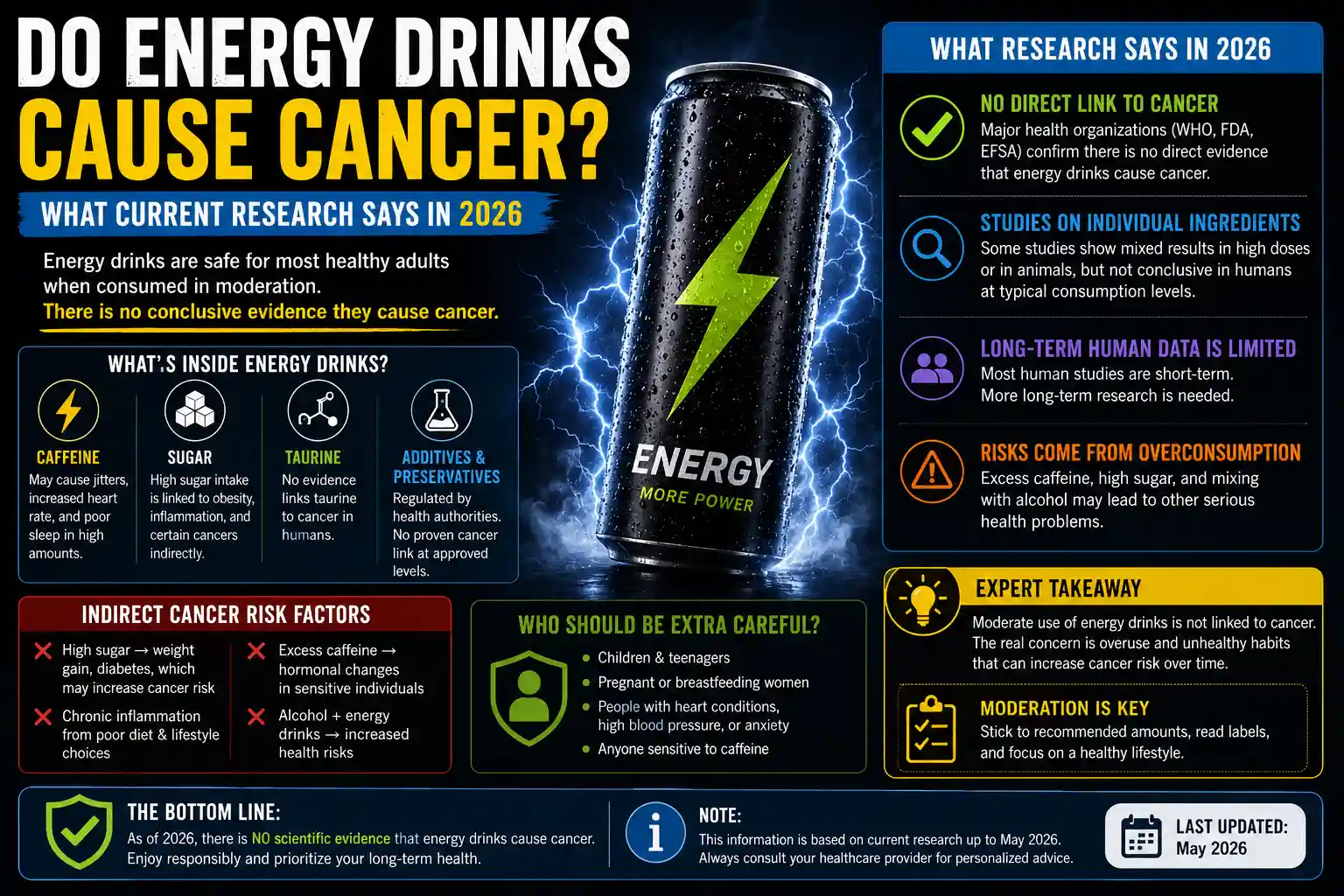
No, current research has not proven that energy drinks directly cause cancer in humans. The bigger concern is indirect risk from high sugar intake, excess caffeine, poor sleep, obesity, and heavy daily use. Taurine research has raised questions about leukemia cell growth, but it does not prove energy drinks cause cancer.
What Current Research Says About Energy Drinks and Cancer
The strongest current conclusion is simple: energy drinks are not proven human carcinogens, but they are not risk-free drinks either.
A 2026 UAB expert review states that there is no causal link showing energy drinks cause cancer, while noting that indirect factors such as sugar, obesity, and metabolic dysfunction can matter for long-term health.
What does “no direct link” mean?
A direct cancer link would mean strong human evidence showing that energy drinks themselves cause cancer.
That is not what the current evidence shows.
Instead, researchers are looking at whether long-term habits around energy drinks may contribute to risk factors linked with cancer, such as:
• Excess body weight
• Insulin resistance
• Chronic inflammation
• Sleep disruption
• High added sugar intake
• Heavy caffeine use
• Poor diet quality
The National Cancer Institute notes that overweight and obesity are linked with higher risk for at least 13 types of cancer. That matters because many regular energy drinks are high in added sugar and calories.
Why are energy drinks harder to study than coffee?
Energy drinks are not one single ingredient. They are usually a blend of:
• Caffeine
• Taurine
• Guarana
• Added sugar or artificial sweeteners
• B vitamins
• Herbal extracts
• Artificial flavors and colors
• Other stimulants
This makes research more complex. Coffee is mostly coffee. Energy drinks may combine several stimulants in one can, and product formulas change often.
Why Taurine Became a Cancer Concern
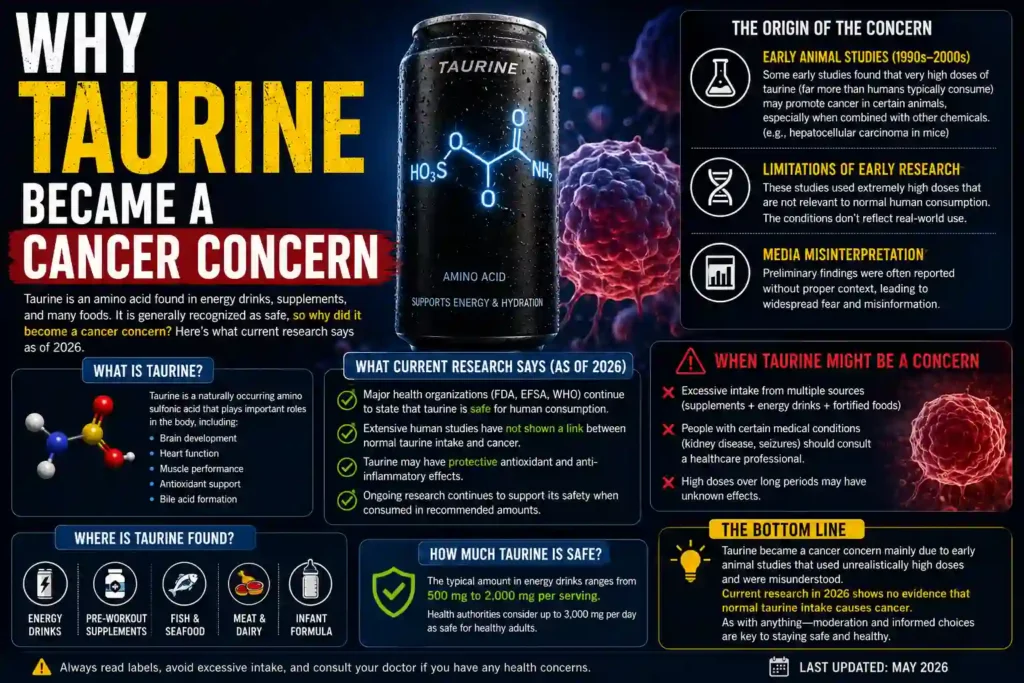
The recent concern started with a 2025 Nature study on taurine and leukemia biology. The study found that taurine from the tumor environment could support certain leukemia cells by helping them use energy through glycolysis. The study also suggested that taurine transport may be a possible treatment target in aggressive myeloid leukemias.
Did the taurine study prove energy drinks cause leukemia?
No.
This is the most important point for readers.
The taurine study did not prove:
• Energy drinks cause leukemia
• Taurine causes cancer in healthy people
• One can of an energy drink is dangerous
• Healthy adults must avoid all taurine
• Sugar-free energy drinks cause blood cancer
The study focused on leukemia cells, mouse models, and human leukemia cell samples, not on healthy people drinking energy drinks and later developing cancer.
Health.com summarized the concern clearly: leukemia cells may use taurine to grow, but that does not mean taurine causes cancer in humans.
Why does taurine still matter?
Taurine matters because it appears to play a role in certain cancer cell environments. The University of Rochester Medical Center explained that leukemia cells relied on a taurine transporter to take taurine from the bone marrow environment, and researchers were able to slow leukemia growth in models by blocking taurine entry into cancer cells.
That does not make taurine a simple “bad ingredient.” Taurine naturally exists in the body and in foods such as meat, fish, and eggs. Mayo Clinic notes that taurine occurs naturally in protein foods and that the human body uses it for normal cell functions.
The practical takeaway is this: people with leukemia, blood cancer history, or active cancer treatment should ask their oncology team about taurine-containing drinks or supplements.
Do Energy Drinks Contain Carcinogens?
Energy drinks are not currently classified as carcinogenic products. The stronger concern is not that one ingredient clearly acts like tobacco smoke or asbestos. The concern is that frequent energy drink use may support unhealthy patterns over time.
Ingredient concerns in energy drinks
| Ingredient | Main Health Concern | Cancer Link Status |
|---|---|---|
| Sugar | Weight gain, insulin resistance, inflammation | Indirect concern through obesity and metabolic health |
| Caffeine | Sleep disruption, anxiety, rapid heartbeat | Not proven to cause cancer |
| Taurine | Emerging leukemia cell metabolism research | Not proven to cause cancer in humans |
| Artificial sweeteners | Ongoing research and public confusion | Mixed regulatory discussion, depends on sweetener |
| Guarana | Extra caffeine exposure | Not a proven cancer cause |
| B vitamins | Excess intake from fortified products | Low concern at reasonable intake |
| Artificial additives | Low nutritional value, possible sensitivity | Ingredient-specific research varies |
UAB notes that B vitamins and common additives do not pose a direct cancer risk when consumed at reasonable levels, but overconsumption is still a concern.
Sugar, Obesity, and Indirect Cancer Risk
For many people, sugar is the biggest long-term concern in regular energy drinks.
Some energy drinks contain sugar levels similar to soda. Harvard’s Nutrition Source notes that sugar is often a main ingredient in energy drinks and that a 12-ounce energy drink can contain around 41 grams of sugar, similar to many soft drinks.
How can sugary energy drinks affect cancer risk indirectly?
Sugar itself is not usually described as a direct cancer-causing substance. The concern is that frequent sugary drinks can make it easier to gain weight and worsen metabolic health.
The American Institute for Cancer Research states that sugary drinks, including energy drinks, contribute to weight gain, overweight, and obesity, and that excess body fat increases the risk of multiple cancers.
The American Cancer Society also recommends limiting sugar-sweetened beverages as part of a healthy eating pattern for cancer prevention.
What does this mean in practice?
An occasional energy drink is different from drinking two or three cans every day.
Higher-risk patterns include:
• Drinking energy drinks instead of meals
• Using them to replace sleep
• Drinking them late at night
• Choosing high-sugar cans daily
• Combining them with alcohol
• Drinking multiple large cans in one day
• Ignoring heart palpitations, anxiety, or insomnia
The risk comes less from a single can and more from the habit pattern around the drink.
Caffeine and Cancer Risk
Caffeine is not considered a proven cause of cancer. The concern with energy drinks is usually dose, timing, and combination with other stimulants.
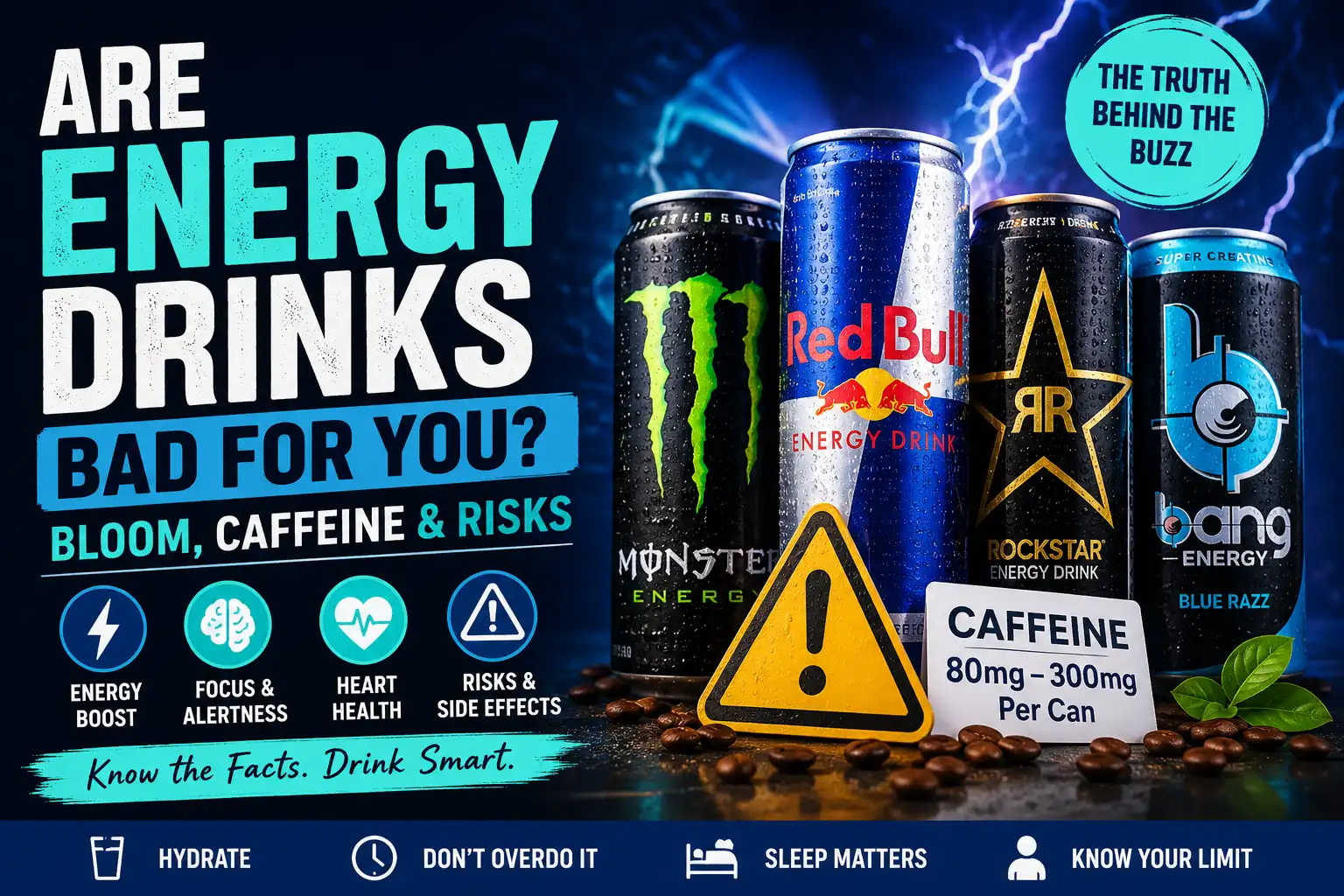
The FDA states that many U.S. energy drinks contain about 54 to 328 mg of caffeine per 16 fluid ounces, and some 12-ounce products contain 41 to 246 mg.
How much caffeine is too much?
For most healthy adults, the commonly cited daily upper limit is about 400 mg of caffeine. MD Anderson recommends paying attention to caffeine content and choosing drinks under 200 mg per serving to reduce side effects such as jitters, disturbed sleep, and heart palpitations.
Very high caffeine intake may cause:
• Insomnia
• Anxiety
• Jitters
• Fast heartbeat
• Higher blood pressure
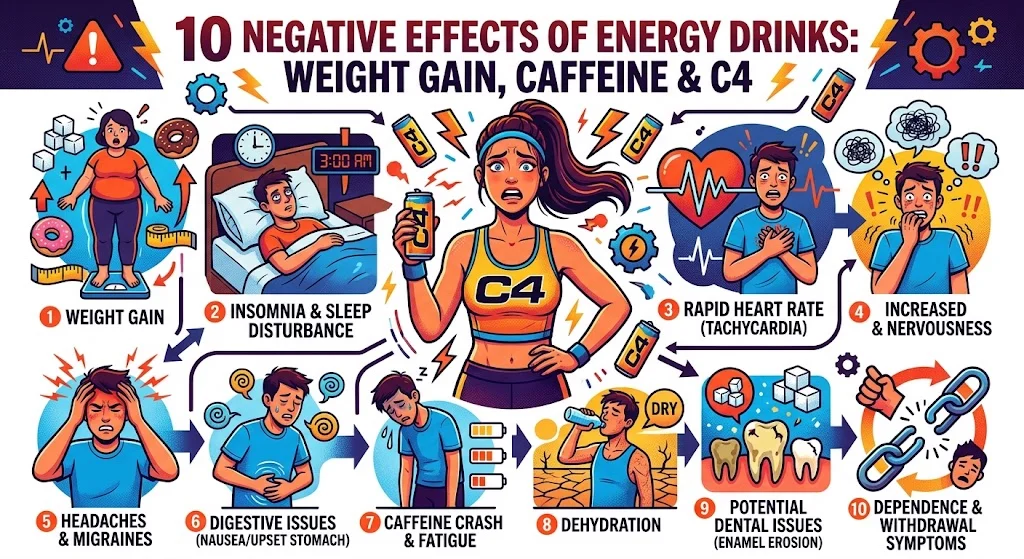
• Headaches
• Dependence symptoms
• Caffeine toxicity in extreme cases
The FDA also warns that rapid consumption of around 1,200 mg of caffeine can cause toxic effects such as seizures.
Why does sleep matter for long-term health?
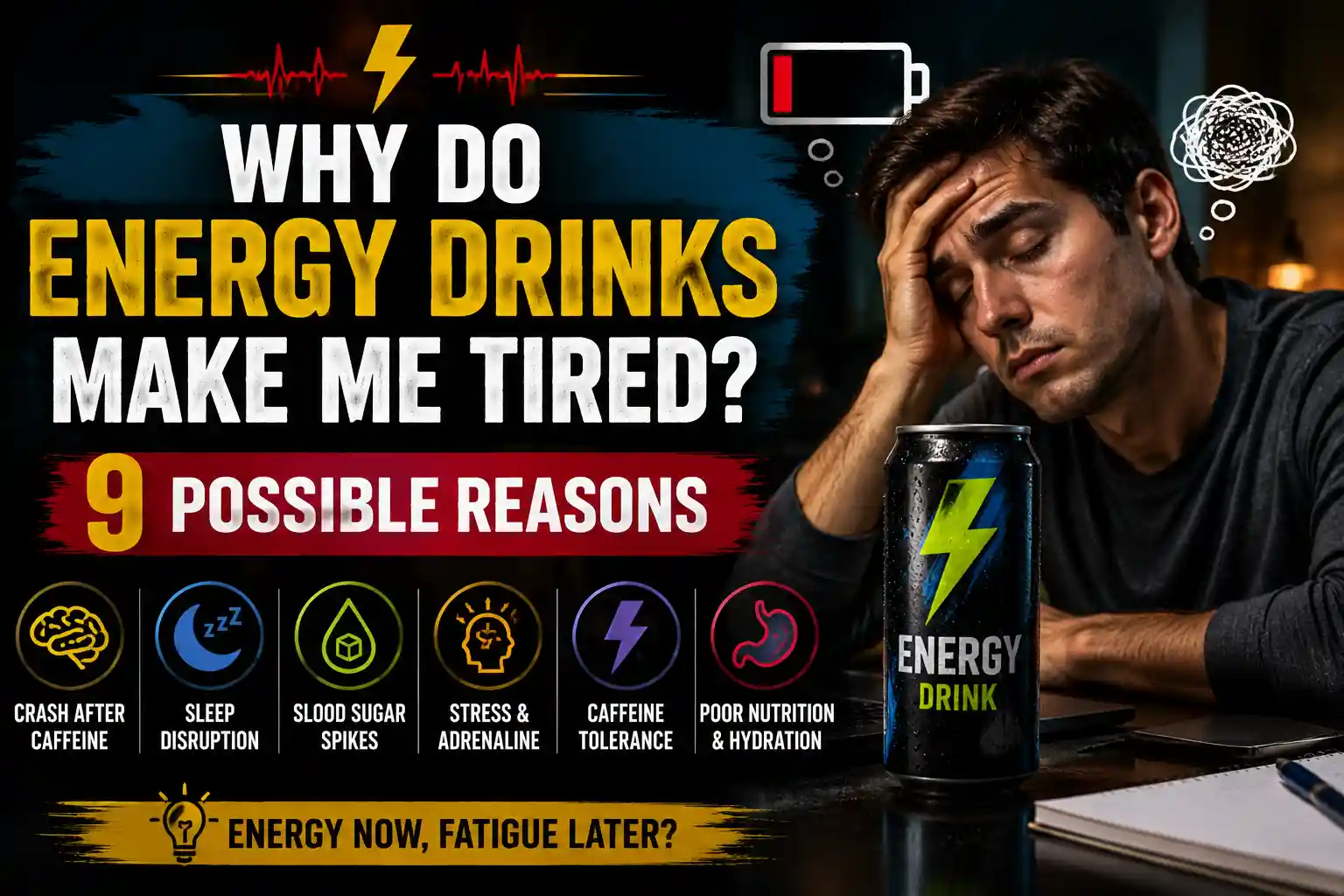
Energy drinks often create a cycle:
You sleep poorly, drink caffeine to function, stay alert too late, sleep poorly again, and repeat.
Poor sleep can affect appetite, stress hormones, blood sugar control, and inflammation. That does not mean caffeine causes cancer, but it does mean daily stimulant dependence is not a healthy long-term energy plan.
Are Sugar-Free Energy Drinks Safer?
Sugar-free energy drinks remove one major issue: added sugar. For people trying to reduce calories or avoid sugar spikes, that can be helpful.
But sugar-free does not automatically mean healthy.
What do sugar-free energy drinks still contain?
Most sugar-free energy drinks still contain:
• Caffeine
• Taurine or amino acids
• Artificial sweeteners
• Flavoring compounds
• Acids that may affect teeth
• Stimulant blends
• Color additives or preservatives
So, sugar-free energy drinks may be a better choice than high-sugar versions for some adults, but they still need moderation.
What about aspartame and cancer?
Aspartame is often misunderstood. In 2023, IARC classified aspartame as possibly carcinogenic to humans, based on limited evidence. At the same time, JECFA reaffirmed the acceptable daily intake of 0–40 mg/kg body weight.
The FDA disagreed with IARC’s conclusion and states that FDA scientists do not have safety concerns when aspartame is used under approved conditions.
That means the best reader-friendly answer is not panic. It is moderation, label awareness, and overall diet quality.
Energy Drinks vs Coffee, Soda, Sports Drinks, and Pre-Workout
Energy drinks often get compared with coffee, soda, sports drinks, and pre-workout supplements. They overlap, but they are not the same.
| Drink Type | Main Concern | Caffeine Level | Best Use |
| Energy drinks | Sugar + caffeine + stimulant blends | Often high | Occasional short-term boost |
| Coffee | Too much caffeine or added sugar | Moderate to high | Simple caffeine option |
| Soda | Added sugar | Usually low to moderate | Occasional treat |
| Sports drinks | Sugar and unnecessary calories | Usually low | Long exercise or heavy sweating |
| Pre-workout | Very high stimulant dose | Often high | Only if appropriate and label is clear |
| Green tea | Mild caffeine | Low to moderate | Gentler daily option |
| Water | None | None | Best hydration choice |
For most adults, coffee, tea, water, and balanced meals are simpler choices than highly processed stimulant beverages. MD Anderson recommends using water or unsweetened caffeinated drinks like coffee or tea when you need a more routine energy option.
Who Should Limit or Avoid Energy Drinks?
Some people are more sensitive to caffeine and stimulant blends.
Which groups should be more careful?
| Group | Why Caution Matters |
| Children and teens | More sensitive to caffeine; AAP recommends adolescents avoid energy drinks |
| Pregnant or breastfeeding people | Caffeine limits and medical needs vary |
| People with heart conditions | Caffeine and stimulants may raise heart rate or blood pressure |
| People with anxiety disorders | Caffeine can worsen jitters and anxiety |
| People with insomnia | Late caffeine can disrupt sleep |
| Cancer patients | Possible medication, hydration, blood sugar, and taurine concerns |
| People taking stimulant medications | Combined stimulant effects may be stronger |
| Heavy daily users | Higher risk of dependence and overconsumption |
The CDC notes that energy drinks can contain large amounts of caffeine, added sugars, guarana, taurine, and L-carnitine, and that these stimulants can increase blood pressure, heart rate, and breathing. The CDC also says the American Academy of Pediatrics recommends that adolescents do not consume energy drinks.
NCCIH also notes that energy drinks can have serious health effects, especially in children, teenagers, and young adults.
Energy Drinks and Cancer Patients
Cancer patients should be more cautious than the general public.
This does not mean every cancer patient must avoid all caffeine forever. It means energy drinks are more complicated during treatment.
Why should cancer patients ask their care team first?
MD Anderson recommends that cancer patients tell their care team about supplements, including energy drinks, because ingredients may affect medications, blood sugar, and hydration.
Cancer patients may already deal with:
• Fatigue
• Poor appetite
• Nausea
• Dehydration
• Sleep problems
• Medication side effects
• Blood sugar changes
• Heart rhythm concerns
An energy drink can worsen some of these issues, especially if it is high in caffeine or sugar.
Questions to ask your oncology team
• Is caffeine safe with my treatment plan?
• Should I avoid taurine supplements or taurine-containing drinks?
• Could this drink interact with my medications?
• Is sugar a concern during treatment?
• Could caffeine worsen dehydration, nausea, anxiety, or sleep?
• Would coffee, tea, or a nutrition shake be safer for me?
Common Mistakes With Energy Drinks
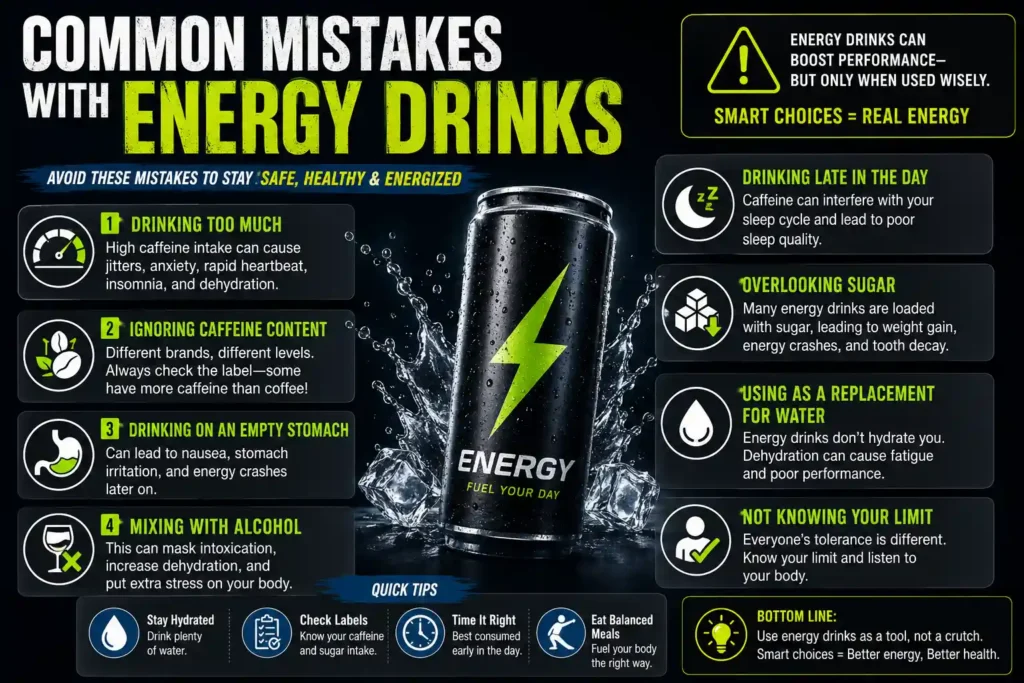
Energy drinks become more concerning when people use them the wrong way.
Mistake 1: Using energy drinks instead of sleep
Energy drinks can hide tiredness for a short time, but they do not fix sleep debt. If you need caffeine every day to function, the root problem may be sleep, stress, workload, or nutrition.
Mistake 2: Ignoring serving size
Some cans contain more than one serving. Always check the full can, not just one serving line.
Mistake 3: Mixing energy drinks with alcohol
The CDC warns that caffeine does not reduce alcohol’s effects. It may make people feel more alert while still impaired, which can lead to more drinking and higher risk of injury.
Mistake 4: Assuming sugar-free means harmless
Sugar-free drinks can reduce sugar intake, but they may still contain high caffeine, acids, additives, and stimulant blends.
Mistake 5: Drinking them late in the day
Caffeine too late can damage sleep quality. For many people, avoiding energy drinks after lunch is a smarter habit.
Practical Tips for Safer Energy Drink Use
A useful way to approach energy drinks is to treat them as an occasional stimulant, not a daily hydration drink.
How can adults reduce risk?
• Choose lower-caffeine options when possible.
• Look for less than 200 mg caffeine per can.
• Avoid drinking more than one energy drink in a day.
• Avoid energy drinks late in the afternoon or evening.
• Choose low-sugar or no-sugar versions if sugar intake is high.
• Do not mix energy drinks with alcohol.
• Avoid “proprietary blends” that hide exact stimulant amounts.
• Stop if you notice palpitations, chest pain, shaking, panic, or severe insomnia.
• Ask a doctor if you have heart disease, anxiety, pregnancy, cancer, or medication concerns.
What should you check on the label?
Before buying, check:
• Caffeine per can
• Added sugar grams
• Serving size
• Taurine amount
• Guarana or yerba mate
• Artificial sweeteners
• B vitamin levels
• Warnings for children or pregnancy
• Medication-related cautions
Healthier Alternatives to Energy Drinks
Many people reach for energy drinks because they are tired, dehydrated, undereating, or overworked. In practice, the better solution is often not a stronger stimulant. It is fixing the energy problem at its source.
Better drink alternatives
• Water
• Sparkling water
• Unsweetened iced tea
• Green tea
• Black coffee
• Matcha
• Coconut water after sweating
• Electrolyte drinks when needed
• Protein smoothies
• Low-sugar nutrition shakes
Better food-based energy habits
• Eat a protein-rich breakfast.
• Add fiber-rich carbs like oats, fruit, beans, or whole grains.
• Drink water before reaching for caffeine.
• Take a 10-minute walk when tired.
• Keep a consistent sleep schedule.
• Avoid heavy caffeine after midday.
• Use caffeine as a tool, not a crutch.
Quick Summary: Key Takeaways
• Energy drinks are not proven to directly cause cancer in humans.
• The strongest cancer-related concern is indirect risk from sugar, weight gain, and metabolic health.
• The 2025 taurine study showed effects on leukemia cell growth, not proof that energy drinks cause leukemia.
• Cancer patients and leukemia patients should ask their care team before using taurine-heavy drinks or supplements.
• Sugar-free energy drinks may reduce sugar intake, but they still contain caffeine and additives.
• Teens, pregnant people, people with heart disease, and people with anxiety or insomnia should be cautious.
• Safer long-term energy comes from sleep, hydration, balanced meals, and moderate caffeine.
FAQs About Energy Drinks and Cancer
Do energy drinks cause cancer?
Current research does not prove that energy drinks directly cause cancer in humans. The main concern is indirect risk from heavy daily use, especially through sugar intake, obesity, poor sleep, excess caffeine, and metabolic health problems.
Does taurine cause cancer?
Current evidence does not show that taurine causes cancer in healthy people. A 2025 Nature study found that taurine may support leukemia growth in certain models, but it did not prove that taurine causes leukemia in humans.
Are energy drinks carcinogenic?
Energy drinks are not currently classified as carcinogenic products. However, frequent high-sugar energy drink use may contribute to weight gain and obesity, which are linked with higher risk of several cancers.
Are sugar-free energy drinks safer?
Sugar-free energy drinks may be better for people trying to reduce added sugar. However, they can still contain high caffeine, taurine, artificial sweeteners, acids, and stimulant blends. They should still be used in moderation.
Is coffee safer than energy drinks?
For many adults, moderate coffee is a simpler option because it usually contains fewer additives and no added sugar unless you add it. Energy drinks often combine caffeine with taurine, guarana, sweeteners, and flavoring compounds.
Can teenagers drink energy drinks?
Health authorities generally advise caution. The CDC states that the American Academy of Pediatrics recommends adolescents do not consume energy drinks, mainly because of caffeine and stimulant effects.
Can energy drinks affect sleep?
Yes. Energy drinks can disturb sleep, especially when consumed later in the day. Poor sleep can affect appetite, stress, blood sugar control, and overall health.
Can cancer patients drink energy drinks?
Cancer patients should ask their healthcare team first. Energy drinks may affect hydration, blood sugar, sleep, anxiety, heart symptoms, and medication safety. MD Anderson recommends cancer patients tell their care team about supplement-like products, including energy drinks.
Is mixing alcohol and energy drinks dangerous?
Yes. The CDC warns that caffeine does not reduce alcohol impairment. It can make people feel more alert while still impaired, which may lead to more drinking, injury, dehydration, higher blood pressure, and irregular heartbeat.
How often is it okay to drink energy drinks?
There is no perfect number for everyone. For most healthy adults, occasional use is very different from daily dependence. If you need energy drinks every day to function, it may be time to review sleep, hydration, nutrition, stress, and caffeine habits.
Conclusion
So, do energy drinks cause cancer? Based on current research in 2026, there is no strong evidence proving that energy drinks directly cause cancer in humans. The real concern is more practical: frequent use may increase exposure to added sugar, high caffeine, poor sleep, stimulant dependence, and metabolic stress, all of which can affect long-term health.
The taurine and leukemia research is important, but it should not be turned into panic. It suggests caution, especially for people with leukemia or active cancer treatment, not proof that one energy drink causes cancer.
For most healthy adults, an occasional energy drink is unlikely to carry the same risk as heavy daily use. The smartest approach is to read labels, limit caffeine and sugar, avoid mixing energy drinks with alcohol, and treat them as an occasional boost rather than a daily habit. If you have medical concerns, ask your healthcare provider before using them regularly.