Homemade syrups and infusions are some of the simplest upgrades a home bar or coffee corner can get. Sugar, water and a few aromatics turn into rosemary syrup for gin cocktails, spiced brown sugar syrup for lattes or a pot of mulled cider for a crowd, and the whole process rarely takes more than twenty minutes on the stove.
The pan is the ingredient nobody lists, yet pouring lemon juice, cranberries or red wine into the wrong metal can leave a batch with a faint metallic edge, a murky color or the ghost of last night’s garlic, which is a frustrating result for something that should taste only of fruit, spice and sugar.
Getting clean flavor from the stove comes down to three things: the metal that touches the liquid, whatever that surface has absorbed from earlier cooking, and how evenly it spreads heat under a pan full of sugar. Each one is covered here, along with pan suggestions for tea concentrates, mulled wine and fruit infusions as the holiday drinks season gets going.
Reasons a Pan Can Change the Taste of a Simple Syrup
Most off flavors start with a reaction between metal and acid, and while plain 1:1 simple syrup is close to neutral, very few drink syrups stay that plain. Citrus peel and juice, berries, rhubarb, cranberries, wine and vinegar shrubs all bring acid, and acid pulls reactive metals into the liquid as it heats, leaving a tinny aftertaste, a gray cast in a syrup that should be jewel bright, or both.
Absorbed aromas come next, since seasoned cast iron and carbon steel hold a thin layer of polymerized oil that carries the memory of every steak and stir fry. Porous or worn surfaces can trap odors in much the same way, so a delicate jasmine tea syrup or vanilla bean infusion picks up savory notes it was never meant to have.
Heat is the third culprit and the easiest to overlook, because sugar scorches quickly wherever a thin pan concentrates the flame. Even a small patch of burnt sugar gives a whole batch of homemade strawberry syrup for drinks a bitter, smoky finish that no amount of straining will remove, so a pan that keeps flavor clean has to get all three of these right at the same time.
Pan Metals That React With Citrus, Wine and Tea
Reactive and non-reactive are the two words that matter most whenever a drink recipe calls for acid, and the difference becomes obvious once the common materials are laid out side by side. These are the pan surfaces most likely to change the taste or color of a syrup or infusion.
- Bare aluminum reacts with citrus, berries and wine, which can darken the pan and leave a metallic note in the liquid.
- Unlined copper is prized for sugar work but can release copper into acidic fruit syrups, which is why most modern copper pans are lined.
- Cast iron reacts with acids and with the tannins in tea, turning pale infusions dark and inky.
- Carbon steel behaves much like cast iron, and acidic liquids can strip the seasoning it depends on.
- Hard-anodized aluminum is sealed and far less reactive, though its dark interior makes a syrup’s color harder to judge.
Stainless steel, enamel, glass and titanium sit on the other side of the line. They leave acidic liquids alone, so a cranberry syrup comes out the same ruby red it went in and a lemon and thyme infusion tastes of lemon and thyme rather than the pan. Titanium is especially stable because it coats itself in a tough oxide skin the moment it meets air, which is why acids that would mark other metals leave a titanium pan untouched.
Syrup Pans That Heat Evenly Without Scorching Sugar
Sugar is forgiving right up until it scorches, and rich 2:1 syrups, demerara syrup for old fashioneds and caramel syrup for lattes all climb past the boiling point of water as they reduce. Any hot spot under the pan pushes the sugar at its center toward burnt while the edges are still dissolving, and that bitterness travels into every drink the syrup touches.
Construction solves most of this, because clad pans sandwich a conductive aluminum or copper core between other layers and spread the burner’s heat across the whole base, while thin single-layer pans tend to concentrate it in a ring right above the flame. A heavier, multi-layer base also holds its temperature when cold fruit or juice goes into hot syrup, so the batch keeps an even simmer instead of lurching between a hard boil and a stall.
Color matters as well, since judging the moment a syrup turns from gold to amber is far easier against bright metal than against a dark coating. Pair a well-built pan with steady medium heat, dissolve the sugar completely before the liquid boils and pour through a fine strainer, and scorching stops being a risk worth worrying about.
Which Pans Work Best for Infusions and Batch Brews?
Infusions ask for a different kind of pan than reductions do, since steeping tea, spices or herbs is about gentle heat and time while batch drinks for a party need volume and an easy way to serve. The best shape changes with the drink, and the three groups below cover most of what home drink makers brew on the stove.
Tea and Chai Concentrates
Black tea, rooibos and chai spices steep best just below a simmer with a lid on to hold in their aromatics, and a wide pan with a fitted lid gives whole cardamom, cinnamon and cloves room to release their oils evenly. Tannins are the reason to keep cast iron out of this job, and a non-reactive surface keeps a chai concentrate the warm amber it should be from the first cup to the last.
Mulled Wine and Spiced Cider
Holiday batch drinks are where pan choice shows most, because red wine and apple cider are both acidic and often sit warm on the stove for hours. A deep, wide pan holds a full batch without crowding the orange slices and cinnamon sticks, a non-reactive surface keeps the wine from turning dull and metallic, and a ladle that lives in the pan makes serving easy. Spiced cider has earned its place among the classic Thanksgiving drinks for every guest precisely because it stays warm and welcoming all afternoon, as long as the pan underneath it stays neutral.
Herb, Citrus and Fruit Infusions
Rosemary, thyme, lemon peel, ginger and berries give up their best flavors quickly, so these infusions need a short simmer followed by an off-heat steep. A smaller, shallower pan heats the liquid fast and cools quickly once the burner is off, which keeps fresh herbs tasting green rather than stewed, and a surface that rinses completely clean stops yesterday’s chili or garlic from turning up in today’s mint syrup.
A Titanium Pan Set That Keeps Syrups and Brews Tasting Clean
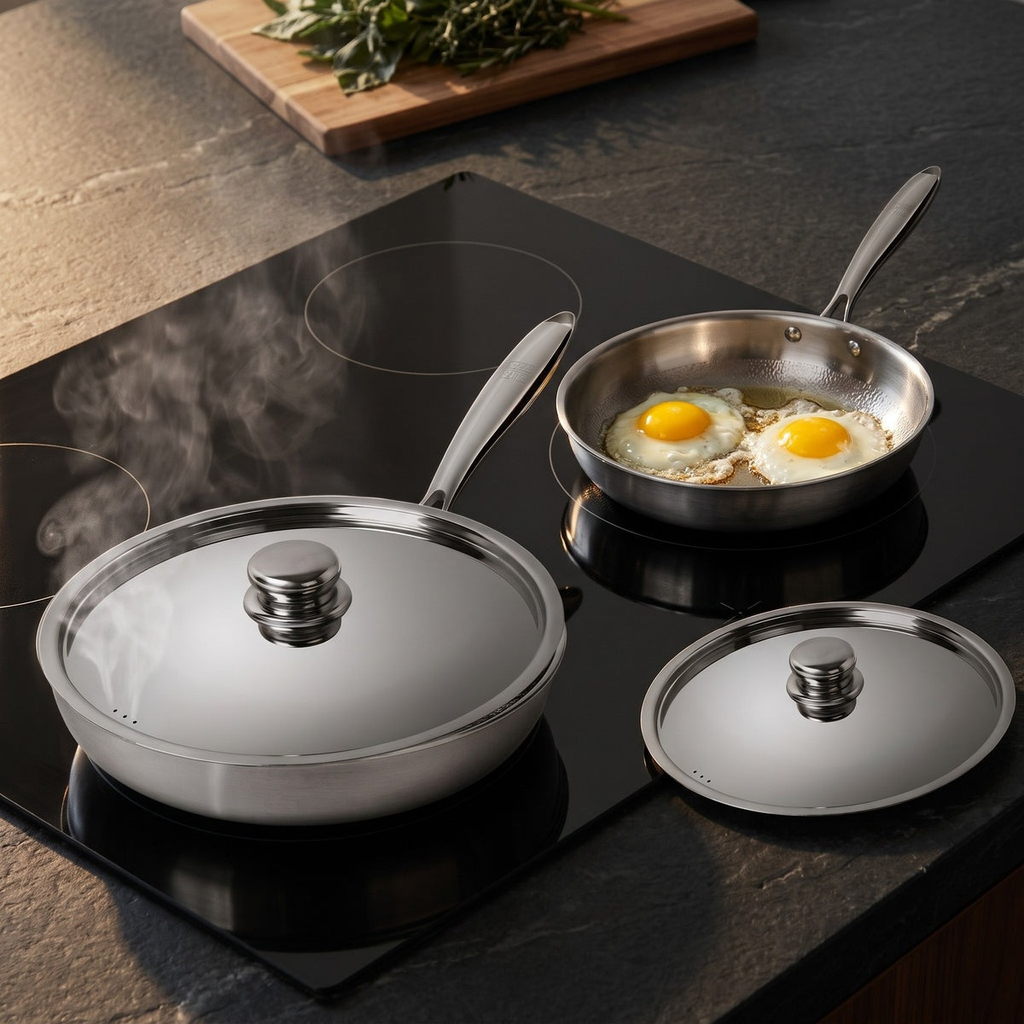
For a kitchen that makes drinks and dinner on the same stove, the Titanium Hammered Cookware Set Pro from Siraats Kitchen covers every job above with a single material. Each piece has a 0.5 mm pure titanium cooking surface with no coating, which keeps it non-reactive with citrus, wine and tea, and the non-porous metal rinses clean so savory aromas never carry over into a syrup. Every piece in this titanium cookware set also shares one fully clad construction, with a 1 mm aluminum core that carries heat out to the edges of the pan and a 430 stainless steel base that works on induction, gas and electric cooktops.
The pieces map neatly onto drink making, with the 10-inch Deep Pan Pro suiting rich syrups, shrubs and reductions, the Wok Pan Pro holding a full batch of mulled wine or cider in its 3.5-inch depth, and the 11-inch Hammered Pan Pro handling the toasting of whole spices or the caramelizing of fruit before it goes into a syrup. A titanium ladle and flipper come in the box, rolled rims pour into bottles and funnels without drips, and every piece is dishwasher safe, safe with metal utensils and oven safe to 1,000°F.
Independent testing by Light Labs came back with no detectable PFAS, PTFE, lead or cadmium, and the set is covered by a 75-year warranty, so the pans that make this year’s cranberry syrup should still be making it decades from now.

Does the Type of Pan Affect the Taste of Simple Syrup?
For a plain 1:1 syrup made in a clean pan, the honest answer is rarely, because sugar and water alone give a reactive metal very little to work with. The pan starts to matter as soon as a recipe adds acid, tannin, long simmering or a push toward caramel, which describes most of the syrups, shrubs and infusions that make homemade drinks worth the effort in the first place.
The practical rule is to keep acidic and tannic drinks in a non-reactive pan, choose a clad base that spreads heat evenly and favor a surface that rinses completely clean between savory cooking and sweet. Pure titanium meets all three without relying on any coating, which lets every syrup taste of exactly what went into it, from the first batch of the season to the last bottle of cranberry syrup poured on New Year’s Eve.
Read more: The Science of Food Texture and Its Influence on Taste