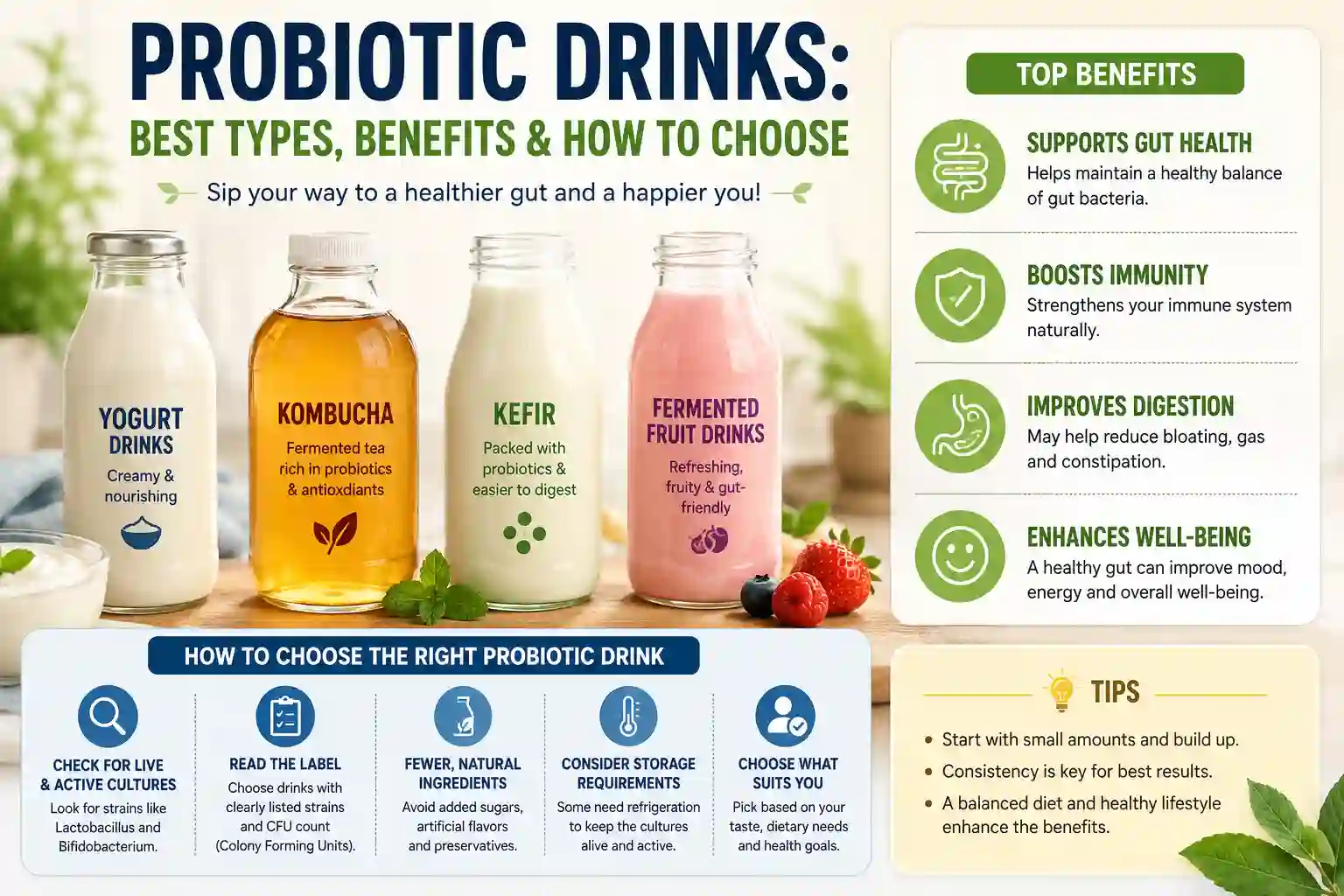
Probiotic drinks range from creamy kefir and yogurt shots to fizzy kombucha and newer probiotic sodas. They all sound similar on store shelves, but their ingredients, live cultures, sugar, caffeine, nutrition, and storage needs can be very different.
The most important detail isn’t whether a bottle says “gut health” on the front. A true probiotic is a specific live microorganism shown to provide a health benefit when consumed in an adequate amount. The exact microorganism and dose matter.
This guide explains the main probiotic drink types, what they taste like, how to read a label, which current U.S. products illustrate the category, and what benefits you can realistically expect.
Quick Answer
Probiotic drinks contain specific live microorganisms intended to provide a health benefit. Common choices include milk kefir, certain yogurt drinks, some fortified beverages, and selected probiotic sodas.
Kombucha and water kefir may contain live microbes, but fermented does not automatically mean probiotic. The organisms need to meet specific criteria before the term probiotic is scientifically appropriate.
At A Glance
• Best for protein: Milk kefir or drinkable yogurt
• Best dairy-free style: Water kefir or fortified probiotic drinks
• Best soda-like choice: A drink with a clearly named probiotic strain
• Kombucha: Tart and fizzy, but probiotic content varies
• More CFUs aren’t always better: Strain and dose matter too
• Check the whole label: Sugar, caffeine, allergens, and storage still count
What Are Probiotic Drinks?
A probiotic drink is a beverage that delivers live microorganisms with evidence of a health benefit at an adequate amount.
That definition is stricter than it sounds.
A beverage can contain bacteria or yeast without being a proven probiotic. Likewise, a drink can be fermented without containing live organisms by the time you drink it.
Probiotic beverages generally fall into two groups.
Fermented Drinks With Added Or Defined Cultures
These include products such as kefir and cultured yogurt drinks. Microorganisms help create the drink’s texture and tart flavor.
Drinks Fortified With Probiotics
Some sodas, juices, waters, and shots have selected microorganisms added to the finished product. They don’t always need traditional fermentation.
This explains why two probiotic drinks can look nothing alike. One may be thick and dairy-based, while another is clear, sparkling, and shelf-stable.
Probiotic Vs Fermented Vs Prebiotic Drinks
These three terms are often treated as synonyms. They aren’t.
| Term | What It Means | Simple Example |
|---|---|---|
| Probiotic | Contains defined live microorganisms with a demonstrated benefit | A drink containing a named probiotic strain |
| Fermented | Made through controlled microbial activity | Kefir or kombucha |
| Prebiotic | Contains substances selectively used by beneficial microorganisms | A drink containing certain prebiotic fibers |
Fermentation describes how a product is made. Probiotic describes specific microorganisms and their demonstrated effect.
ISAPP notes that not every fermented food or drink contains living microbes at consumption. Even when live organisms remain, they may not qualify as probiotics because their type, quantity, or benefit hasn’t been established.
Prebiotics work differently. They are substrates used selectively by microorganisms in or on the body and provide a health benefit.
Some modern beverages contain both probiotics and prebiotic ingredients. Those products may be described as containing both, but the terms should not be used interchangeably.
Best Types Of Probiotic Drinks At A Glance
No single drink fits every person. The better choice depends on what you want from the beverage itself.
| Drink Type | Taste | Dairy-Free? | Protein | Key Thing To Check |
|---|---|---|---|---|
| Milk kefir | Tangy, creamy | No | Usually higher | Cultures and added sugar |
| Yogurt drink | Mild, creamy, sweet-tart | Usually no | Low to moderate | Strain, sugar, serving size |
| Kombucha | Tart, fizzy, tea-like | Usually yes | Very low | Live microbes, caffeine, alcohol |
| Water kefir | Light, tart, sparkling | Yes | Very low | Live culture information |
| Probiotic soda | Fizzy, fruity | Often | Very low | Named strain and sweeteners |
| Probiotic juice | Fruity | Often | Very low | Sugar and probiotic details |
| Probiotic shot | Concentrated | Varies | Varies | Small serving, sugar, strain |
| Probiotic water | Light | Usually | Very low | Strain and storage |
If you want protein and calcium, cultured dairy makes more sense than a sparkling probiotic water.
If you mainly want a soda replacement, a shelf-stable probiotic beverage may be easier to enjoy regularly.
Milk Kefir
Kefir is one of the most recognizable cultured probiotic drinks. Traditional milk kefir is made by fermenting milk with a community of bacteria and yeasts.
Its texture falls somewhere between milk and drinkable yogurt. Expect a creamy body, noticeable tang, and sometimes a faint natural fizz.
Why Kefir Stands Out
Milk kefir can combine live cultures with nutrients already present in dairy, including protein and calcium.
That makes it different from water-based probiotic drinks, which may deliver microorganisms but very little protein.
Current Lifeway Plain Lowfat Kefir, for example, lists 12 live and active probiotic cultures, 10 grams of protein, 0 grams of added sugar, and 110 calories per 1-cup serving. The company also currently states 50 billion CFUs per 8-ounce serving for its low-fat kefir line.
That is a useful example of why you should evaluate the whole beverage, not just the probiotic number.
What Does Kefir Taste Like?
Plain kefir is usually:
• tangy
• creamy
• lightly sour
• smoother and thinner than spoonable yogurt
Flavored versions can be much sweeter.
If added sugar matters to you, compare plain and flavored labels rather than assuming every kefir has the same nutrition.
Probiotic Yogurt Drinks And Cultured Milk Drinks
Drinkable yogurt offers a familiar route into probiotics. The texture is usually thinner than ordinary yogurt but creamier than milk.
These drinks can work well for people who dislike kombucha’s sharp acidity.
The main label questions are:
• Does it contain live cultures?
• Is a specific probiotic strain named?
• How much added sugar does one bottle contain?
• How much protein and calcium does it provide?
Current Activia Dailies Strawberry provides a good label-reading example. One 93 mL bottle lists several live cultures plus B. lactis DN 173-010/CNCM I-2494 as its live and active probiotic. It currently contains 70 calories, 3 grams of protein, 10 grams of total sugar, and 6 grams of added sugar.
That shows why “probiotic” shouldn’t be the only buying criterion. Culture details and nutrition both matter.
What Does “Live And Active Cultures” Mean?
For yogurt sold in the United States, FDA rules address when manufacturers may use wording such as “contains live and active cultures.”
Yogurt treated after culturing to inactivate viable microorganisms must instead state that it does not contain live and active cultures.
That makes the package especially useful when you’re comparing yogurt-based drinks.
Kombucha
Kombucha is a fermented tea drink made from sweetened tea and a culture of bacteria and yeast, often called a SCOBY.
The finished beverage is usually:
• tart
• acidic
• lightly sweet
• fizzy
• tea-like
Fruit, ginger, herbs, and spices are common flavor additions.
Is Kombucha Really A Probiotic Drink?
This requires some nuance.
Kombucha commonly contains live microorganisms, but live microorganisms alone do not automatically make a beverage probiotic. Traditional fermented drinks often contain organisms in variable types and amounts that haven’t been tied to a specific demonstrated benefit.
Some commercial kombucha brands may add defined cultures or provide more detailed microorganism information. Check the individual product rather than assuming every bottle is equivalent.
Does Kombucha Contain Caffeine?
It can.
Because kombucha usually starts with tea, some caffeine may remain. The amount depends on the tea and manufacturing process.
If you’re sensitive to caffeine, look for a stated amount or ask the manufacturer rather than assuming kombucha is caffeine-free.
Does Kombucha Contain Alcohol?
Fermentation can produce alcohol.
In the United States, kombucha that reaches 0.5% alcohol by volume or more during production, bottling, or afterward falls under federal alcohol-beverage rules. Continued fermentation after bottling can matter too.
Hard kombucha is intentionally alcoholic and belongs in a different category.
Water Kefir And Dairy-Free Probiotic Drinks
Water kefir is a fermented beverage made with water, sugar, and water-kefir cultures rather than milk.
It tends to be:
• lighter than dairy kefir
• slightly tart
• gently sparkling
• easy to flavor with fruit or herbs
Because water kefir doesn’t use milk, it can suit people seeking a dairy-free fermented beverage.
However, dairy-free doesn’t mean nutritionally identical to milk kefir.
Water kefir generally doesn’t provide the same natural protein and calcium found in dairy. If those nutrients matter to you, you may need to get them elsewhere in your diet.
Other Dairy-Free Choices
Depending on the product, dairy-free probiotic formats can include:
• plant-based cultured drinks
• probiotic soda
• probiotic juice
• probiotic water
• small probiotic shots
Check the allergen statement even when a drink looks plant-based. Manufacturing and ingredients vary.
Probiotic Sodas, Juices, Waters, And Shots
One of the biggest changes in the drink aisle is the growth of nontraditional probiotic beverages.
These products don’t necessarily use fermentation. A manufacturer may choose a probiotic strain that can survive in a particular beverage and add it during production.
Probiotic Soda
This is the most soda-like option.
Expect carbonation, fruit flavors, and a thinner texture than cultured dairy.
Some probiotic sodas use spore-forming Bacillus strains, which can be more suitable for certain shelf-stable formats.
Probiotic Juice
Fruit or vegetable juice can serve as the beverage base.
These may appeal to dairy-free consumers, but the sugar content can vary widely. Check total sugar and added sugar separately.
Probiotic Shots
Shots pack a serving into a small bottle.
Their small size makes them convenient, but it can also make a sweet drink look lower in sugar simply because the portion is tiny.
Always compare serving sizes.
Probiotic Water
These drinks usually aim for a lighter flavor and fewer calories.
The key question remains the same: Which microorganism does it contain, and what does the label actually disclose?
Current U.S. Probiotic Drinks Worth Comparing
These examples aren’t a ranking or a claim that one product is best. They show the different ways probiotics appear in current U.S. beverages as of August 2026.
| Product | Drink Type | Useful Label Detail | Best Fit |
|---|---|---|---|
| Lifeway Plain Lowfat Kefir | Milk kefir | 12 live cultures; 10g protein; 0g added sugar per cup | Creamy, higher-protein option |
| Yakult Original | Cultured milk drink | L. paracasei strain Shirota; 50 calories; 10g sugar per bottle | Small probiotic drink |
| Activia Dailies Strawberry | Yogurt drink | B. lactis DN 173-010/CNCM I-2494; 93 mL bottle | Drinkable yogurt format |
| Culture Pop | Probiotic soda | B. subtilis DE111; shelf-stable | Fizzy dairy-free option |
Yakult’s U.S. product page currently identifies L. paracasei strain Shirota and lists 50 calories and 10 grams of sugar in Original Yakult.
Culture Pop currently identifies its probiotic as Bacillus subtilis DE111 and states that its sodas are shelf-stable rather than refrigerated. Its current flavors are also caffeine-free according to the company.
These examples show why choosing a probiotic beverage is about more than counting cultures. Kefir, yogurt drinks, cultured milk shots, and probiotic soda serve very different needs.
How To Read A Probiotic Drink Label
This is the most useful skill to learn before buying any probiotic drink.
1. Look For The Microorganism
A vague statement such as “contains probiotics” tells you less than a named organism.
You may see names involving:
Lactobacillus-related species, Bifidobacterium, Bacillus, or certain yeasts.
2. Look For The Strain
A probiotic name can go beyond genus and species.
For example:
Bacillus subtilis DE111
Here, DE111 is the strain designation.
Another current drink example is:
L. paracasei strain Shirota
Strain identity matters because findings from one strain should not automatically be applied to every other microorganism with a similar name.
3. Understand CFU
CFU means colony-forming units. It is a way to express the number of viable microorganisms.
A bottle claiming 50 billion CFUs might sound better than one claiming 1 billion. That comparison is incomplete.
The NIH notes that higher CFU counts alone don’t necessarily mean greater health benefits. The microorganism and amount both matter.
4. Check When The Count Applies
If a brand provides a microorganism count, see whether the wording explains when that number applies.
Live cultures can change during storage.
A huge number at manufacturing is less informative if the manufacturer provides no useful indication of what remains during the product’s normal shelf life.
5. Read The Nutrition Facts
Check:
• serving size
• added sugar
• protein
• calories
• saturated fat
• fiber
• sodium
A probiotic drink is still a drink. Its complete nutritional profile matters.
6. Check Refrigeration Instructions
Some live-culture dairy drinks need refrigeration.
Other probiotics can be used in shelf-stable beverages. Culture Pop, for example, currently says its B. subtilis DE111 product can be stored at ambient temperature.
Follow the specific package instead of assuming every probiotic belongs in the refrigerator.
What Benefits Can Probiotic Drinks Offer?
The answer depends heavily on the specific probiotic.
Certain probiotic strains have been studied for digestive and other health outcomes. However, the term probiotic covers many different organisms, and their effects aren’t interchangeable.
This means a study involving one strain doesn’t prove that every kefir, yogurt drink, kombucha, or probiotic soda produces the same effect.
A Better Way To Think About Benefits
Instead of asking:
“Do probiotic drinks work?”
Ask:
“Which strain is in this drink, at what amount, and what evidence exists for that strain?”
That is a much stronger buying question.
Some probiotic beverages also provide nutritional value unrelated to probiotics.
For example, dairy kefir can provide protein and calcium. Other drinks may provide little protein but offer a convenient dairy-free format.
What Probiotic Drinks Cannot Promise
Be skeptical of claims that one beverage will:
• “detox” your body
• permanently fix your microbiome
• guarantee weight loss
• prevent every illness
• cure digestive disease
• work equally well for everyone
Those promises go well beyond what the broad category can establish.
A specific probiotic may have evidence for a specific outcome. That doesn’t turn every probiotic drink into a treatment.
Which Probiotic Drink Should You Choose?
Instead of looking for one universal winner, choose according to the beverage qualities you actually need.
Choose Kefir If You Want More Protein
Plain milk kefir makes sense if you want live cultures plus dairy nutrition.
It’s also useful in smoothies because its tart flavor pairs well with fruit.
Choose A Yogurt Drink If You Prefer Mild Flavor
Drinkable yogurt can be less sharp than kombucha.
It’s convenient for breakfast or snacks, but flavored versions can carry meaningful added sugar.
Choose Water Kefir If You Want Dairy-Free Fermentation
Water kefir offers a lighter fermented experience.
Choose it for the flavor and format, not because you expect it to match milk kefir’s protein or calcium.
Choose Probiotic Soda If Carbonation Matters
A probiotic soda may suit someone replacing traditional soda or flavored sparkling drinks.
Look for a named strain, not just vague wellness wording.
Choose Kombucha If You Like Tart Fermented Tea
Kombucha’s appeal is its strong, acidic flavor and carbonation.
Check caffeine and alcohol considerations, and don’t assume all naturally occurring microbes qualify as defined probiotics.
Choose A Small Cultured Drink If Convenience Matters
Products such as Yakult or yogurt shots fit easily into a small serving.
Just remember that a small bottle doesn’t automatically mean low sugar.
Sugar, Caffeine, Alcohol, And Allergens
The word probiotic tells you almost nothing about these other factors.
Sugar
Sugar varies greatly across the category.
Plain kefir may contain natural milk sugar without added sugar. A flavored yogurt drink can contain both natural and added sugars.
Yakult Original currently lists 10 grams of sugar per 2.7-fluid-ounce bottle, while Lifeway Plain Lowfat Kefir currently lists 0 grams of added sugar per cup.
Those aren’t equivalent serving sizes, which is another reason to compare carefully.
Caffeine
Milk kefir and ordinary yogurt drinks are typically caffeine-free unless caffeine-containing ingredients are added.
Tea-based kombucha can contain caffeine.
Culture Pop currently says its probiotic soda flavors contain no caffeine.
Alcohol
Fermented kombucha can develop alcohol.
The important U.S. regulatory threshold is 0.5% ABV. Products reaching that amount can fall under federal alcohol rules.
Allergens
Dairy kefir and traditional yogurt drinks contain milk.
Reduced lactose doesn’t make a drink safe for someone with a milk allergy.
Plant-based options may contain soy, coconut, nuts, or other ingredients. Check the allergen statement every time.
Side Effects And Who Should Be Cautious
Healthy people generally tolerate commonly used probiotics well, but digestive changes can occur.
Some people notice temporary:
• gas
• bloating
• changes in bowel habits
• abdominal discomfort
A product containing added prebiotic fiber can also cause gas in sensitive people.
Starting with a modest serving can make it easier to judge how a new beverage feels.
Who Needs More Caution?
The NCCIH notes that the risk of harmful effects from probiotics is greater in people who are seriously ill or have compromised immune systems. Rare serious infections have been reported in vulnerable groups.
If you’re severely ill, immunocompromised, or using probiotics for a medical condition, professional medical guidance matters more than a general beverage recommendation.
Persistent digestive symptoms also deserve proper evaluation rather than repeated experimentation with different drinks.
When Should You Drink Probiotic Drinks?
There is no single clock time that makes every probiotic drink work better.
Breakfast is convenient for kefir and yogurt drinks. A probiotic soda may fit lunch or dinner. Some people prefer kombucha earlier because tea-based versions can contain caffeine.
Consistency with a suitable product matters more than chasing a supposedly perfect hour.
Follow any product-specific serving directions.
If a drink repeatedly causes discomfort, increasing the amount isn’t a smart solution.
How Much Should You Drink?
There is no universal serving amount for the entire category.
Consider how different the products are:
A cultured shot may be only a few ounces. A kefir serving may be one cup. Kombucha and sparkling drinks often come in larger bottles or cans.
Use the labeled serving as your reference rather than applying one serving rule to every beverage.
More isn’t automatically more useful, especially when the extra volume also adds:
• sugar
• calories
• caffeine
• acidity
• fermentable fiber
Judge the complete drink.
How To Store Probiotic Drinks
Storage can affect live microorganisms as well as food safety.
Refrigerated Drinks
Kefir, yogurt drinks, and many kombucha products are sold cold.
Keep them refrigerated according to package directions. Don’t leave perishable dairy drinks at room temperature for extended periods.
Shelf-Stable Products
Not every probiotic requires refrigeration.
Certain strains and production methods allow shelf-stable beverages. Culture Pop currently uses B. subtilis DE111 and says its sodas can remain at ambient temperature.
Check The Package
Storage guidance beats general rules.
Look for:
• refrigeration instructions
• use-by or best-by dates
• damaged packaging
• leaking containers
• unexpected swelling
Don’t use a damaged or suspicious beverage simply because fermentation can naturally create gas.
Probiotic Drinks Vs Probiotic Supplements
Drinks and supplements can both deliver probiotics, but they solve different practical problems.
| Factor | Probiotic Drink | Probiotic Supplement |
|---|---|---|
| Food value | May provide protein, calcium, juice, or other nutrients | Usually little food value |
| Strain detail | Varies widely | Often more detailed |
| CFU labeling | Varies | Often prominently stated |
| Taste | Important | Usually minor |
| Serving size | Ounces to cups | Capsule, powder, chewable |
| Sugar/calories | Can matter | Usually low |
| Convenience | Ready to drink | Easy to carry |
A drink isn’t automatically more natural or effective. A supplement isn’t automatically stronger or better.
For a specific clinical goal, the strain and evidence matter more than whether the probiotic comes in a bottle or capsule.
For everyday food use, a cultured drink can have another advantage: you may simply enjoy consuming it.
FAQs
What Are The Best Probiotic Drinks?
The best type depends on what you need. Plain kefir is useful for protein and dairy nutrition, while yogurt drinks, probiotic sodas, and water kefir suit different tastes and diets.
Prioritize a clearly identified probiotic, reasonable nutrition, and a format you’ll actually use.
Is Kefir Better Than Kombucha?
Not universally. Kefir provides dairy protein and calcium, while kombucha is a lighter fermented tea with a completely different flavor and nutrition profile.
Kombucha’s naturally occurring microorganisms also shouldn’t automatically be assumed to meet the scientific definition of probiotics.
Are Probiotic Drinks Good For Gut Health?
Certain probiotic strains have evidence for specific health outcomes, but effects depend on the strain and amount.
The phrase “probiotic drink” alone cannot predict how a particular product will affect you.
Can I Drink A Probiotic Drink Every Day?
Many healthy adults can include cultured or probiotic foods in their regular diet if they tolerate them.
Check the full beverage for added sugar, calories, caffeine, allergens, and serving size rather than focusing only on probiotics.
Do Probiotic Drinks Make You Poop?
They aren’t stimulant laxatives.
Some specific probiotics may influence digestive function or bowel habits, but results vary. Fiber intake, fluids, medications, activity, and medical conditions also affect bowel movements.
What Does CFU Mean?
CFU stands for colony-forming units and represents viable microorganisms.
A larger CFU number isn’t automatically more effective. NIH guidance emphasizes that the identity of the microorganism and the amount both matter.
Does Pasteurization Kill Probiotics?
Heat treatment can inactivate live microorganisms. However, some cultured products are pasteurized first and then inoculated with live cultures afterward.
For U.S. yogurt, products treated after culturing to inactivate viable organisms must state that they do not contain live and active cultures.
Are Probiotic Sodas The Same As Prebiotic Sodas?
No.
Probiotic sodas deliver live microorganisms. Prebiotic sodas contain ingredients that selected microorganisms can use. Some beverages include both.
Read the ingredient and culture information instead of relying on “gut-friendly” wording.
Conclusion
Probiotic drinks are a broad beverage category, not one interchangeable product. Kefir can deliver cultures with protein and calcium. Yogurt drinks offer a convenient dairy format. Water kefir provides a lighter fermented choice, while probiotic sodas bring live cultures into a fizzy, modern drink.
The best buying strategy is simple: look beyond the front label. Check the microorganism, strain when available, serving size, added sugar, protein, caffeine, allergens, alcohol considerations, and storage instructions.
Most importantly, remember that a higher CFU count or trendier bottle doesn’t guarantee a better result. Choose a drink whose cultures, nutrition, taste, and format make sense for you.