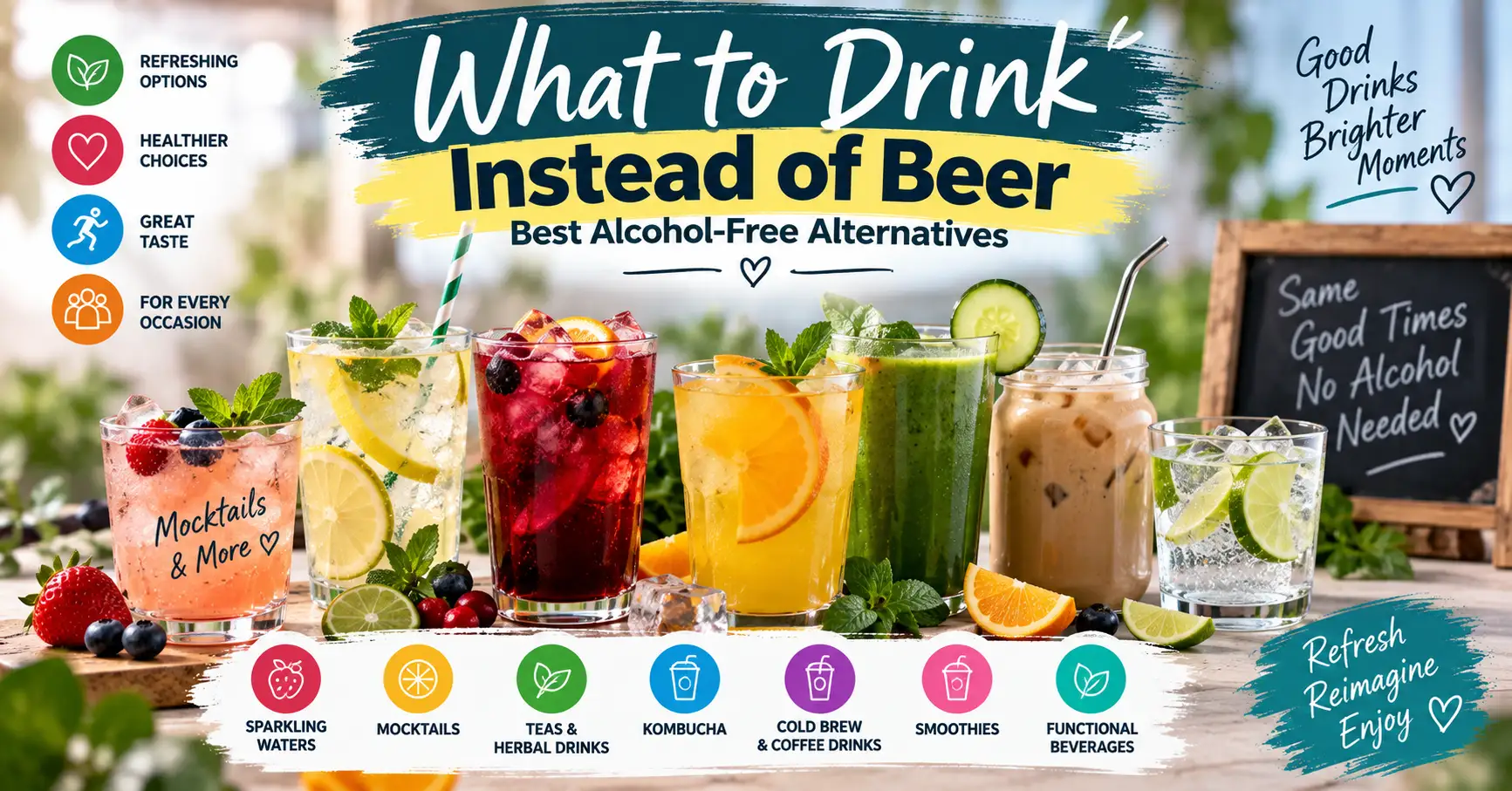
If you’re wondering what to drink instead of beer, the best answer depends on what you actually enjoy about drinking it. Some people miss the hops and bitterness. Others want carbonation, a cold can after work, something to sip with dinner, or simply a drink that feels appropriate at a party.
Fortunately, beer alternatives and alcohol-free beverages now go far beyond soda and juice. Choices include non-alcoholic beer, hop water, sparkling tea, kombucha, zero-proof spirits, mocktails, flavored sparkling water, ginger beer, iced tea, botanical drinks, and simple homemade beverages.
Interest in these choices has grown quickly. NielsenIQ reported that U.S. sales of non-alcohol beer, wine, and spirits surpassed $1 billion during 2025, reflecting the growth of moderation and more intentional drinking habits.
This guide covers the best drinks instead of beer, broader things to drink instead of alcohol, lower-calorie options, evening drinks, party choices, bar orders, sober-friendly drinks, and practical ideas for anyone cutting back or going alcohol-free.
Quick Answer: What Can I Drink Instead of Beer?
For the closest beer-like experience, start with non-alcoholic beer, alcohol-free beer, a 0.0% malt beverage, or hop water. These options retain some combination of hops, bitterness, carbonation, aroma, and cold-drink ritual.
If you don’t need something that tastes like beer, good drinks to replace beer include sparkling water, kombucha, sparkling tea, ginger beer, unsweetened iced tea, dry mocktails, alcohol-free wine, botanical beverages, and herbal tea.
| If You Usually Want | Good Starting Choice | Why It Works |
|---|---|---|
| A cold lager | Non-alcoholic lager | Familiar malt character and carbonation |
| An IPA | NA IPA or hop water | Hop aroma and bitterness |
| Light beer | Flavored seltzer or hop water | Crisp and easy to drink |
| Sour beer | Kombucha | Tartness and fermentation character |
| Beer with dinner | Sparkling tea | Dry, aromatic, and food-friendly |
| Beer after work | Hop water or ginger beer | Strong flavor and clear ritual |
| Beer at a party | NA beer or mocktail | Fits social occasions easily |
| Beer while watching sports | 0.0% beer or sparkling water | Cold, portable, and convenient |
| Wine | Sparkling tea or alcohol-free wine | Acidity and dinner-friendly flavor |
| Cocktails | Zero-proof cocktail | Keeps mixing and presentation |
| A nightcap | Rooibos or herbal tea | Warm and caffeine-free options |
What Makes the Best Drink to Replace Alcohol?
There is no universal best drink to replace alcohol. A beverage works best when it replaces the part of drinking that matters to you.
Someone who drinks IPA for its bitterness needs a different substitute from someone who drinks wine with dinner. Likewise, someone looking for an evening ritual will probably want something different from a person ordering drinks at happy hour.
A useful way to choose an alcohol replacement drink is to match four qualities.
Taste
Ask whether you prefer bitter, dry, tart, sweet, spicy, herbal, fruity, roasted, or creamy flavors.
Mouthfeel
Beer, wine, and cocktails also provide texture. Consider whether you want carbonation, body, sharpness, warmth, or a clean finish.
Occasion
Good alcohol alternatives for adults vary by setting. Dinner, sports nights, BBQs, restaurants, parties, bedtime, and after-work routines all call for different choices.
Ritual
Opening a can, filling a wine glass, shaking a cocktail, or holding something during a social event can become part of a drinking habit.
A successful alternative often replaces that ritual as well as the flavor.
Best Beer Alternatives by Beer Style
If you want the best beer alternatives, start with the style you normally drink.
Beer is not one flavor. Lager, IPA, stout, wheat beer, sour beer, and cider-style drinks create very different experiences.
| Your Usual Drink | Best Beer Substitute | Main Quality Replaced |
|---|---|---|
| American lager | Non-alcoholic lager | Crisp malt and carbonation |
| Light beer | Hop water | Fizz and mild bitterness |
| IPA | NA IPA | Hops and stronger bitterness |
| Wheat beer | Alcohol-free wheat-style malt beverage | Soft grain and citrus character |
| Stout | Dark NA malt beverage | Roasted flavor |
| Sour beer | Kombucha | Acidity and fermentation |
| Fruit beer | Fruit-forward sparkling tea | Aroma and fruit character |
| Hard cider | Alcohol-free cider | Apple flavor and carbonation |
Lager Drinkers
A well-chilled non-alcoholic lager usually provides the closest substitute.
If malt flavor does not matter much, try mineral water, hop water, or a less-sweet citrus seltzer.
IPA Drinkers
The natural starting point is an NA IPA.
However, hop water can sometimes work better for people who mainly enjoy hops, bitterness, citrus aroma, and carbonation rather than malt.
Stout Drinkers
Try a darker non-alcoholic malt beverage with roasted notes.
For something completely different, decaf cold brew can provide bitterness and roasted flavor, though it will not reproduce beer’s body.
Sour Beer Drinkers
Kombucha is worth trying because fermentation creates tartness and complexity.
Check the package carefully when complete alcohol avoidance matters, since fermented beverages vary.
Non-Alcoholic Beer vs Alcohol-Free Beer vs 0.0% Beer
Understanding the label matters when looking for beer substitutes without alcohol.
For U.S. malt beverages, the Alcohol and Tobacco Tax and Trade Bureau allows “non-alcoholic” only when the beverage contains less than 0.5% alcohol by volume and carries the required adjacent alcohol statement. TTB reserves “alcohol free” for malt beverages containing no alcohol.
ABV means alcohol by volume. It tells you what percentage of a beverage’s volume is alcohol.
Therefore, do not assume the following expressions always mean exactly the same thing:
- non-alcoholic beer
- alcohol-free beer
- zero-alcohol beer
- 0.0% beer
- near beer
- non-alcoholic malt beverage
Always read the actual alcohol statement if complete avoidance is important.
The same care applies to dealcoholized wine. FDA guidance distinguishes non-alcoholic from alcohol-free and states that alcohol-free products should contain no detectable alcohol.
Best Non-Alcoholic Beer Alternatives That Aren’t Beer
Some people searching for alcohol-free beer alternatives do not want another product that imitates beer.
If that’s you, look for another beverage with one or two qualities you like about beer.
Hop Water
Hop water instead of beer makes sense for anyone who enjoys hops, carbonation, and a dry finish.
It usually feels lighter than an NA beer because there is less malt character.
Serve it extremely cold. Grapefruit peel, lemon, cucumber, or rosemary can change the flavor without turning it into a sweet drink.
Kombucha
Kombucha instead of beer is especially suited to sour-beer and cider drinkers.
Its fermentation can create tart, complex flavors that ordinary soda lacks.
Because kombucha varies in ABV, sugar, and caffeine, check individual labels.
Sparkling Tea
Sparkling tea brings bubbles plus tea tannins and aroma.
It works particularly well as a dinner drink when you want something drier than fruit juice.
Ginger Beer
Despite its name, most soft-drink-style ginger beer is not beer.
Strong ginger provides a sharp sensation that can make it more satisfying than ordinary soda.
Tonic Water
Tonic water instead of beer works best for people who enjoy bitterness.
Regular tonic can contain substantial added sugar, so compare it with diet tonic water or less-sweet products if sugar matters to you.
Unsweetened Iced Tea
Iced tea instead of beer is inexpensive, food-friendly, and easy to prepare in batches.
Black tea gives more tannin and bitterness. Green tea is generally lighter.
Mineral Water
Mineral water provides stronger character than plain tap water while remaining simple.
Chill it well and serve it with lemon, lime, or grapefruit peel.
Alcohol-Free Cider
Alcohol-free cider is a useful bridge for people who like fruit beer, cider, or sweeter sparkling beverages.
Choose a dryer style when possible if sweetness is your main concern.
Sparkling Water Instead of Beer or Alcohol
Sparkling water as an alcohol alternative works because carbonation gives plain water more texture.
It is also one of the easiest low-calorie alternatives to beer when you choose an unsweetened version.
Not all sparkling waters are identical.
Seltzer Water
Seltzer is carbonated water and usually has a clean, neutral character.
Flavored sparkling water can add citrus, berry, or herbal aroma without becoming a full mocktail.
Club Soda
Club soda contains added minerals that can give it a slightly different taste from plain seltzer.
It works well with lime, bitters-style zero-proof flavorings, cucumber, or herbs.
Soda Water
The term soda water is often used broadly for carbonated water.
At a bar, asking for soda water with lime is one of the easiest alcohol-free orders.
Mineral Water
Naturally occurring minerals can create more noticeable mouthfeel and flavor.
A cold bottle at dinner can feel more substantial than still water.
Easy Sparkling Combinations
A few reliable combinations are lime and mint, grapefruit and rosemary, cucumber and lemon, orange peel and basil, ginger and lime, or berries with sparkling water.
The goal is not to create dozens of nearly identical recipes. Use one aromatic ingredient, one acidic ingredient, and plenty of carbonation.
Zero-Proof Drinks and Non-Alcoholic Spirits
Zero-proof drinks have become a major part of the adult beverage market.
The term usually describes beverages designed to create a cocktail-style experience without conventional alcoholic spirits. It is best treated as a consumer-facing description rather than a reason to ignore the actual alcohol statement.
In the U.S., “proof” traditionally measures distilled-spirit alcohol content at twice the percentage of alcohol by volume. For example, 40% ABV equals 80 proof.
Non-Alcoholic Gin Alternatives
An alcohol-free gin or gin-style botanical spirit usually focuses on juniper, citrus, herbs, or spices.
It often works better with tonic than when served neat because ethanol normally contributes significant body and warmth to gin.
Non-Alcoholic Whiskey Alternatives
Non-alcoholic whiskey products may use oak, spice, smoke, vanilla, tea, or caramel-like notes.
Try them with soda water, ginger ale, or an alcohol-free Old Fashioned-style mixer rather than expecting an exact whiskey replica.
Non-Alcoholic Tequila Alternatives
An alcohol-free tequila-style spirit may emphasize pepper, citrus, vegetal flavors, or smoke.
It works naturally in a virgin margarita with fresh lime.
Alcohol-Free Aperitifs
A non-alcoholic aperitif often uses citrus, botanicals, bitterness, herbs, or spices.
Serve it before dinner over ice with soda or sparkling water.
Digestif-style alcohol-free drinks can also provide an after-dinner ritual, although they should not be treated as digestive treatments.
Mocktails Instead of Beer or Alcohol
Mocktails are among the most flexible non-alcoholic drinks for adults because they can recreate the presentation, aroma, acidity, and ritual of cocktails.
The difference between a good mocktail and sweet juice is balance.
Use citrus, herbs, spices, ginger, tea, botanicals, sparkling beverages, and controlled sweetness.
Virgin Mojito
Muddle mint gently with lime. Add ice, soda water, and only enough sweetener to balance the citrus.
This is one of the easiest mocktails for adults when you want something cold and herbal.
Virgin Margarita
Combine lime with orange or another citrus element, plenty of ice, and a zero-proof tequila-style spirit if desired.
A salted rim adds contrast without increasing sweetness.
Virgin Bloody Mary
Tomato juice, lemon, pepper, celery, and savory seasoning create a very different experience from soda.
This is one of the few virgin cocktails that can be flavorful without relying heavily on sugar.
Alcohol-Free Spritz
Combine a bitter or botanical non-alcoholic aperitif with sparkling water.
Add orange peel or grapefruit for aroma.
Ginger-Lime Mocktail
Use ginger beer, lime, soda water, and ice.
This is useful for people who miss the sharper sensation of stronger drinks.
Hibiscus Tonic
Brew strong hibiscus tea, chill it, and combine it with tonic.
The result is tart, bitter, and visually suited to parties or dinner.
Cucumber Basil Cooler
Cucumber, basil, lime, and club soda make a clean homemade drink.
It is especially useful if fruit-heavy mocktail recipes feel too sweet.
Cranberry Rosemary Fizz
Use a modest amount of cranberry juice with rosemary, lime, and sparkling water.
This is an easy holiday or winter mocktail.
Are Mocktails a Good Alcohol Alternative?
They can be.
A thoughtfully made mocktail preserves cocktail presentation, social ritual, aroma, acidity, and complexity without a standard alcoholic spirit.
However, healthy mocktails are not defined simply by the absence of alcohol.
Some alcohol-free cocktail recipes contain large amounts of juice, syrups, sweetened mixers, or added sugar. Current Dietary Guidelines for Americans, 2025–2030 encourage reducing highly processed foods and added sugars as part of a nutrient-dense eating pattern.
If you want low-sugar mocktails, build drinks around sparkling water, unsweetened tea, citrus, herbs, ginger, and small portions of juice.
Alcohol-Free Wine and Sparkling Wine Alternatives
For someone asking what drink can replace wine, beer substitutes may not address the actual need.
Wine provides acidity, aroma, tannin, and a strong dinner ritual.
Non-Alcoholic Wine
Non-alcoholic wine or dealcoholized wine can provide a closer experience than juice.
Flavor quality varies considerably, so expect differences in body and finish.
Alcohol-Free Wine
When a product makes an alcohol-free claim, read its alcohol information carefully.
Labeling rules differ depending on beverage type and regulatory jurisdiction.
Non-Alcoholic Sparkling Wine
Bubbles often help alcohol-removed sparkling wine feel more complete than still versions.
These beverages are useful for celebrations, brunch, weddings, and holiday dinners.
Alcohol-Free Champagne-Style Alternatives
“Champagne” specifically refers to wine associated with France’s Champagne region, so many U.S. products are better described as alcohol-free sparkling wine or Champagne-style alternatives.
Serve them well chilled in sparkling-wine glasses.
Tea Instead of Beer or Alcohol
Tea is one of the broadest healthy alternatives to alcohol because it can be hot, iced, bitter, aromatic, floral, tart, or caffeine-free.
That does not make every tea right for every occasion.
Black Tea
Black tea has noticeable tannin and works well with grilled meat, sandwiches, BBQ, and rich meals.
Serve it unsweetened over ice for a simple cold drink instead of beer.
Green Tea
Green tea has a lighter profile.
Chill it with cucumber, mint, or citrus for an afternoon drink.
Herbal Tea
Herbal tea instead of beer is particularly useful in evening routines because many varieties contain no caffeine.
Always check the ingredients because herbal blends differ.
Rooibos Tea
Rooibos tea is naturally caffeine-free and has a rounded flavor.
It works hot with cinnamon or chilled with orange peel.
Chamomile Tea
Chamomile is a common caffeine-free evening beverage.
Treat it as a pleasant hot drink rather than a medical treatment for anxiety or insomnia.
Peppermint Tea
Peppermint tea provides strong aroma without added sugar.
It works well after dinner when you want something light.
Ginger Tea
Fresh ginger tea has more bite than many herbal teas.
Add lemon for extra acidity.
Hibiscus Tea
Hibiscus tea is tart, brightly colored, and excellent chilled.
Mix it with sparkling water for a sophisticated alcohol-free drink.
Decaf Tea
A decaf tea is useful if you enjoy traditional tea flavors but want to limit evening caffeine.
Coffee and Decaf Drinks as Alcohol Alternatives
Coffee is not the right beer replacement for every occasion, but it can replace certain drinking rituals.
An after-dinner decaf coffee can provide aroma, bitterness, warmth, and something to sip slowly.
Iced coffee and cold brew work better during the day or early evening for people who tolerate caffeine.
If sleep is the priority, caffeine timing matters. Do not replace a bedtime beer with a highly caffeinated drink and expect that choice to support sleep.
Healthy Drinks Instead of Beer: What Does “Healthy” Mean?
Searches for healthy drinks instead of beer and healthy alternatives to alcohol need some context.
No beverage is universally healthy for every person. Calories, carbohydrates, caffeine, allergens, sugar, medications, and individual health needs all matter.
For many adults, simple options include:
- plain or flavored sparkling water
- mineral water
- unsweetened iced tea
- unsweetened herbal tea
- water infused with fruit or herbs
- low-sugar mocktails
- beverages with clearly labeled ingredients
CDC states that drinking less alcohol is better for health than drinking more, and choosing not to drink can reduce alcohol-related health risks.
That does not mean every beverage labeled “functional,” “natural,” “relaxation,” or “zero proof” automatically provides a health benefit.
Low-Calorie, Low-Sugar, and Low-Carb Alternatives to Beer
People often search for what to drink instead of beer for weight loss, but no specific beverage causes fat loss by itself.
Weight management depends on overall energy intake, food patterns, activity, sleep, and other factors.
Replacing a higher-calorie alcoholic drink with a lower-calorie beverage can reduce beverage calories if those calories are not replaced elsewhere.
Lower-Calorie Choices
Good starting points include plain seltzer, flavored sparkling water without added sugar, hop water, club soda, mineral water, unsweetened tea, lemon water, lime water, or diluted low-sugar mocktails.
Low-Sugar Alternatives to Beer
Try unsweetened iced tea, hop water, plain sparkling water, diet tonic water, herbal tea, cucumber water, and soda water with citrus.
Remember that some kombuchas, ginger beers, tonics, lemonades, alcohol-free wines, and bottled mocktails can contain significant sugar.
Low-Carb Alternatives to Beer
Plain carbonated water, tea, coffee without added sugar, and certain hop waters are often very low in carbohydrates.
Packaged beverages vary, so the nutrition panel matters more than the category name.
What About Alcohol-Free Drinks for Weight Loss?
There is no best alcohol-free drink for weight loss that guarantees results.
Choose beverages that fit your total eating pattern and help you manage calories without making the routine difficult to maintain.
Lemon Water, Cucumber Water, and Fruit-Infused Water
Not every alcohol substitute needs to be sophisticated.
Fruit-infused water is inexpensive and useful for everyday hydration.
Lemon Water
Lemon water instead of beer provides acidity and aroma with very little preparation.
Use sparkling water if you want more texture.
Lime Water
Fresh lime works especially well with club soda or seltzer.
It is also one of the easiest bar orders.
Cucumber Water
Cucumber water has a clean aroma that works well at dinner, brunch, or during summer.
Add mint for a stronger flavor.
Fruit-Infused Water
Berries, citrus slices, melon, pineapple, herbs, and cucumber can flavor still or sparkling water.
Refrigerate homemade infused water and use clean ingredients.
Coconut Water, Juice, and Other Hydrating Drinks
Coconut water instead of beer can work after outdoor activities or when you simply enjoy its flavor.
It contains natural sugars and calories, so it is not identical to plain water.
Fresh juice can also be enjoyable but is easy to drink in large amounts. Use a smaller portion and dilute it with sparkling water when you want a lighter spritzer.
Vegetable juice provides a savory alternative for people tired of sweet drinks, though sodium can vary considerably among packaged products.
For ordinary daily hydration, plain water remains the simplest choice.
Smoothies, Protein Shakes, and Electrolyte Drinks
Smoothies and protein shakes belong in this topic only in certain situations.
They are more filling than beer substitutes such as seltzer or mocktails, so think of them as snacks or nutrition beverages rather than all-purpose social drinks.
A smoothie can make sense after exercise or as part of breakfast.
A protein shake may fit someone whose nutrition plan already includes one.
Electrolyte drinks can be useful during prolonged exercise, heavy sweating, or other situations where electrolyte replacement is appropriate. They are not automatically better everyday drinks simply because they carry a sports or wellness label.
Check calories, added sugar, caffeine, sodium, and serving size.
What to Drink Instead of Beer After Work
The after-work drink is often as much about drinking habits as thirst.
Work ends, you open the refrigerator, and beer marks the transition into the evening.
Instead of searching only for the closest flavor, create another repeatable routine.
Good drinks instead of alcohol after work include hop water, ginger beer with lime, flavored seltzer, iced tea, kombucha, an alcohol-free spritz, or a zero-proof cocktail.
Keep the replacement cold and visible.
If you usually open a beer immediately after arriving home, having the alternative ready removes one decision from the routine.
What to Drink Instead of Beer at Night
For drinks instead of alcohol at night, caffeine-free choices often make more sense.
Try rooibos, peppermint tea, chamomile tea, ginger tea, warm milk or a suitable plant-based alternative, decaf tea, or sparkling water with citrus.
Alcohol may make people feel sleepy initially, but NIAAA notes that sleep after drinking can become fragmented and people may wake earlier.
A beverage cannot guarantee better sleep, but replacing alcohol with a caffeine-free drink avoids alcohol-related sleep disruption.
What Can I Drink to Relax Instead of Alcohol?
People looking for drinks instead of alcohol for relaxation, stress, or anxiety relief should separate the drink ritual from medical treatment.
No mocktail, tea, “functional beverage,” or relaxation drink should be presented as a treatment for anxiety.
However, an enjoyable non-caffeinated beverage can still be part of a calm evening routine.
Useful choices include rooibos, peppermint tea, chamomile, warm ginger water, decaf tea, sparkling water, or a simple botanical spritz.
Pair the drink with the behavior that helps you unwind: finishing work, changing clothes, eating dinner, reading, listening to music, or spending time away from screens.
If anxiety is persistent or difficult to manage, a healthcare professional is a more appropriate source of treatment than a beverage.
What to Drink Instead of Beer With Dinner
Beer and wine work with food because they offer bitterness, acidity, aroma, carbonation, and contrast.
A dinner replacement should do the same.
With Burgers and BBQ
Try hop water, NA lager, ginger beer, or unsweetened iced black tea.
With Pizza
A crisp NA lager, sparkling mineral water, or tart kombucha can cut through cheese and richer toppings.
With Seafood
Try sparkling white tea, lemon mineral water, cucumber soda, or alcohol-free sparkling wine.
With Pasta
Sparkling tea, herbal-citrus spritzes, or alcohol-free wine can work well.
With Spicy Food
Ginger-lime drinks, cucumber water, iced tea, and lightly sweetened citrus drinks can balance heat.
Instead of Wine With Dinner
If you’re asking what can I drink with dinner instead of wine, start with sparkling tea or a dealcoholized wine.
Both provide more dinner-style structure than standard soda.
What to Drink Instead of Beer While Watching Sports
Sports viewing is one of the occasions where the cold can and drinking ritual may matter more than complexity.
Easy options include:
0.0% malt beverages, non-alcoholic beer, hop water, flavored sparkling water, ginger beer, iced tea, club soda with lime, or canned zero-proof cocktails.
Keep several cold cans available so choosing an alternative requires no extra preparation.
For snacks such as wings, nachos, burgers, and pizza, hoppy, bitter, tart, and carbonated drinks generally feel more natural than creamy beverages or smoothies.
What to Drink Instead of Alcohol at a Party
A good non-alcoholic party drink should feel like part of the event.
You should not have to spend the evening explaining why you have plain water.
Good alcohol-free drinks for parties include sparkling tea, alcohol-free sparkling wine, zero-proof spritzes, mocktails, NA beer, hop water, ginger beer, and attractive fruit-and-herb pitchers.
For hosts, offer at least one drink that is:
dry or bitter, fruit-forward, and simple or unsweetened.
That gives non-drinkers meaningful choice instead of one sugary punch.
Best Drinks for Socializing Without Alcohol
For social drinking situations, convenience matters.
Your drink should be easy to hold, easy to order, and easy to replace when finished.
Good sober-friendly drinks include:
- NA beer
- sparkling water with lime
- hop water
- zero-proof cocktails
- tonic with grapefruit
- ginger beer
- alcohol-free sparkling wine
- iced tea
- botanical spritzes
These choices work for sober people, non-drinkers, sober-curious adults, designated drivers, and anyone simply taking a night off alcohol.
There is no requirement to imitate everyone else’s drink.
What to Order at a Bar If You Don’t Drink
One of the most practical questions is what to order instead of alcohol.
Most bars can make an adult-tasting drink without requiring a complicated recipe.
- soda water with lime
- tonic and grapefruit
- ginger beer with lime
- cranberry and soda
- cucumber, lime, and club soda
- a virgin mojito
- a virgin Bloody Mary
- an alcohol-free beer
- a house mocktail
- a dry zero-proof cocktail
If the venue has a mocktail menu or zero-proof menu, look for drinks based on citrus, tea, ginger, botanicals, herbs, or bitter ingredients.
You can also simply say:
“Could you make something alcohol-free, citrusy, and not too sweet?”
That is often more useful to a bartender than asking for a generic mocktail.
What to Order at a Restaurant Without Alcohol
Restaurants increasingly offer non-alcoholic beverages for adults beyond fountain drinks.
Look for sparkling water, alcohol-free beer, sparkling tea, kombucha, zero-proof spirits, dealcoholized wine, mocktails, or specialty iced tea.
Match the drink to your meal just as you would with beer or wine.
At restaurants without a dedicated alcohol-free list, sparkling mineral water with citrus is a reliable fallback.
Best Drinks for Dry January, Sober October, and Sober-Curious Adults
Dry January, Sober October, mindful drinking, and the broader sober-curious movement all involve examining alcohol consumption rather than automatically drinking because an occasion usually includes alcohol.
Some people stop completely for a period. Others focus on moderation or alcohol reduction.
There is no need to buy dozens of specialty beverages.
A useful setup includes:
- one beer-like option
- one everyday sparkling drink
- one dinner drink
- one evening drink
- one social or mocktail option
For example, keep NA beer, lime seltzer, sparkling tea, rooibos, and ginger beer available.
That small selection covers most common drinking occasions.
What to Drink When Cutting Back on Alcohol
The best drinks when cutting back on alcohol are the ones you will actually choose consistently.
Start by identifying your most predictable drinking occasions.
If beer usually appears after work, replace the after-work drink first.
If weekends are the challenge, stock the refrigerator before Friday.
If restaurants are difficult, decide your alcohol-free order before arriving.
This makes alcohol reduction a practical habit change rather than a nightly debate.
CDC’s current guidance is straightforward: drinking less is better for health than drinking more.
What to Drink When Quitting Alcohol
If “what to drink when quitting alcohol” means you have simply decided alcohol is no longer something you want, any enjoyable alcohol-free beverage can help build a new routine.
If you have been drinking heavily for a prolonged period, the situation is different.
The National Institute on Alcohol Abuse and Alcoholism warns that suddenly stopping prolonged heavy drinking can lead to painful and potentially life-threatening withdrawal, including seizures and other serious problems. Medical help should be sought to plan a safe recovery.
A mocktail, tea, or non-alcoholic beer is not a treatment for alcohol use disorder or withdrawal.
Professional care can include medical assessment, counseling, medications, outpatient care, or other evidence-based support depending on the individual.
When Beer-Like Drinks May Not Be the Best Choice
Some people love non-alcoholic beer alternatives because they preserve the taste and ritual without conventional beer.
For other people, the smell, bottle, can, flavor, or setting may make them want alcohol more.
If alcohol-style drinks feel uncomfortable, choose something intentionally different.
Tea, fruit-infused water, sparkling water, coffee, ginger beverages, or mineral water may create greater separation from old drinking habits.
The best alcohol substitute is not necessarily the one that tastes most like alcohol. It is the one that supports your reason for avoiding it.
What to Keep in the Fridge Instead of Beer
Convenience has a major effect on everyday choices.
If beer is cold and ready while every alternative requires ten minutes of preparation, the replacement is at a disadvantage.
Keep a small alcohol-free beverage rotation:
- Beer-like: NA beer or hop water
- Everyday: flavored sparkling water
- Strong flavor: ginger beer or kombucha
- Dinner: sparkling tea or mineral water
- Evening: rooibos, peppermint, or another caffeine-free tea
- Social: zero-proof cocktail ingredients
- Garnishes: lemon, lime, cucumber, mint, or grapefruit
You do not need all of them.
Three or four reliable drinks are often more useful than a refrigerator full of products you do not enjoy.
How to Make Non-Alcoholic Drinks Feel More Like Adult Beverages
A satisfying non-alcoholic adult beverage often depends more on balance and serving than complexity.
Use Bitterness
Hops, tonic, grapefruit, tea, and bitter botanicals make drinks feel less like children’s beverages.
Use Acidity
Lemon, lime, grapefruit, cranberry, and hibiscus keep sweet ingredients balanced.
Add Carbonation
Bubbles create texture and make simple ingredients feel more substantial.
Build Aroma
Mint, basil, rosemary, citrus peel, ginger, spices, and botanicals affect the drink before the first sip.
Watch the Sugar
More syrup does not automatically create more flavor.
Use Good Glassware
Serve sparkling tea in a wine glass, hop water in a chilled glass, and mocktails in proper cocktail glassware.
Keep Drinks Cold
Temperature strongly affects beer and sparkling beverages.
Use plenty of ice when appropriate and chill canned alternatives well.
Are Functional Beverages Good Alcohol Replacements?
The term functional beverage may describe drinks marketed with herbs, vitamins, minerals, adaptogens, caffeine, or other ingredients.
Do not assume these products are automatically safer, healthier, or suitable for everyone because they are alcohol-free.
Read ingredient lists carefully.
Some products may contain caffeine or botanical ingredients that interact with medications or are unsuitable for certain people.
For simple alcohol replacement, you do not need functional claims. A well-made tea, seltzer, mocktail, or hop water can be enough.
Frequently Asked Questions
What can I drink when everyone else is drinking alcohol?
Choose something that fits the setting, such as non-alcoholic beer, sparkling water, hop water, a mocktail, ginger beer, alcohol-free wine, or a zero-proof cocktail.
Holding a drink you genuinely enjoy often feels more natural than choosing something solely because it resembles another person’s cocktail.
What is the best drink to replace beer?
If taste matters most, non-alcoholic beer is generally the closest option.
If you mainly miss hops, bitterness, and carbonation, hop water may be a better beer alternative.
What is the best beverage to replace alcohol?
There is no universal winner.
The best alcohol replacement drink should match your preferred flavor and drinking occasion. Sparkling tea works well with dinner, hop water suits beer drinkers, and herbal tea fits quiet evenings.
What can replace alcohol after work?
Try hop water, ginger beer and lime, kombucha, sparkling water, iced tea, or a dry mocktail.
Keeping the drink cold and ready can help replace the automatic after-work routine.
What should I drink instead of alcohol at night?
Caffeine-free rooibos, peppermint tea, chamomile tea, ginger tea, decaf tea, or sparkling water are simple nighttime choices.
Avoid treating any drink as a guaranteed sleep remedy.
What can I drink instead of alcohol to sleep better?
No beverage guarantees better sleep.
NIAAA notes that drinking alcohol can fragment sleep. Replacing a bedtime alcoholic drink with a caffeine-free beverage removes that source of sleep disruption, although other sleep factors still matter.
What can I drink instead of alcohol for stress?
A beverage should not be used as medical treatment for stress or anxiety.
For a calming routine, consider a caffeine-free tea, warm ginger drink, sparkling water, or another beverage you enjoy slowly.
Is sparkling water a good alternative to alcohol?
Yes, especially when you mainly want a cold, fizzy drink.
Add lime, grapefruit, cucumber, mint, or another aromatic ingredient if plain sparkling water feels too basic.
Is kombucha a good alternative to alcohol?
It can be, especially for people who enjoy sour or fermented flavors.
Because fermentation can produce alcohol and kombucha may contain caffeine or sugar, check the individual label.
Is non-alcoholic beer a good substitute for beer?
For many beer drinkers, yes.
It provides familiar malt, hops, bitterness, carbonation, aroma, and mouthfeel, although products differ significantly.
Does non-alcoholic beer contain alcohol?
It can.
Under U.S. TTB rules, a malt beverage labeled non-alcoholic must contain less than 0.5% ABV and carry the required adjacent statement. An alcohol-free malt beverage must contain no alcohol.
What does alcohol-free mean?
For U.S. malt beverages, alcohol free means the product contains no alcohol under TTB labeling rules.
Rules and terminology can differ by beverage type, so always read the actual product label.
What is zero-proof alcohol?
“Zero proof” usually refers to a zero-proof beverage or spirit-style alternative, not a special type of alcohol.
Because it is widely used in marketing, check the actual ABV or alcohol statement instead of relying only on the phrase.
What are the healthiest non-alcoholic drinks?
There is no single healthiest beverage for every adult.
Simple options include water, unsweetened sparkling water, unsweetened tea, mineral water, and drinks with limited added sugar, depending on your nutritional and medical needs.
What is the lowest-calorie alcohol alternative?
Plain water, plain seltzer, club soda, and many unsweetened sparkling waters contain few or no calories.
Some hop waters are also very low in calories, but packaged products vary.
What are the best low-sugar alcohol alternatives?
Try unsweetened tea, sparkling water, mineral water, hop water, soda water with citrus, herbal tea, or low-sugar homemade mocktails.
Always check bottled tonic, ginger beer, kombucha, lemonade, and canned mocktails because sugar levels can vary widely.
What are good alcohol-free drinks for sober-curious people?
Good choices include NA beer, hop water, zero-proof cocktails, sparkling tea, kombucha, flavored seltzer, herbal tea, and alcohol-free wine.
Try several categories rather than assuming every alternative needs to imitate alcohol.
What should I drink during Dry January?
Keep your choices simple.
Use one familiar beer or wine alternative, one everyday sparkling drink, one evening beverage, and one mocktail option for social occasions.
What can I order at a bar instead of alcohol?
Ask for soda and lime, tonic and grapefruit, ginger beer and lime, a virgin mojito, a virgin Bloody Mary, an NA beer, or a dry house mocktail.
If the bar has a dedicated zero-proof menu, look for tea, citrus, botanical, or ginger-based drinks.
What can I drink at a party instead of alcohol?
Choose something that feels festive, such as alcohol-free sparkling wine, a zero-proof spritz, NA beer, ginger beer, sparkling tea, or a well-balanced mocktail.
A drink does not need alcohol to fit a social occasion.
What can I drink with dinner instead of wine?
Sparkling tea, dealcoholized wine, alcohol-free sparkling wine, mineral water, hibiscus spritzes, or unsweetened iced tea work well.
Choose drier, more acidic drinks with savory food rather than very sweet beverages.
Conclusion
Knowing what to drink instead of beer becomes much easier once you stop searching for one universal replacement. If you miss beer flavor, start with non-alcoholic beer or an alcohol-free malt beverage. If hops and fizz matter most, choose hop water. If you want something completely different, sparkling tea, kombucha, mocktails, herbal tea, mineral water, and ginger drinks can all work.
The same principle applies when choosing things to drink instead of alcohol more broadly. Match the beverage to the moment. Use sparkling tea with dinner, a zero-proof cocktail at a party, flavored seltzer while watching sports, and caffeine-free tea during a quiet evening.
For anyone seeking the best drink to replace alcohol, the strongest choice is usually the drink that matches your taste, routine, and goals without creating unnecessary complexity. Keep a few reliable non-alcoholic drinks for adults available at home, experiment with different flavors, and build an alcohol-free routine you actually enjoy.
If you’re cutting back, practicing mindful drinking, trying Dry January, exploring a sober-curious lifestyle, or simply looking for better beer alternatives, there are now more practical options than ever. And if stopping alcohol involves prolonged heavy drinking, prioritize medical guidance over beverage substitutions because withdrawal can be dangerous.