PRIME Drinks for Kids: Are PRIME Hydration and PRIME Energy Safe?
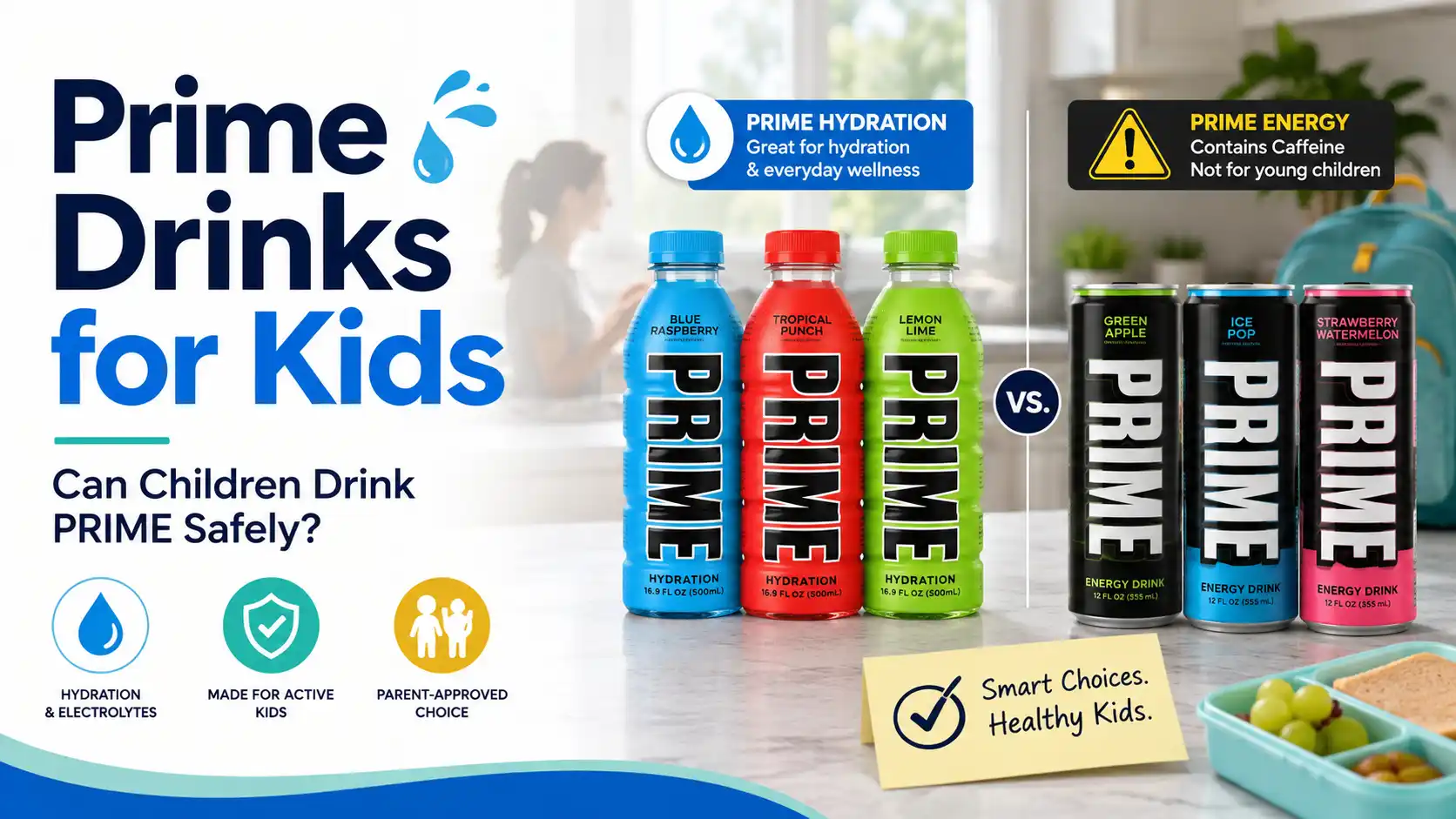
PRIME drinks for kids can be confusing because the brand sells both caffeine-free hydration drinks and highly caffeinated energy drinks. The bottles and cans use similar colors, flavors, and branding, but they are not suitable for the same audience.
Important: Children and teenagers should not drink PRIME Energy. PRIME Hydration is caffeine-free, but that does not make it necessary or recommended as an everyday children’s beverage. For routine hydration, plain water remains the better choice.
Quick Answer
PRIME Energy is not suitable for children or teenagers. The current U.S. product contains 200 milligrams of caffeine, comes in a 16-ounce can, and is labeled for ages 18 and older.
PRIME Hydration does not contain caffeine, but it contains non-sugar sweeteners and acidic ingredients. It may provide fluid, yet it offers little advantage over water for most children’s normal activities.
Current expert beverage guidance recommends that children primarily drink plain water and plain milk.
PRIME Hydration vs PRIME Energy
The word PRIME alone does not tell you what is inside the container. Parents need to find the smaller product name near the main logo.
The two most common products have different ingredients, purposes, and age guidance.
| Feature | PRIME Hydration | PRIME Energy |
|---|---|---|
| Typical container | Plastic bottle | Aluminum can |
| Current U.S. size | Usually 16.9 fluid ounces | 16 fluid ounces |
| Caffeine | Caffeine-free | 200 mg per can |
| Sweetening | Non-sugar sweeteners | Zero sugar; sweetened formula |
| Coconut water | Usually 10% | Included in the formula |
| Intended role | Flavored hydration drink | Adult energy drink |
| Company age label | No universal child age stated | Ages 18+ |
| Best choice for children | Not needed routinely | Avoid |
The current PRIME Energy Original page lists 200 milligrams of caffeine, 355 milligrams of electrolytes, zero sugar, a new 16-ounce size, and an ages-18-plus statement.
Current PRIME Hydration product pages describe the bottled line as caffeine-free, with 10% coconut water, electrolytes, vitamins, and zero added sugar. Nutrition values can vary between flavors, so parents should check the bottle they are buying.
Is PRIME Hydration Good for Kids?
PRIME Hydration is less concerning than PRIME Energy because it does not contain caffeine. However, “caffeine-free” and “recommended for children” are not the same thing.
There is no evidence-based age chart showing that PRIME Hydration becomes appropriate at age 8, 10, 12, or 13. There is also no established pediatric serving schedule for the product.
The 2025 beverage recommendations for children and teenagers ages 5–18 advise families to prioritize:
- Plain water
- Plain pasteurized milk
- Limited amounts of 100% fruit or vegetable juice
The same guidance recommends avoiding beverages containing non-sugar sweeteners and beverages containing caffeine or other stimulants. PRIME Hydration commonly contains non-sugar sweeteners, which means it does not fit the recommended everyday beverage pattern.
Safe Does Not Always Mean Recommended
A child drinking a caffeine-free Hydration bottle is not the same situation as a child drinking PRIME Energy. Still, parents should not confuse a lower immediate risk with a nutritional recommendation.
A product can be:
- Unlikely to cause an emergency for many children
- Unnecessary for normal hydration
- Unsuitable as an everyday drink
- Less useful than water during ordinary activity
That distinction provides a more accurate answer than simply calling PRIME Hydration “safe” or “unsafe.”
What Is in PRIME Hydration?
Formulas can differ by flavor, product line, and package date. The current U.S. Glowberry label provides a useful example of what parents may find in a standard PRIME Hydration bottle.
One 16.9-ounce Glowberry bottle lists:
- 25 calories
- 30 milligrams of sodium
- 700 milligrams of potassium
- 125 milligrams of magnesium
- 5 grams of total carbohydrate
- 2 grams of total sugar
- 10% coconut water
- No caffeine
- Vitamins A, E, B6, and B12
- Branched-chain amino acids, commonly called BCAAs
Its ingredient list includes water, coconut water concentrate, citric acid, dipotassium phosphate, trimagnesium citrate, natural flavors, sucralose, acesulfame potassium, added vitamins, and amino acids.
Coconut Water Concentrate
Coconut water supplies much of the drink’s potassium. That explains why some PRIME Hydration flavors contain far more potassium than sodium.
A large electrolyte number on the front of a bottle does not reveal which electrolytes provide that total. Parents should compare the individual sodium, potassium, and magnesium amounts on the Nutrition Facts panel.
Citric Acid
Citric acid creates a tart flavor and helps control acidity. It is common in sports drinks and other flavored beverages.
Acidic drinks can contribute to tooth enamel erosion, especially when children sip them repeatedly throughout the day.
Sucralose and Acesulfame Potassium
These ingredients create sweetness without much added sugar. They may appear as sucralose and acesulfame potassium, or acesulfame-K, on the label.
The 2025 expert consensus does not claim that one serving will harm a child. Instead, it takes a precautionary approach because evidence about long-term non-sugar sweetener use during childhood remains limited. The panel recommends avoiding these beverages as routine choices for children and teenagers.
BCAAs and Added Vitamins
PRIME promotes BCAAs, antioxidants, and B vitamins as functional ingredients. However, added nutrients do not automatically make a drink necessary for children.
The 2025 expert report found insufficient evidence to describe the health effects of beverages containing added supplements and nutrients during childhood. Most children can obtain amino acids and vitamins through a varied diet.
Why PRIME Energy Is Not for Children or Teens
PRIME Energy contains 200 milligrams of caffeine in one can. Its official U.S. product page clearly states that it is for ages 18 and older.
That caffeine amount is twice the 100-milligram daily limit previously suggested for adolescents by some pediatric guidance. The broader 2025 expert panel recommends avoiding caffeine during childhood and adolescence because a clearly safe level remains uncertain.
Possible caffeine effects include:
- Shakiness
- Nausea
- Nervousness or anxiety
- Headaches
- Difficulty sleeping
- A fast or pounding heartbeat
- Heart palpitations
- Stomach discomfort
- Restlessness
Large caffeine exposures can cause more serious problems, including abnormal heart rhythms and seizures. Individual sensitivity also varies, so two children may react differently to the same amount.
PRIME Energy Is Not a Sports Drink for Young Athletes
The word “energy” can sound helpful before a practice or game. However, energy drinks and sports drinks are different categories.
Energy drinks use caffeine or other stimulants. They should not be used by children for hydration, athletic performance, studying, gaming, or staying awake.
A child who feels unusually tired may need more sleep, regular meals, water, or medical evaluation. A highly caffeinated drink does not solve the underlying cause.
Do Children Need Electrolyte Drinks?
Most children do not need a special electrolyte beverage after school, recess, playground time, or an ordinary sports practice.
For normal activity, the practical combination is usually:
- Water before and during activity
- A regular meal or snack afterward
- More water when the child remains thirsty
Sports drinks may become useful during prolonged, vigorous exercise, especially in high heat or humidity. Current expert guidance states that sports drinks are unnecessary for the typical child doing routine activity or around one hour of high-intensity exercise in normal weather.
Is PRIME Hydration a Good Sports Drink?
Not necessarily.
A current Glowberry bottle contains 700 milligrams of potassium but only 30 milligrams of sodium, along with five grams of carbohydrate.
Sweat contains sodium, and prolonged exercise may also create a need for carbohydrates. Therefore, the total electrolyte claim on a bottle does not prove that its formula is ideal for every young athlete.
For a child participating in long tournaments, endurance events, or intensive heat training, ask a pediatrician or sports dietitian for individualized guidance.
PRIME Hydration vs Water vs Sports Drinks
| Drink | Best Use | Main Advantage | Main Limitation |
|---|---|---|---|
| Plain water | Daily hydration and routine sports | No caffeine, sweeteners, or calories | Does not supply carbohydrates during very long exercise |
| PRIME Hydration | Optional flavored beverage | Caffeine-free and low in added sugar | Contains non-sugar sweeteners and may be low in sodium |
| Traditional sports drink | Prolonged vigorous exercise | May supply sodium and carbohydrates | Often contains added sugar or sweeteners |
| PRIME Energy | Adult energy drink | Contains caffeine | Not for children or teenagers |
| Oral rehydration solution | Vomiting, diarrhea, or medical fluid loss | Designed for illness-related rehydration | Should be used as directed, not as a daily drink |
This comparison explains why one drink cannot meet every need. Water is for everyday thirst, a sports drink may have a limited athletic role, and an oral rehydration solution serves a medical purpose.
Can Kids Drink PRIME After Soccer Practice?
For a normal soccer practice lasting about an hour in mild weather, water is usually enough.
A balanced snack can replace nutrients afterward. Practical choices include:
- A banana with yogurt
- Milk and whole-grain crackers
- Fruit with a cheese stick
- A turkey sandwich
- Water with a regular family meal
During a full-day tournament in hot weather, hydration needs may be different. Children may need scheduled water breaks, cooling periods, sodium, carbohydrates, and enough food.
PRIME Hydration should not be selected only because it says “electrolytes.” The individual nutrition facts matter more than the front-label claim.
How Often Can Children Have PRIME Hydration?
There is no official pediatric frequency or serving recommendation for PRIME Hydration.
Current child-beverage guidance does not recommend drinks containing non-sugar sweeteners as part of a regular diet. That makes an occasional parent-approved serving different from keeping PRIME in every lunchbox or serving it after every practice.
Parents who permit occasional use can reduce unnecessary exposure by:
- Pouring a smaller amount into a cup
- Serving it with a meal rather than allowing all-day sipping
- Keeping water available
- Avoiding multiple bottles in one day
- Not using it as a reward
- Not replacing milk, meals, or snacks with it
- Checking every new flavor’s label
A child with kidney disease, heart disease, diabetes, food allergies, or another medical condition may need personalized advice before using electrolyte beverages.
Dental Concerns: Sugar Is Not the Only Issue
A drink can contain little sugar and still be acidic.
PRIME Hydration contains citric acid. Poison Control notes that its low pH may contribute to tooth erosion, particularly when exposure is frequent.
To reduce contact with the teeth:
- Serve the drink with a meal instead of between meals
- Avoid carrying it around and sipping for hours
- Rinse the mouth with plain water afterward
- Do not swish the drink around the mouth
- Use a straw when practical
- Continue twice-daily brushing with fluoride toothpaste
The American Dental Association advises waiting about one hour before brushing after acidic food or drinks. This gives saliva time to clear acids and help re-harden enamel.
Coconut Allergy and Label Changes
PRIME Hydration contains coconut water concentrate. Anyone with a diagnosed coconut allergy should avoid the drink unless an allergist gives different guidance.
Coconut labeling has changed in the United States. In March 2025, the FDA stated that coconut is no longer included on its list of tree nuts considered major food allergens. Coconut ingredients must still appear in the ingredient list, but they may no longer appear in a separate “Contains” statement.
This means parents should:
- Read the full ingredient list
- Not depend only on the bold allergen statement
- Check each flavor separately
- Follow their child’s allergy action plan
- Ask an allergist about specific coconut concerns
A general tree-nut allergy does not automatically confirm a coconut allergy. Individual medical guidance is more reliable than assumptions based on the product category.
What If a Child Accidentally Drinks PRIME Energy?
Do not panic, but do not ignore the situation.
First, identify:
- The exact product
- The can size
- How much the child drank
- When the child drank it
- The child’s age and approximate weight
- Any symptoms
- Other caffeine consumed that day
Remove the remaining drink and avoid giving more caffeine from soda, tea, coffee, chocolate, supplements, or medication.
Contact Poison Control at 1-800-222-1222 or use the webPOISONCONTROL service for personalized instructions. The service is free, confidential, and available 24 hours a day in the United States.
Do not make the child vomit unless a qualified professional specifically instructs you to do so.
Call 911 immediately if the child collapses, has a seizure, has trouble breathing, or cannot be awakened.
Three Real-Life Parent Scenarios
A 10-Year-Old Wants PRIME After Practice
The child completed a 50-minute practice in mild weather and feels thirsty.
Best response: Offer water first. Explain that PRIME Hydration is caffeine-free but not needed for a normal practice. A regular snack can provide carbohydrates, sodium, protein, and other nutrients.
A 15-Year-Old Wants PRIME Energy to Study
The teenager wants a can to stay awake for a test.
Best response: Do not serve it. The current product contains 200 milligrams of caffeine and is labeled for ages 18 and older. Help the teenager plan sleep, meals, water, and study breaks instead.
A Child Wants PRIME Because Friends Have It
The request may be about social belonging rather than hydration.
A calm response could be:
“The canned Energy version is for adults because it contains a lot of caffeine. The bottled Hydration version has no caffeine, but it is not an everyday drink. You can choose water in a fun bottle or help pick a fruit flavor for homemade infused water.”
This approach sets a boundary without shaming the child or turning the product into forbidden status merchandise.
Better Everyday Drinks for Kids
Most children do not need complicated beverage products.
Plain Water
Water should be the main drink for thirst, school, meals, and routine physical activity.
Make it more appealing with:
- Ice
- A reusable bottle
- Strawberry slices
- Cucumber slices
- Orange slices
- Mint leaves
- Frozen berries
Plain Milk
Plain pasteurized milk can provide protein, calcium, vitamin D, and potassium. Lactose-free dairy milk is an option for children with lactose intolerance.
The appropriate amount depends on the child’s age and overall diet.
Fortified Soy Milk
Fortified, unsweetened soy milk may be suitable when dairy is medically unsuitable or does not fit the family’s dietary pattern.
Other plant-based milks vary widely in protein, calories, vitamins, and minerals. Compare labels and ask a healthcare professional when the drink will regularly replace dairy milk.
Limited 100% Juice
Small amounts of 100% fruit or vegetable juice can fit some diets. Whole fruit remains more filling and provides fiber.
Juice should not replace water throughout the day.
Oral Rehydration Solution
Use a pediatric oral rehydration product for vomiting, diarrhea, or significant illness-related fluid loss when recommended.
PRIME Hydration is not the same as an oral rehydration solution.
Parent Label-Checking Checklist
Before buying any PRIME product for a household with children, check these seven details:
- Read the full product name. Look for Hydration, Energy, Shake, or another line.
- Check the caffeine statement. Never assume every bottle or can is caffeine-free.
- Read the age warning. Current PRIME Energy is marked for ages 18 and older.
- Check serving size. One container may represent a large flavored-drink portion.
- Review individual electrolytes. Compare sodium, potassium, and magnesium separately.
- Find the sweeteners. Look for sucralose, acesulfame potassium, or other non-sugar sweeteners.
- Read the full ingredient list. Check coconut and any ingredients relevant to allergies or medical conditions.
Recheck the label when buying a new flavor. Product formulas, package sizes, and nutrition values may change.
Frequently Asked Questions
Can a 10-Year-Old Drink PRIME Hydration?
There is no evidence-based rule stating that PRIME Hydration becomes appropriate at age 10. It is caffeine-free, but it contains non-sugar sweeteners and is unnecessary for routine hydration.
Water should remain the main drink. Parents should ask a pediatrician before serving electrolyte drinks to children with medical conditions.
Does PRIME Hydration Have Caffeine?
The current standard U.S. PRIME Hydration bottled line is marketed as caffeine-free. Always read the exact package because PRIME also sells caffeinated Energy products.
The canned PRIME Energy line currently contains 200 milligrams of caffeine per can.
Is PRIME Energy Safe for Teenagers?
No. The current U.S. product is labeled for ages 18 and older.
Children and teenagers should avoid energy drinks containing caffeine or other stimulants.
Is PRIME Hydration Better Than Gatorade for Kids?
Neither is needed for most routine activity. Water is usually the better option.
For prolonged vigorous exercise, the right sports drink depends on sodium, carbohydrates, activity duration, heat, and sweat loss. PRIME’s high potassium claim does not automatically make it the best formula for young athletes.
Can Children Drink PRIME Hydration Every Day?
Current expert guidance does not recommend beverages containing non-sugar sweeteners as regular drinks for children and adolescents.
PRIME Hydration should not replace water, plain milk, meals, or balanced snacks.
Can PRIME Hydration Treat Dehydration From Vomiting or Diarrhea?
PRIME Hydration is not a medical oral rehydration solution. Illness-related dehydration requires the correct balance of fluid, sodium, and glucose.
Use a pediatric oral rehydration product as directed and contact a healthcare professional when dehydration is significant.
Can a Child With a Tree-Nut Allergy Drink PRIME?
PRIME Hydration contains coconut water concentrate. A general tree-nut allergy does not automatically mean the child has a coconut allergy, but a diagnosed coconut allergy requires caution.
Because coconut may no longer appear in a separate U.S. “Contains” statement, read the complete ingredient list every time.
Conclusion
The central question about PRIME drinks for kids has two different answers. PRIME Energy is not for children or teenagers, while PRIME Hydration is caffeine-free but not recommended as an everyday children’s drink.
For normal school days, meals, play, and most sports practices, choose plain water. Read the complete label when a child asks for PRIME, and use Poison Control or medical guidance when caffeine exposure, allergies, illness, or unexpected symptoms create concern.
Editorial and Medical Information
This article was updated on August 6, 2026 using current U.S. PRIME product pages and labels, the 2025 beverage recommendations developed by experts from major U.S. pediatric, dental, heart, and nutrition organizations, FDA allergen guidance, American Dental Association guidance, and Poison Control resources.
This information is educational and does not replace personalized advice from a pediatrician, registered dietitian, dentist, allergist, or other qualified healthcare professional.