12 Worst Energy Drinks for You in 2026
Caffeine, sugar, serving-size, concentration, and label concerns—compared clearly.
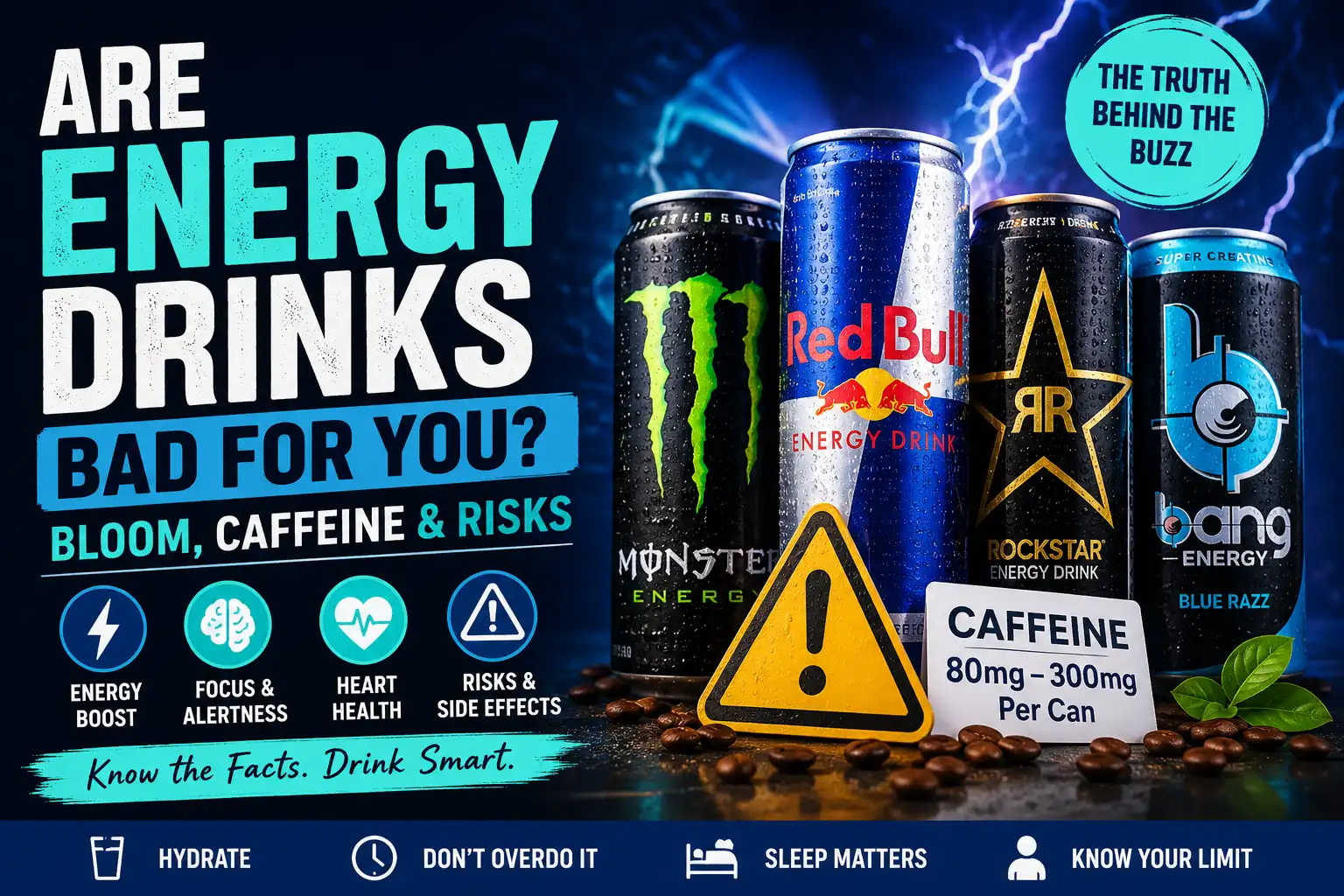
Energy drinks can look similar while delivering very different caffeine and sugar amounts. This guide identifies the worst energy drinks for you when judged by caffeine, sugar, serving size, concentration, and ease of accidental overconsumption.
That does not mean one occasional can will harm every adult. Caffeine sensitivity varies widely. Children, teenagers, pregnant people, and adults with certain health conditions require greater caution.
Quick Answer
The worst mainstream energy drinks include Rockstar Original for its 63 grams of sugar and Bang and Reign for their 300 mg caffeine loads. Large Red Bull, concentrated shots, and some performance drinks also deserve caution because one container can supply a large stimulant dose.
TL;DR
- Rockstar Original stands out for its 63 grams of sugar.
- Bang and Reign contain 300 mg caffeine per can.
- Zero sugar does not mean low caffeine.
- Count caffeine from coffee, tea, supplements, and pre-workout.
- Children and teenagers should avoid energy drinks.
- Never combine energy drinks with alcohol.
Worst Energy Drinks at a Glance
This comparison focuses on mainstream products commonly sold in the United States. It is not a medical risk score because health effects vary by person.
Caffeine and sugar values refer to the listed container unless stated otherwise. Always check the can in your hand before drinking it.
| Product | Size | Caffeine | Total sugar | Main concern |
|---|---|---|---|---|
| Rockstar Original | 16 fl oz | At least 160 mg | 63 g | Very high sugar |
| Rockstar Hardcore Apple | 16 fl oz | 240 mg | 61 g | High caffeine and sugar |
| Red Bull Original | 20 fl oz | 198 mg | 63 g | Oversized sugary serving |
| Bang Energy | 16 fl oz | 300 mg | 0 g | Very high caffeine |
| Reign Total Body Fuel | 16 fl oz | 300 mg | 0 g | Very high caffeine |
| C4 Ultimate Energy | 16 fl oz | 300 mg | 0 g | Very high caffeine |
| Prime Energy | 16 fl oz | 200 mg | 0 g | High caffeine; ages 18+ |
| Celsius | 12 fl oz | 200 mg | 0 g | High caffeine in a smaller can |
| Ghost Energy | 16 fl oz | 200 mg | 0 g | High caffeine |
| Monster Original Green | 16 fl oz | 160 mg | Check current label | Sugar and large serving |
| Monster Zero Sugar | 16 fl oz | 160 mg | 0 g | Sugar-free but highly caffeinated |
| Monster Ultra Zero | 16 fl oz | 150 mg | 0 g | Moderate-high caffeine |
Important: Some brands sell several lines with different formulas. Standard C4 is not the same as C4 Ultimate, while Celsius Essentials differs from standard Celsius.
How These Products Were Evaluated
A drink can be concerning for more than one reason. A zero-sugar can may contain very high caffeine, while a lower-caffeine product may carry excessive sugar.
The products were evaluated using five practical factors. Caffeine and sugar received the greatest attention because readers can verify them directly on current labels.
- Caffeine per container: Higher amounts leave less room for other daily sources.
- Caffeine concentration: Small cans and shots can deliver a large dose quickly.
- Total sugar: Some full-sugar products contain over 60 grams per can.
- Serving size: Large containers encourage greater caffeine and sugar intake.
- Label clarity: Similar product names can hide very different formulas.
The FDA says 400 mg of caffeine per day is an amount not generally associated with negative effects for most adults. It is not a target or a safe amount for everyone. Source: FDA caffeine guidance
The 12 Worst Energy Drinks for You
These products are not presented as equally concerning. Some stand out for sugar, while others stand out for caffeine or serving size.
The most useful question is not simply, “Is this drink bad?” Ask which ingredient creates the main concern and how it fits your complete day.
Rockstar Original — Worst for Sugar
A 16-ounce Rockstar Original lists 63 grams of total sugar and at least 160 mg of caffeine. That sugar amount makes it one of the most extreme mainstream examples.
The drink also contains 260 calories. Someone who finishes the can consumes the full listed amount, not a smaller eight-ounce portion.
- Main concern: Very high sugar
- Container: 16 ounces
- Caffeine: At least 160 mg
- Total sugar: 63 grams
- Calories: 260
- Who should skip it: Anyone limiting sugar or caffeine
- Lower-sugar option: Unsweetened tea or a clearly labeled lower-caffeine drink
Verdict: Rockstar Original is the clearest candidate for the worst mainstream energy drink based on sugar alone. Its current manufacturer page lists the full nutrition information.
Rockstar Hardcore Apple — Worst Caffeine-and-Sugar Combination
Rockstar Hardcore Apple combines 240 mg of caffeine with 61 grams of sugar in a 16-ounce can. Most high-caffeine competitors contain no sugar, which makes this combination stand out.
The drink also contains 250 calories. It leaves little room for coffee, tea, or pre-workout later in the day.
- Main concern: High caffeine plus very high sugar
- Container: 16 ounces
- Caffeine: 240 mg
- Total sugar: 61 grams
- Calories: 250
- Who should skip it: Caffeine-sensitive adults and people limiting sugar
- Better approach: Choose a smaller drink and avoid stacking caffeine
Verdict: This is arguably more concerning overall than Rockstar Original because the caffeine is much higher.
Red Bull Original 20-Ounce — Worst Oversized Classic
A 20-ounce Red Bull Original contains 198 mg of caffeine and 63 grams of sugar. Its familiar branding can make the oversized format seem less intense than it is.
The standard 8.4-ounce can contains 80 mg caffeine and 26 grams sugar. Moving to the 20-ounce can more than doubles both totals.
- Main concern: Large serving with high sugar
- Container: 20 ounces
- Caffeine: 198 mg
- Total sugar: 63 grams
- Who should skip it: Anyone who assumes all Red Bull sizes are similar
- Lower-dose comparison: An 8.4-ounce can contains 80 mg caffeine
- Label lesson: Compare container totals, not brand reputation
Verdict: The large can is far more concerning than the familiar small version. Red Bull publishes current caffeine amounts and sugar amounts by size.
Reign Total Body Fuel — Worst for a One-Can Caffeine Load
A 16-ounce Reign Total Body Fuel contains 300 mg of caffeine and no sugar. That is three-quarters of the FDA’s daily reference for most adults.
Reign labels its products for adults and advises against use by children, pregnant people, nursing people, and caffeine-sensitive consumers.
- Main concern: 300 mg caffeine in one container
- Container: 16 ounces
- Caffeine: 300 mg
- Total sugar: 0 grams
- Who should skip it: Teenagers and caffeine-sensitive adults
- Stacking risk: Coffee or pre-workout can push the daily total higher
- Timing issue: Afternoon use may interfere with sleep
Verdict: Zero sugar does not make Reign a low-impact drink. The manufacturer confirms 300 mg per can.
Bang Energy — Worst Candy-Flavored High-Caffeine Choice
A 16-ounce Bang Energy contains 300 mg of caffeine with zero sugar and zero calories. Its sweet, candy-style flavors can make the caffeine load easy to underestimate.
One can provides the same caffeine total as Reign. Drinking another caffeinated product that day can bring an adult close to or above 400 mg.
- Main concern: 300 mg caffeine
- Container: 16 ounces
- Caffeine: 300 mg
- Total sugar: 0 grams
- Calories: 0
- Who should skip it: Minors, pregnant people, and caffeine-sensitive adults
- Label lesson: Sweet flavor does not indicate a mild stimulant level
Verdict: Bang removes sugar but not the central caffeine concern. Its U.S. product information confirms 300 mg per can.
C4 Ultimate Energy — Worst Confusing Product-Line Upgrade
C4 Ultimate Energy commonly contains 300 mg of caffeine per 16-ounce can. The problem is that customers may mistake it for standard C4 Energy, which generally contains less.
The word “Ultimate” matters. Anyone buying C4 should read the exact product line and caffeine statement instead of relying on the brand name.
- Main concern: 300 mg caffeine
- Container: 16 ounces
- Caffeine: 300 mg in the Ultimate line
- Total sugar: Typically 0 grams
- Who should skip it: Anyone sensitive to strong pre-workout-style products
- Label lesson: Standard and Ultimate C4 are not interchangeable
- Stacking risk: Do not combine it with caffeinated pre-workout
Verdict: C4 Ultimate deserves caution because its familiar branding can hide a substantial caffeine increase.
Prime Energy — Worst for Confusion With a Hydration Drink
Current 16-ounce Prime Energy products list 200 mg of caffeine, zero sugar, and an ages 18+ recommendation. Prime Hydration is a separate, caffeine-free-style hydration product.
Similar packaging and shared branding can cause confusion. Parents and teenagers must distinguish the words Energy and Hydration.
- Main concern: High caffeine and brand confusion
- Container: 16 ounces
- Caffeine: 200 mg
- Total sugar: 0 grams
- Manufacturer guidance: Ages 18+
- Important distinction: Prime Energy is not Prime Hydration
- Who should skip it: Children, teenagers, and caffeine-sensitive adults
Verdict: Prime Energy is not the strongest drink here, but its hydration-style branding demands careful label reading. The official product page lists 200 mg and ages 18+.
Celsius — Worst High-Caffeine Small Can
A standard 12-ounce Celsius commonly contains 200 mg of caffeine. That is the same caffeine as several larger 16-ounce competitors.
The smaller package may create the impression of a lighter product. In reality, its caffeine concentration is higher than many traditional energy drinks.
- Main concern: 200 mg in a compact serving
- Container: 12 ounces
- Caffeine: 200 mg
- Total sugar: 0 grams in common varieties
- Who should skip it: Caffeine-sensitive adults and teenagers
- Product-line warning: Celsius Essentials may use a different formula
- Label lesson: Smaller does not always mean weaker
Verdict: Celsius is sugar-free, but its caffeine is concentrated. Do not treat it like ordinary sparkling water.
Ghost Energy — Worst Easy-Drinking 200 mg Can
Ghost Energy commonly provides 200 mg of caffeine in a 16-ounce can. The product uses familiar candy and fruit flavors with no sugar.
Its primary concern is not sugar. It is how easily a sweet-tasting drink can deliver the caffeine of roughly two typical cups of home-brewed coffee.
- Main concern: 200 mg caffeine
- Container: 16 ounces
- Caffeine: 200 mg
- Total sugar: 0 grams
- Who should skip it: Minors and adults who react strongly to caffeine
- Timing issue: Avoid using it near bedtime
- Stacking risk: Include coffee, tea, and supplements in the daily total
Verdict: Ghost has a lower caffeine load than Bang or Reign, but 200 mg remains substantial.
Monster Original Green — Worst Familiar Full-Sugar Can
A 16-ounce Monster Original Green lists 160 mg of caffeine and 230 calories. The regular formula also contains a large sugar load, which should be checked on the can.
Monster’s 16-ounce package has become visually familiar. Familiarity should not be mistaken for a small or ordinary soft drink.
- Main concern: Sugar, calories, and a large serving
- Container: 16 ounces
- Caffeine: 160 mg
- Calories: 230
- Total sugar: Verify the current U.S. can
- Who should skip it: Anyone limiting sugar or stimulant intake
- Alternative: Monster Zero Sugar removes sugar but retains 160 mg caffeine
Verdict: Monster Original is not the strongest energy drink, but it combines caffeine with a sugary, full-size serving. The manufacturer page confirms its caffeine and calories.
Monster Energy Zero Sugar — Worst “Zero” Misunderstanding
A 16-ounce Monster Energy Zero Sugar contains 160 mg of caffeine, zero sugar, and 10 calories. It solves the regular product’s sugar problem but not its stimulant load.
The word “zero” refers to sugar, not caffeine. Customers may still experience restlessness, sleep disruption, or other caffeine effects.
- Main concern: Moderate-high caffeine
- Container: 16 ounces
- Caffeine: 160 mg
- Total sugar: 0 grams
- Calories: 10
- Who should skip it: Caffeine-sensitive adults and minors
- Label lesson: Zero sugar does not mean caffeine-free
Verdict: It is a better sugar choice than Monster Original, but it remains a substantial caffeinated drink. Monster’s current label information lists 160 mg.
Monster Ultra Zero — Worst “Light-Tasting” Caffeine Trap
Monster Ultra Zero contains 150 mg of caffeine, no sugar, and 10 calories per 16-ounce can. Its light citrus flavor may feel milder than its caffeine amount suggests.
It contains half the caffeine of Bang or Reign. However, 150 mg still matters when combined with coffee, tea, or another energy drink.
- Main concern: Moderate-high caffeine hidden by a lighter flavor
- Container: 16 ounces
- Caffeine: 150 mg
- Total sugar: 0 grams
- Calories: 10
- Who should skip it: Children, teenagers, and sensitive adults
- Stacking risk: A large coffee can raise the daily total quickly
Verdict: Monster Ultra is less extreme than 300 mg products but is not a low-caffeine beverage. The official product page confirms 150 mg.
Highest-Caffeine Energy Drinks Compared
High caffeine is not automatically harmful to every healthy adult. The dose, timing, individual sensitivity, and other daily caffeine sources all matter.
These products deserve attention because one can supplies a large portion of the FDA’s 400 mg daily reference.
| Product | Caffeine | Size | Caffeine per fl oz |
|---|---|---|---|
| Reign Total Body Fuel | 300 mg | 16 oz | 18.8 mg |
| Bang Energy | 300 mg | 16 oz | 18.8 mg |
| C4 Ultimate Energy | 300 mg | 16 oz | 18.8 mg |
| Rockstar Hardcore Apple | 240 mg | 16 oz | 15 mg |
| Celsius | 200 mg | 12 oz | 16.7 mg |
| Prime Energy | 200 mg | 16 oz | 12.5 mg |
| Ghost Energy | 200 mg | 16 oz | 12.5 mg |
| Red Bull Original | 198 mg | 20 oz | 9.9 mg |
| Monster Original | 160 mg | 16 oz | 10 mg |
| Monster Zero Sugar | 160 mg | 16 oz | 10 mg |
| Monster Ultra Zero | 150 mg | 16 oz | 9.4 mg |
A Simple Caffeine-Stacking Example
A drink should be evaluated within the entire day, not alone.
- One 200 mg energy drink
- Two 95 mg cups of coffee
- Total before tea or supplements: 390 mg
That total approaches the FDA reference without counting chocolate, soda, pre-workout, or medication containing caffeine.
Highest-Sugar Energy Drinks Compared
Sugar and caffeine create separate concerns. A 300 mg zero-sugar drink may be the worse caffeine choice, while a full-sugar Rockstar may be the worse sugar choice.
The American Heart Association suggests limiting daily added sugar to about 25 grams for most women and 36 grams for most men. This is general guidance, not a personalized prescription.
| Product | Size | Total sugar | Main issue |
|---|---|---|---|
| Rockstar Original | 16 oz | 63 g | Very high sugar |
| Red Bull Original | 20 oz | 63 g | Large sugary serving |
| Rockstar Hardcore Apple | 16 oz | 61 g | Sugar plus 240 mg caffeine |
| Red Bull Original | 16 oz | 51 g | High sugar and caffeine |
| Rockstar Blackberry | 16 oz | 51 g | High sugar |
| Red Bull Original | 12 oz | 37 g | Exceeds many daily added-sugar goals |
| Red Bull Original | 8.4 oz | 26 g | Smaller but still sugary |
Total sugar and added sugar are not always identical. Use the current Nutrition Facts panel when comparing products with daily added-sugar guidance.
Full-Sugar Versus Zero-Sugar Energy Drinks
A zero-sugar drink usually provides fewer calories and avoids the large sugar load of regular formulas. It may be the better choice for someone specifically limiting sugar.
That does not make it caffeine-free or suitable for everyone. Bang and Reign contain no sugar but deliver 300 mg caffeine per can.
| Feature | Full-sugar drink | Zero-sugar drink |
|---|---|---|
| Added sugar | Often high | Usually none |
| Calories | Often higher | Usually low |
| Caffeine | Varies | Can still reach 300 mg |
| Sweeteners | Sugar or syrup | Often non-nutritive sweeteners |
| Main concern | Sugar plus caffeine | Caffeine and personal tolerance |
| Best label check | Added sugar and serving size | Caffeine per container |
Some people also experience digestive discomfort from certain sweeteners. That is an individual response and does not make every zero-sugar product unsafe.
Energy Drinks Versus Sports and Hydration Drinks
Energy drinks are often displayed near sports drinks, but they serve different purposes. One category emphasizes stimulation; the other usually emphasizes fluid and electrolytes.
Packaging can blur the distinction. Always look for a caffeine statement before giving a performance-branded beverage to a child or teenager.
| Drink type | Main purpose | Caffeine | Main label check |
|---|---|---|---|
| Energy drink | Stimulation and alertness | Often 80–300 mg | Caffeine per container |
| Sports drink | Fluid and carbohydrates | Usually none | Sugar and sodium |
| Hydration drink | Fluid and electrolytes | Usually none | Added sugar |
| Pre-workout | Exercise supplement | Often high | Serving size and stimulants |
| Energy shot | Concentrated stimulation | Often high | Caffeine per bottle |
Prime Energy Versus Prime Hydration
Prime Energy contains caffeine and is labeled for adults. Prime Hydration is a separate electrolyte beverage.
The products share branding but should not be treated as interchangeable.
Energy Shots and Concentrates Need Extra Caution
A small bottle can contain as much caffeine as a large can. Concentration makes it easy to consume the full amount quickly.
Powders add another concern because an extra scoop may double the listed caffeine. Never estimate a serving by eye.
- Check caffeine for the whole shot.
- Confirm whether the bottle contains one or two servings.
- Use the scoop supplied with powdered products.
- Never combine an energy shot with a high-caffeine can.
- Count pre-workout, coffee, tea, and caffeine tablets.
- Do not use an energy shot to counter alcohol.
- Store concentrated products away from children.
- Avoid homemade mixtures with unknown caffeine totals.
What Happens If You Drink Energy Drinks Every Day?
Daily use does not affect every adult in the same way. The product, amount, timing, sugar, health history, and sleep schedule all matter.
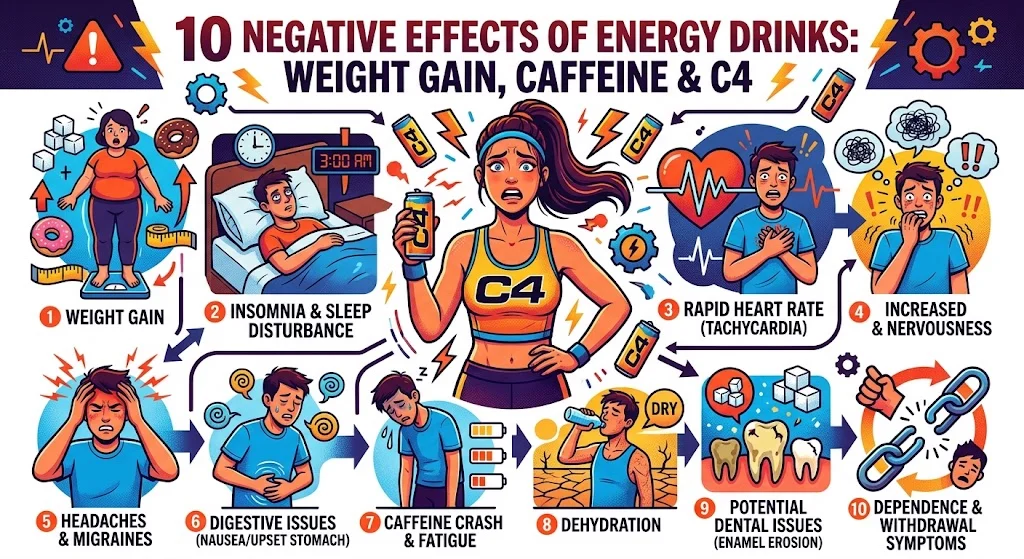
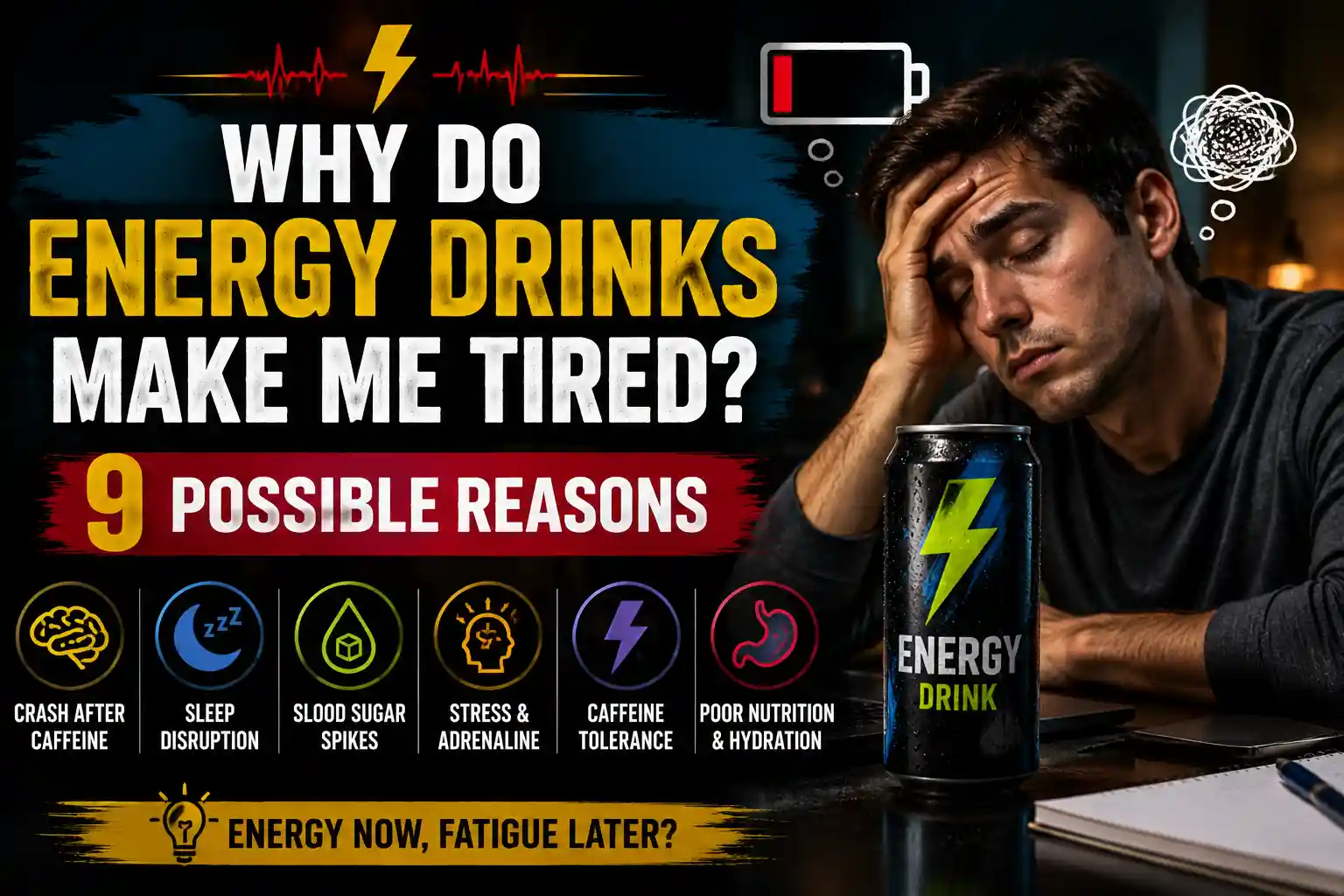
Regular use may create a cycle where caffeine disrupts sleep, then poor sleep increases next-day caffeine use.
Possible Problems With Frequent Use
- Caffeine tolerance: The same amount may feel less effective over time.
- Dependence: Missing the usual caffeine may cause headaches or fatigue.
- Sleep disruption: Late caffeine can reduce sleep quality or delay bedtime.
- Regular sugar exposure: Full-sugar cans can add hundreds of weekly calories.
- Dental exposure: Frequent sipping repeatedly exposes teeth to acid and sugar.
- Anxiety or restlessness: Sensitive adults may feel uncomfortable at lower doses.
- Caffeine stacking: Coffee and supplements may push the daily total higher.
- Masked fatigue: Caffeine may delay attention to poor sleep or another cause.
Persistent fatigue deserves attention beyond a stronger drink. Speak with a qualified healthcare professional when tiredness is frequent or unexplained.
Who Should Avoid or Limit Energy Drinks?
The FDA’s 400 mg reference applies to most adults. It does not apply equally to children, pregnant people, or adults with certain medical conditions.
Anyone advised to limit caffeine should follow personal medical guidance instead of a general online number.
- Children and teenagers: Pediatric guidance discourages energy drinks.
- Pregnant people: Discuss caffeine limits with an obstetric professional.
- Breastfeeding people: Ask about total intake and timing.
- Caffeine-sensitive adults: Even modest amounts may cause symptoms.
- People with heart conditions: Ask a clinician before using stimulant drinks.
- People with high blood pressure: Caffeine guidance may need personalization.
- People with anxiety disorders: Caffeine may worsen restlessness or panic symptoms.
- People taking stimulant medication: Combined effects require caution.
- People with sleep disorders: Afternoon caffeine may worsen sleep.
- People using pre-workout: Count every stimulant source.
The CDC notes that the American Academy of Pediatrics says stimulants in energy drinks have no place in children’s and adolescents’ diets. Source: CDC youth guidance
Signs You May Have Consumed Too Much Caffeine
Caffeine response varies with body size, tolerance, medications, pregnancy, and how quickly it was consumed. Symptoms can occur below 400 mg.
Stop consuming caffeine if uncomfortable symptoms appear. Do not use alcohol, exercise, or another supplement to “balance” the effects.
Common Warning Signs
- Shakiness
- Restlessness
- Anxiety
- Headache
- Dizziness
- Nausea
- Fast heartbeat
- Pounding or fluttering heartbeat
- Trouble sleeping
- Confusion
When to Get Help
Contact Poison Control at 1-800-222-1222 for guidance about suspected excessive caffeine exposure in the United States.
Call 911 immediately if someone collapses, has a seizure, has trouble breathing, or cannot be awakened. Source: Poison Control guidance
Why Energy Drinks and Alcohol Should Not Be Mixed
Caffeine can make an intoxicated person feel more awake. It does not lower blood alcohol concentration or restore judgment.
This mismatch can encourage more drinking or unsafe decisions. Only time lowers alcohol concentration.
- Do not add energy shots to liquor.
- Avoid caffeinated party punches.
- Do not use an energy drink to “sober up.”
- Never drive after drinking alcohol.
- Arrange a designated driver before drinking begins.
- Choose non-caffeinated mixers.
- Track serving sizes in mixed drinks.
- Stop drinking if you feel unwell.
FAQs About Worst Energy Drink
What Is the Worst Energy Drink for You?
There is no single worst product for everyone. Rockstar Original stands out for 63 grams of sugar, while Bang, Reign, and C4 Ultimate stand out for 300 mg caffeine.
Rockstar Hardcore Apple combines both concerns with 240 mg caffeine and 61 grams sugar.
Is Monster or Red Bull Worse for You?
It depends on product size and formula. A 16-ounce Monster Original lists 160 mg caffeine, while a 16-ounce Red Bull lists 151 mg caffeine and 51 grams sugar.
Compare equal container sizes and current labels rather than brand names alone.
Is Reign Worse Than Bang?
Both commonly list 300 mg caffeine and zero sugar per 16-ounce can. Neither is a mild caffeine choice.
The better comparison depends on ingredients, personal tolerance, and whether other caffeine is consumed that day.
Is Celsius Healthier Than Monster?
Standard Celsius contains no sugar but commonly provides 200 mg caffeine. Monster Original contains less caffeine at 160 mg but includes sugar and more calories.
One is not universally healthier. The relevant choice depends on caffeine sensitivity and sugar goals.
Are Energy Drinks Worse Than Coffee?
Plain coffee has a simpler ingredient list, but its caffeine can still be high. Energy drinks often add sugar, sweeteners, flavorings, vitamins, or herbal extracts.
A large sweetened coffee can also contain significant caffeine, sugar, and calories.
How Many Energy Drinks Can an Adult Have per Day?
There is no safe universal number of cans because products range from about 80 to 300 mg caffeine. Calculate total caffeine instead.
One 300 mg can leaves little room below the FDA’s 400 mg daily adult reference.
Is Prime Energy the Same as Prime Hydration?
No. Prime Energy contains caffeine, while Prime Hydration is a separate caffeine-free electrolyte product.
Check the word printed below the Prime logo before buying.
Can Teenagers Drink Energy Drinks?
The American Academy of Pediatrics advises that caffeine and other stimulants in energy drinks have no place in children’s and adolescents’ diets.
Choose caffeine-free drinks for teenagers and children.
How Long Does Caffeine Stay in Your System?
Caffeine can remain active for several hours. Dose, pregnancy, medication, metabolism, and regular caffeine use affect how long it lasts.
An afternoon energy drink may still interfere with nighttime sleep.
What Should I Do After Drinking Too Much Caffeine?
Stop consuming caffeine, avoid alcohol, and do not exercise intensely. Contact Poison Control at 1-800-222-1222 for personalized guidance.
Call 911 for collapse, seizure, breathing trouble, or inability to awaken.
Sources and Editorial Review Notes
Product amounts were checked against available U.S. manufacturer pages on July 26, 2026. Labels should be checked again before publication and during future updates.
Primary references include:
- FDA caffeine guidance
- CDC guidance on energy drinks and young people
- Poison Control energy drink guidance
- Rockstar Original product label
- Reign product information
- Bang Energy product information
- Monster Original product information
- Red Bull ingredient and nutrition information
A qualified healthcare professional should review the article before publication. Add the reviewer’s real name, credentials, profile, and review date only after that review occurs.
Conclusion
The worst energy drinks for you are not defined by one ingredient. The biggest concerns are very high caffeine, heavy sugar, oversized cans, concentrated shots, and unsafe combinations.
Read the current label, count all caffeine sources, and avoid treating 400 mg as a daily goal. When fatigue becomes frequent, choose water, food, rest, or professional guidance instead of reaching for a stronger can.
Energy Drink Quick Answers
⚡ What is the most unhealthiest energy drink?
There isn’t one single “unhealthiest” energy drink. Generally, drinks with very high caffeine, added sugar, and large serving sizes are among the least healthy choices.
💙 What is the #1 healthiest energy drink?
There’s no universally healthiest energy drink. A low-sugar or zero-sugar option with moderate caffeine is generally a better choice than high-sugar, high-caffeine drinks.
🚫 Which energy drinks should I avoid?
Avoid energy drinks with very high caffeine, excessive added sugar, or multiple stimulant ingredients, especially if you’re sensitive to caffeine.
🥤 Is Red Bull or Monster worse for you?
It depends on the specific product and serving size. Monster often contains more caffeine and sugar per can, but some Monster and Red Bull varieties are lower-sugar or zero-sugar, so the label matters.
Read More:
What Can I Drink After a Tooth Extraction
100 Fruit Drink Recipes: Juices, Smoothies & Mocktails
16 Best Non-Alcoholic After Dinner Drinks for Any Evening
Best Places for Non-Alcoholic Drinks in Las Vegas: 2026 Guide
Bob Marley Mocktail: Easy Non-Alcoholic Layered Drink
Liquid Maria Juana Drink: Easy Tropical Cocktail Recipe
Gasolina Drink: Flavors, ABV, Ingredients & More