Alani Energy Drinks: Flavors, Caffeine, Nutrition, Ingredients and Safety
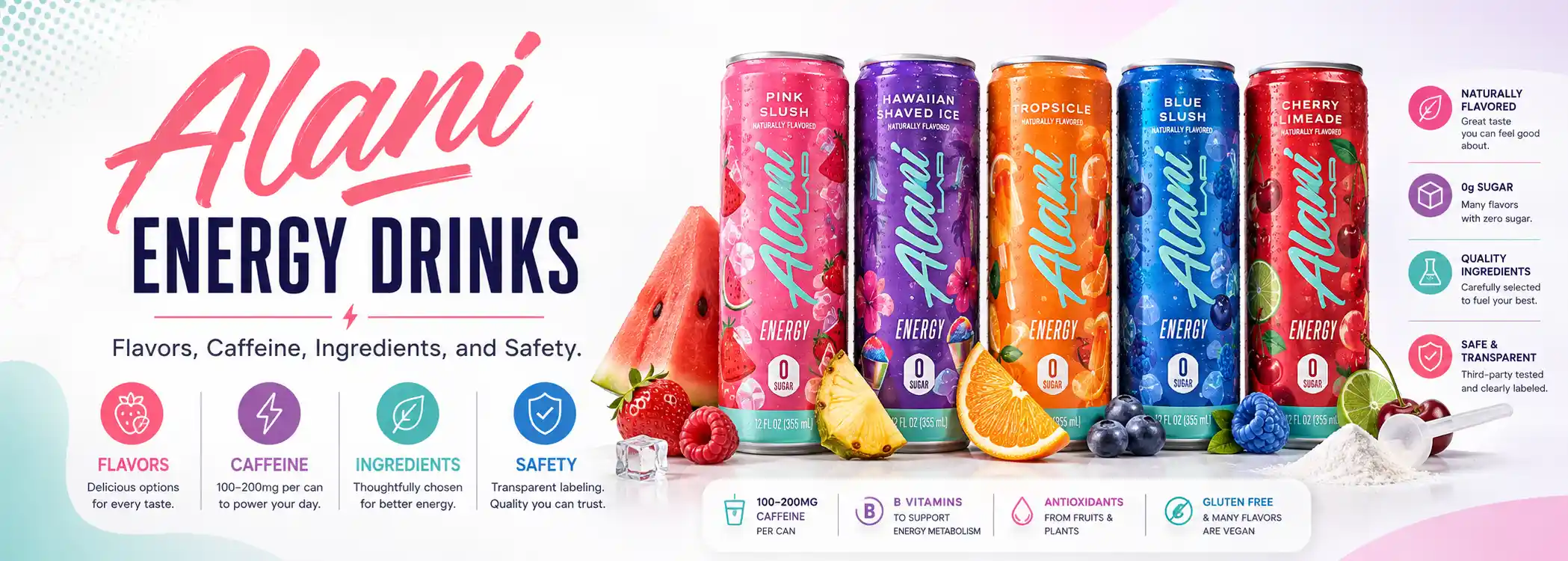
Alani energy drinks stand out for their colorful cans, sweet flavors, zero-sugar formulas, and compact 12-ounce size. However, their playful packaging can make it easy to overlook one important fact: a standard can contains 200 milligrams of caffeine.
This guide explains Alani’s current flavors, nutrition, sweeteners, ingredients, product formats, side effects, and safety warnings. It also compares Alani with Celsius, Red Bull, Monster, coffee, and lower-caffeine options.
Quick Answer
A standard 12-ounce Alani energy drink generally contains 200 milligrams of caffeine, zero grams of sugar, and about 10 to 15 calories. Mini cans contain 100 milligrams of caffeine.
Alani may suit healthy adults who already tolerate caffeine. It is not recommended for children, caffeine-sensitive people, pregnant women, or nursing women, according to current product labels.
Key Takeaways
- Standard 12-ounce cans contain 200 milligrams of caffeine.
- Mini Energy cans contain 100 milligrams.
- Most standard cans contain zero grams of sugar.
- Current labels use sucralose and acesulfame potassium.
- Bold flavors do not make the drink suitable for children.
- Total daily caffeine matters more than can size.
Alani Energy Drinks at a Glance
| Product Format | Serving Size | Caffeine | Sugar | Typical Calories | Best For |
|---|---|---|---|---|---|
| Standard energy drink | 12 fl oz | 200 mg | 0 g | 10–15 | Caffeine-tolerant adults |
| Mini Energy | 8.4 fl oz | 100 mg | 0 g | About 10 | Smaller caffeine serving |
| Energy Stick | Mixed with water | 200 mg | 0 g | About 15 or more | Portable powdered option |
| Variety pack | 12 fl oz per can | 200 mg per can | 0 g | Varies | Trying several flavors |
Current labels show that nutrition can vary by flavor. For example, Cotton Candy has 10 calories and 180 milligrams of sodium, while Sherbet Swirl has 15 calories and 200 milligrams of sodium.
What Are Alani Energy Drinks?
Alani Nu is a beverage and wellness brand known for sugar-free canned energy drinks, Mini Energy cans, powdered Energy Sticks, pre-workout products, protein drinks, and snacks.
The standard canned beverages combine caffeine with ingredients such as taurine, L-theanine, guarana seed extract, Panax ginseng, L-carnitine, B vitamins, and non-sugar sweeteners. The flavor range leans heavily toward candy, fruit, slushie, and dessert-inspired profiles.
Celsius Holdings announced its acquisition of Alani Nutrition in 2025 in a deal valued at approximately $1.8 billion. Alani continues to operate as its own consumer brand rather than becoming a Celsius flavor line.
What Alani Is Not
Despite the branding, a can should not be treated as:
- A replacement for adequate sleep
- A complete pre-workout product
- A sports hydration beverage
- A meal replacement
- A source of protein or meaningful calories
- An unlimited alternative to coffee
- A suitable beverage for children
Alani Energy Drink Nutrition Facts
Most standard Alani energy drinks have a similar basic nutrition profile. However, calories, carbohydrates, sodium, vitamins, colors, and flavoring ingredients may differ.
A current 12-ounce Cotton Candy label lists 10 calories, 3 grams of carbohydrates, zero grams of sugar, and 180 milligrams of sodium. Sherbet Swirl lists 15 calories, 2 grams of carbohydrates, zero grams of sugar, and 200 milligrams of sodium. Both contain 200 milligrams of caffeine.
Typical Nutrition in One Standard Can
| Nutrient | Typical Amount |
|---|---|
| Serving size | 12 fl oz |
| Calories | About 10–15 |
| Total sugar | 0 g |
| Added sugar | 0 g |
| Caffeine | 200 mg |
| Sodium | About 180–200 mg in reviewed flavors |
| Protein | 0 g |
| Fat | 0 g |
| Carbohydrates | About 2–3 g |
| Niacin | Around 110% Daily Value |
| Vitamin B6 | Around 110% Daily Value |
| Vitamin B12 | Around 100% or more |
| Biotin | Around 100% Daily Value |
These values should be treated as examples rather than universal numbers. Check the can because limited releases and reformulated products may differ.
Do the B Vitamins Create Energy?
B vitamins help the body carry out normal metabolic processes. They do not supply calories, replace food, or produce the same immediate stimulant effect as caffeine.
Someone who already gets enough B vitamins does not automatically become more energetic by consuming a larger amount. The noticeable alertness from Alani is primarily associated with its 200-milligram caffeine dose.
How Much Caffeine Is in Alani?
A standard 12-ounce Alani can contains 200 milligrams of caffeine. That is within the caffeine range found in American energy drinks, but it is near the higher end for such a small can.
The FDA says 400 milligrams per day is an amount not generally associated with negative effects for most healthy adults. However, the FDA also stresses that sensitivity varies widely. The 400-milligram figure is a general reference point, not a recommended daily target.
Caffeine by Alani Product Type
- Standard 12-ounce can: 200 milligrams
- Mini 8.4-ounce can: 100 milligrams
- Energy Stick: 200 milligrams per prepared serving
- Two standard cans: 400 milligrams before coffee, tea, soda, or supplements
- One standard can plus one Mini: 300 milligrams
Current Mini Energy labels list 100 milligrams per can. Current Energy Stick labels list 200 milligrams per stick serving.
Why Total Daily Caffeine Matters
Caffeine does not come only from energy drinks. It may also appear in:
- Brewed coffee
- Espresso
- Black and green tea
- Soda
- Chocolate
- Caffeine gum or pouches
- Headache medicine
- Fat burners
- Pre-workout powders
- Energy shots
The FDA reports that a 12-ounce brewed coffee can contain roughly 113 to 247 milligrams of caffeine. Therefore, one Alani plus one brewed coffee could provide about 313 to 447 milligrams before any other sources are counted.
A Practical Caffeine-Budget Example
| Time | Drink | Caffeine |
|---|---|---|
| 9:00 a.m. | One standard Alani | 200 mg |
| Lunch | One black tea | About 71 mg |
| 3:00 p.m. | One Mini Energy | 100 mg |
| Approximate total | 371 mg | |
That total falls below 400 milligrams, but the timing could still disturb sleep or trigger symptoms in a sensitive person.
What Ingredients Are in Alani Energy Drinks?
Alani’s current standard formulas contain more than flavored carbonated water and caffeine. The exact ingredient order varies, but reviewed labels list the following major components.
Carbonated Water
This forms the fizzy base. Carbonation does not add caffeine, but it may cause bloating, burping, or stomach discomfort in some people.
Caffeine
Caffeine is the main stimulant. It can increase alertness, but it may also affect heart rate, anxiety, digestion, and sleep.
Guarana Seed Extract
Guarana naturally contains caffeine. The FDA notes that many American energy-drink labels report total caffeine from all sources, including ingredients such as guarana. Alani declares 200 milligrams of caffeine per standard can, so guarana should not automatically be counted as another 200 milligrams.
Taurine
Taurine is an amino-acid-like compound found naturally in the body and commonly added to energy drinks. Its inclusion does not make a beverage a hydration product or prove that it improves athletic performance.
L-Theanine
L-theanine is an amino acid commonly associated with tea. Alani lists it in its formula, but the label does not state a separate amount.
L-Carnitine L-Tartrate
This ingredient appears in many sports and wellness products. Alani does not disclose enough individual dosing information on the reviewed labels to judge its stand-alone effect.
Panax Ginseng Root Extract
Panax ginseng is a botanical ingredient found in many functional beverages. Its presence does not mean the drink treats fatigue or improves health.
Sucralose and Acesulfame Potassium
Current standard labels reviewed for this guide list sucralose and acesulfame potassium, also called Ace-K. These high-intensity sweeteners create a strong sweet taste without regular sugar.
Some previous online descriptions incorrectly claim that standard Alani cans use erythritol as their main sweetener. The current labels reviewed here do not support that broad claim.
Citric Acid and Sodium Citrate
Citric acid adds tartness. Sodium citrate controls acidity and helps shape the flavor.
Preservatives
Sodium benzoate and potassium sorbate help maintain product stability. People trying to avoid specific additives should inspect each can rather than relying on a general ingredient summary.
B Vitamins
Current formulas may contain niacin, vitamin B6, vitamin B12, biotin, and pantothenic acid. These support normal body functions but do not replace meals, sleep, or recovery.
Are Alani Energy Drinks Sugar-Free?
Current standard Alani energy drinks are labeled with zero grams of sugar and zero grams of added sugar. Mini Energy cans and Energy Sticks are also sold as zero-sugar products.
Their sweet taste generally comes from sucralose and acesulfame potassium. This makes Alani different from traditional energy drinks that may contain substantial amounts of added sugar.
Does Alani Contain Aspartame?
Aspartame does not appear on the current Cotton Candy or Sherbet Swirl ingredient lists reviewed for this guide. Those formulas list sucralose and acesulfame potassium instead.
Formulas may change, so anyone avoiding aspartame or another additive should read the physical label before drinking.
Are Alani Energy Drinks Healthy?
Calling an energy drink simply “healthy” or “unhealthy” misses the most important details. The answer depends on the person, serving size, frequency, timing, medical history, and total caffeine intake.
For a healthy adult who tolerates caffeine, an occasional Alani may be a lower-sugar alternative to a traditional sweetened energy drink. For a child, pregnant person, caffeine-sensitive adult, or someone with certain health conditions, it may be inappropriate.
Potential Advantages
- Zero grams of sugar in standard cans
- Only about 10 to 15 calories
- Clearly declared caffeine amount
- Smaller 100-milligram Mini option
- Several flavors and package formats
- Vegan and gluten-free options, according to the company
- No need to prepare or measure a canned serving
Important Limitations
- 200 milligrams is a strong caffeine serving
- Sweeteners may leave a noticeable aftertaste
- Carbonation and acids may bother sensitive stomachs
- Sodium can reach about 180–200 milligrams in reviewed cans
- B vitamins do not replace nutritious food
- The drink is not designed for hydration
- Frequent use can make caffeine feel necessary
- Late use may interfere with sleep
Alani states that its Energy Drinks and Mini Energy products are vegan. It also states that all company products are gluten-free except Munchies Whey Protein.
Current Alani Energy Drink Flavors in 2026
As of July 11, 2026, Alani’s official online product selection displays 15 individual standard-can flavors, along with several variety packs. Availability can still differ by retailer and location.
The taste notes below summarize current manufacturer descriptions. They are not presented as independent blind-test results.
| Flavor | Main Taste Profile | Sweetness Style | Best For |
|---|---|---|---|
| Cotton Candy | Pink vanilla and spun-sugar notes | Very sweet | Candy lovers |
| Sherbet Swirl | Orange, raspberry, and lime | Sweet-tart and creamy | Sherbet fans |
| Strawberry Sunrise | Strawberry and orange | Fruity and bright | Berry-citrus drinkers |
| Pink Slush | Strawberry and cream soda | Sweet and creamy | Dessert-style flavors |
| Dream Float | Orange with sweet cream | Creamsicle-like | Orange-vanilla fans |
| Orange Kiss | Candied orange and clementine | Bright and sweet | Citrus lovers |
| Hawaiian Shaved Ice | Strawberry and creamy coconut | Tropical and sweet | Coconut fans |
| Cherry Twist | Cherry and lime | Sweet with a tart edge | Cherry-lime drinkers |
| Cherry Slush | Bold cherry slush flavor | Syrupy and tangy | Strong cherry fans |
| Blue Slush | Blue raspberry | Candy-like | Slushie flavors |
| Cosmic Stardust | Mixed fruit and chewy candy | Very sweet | Candy-inspired drinks |
| Watermelon Wave | Candied watermelon and lemonade | Sweet-tart | Summer flavors |
| Breezeberry | Blue raspberry and citrus | Tart and fruity | Sharper berry flavors |
| Juicy Peach | Peach candy | Smooth and sweet | Peach fans |
| Purple Cotton Candy | Grape and caramel-like sweetness | Rich and candy-like | Grape candy fans |
Current Variety Packs
- Dream Trio: Strawberry Sunrise, Sherbet Swirl, and Cotton Candy
- Sunshine Mix: A bright mixed-flavor assortment
- Beach Blend: A warm-weather variety selection
Variety-pack contents can change. Check the package before ordering, especially when buying through a third-party retailer.
Is Lime Slush Still Available?
Lime Slush has appeared as a limited-edition Alani flavor. However, it was not displayed among the current individual standard-can options on the official online product page reviewed on July 11, 2026.
Limited flavors may remain available through certain stores after disappearing from the official lineup. Check the date, packaging condition, and seller before purchasing older stock.
Best Alani Flavors by Taste Preference
A flavor that tastes great to one person may feel overly sweet to another. Choosing by flavor family is more useful than trusting a single universal ranking.
Best for Citrus Fans
- Orange Kiss offers the clearest orange-forward profile.
- Cherry Twist combines sweet cherry with a lime edge.
- Breezeberry adds citrus sharpness to blue raspberry.
- Sherbet Swirl mixes orange and lime with raspberry sweetness.
Best for Creamy or Dessert-Like Flavors
- Dream Float resembles an orange-and-vanilla float.
- Pink Slush combines strawberry with cream-soda notes.
- Sherbet Swirl offers a creamy frozen-dessert profile.
- Cotton Candy delivers a soft vanilla-candy taste.
Best for Tart Flavors
- Breezeberry is one of the sharper berry options.
- Cherry Twist balances sweetness with lime.
- Watermelon Wave brings a lemonade-style finish.
- Sherbet Swirl uses citrus to cut through the sweetness.
Best for Candy Lovers
- Cosmic Stardust has a mixed-fruit candy character.
- Cotton Candy is designed around spun-sugar flavor.
- Purple Cotton Candy adds grape and caramel-like notes.
- Blue Slush fits the classic blue-raspberry candy profile.
Best First Flavor to Try
For a broad, fruit-forward starting point, Juicy Peach, Strawberry Sunrise, Orange Kiss, or Cherry Twist may feel more familiar than the strongest candy-inspired options.
Standard Cans vs Mini Cans vs Energy Sticks
Alani offers three main energy formats. The most important difference is not convenience. It is caffeine per serving.
| Feature | Standard Can | Mini Energy | Energy Stick |
|---|---|---|---|
| Serving format | Carbonated can | Smaller carbonated can | Powder mixed with water |
| Serving size | 12 fl oz | 8.4 fl oz | One stick |
| Caffeine | 200 mg | 100 mg | 200 mg |
| Sugar | 0 g | 0 g | 0 g |
| Carbonated | Yes | Yes | No, unless mixed with sparkling water |
| Best advantage | Ready to drink | Smaller caffeine dose | Portable |
| Main caution | Strong full serving | Still contains caffeine | Easy to stack with other products |
Standard Cans
Standard cans provide the widest flavor selection. They also contain the full 200-milligram caffeine dose.
Mini Energy Cans
Mini cans are not simply smaller packaging. They provide 100 milligrams of caffeine, which makes them a more practical starting point for adults unsure about a full-strength can.
The current Mini lineup includes Cherry Twist, Juicy Peach, Orange Kiss, Cherry Slush, and a Splash Pack.
Energy Sticks
Energy Sticks are powdered and mixed with water. Current stick options include Cotton Candy, Strawberry Sunrise, Sherbet Swirl, Cherry Twist, Cherry Slush, Orange Kiss, Juicy Peach, Pink Slush, Breezeberry, Hawaiian Shaved Ice, and Cosmic Stardust.
Alani vs Celsius, Red Bull, Monster and Coffee
Energy drinks come in different sizes, so comparing cans without comparing caffeine can be misleading.
| Drink | Serving Size | Caffeine | Sugar |
|---|---|---|---|
| Alani standard can | 12 oz | 200 mg | 0 g |
| Alani Mini | 8.4 oz | 100 mg | 0 g |
| Celsius Sparkling | 12 oz | 200 mg | 0 g |
| Red Bull Original | 8.4 oz | 80 mg | 27 g |
| Monster Original | 16 oz | 160 mg | 54 g |
| Regular brewed coffee | 12 oz | About 113–247 mg | Depends on additions |
The American Academy of Pediatrics’ comparison lists Alani Hawaiian Shaved Ice and Celsius Sparkling at 200 milligrams per 12-ounce can. It lists Monster Original at 160 milligrams per 16 ounces and Red Bull Original at 80 milligrams per 8.4 ounces. The FDA reports a broad 113-to-247-milligram range for 12-ounce brewed coffee.
Alani vs Celsius
- Both commonly provide 200 milligrams of caffeine.
- Both offer zero-sugar flavors.
- Both emphasize fruit-forward options.
- Alani leans more toward candy, slushie, and dessert profiles.
- Ingredient blends differ despite shared corporate ownership.
Neither is automatically the safer choice. Label details, serving frequency, personal tolerance, and flavor preference matter more.
Alani vs Red Bull
A standard Alani has 2.5 times the caffeine of an 8.4-ounce Original Red Bull. Red Bull Original contains sugar, while standard Alani cans contain none.
Someone switching from Red Bull should not assume the similar can size means a similar caffeine dose.
Alani vs Monster
A 16-ounce Original Monster has less caffeine than a 12-ounce standard Alani in the AAP comparison, but substantially more sugar.
Alani is lower in sugar and calories. It is not lower in caffeine.
Alani vs Coffee
A 12-ounce brewed coffee may contain less, roughly the same, or more caffeine than Alani. Coffee strength varies by bean, brewing method, and serving size.
Plain coffee usually has no sugar. Sweetened coffee drinks may contain more calories and sugar than either beverage.
What Is the Best Time to Drink Alani?
There is no universal ideal time. The best timing depends on bedtime, caffeine tolerance, meals, medications, and other caffeinated products.
Caffeine can remain active for hours. Drinking Alani late in the day may delay sleep, even when you no longer feel highly stimulated.
More Practical Times
- Earlier in the morning after food
- Late morning instead of a second coffee
- Before an early workout, when appropriate
- During a planned daytime work session
- At the beginning of a long drive, but never instead of sleep
Less Practical Times
- Near bedtime
- After several coffees
- Before a late-evening workout
- On an empty stomach when caffeine causes nausea
- During intense heat without enough water
- When feeling anxious, shaky, or sleep-deprived
Can You Drink Alani Before a Workout?
Some adults use Alani before training because caffeine can increase alertness. However, the canned beverage is not identical to a measured pre-workout formula.
A standard can already supplies 200 milligrams of caffeine. Combining it with caffeinated pre-workout, coffee, fat burners, or energy shots can quickly push the total higher than expected.
Safer Pre-Workout Practices
- Check every label for caffeine.
- Do not stack a full can with caffeinated pre-workout.
- Try a 100-milligram Mini before choosing a standard can.
- Drink water before and during exercise.
- Eat when the workout follows a long gap without food.
- Test tolerance during a normal session, not competition day.
- Avoid late use when caffeine affects sleep.
- Stop exercising if serious symptoms develop.
Alani does not provide carbohydrates, electrolytes, or protein in amounts that make it a complete sports-fueling beverage.
Possible Alani Side Effects
The side effects associated with Alani mainly relate to caffeine sensitivity, serving size, timing, acidity, carbonation, and sweeteners.
The FDA lists increased heart rate, heart palpitations, high blood pressure, insomnia, anxiety, jitters, upset stomach, nausea, and headache among signs of excessive caffeine intake.
Common Unwanted Effects
- Shaky or jittery feelings
- Restlessness
- Trouble falling asleep
- Waking during the night
- Faster or stronger heartbeat
- Anxiety or irritability
- Headache
- Nausea
- Stomach discomfort
- Bloating from carbonation
- A later feeling of tiredness
- Frequent urination
What Increases the Risk?
- Drinking a full can quickly
- Consuming it on an empty stomach
- Combining it with coffee or pre-workout
- Drinking two cans close together
- Having low caffeine tolerance
- Using it late in the day
- Taking stimulant medications
- Having certain heart or anxiety conditions
- Being dehydrated
- Getting inadequate sleep
Who Should Avoid Alani Energy Drinks?
Current standard and Mini labels say the products are not recommended for children, caffeine-sensitive people, pregnant women, or nursing women.
People with health conditions or medication concerns should discuss caffeine with a qualified healthcare professional.
Children and Teenagers
Energy drinks are not suitable everyday beverages for children or teenagers. The American Academy of Pediatrics says avoiding caffeine is the best choice for children, while the FDA reports that medical experts advise against energy drinks for children and teens.
The AAP reported that caffeine-related emergency-department visits among middle- and high-school students nearly doubled between 2017 and 2023. It also reported a 24% rise in poison-control calls involving youth reactions to energy drinks in 2023.
Pregnant or Nursing People
A standard can provides 200 milligrams of caffeine. The product label recommends against use during pregnancy or nursing.
Individual caffeine limits should be discussed with an obstetrician or other qualified clinician.
Caffeine-Sensitive Adults
Sensitivity can appear as anxiety, poor sleep, nausea, headache, racing heartbeat, or tremors. A Mini can may still be too strong for some people.
People Taking Medication
Caffeine may interact with stimulant medicines and may worsen certain side effects. Ask a pharmacist or clinician about possible interactions.
People With Certain Health Conditions
Professional guidance is particularly important for people with:
- Heart rhythm conditions
- Uncontrolled high blood pressure
- Panic attacks or severe anxiety
- Chronic insomnia
- Significant digestive sensitivity
- A history of adverse caffeine reactions
Important 2026 Safety Context
In June 2026, the Texas Attorney General opened an investigation into whether Celsius Holdings marketed Alani Nu energy drinks to children and teenagers. The inquiry followed a wrongful-death lawsuit involving a 17-year-old and allegations related to excessive caffeine intake.
An investigation and lawsuit contain allegations; they are not final findings of legal or medical responsibility. Celsius has said its marketing targets adults and that Alani labels disclose caffeine and advise against use by children.
How Many Alani Energy Drinks Can You Have Per Day?
There is no number that works for every person. For many adults, one standard can is already a substantial caffeine serving.
Two standard cans provide 400 milligrams. That reaches the FDA’s general daily reference before adding coffee, tea, chocolate, soda, pre-workout, or medication.
A Sensible Decision Guide
- New to caffeine: Start below 200 milligrams.
- Sensitive to coffee: Avoid a full standard can.
- Already had coffee: Calculate the combined amount first.
- Using pre-workout: Do not add Alani without checking caffeine.
- Poor sleep: Skip the drink instead of increasing the dose.
- Experiencing symptoms: Reduce or stop caffeine and seek guidance.
Can You Drink Alani Every Day?
A caffeine-tolerant adult may consume one regularly without immediate problems. That does not mean daily use is ideal or necessary.
Frequent use can make it harder to notice changes in sleep, anxiety, digestion, or caffeine dependence. Some regular users also experience headaches, fatigue, or irritability when they suddenly stop.
Ask Yourself
- Do I need more caffeine to get the same effect?
- Is my sleep becoming lighter or shorter?
- Do I get headaches when I skip it?
- Am I replacing meals or water with energy drinks?
- Do I feel anxious or shaky afterward?
- Am I drinking it simply out of habit?
A “yes” answer suggests it may be time to reduce the amount or frequency. Gradual reduction is often more comfortable than stopping abruptly.
How to Choose the Right Alani Product
The best option is not always the newest or sweetest flavor. Choose according to caffeine tolerance first and taste second.
Choose a Mini When
- You rarely drink caffeine
- Coffee already makes you jittery
- You want 100 milligrams rather than 200
- You plan to drink tea or coffee later
- You are trying Alani for the first time
Choose a Standard Can When
- You already understand your caffeine response
- You have not stacked other stimulant products
- It is early enough to protect sleep
- You want the broadest flavor selection
Choose an Energy Stick When
- Portability matters
- Carbonation bothers you
- You can measure and track servings carefully
- You understand that one stick still contains 200 milligrams
Choose a Variety Pack When
- You do not know your favorite flavor
- Several adults prefer different profiles
- You want to avoid committing to one sweet flavor
- The package clearly lists each included variety
Where to Buy, Store and Serve Alani
Where to Buy Alani Energy Drinks
Alani products are available through the official website and participating American retailers. The company also provides a store locator.
As of October 1, 2025, Alani states that orders from its website are available only for purchase and delivery within the United States.
Buying Tips
- Compare the price per can, not only the package price.
- Check whether a listing contains standard or Mini cans.
- Confirm the caffeine amount before ordering Energy Sticks.
- Review the variety-pack contents carefully.
- Inspect expiration or best-by information.
- Avoid leaking, swollen, rusted, or severely dented cans.
- Use trusted sellers when buying discontinued flavors.
- Remember that beverages bought directly from Alani are listed as final sale.
How to Store and Serve Alani
Store unopened cans in a cool, dry place away from direct heat and sunlight. Refrigeration is useful for taste but is not required for a sealed, shelf-stable can.
Do not leave cans in a hot vehicle for extended periods. Do not freeze them, since expansion can damage or burst the container.
Best Serving Tips
- Chill the can fully before opening.
- Pour over ice to soften sweetness.
- Add a citrus wedge to fruit-forward flavors.
- Sip slowly rather than finishing it quickly.
- Drink water separately.
- Avoid mixing it with other caffeine products.
- Refrigerate an opened can and finish it soon.
- Discard a can that smells, tastes, or looks unusual.
Alani Energy Drink Pros and Cons
| Pros | Cons |
|---|---|
| Zero grams of sugar | Strong 200-milligram standard dose |
| Low in calories | Not suitable for children |
| Many flavor choices | May affect sleep |
| Mini cans offer 100 milligrams | Sweeteners may not suit everyone |
| Caffeine amount is clearly stated | May trigger anxiety or palpitations |
| Vegan and gluten-free options | Not a hydration or recovery drink |
| Ready-to-drink convenience | Easy to stack with other caffeine |
| Several package formats | Bold sweetness may become tiring |
Frequently Asked Questions
How much caffeine is in one Alani energy drink?
A standard 12-ounce can contains 200 milligrams of caffeine. A Mini Energy can contains 100 milligrams, while a current Energy Stick contains 200 milligrams per serving.
Always check the package because new formats may use different amounts.
Is Alani stronger than coffee?
It depends on the coffee. The FDA reports roughly 113 to 247 milligrams in a 12-ounce brewed coffee, while a standard Alani contains 200 milligrams.
Alani may therefore contain more caffeine than some coffees and less than others.
Does Alani contain taurine and guarana?
Yes. Current standard labels list taurine and guarana seed extract, along with caffeine, L-theanine, L-carnitine, and Panax ginseng.
The declared 200-milligram caffeine amount should represent the product’s total caffeine rather than 200 milligrams plus an unknown extra amount from guarana.
Are Alani energy drinks vegan and gluten-free?
The company lists Energy Drinks and Mini Energy among its vegan products. It also says its products are gluten-free except for Munchies Whey Protein.
People with celiac disease or severe allergies should still inspect the current package and manufacturing statements.
Can teenagers drink Alani?
Alani labels state that the drinks are not recommended for children. The American Academy of Pediatrics says avoiding caffeine is the best choice for children and advises against energy drinks for young people.
A brightly colored or fruit-flavored can should not be mistaken for a youth beverage.
Can people with diabetes drink Alani?
Standard Alani cans contain zero grams of sugar, but that does not automatically make them suitable for every person with diabetes.
Caffeine, sweeteners, medications, blood-pressure concerns, and individual glucose responses matter. A doctor or registered dietitian can give advice based on personal needs.
Is Alani a pre-workout?
The canned energy drink may be used before exercise by some adults, but it is not the same product as Alani’s pre-workout powder.
Do not combine the two without calculating total caffeine and reviewing every ingredient label.
Does Alani have aspartame?
Aspartame does not appear on the current standard labels reviewed for this article. They list sucralose and acesulfame potassium.
Read the can you purchase because formulas can change.
Is Alani bad for your heart?
It is not accurate to say that every can harms every person’s heart. However, caffeine can increase heart rate and trigger palpitations or blood-pressure changes, especially at high doses or in sensitive people.
People with heart conditions or previous caffeine reactions should seek medical guidance before drinking it.
Is Lime Slush discontinued?
Lime Slush was not shown among the current individual standard flavors on Alani’s official online lineup reviewed on July 11, 2026.
It may still appear through stores carrying older or limited-release inventory.
Editorial Standards and Sources
This article was checked against:
- Current Alani standard-can nutrition and ingredient labels
- Current Alani Mini Energy labels
- Current Alani Energy Stick labels
- Alani’s official dietary and shipping FAQ
- FDA caffeine guidance
- American Academy of Pediatrics guidance
- Current 2026 reporting on regulatory and legal developments
Flavor notes are based on current manufacturer descriptions and are not represented as personal blind-tasting results. No medical diagnosis or individual treatment advice is provided.
Conclusion
Alani energy drinks combine zero sugar, low calories, bold flavors, and a significant caffeine dose. The most important number is 200 milligrams per standard can, not the can’s size, color, or vitamin content.
For adults new to the brand, a 100-milligram Mini is the more cautious starting point. Check the current label, count every caffeine source, protect your sleep, and stop using the drink when it causes unwanted symptoms.