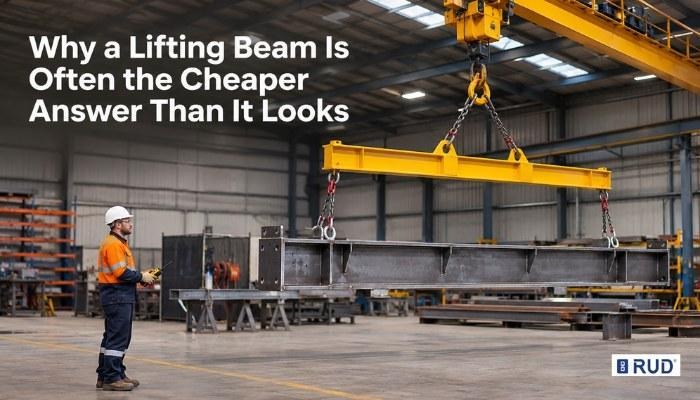
A lifting beam often costs less over time because repeated rigging hire fees can exceed the price of owning one. The expense doesn’t stop at hire charges, either. Sling wear, crane repositioning, and engineering sign-offs can increase the cost of each job, especially when crews repeat the same lift every week.
Still, paying upfront for equipment feels harder to justify than a quick hire fee, especially when the job looks small. At RUD.com.au, we’ve worked alongside crews facing this decision, and we know how difficult it is to compare the costs.
To make the comparison easier, this article uses a weekly lifting job to examine the costs over 12 months. You’ll see how lift frequency affects the total expense and when buying a lifting beam makes financial sense.
Spreader Beams vs. Lifting Beams for Overhead Cranes
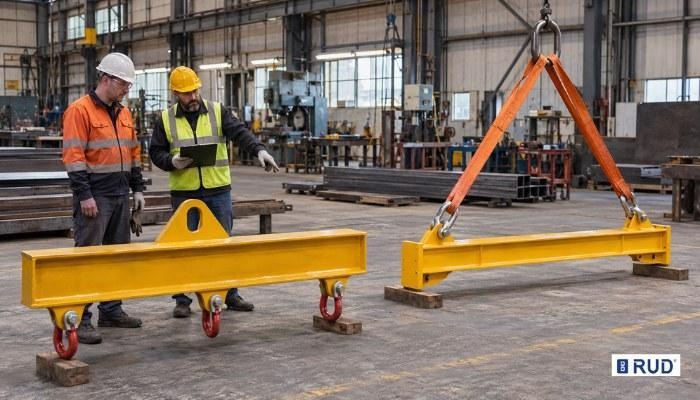
Lifting beams support loads through bending, while spreader beams mainly carry compression forces between their ends. Both work with overhead cranes, but the right choice depends on the load’s size, weight, and how much space you have to work with.
The main difference becomes clearer when you look at how each beam connects to the crane hook.
Lifting Beams Use a Single Lifting Point
A lifting beam connects to the crane hook at one main point, with two or more attachment points underneath. These usually connect to lifting lugs positioned to keep slings vertical on the load itself. The beam carries the load’s weight across its length and passes it to the single hook point.
For your crew, the tricky part is getting the balance right. If the hook doesn’t sit above the load’s centre of gravity, the load could tilt when you lift it.
Spreader Beams Hang From an Upper Sling
A spreader beam works differently. It uses two upper legs connected to the crane hook, with lifting points at each end. This setup works well for wider loads because it helps reduce inward pressure on the load. Remember how we described lifting beams earlier? The main difference here is how the slings support the weight.
Get the choice wrong, though, and your crew may need to stop and adjust the rigging components. Worse, unsuitable lifting gear can put workers at risk of serious injury.
Lifting Beam Costs vs. Renting Equipment for Every Job
Renting a lifting beam means paying a new hire fee every time your crew needs to lift a load. The quote looks small, the job gets done, and you move on. But repeat that same hire every week, and the total cost could exceed the price of a lifting beam within a few months.
From our experience working with plenty of crews, renting rarely saves money when the same lift repeats every week. Any upfront saving soon disappears once you total the hire fees across 12 months.
Owning a lighter, lower-profile lifting device removes those repeat hire fees. You’ll still need to pay for inspections and maintenance, but your crew won’t have to arrange another rental for every lift.
One Weekly Lift and Twelve Months of Wire Rope Sling Hire
Think about a crew doing the same lift every week, typically with a wire rope sling. Over a year, that’s 52 hires, each with a rental fee. If the crew also needs replacement slings or extra equipment, the costs rise further. Look a little closer at each hire, and you’ll see where the money goes:
- Hire Fee Per Lift: Most hire companies charge a few hundred dollars for smaller jobs and over a thousand for heavier lifts. Pay that fee 52 times, and your yearly rental bill could run into tens of thousands of dollars.
- Wire Rope Sling Wear: Each hire includes a sling rope that wears thin with regular use, especially on rougher loads with sharp edges or uneven surfaces. A worn sling wears down the same way a car tyre does, slowly, until it’s no longer safe to trust. Because that wear builds with every lift, most crews replace it two or three times a year.
- Ownership Costs Compared: Now consider what you’d spend if you owned a lifting beam instead. You’ll have the purchase price, regular inspections, and maintenance to cover. But you won’t face another beam rental fee each week.
A standard lifting beam typically costs between $500 and $5,000 depending on capacity. At a few hundred dollars per hire, it can pay for itself within a year of weekly lifts.
The purchase price is only part of the long-term cost. Your crew also needs to check the condition of its lifting gear before every job. WorkSafe Victoria warns about the dangers of falling objects during lifting operations, so damaged equipment needs proper attention before the next lift.
Low Headroom and Crane Design: When Repositioning Adds Costs
Low headroom limits the maximum height a crane hook can lift a load before it runs out of room. Once the hook reaches that limit, the crew may need to adjust the lifting setup before continuing. Do that a few times in one shift, and repositioning alone can eat into most of your working day.
Crane design and lifting height decide how often this happens. A bridge crane with tight clearance between the hook, trolley, and bridge girder reduces the available lifting height, especially for taller loads.
Low headroom makes the problem worse still. It boxes the crane in, leaving little room to clear the load past nearby obstacles. A lifting beam helps here, since its short, vertical slings need less headroom than angled rigging, which means fewer stops to reposition.
Limited clearance carries a safety risk too. WorkSafe Queensland’s crane drop incident alert from 2024 traced one failure back to a load shifting mid-adjustment. That’s a clear reminder to handle loads carefully when space is tight.
The Paperwork Cost Behind Engineering Sign-Off Fees
Improvised rigging setups often need a fresh engineering sign-off on nearly every lift. And each assessment adds engineering fees and can delay lifting until the engineer approves the setup.
Change the setup even slightly, and the process may start over: new paperwork, a fresh wait, another fee. If you’ve ever had a crew ready to lift while the paperwork sits in someone’s inbox, you know how frustrating that wait gets.
That’s one expense a purpose-built lifting beam may reduce. With the right certified equipment and paperwork already in place, crews can safely avoid repeated approvals for the same lift and work more efficiently. For regular jobs, that means less time chasing engineers and more certainty when planning the next lift.
Below-the-Hook Equipment: The Verdict on Owning vs. Hiring
Now you know that for a one-off lift, hiring rigging is often the cheaper call. But when the same lift comes around every week, those rental fees start eating into your budget. At some point, owning a lifting beam may cost less than continuing to hire.
With that in mind, this article walked through headroom limits, wire rope sling wear, crane repositioning, and engineering sign-off fees. Add those costs together across a year, and renting often costs more than buying a below-the-hook lifting beam outright.
So where does that leave you? Our team at RUD Australia will take you through every option that fits your lift frequency and load type. Reach out, and we’ll help you find the right beam for the job.
Read more: Workers’ Compensation for Small Businesses: Coverage, Claims, and Cost Planning