40+ Best Trip Drinks for Road Trips in 2026: Easy & Refreshing Ideas
Build a cleaner, cooler, safer road-trip drink lineup with water, coffee, tea, sparkling drinks, family-friendly picks, homemade options, and practical cooler advice.
The best trip drinks keep you comfortable without making the car messy or the cooler complicated. Whether you’re driving to the beach, mountains, campground, or another state, smart drink choices can make long hours on the road easier.
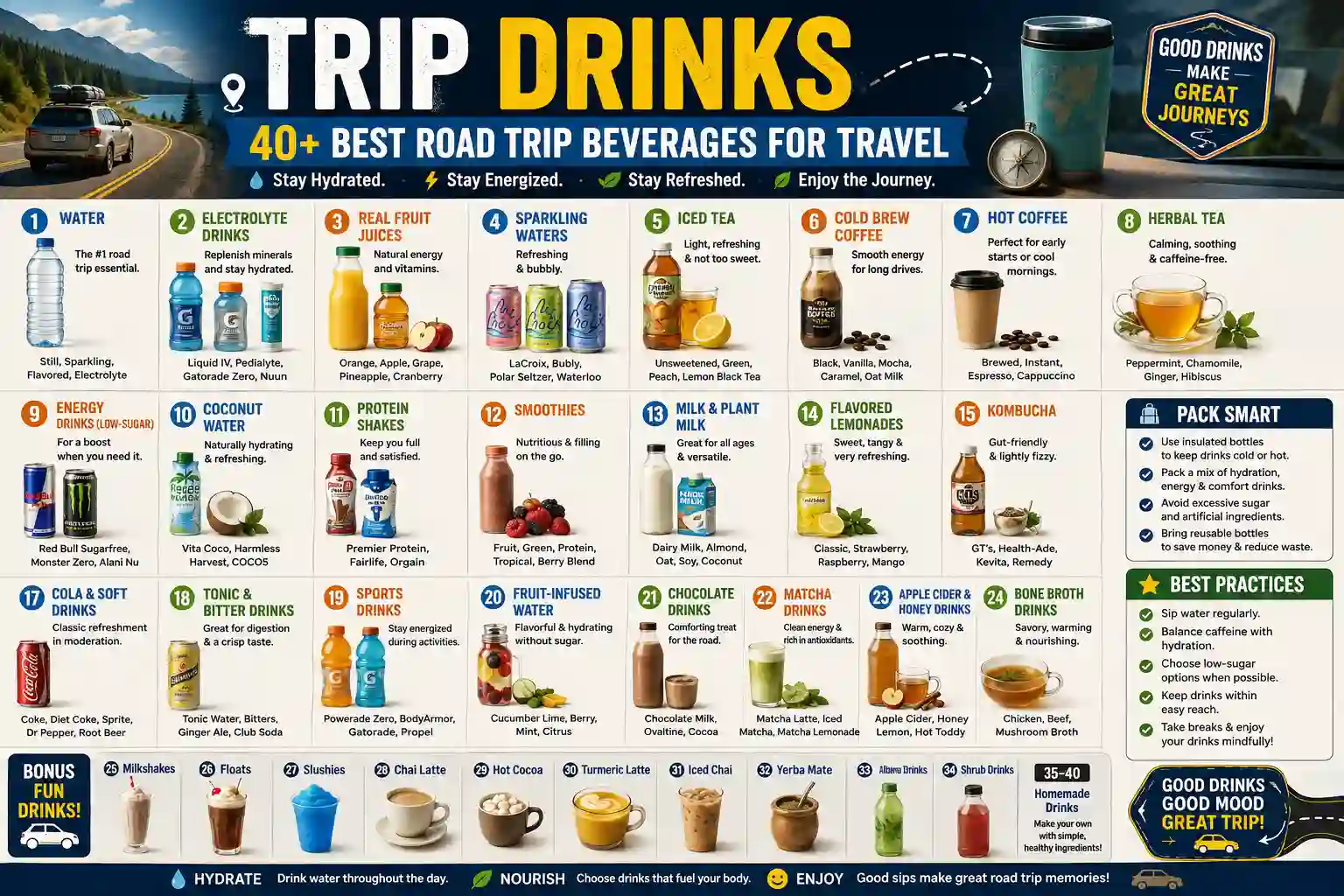
A useful travel drink lineup starts with water, then adds variety based on the weather and passengers. This guide covers coffee, tea, fruit drinks, smoothies, electrolyte drinks, kids’ choices, homemade options, and practical cooler tips.
Quick Answer
The best trip drinks include cold water, flavored water, unsweetened iced tea, coffee, sparkling water, diluted juice, smoothies, and occasional electrolyte drinks. Pack mostly water, then add a few drinks for flavor, caffeine, meals, or special stops.
TL;DR
Make water your main road-trip drink.
Add flavored options so the cooler doesn’t feel boring.
Keep dairy and homemade drinks properly chilled.
Choose caffeine carefully, especially on long driving days.
Pack caffeine-free drinks for children.
Skip alcohol completely when you’re driving.
Best Trip Drinks at a Glance
A good road-trip cooler doesn’t need twenty different beverages. A few carefully chosen options can cover hydration, caffeine, meals, and treats.
Think about weather, drive length, passenger ages, cooler space, and sweetness. This quick comparison helps narrow the choices.
| Drink | Best For | Sweetness | Needs Cooler? |
|---|---|---|---|
| Plain water | Every trip | None | Optional |
| Fruit-infused water | Hot drives | Low | Recommended |
| Sparkling water | Soda alternative | None to low | Optional |
| Electrolyte drink | Hot or active days | Varies | Optional |
| Cold brew coffee | Morning driving | Varies | Usually |
| Unsweetened iced tea | Long afternoon drives | None | Recommended |
| Diluted fruit juice | Families and picnics | Medium | After opening |
| Smoothie | Breakfast travel | Medium | Yes |
| Protein shake | Meal backup | Varies | Depends on package |
| Lemonade | Summer treat | Medium to high | Recommended |
| Hot tea | Cold-weather trips | Low | Insulated bottle |
| Decaf coffee | Evening travel | Varies | Insulated bottle |
The easiest approach is water first, variety second. Sweet drinks, coffee, and specialty beverages work better as extras rather than the entire drink supply.
Water and Flavored Water for Road Trips
Water is the simplest trip drink because it works with almost every meal, snack, temperature, and destination. It also creates fewer sticky spills than soda or juice.
CDC guidance recommends drinking fluids during hot weather and carrying a refillable water bottle. Hot conditions can increase fluid needs, especially when travelers spend time outdoors.
Cold still water: The easiest choice for drivers and passengers.
Lemon water: Add fresh lemon slices for light citrus flavor.
Lime water: Sharper than lemon and great with salty snacks.
Cucumber water: Mild, crisp, and useful for hot-weather travel.
Berry water: Add strawberries or blueberries without making the drink very sweet.
Mint water: Fresh mint adds flavor without syrups or sweeteners.
Unsweetened flavored water: Convenient when homemade infused water isn’t practical.
Reusable bottle water: Easy to refill during longer multi-day trips.
If you add fresh fruit, herbs, or cucumber, treat the drink as a perishable homemade beverage. Keep it chilled and make a fresh batch rather than leaving it in a hot car all day.
Electrolyte Drinks for Hot or Active Travel
Electrolyte drinks can be useful when a trip includes long periods outdoors, hiking, sports, heavy sweating, or extreme heat. Routine driving alone doesn’t automatically require them.
CDC travel guidance notes that electrolyte replacement provides no clear advantage over plain water during mild to moderate exertion. That makes plain water suitable for many ordinary travel days.
Low-sugar electrolyte water: Useful when you want minerals without a very sweet taste.
Electrolyte powder packets: Compact and easy to mix at a rest stop.
Coconut water: Mildly sweet with a distinct tropical flavor.
Diluted sports drink: Mix with water if regular versions taste too strong.
Lemon electrolyte water: A bright option for hot beach or camping trips.
Orange electrolyte drink: Works well after outdoor activities.
Unsweetened electrolyte mix: Good for travelers limiting added sweetness.
Frozen electrolyte bottle: Can help chill a cooler while slowly thawing.
Check individual labels because sugar, sodium, sweeteners, and serving sizes vary widely. People with medical fluid or sodium restrictions should follow their clinician’s advice instead of general travel guidance.
Coffee and Caffeinated Drinks for Long Drives
Coffee is a road-trip classic, especially during early departures and morning drives. Hot coffee, iced coffee, and cold brew all travel well in sealed containers.
Caffeine doesn’t replace sleep or safe driving habits. The FDA cites 400 milligrams of caffeine per day for most adults as an amount not generally associated with negative effects, although individual sensitivity varies.
Black coffee: Simple, unsweetened, and easy to find almost anywhere.
Cold brew: Smooth and convenient for warm-weather travel.
Iced coffee: Great when you prefer milk and a lighter coffee flavor.
Americano: Strong coffee flavor without heavy cream or syrups.
Half-caf coffee: A useful middle ground for caffeine-sensitive travelers.
Decaf coffee: Keeps the road-trip coffee ritual without much caffeine.
Cold brew with milk: Creamier, but it must remain properly chilled.
Homemade iced latte: Easy to prepare before an early departure.
Keep your total caffeine intake in mind when combining coffee with soda, tea, chocolate, or energy drinks. Too much caffeine can cause unpleasant effects, and sensitivity differs from person to person.
Tea Drinks for Long Drives
Tea gives travelers more choices than many people expect. It can be cold, hot, sweet, unsweetened, caffeinated, or caffeine-free.
Unsweetened versions are especially useful when you want flavor without drinking sugary beverages throughout the drive. Use an insulated bottle for hot tea and a cold container for iced versions.
Unsweetened black iced tea: Crisp and easy to pair with road-trip lunches.
Green iced tea: Lighter and less robust than black tea.
Peach iced tea: Fruity and easy to make with fresh peach slices.
Lemon iced tea: Bright, simple, and familiar.
Mint herbal tea: Naturally caffeine-free when made from pure peppermint or spearmint.
Hibiscus tea: Tart, colorful, and good served cold.
Chamomile tea: Better suited to passengers or after reaching your destination.
Hot ginger tea: Warming and easy to carry during winter travel.
Remember that black and green tea contain caffeine unless labeled decaffeinated. Herbal infusions can vary, so check the ingredient list when avoiding caffeine.
Juice and Fruit-Based Trip Drinks
Fruit drinks can add color and flavor to a cooler, but you don’t need huge bottles. Smaller servings are easier to manage and create fewer sticky accidents.
Whole fruit juice can also be mixed with water or sparkling water. That keeps the fruit flavor while producing a lighter drink for longer travel days.
Orange juice: Best with a breakfast stop or early departure.
Apple juice: Mild and familiar for family trips.
Pineapple juice: Sweet and tropical for beach travel.
Cranberry juice blend: Tart enough to pair with savory snacks.
Grape juice: Rich and sweeter than many lighter fruit choices.
Watermelon juice: A fun homemade option for summer drives.
Apple juice spritzer: Mix juice with sparkling water before serving.
Citrus fruit punch: Combine orange, lemon, and water without heavy syrup.
Opened juice and freshly prepared fruit drinks generally need refrigeration. Pack small bottles so you don’t repeatedly warm and chill one large container.
Sparkling Water and Low-Sugar Fizzy Drinks
Carbonation gives a road-trip cooler more variety without requiring heavily sweetened soda. Sparkling water is especially useful for travelers who find plain water boring.
Choose tightly sealed cans or bottles because carbonation can create messy spills inside a moving vehicle. Open fizzy drinks when the road is smooth and the container is upright.
Plain sparkling water: Clean and neutral with meals.
Lime sparkling water: Sharp enough to replace some lemon-lime sodas.
Berry sparkling water: Fruity without needing juice.
Grapefruit sparkling water: Slightly bitter and suited to adult palates.
Orange seltzer: Familiar citrus flavor without heavy sweetness.
Sparkling lemonade: More treat-like than regular sparkling water.
Juice-and-seltzer spritzer: Easy to customize with any favorite juice.
Ginger sparkling drink: Works well with sandwiches and salty snacks.
Keep an unopened backup can in the cooler rather than carrying several opened drinks. Resealable bottles are usually more practical than cans for drivers.
Smoothies and Protein Drinks for Travel
A smoothie can work as more than a beverage when breakfast gets squeezed by an early departure. Protein drinks can serve a similar role during busy travel days.
Berry yogurt smoothie: Creamy, fruity, and useful at breakfast.
Banana oat smoothie: Mild and filling without needing elaborate ingredients.
Mango smoothie: Tropical and naturally thick when frozen mango is used.
Strawberry banana smoothie: Familiar and family-friendly.
Peanut butter banana smoothie: Richer, with a clear peanut allergy consideration.
Coffee protein shake: An adult breakfast option that may contain caffeine.
Shelf-stable protein shake: Convenient when the package doesn’t require chilling before opening.
Vanilla fruit shake: Easy to pair with berries, peaches, or banana.
Always read storage directions on packaged drinks. Once a shelf-stable product is opened, its storage requirements can change.
Best Trip Drinks for Kids and Families
Family road trips work better when drinks are easy to open, resealable, and not overly messy. Small containers also reduce the damage from inevitable back-seat spills.
Cold water: Simple, inexpensive, and easy to refill.
Fruit-infused water: Adds color without needing a heavily sweetened drink.
Small milk carton: Useful with breakfast when kept safely chilled.
Diluted apple juice: Lighter than a full-strength juice serving.
Homemade fruit water: Try strawberry, orange, or cucumber slices.
Caffeine-free herbal iced tea: Choose simple, child-appropriate ingredients.
Fruit smoothie: Pack in a leak-resistant insulated bottle.
Frozen juice pouch: Can thaw gradually inside a properly chilled cooler.
Use spill-resistant reusable bottles whenever possible. Avoid glass containers in the passenger area, where breakage can create a safety problem.
Homemade Trip Drinks Worth Packing
Homemade drinks let you control sweetness, flavors, and portion sizes. They also turn basic ingredients into something more interesting than another convenience-store bottle.
Prepare them the night before so every drink starts fully chilled. Use clean, leak-resistant containers and refrigerate anything made with fresh produce or dairy.
Strawberry lemon water: Combine sliced strawberries, lemon, and cold water.
Cucumber mint water: Crisp and especially good during summer trips.
Light homemade lemonade: Use fresh lemon and sweeten gradually.
Peach iced tea: Steep tea, cool completely, then add sliced peach.
Watermelon cooler: Blend seedless watermelon and serve thoroughly chilled.
Berry spritzer: Mix berry juice with sparkling water when ready to drink.
Cold brew coffee: Brew ahead and dilute to your preferred strength.
Banana berry smoothie: Blend before departure and keep deeply chilled.
Avoid preparing enormous batches unless several passengers will drink them quickly. Smaller bottles stay sealed longer and are easier to fit around ice packs.
Summer Road Trip Drinks
Hot summer drives call for drinks that are cold, simple, and easy to replace. Keep most of the cooler space for water before adding specialty beverages.
CDC guidance emphasizes drinking fluids during hot weather. It also advises considering limits on beverages high in sugar, sodium, caffeine, or alcohol during extreme heat.
Ice-cold water: The foundation of a summer road-trip cooler.
Cucumber lime water: Crisp with a clean citrus finish.
Watermelon water: Fruity without the heaviness of a shake.
Unsweetened iced tea: A classic choice for afternoon travel.
Cold brew coffee: Better suited to moderate servings than constant sipping.
Sparkling citrus water: Fizzy without being syrupy.
Light lemonade: Tart enough to pair with salty picnic foods.
Electrolyte drink: Consider one when the trip includes prolonged heat or strenuous activity.
Don’t rely on a car’s air conditioning to keep perishable drinks safe. A closed vehicle can heat rapidly when parked, so chilled drinks belong in a properly packed cooler.
Cold-Weather and Winter Travel Drinks
Winter trips bring different priorities. Instead of filling an entire cooler with ice, you may want warm drinks in insulated containers plus regular water.
Warm beverages can make rest stops and early departures more pleasant. However, hot drinks should have secure lids to reduce spill and burn risks inside a moving vehicle.
Hot coffee: A classic choice for early winter departures.
Decaf coffee: Better for travelers limiting caffeine later in the day.
Black tea: Strong enough for cold mornings.
Green tea: Lighter than coffee or black tea.
Peppermint tea: Caffeine-free and easy to prepare.
Ginger tea: Spicy, warming, and simple.
Hot cocoa: A sweet passenger treat rather than an everyday hydration drink.
Warm apple drink: Heat apple juice gently with cinnamon before leaving.
Carry plain water even during cold weather. Travelers may simply notice thirst less when temperatures fall.
Budget-Friendly Gas Station Trip Drinks
You don’t need premium specialty beverages at every stop. Most gas stations and travel centers carry enough basics to rebuild a practical drink supply.
Start by checking water and unsweetened drinks before browsing oversized fountain beverages. Buying only what you’ll actually finish also keeps the car cleaner.
Bottled water: Usually the easiest emergency refill.
Unsweetened iced tea: Check the label because similar bottles can contain very different sugar levels.
Plain sparkling water: Useful when you want carbonation without soda.
Small coffee: Easier to manage than the largest available cup.
Low-sugar flavored water: Adds variety without becoming dessert-like.
Single-serving juice: More practical than an oversized bottle.
Shelf-stable shake: Handy when you missed a meal and storage directions permit.
Electrolyte drink: Useful after significant heat or outdoor activity.
Check the caffeine amount and serving size on unfamiliar energy drinks. A large container isn’t always intended to be consumed quickly.
How to Pack a Cooler for Trip Drinks
A cooler works best when drinks enter it already cold. Starting with warm cans forces the ice to cool the beverages before it can maintain their temperature.
Perishable drinks need stricter temperature control. USDA recommends holding cold foods at 40°F or below and packing travel coolers with enough ice or frozen gel packs.
Pre-chill everything: Refrigerate beverages overnight before loading the cooler.
Freeze some water bottles: They can act as temporary cold sources while thawing.
Use plenty of ice packs: Fill empty cooler space where practical.
Separate daily drinks: Keep frequently used bottles near the top.
Limit cooler opening: Repeated opening allows warm air inside.
Keep dairy cold: Milk drinks and homemade smoothies need reliable refrigeration.
Use a cooler thermometer: It helps confirm perishable items remain safely chilled.
Park the cooler away from sunlight: The coolest practical location is preferable.
A separate small cooler for beverages can be useful on longer trips. People tend to open the drink cooler frequently, while perishable foods benefit from staying closed.
Drinks to Limit or Skip While Driving
Some beverages are technically portable but poor choices for drivers. The biggest concerns are alcohol, excessive caffeine, oversized sugary drinks, and containers that distract from driving.
Alcoholic drinks: Save them for after driving has completely ended.
High-caffeine energy drinks: Check total caffeine instead of relying on marketing language.
Huge fountain sodas: Awkward containers increase spill risk.
Unsealed smoothies: Thick drinks can create difficult-to-clean spills.
Very sugary beverages: Better treated as occasional choices than your main fluid source.
Unrefrigerated dairy drinks: Don’t leave them warming inside the car.
Glass bottles: Less practical around children or crowded passenger areas.
Overfilled hot drinks: Leave enough room to reduce splash and burn risks.
How to Build the Right Trip Drink Plan
The best drink plan depends on how long you’re driving and what happens after arrival. A four-hour highway drive needs a different cooler from an all-day beach trip.
Start with enough water for everyone, then add only the drinks serving a clear purpose. Think breakfast, caffeine, children, outdoor activity, meals, or one fun treat.
For short drives: Water plus one optional coffee or flavored drink is usually enough.
For all-day drives: Add water, tea, coffee, and one cooler-friendly alternative.
For summer travel: Increase your emphasis on cold water and reliable cooler storage.
For family trips: Use smaller, resealable, caffeine-free beverages for children.
For outdoor trips: Consider electrolyte options when significant heat or strenuous activity is expected.
For breakfast departures: Add coffee, milk, or a chilled smoothie where appropriate.
For evening drives: Choose water, herbal tea, or decaf instead of piling on caffeine.
For multi-day travel: Refill water and buy fresh perishable drinks as needed.
The goal isn’t to predict every craving before leaving home. A simple, flexible drink setup takes less space and makes restocking much easier.
FAQs
What Are the Best Drinks to Take on a Road Trip?
Start with water, then add sparkling water, unsweetened tea, coffee, or diluted juice based on your passengers.
For hot outdoor travel, an electrolyte drink can also be useful. Keep perishable beverages properly chilled.
What Is the Best Drink for a Long Drive?
Water is the most practical main drink for a long drive because it’s simple and easy to refill. Coffee or tea can be added when an adult wants caffeine.
Don’t use caffeine to push through serious tiredness. Safe driving still requires adequate sleep and breaks.
What Drinks Should I Put in a Road-Trip Cooler?
Pack water, sparkling water, juice, iced tea, cold brew, smoothies, or milk drinks based on your group.
Keep dairy drinks, homemade smoothies, and other perishable beverages at 40°F or below.
Are Electrolyte Drinks Necessary for Road Trips?
Not for most ordinary driving. Plain water is generally suitable for routine travel, while electrolyte drinks become more relevant during prolonged heat or strenuous activity.
Choose based on what you’re doing during the trip rather than assuming every traveler needs extra electrolytes.
What Are Good Road-Trip Drinks for Kids?
Water, milk stored safely, diluted juice, fruit-infused water, and caffeine-free drinks are practical options.
The American Academy of Pediatrics recommends avoiding caffeine for children, so energy drinks shouldn’t be part of a child’s road-trip drink supply.
How Do You Keep Drinks Cold During a Long Road Trip?
Chill drinks before departure and place them in an insulated cooler with plenty of ice or frozen gel packs.
For beverages that require refrigeration, USDA guidance calls for maintaining 40°F or below.
Can Passengers Drink Alcohol During a Road Trip?
It’s safest to keep the vehicle’s road-trip beverages alcohol-free while traveling. The driver should never drink alcohol before or while driving.
Open-container laws can also restrict alcohol possession or consumption by vehicle occupants. Rules can vary, so don’t assume passenger drinking is permitted.
Conclusion
The best trip drinks are easy to pack, easy to sip, and appropriate for the people traveling with you. Build your cooler around water, then add coffee, tea, fruit drinks, sparkling options, or specialty beverages where they make sense.
Keep perishable drinks cold, choose caffeine thoughtfully, and make children’s choices caffeine-free. Before your next drive, prepare a simple drink lineup the night before so everything leaves home cold and ready.