Use up and down arrow keys to resize the meta box pane.
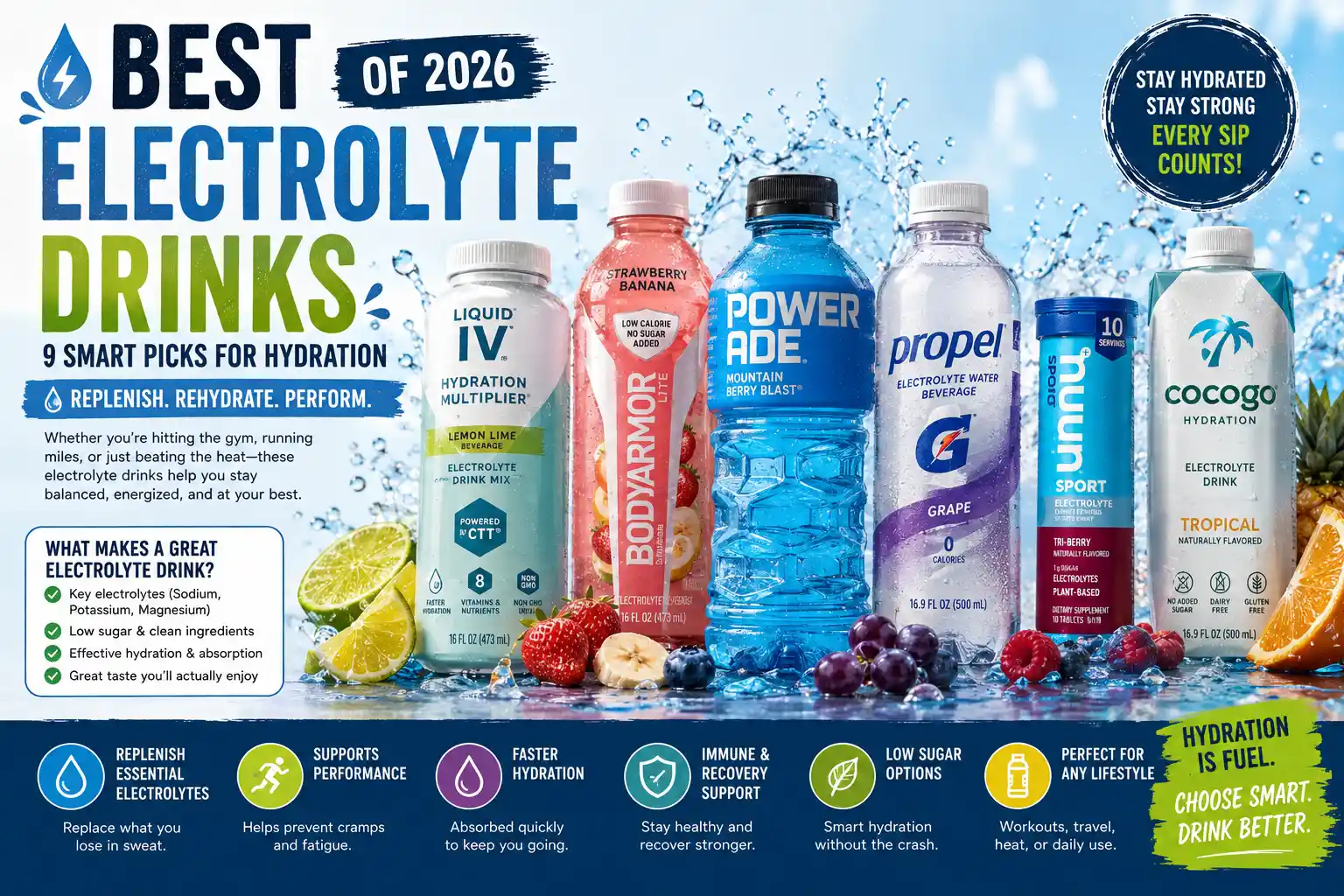
Best Electrolyte Drinks of 2026: Smart Picks for Better Hydration
The best electrolyte drink is not necessarily the product with the longest ingredient list or highest sodium number. It is the drink that matches your activity, sweat loss, diet, health needs, and reason for rehydrating.
A marathon runner may benefit from sodium and carbohydrates. Someone completing a short gym session may need only water. A person losing fluids from diarrhea may require a proper oral rehydration solution, not a fashionable workout powder.
This guide compares the most useful electrolyte drinks by real-world use case. You will find current label details, straightforward pros and cons, and practical guidance for exercise, heat, travel, illness, children, and everyday hydration.
Quick Answer
Liquid I.V. Hydration Multiplier is our best overall pick for active adults because it combines 500 milligrams of sodium, carbohydrates, convenient packets, and broad availability.
Choose Skratch Labs Sport Hydration Mix for long workouts, LMNT for unusually heavy sodium loss, Nuun Sport for a lighter low-sugar formula, and Pedialyte when illness-related fluid loss requires a more appropriate rehydration product.
TL;DR
- Water is enough for most ordinary days and short workouts.
- Liquid I.V. offers the best versatile packet for active adults.
- Skratch Labs combines electrolytes with endurance-friendly carbohydrates.
- LMNT contains very high sodium and is not for everyone.
- Nuun Sport provides moderate sodium with only one gram of sugar.
- Oral rehydration solutions differ from standard sports drinks.
- High-sodium products require extra caution with certain medical conditions.
Best Electrolyte Drinks at a Glance
Electrolyte products vary dramatically. One packet may contain 1,000 milligrams of sodium, while another provides only a small amount intended for light daily drinking.
The table below compares each product by its strongest use case. Sodium and carbohydrate numbers apply to the manufacturer’s stated serving unless otherwise noted.
| Electrolyte Drink | Best For | Sodium | Carbohydrates or Sugar | Format | Main Limitation |
|---|---|---|---|---|---|
| Liquid I.V. Hydration Multiplier | Best overall for active adults | 500 mg | 11 g carbohydrates | Powder packet | Too salty or sweet for some daily users |
| Nuun Sport | Low-sugar workout hydration | 300 mg | 4 g carbs; 1 g sugar | Tablet | Does not provide meaningful exercise fuel |
| Skratch Labs Sport Hydration Mix | Long workouts and endurance sports | 400 mg | 19–20 g carbs | Powder | More sugar than casual users need |
| LMNT | Heavy sweaters needing high sodium | 1,000 mg | Zero sugar | Powder packet | Excessive sodium for many people |
| Gatorlyte Ready-to-Drink | Convenient bottled hydration | 300 mg per 12 oz | 8 g carbs per 12 oz | Bottle | Less portable than powder |
| Pedialyte Sport | Significant post-workout fluid loss | About 490 mg per 12 oz | No more than about 5 g sugar | Bottle or powder | Not necessary after routine exercise |
| Gatorade Endurance Formula | Racing and prolonged competition | 310 mg per 12 oz | 22 g carbs per 12 oz | Bottle or powder | Carbohydrate-heavy for short workouts |
| Skratch Labs Unsweetened | Sugar-free athletic hydration | 400 mg | Zero sugar | Powder | No carbohydrate fuel |
| Coconut Water | Natural potassium-rich hydration | Varies | Natural sugar varies | Bottle or carton | Usually too low in sodium for heavy sweat |
Liquid I.V. lists 500 milligrams of sodium and 11 grams of carbohydrates in its standard Hydration Multiplier. Nuun Sport provides 300 milligrams of sodium, 150 milligrams of potassium, 25 milligrams of magnesium, and one gram of sugar per tablet.
Skratch Labs lists 400 milligrams of sodium and 19–20 grams of carbohydrates per serving. LMNT provides 1,000 milligrams of sodium, 200 milligrams of potassium, and 60 milligrams of magnesium per packet.
Official Gatorade materials list 300 milligrams of sodium and eight grams of carbohydrates per 12 ounces of Gatorlyte, while Endurance Formula provides 310 milligrams of sodium and 22 grams of carbohydrates per 12 ounces.
Pedialyte Sport lists 1,380 milligrams of sodium and no more than 14 grams of sugar per liter. That equals approximately 490 milligrams of sodium and no more than five grams of sugar per 12 ounces.
How We Chose the Best Electrolyte Drinks
A useful comparison must look beyond flavor names, celebrity endorsements, and vague hydration promises. Electrolyte amounts should match the situation in which the drink will be used.
We compared products using current nutrition labels, ingredient lists, preparation requirements, intended use, and guidance from recognized health and sports organizations.
Our Evaluation Criteria
- Sodium content: Sodium is generally the primary electrolyte lost through sweat.
- Carbohydrate content: Carbohydrates can provide fuel during long or intense activity.
- Sugar level: Sugar may serve a purpose during endurance exercise but can be unnecessary during casual use.
- Potassium and magnesium: These minerals add value, although more is not automatically better.
- Serving size: A large sodium number means little without knowing the required water volume.
- Convenience: We considered bottles, packets, tablets, bulk powders, and natural drinks.
- Use-case fit: Products were matched to everyday hydration, exercise, heat, travel, and illness.
- Ingredient transparency: Clearly stated nutrition information received greater weight.
- Safety: We considered excessive sodium, overhydration, caffeine, medications, and medical restrictions.
The National Athletic Trainers’ Association recommends individualized hydration plans rather than one universal fluid prescription. It also warns that drinking more fluid than the body loses can contribute to exercise-associated hyponatremia.
Best Overall Electrolyte Drink: Liquid I.V. Hydration Multiplier
Liquid I.V. Hydration Multiplier earns the best overall position because it offers a practical middle ground between ordinary sports drinks and extremely salty endurance formulas.
Each standard serving contains 500 milligrams of sodium and 11 grams of carbohydrates. Its single-serving packets are convenient for hot days, workouts, road trips, flights, and physically demanding work.
Why It Stands Out
- Substantial sodium: Higher than many conventional sports drinks.
- Portable packaging: Packets fit easily into travel bags and gym kits.
- Carbohydrate support: The standard formula includes glucose-based carbohydrates.
- Broad availability: Commonly found in major U.S. stores and online retailers.
- Multiple options: Standard and sugar-free varieties are available.
Best For
Liquid I.V. works best for active adults who sweat noticeably, travel frequently, exercise in warm conditions, or prefer a stronger-tasting drink.
It may also suit people who struggle to drink enough plain water and find that flavor encourages more consistent fluid intake.
What to Consider
The standard formula is not a calorie-free daily water enhancer. Its sodium and carbohydrate levels may be unnecessary for someone sitting at a desk or completing a light 20-minute workout.
People following sodium restrictions should review the label carefully. Sugar-free varieties remove the sugar but still contain meaningful sodium.
Bottom Line
Choose Liquid I.V. when you want a convenient, versatile electrolyte packet with more sodium than an ordinary sports drink.
Skip it when plain water is meeting your needs or when your healthcare professional has advised you to restrict sodium.
Best Low-Sugar Electrolyte Drink: Nuun Sport
Nuun Sport is a strong option for people who want moderate electrolyte replacement without the sugar load of a traditional sports drink.
Each tablet provides 300 milligrams of sodium, 150 milligrams of potassium, 25 milligrams of magnesium, 13 milligrams of calcium, and one gram of sugar.
Why It Stands Out
The tablet format is compact, simple to store, and less messy than loose powder. One tube can remain in a gym bag, hiking pack, desk drawer, or suitcase.
Its light carbohydrate profile makes more sense for shorter exercise sessions than formulas containing 20 grams or more.
Best For
- Gym workouts
- Recreational sports
- Hiking
- Light-to-moderate sweating
- People limiting added sugar
- Travelers who prefer tablets
What to Consider
Nuun Sport does not supply enough carbohydrate to function as a complete endurance fuel. Long-distance runners and cyclists may need additional carbohydrates from food, gels, chews, or another drink.
The product uses stevia, which some people dislike. Tablets also take time to dissolve and may leave light carbonation.
Bottom Line
Choose Nuun Sport for low-sugar, moderate-sodium hydration during ordinary exercise.
It is less suitable as the only fuel source during a long race or demanding endurance session.
Best Electrolyte Drink for Long Workouts: Skratch Labs Sport Hydration Mix
Skratch Labs Sport Hydration Mix is built for exercise where hydration and fueling overlap. It contains more carbohydrates than low-calorie electrolyte tablets.
A serving provides 400 milligrams of sodium, 19–20 grams of carbohydrates, and approximately 18–19 grams of sugar.
Why It Stands Out
The formula combines sodium with glucose and fructose. That makes it more useful during prolonged exercise than a sugar-free mix that provides minerals but no energy.
Its relatively light fruit flavor may also be easier to tolerate over several hours than an intensely sweet drink.
Best For
- Long-distance running
- Cycling
- Triathlon training
- Extended hiking
- High-intensity team practices
- Sessions lasting longer than one hour
What to Consider
The sugar is functional during prolonged exercise, but it is unnecessary for casual sipping. Someone taking a slow walk or working at a desk does not need 19 grams of sugar from a hydration drink.
Athletes requiring considerably more carbohydrates per hour will still need additional fuel.
Bottom Line
Choose Skratch Labs Sport Hydration Mix when you need both electrolytes and moderate carbohydrate fuel.
It is one of the most logically formulated choices for long, sweaty training sessions.
Best High-Sodium Electrolyte Drink: LMNT
LMNT is the strongest high-sodium option in this comparison. Each packet contains 1,000 milligrams of sodium, 200 milligrams of potassium, and 60 milligrams of magnesium.
That profile can be useful for selected heavy sweaters, endurance athletes, people exercising for hours in heat, or those following a clinician-approved high-sodium plan.
Why It Stands Out
Most ordinary sports drinks contain far less sodium. LMNT makes its high-sodium purpose clear and avoids pretending to be a mild everyday water enhancer.
It also contains zero sugar, making it compatible with low-carbohydrate eating patterns.
Best For
- People with documented high sweat-sodium loss
- Endurance exercise in heat
- Long events producing visible salt marks on clothing
- Low-carbohydrate athletes who obtain fuel elsewhere
- Users specifically advised to increase sodium
Who Should Avoid It
One thousand milligrams of sodium is excessive for many casual users. It should not become an automatic daily drink because social media describes electrolytes as beneficial.
People with kidney disease, heart conditions, high blood pressure, fluid restrictions, or prescribed low-sodium diets should obtain medical guidance before using concentrated electrolyte products.
Bottom Line
Choose LMNT only when your activity and sweat losses justify a very high-sodium formula.
Do not select it merely because a larger electrolyte number appears more powerful.
Best Ready-to-Drink Electrolyte Beverage: Gatorlyte
Gatorlyte offers a more concentrated electrolyte profile than standard Gatorade while remaining available as a convenient bottled drink.
Official Gatorade performance materials list 300 milligrams of sodium and eight grams of carbohydrates per 12-ounce serving.
Why It Stands Out
Ready-to-drink bottles require no measuring, shaking, or waiting for powder to dissolve. That makes Gatorlyte convenient for tournaments, worksites, road trips, outdoor events, and convenience-store purchases.
It provides fewer carbohydrates than Gatorade Endurance while delivering considerably more sodium than plain electrolyte water.
Best For
- Hot outdoor events
- Physically demanding work
- Post-workout convenience
- Team sports
- People who dislike powders
- Situations without clean mixing water
What to Consider
Bottles cost more per serving than many bulk powders. They also take up more storage space and create more packaging waste.
The drink still contains carbohydrates. A zero-sugar version may fit users who need electrolytes but obtain fuel from food.
Bottom Line
Choose Gatorlyte when convenience matters and you want a bottled drink with meaningful electrolyte content.
It is a practical middle option between standard sports drinks and extremely high-sodium packets.
Best for Heavy Post-Workout Fluid Loss: Pedialyte Sport
Pedialyte Sport is formulated with higher sodium and lower sugar than many conventional sports drinks.
Its official formulation contains 1,380 milligrams of sodium and no more than 14 grams of sugar per liter. That equals approximately 490 milligrams of sodium and five grams of sugar per 12 ounces.
Why It Stands Out
The formula provides five electrolytes and substantially more sodium than many familiar workout beverages.
It can be useful after prolonged exercise, intense sweating, outdoor work, or other situations involving significant fluid loss.
Best For
- Long training sessions
- Hot-weather sports
- Physically demanding outdoor work
- Heavy sweaters
- Post-exercise rehydration when food intake is delayed
What to Consider
Pedialyte Sport is not required after every workout. Water and a normal meal can replace fluids and minerals after many ordinary exercise sessions.
Pedialyte products intended for gastrointestinal illness should also not be confused with general sports marketing. Different situations may require different formulas.
Bottom Line
Choose Pedialyte Sport after substantial sweating when a higher-sodium, lower-sugar ready-to-drink option makes sense.
For significant illness-related dehydration, use the appropriate oral rehydration product and follow medical guidance.
Best Electrolyte Drink for Racing: Gatorade Endurance Formula
Gatorade Endurance Formula is designed for prolonged training and competition rather than casual daily hydration.
Per 12 ounces, it provides 310 milligrams of sodium, 140 milligrams of potassium, and approximately 22 grams of carbohydrates.
Why It Stands Out
The formula supplies both electrolytes and carbohydrate energy. It is also commonly used at organized races, making it useful for athletes who want to train with the same beverage available on the course.
Race-day familiarity matters. Trying a new drink during competition can result in flavor fatigue or digestive discomfort.
Best For
- Marathons
- Half-marathons
- Long cycling events
- Triathlons
- Extended team competitions
- Athletes practicing a race-day fueling strategy
What to Consider
Twenty-two grams of carbohydrates per 12 ounces is unnecessary for short or low-intensity exercise.
Endurance athletes must also calculate total carbohydrates from gels, chews, food, and drinks. Consuming several fuel sources without a plan may upset the stomach.
Bottom Line
Choose Gatorade Endurance Formula when you need an established race drink containing meaningful sodium and carbohydrates.
Practice with it during training rather than introducing it for the first time on race day.
Best Sugar-Free Workout Mix: Skratch Labs Unsweetened
Skratch Labs Unsweetened Hydration Sport Drink Mix provides the brand’s electrolyte profile without added sugar or non-nutritive sweeteners.
It supplies 400 milligrams of sodium plus potassium, calcium, and magnesium, while containing no sugar.
Why It Stands Out
Many sugar-free products depend on stevia, sucralose, or other sweeteners. This formula suits users who prefer a lighter taste without sweetness.
It also allows athletes to separate hydration from fueling. They can obtain carbohydrates from food or sports nutrition products while controlling sodium through the drink.
Best For
- Athletes who dislike sweet drinks
- Short-to-moderate workouts
- Low-carbohydrate eating plans
- Long sessions where fuel comes from food or gels
- People sensitive to artificial or alternative sweeteners
What to Consider
Sugar-free does not automatically mean better. During extended exercise, carbohydrates can support performance and maintain blood glucose.
An unsweetened drink therefore needs to fit into a broader fueling plan.
Bottom Line
Choose Skratch Labs Unsweetened when you want meaningful sodium without sugar, calories, or a strongly sweet flavor.
Do not mistake it for a complete endurance fuel.
Best Natural Electrolyte Drink: Coconut Water With Salty Food
Coconut water naturally provides potassium and smaller amounts of other minerals. It can be a pleasant option after light activity or during an ordinary warm day.
However, coconut water is generally not sodium-rich enough to replace substantial salty sweat by itself. Cleveland Clinic identifies it as potassium-rich while cautioning that excessive electrolyte intake can still create problems.
The Smarter Natural Combination
Pair coconut water with a sodium-containing food when meaningful sweat replacement is needed.
- Coconut water with a turkey sandwich
- Coconut water with salted pretzels
- Coconut water with soup
- Coconut water with eggs and toast
- Coconut water with rice and salted beans
- Coconut water with yogurt and a normal meal
Other Food-Based Electrolyte Drinks
- Milk: Provides fluid, potassium, calcium, sodium, carbohydrates, and protein.
- Chocolate milk: Adds more carbohydrates for post-workout recovery.
- Broth: Supplies water and sodium in a warm, savory format.
- Fruit smoothie: Combines fluids, potassium-rich fruit, dairy, and carbohydrates.
- Diluted fruit juice: Provides fluid and carbohydrate, but usually little sodium.
Bottom Line
Choose coconut water for light hydration and potassium, not as a universal replacement for a balanced sports drink.
For heavy sweating, pair it with food containing sodium or choose a more suitable formulated product.
How to Choose the Right Electrolyte Drink
The front label rarely tells you enough. Words such as advanced hydration, rapid hydration, and complete electrolytes do not reveal whether the drink fits your needs.
Turn the package around and compare the nutrition panel, ingredients, serving size, and required water volume.
Check Sodium First
Sodium is usually the most important number for sweat replacement. A person who barely sweats does not need the same amount as an endurance athlete finishing with salt marks on a shirt.
| Sodium per Serving | Typical Use |
|---|---|
| Below 200 mg | Light daily flavoring or mild activity |
| 200–400 mg | Ordinary workouts and moderate sweating |
| 400–700 mg | Longer activity, heat, or heavier sweating |
| 800–1,000+ mg | Specialized high-sodium needs |
These are comparison ranges, not medical dosing instructions. Sweat rate, serving volume, food intake, environment, and health conditions change individual needs.
Decide Whether You Need Carbohydrates
For activity lasting less than about one hour, water often performs as well as a carbohydrate-electrolyte drink.
For longer or more intense exercise, adding carbohydrates and electrolytes may support fluid balance and performance. The National Athletic Trainers’ Association notes that people exercising for longer than one hour may benefit from carbohydrates, electrolytes, or both.
Review Sweeteners
Common sweeteners include:
- Cane sugar
- Dextrose or glucose
- Fructose
- Stevia
- Monk fruit
- Sucralose
- Acesulfame potassium
- Allulose
Sugar can provide useful exercise fuel. Alternative sweeteners lower carbohydrate content but may cause an aftertaste or digestive discomfort for some users.
Check for Caffeine
An electrolyte drink is not automatically an energy drink. Some products add caffeine, while others do not.
Read the label carefully, especially when buying products for children, evening workouts, pregnancy, or people sensitive to stimulants.
Measure the Water Correctly
Mixing one packet into less water than directed creates a more concentrated beverage. That changes its sodium, carbohydrate, sweetness, and particle concentration.
Follow the manufacturer’s preparation instructions unless a qualified sports professional has created a different plan.
When Water Is Better Than an Electrolyte Drink
Electrolyte marketing often makes plain water seem inadequate. For most healthy people during normal daily life, that message is misleading.
People eating a varied diet generally obtain sodium, potassium, magnesium, and calcium through food. Their bodies regulate these minerals without requiring a daily powder.
Water Is Usually Enough For
- Desk work
- Short walks
- Light household activity
- Normal meals
- Mild weather
- Workouts lasting less than one hour
- Exercise without heavy sweating
- Children’s routine play
- Casual hydration throughout the day
NIOSH advises workers performing moderate activity in heat for less than two hours to drink water regularly. Balanced sports drinks become more relevant when sweating continues for several hours.
Electrolytes May Be More Useful During
- Prolonged endurance exercise
- Several hours of sweating
- Hot and humid outdoor work
- High-altitude activity
- Significant vomiting or diarrhea
- Clinician-directed fluid replacement
- Heavy sweat loss with visible salt residue
More Fluid Is Not Always Better
Overdrinking can be dangerous. Exercise-associated hyponatremia can occur when someone consumes more fluid than they lose and dilutes blood sodium.
Athletes should avoid gaining weight during exercise from excessive fluid consumption. Personalized sweat-rate calculations provide better guidance than forcing a fixed amount every hour.
Electrolyte Drinks for Illness and Dehydration
Vomiting and diarrhea can remove both water and electrolytes. In that situation, the goal differs from fueling a workout.
A commercial oral rehydration solution contains glucose and electrolytes in a balance intended to promote fluid absorption. It should not be treated as identical to a standard sports drink.
Better Choices for Illness-Related Fluid Loss
- Commercial oral rehydration solution
- Pedialyte or an equivalent appropriate product
- Broth
- Water in small, tolerable amounts
- Clinician-recommended fluids
- Breast milk or formula for infants, following medical advice
NIDDK recommends replacing lost fluids and electrolytes during diarrhea. It notes that oral rehydration solutions contain glucose and electrolytes, while severe dehydration may require intravenous fluids and hospital treatment.
Seek Medical Help When
- Fluids cannot be kept down
- Urination becomes very limited
- Confusion or fainting develops
- Symptoms are severe or persistent
- Blood appears in vomit or stool
- An infant, older adult, or medically vulnerable person is affected
- Severe dehydration is suspected
People with diabetes, kidney disease, weakened immunity, or other health conditions should discuss oral rehydration solutions with a healthcare professional.
Electrolyte Drinks for Kids and Teens
Water and milk should remain the primary drinks for children. Sports drinks should not become routine lunchbox or household beverages.
The American Academy of Pediatrics advises that children may need electrolyte-supplemented drinks when vigorous exercise extends beyond one hour or produces heavy sweating.
Water Is Usually Best For
- School
- Meals
- Playground activity
- Short practices
- Ordinary summer play
- Recreational sports
- Routine daily hydration
A Sports Drink May Be Reasonable During
- Tournaments lasting several hours
- Vigorous exercise exceeding one hour
- Intense activity in significant heat
- Situations supervised by coaches, parents, or medical professionals
Avoid Energy Drinks
Energy drinks and sports drinks are not the same. Energy drinks may contain substantial caffeine and other stimulants.
Check labels carefully because packaging can make both categories look similar.
Who Should Be Careful With Electrolyte Drinks
Electrolyte products contain biologically active minerals. They should not be treated as flavored water when sodium or potassium levels are high.
Extra caution is appropriate when a person has a condition or medication that affects fluid and mineral balance.
Speak With a Healthcare Professional If You Have
- Kidney disease
- Heart failure or another heart condition
- High blood pressure requiring sodium restriction
- Diabetes
- Liver disease
- Adrenal disorders
- A prescribed fluid restriction
- A low-sodium or low-potassium diet
Review Your Medications
Diuretics, blood pressure medicines, kidney medicines, and potassium-altering drugs can affect electrolyte balance.
Do not combine several hydration powders, mineral supplements, pre-workouts, and fortified beverages without checking their total amounts.
Do Not Diagnose an Imbalance From Symptoms Alone
Fatigue, headaches, muscle cramps, dizziness, and nausea have many possible causes. They do not prove that someone needs more sodium, potassium, or magnesium.
An electrolyte imbalance may require blood testing and medical evaluation rather than a stronger drink mix.
Related Hydration Guides
Frequently Asked Questions
What is the best electrolyte drink overall?
Liquid I.V. Hydration Multiplier is the most versatile overall choice for active adults because it provides 500 milligrams of sodium, carbohydrates, portable packaging, and broad availability.
However, Nuun Sport may be better for low-sugar use, while Skratch Labs better suits endurance exercise.
What is the healthiest electrolyte drink?
There is no universally healthiest product. The best choice provides enough sodium and carbohydrates for your situation without unnecessary extras.
For routine hydration, water may be healthier and more appropriate than any electrolyte supplement.
Which electrolyte drink has the most sodium?
Among the products compared here, LMNT contains the most sodium at 1,000 milligrams per packet.
That amount may benefit selected heavy sweaters, but it is excessive for many casual users.
Are sugar-free electrolyte drinks better?
Sugar-free products work well when you need minerals but not exercise fuel. They can suit short workouts, low-carbohydrate diets, and people limiting added sugar.
Sugar-containing drinks may be more appropriate during long exercise because carbohydrates provide energy. The correct choice depends on the activity.
Is it safe to drink electrolytes every day?
A moderate electrolyte drink can fit some people’s daily routines, but most healthy adults do not need one every day.
Regularly consuming high-sodium products without significant sweat loss may add unnecessary sodium. Water and a balanced diet cover ordinary hydration needs for most people.
Is coconut water better than a sports drink?
Coconut water is naturally rich in potassium and can work after light activity. It usually contains less sodium than sports drinks designed for substantial sweat replacement.
A sports drink may therefore be more appropriate during long, hot, or demanding exercise.
What should I drink after a one-hour workout?
Water is usually sufficient after a moderate one-hour workout, especially when you will soon eat a normal meal.
Choose an electrolyte drink when the session was unusually hot, intense, or sweaty.
Can electrolyte drinks help with a hangover?
Alcohol can contribute to fluid loss, but electrolyte drinks do not cure a hangover or reverse alcohol’s effects.
Water, food, rest, and avoiding more alcohol are more important. Seek medical help for confusion, breathing problems, inability to wake, or suspected alcohol poisoning.
Can you consume too many electrolytes?
Yes. Excessive sodium, potassium, magnesium, or fluid intake can create health problems.
Risk is greater when someone uses multiple supplements or has kidney, heart, blood pressure, or medication-related concerns.
Is an electrolyte drink the same as an oral rehydration solution?
No. A sports drink is generally designed for exercise, while an oral rehydration solution uses a specific glucose-electrolyte balance for fluid loss such as diarrhea or vomiting.
For meaningful illness-related dehydration, use an appropriate oral rehydration product and seek medical guidance when needed.
Conclusion
The best electrolyte drinks of 2026 serve different purposes. Liquid I.V. is the strongest versatile option, Nuun Sport suits low-sugar hydration, Skratch Labs supports endurance exercise, and LMNT addresses specialized high-sodium needs.
Do not choose a drink by chasing the largest electrolyte number. Start with your activity duration, sweat level, environment, diet, and medical needs.
For most ordinary days, plain water and a balanced meal remain the smartest hydration strategy. Use electrolyte products when they solve a specific problem, not because marketing suggests every water bottle needs a packet.