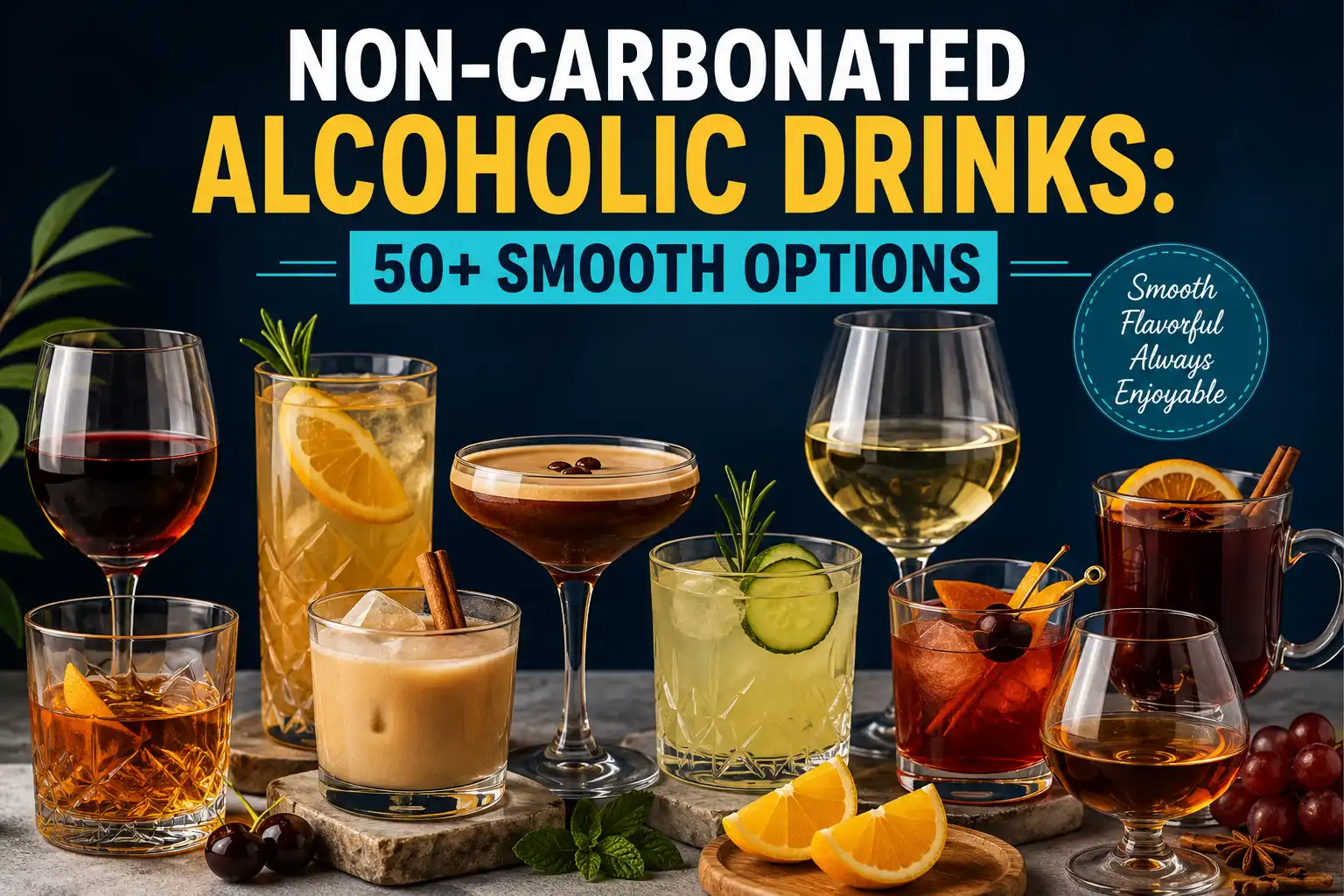
Explore the world of non-carbonated alcoholic drinks, including still beverage categories, vodka waters, hard teas, wine, classic cocktail styles, canned options, label-reading tips, and the differences between still drinks and hard seltzers.
If you want non-carbonated alcoholic drinks, you have choices beyond flat beer or wine. The category includes still vodka waters, hard teas, canned cocktails, wine, spirit-forward classics, and other beverage styles.
This guide focuses on drinks that do not rely on carbonation, with attention to current U.S. ready-to-drink categories and practical beverage information. You’ll find options and information relevant to summer, parties, brunch, relaxing at home, and people who simply dislike fizzy drinks.
What Are Non-Carbonated Alcoholic Drinks?
Non-carbonated alcoholic drinks are beverages containing alcohol without intentional carbonation or noticeable bubbles. They can be served cold, over ice, at room temperature, or warm depending on the beverage.
The category includes both ready-to-drink beverages and homemade cocktail categories. Still vodka waters, hard iced tea, wine, Martinis, Old Fashioneds, Margaritas, and many spirit-forward drinks can fall within the broad category.
Important Distinction
Non-carbonated does not mean low-alcohol. A still drink can contain considerably more alcohol than another beverage, depending on its formulation and serving size.
Still Vodka Water
Light, water-based vodka beverage styles that are designed without sparkling bubbles.
Hard Iced Tea
Tea-based alcoholic beverages that may be smooth and still, depending on the product.
Wine
Still wine does not have the sparkling characteristics associated with sparkling wine.
Classic Cocktails
Many traditional cocktail categories do not require carbonated mixers.
Fruit Drinks
Fruit juice can provide flavor, sweetness, color, and body without carbonation.
Warm Drinks
Some traditional warm alcoholic beverage categories are naturally non-carbonated.
Best Non-Carbonated Alcoholic Drinks You Can Buy
The fastest way to find a still alcoholic beverage is to look beyond traditional hard seltzers. The U.S. market includes vodka waters, hard teas, canned cocktails, still wine, and other beverage categories.
Check the Current Package
Product formulas and availability can change. A product marketed as a tea, refresher, lemonade, or cocktail is not automatically non-carbonated. Check the current package before making a choice.
Mom Water is an example of a product marketed as non-carbonated vodka water. The product information referenced in this article lists 4.5% ABV, 90 calories, zero sugar, and zero carbohydrates per 12-ounce can.
High Noon Vodka Iced Tea has also entered the hard-tea category. The product was launched as a non-carbonated vodka-and-iced-tea beverage at 4.5% ABV and 90 calories per 12-ounce can, with flavors including original, peach, lemon, and raspberry reported at launch.
Best Non-Carbonated Vodka Drinks
Vodka is one of the easiest spirits to associate with a still beverage format. Its relatively neutral profile allows fruit, tea, coffee, herbs, citrus, and water-based ingredients to take the lead.
Choosing a Vodka-Based Category
Still vodka water can appeal to people looking for a less sweet beverage profile, while vodka iced tea can provide more flavor without relying on soda or sparkling water.
Best Non-Carbonated Tequila Drinks
Tequila does not require soda to create a complete flavor profile. Lime, fruit, agave, herbs, and fresh juices can provide acidity and flavor without carbonation.
Blanco tequila is often associated with bright flavor profiles, while reposado tequila can bring additional vanilla, oak, and depth.
Best Non-Carbonated Rum Drinks
Rum works particularly well with lime, pineapple, coconut, orange, mango, and tropical fruit. White rum is associated with brighter fruit profiles, while aged rum can contribute richer vanilla, caramel, and oak characteristics.
Best Non-Carbonated Whiskey Drinks
Whiskey gives still beverage categories a deeper flavor profile than many neutral spirits. Bourbon commonly brings sweeter vanilla and caramel notes, while rye can feel spicier and drier.
Old Fashioned
A classic whiskey-based cocktail category that does not rely on carbonation.
Manhattan
A richer, spirit-forward whiskey cocktail category.
Boulevardier
A whiskey-based category combining whiskey with bitter and fortified-wine flavors.
Whiskey Sour
A citrus-driven whiskey cocktail category without a carbonated mixer.
Gold Rush
A bourbon category associated with lemon and honey flavors.
Fruit Whiskey Drinks
Whiskey can pair with peach, apple, cranberry, and other fruit flavors.
Whiskey Flavor Direction
Spirit-forward categories emphasize the whiskey itself, while citrus-based categories create a brighter and more refreshing flavor profile.
Best Non-Carbonated Gin Drinks
Gin offers botanical complexity, making it useful when you want a flavorful drink without bubbles. Citrus, cucumber, berries, herbs, and floral ingredients can complement gin without tonic water.
Best Non-Carbonated Hard Teas
Hard tea is one of the most useful categories for people who dislike carbonation. Tea provides flavor and structure without necessarily needing sparkling water.
The category has expanded beyond basic malt-based products, with vodka-based iced teas providing another product format.
⚠️ Hard Tea Is Not Automatically Still
Some alcoholic teas are carbonated while others are not. Always check the product package and current manufacturer information.
Best Non-Carbonated Hard Lemonades
Hard lemonade is another useful category, but carbonation can vary significantly between products.
Best Non-Carbonated Fruit Cocktails
Fruit is especially useful when you want to avoid soda. Juice can provide sweetness, acidity, color, and body in a single ingredient.
The balance between sweet fruit and tart ingredients can strongly influence the overall flavor profile.
How Fruit Changes Flavor
Sweeter fruit ingredients can create a heavier profile, while fresh citrus can add acidity and contrast. Still water or unsweetened tea can also change the texture and sweetness of a fruit-based beverage.
Best Low-Sugar Non-Carbonated Alcoholic Drinks
Low-sugar does not automatically mean low-calorie or low-alcohol. Always check the current nutrition label and ABV before comparing products.
Homemade beverage categories can offer more control over added sweeteners, but individual ingredients still determine the final nutritional profile.
Current product information for Mom Water lists zero sugar and zero carbohydrates alongside 90 calories per 12-ounce can. This is a product-specific fact and should not be generalized to all vodka-water products.
Best Non-Carbonated Alcoholic Drinks for Summer
Summer beverages do not need bubbles to feel refreshing. Cold temperatures, citrus, fruit, tea, and ice can create a lighter sensory experience.
Outdoor Storage Reminder
Fruit juices, dairy-based mixers, and other perishable ingredients should be kept appropriately cold and should not be left unrefrigerated for extended periods.
Best Non-Carbonated Alcoholic Drinks for Winter
Winter is a natural fit for still beverage categories. Whiskey, dark rum, brandy, coffee, spices, and warm citrus can create substantial flavor without carbonation.
Best Non-Carbonated Drinks for Brunch
Brunch provides room for tea, coffee, juice, wine, and lighter spirit-based categories.
Best Non-Carbonated Party Drinks
For gatherings, beverage categories are easier to manage when they are clearly identified and when guests can understand the ingredients and alcohol content.
Better Party Organization
A clearly labeled beverage station can make it easier for guests to identify ingredients, alcohol content, and non-alcoholic alternatives.
- Clearly identify each beverage.
- Provide still mixers separately.
- Offer fresh citrus and other garnishes.
- Provide plenty of water.
- Keep perishable ingredients appropriately chilled.
- Clearly distinguish alcoholic and non-alcoholic beverages.
Non-Carbonated Alcoholic Drinks vs. Hard Seltzers
The biggest difference between these categories is carbonation. Hard seltzers are generally designed around sparkling texture, while still beverages remove that sensation.
| Feature | Non-Carbonated Drinks | Hard Seltzers |
|---|---|---|
| Bubbles | None or negligible | Carbonated |
| Mouthfeel | Still and smooth | Fizzy and crisp |
| Common Bases | Vodka, spirits, tea, wine, juice | Often fermented alcohol bases with sparkling water |
| Popular Formats | Vodka water, tea, wine, cocktails | Flavored sparkling alcoholic beverages |
| Sweetness | Varies widely | Usually varies from light to moderate |
| Best For | People avoiding carbonation | People who enjoy fizzy beverages |
Important Comparison
Neither category is automatically lower in alcohol, sugar, or calories. Compare the actual product label rather than judging by beverage style.
How to Choose a Non-Carbonated Alcoholic Drink
A useful way to compare still beverages is to start with mouthfeel, then consider flavor profile, ingredients, alcohol content, and nutritional information.
Looking for Something Light?
Explore still water-based or tea-based beverage categories.
Want Something Fruity?
Look at fruit-forward beverage categories involving citrus, berries, tropical fruit, or stone fruit.
Prefer Dry Flavors?
Consider dry wine, unsweetened tea-based options, or spirit-forward categories.
Want Citrus?
Margarita, Gimlet, and Whiskey Sour-style categories are examples of citrus-forward drinks.
Want Something Rich?
Explore spirit-forward, coffee-based, or creamy beverage categories.
Want Tropical Flavors?
Rum, pineapple, mango, coconut, and tropical fruit are common combinations.
Looking for Brunch?
Tea, coffee, juice, wine, and tomato-based categories offer several directions.
Want a Winter Profile?
Whiskey, brandy, rum, coffee, spices, and warm citrus are common choices.
How to Tell If an Alcoholic Drink Is Carbonated
Don’t rely on the drink’s name alone. “Refresher,” “tea,” “lemonade,” and “cocktail” do not necessarily tell you whether a product contains carbonation.
Terms That Indicate Carbonation
Terms That May Indicate a Still Product
Common Carbonated Ingredients
- Club soda
- Sparkling water
- Tonic water
- Ginger beer
- Champagne
- Prosecco
- Sparkling wine
- Carbonated mixers
⚠️ Always Check Current Information
Product formulas and packaging can change. Check the current package or manufacturer information rather than relying on an old product label or product photograph.
Alcohol Content and Standard Drinks
A beverage without carbonation can still contain substantial alcohol. Carbonation has nothing to do with ABV.
In the United States, NIAAA defines a standard drink as approximately 0.6 fluid ounces, or 14 grams, of pure alcohol. A common comparison is 12 ounces of beer at about 5% ABV, 5 ounces of table wine at about 12% ABV, or 1.5 ounces of distilled spirits at about 40% ABV.
What to Check on a Label
ABV
Alcohol by volume indicates the concentration of alcohol.
Container Size
A larger container may contain more total alcohol.
Servings
Check how many servings are represented by the package.
Calories
Calorie content can vary substantially between products.
Sugar
Review current nutrition information instead of assuming a product is low-sugar.
Caffeine
Tea- and coffee-based products may contain caffeine.
Don’t Judge Strength by Taste
A beverage can taste light while still containing alcohol. Always use the current ABV and serving information when comparing products.
Non-Carbonated Beverage Formulation Concepts
Many non-carbonated beverage categories can be understood through the relationship between a base ingredient, an acidic component, sweetness, dilution, and flavoring.
Spirit
Vodka, gin, rum, tequila, or whiskey can provide the primary alcoholic base in cocktail categories.
Citrus
Lemon and lime can contribute acidity and balance in many still beverage categories.
Fruit or Tea
Fruit juices, tea, coffee, herbs, and spices can provide additional flavor and character.
Still Water
Still water can provide dilution without introducing carbonation.
How Non-Carbonated Drinks Differ in Texture
Still beverages do not receive the texture and sensation created by dissolved carbon dioxide. As a result, temperature, ice, glassware, ingredients, and dilution can have a greater influence on the overall drinking experience.
Temperature
Chilled products can feel lighter and more refreshing, while warm categories create a different sensory experience.
Ice
Ice can affect both temperature and dilution in still beverages.
Glassware
Glass shape can influence aroma and presentation even when carbonation is absent.
Storage, Ingredients, and Allergy Considerations
Storage depends heavily on the ingredients. Commercial canned beverages should follow the package storage instructions, while homemade beverages containing fresh ingredients generally require appropriate refrigeration.
Dairy, cream, fresh juice, and cut fruit are examples of ingredients that require particular attention to storage and temperature.
- Refrigerate opened canned beverages when appropriate.
- Keep homemade juice mixtures chilled.
- Store cream-based beverage mixtures appropriately.
- Add delicate garnishes shortly before serving.
- Do not assume a vodka-based product is allergen-free.
- Check current labels for flavored products.
- Check caffeine when using tea or coffee.
- Review current labels because formulas can change.
⚠️ Allergy & Ingredient Reminder
Common ingredient considerations can include dairy, nuts, coconut, citrus, eggs, gluten-related ingredients, and caffeine.
Always check the current ingredient list for the specific product, particularly when serving someone with allergies or dietary restrictions.
Frequently Asked Questions
Common examples include still vodka water, hard iced tea, still wine, Martinis, Old Fashioneds, Margaritas, Daiquiris, and Whiskey Sour-style drinks. The appropriate category depends on flavor preferences and the product’s current formulation.
Many classic cocktail categories contain no carbonation, including Martinis, Old Fashioneds, Manhattans, Daiquiris, Margaritas, and Whiskey Sours. Still wine, certain hard teas, vodka waters, and some canned cocktails may also be non-carbonated.
Mom Water is marketed as a non-carbonated vodka water. Product information referenced in this article lists 4.5% ABV, 90 calories, zero sugar, and zero carbohydrates per 12-ounce can.
The brand also offers a non-carbonated vodka-and-tea line known as Bes-Teas.
Some are and some aren’t. Hard tea is a category rather than a guarantee of carbonation. Always check the product packaging.
High Noon Vodka Iced Tea was launched specifically as a non-carbonated hard tea at 4.5% ABV.
Not necessarily. Removing carbonation does not automatically reduce alcohol, sugar, calories, or other nutritional factors.
Compare the current label for ABV, calories, carbohydrates, sugar, serving size, and ingredients.
They can be, but carbonation does not determine alcohol strength. Compare ABV and serving size instead.
Still vodka water, hard iced tea, traditional cocktail categories, still wine, and other non-sparkling beverage styles are examples to investigate.
If you also prefer less sweetness, look for unsweetened tea-based products, dry wine, or products specifically labeled still or non-carbonated.
Often, a cocktail category can be reformulated using a still ingredient, but the appropriate substitution depends on the original recipe. Carbonated mixers can contribute more than bubbles, including dilution and acidity.
Conclusion
The best non-carbonated alcoholic drinks range across still vodka waters, hard teas, classic cocktail categories, still wine, fruit-based beverages, and other non-sparkling formats. You do not need carbonation for a beverage to have a distinctive flavor profile.
When comparing products, start with the experience you want — light and still, dry, fruity, spirit-forward, creamy, tea-based, or warm. Then check the current ABV, serving size, ingredients, nutrition information, and carbonation details before choosing a product.
Most importantly, don’t assume that terms such as “tea,” “lemonade,” “refresher,” or “cocktail” automatically mean a beverage is still. The package and current manufacturer information are the best sources for confirming carbonation status.
Read More:
What Can I Drink After a Tooth Extraction
100 Fruit Drink Recipes: Juices, Smoothies & Mocktails
16 Best Non-Alcoholic After Dinner Drinks for Any Evening
Best Places for Non-Alcoholic Drinks in Las Vegas: 2026 Guide
Bob Marley Mocktail: Easy Non-Alcoholic Layered Drink
Liquid Maria Juana Drink: Easy Tropical Cocktail Recipe
Gasolina Drink: Flavors, ABV, Ingredients & More