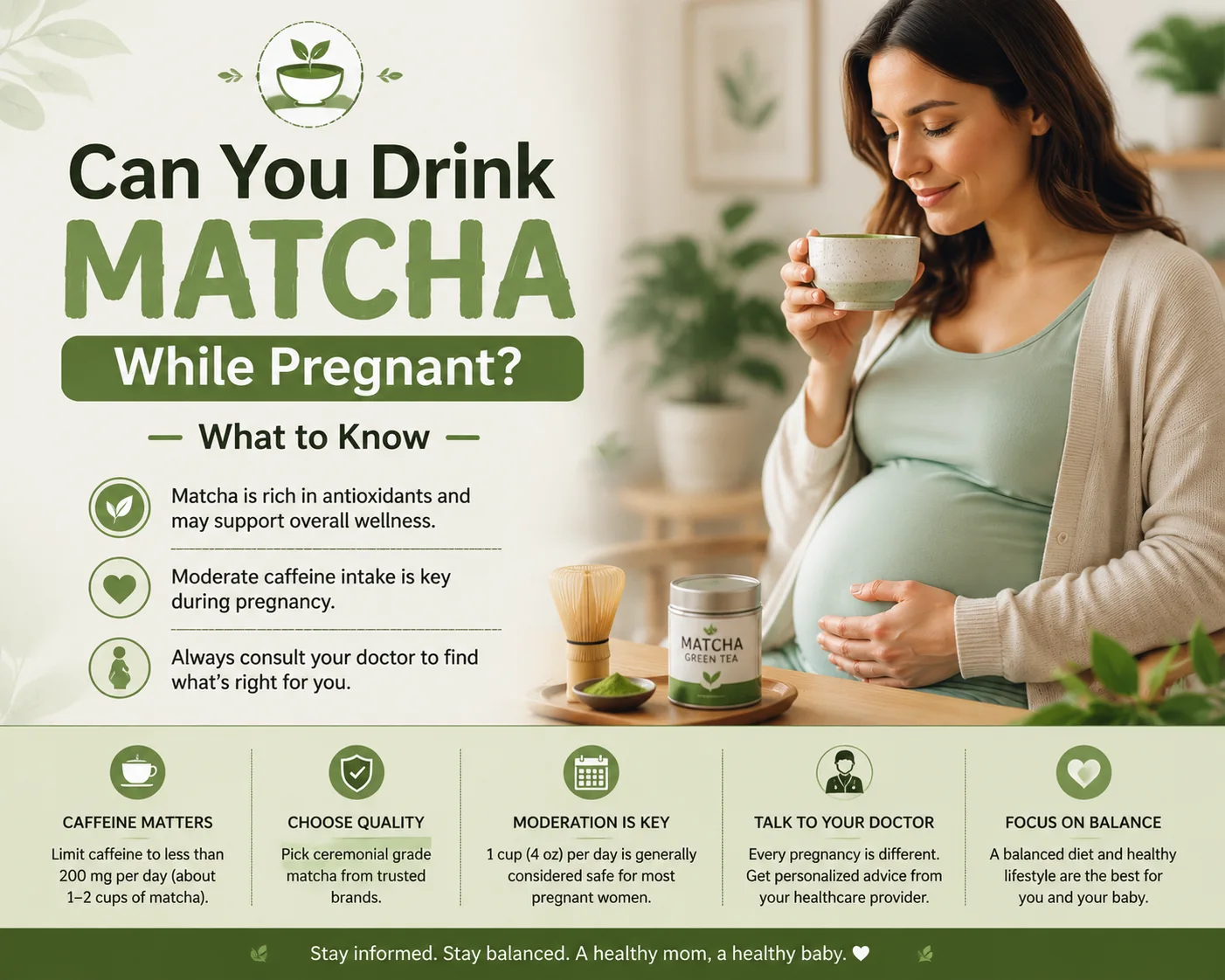
A practical pregnancy guide to matcha caffeine, the 200 mg daily limit, folic acid, iron absorption, café drinks, homemade matcha lattes, and lower-caffeine alternatives.
That 200 mg is your total daily caffeine budget—not 200 mg reserved for matcha. Coffee, tea, chocolate, soda, energy drinks, and other caffeinated products all count.
Why Matcha Is Different From Regular Green Tea
Matcha and green tea come from the same tea plant, Camellia sinensis, but they are prepared differently. With ordinary green tea, you drink water that has extracted compounds from the leaves. With matcha, you consume finely ground tea leaves suspended in the drink.
That difference makes serving size especially important. A stronger matcha made with more powder can contain substantially more caffeine than a lighter drink.
Matcha also isn’t the same as a green-colored herbal drink. The word “matcha” means actual powdered tea, so caffeine should be expected unless the product is specifically processed to reduce it.
What This Means During Pregnancy
- Matcha contains caffeine.
- Your caffeine from matcha counts toward your daily total.
- More matcha powder generally means more caffeine.
- Café recipes can use different amounts of powder.
- Product labels are useful when caffeine information is available.
- A homemade drink gives you better control over the serving.
- “Green” does not mean “caffeine-free.”
- Matcha supplements and concentrated extracts are a different issue from an ordinary beverage.
How Much Caffeine Is in Matcha?
There isn’t one universal caffeine number for matcha. The amount depends on the tea variety, growing conditions, processing, powder quantity, and preparation.
A practical estimate used by some current matcha sources is around 30–40 mg of caffeine per gram of powder, although individual products can fall outside that range. A 2-gram serving could therefore land around 60–80 mg. Treat these figures as estimates rather than laboratory measurements for every brand.
| Matcha powder | Approximate caffeine* | What it means |
|---|---|---|
| 1 g | ~30–40 mg | Light serving |
| 2 g | ~60–80 mg | Common starting range |
| 3 g | ~90–120 mg | Stronger drink |
| 4 g | ~120–160 mg | Large powder serving |
*Actual caffeine varies by product and preparation. The safest way to manage your intake is to check the package when caffeine is listed and measure the powder you use.
How the 200 mg Pregnancy Caffeine Limit Works
The 200 mg daily limit applies to caffeine from all sources combined. MotherToBaby’s current caffeine guidance recommends keeping pregnancy caffeine intake below 200 mg per day.
That makes your daily caffeine total more useful than memorizing a single matcha number.
- Matcha + coffee
- Matcha + black tea
- Matcha + chocolate
- Matcha + soda
- Matcha + an energy drink
An 8-ounce brewed coffee alone can contain roughly 70–140 mg, depending on the coffee and brewing method. So a matcha drink and coffee can use most of your daily caffeine allowance surprisingly quickly.
Daily caffeine total = matcha + coffee + tea + soda + chocolate + other caffeine.
Can You Drink Matcha in the First Trimester?
Occasional moderate matcha is not automatically a reason for concern during the first trimester. However, early pregnancy is an important time for folate because adequate folic acid helps reduce the risk of neural tube defects.
MotherToBaby notes that green tea contains catechins that may interfere with folic acid absorption, with concerns particularly associated with higher tea consumption. Their guidance also emphasizes that occasional green or black tea has not been shown to increase pregnancy problems.
This is one reason not to treat large amounts of matcha as an everyday health supplement during pregnancy.
- Keep your total caffeine below 200 mg per day.
- Continue your prenatal vitamin as directed.
- Avoid replacing meals or prenatal nutrition with matcha.
- Keep frequent, high-volume tea consumption to a minimum.
- Tell your prenatal provider about regular matcha use if you’re concerned.
- Don’t panic about an occasional serving you already drank.
What About Matcha During the Second and Third Trimesters?
The caffeine recommendation does not become a separate matcha allowance later in pregnancy. Your total daily caffeine still matters.
Your personal situation can change, though. Some people become more sensitive to caffeine, while others may need to pay particular attention to iron intake.
Practical Considerations Later in Pregnancy
- Keep caffeine within your recommended daily limit.
- Reduce caffeine if it makes you jittery or disrupts sleep.
- Consider your total caffeine rather than matcha alone.
- Follow your provider’s advice if you have anemia or low iron.
- Avoid concentrated caffeine products.
- Choose a smaller matcha if you already had coffee.
- Don’t assume a large café matcha has the same caffeine as homemade matcha.
Can You Drink a Matcha Latte While Pregnant?
A matcha latte can fit into pregnancy, provided its caffeine fits within your daily total and the other ingredients are appropriate.
The biggest problem with café lattes is uncertainty. One shop may use a light amount of matcha, while another may use multiple scoops. A large drink can therefore contain much more caffeine than you expect.
For a Homemade Matcha Latte
- Measure your matcha instead of using an oversized scoop.
- Use pasteurized milk or a suitable commercial plant-based milk.
- Add water and whisk the matcha until smooth.
- Add the milk and sweeten lightly if desired.
- Keep the matcha amount consistent from day to day.
- Count the finished drink toward your daily caffeine.
A homemade latte is often the easiest option when you want control over caffeine and sweetness.
Is Iced Matcha Safe During Pregnancy?
Iced matcha follows the same caffeine rules as hot matcha. Ice changes the temperature, not the caffeine content.
The ingredients added to iced café drinks deserve attention, however. Syrups, sweetened milk, cold foam, and flavored powders can turn a simple matcha into a much more complicated beverage.
When Ordering Iced Matcha
- Ask how much matcha powder the drink contains.
- Choose a smaller size if the recipe is unclear.
- Check whether the shop publishes caffeine information.
- Ask about flavored powders or additional caffeinated ingredients.
- Choose pasteurized dairy products.
- Check plant-based milk ingredients if you have an allergy.
- Reduce syrup if you prefer less sweetness.
- Don’t add extra matcha simply because the drink tastes mild.
Matcha vs. Green Tea During Pregnancy
Matcha is a type of green tea, but the two drinks aren’t prepared the same way. With brewed green tea, most of the leaves stay out of the cup. With matcha, the powdered leaf is consumed.
| Drink | Main difference | Pregnancy consideration |
|---|---|---|
| Matcha | Powdered whole tea leaf | Caffeine depends heavily on powder amount |
| Brewed green tea | Tea leaves steeped in water | Caffeine varies with tea and brewing |
| Black tea | Stronger tea flavor | Also contributes caffeine |
| Herbal tea | Usually made from other plants | Ingredients need individual consideration |
| Decaf tea | Caffeine reduced, not necessarily zero | Check the label |
Matcha vs. Coffee During Pregnancy
Matcha isn’t automatically “safer” than coffee. The better comparison is how much caffeine is actually in each serving.
An 8-ounce brewed coffee can contain around 70–140 mg of caffeine, according to MotherToBaby. Matcha can contain less in some preparations, but a strong serving can narrow that difference.
If your matcha contains approximately 70 mg of caffeine and your coffee contains 120 mg, the coffee uses considerably more of a 200 mg daily caffeine budget. A very strong matcha could reverse that comparison.
Does Matcha Affect Folic Acid?
This is one of the more nuanced questions about matcha during pregnancy.
Green tea contains catechins that have been studied for their potential effect on folic acid absorption. MotherToBaby explains that concerns are more relevant with higher tea consumption, while occasional tea consumption has not been shown to cause pregnancy problems.
That doesn’t mean you need to eliminate every cup of matcha. It means large amounts of tea should not replace a well-balanced pregnancy diet or prescribed prenatal supplementation.
What to Do
- Take your prenatal vitamin according to your provider’s instructions.
- Don’t use matcha as a substitute for prenatal nutrition.
- Avoid making very large amounts of green tea a daily habit.
- Ask your provider about supplement timing if you’re concerned.
- Mention regular high tea intake at prenatal appointments.
Can Matcha Affect Iron Absorption?
Tea can interfere with the absorption of non-heme iron, the form found mainly in plant foods and many iron supplements.
This becomes especially relevant if you’re taking an iron supplement or have been told that your iron level is low. Pregnancy guidance commonly advises separating tea or coffee from iron supplements because they can reduce iron absorption.
For meals, pairing plant-based iron foods with a vitamin C source can help improve iron absorption. Examples include beans with bell peppers or lentils with tomatoes.
Should You Take Prenatal Vitamins With Matcha?
It’s generally better not to treat matcha as the drink you automatically use with your prenatal vitamin.
The bigger issue is nutrient absorption and the specific ingredients in your supplement. If your prenatal contains iron, tea or coffee taken at the same time may reduce iron absorption.
Follow the instructions on your prenatal and your clinician’s advice about timing. If you take prescription iron, don’t change the schedule simply because of an online article.
Does Matcha Quality Matter During Pregnancy?
Quality matters because matcha is consumed as powdered tea leaf. You’re not simply drinking water that was briefly exposed to a tea bag.
Look for products with clear ingredient information, reputable sourcing, and sensible quality-control information. Avoid powders marketed as miracle supplements or stimulant products.
There is another reason to avoid concentrated tea extracts. Herbal and botanical products can have different safety profiles from ordinary food and beverage amounts, and contaminants can sometimes be present in poorly controlled products.
What to Look For
- Clear ingredient labeling
- A reputable manufacturer
- A stated serving size
- Caffeine information when available
- Transparent sourcing
- Appropriate quality testing when provided
- No unnecessary stimulant blend
- No “detox” or pregnancy cure claims
Can You Drink Starbucks Matcha While Pregnant?
You don’t need to automatically avoid café matcha just because it’s from a chain. The issue is the current recipe and caffeine amount.
Café formulas can change, and serving sizes can differ, so don’t assume every matcha drink contains the same amount of powder or caffeine.
A Practical Café Strategy
If you’re unsure, choose a smaller size and avoid stacking it with coffee or an energy drink.
How to Make a Lower-Caffeine Matcha at Home
You don’t need a complicated recipe to make a pregnancy-conscious matcha drink. The simplest approach is to control the amount of powder.
Basic Matcha Latte
Ingredients
- 1 g matcha powder
- 2–3 tablespoons warm water
- 6–8 ounces pasteurized milk or a suitable plant-based milk
- Optional sweetener
Method
- Sift the matcha into a cup.
- Add warm water.
- Whisk until smooth.
- Add the milk.
- Sweeten lightly if desired.
- Serve warm or pour over ice.
The exact caffeine amount depends on the matcha you use. If your package provides a caffeine value, use that number instead of relying on a general estimate.
Lower-Caffeine Alternatives to Matcha
Sometimes you don’t need another caffeinated drink. You simply want something creamy, warm, refreshing, or slightly earthy. That makes caffeine-free alternatives useful during pregnancy.
- Rooibos tea for an earthy, naturally caffeine-free option
- Sparkling water with citrus for something cold and fizzy
- Milk with cinnamon for a creamy warm drink
- Fruit-infused water for a simple flavored option
- Decaffeinated tea when you want a tea-like drink
- Warm milk when you want something soothing
- Caffeine-free flavored water for convenience
- Simple fruit spritzers made with sparkling water
What If You Already Drank Matcha While Pregnant?
Check the matcha serving, then add coffee, tea, soda, chocolate, energy drinks, or other caffeinated products.
If You Accidentally Had More Caffeine Than Planned
- Estimate your total caffeine for the day.
- Check the product label if available.
- Avoid adding more caffeine unnecessarily.
- Return to your usual routine the following day.
- Don’t take extra supplements to “cancel out” caffeine.
- Contact your prenatal care provider if you’re particularly concerned.
A single drink does not tell you what will happen with a pregnancy.
When Should You Talk to Your Healthcare Provider?
Most people asking about an occasional matcha drink need straightforward caffeine guidance. Some situations deserve individualized advice.
Talk with your OB-GYN, midwife, or other pregnancy-care professional if you:
- Regularly consume large amounts of caffeine
- Have been diagnosed with iron-deficiency anemia
- Take prescription iron
- Have questions about your prenatal vitamin
- Have been told to follow a special diet
- Take medications that may affect caffeine sensitivity
- Are using concentrated green-tea extracts
- Are unsure about a multi-herb matcha product
- Have a pregnancy-specific medical concern
For exposure questions, MotherToBaby also provides evidence-based information and personalized exposure counseling to people in the United States and its territories.
Frequently Asked Questions
Can I drink matcha every day while pregnant?
Possibly, if your total daily caffeine remains below 200 mg and your healthcare provider has not given you a different limit. The amount of caffeine in matcha varies, so daily use is easier to manage when you measure the powder and know the product’s caffeine information.
How much matcha powder can I have while pregnant?
There isn’t one universal gram limit that applies to every matcha. Caffeine content varies by powder, so use the smallest amount that gives you the flavor you want and count its caffeine toward your daily total.
Is one matcha latte a day okay during pregnancy?
A matcha latte can fit into pregnancy for many people. The important details are how much matcha it contains, how large the drink is, and how much other caffeine you consume that day.
Can I drink matcha while taking prenatal vitamins?
If your prenatal contains iron, it may be better to separate it from matcha because tea can reduce iron absorption. Follow the instructions for your specific prenatal and ask your healthcare provider if you’re unsure about timing.
Is matcha safer than coffee during pregnancy?
Neither drink automatically wins on safety. Compare the actual caffeine amount in your serving, because both matcha and coffee vary considerably in strength and serving size.
Can matcha affect folic acid absorption?
Green tea catechins have been studied for their potential effect on folic acid absorption. Current MotherToBaby information suggests the concern is more relevant to higher tea consumption, while occasional green or black tea has not been shown to increase pregnancy risks.
Is decaf matcha completely caffeine-free?
Not necessarily. Decaffeinated products can still contain some caffeine, depending on how they are processed. Check the package if you need to keep caffeine very low.
The Bottom Line
Can you drink matcha while pregnant? Usually, yes—but treat it as a caffeinated beverage, not a caffeine-free health drink.
The key number is less than 200 mg of caffeine per day from all sources, unless your own healthcare provider recommends a different limit.
For the simplest approach, use a measured matcha serving, check the product information, count your other caffeine, and avoid taking tea alongside iron supplements. If you’re drinking matcha frequently, using concentrated extracts, or have an iron or pregnancy-related concern, discuss it with your prenatal care team.
Read More:
What Can I Drink After a Tooth Extraction
100 Fruit Drink Recipes: Juices, Smoothies & Mocktails
16 Best Non-Alcoholic After Dinner Drinks for Any Evening
Best Places for Non-Alcoholic Drinks in Las Vegas: 2026 Guide
Bob Marley Mocktail: Easy Non-Alcoholic Layered Drink
Liquid Maria Juana Drink: Easy Tropical Cocktail Recipe
Gasolina Drink: Flavors, ABV, Ingredients & More
