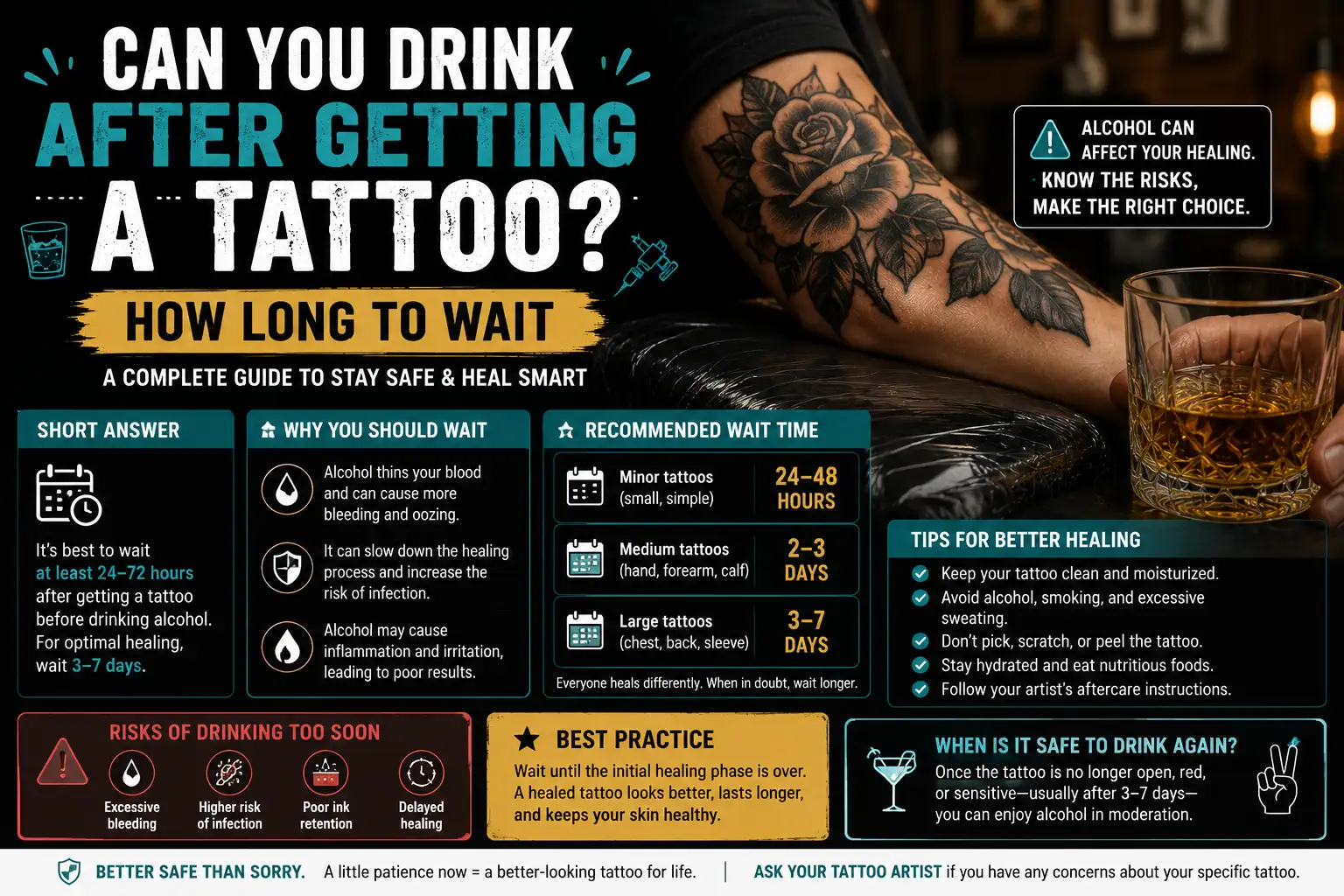
Everything you need to know about alcohol, tattoo healing, waiting times, aftercare, warning signs, and what to drink instead.
Getting a new tattoo means your skin needs time to recover, so alcohol is best avoided during the early healing period. If you’re wondering whether you can have a drink tonight, waiting is the safer choice.
A fresh tattoo is a controlled skin injury. Dermatologists recommend gentle cleaning, light moisturizing, protection from friction and sun, and avoiding activities that can interfere with healing.
Quick Answer: Can You Drink After Getting a Tattoo?
Yes, you can drink alcohol again after getting a tattoo, but it’s better not to drink immediately afterward. A practical, cautious approach is to wait at least 24 to 48 hours, then reassess how the tattoo looks and feels.
There is no universal medical rule saying every person must wait exactly 48 or 72 hours. If the tattoo is still bleeding, oozing, significantly swollen, or becoming more painful, wait longer and follow your tattoo artist’s aftercare instructions.
The Simple Rule
- Tattoo today: Skip alcohol.
- 24 hours later: Waiting longer is preferable if the skin is still irritated.
- 48 hours later: A more conservative point for many people.
- Large or heavily worked tattoo: Consider waiting 48 to 72 hours or longer.
- Still bleeding or oozing: Don’t use the clock alone; wait.
- Worsening redness, pain, warmth, pus, or fever: Seek medical advice.
TL;DR: Can You Drink After Getting a Tattoo?
- Skip alcohol on tattoo day while your skin starts healing.
- Wait 24–48 hours before considering alcohol again.
- Wait 48–72 hours after large or heavily worked tattoos.
- Keep waiting if your tattoo still bleeds, oozes, or swells.
- Choose water and non-alcoholic drinks during early healing.
- Don’t panic after one drink; stop, hydrate, and resume proper aftercare.
- Seek medical advice if you develop concerning symptoms.
Why Should You Avoid Alcohol Right After a Tattoo?
A tattoo involves repeated needle punctures that place pigment into the dermis. That leaves the skin irritated and vulnerable while the body begins repairing the area. Cleveland Clinic describes tattoos as a form of controlled skin trauma that needs proper aftercare.
The concern with drinking immediately afterward is less about alcohol somehow “destroying tattoo ink” and more about giving your healing skin the best conditions possible. Alcohol can also make it easier to neglect hydration, sleep, or careful aftercare.
The Practical Concerns
- Fresh bleeding or oozing: A new tattoo can release small amounts of blood and fluid during early healing.
- Hydration: Water is a better choice while your body is recovering.
- Aftercare: Drinking heavily can make it easier to forget cleaning and other care instructions.
- Sleep: A late night can interfere with the rest your body needs.
- Judgment: Alcohol can make scratching, rubbing, swimming, or otherwise mishandling a new tattoo more likely.
- Skin irritation: Your tattoo already has enough irritation to deal with during the first few days.
Some tattoo professionals recommend avoiding alcohol for the first 24 to 48 hours after a tattoo. That recommendation is best viewed as a cautious aftercare practice rather than a universal medical deadline.
How Long Should You Wait to Drink After a Tattoo?
If you want one simple answer, 48 hours is a cautious baseline for many healthy adults. However, the condition of your tattoo matters more than an arbitrary countdown.
A small tattoo that has settled quickly is different from a large sleeve that took several hours and remains swollen. Cleveland Clinic notes that tattoo healing varies with factors such as size and location, with larger tattoos potentially taking longer to fully heal.
| Your Situation | Practical Approach |
|---|---|
| Small tattoo, minimal irritation | Consider waiting 24–48 hours |
| Medium tattoo | Waiting around 48 hours is more cautious |
| Large tattoo | Consider 48–72 hours or longer |
| Full-day tattoo session | Give yourself additional recovery time |
| Tattoo still oozing | Wait until the oozing settles |
| Increasing redness or pain | Don’t drink; seek medical advice if concerning |
| Taking medication | Check with your healthcare professional or pharmacist |
The Most Important Point
Don’t treat 48 hours as permission to drink if your tattoo is clearly not settling.
Can You Drink 24 Hours After Getting a Tattoo?
You can, but waiting longer is the safer option when possible. Twenty-four hours is a common minimum discussed by tattoo professionals, but it does not mean every tattoo has finished its most sensitive early stage.
Look at the tattoo itself. Mild redness, soreness, swelling, and clear fluid can be normal early signs. The American Academy of Dermatology notes that these symptoms can occur during normal healing.
If You’re at the 24-Hour Mark, Check:
- Is the tattoo still noticeably wet or oozing?
- Is swelling improving rather than increasing?
- Is redness becoming lighter rather than spreading?
- Is soreness gradually settling?
- Have you been able to follow your aftercare routine?
- Did your artist give you a longer alcohol restriction?
If the answer to several of these questions concerns you, wait another day or two rather than drinking simply because 24 hours have passed.
Can You Drink 48 Hours After a Tattoo?
For many people, 48 hours is a reasonable conservative point to reassess alcohol, provided the tattoo is healing normally.
That doesn’t make alcohol automatically harmless at the 48-hour mark. A large, heavily shaded tattoo may still be irritated, while a small tattoo may already look much calmer.
Before Drinking, Look for Improvement
- Less redness
- Less swelling
- Less tenderness
- Little or no oozing
- No worsening pain
- No unusual warmth
- No spreading redness
- No pus or foul-smelling drainage
Important Warning
If the tattoo is getting worse instead of better, don’t blame normal healing and wait it out. Worsening pain, spreading redness, fever, chills, pus, or red streaks can indicate infection and warrant medical evaluation.
What About One Beer or One Drink?
One drink is not the same as heavy drinking, and one drink does not automatically ruin a tattoo. Still, drinking on the day of your tattoo is an unnecessary variable during a sensitive period.
The better question isn’t “Will one beer destroy my tattoo?” It’s “Why take the risk when waiting another day is easy?”
If You Decide to Drink After the Early Healing Period
- Keep the amount moderate.
- Drink water alongside alcohol.
- Avoid turning one drink into a heavy night.
- Don’t neglect your normal aftercare.
- Don’t swim or soak the tattoo afterward.
- Avoid scratching or rubbing the area.
- Don’t sleep directly on the tattoo if that causes friction.
- Stop and reassess if the tattoo starts bleeding or becomes unusually irritated.
Already Had One Drink?
You do not need to panic if you already had one drink. Stop drinking, hydrate, resume normal aftercare, and monitor the tattoo.
Does Alcohol Slow Tattoo Healing?
It is too simplistic to say that alcohol automatically makes every tattoo heal more slowly. The better-supported point is that good tattoo healing depends on consistent aftercare and avoiding unnecessary stress on the healing skin.
A new tattoo needs gentle care while the surface repairs itself. Cleveland Clinic recommends gentle washing, moisturizing, loose clothing, and avoiding soaking and other sources of irritation during healing.
Alcohol can also indirectly work against good aftercare. A night of heavy drinking may mean less sleep, poorer hydration habits, or less attention to the tattoo.
Give Your Tattoo the Best Start By:
- Drinking water regularly.
- Eating normal, balanced meals.
- Getting adequate sleep.
- Keeping the tattoo clean.
- Moisturizing as directed.
- Avoiding scratching and picking.
- Wearing loose clothing around the area.
- Avoiding pools, hot tubs, and prolonged soaking.
- Protecting the tattoo from unnecessary sun exposure.
Does Alcohol Make a Fresh Tattoo Bleed More?
A fresh tattoo can have mild bleeding or clear fluid mixed with ink during the early healing stage. That can be normal. Cleveland Clinic specifically notes that some oozing of blood and ink can occur during the first couple of weeks.
Because alcohol may affect bleeding and can make aftercare less careful, many tattoo professionals recommend avoiding it immediately after an appointment. The important distinction is between mild expected oozing and persistent or worsening bleeding.
If Your Tattoo Is Still Oozing:
- Keep following your artist’s dressing instructions.
- Wash your hands before touching the tattoo.
- Don’t scrub the area.
- Don’t pick at scabs.
- Avoid alcohol until the situation settles.
- Don’t cover the tattoo with an improvised airtight dressing.
- Contact your tattoo artist if you’re unsure about the aftercare.
- Seek medical advice for heavy or persistent bleeding.
Can You Drink Before Getting a Tattoo?
It’s best to avoid alcohol before a tattoo appointment, too. The FDA and Mayo Clinic both emphasize choosing a reputable tattoo professional and taking appropriate safety precautions, while tattoo professionals commonly advise arriving rested, fed, hydrated, and alcohol-free.
Alcohol before the appointment can also make the session less predictable. If you’re getting a large piece, you want to arrive in a condition that lets you communicate clearly with your artist and follow instructions.
A Better Pre-Tattoo Routine
- Drink water.
- Eat a normal meal.
- Get a good night’s sleep.
- Arrive sober and alert.
- Wear comfortable clothing.
- Tell the artist about relevant medications or health concerns.
- Don’t stop prescribed medication without medical advice.
Medication & Bleeding Warning
If you take blood-thinning medication or have a condition affecting bleeding or healing, talk with your healthcare professional before your appointment. Never stop a prescribed medicine simply because you’re getting tattooed.
What Should You Drink Instead of Alcohol After a Tattoo?
You don’t need a special “tattoo healing drink.” Water is the simplest choice, especially during the first day or two.
Other non-alcoholic drinks can fit your routine as long as they don’t replace sensible hydration or contain ingredients you need to avoid.
Good Choices
- Plain water: The simplest everyday option.
- Sparkling water: Useful if you prefer carbonation.
- Unsweetened tea: A simple alternative to sugary drinks.
- Decaf tea: Helpful if you want to limit caffeine.
- Milk: Fine if you normally tolerate dairy.
- Low-sugar electrolyte drink: Useful when it fits your hydration needs.
- Diluted fruit juice: Adds flavor without making every drink heavily sweet.
- Homemade fruit water: Try water with cucumber, berries, lemon, or mint.
You don’t need to force huge amounts of fluid. Drink normally according to thirst and your usual hydration needs.
Can You Drink Coffee After Getting a Tattoo?
Coffee is not the same concern as alcohol. If coffee is part of your normal routine, a moderate serving doesn’t automatically need to be removed from your diet after a tattoo.
The practical point is balance. Don’t let several large caffeinated drinks replace water, meals, or sleep.
A Sensible Approach
- Have your usual moderate coffee.
- Drink water during the day.
- Avoid excessive caffeine if it makes you shaky or uncomfortable.
- Don’t use coffee instead of eating.
- Choose less caffeine if you’re already feeling stressed or dehydrated.
- Avoid adding excessive sugar if you’re trying to keep your overall diet balanced.
If your healthcare professional has told you to limit caffeine, follow that advice instead.
Does Tattoo Size Change How Long You Should Wait?
Yes, tattoo size and the intensity of the session are useful factors to consider. A tiny line tattoo and a six-hour sleeve session don’t put the same amount of skin through the tattooing process.
Cleveland Clinic notes that larger tattoos may take longer to fully heal, and tattoos on different body areas can heal at different rates.
Think About the Tattoo, Not Just the Clock
Small tattoo: If irritation settles quickly, a shorter waiting period may be reasonable.
Large tattoo: Give yourself more recovery time, particularly if the skin remains swollen or sore.
Full sleeve or back piece: A longer break from alcohol is sensible because a large area may remain irritated for longer.
Heavy shading or color work: More skin trauma can mean a more noticeable early healing phase.
Still oozing: Don’t drink simply because 48 hours have passed.
The condition of your skin should guide the decision more than a rigid number.
What Happens to a Tattoo During the First Few Weeks?
A tattoo does not become completely healed overnight. The surface can look much better before the deeper layers have finished recovering.
Cleveland Clinic’s current dermatologist-backed guidance describes a progression from early redness and soreness to itching, flaking, and scabbing. It notes that the surface may look healed around two months while deeper layers can continue healing for several more months.
First Few Days
Expect some tenderness, redness, swelling, or fluid release. Keep the area clean and follow your artist’s instructions.
First Two Weeks
Itching, peeling, and scabbing can occur. Don’t scratch or pull off flaky skin.
Weeks Three to Four
Flaking and scabbing should generally be settling. Continue gentle care and avoid unnecessary irritation.
Around Two Months and Beyond
The surface may look healed, but deeper skin layers can continue recovering. Long-term tattoo care also includes protecting the ink from UV exposure.
What Should You Avoid After Getting a Tattoo?
Alcohol gets most of the attention, but it isn’t the only thing that can interfere with sensible tattoo aftercare.
The American Academy of Dermatology recommends keeping tattooed skin healthy and protecting it from UV exposure. Cleveland Clinic also advises avoiding immersion in water, tight clothing, exfoliation, and other sources of irritation while the tattoo heals.
Avoid These Common Mistakes
- Swimming: Don’t soak a healing tattoo in pools, lakes, oceans, or hot tubs.
- Long baths: Prolonged immersion can irritate healing skin.
- Scratching: Let itching and flakes settle without picking.
- Tight clothing: Reduce rubbing and sticking.
- Exfoliation: Don’t scrub a healing tattoo.
- Direct sun: Protect the area from unnecessary UV exposure.
- Unapproved products: Don’t pile on products your artist didn’t recommend.
- Heavy drinking: Give your body a better chance to focus on recovery.
- Picking scabs: Pulling them off can irritate the area and interfere with healing.
What If You Already Drank After Getting a Tattoo?
Don’t panic. One drink does not mean you’ve ruined your tattoo. The sensible response is to stop drinking, hydrate normally, and return to careful aftercare.
Don’t try to “fix” the situation with extra products or by repeatedly washing the tattoo. Keep your routine simple and monitor the skin.
If You Already Drank
- Stop drinking for the night.
- Drink water normally.
- Follow your tattoo artist’s cleaning instructions.
- Avoid swimming or soaking.
- Don’t scratch or pick the tattoo.
- Get enough sleep.
- Watch for unusual symptoms.
If the tattoo develops spreading redness, worsening pain, pus, fever, chills, or red streaks, contact a healthcare professional.
What If You’re Taking Medication After a Tattoo?
This is one situation where generic alcohol advice isn’t enough.
Some medicines can interact with alcohol, and the answer depends on the specific medication, dose, reason for taking it, and your health history.
If you’re taking prescription medicine, don’t assume a 48-hour tattoo rule makes alcohol safe. Check the medication label or ask your pharmacist or healthcare professional.
Never stop a prescribed medication simply so you can drink.
The same applies if you take anticoagulants or other medicines that affect bleeding. Discuss your individual situation with your healthcare professional before changing anything.
When Is Tattoo Redness Normal, and When Is It Concerning?
Some redness and swelling can be normal after tattooing. The American Academy of Dermatology notes that mild redness, swelling, soreness, clear fluid, itching, flaking, and scabbing can occur during normal healing.
The important clue is direction. Normal irritation should generally settle. Concerning symptoms tend to worsen, spread, or become more severe.
| More Typical During Healing | Get Medical Advice |
|---|---|
| Mild redness | Redness that spreads or gets darker |
| Mild swelling | Increasing swelling |
| Soreness that improves | Pain that keeps getting worse |
| Clear fluid | Pus or significant drainage |
| Itching | Painful, spreading rash |
| Peeling or flaking | Fever or chills |
| Small scabs | Red streaks extending from the tattoo |
| Gradual improvement | Skin becoming increasingly hot |
The AAD recommends seeing a doctor or board-certified dermatologist promptly when infection symptoms develop.
When Should You Get Medical Help for a Tattoo?
Don’t rely on alcohol timing if the tattoo appears to be developing a complication.
Contact a healthcare professional if you notice worsening pain, spreading redness, significant drainage, pus, fever, chills, red streaks, or skin that becomes increasingly hot. These are not symptoms to simply watch because you recently had a tattoo.
You should also seek medical advice for a persistent rash or suspected allergic reaction. The AAD notes that tattoo reactions can occur immediately or even much later, depending on the cause.
Don’t Wait for a Specific Alcohol Timeline If:
- The tattoo is getting more painful.
- Redness is spreading.
- The area feels increasingly hot.
- Pus or significant drainage appears.
- You develop fever or chills.
- Red streaks appear near the tattoo.
- You develop a severe rash or swelling.
- The tattoo simply isn’t behaving like it’s healing.
Real-World Examples: What Should You Do?
You Got a Small Tattoo This Afternoon and Have a Party Tonight
Skip the alcohol. The party can wait; the tattoo only gets one chance to start healing properly.
Drink water or another non-alcoholic beverage and follow your artist’s aftercare instructions.
You Got a Sleeve Tattoo Two Days Ago and It Still Feels Swollen
Don’t use the 48-hour mark as permission to drink. Wait until the irritation is settling, especially after a long, heavily worked session.
You Accidentally Had One Beer the Night After Your Tattoo
Don’t assume you damaged the tattoo. Stop drinking, hydrate normally, follow your aftercare routine, and watch for unusual symptoms.
Your Tattoo Is Peeling Four Days Later
Peeling can be part of normal healing. Don’t pick or scratch it. Continue gentle aftercare and let the skin shed naturally.
You Have a Wedding Three Days After Getting Tattooed
If the tattoo is healing normally, three days gives you more recovery time than drinking on the appointment day. Still, keep alcohol moderate and continue protecting the tattoo from friction, soaking, and other aftercare problems.
FAQs
Can I drink alcohol the same day I get a tattoo?
It’s best to skip alcohol that day. Your tattoo is freshly irritated, and there is little benefit to adding alcohol during the earliest stage of healing.
Is 48 hours enough before drinking after a tattoo?
Forty-eight hours is a cautious baseline for many people, but it isn’t a universal medical deadline. If your tattoo is still bleeding, oozing, swollen, or becoming more painful, wait longer.
Can I drink one beer after getting a tattoo?
One beer does not automatically mean your tattoo will be damaged. However, avoiding alcohol during the first 24 to 48 hours is the more cautious choice.
Can I drink alcohol if my tattoo is still scabbing?
Scabbing can occur during normal tattoo healing, so scabbing alone doesn’t determine whether alcohol is safe. If the area is also worsening, increasingly painful, swollen, hot, or producing pus, get medical advice instead of focusing on alcohol.
Does alcohol make tattoo ink fade?
There isn’t good reason to treat alcohol as a direct cause of tattoo ink fading. UV exposure, skin care, and the natural aging of tattooed skin are much more relevant long-term concerns. The AAD recommends protecting tattooed skin from UV exposure.
Can I drink coffee after getting a tattoo?
For most people, coffee isn’t subject to the same concern as alcohol. A moderate amount is reasonable if it fits your normal routine, but don’t let caffeine replace water, food, or sleep.
What is the best drink after getting a tattoo?
Water is the simplest choice. You can also choose sparkling water, unsweetened tea, milk, or another non-alcoholic drink that fits your normal diet and any dietary restrictions.
Bottom Line
If you’re asking can you drink after getting a tattoo, the safest practical answer is wait rather than drink immediately. A 24- to 48-hour alcohol break is a reasonable minimum approach, while 48 to 72 hours or longer can make more sense after a large or heavily worked tattoo.
Don’t let the clock override what your skin is telling you. If the tattoo is still oozing, significantly swollen, increasingly painful, spreading redness, or showing other concerning changes, keep focusing on aftercare and seek medical advice when needed. Your tattoo artist’s specific instructions should also take priority because they know how your tattoo was performed and covered.
The simplest plan is: skip alcohol on tattoo day, stay normally hydrated, follow proper aftercare, and give the skin time to settle before drinking again.
Read More:
What Can I Drink After a Tooth Extraction
100 Fruit Drink Recipes: Juices, Smoothies & Mocktails
16 Best Non-Alcoholic After Dinner Drinks for Any Evening
Best Places for Non-Alcoholic Drinks in Las Vegas: 2026 Guide
Bob Marley Mocktail: Easy Non-Alcoholic Layered Drink
Liquid Maria Juana Drink: Easy Tropical Cocktail Recipe
Gasolina Drink: Flavors, ABV, Ingredients & More