Looking for the best probiotic drinks in 2026? The refrigerated beverage aisle now includes everything from creamy kefir and drinkable yogurt to fizzy kombucha, water kefir, and modern probiotic sodas. With so many options, choosing a genuinely good drink can be confusing.
This guide ranks the best probiotic drinks by live-culture information, sugar content, taste, ingredients, dietary needs, and everyday use. Whether you want a creamy breakfast drink, a dairy-free option, a low-sugar soda alternative, or an easy beginner pick, you’ll find practical options here—plus label-reading tips and drinks worth skipping.
Important note: Probiotic beverages are foods, not medical treatments. People with serious illness, weakened immune systems, pregnancy concerns, or digestive conditions should ask a qualified healthcare professional before using probiotics for health reasons.
Quick Answer / TL;DR
Probiotic drinks are fermented or cultured beverages that contain live microorganisms. The best probiotic drinks in 2026 include kefir, kombucha, water kefir, drinkable yogurt, cultured smoothies, and low-sugar sparkling probiotic drinks. Choose options with clear live-culture labeling, moderate sugar, realistic claims, and flavors you will actually drink consistently.
Best Probiotic Drinks by Category
The best choice depends on texture, flavor tolerance, caffeine needs, dairy preference, and sugar goals. A beginner who likes smoothies may enjoy kefir first, while a soda drinker may prefer a sparkling probiotic drink.
What are probiotic drinks?
Probiotic drinks are beverages that contain live microorganisms, usually from fermentation or added cultures. Common examples include kefir, kombucha, drinkable yogurt, water kefir, and cultured dairy-free drinks.
A drink is more trustworthy when it gives clear information about live cultures, storage, ingredients, and serving size.
Which probiotic drink is best overall?
For most beginners, fruit-flavored kefir or low-sugar drinkable yogurt is the easiest starting point. These drinks taste familiar, feel creamy, and work well at breakfast.
For people who prefer fizz, mild kombucha or water kefir may feel more enjoyable.
Best probiotic drink categories to try
| Category | Best For | Flavor Profile | Watch Out For |
|---|---|---|---|
| Kefir | Breakfast, smoothies, creamy texture | Tangy, thick, yogurt-like | Added sugar in flavored bottles |
| Kombucha | Soda replacement, tea lovers | Tart, fizzy, tea-forward | Caffeine, acidity, trace alcohol |
| Water kefir | Dairy-free fizz | Light, fruity, sparkling | Sugar levels vary |
| Drinkable yogurt | Beginners, kids, breakfast | Mild, sweet, creamy | Added sugar |
| Cultured smoothies | Busy mornings | Fruity, filling, smooth | Juice concentrates |
| Probiotic soda | Soda fans | Sweet, fizzy, modern | May contain more prebiotics than probiotics |
| Coconut probiotic drinks | Dairy-free routines | Tropical, smooth, light | Saturated fat or sugar can vary |
In practice, the best drink is not always the strongest-tasting one. The best option is the drink that fits your routine without excess sugar or unrealistic claims.
Kefir, Kombucha, and Water Kefir Compared
Kefir, kombucha, and water kefir are the three most common probiotic-style drinks shoppers compare. They are not interchangeable because they use different bases and taste very different.
What is kefir?
Kefir is a cultured milk drink made with kefir grains or starter cultures. It tastes tangy, creamy, and slightly sour.
Kefir works well for:
• Smoothies
• Breakfast bowls
• Post-workout snacks
• Creamy fruit drinks
• People who enjoy yogurt
Plain kefir is usually less sweet than flavored kefir. Berry, vanilla, strawberry, and mango versions taste easier for beginners but often contain more sugar.
What is kombucha?
Kombucha is fermented tea made with a SCOBY, which stands for symbiotic culture of bacteria and yeast. It tastes fizzy, tart, and tea-like.
Kombucha works well for:
• Afternoon drinks
• Soda replacement
• Mocktails
• Brunch drinks
• People who enjoy sharp flavors
Because kombucha is tea-based, it may contain caffeine. It can also contain trace alcohol because fermentation continues under certain conditions.
What is water kefir?
Water kefir is a lightly fermented sparkling drink made with water kefir grains, sugar water, and flavor additions like citrus, berries, or herbs.
Water kefir works well for:
• Dairy-free lifestyles
• Light sparkling drinks
• Summer coolers
• Fruit-forward flavors
• People who dislike creamy drinks
Water kefir often tastes gentler than kombucha. That makes it useful for beginners who want fizz without strong vinegar-like notes.
Which is better: kefir or kombucha?
| Feature | Kefir | Kombucha |
| Base | Cultured milk | Fermented tea |
| Texture | Creamy | Fizzy |
| Flavor | Tangy and smooth | Tart and sparkling |
| Caffeine | Usually none | Often present |
| Dairy-free | Not usually | Usually |
| Best time | Morning | Afternoon |
| Beginner score | High | Medium |
| Main caution | Sugar in flavored bottles | Acidity, caffeine, trace alcohol |
Choose kefir for a filling breakfast drink. Choose kombucha for a fizzy soda alternative. So, Choose water kefir if you want dairy-free sparkle with a lighter taste.
Best Probiotic Drinks for Beginners
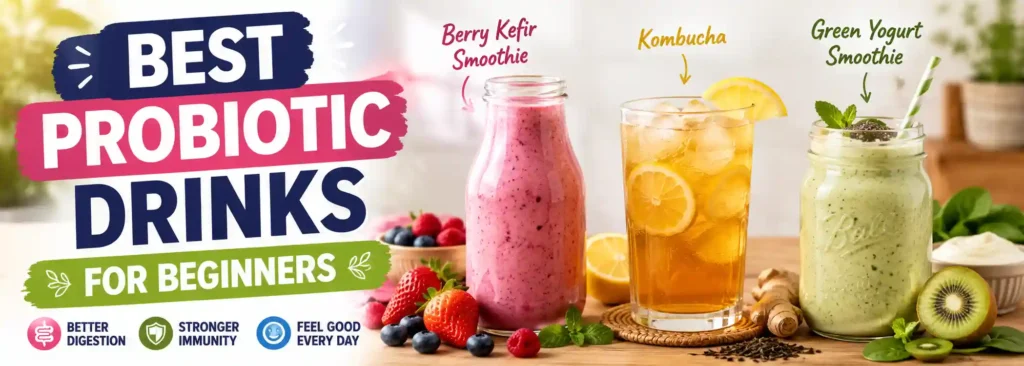
Beginners should start with mild flavor, not the most intense fermented drink on the shelf. Strong plain kombucha or unsweetened cultured drinks can feel too sharp at first.
Which probiotic drinks taste easiest?
The easiest options usually include fruit, vanilla, or creamy textures.
Good beginner choices include:
• Vanilla drinkable yogurt
• Strawberry kefir
• Blueberry kefir smoothie
• Peach kombucha
• Mango water kefir
• Coconut cultured smoothie
• Mild berry probiotic soda
• Banana kefir smoothie
• Strawberry yogurt drink
• Citrus water kefir
These options hide tartness better and feel more familiar than plain fermented drinks.
How should beginners start?
Start with 4 to 8 ounces at a time, especially if you are new to fermented foods. This helps you test taste and tolerance without overdoing it.
A simple beginner plan:
• Day 1–2: Try a small serving with food
• Day 3–4: Try the same drink again if it feels comfortable
• Week 2: Compare one new category, such as kefir vs water kefir
• Week 3: Choose your regular drink based on taste, sugar, and routine
This method prevents wasted money and helps avoid buying trendy drinks you may not enjoy.
Low-Sugar Probiotic Drinks
Many probiotic beverages taste healthy but still contain added sugar. Sugar is not always bad in fermentation because microbes need food during the process. The issue is how much sugar remains in the final drink.
How much sugar is too much?
For everyday use, a practical target is:
• 0–5 grams added sugar for strict low-sugar routines
• 6–10 grams added sugar for balanced daily use
• 11–15 grams added sugar for occasional flavored drinks
• 16+ grams added sugar as a treat, not a daily habit
Always check the serving size. Some bottles contain two servings.
Which probiotic drinks are usually lower in sugar?
Lower-sugar options often include:
• Plain kefir
• Unsweetened drinkable yogurt
• Low-sugar kombucha
• Light citrus water kefir
• Unsweetened cultured coconut drinks
• Sparkling probiotic drinks with no added sugar
• Homemade kefir smoothies with whole fruit
• Plain yogurt blended with berries
What should shoppers avoid?
Skip or limit probiotic drinks with:
• Syrup as a top ingredient
• Very high added sugar
• Candy-like flavor profiles
• Vague “gut healthy” claims
• No clear culture information
• Oversized bottles with multiple servings
• Heavy juice concentrate
A probiotic drink should not become a hidden dessert unless you are choosing it as an occasional treat.
Dairy-Free Probiotic Drinks
Dairy-free probiotic drinks are easier to find in 2026. They help shoppers who avoid milk, prefer vegan options, or want lighter sparkling beverages.
Which probiotic drinks are dairy-free?
Common dairy-free options include:
• Kombucha
• Water kefir
• Coconut kefir
• Cultured coconut drinks
• Fermented oat drinks
• Sparkling probiotic sodas
• Plant-based cultured smoothies
• Fruit-based fermented beverages
Are dairy-free probiotic drinks better?
Dairy-free drinks are not automatically better. They are better only when they match your needs.
Choose dairy-free drinks if you:
• Avoid lactose
• Follow a vegan diet
• Dislike creamy drinks
• Prefer sparkling beverages
• Want a lighter afternoon drink
Choose dairy-based kefir or yogurt drinks if you:
• Want more creaminess
• Like smoothie texture
• Want a filling breakfast drink
• Prefer yogurt-style flavor
The strongest choice depends on your diet and label, not just whether the drink is dairy-free.
Store-Bought Probiotic Drinks in 2026
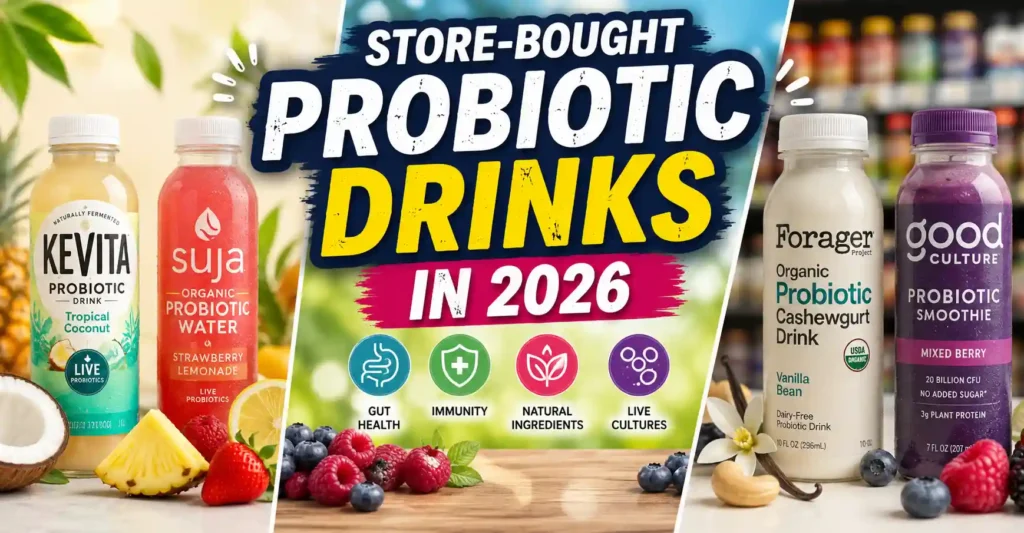
The Store-bought probiotic beverages are convenient because they offer consistent flavor, clear packaging, and easy access. However, brand names alone should not decide the purchase.
Which store-bought probiotic drinks are popular?
Popular store-bought categories include:
• Lifeway-style kefir drinks
• GT’s-style kombucha
• Health-Ade-style kombucha
• Yakult-style cultured dairy drinks
• Chobani-style drinkable yogurt
• Siggi’s-style yogurt drinks
• Forager-style dairy-free cultured drinks
• Culture Pop-style probiotic sodas
• Olipop-style functional sodas
• Poppi-style soda alternatives
Some soda-style drinks focus more on prebiotic fiber than live probiotics. That does not make them bad, but shoppers should understand the difference.
How should bloggers rank store-bought drinks?
A strong ranking should consider:
• Live culture clarity
• Added sugar per serving
• Taste accessibility
• Refrigeration needs
• Price per ounce
• Caffeine content
• Dairy-free availability
• Ingredient simplicity
• Brand transparency
• Realistic claims
A drink with clear labeling and moderate sugar should rank higher than one with flashy claims and weak details.
Probiotic Drinks Shopping Checklist
A simple checklist makes buying easier. It also helps readers compare products without falling for packaging claims.
What should a good label include?
Look for:
• Named cultures or live culture statement
• Added sugar amount
• Serving size
• Expiration date
• Storage instructions
• Caffeine information for tea-based drinks
• Dairy, soy, coconut, or allergen details
• Pasteurization or live-culture wording
• Clear ingredient list
• Realistic health language
What does CFU mean?
CFU means colony-forming units. It is a way to describe the amount of viable live microorganisms in some probiotic products.
More CFUs do not always mean a better drink. Strain type, survival, storage, and evidence matter too.
Are refrigerated drinks better?
Refrigerated probiotic drinks often contain active cultures, but refrigeration alone does not prove quality.
Check both:
• Storage instructions
• Live culture information
Some shelf-stable drinks may use hardy strains or different processing. Others may not provide the same live-culture experience as refrigerated fermented drinks.
Probiotic Drinks to Skip
Some probiotic beverages look healthy but do not offer a practical daily choice. The main problems are sugar, weak labeling, vague claims, and poor fit.
Which probiotic drinks should you avoid?
Skip drinks that have:
• Very high added sugar
• No clear live-culture information
• Unrealistic medical-style claims
• A taste you dislike
• Too much caffeine for your routine
• Poor refrigeration handling
• Damaged packaging
• Expired dates
• Artificial candy-style sweetness
• Multiple servings hidden in one bottle
Are all fermented drinks probiotic?
No. Fermented does not always mean probiotic.
Some fermented drinks may be pasteurized after fermentation. That can improve shelf life but may reduce or eliminate live microbes. A product should clearly say whether it contains live and active cultures.
Can probiotic drinks replace medical care?
No. Probiotic drinks should not replace medical care, medication, or professional guidance for digestive disease.
They may fit a balanced diet, but they are not a guaranteed treatment for IBS, IBD, infections, bloating, or immune problems.
Probiotic Drinks for Different Routines

The best probiotic drink changes by time of day and lifestyle. A thick kefir smoothie may work in the morning, while kombucha may fit better with lunch.
What is best for busy mornings?
Best morning options:
• Banana kefir smoothie
• Vanilla yogurt drink
• Strawberry cultured smoothie
• Blueberry kefir shake
• Mango coconut probiotic smoothie
• Oat-based cultured smoothie
• Plain kefir with berries
• Apple cinnamon yogurt drink
These drinks feel filling and pair well with breakfast foods.
What is best for replacing soda?
Best fizzy options:
• Citrus kombucha
• Berry water kefir
• Grapefruit probiotic spritzer
• Low-sugar probiotic soda
• Hibiscus kombucha
• Pineapple water kefir
• Lemon ginger kombucha
• Sparkling coconut lime probiotic drink
These drinks work best over ice with citrus, mint, or frozen fruit.
What is best for kids?
For kids, choose mild drinks with lower added sugar and age-appropriate serving sizes.
Better options may include:
• Small yogurt drinks
• Mild kefir smoothies
• Homemade yogurt fruit smoothies
• Low-sugar strawberry drinkable yogurt
Avoid strong kombucha for children unless a pediatric professional says it fits their situation, especially because kombucha may contain caffeine and trace alcohol.
What is best for dairy-free lifestyles?
Best dairy-free options:
• Water kefir
• Coconut kefir
• Kombucha
• Cultured oat drinks
• Plant-based probiotic smoothies
• Sparkling probiotic sodas
Choose unsweetened or lightly sweetened versions when possible.
Homemade Probiotic Drinks
Homemade probiotic drinks can be useful for people who want more control over sugar, fruit, and flavor. They also require careful cleanliness.
Which homemade probiotic drinks are easiest?
Beginner-friendly homemade ideas include:
• Berry kefir smoothie
• Plain yogurt fruit drink
• Lemon ginger water kefir
• Mint lime water kefir
• Mango coconut cultured smoothie
• Strawberry kefir shake
• Apple cinnamon kefir drink
• Pineapple water kefir cooler
How do you make a simple probiotic smoothie?
Use this basic formula:
• 1 cup plain kefir or drinkable yogurt
• ½ cup frozen berries
• ½ banana or 1–2 dates if sweetness is needed
• 1 tablespoon oats or chia seeds
• Ice, if desired
Blend until smooth. Drink soon after blending for the best taste and texture.
What safety rules matter for homemade fermented drinks?
Use:
• Clean glass jars
• Clean utensils
• Fresh ingredients
• Filtered water when needed
• Proper fermentation time
• Refrigerated storage after fermentation
Discard any homemade fermented drink with mold, foul odor, strange color, slimy texture, or pressure that seems unsafe.
Common Mistakes With Probiotic Drinks
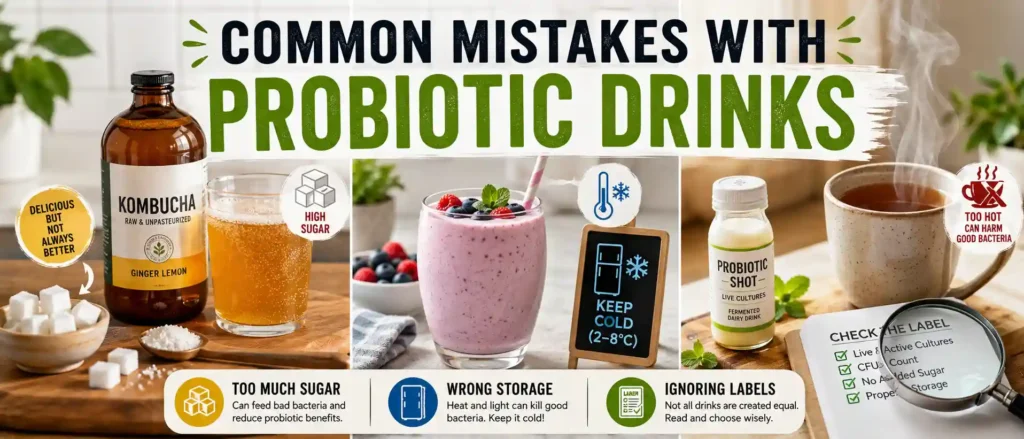
Most mistakes happen because shoppers focus on buzzwords instead of the label.
What mistakes should shoppers avoid?
Avoid these common mistakes:
• Buying the sweetest drink and assuming it is healthy
• Choosing the highest CFU count without checking strain or evidence
• Ignoring serving size
• Forgetting kombucha may contain caffeine
• Assuming every fermented drink contains live cultures
• Drinking too much too quickly
• Using probiotic drinks to treat medical symptoms without guidance
• Ignoring refrigeration instructions
• Buying flavors you do not enjoy
• Confusing prebiotic soda with probiotic drinks
What is the biggest myth?
The biggest myth is that all probiotic drinks work the same way.
They do not. Different strains, bases, storage methods, and serving sizes can create different results. A kefir drink, kombucha bottle, and soda-style functional beverage are not the same product.
Myths vs Facts About Probiotic Drinks
| Myth | Fact |
| All fermented drinks are probiotic | Some are pasteurized or lack proven live cultures |
| More CFUs always means better | Strain, dose, evidence, and storage matter |
| Kombucha is always caffeine-free | It is tea-based and may contain caffeine |
| Probiotic soda equals kombucha | Many probiotic sodas use different cultures or focus on fiber |
| Dairy-free means healthier | It only means it avoids dairy |
| Probiotic drinks cure gut problems | They are foods, not medical treatments |
| Sugar-free always tastes better | Some sugar-free drinks have strong aftertastes |
| Refrigerated always means superior | Label clarity still matters |
Best Ways to Serve Probiotic Drinks
Serving style can make probiotic drinks taste better, especially for beginners.
How can you make probiotic drinks taste better?
Try:
• Serve kombucha over ice
• Add fresh citrus
• Use frozen berries instead of syrup
• Mix water kefir with mint
• Blend plain kefir with banana
• Add cinnamon to yogurt drinks
• Use probiotic soda in mocktails
• Pair tart drinks with savory meals
Can you heat probiotic drinks?
Avoid heating drinks that rely on live cultures. High heat can reduce live microorganisms. Use probiotic drinks cold, chilled, or blended into cold smoothies.
Key Takeaways
• Probiotic drinks include kefir, kombucha, water kefir, drinkable yogurt, cultured smoothies, and some sparkling probiotic drinks.
• The best probiotic drinks have clear culture information, moderate sugar, realistic claims, and good flavor.
• Kefir works best for creamy breakfast routines, while kombucha and water kefir work better as fizzy soda alternatives.
• Low-sugar options are better for daily use than heavily sweetened flavored bottles.
• Dairy-free options include kombucha, water kefir, coconut kefir, and plant-based cultured smoothies.
• Probiotic drinks are not medical treatments and should not replace professional healthcare advice.
FAQs About Probiotic Drinks
What is the best probiotic drink for beginners?
Fruit-flavored kefir, vanilla drinkable yogurt, and mild berry kombucha are usually the best beginner options. They taste smoother and less sharp than plain kombucha or unsweetened fermented drinks.
Are probiotic drinks actually good for you?
Probiotic drinks can fit a balanced diet when they contain live cultures, moderate sugar, and ingredients that match your needs. They are not guaranteed to treat digestive problems.
Which probiotic drink has the least sugar?
Plain kefir, unsweetened drinkable yogurt, low-sugar kombucha, and lightly flavored water kefir are often lower in added sugar. Always check the Nutrition Facts label.
Is kombucha better than kefir?
Kombucha is better for people who want fizz, tea flavor, and a soda alternative. Kefir is better for people who want a creamy, filling breakfast drink.
Are probiotic sodas the same as probiotic drinks?
Some probiotic sodas contain live cultures, but many focus more on prebiotic fiber or functional branding. Read the label before assuming they work like kefir or kombucha.
Can you drink probiotic drinks every day?
Many healthy adults can include a moderate serving daily if the drink fits their diet. Start small and choose low-sugar options. People with medical concerns should ask a healthcare professional first.
Do probiotic drinks need to be refrigerated?
Many live-culture drinks need refrigeration, especially kefir, yogurt drinks, water kefir, and many kombuchas. Some shelf-stable products exist, but storage instructions vary by brand.
What probiotic drink should you skip?
Skip drinks with very high added sugar, vague culture claims, expired dates, poor storage, or medical-style promises. A probiotic drink should be transparent and practical.
Conclusion
The best probiotic drinks in 2026 are not necessarily the most heavily marketed or highest in CFUs. A better choice combines clear live-culture information, reasonable sugar, transparent ingredients, good storage guidance, and a flavor you genuinely enjoy.
Choose kefir or drinkable yogurt for a creamy breakfast option, kombucha or water kefir when you want something fizzy, and a low-sugar probiotic beverage when replacing soda. Always check the label rather than assuming that every fermented or “gut health” drink contains the same type or amount of live cultures.
Ultimately, the best probiotic drink is one that fits your diet, tastes good, and works naturally within your routine.