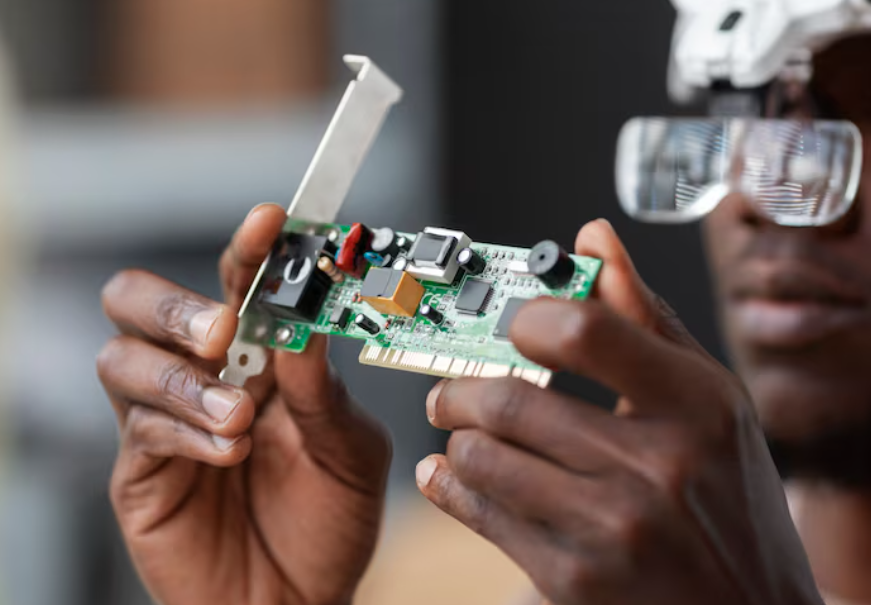
In the modern digital economy, silicon is the fundamental currency. Microchips—the microscopic brains powering everything from smartphones and medical devices to autonomous vehicles and hyper-scale data centers—have become the bedrock of contemporary civilization. Yet, for decades, the global semiconductor supply chain relied on a hyper-globalized, highly centralized model. A complex network developed where design happened in one country, chemical supplies were sourced from another, and actual fabrication was concentrated in a select few geographical hubs.
Recent geopolitical friction, supply chain disruptions, and the rapid rise of Artificial Intelligence have fundamentally altered this dynamic. Today, the ambition is clear: achieve silicon independence through indigenous semiconductor manufacturing.
The Vulnerability of Global Interdependence
The traditional semiconductor supply chain was built for efficiency, not resilience. A single advanced chip might travel over 25,000 miles and cross multiple borders before reaching a consumer. Key bottlenecks emerged along the way:
- Fabrication Concentration: The vast majority of leading-edge logic chips (under 7 nanometers) are manufactured in East Asia, primarily by Taiwan’s TSMC.
- Photolithography Monopolies: Advanced extreme ultraviolet (EUV) lithography machines—essential for printing the smallest circuit features—are exclusively produced by Dutch giant ASML.
- Raw Material and Chemical Constraints: Specialized silicon wafers, ultra-pure gases, and rare earth elements are controlled by a handful of nations.
When global disruptions exposed these single points of failure, governments realized that lacking domestic semiconductor manufacturing capabilities was not merely an economic issue—it was a critical national security risk.
The New Industrial Policy: Funding Domestic Foundries
To reduce reliance on foreign supply chains, major economies are making unprecedented investments in domestic fabrication facilities (“fabs”).
1. The Western Push
Both the United States and the European Union enacted massive legislative acts (such as the US CHIPS and Science Act and the EU Chips Act) allocating tens of billions of dollars in subsidies, tax credits, and research grants. These initiatives aim to incentivize major foundries to build advanced manufacturing facilities locally, bringing advanced nodes back to Western soil.
2. Asia’s Strategic Escalation
Nations across Asia are doubling down on their existing strengths or building new domestic ecosystems:
- Japan: Investing heavily to rebuild its historical semiconductor edge, attracting major foreign foundries while nurturing domestic initiatives like Rapidus to commercialize next-generation nodes.
- India: Launching comprehensive incentive packages under its Semiconductor Mission, aiming to establish domestic commercial fabs, compound semiconductor plants, and assembly-test-packaging (ATMP) units.
- China: Accelerating massive capital deployment toward domestic equipment manufacturing, legacy node scaling, and mature-node self-sufficiency in response to export controls.
Beyond Subsidies: The Real Hurdles to Silicon Autonomy
While financial backing is necessary, throwing money at silicon fabrication does not guarantee instant independence. Building a sovereign chip industry requires overcoming several formidable structural challenges:
- Talent Shortages: Semiconductor manufacturing requires specialized talent—from materials scientists and chemical engineers to process integration experts. A global shortage of qualified engineers remains a major bottleneck.
- Capital Intensity: Modern advanced fabs cost upwards of $15 billion to $20 billion to construct and equip, requiring continuous yield optimization and massive capital expenditure to stay competitive.
- Complex Ecosystem Integration: A fab cannot operate in isolation. It requires an entire localized supply chain: photoresist suppliers, ultra-pure water treatment systems, high-precision robotics, and specialized testing facilities.
Strategic Realism: Partial Autonomy vs. Total Isolation
Complete end-to-end self-reliance in semiconductors is nearly impossible for any single nation given the sheer complexity of modern microelectronics. True silicon independence is rarely about total isolation; rather, it is about strategic autonomy and resilience.
Nations seek to secure critical baseline capacities for defense, infrastructure, and core industries, ensuring that a foreign supply shock cannot bring domestic manufacturing to a halt.
Conclusion
The race for indigenous semiconductor manufacturing marks a profound shift from a purely globalized tech ecosystem toward regionalized, resilient production networks. As nations construct advanced fabs and cultivate domestic engineering talent, the balance of technological power is being redrawn. Silicon independence is no longer just an economic objective—it is the cornerstone of national sovereignty in the 21st century.
Read more : The Growing Role of Digital Evidence in Modern Legal Cases