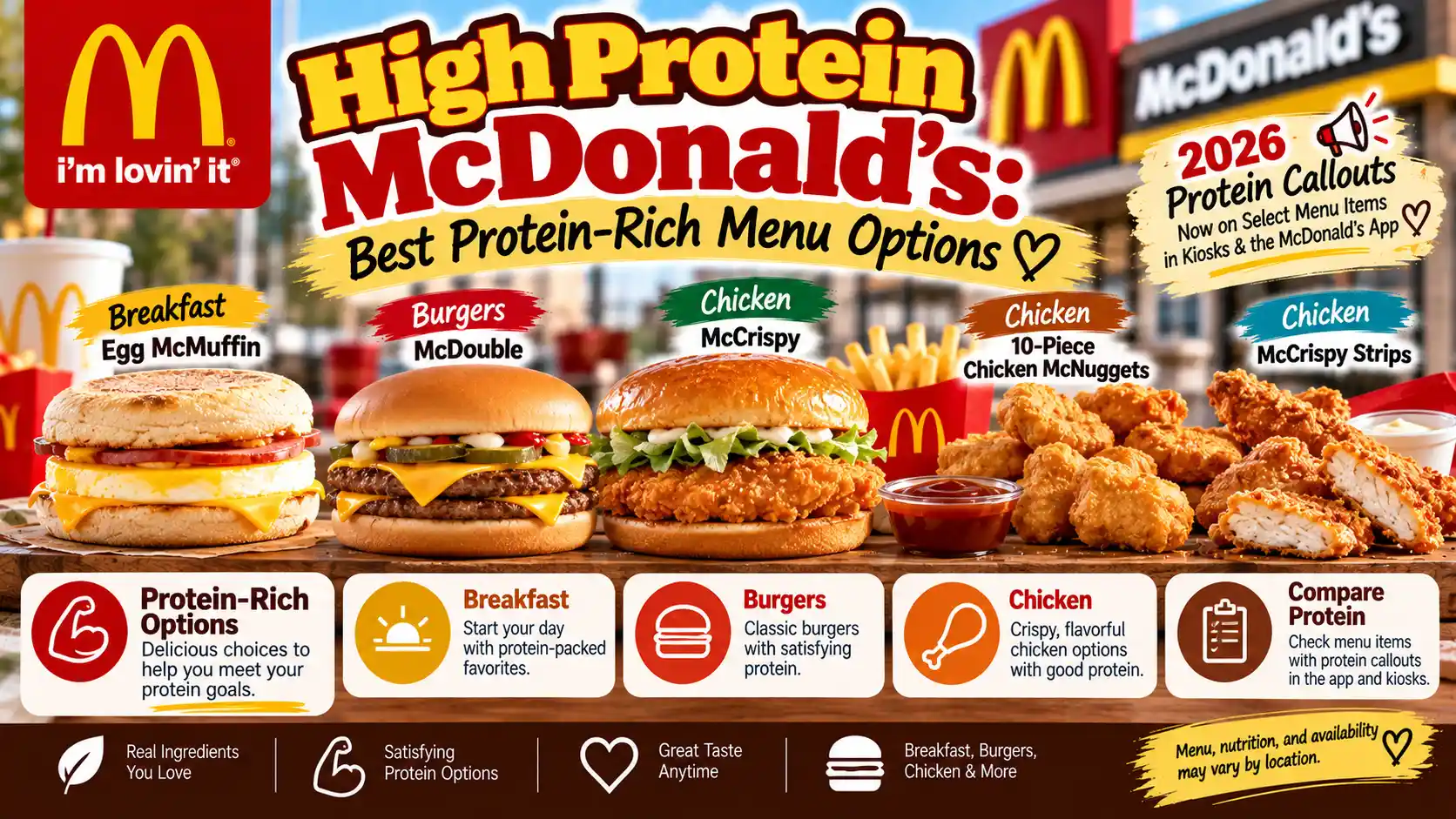
People searching for high protein McDonald’s options can find plenty of choices across breakfast, burgers, chicken, and snacks. McDonald’s also began highlighting protein amounts on selected menu items in 2026.
This guide makes those choices easier to compare. You’ll find higher-protein menu items, breakfast ideas, chicken and beef options, ordering tips, nutrition guidance, and important allergen notes.
Quick Answer
High-protein McDonald’s options include the Double Quarter Pounder with Cheese, McCrispy Strips, McCrispy, McDouble, Egg McMuffin, and Chicken McNuggets. Protein amounts depend on the exact item and serving size, so check the current McDonald’s nutrition information before ordering.
TL;DR
- Egg McMuffin: 17 g protein
- McDouble: 22 g protein
- 10-piece McNuggets: 23 g protein
- Three McCrispy Strips: about 30 g protein
- McCrispy: about 27 g protein
- Larger beef sandwiches can provide substantially more protein
- Check the current menu for final nutrition figures
High-Protein McDonald’s Options at a Glance
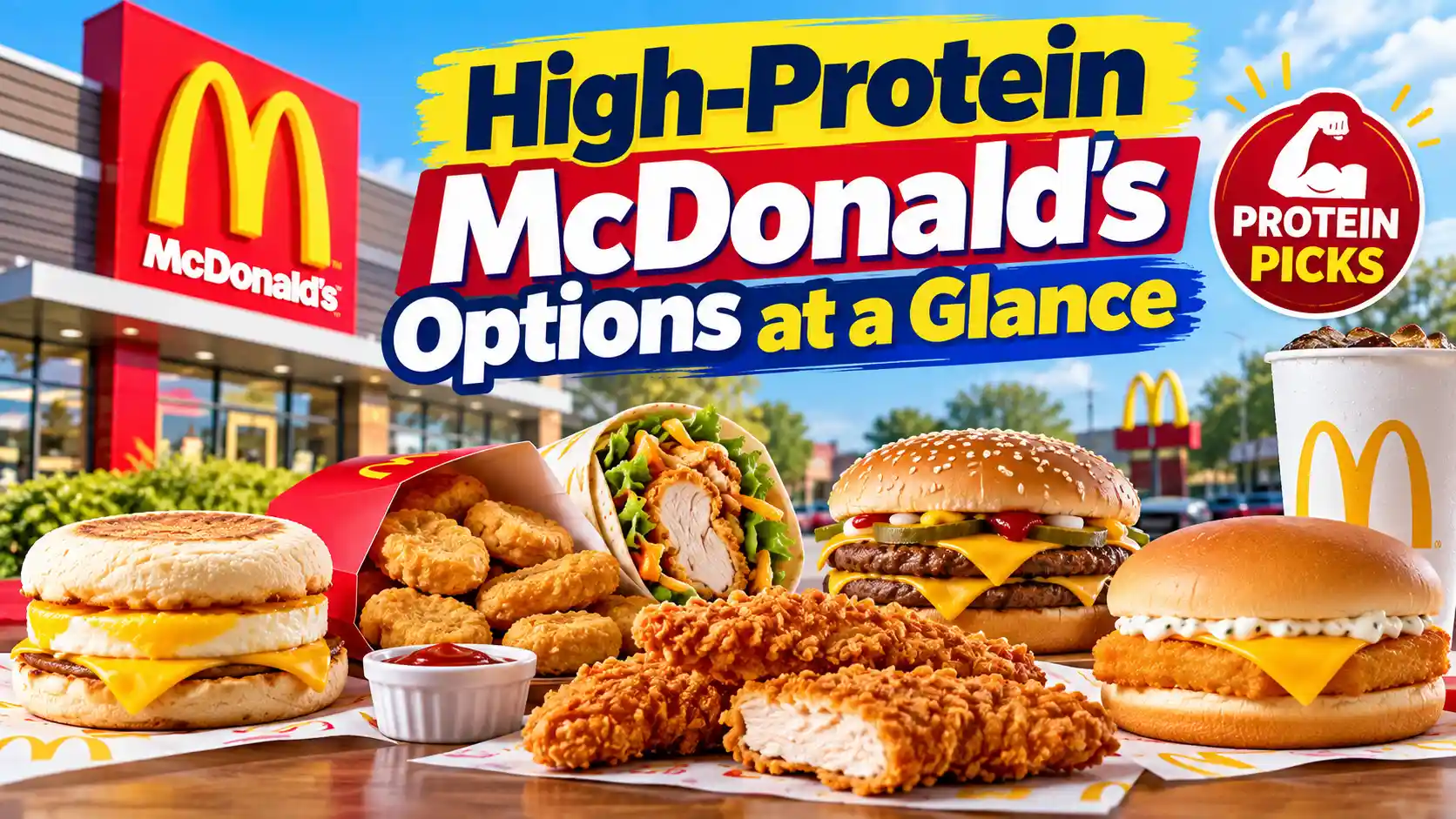
McDonald’s has protein-containing choices in nearly every major menu category. Your best starting point depends on whether you want breakfast, beef, chicken, or a complete meal.
Protein numbers also change with serving size. A larger portion can provide more protein while also adding more calories, sodium, fat, or carbohydrates.
• Egg McMuffin: 17 g protein
• McDouble: 22 g protein
• 10-piece Chicken McNuggets: 23 g protein
• Three McCrispy Strips: about 30 g protein
• McCrispy: about 27 g protein
• Quarter Pounder with Cheese: about 30 g protein
• Double Quarter Pounder with Cheese: one of the highest-protein individual sandwiches
• Steak, Egg & Cheese Bagel: about 34 g protein in current menu databases
• Bacon Quarter Pounder with Cheese: about 36 g protein
• Big Mac: about 25 g protein
• Double Cheeseburger: about 25 g protein
• Filet-O-Fish: about 16 g protein
What Counts as High Protein at McDonald’s?
There isn’t one universal protein number that makes a McDonald’s item “high protein.” A practical comparison can use protein ranges while considering the complete nutrition profile.
McDonald’s uses 15 g or more of protein for its current protein callouts. Many nutrition-focused menu guides use 20 g or 25 g as higher-protein thresholds.
• 15–19 g: moderate protein option
• 20–24 g: solid protein option
• 25–29 g: higher-protein option
• 30–39 g: very protein-focused option
• 40+ g: exceptionally high protein for one menu item
• Compare the same serving size when checking different foods
• Separate an individual item from a complete meal
• Check calories alongside protein
• Consider sodium, saturated fat, carbohydrates, and fiber
• Remember that recipes and nutrition values can change
• Check the current McDonald’s menu before relying on an exact number
Highest-Protein McDonald’s Menu Items
The highest protein amounts generally come from larger beef sandwiches, larger chicken portions, and substantial breakfast sandwiches. Portion size is one of the biggest reasons nutrition numbers vary.
A high protein number doesn’t automatically make an item the right choice for everyone. Calories, sodium, fat, carbohydrates, serving size, and personal preferences still matter.
• Double Quarter Pounder with Cheese: one of the highest-protein individual sandwiches
• Bacon Quarter Pounder with Cheese: about 36 g protein
• Steak, Egg & Cheese Bagel: about 34 g protein
• Quarter Pounder with Cheese: about 30 g protein
• Three McCrispy Strips: about 30 g protein
• McCrispy: about 27 g protein
• Big Mac: about 25 g protein
• Double Cheeseburger: about 25 g protein
• 10-piece Chicken McNuggets: 23 g protein
• McDouble: 22 g protein
• Egg McMuffin: 17 g protein
• Filet-O-Fish: about 16 g protein
High-Protein McDonald’s Breakfast
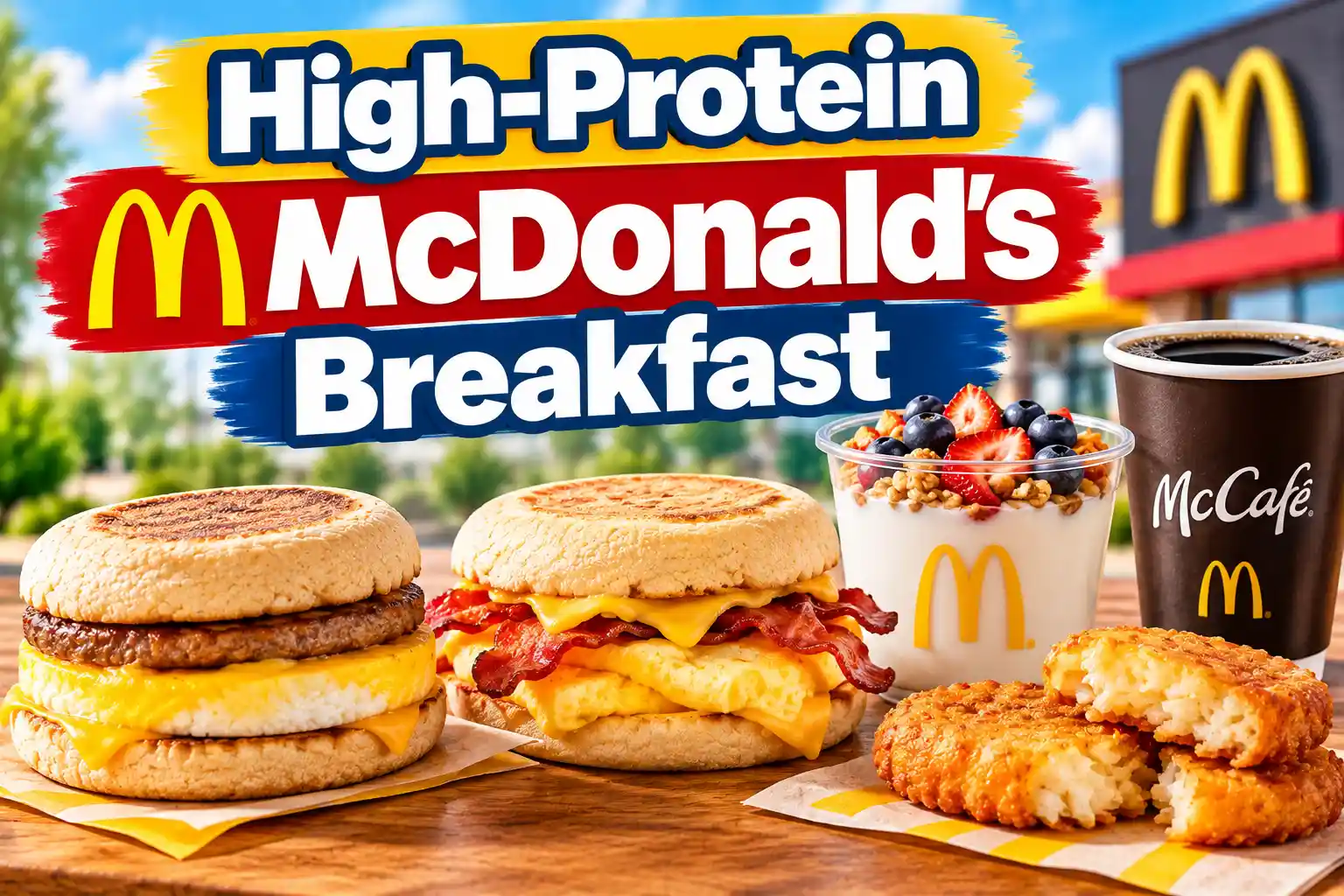
Breakfast offers several ways to add meaningful protein to your meal. Egg, sausage, bacon, and steak sandwiches provide different combinations of protein, calories, and other nutrients.
The Egg McMuffin is one of the clearest examples. McDonald’s lists it at 17 g of protein, making it a moderate protein breakfast choice.
• Egg McMuffin: 17 g protein
• Steak, Egg & Cheese Bagel: larger steak-and-egg breakfast sandwich
• Bacon, Egg & Cheese Bagel: bacon, egg, cheese, and bagel combination
• Sausage McMuffin with Egg: sausage and egg breakfast option
• Sausage, Egg & Cheese McGriddles: sweet-savory breakfast sandwich
• Bacon, Egg & Cheese Biscuit: biscuit-based breakfast choice
• Sausage Biscuit with Egg: sausage and egg combination
• Egg and Cheese Bagel: simpler egg-based breakfast
• Big Breakfast: combines eggs, sausage, biscuit, and hash browns
• Big Breakfast with Hotcakes: adds hotcakes to a larger breakfast
• Hash Browns: provide relatively little protein compared with the main breakfast items
• Coffee: nutrition depends on milk, cream, sugar, and other additions
High-Protein McDonald’s Burgers
Beef burgers are among the simplest McDonald’s choices when you’re looking for more protein. Double-patty burgers and Quarter Pounder options generally provide more protein than smaller single-patty sandwiches.
However, more protein usually comes with a larger overall meal. Compare calories, sodium, saturated fat, and serving size rather than looking at protein alone.
• Double Quarter Pounder with Cheese: very high protein for one sandwich
• Bacon Quarter Pounder with Cheese: about 36 g protein
• Quarter Pounder with Cheese: about 30 g protein
• Quarter Pounder with Cheese Deluxe: adds vegetables and toppings
• Big Mac: about 25 g protein
• Double Cheeseburger: about 25 g protein
• McDouble: 22 g protein
• Daily Double: another beef-based sandwich choice
• Cheeseburger: about 15 g protein
• Hamburger: about 12 g protein
• Cheese: adds some protein along with additional calories and fat
• Bacon: adds protein while also increasing calories and sodium
High-Protein McDonald’s Chicken Options
Chicken gives you several protein-focused formats, including sandwiches, strips, and McNuggets. This makes it easier to choose based on portion size and the type of meal you want.
For a fair comparison, always check the exact serving. A four-piece McNuggets order and a 20-piece order are very different portions.
• McCrispy: about 27 g protein
• Deluxe McCrispy: chicken sandwich with additional toppings
• Spicy McCrispy: spicy chicken sandwich option
• Spicy Deluxe McCrispy: spicy chicken with additional toppings
• Three McCrispy Strips: about 30 g protein
• Four McCrispy Strips: more total protein than a three-piece serving
• 10-piece Chicken McNuggets: 23 g protein
• 20-piece McNuggets: substantially more total protein
• 40-piece McNuggets: large shareable chicken portion
• McChicken: smaller chicken sandwich option
• Snack Wrap: smaller chicken-based menu format
• Dipping sauces: add flavor and change the overall nutrition of the order
High-Protein McDonald’s Orders Under Different Nutrition Priorities
“High protein” can mean different things to different customers. Some people want the largest protein number, while others want a moderate sandwich with a smaller overall portion.
Instead of choosing solely by protein, compare the item with your intended meal. A 30 g protein sandwich may be a very different choice from a 30 g protein serving of another food.
• Moderate breakfast: Egg McMuffin with a beverage
• Higher-protein breakfast: Steak, Egg & Cheese Bagel
• Moderate beef option: McDouble
• Higher-protein beef option: Quarter Pounder with Cheese
• Very high-protein beef option: Double Quarter Pounder with Cheese
• Chicken sandwich option: McCrispy
• Chicken strips option: three McCrispy Strips
• Nugget option: 10-piece Chicken McNuggets
• Simple order: protein-focused entrée plus a beverage
• Complete meal: entrée, side, and beverage
• Flexible chicken order: choose a McNuggets serving that matches your appetite
• Customized order: check the nutrition panel again after making changes
McDonald’s Protein Per Calorie: How to Compare It
Protein per calorie can help you compare similar menu items. It shows how much protein an item provides relative to its calorie content.
It isn’t a complete nutrition score. A useful comparison should also consider serving size, sodium, saturated fat, carbohydrates, fiber, and the rest of the meal.
• Divide protein grams by calories
• Multiply the result by 100 for protein per 100 calories
• Compare items with similar serving sizes
• Use the same calculation for every item
• Check total calories separately
• Consider sodium when comparing larger menu items
• Look at saturated fat when comparing burgers
• Consider fiber when comparing complete meals
• Don’t treat protein-per-calorie as a universal health rating
• Don’t compare a snack directly with a large meal without context
• Use the calculation as one decision tool
• Verify the underlying nutrition numbers first
High-Protein McDonald’s Meals for Breakfast, Lunch, and Dinner
A sandwich isn’t always the same thing as a meal. Fries, hash browns, sauces, and drinks can significantly change the nutrition of the complete order.
For that reason, start by choosing your main protein source. Then decide whether you want a side and which beverage fits the meal.
• Breakfast: Egg McMuffin with coffee or another beverage
• Breakfast: Steak, Egg & Cheese Bagel with a beverage
• Lunch: McDouble with a side and drink
• Lunch: Quarter Pounder with Cheese with a beverage
• Lunch: McCrispy with a side
• Dinner: Double Quarter Pounder with Cheese with a beverage
• Dinner: 10-piece Chicken McNuggets with a side
• Chicken meal: McCrispy with a side and drink
• Strips meal: McCrispy Strips with a beverage
• Simple order: buy the entrée separately if you don’t want a full combo
• Larger order: compare the complete meal nutrition
• Custom order: review the nutrition information after substitutions
High-Protein McDonald’s Orders With Fewer Extras
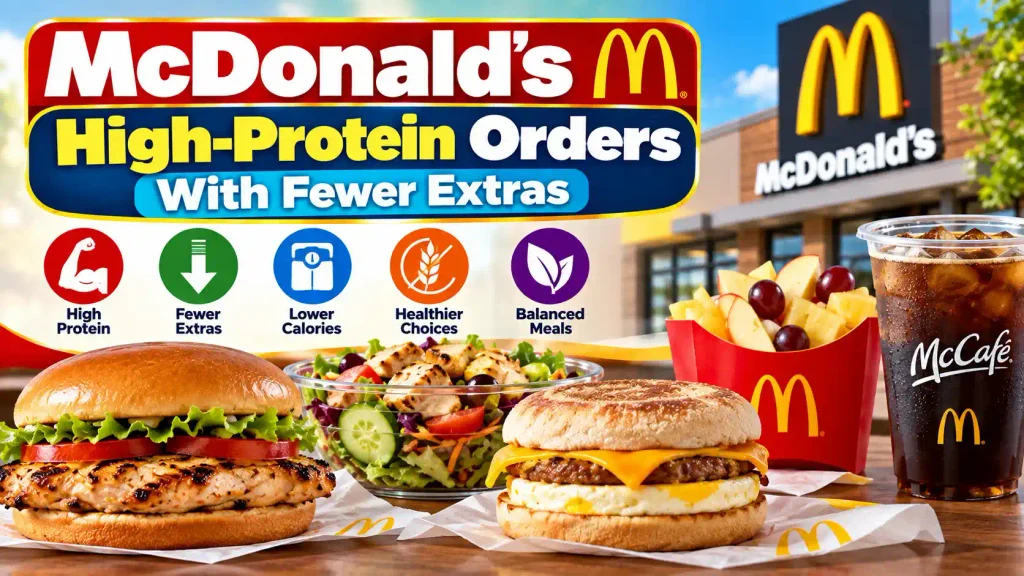
You don’t need to order a large combo to choose a protein-rich McDonald’s item. Ordering the main entrée separately can make the nutrition information easier to understand.
This approach also makes it simpler to compare two similar items. You can decide on the side or drink after choosing your main protein source.
• Start with the main protein-containing entrée
• Check protein before adding sides
• Compare sandwich-only nutrition with full-meal nutrition
• Choose sauces based on flavor preference
• Review beverage nutrition separately
• Remember that specialty drinks can add substantial calories and sugar
• Choose water when you want a calorie-free beverage
• Add a side when you actually want one
• Compare chicken portions by exact serving size
• Check the McDonald’s app before ordering
• Review nutrition after substitutions
• Consider the entire meal rather than protein alone
High-Protein McDonald’s Options When You Want Chicken
Chicken options cover several formats, from sandwiches to strips and McNuggets. This gives you flexibility when you want protein without automatically choosing a large burger.
Serving size remains important. The protein number for a small order shouldn’t be compared directly with a much larger chicken portion.
• McCrispy: chicken sandwich format
• Deluxe McCrispy: chicken with additional vegetables and toppings
• Spicy McCrispy: spicy chicken sandwich
• Spicy Deluxe McCrispy: spicy chicken with additional toppings
• McCrispy Strips: smaller chicken-piece format
• Three strips: about 30 g protein
• Four strips: more total protein than three strips
• 10-piece McNuggets: 23 g protein
• 20-piece McNuggets: larger chicken serving
• 40-piece McNuggets: designed for sharing
• McChicken: smaller chicken sandwich
• Snack Wrap: smaller chicken-based option
High-Protein McDonald’s Options When You Want Beef
Beef sandwiches offer several protein levels, depending on the number of patties and toppings. Double-patty sandwiches naturally provide more beef than smaller single-patty options.
Cheese and bacon can add protein, but they also change calories, fat, and sodium. Compare the complete nutrition information when making your choice.
• Double Quarter Pounder with Cheese: among the highest-protein individual burgers
• Bacon Quarter Pounder with Cheese: about 36 g protein
• Quarter Pounder with Cheese: about 30 g protein
• Quarter Pounder with Cheese Deluxe: includes additional toppings
• Big Mac: about 25 g protein
• Double Cheeseburger: about 25 g protein
• McDouble: 22 g protein
• Daily Double: beef sandwich with additional toppings
• Cheeseburger: about 15 g protein
• Hamburger: about 12 g protein
• Cheese: contributes additional protein
• Bacon: contributes protein while adding calories and sodium
High-Protein McDonald’s Breakfast Ordering Tips
Breakfast has several protein-containing sandwiches, but the total nutrition changes when you add hash browns, drinks, sauces, or other sides.
Start with the breakfast sandwich. Then check the complete order if you’re adding anything else.
• Egg McMuffin: 17 g protein
• Steak, Egg & Cheese Bagel: larger steak-and-egg sandwich
• Bacon, Egg & Cheese Bagel: bacon-based breakfast sandwich
• Sausage McMuffin with Egg: sausage and egg combination
• Sausage, Egg & Cheese McGriddles: sweet-savory breakfast
• Bacon, Egg & Cheese Biscuit: biscuit-based option
• Sausage Biscuit with Egg: sausage and egg breakfast
• Big Breakfast: several breakfast components in one order
• Hash Browns: add calories and carbohydrates with little protein
• Coffee: protein and calories depend on additions
• Breakfast hours: can vary by restaurant
• McDonald’s app: useful for checking the menu and nutrition information
How to Build a Protein-Focused McDonald’s Order
Building a protein-focused order is easier when you choose the main entrée first. After that, consider your side, beverage, portion size, and any customizations.
The McDonald’s app can help you review available items and nutrition information before placing an order. Local menus can vary, so use the restaurant-specific menu when possible.
• Choose your main protein source first
• Decide whether you’re ordering breakfast or the regular menu
• Compare protein between similar entrées
• Check calories alongside protein
• Choose a side separately
• Review your beverage choice
• Check sauces and condiments
• Review allergen information when relevant
• Recheck nutrition after substitutions
• Use the current restaurant menu
• Remember that recipes can change
• Treat protein as one part of the complete meal
McDonald’s Nutrition, Allergens, and Menu Changes
McDonald’s provides nutrition and ingredient information for its U.S. menu. The company notes that product formulations, preparation methods, portion sizes, suppliers, and regional or seasonal differences can affect nutrition information.
Allergies require additional caution. McDonald’s provides allergen information but also warns that shared preparation areas and equipment can create cross-contact.
• Check the official nutrition information before ordering
• Review ingredients if you have a food allergy
• Check allergens for the exact menu item
• Remember that cross-contact can occur
• Ask restaurant staff about current ingredient information when necessary
• Don’t assume an item is allergen-free
• Don’t assume a menu item is vegetarian or vegan
• Check local availability for limited-time products
• Recheck nutrition after recipe changes
• Treat third-party nutrition databases as secondary references
• Use the current McDonald’s menu for final verification
• Remember that nutrition figures can be rounded
How to Choose the Right High-Protein McDonald’s Option
The easiest approach is to compare the exact menu item, serving size, protein amount, and complete nutrition information. Start with what you want to eat, then use protein as one of your comparison points.
There isn’t one universally correct McDonald’s order. Your choice can depend on portion size, taste, dietary needs, allergies, meal timing, and what else you’re eating that day.
• Choose an Egg McMuffin for a moderate-protein breakfast
• Pick a Steak, Egg & Cheese Bagel for a larger breakfast sandwich
• Choose a McDouble for a moderate-protein beef option
• Pick a Quarter Pounder with Cheese for more protein from one burger
• Choose a Double Quarter Pounder with Cheese for a much larger protein amount
• Pick McCrispy Strips when you prefer chicken pieces
• Choose McNuggets when you want flexible portion sizes
• Pick McCrispy when you prefer a chicken sandwich
• Compare the full meal rather than only the entrée
• Check beverage and side nutrition separately
• Review allergens when they apply to you
• Verify current numbers in the McDonald’s app
FAQs
What is the highest-protein item at McDonald’s?
The answer depends on the current menu and serving size. The Double Quarter Pounder with Cheese is among the highest-protein individual sandwiches, while larger chicken portions can provide substantial total protein.
What McDonald’s breakfast has the most protein?
Several breakfast sandwiches provide substantial protein, including the Steak, Egg & Cheese Bagel and other egg-and-meat combinations. Exact protein amounts vary by item and should be checked against the current menu.
How much protein is in an Egg McMuffin?
The Egg McMuffin has 17 g of protein according to McDonald’s current protein information. It provides a moderate amount of protein compared with larger breakfast sandwiches.
Is the McDouble high in protein?
The McDouble provides 22 g of protein in McDonald’s current protein information. That makes it a higher-protein choice than smaller single-patty sandwiches.
How much protein is in 10-piece McNuggets?
A 10-piece Chicken McNuggets serving provides 23 g of protein according to McDonald’s 2026 protein information. Larger servings provide more total protein but also increase the overall nutrition values.
Can you get high protein at McDonald’s without ordering a huge meal?
Yes. Several individual sandwiches and chicken portions provide meaningful amounts of protein without requiring a large combo. Compare the entrée itself before adding sides and drinks.
Does McDonald’s nutrition information change?
Yes. Recipes, portion sizes, preparation methods, suppliers, and regional availability can change. Check the current McDonald’s U.S. menu or app before relying on a specific nutrition number.
Conclusion
High protein McDonald’s options include breakfast sandwiches, burgers, McCrispy items, McNuggets, strips, and other chicken choices. The most useful comparison considers protein alongside serving size and the rest of the meal.
Before ordering, check the current McDonald’s nutrition information for your exact item and location. Then choose the combination that fits your preferences, portion needs, and meal.