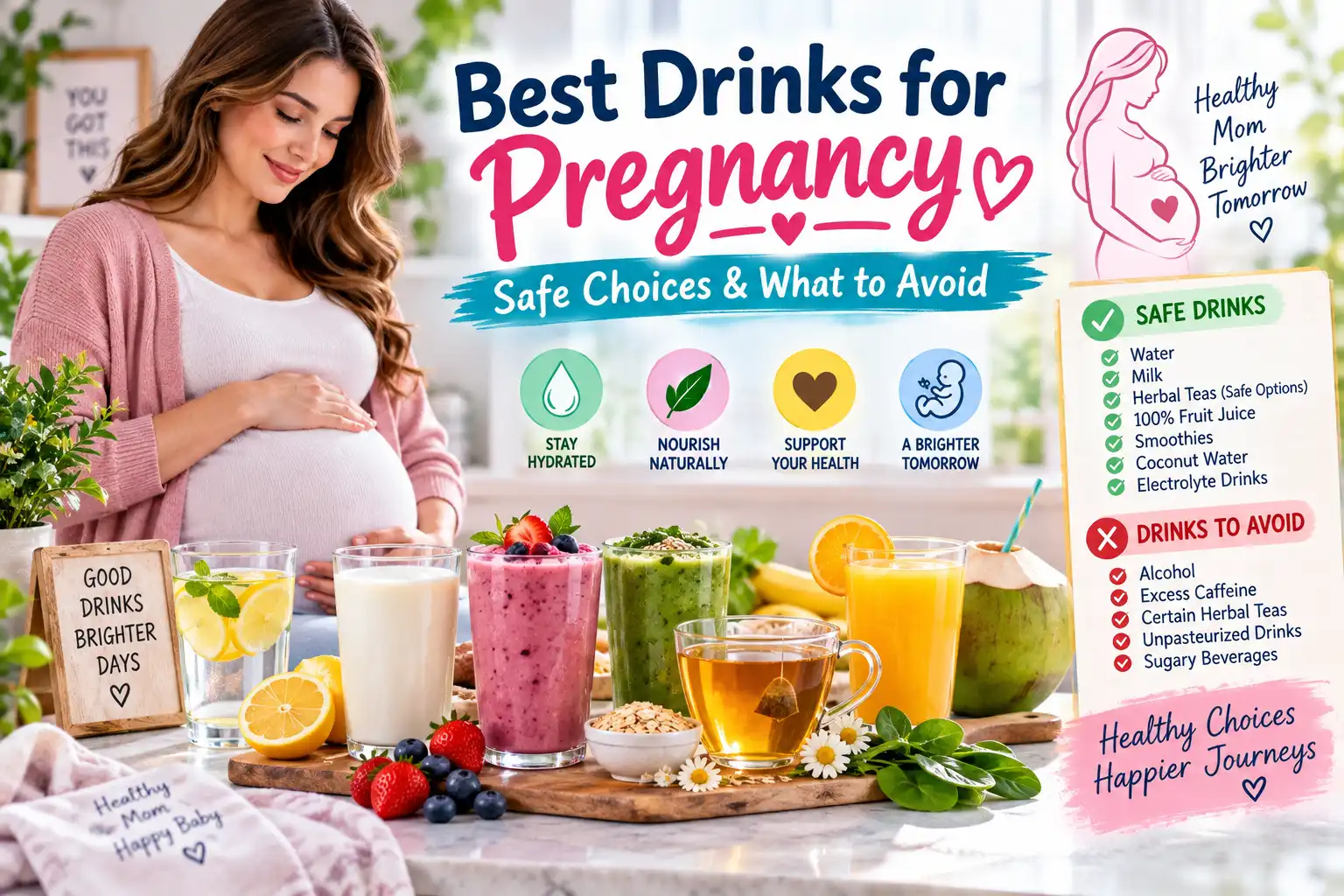
Choosing the best drinks for pregnancy sounds simple until nausea, food aversions, heartburn, caffeine limits, or plain-water fatigue get involved. The good news is that drinks for pregnant women do not need to be complicated or expensive.
For most people, water is the healthiest everyday drink during pregnancy. However, pasteurized milk, fortified plant beverages, homemade smoothies, pasteurized juice, sparkling water, ginger drinks, and carefully chosen teas can provide useful variety.
The right choice can also change throughout pregnancy. What feels manageable at 6 weeks pregnant may be different from what you prefer during the second or third trimester.
Medical information note: This guide summarizes current U.S. guidance from organizations including the American College of Obstetricians and Gynecologists (ACOG), Centers for Disease Control and Prevention (CDC), U.S. Food and Drug Administration (FDA), USDA, and National Institutes of Health (NIH). Individual pregnancy needs can differ, so advice from your OB-GYN, midwife, registered dietitian, or other prenatal care professional takes priority.
Best Pregnancy Drinks at a Glance
The best pregnancy drinks depend on what you need at that moment. Water works well for everyday hydration, while other healthy pregnancy beverages can add nutrients, flavor, or variety.
No drink has to supply every pregnancy nutrient. Prenatal nutrition works best as part of a balanced diet, appropriate prenatal vitamins, and regular prenatal care.
| Need | Good Drink Choice | Main Consideration |
|---|---|---|
| Best overall daily drink | Plain water | Drink regularly throughout the day |
| Water tastes boring | Infused or flavored water | Limit added sugar |
| Fizzy option | Unsweetened sparkling water | May worsen heartburn for some |
| Calcium and protein | Pasteurized milk | Choose the type that fits your diet |
| Non-dairy option | Fortified soy milk | Check calcium, vitamin D, protein |
| Filling drink | Homemade smoothie | Use washed produce and pasteurized ingredients |
| Fruit-flavored option | Pasteurized 100% juice | Whole fruit provides more fiber |
| First-trimester nausea | Cold water or ginger tea | Persistent vomiting needs medical care |
| After greater fluid loss | Appropriate electrolyte drink | Check sugar, caffeine, sodium, herbs |
| Coffee drink | Regular, half-caf, or decaf | Keep total caffeine below 200 mg daily |
| Social drink | Homemade 0.0% alcohol mocktail | Verify alcohol content carefully |
If someone asks “What can I drink during pregnancy?”, this table provides the short answer. The rest of this guide explains how each option fits into a healthy pregnancy.
How Much Water Should You Drink During Pregnancy?
Water during pregnancy should usually form the foundation of daily fluid intake. ACOG recommends drinking about 8 to 12 cups, or 64 to 96 ounces, of water per day while pregnant. Water helps digestion, nutrient circulation, waste removal, and formation of amniotic fluid around the fetus.
That recommendation is a useful general target, not a rigid rule for every person. Hydration needs during pregnancy can rise with hot weather, physical activity, fever, vomiting, diarrhea, and other fluid losses.
What Is the Best Water to Drink During Pregnancy?
There is no special premium water required for a healthy pregnancy.
Options can include:
• Plain water from a safe drinking-water source
• Filtered water if you prefer its flavor
• Mineral water, provided it is safe for drinking
• Cold water if chilled drinks are easier to tolerate
• Warm water if cold beverages bother your stomach
• Sparkling water without alcohol or excessive added ingredients
• Flavored water with little or no added sugar
• Infused water made with properly washed fruits or vegetables
Easy Infused Water Ideas
If drinking water while pregnant becomes boring, simple additions can make it more appealing:
• Lemon water
• Lime water
• Cucumber water
• Berry-infused water
• Orange-infused water
• Cucumber and mint water
• Strawberry and lemon water
Lemon water during pregnancy and other fruit-infused options are mainly useful because they make water more appealing. They are not special detox drinks and do not replace prenatal nutrition.
Benefits of Drinking Water During Pregnancy
Adequate fluid intake supports normal body functions while pregnancy increases demands on the body.
Pregnancy involves changes in blood volume, circulation, digestion, and fluid needs. Water also helps support the fluid surrounding the developing fetus.
The simplest strategy for how to stay hydrated during pregnancy is to sip regularly rather than trying to drink a huge amount at once.
What to Drink While Pregnant in the First Trimester
Questions about what to drink while pregnant first trimester are especially common because early pregnancy often brings nausea, vomiting, food aversions, smell sensitivity, and changes in taste.
The best drinks for first trimester pregnancy are usually safe beverages that you can comfortably keep down. You do not need a different special drink for every week.
From 4 weeks through 12 weeks pregnant, your basic hydration options remain similar. What changes is often your tolerance for temperature, sweetness, smell, carbonation, and portion size.
Good First-Trimester Pregnancy Drinks
Try options such as:
• Cold water
• Ice chips
• Mild lemon water
• Cucumber water
• Plain sparkling water
• Pasteurized milk
• Fortified soy milk
• Simple fruit smoothies
• Diluted pasteurized juice
• Fresh ginger tea
• Clear broth when savory flavors are easier
ACOG says pregnancy nausea commonly begins before nine weeks and may improve during the second trimester, although experiences vary.
What If Water Makes You Nauseous While Pregnant?
You do not have to force room-temperature plain water.
Try changing one variable at a time:
• Make the water much colder.
• Sip through a straw.
• Try ice chips.
• Add lemon or cucumber.
• Switch temporarily to plain seltzer.
• Dilute pasteurized apple juice with water.
• Drink smaller portions more frequently.
• Keep strong-smelling drinks away from you.
These simple first trimester hydration tips can make daily fluid intake more manageable.
Best Drinks for Morning Sickness and Pregnancy Nausea
The best drinks for morning sickness are not the same for everyone. Some people prefer very cold drinks, while others tolerate warm or room-temperature liquids better.
ACOG emphasizes drinking throughout the day because dehydration can make nausea worse. It also lists ginger products, including ginger tea made from fresh ginger and ginger ale made with real ginger, among options that may help settle the stomach.
Drinks to Try When Pregnant and Nauseous
• Cold water: Low aroma and easy to take in small sips.
• Ice chips: Useful when a whole glass feels overwhelming.
• Fresh ginger tea: One of the better-studied herbal options for pregnancy nausea.
• Ginger ale: Choose one made with real ginger and watch added sugar.
• Plain sparkling water: Provides carbonation without heavy sweetness.
• Lemon water: Tart flavors appeal to some people experiencing nausea.
• Diluted apple juice: Offers mild sweetness when water tastes unpleasant.
• Small smoothie: May work when drinking feels easier than eating.
• Clear broth: A savory alternative when fruit drinks sound unappealing.
NIH reviews indicate that ginger may help pregnancy-related nausea, although evidence is stronger for nausea than for preventing vomiting.
Cold Drinks vs. Warm Drinks for Pregnancy Nausea
There is no universal winner.
Cold drinks for pregnancy nausea can have less noticeable aroma, which may help when smell sensitivity is strong.
A warm drink such as mild ginger tea may feel more comforting to someone who dislikes carbonation or icy beverages.
Choose based on tolerance rather than assuming one temperature is medically superior.
What to Drink After Vomiting While Pregnant
Start slowly.
Small sips of water, ice chips, or another tolerated beverage may be easier than quickly drinking a full glass.
If repeated vomiting makes it difficult to maintain fluids, you may need individualized advice about rehydration drinks during pregnancy or an oral rehydration solution.
Inability to keep liquids down is a warning sign that needs medical attention rather than another homemade drink.
Coconut Water and Electrolyte Drinks During Pregnancy
Electrolytes during pregnancy become especially relevant when someone has lost fluid through vomiting, diarrhea, or heavy sweating.
Important electrolytes include sodium, potassium, and magnesium. These minerals help maintain normal fluid and electrolyte balance, but ordinary pregnancy does not automatically require a sports drink every day.
Is Coconut Water Safe During Pregnancy?
Commercial coconut water during pregnancy can generally fit into a normal diet when the product is appropriately processed and contains straightforward ingredients.
It provides fluid and naturally contains minerals such as potassium.
Useful options include:
• Plain coconut water
• Chilled coconut water
• Coconut water mixed with sparkling water
• Coconut water with a small squeeze of lime
• Watermelon blended with coconut water
However, coconut water is not inherently better than ordinary water for routine hydration.
Are Electrolyte Drinks Safe During Pregnancy?
Many conventional electrolyte drinks for pregnant women can fit into a pregnancy diet, but the ingredient list matters.
Check:
• Caffeine
• Added sugar
• Sodium
• Potassium
• Serving size
• Herbal extracts
• Stimulants
• Artificial colors or sweeteners if these concern you
• Other supplement-style ingredients
What Is the Best Electrolyte Drink While Pregnant?
There is no single brand that is automatically best for every pregnancy.
For mild everyday hydration, water is usually enough.
For meaningful fluid loss, a properly formulated oral rehydration solution can differ from an ordinary sports drink because it is designed with specific amounts of fluid, carbohydrate, and electrolytes.
If vomiting is persistent, especially with severe morning sickness, ask your prenatal care professional what type of rehydration product is appropriate.
Milk and Calcium-Rich Drinks During Pregnancy
Milk during pregnancy can provide fluid, protein, calcium, potassium, and other nutrients. USDA notes that dairy foods provide nutrients including calcium, vitamin D, protein, potassium, magnesium, and vitamin B12.
The key food-safety rule is to choose pasteurized milk.
FDA warns that raw milk can contain harmful microorganisms, including Listeria monocytogenes, which presents particular concerns during pregnancy.
What Is the Best Milk for Pregnancy?
The answer depends on your diet, nutritional needs, allergies, and preferences.
Dairy Milk
Options can include:
• Whole milk
• Low-fat milk
• Skim milk
• Lactose-free milk
All should be pasteurized.
The best fat level is not identical for every pregnant person, so use the type that fits your overall eating plan or professional advice.
Soy Milk
Fortified soy milk is one of the strongest non-dairy choices because it can supply both protein and important fortified nutrients.
USDA includes fortified soy milk and yogurt within its Dairy Group because fortified versions can provide calcium, vitamin A, and vitamin D.
Almond Milk
Almond milk during pregnancy can provide a light dairy-free option.
Check the label for:
• calcium
• vitamin D
• protein
• added sugar
• almond allergens
Protein is often lower than in dairy or soy milk.
Oat Milk
Oat milk during pregnancy can be useful for people who prefer a creamier plant-based drink.
Again, fortification varies between brands.
Calcium, Vitamin D, and Pregnancy Beverages
Calcium-rich drinks during pregnancy can support a balanced diet, but beverages should not become the sole source of important nutrients.
Pregnancy also increases attention to nutrients such as:
• folate and folic acid
• iron
• vitamin D
• calcium
• protein
• vitamin C
These nutrients support maternal health and fetal development, but no single beverage replaces a balanced diet or prescribed prenatal vitamins. NIH notes that nutritional requirements increase during pregnancy for many nutrients.
Pregnancy-Safe Smoothies and Protein Drinks
Smoothies during pregnancy are useful because they can combine fluid, fruit, fiber, dairy or plant milk, and protein in one glass.
The safest homemade versions use washed produce and pasteurized milk, yogurt, or juice. FDA specifically advises washing raw fruits and vegetables under running water and using pasteurized juice in smoothies during pregnancy.
Healthy Pregnancy Smoothie Ideas
Banana Berry Breakfast Smoothie
Blend:
• banana
• washed berries
• pasteurized plain yogurt
• milk or fortified soy milk
• ice
This works well as one of the simpler breakfast smoothies for pregnancy.
Strawberry Oat Smoothie
Blend:
• strawberries
• oats
• pasteurized yogurt
• milk
• ice
The oats and fruit add more texture and fiber than juice alone.
Mango Yogurt Smoothie
Blend:
• mango
• pasteurized yogurt
• milk or fortified plant milk
• ice
Green Pregnancy Smoothie
Blend:
• thoroughly washed spinach
• banana
• berries
• pasteurized yogurt
• milk
A green smoothie during pregnancy can be perfectly ordinary food. It does not need detox powders, herbal blends, or concentrated supplements.
Prune-Berry Smoothie
Blend:
• a small amount of pasteurized prune juice
• berries
• yogurt
• oats
• ice
This provides fruit and fiber while incorporating a traditional constipation-friendly beverage.
Can Pregnant Women Drink Protein Shakes?
A simple protein shake while pregnant is different from a heavily supplemented performance drink.
A homemade shake made from pasteurized milk or fortified soy milk, yogurt, nut butter when appropriate, fruit, and oats can provide protein without needing a supplement powder.
Commercial pregnancy-safe protein shakes require closer label reading.
Some powders contain:
• botanical extracts
• caffeine
• large vitamin doses
• proprietary blends
• stimulants
• other dietary supplements
NIH advises caution with botanical supplements during pregnancy because safety evidence for many ingredients is limited.
If you plan to use a protein powder regularly, show the ingredient list to your OB-GYN or registered dietitian.
Best Juice During Pregnancy
Juice during pregnancy can fit into a balanced diet, but pasteurization is the main safety issue.
FDA recommends pregnant consumers choose juice that has been pasteurized or otherwise treated to kill harmful bacteria. It also notes that fresh-squeezed juice sold by the glass at farmers markets, roadside stands, and some juice bars may not be treated or labeled with a warning.
Healthy Juices During Pregnancy
Options can include:
• Orange juice
• Apple juice
• Cranberry juice
• Pomegranate juice
• Prune juice
• Carrot juice
• Beet juice
• Tomato juice
• Other pasteurized fruit or vegetable juices
Orange Juice During Pregnancy
Pasteurized orange juice can provide vitamin C. Some products are also fortified with calcium or other nutrients, so check the nutrition label rather than assuming.
Apple Juice During Pregnancy
Pasteurized apple juice has a mild flavor that some people tolerate during early pregnancy.
Diluting it with water can make it less sweet.
Cranberry and Pomegranate Juice
Pasteurized cranberry juice and pomegranate juice can add variety, but watch added sugar in sweetened blends.
Prune Juice During Pregnancy
Pasteurized prune juice is often chosen when constipation is an issue.
It can be paired with adequate water and fiber-rich foods instead of relying on juice alone.
Vegetable Juices
Pasteurized carrot juice, beet juice, and tomato juice can fit into a pregnancy diet.
Check packaged vegetable juice for sodium, especially if you drink it frequently.
Is Fresh Juice Safe During Pregnancy?
Do not assume “fresh” means safer.
FDA reports that about 98% of juice sold in the United States is pasteurized, but untreated juice still exists. Harmful bacteria such as E. coli O157:H7 can survive in acidic juices.
If pasteurization cannot be confirmed, choose another beverage.
Tea During Pregnancy: What Is Safer and What Needs Caution?
Tea during pregnancy requires more nuance than simply dividing drinks into caffeinated and caffeine-free categories.
Black and green teas contribute caffeine. Herbal tea during pregnancy may contain little or no caffeine, but some botanicals have limited pregnancy safety data.
Green Tea During Pregnancy
Green tea contains caffeine and therefore contributes to your daily total.
NIH notes that caffeine can occur naturally in green tea and other botanicals.
You do not necessarily need to eliminate green tea, but serving size and total daily caffeine matter.
Black Tea During Pregnancy
Black tea typically contains more caffeine than green tea, although amounts vary.
Count it alongside coffee, chocolate, soda, and other caffeine sources.
Decaf Tea
Decaf tea during pregnancy can reduce caffeine intake substantially.
“Decaf” does not always mean absolutely caffeine-free, but the amount is typically much lower.
Ginger Tea During Pregnancy
Ginger tea is one of the better-supported herbal choices for pregnancy nausea.
NIH says some evidence supports ginger for relieving nausea, although evidence quality varies and it appears more effective for nausea than vomiting.
Peppermint Tea During Pregnancy
Peppermint is common in foods, but evidence regarding concentrated or regular medicinal use during pregnancy is less complete.
NIH states that peppermint consumed in amounts normally found in foods is considered safe, but information on peppermint leaf use during pregnancy is limited. Peppermint essential oil should not be taken during pregnancy except under qualified supervision.
Chamomile Tea During Pregnancy
Do not automatically place chamomile tea on a pregnancy-safe list.
NIH reports that the pregnancy safety of German chamomile is not well studied, while experts advise against Roman chamomile during pregnancy.
Rooibos Tea During Pregnancy
Rooibos tea is naturally caffeine-free, but pregnancy-specific safety evidence is less extensive than evidence for standard dietary beverages.
If you drink herbal tea regularly, especially in concentrated amounts, discuss the specific product and ingredients with your prenatal care professional.
The Best Herbal Tea Rule
Do not assume these package words mean safe:
• “natural”
• “detox”
• “cleanse”
• “wellness”
• “maternal”
• “pregnancy blend”
Most botanicals lack strong pregnancy safety evidence, according to NIH.
Coffee, Decaf, and the Caffeine Limit During Pregnancy
Coffee during pregnancy does not automatically need to disappear.
The important number is 200 mg of caffeine per day.
ACOG says moderate caffeine consumption of less than 200 mg daily does not appear to cause miscarriage or preterm birth. Caffeine also comes from tea, chocolate, energy drinks, and soft drinks.
How Much Coffee Can You Drink While Pregnant?
Coffee caffeine levels vary substantially.
A small home-brewed coffee may fit comfortably within the limit, while some large coffeehouse drinks can approach or exceed it.
Always check the actual drink when possible.
Lower-Caffeine Pregnancy Drinks
Options include:
• Decaf coffee
• Half-caf coffee
• Decaf tea
• Milk
• Fortified plant milk
• Caffeine-free sparkling water
• Ginger tea
• Warm water with lemon
Morning Drinks Instead of Coffee While Pregnant
If coffee worsens nausea or heartburn, try:
• Decaf latte
• Warm pasteurized milk
• Ginger tea
• Cold lemon water
• Breakfast smoothie
• Fortified soy milk
• Caffeine-free herbal beverage approved by your care professional
Caffeine can contribute to nausea, sleep problems, light-headedness, and increased urination in some people.
Sparkling Water, Soda, Diet Drinks, and Artificial Sweeteners
Sparkling water while pregnant can be a practical choice when plain water feels boring.
Plain carbonated water during pregnancy does not contain caffeine unless another caffeinated ingredient has been added.
Is Sparkling Water Safe During Pregnancy?
Ordinary unsweetened sparkling water can generally fit into pregnancy hydration.
Try:
• lemon sparkling water
• lime seltzer
• berry seltzer
• cucumber sparkling water
• sparkling water mixed with pasteurized juice
However, carbonation may worsen heartburn, acid reflux, or bloating for some people.
Can Pregnant Women Drink Soda?
Soda during pregnancy can fit occasionally, but check caffeine and added sugar.
Caffeinated soft drinks count toward the 200 mg daily caffeine limit.
Regular soda can also contain a substantial amount of added sugar, so it is usually better as an occasional drink than the main source of hydration.
Diet Soda and Zero-Sugar Drinks
A zero-sugar drink avoids added sugar but may contain caffeine and high-intensity sweeteners.
FDA states that authorized sweeteners such as aspartame and sucralose are considered safe under their approved conditions of use for the general population. People with phenylketonuria (PKU) need to avoid or restrict aspartame because it contains phenylalanine.
Pregnancy is still a good time to avoid letting diet soda replace water, milk, or other nutrient-rich beverages.
If you have gestational diabetes, work with your healthcare team or dietitian to choose drinks that fit your individualized blood sugar or blood glucose plan.
Drinks for Constipation and Heartburn During Pregnancy
Pregnancy can change digestion, so readers often search for drinks that fit specific symptoms.
A drink should support comfort without being presented as a cure.
Drinks When Constipation Is a Problem
Useful choices can include:
• Water
• Warm water
• Pasteurized prune juice
• Smoothies containing whole fruit
• Smoothies containing oats
• Milk or fortified plant beverages as part of meals
Water and fiber work together, so increasing fiber without adequate fluids may not provide the result you expect.
Drinks When Heartburn or Acid Reflux Is a Problem
Pregnancy heartburn triggers differ between people.
If symptoms worsen after certain drinks, consider reducing:
• strongly acidic citrus drinks
• coffee
• caffeinated beverages
• carbonated drinks
• very large drink portions close to bedtime
Water or a mild non-acidic beverage may feel more comfortable.
Persistent or severe heartburn should be discussed with your prenatal care professional rather than managed only through beverage changes.
What Should a Pregnant Woman Drink Throughout the Day?
There is no mandatory pregnancy drink schedule, but a simple routine can make hydration easier.
First Thing in the Morning
If you are wondering what to drink first thing in the morning while pregnant, start with something you tolerate.
That might be:
• Water
• Cold lemon water
• Pasteurized milk
• Ginger tea
• A small smoothie
• A measured coffee if it fits your caffeine allowance
A person with first-trimester nausea may prefer a few sips before attempting a full glass.
With Breakfast
Good choices include:
• Water
• Pasteurized milk
• Fortified soy milk
• Breakfast smoothie
• Small pasteurized orange juice
• Coffee or tea within your caffeine allowance
During the Day
Make water your default and rotate in other hydrating drinks for pregnancy when you need variety.
Keep a bottle nearby instead of relying only on thirst.
In the Evening
Good daily drinks during pregnancy can include water, pasteurized milk, or another caffeine-free drink.
If caffeine interferes with sleep, move coffee, green tea, and black tea earlier in the day.
What Should I Drink at Night While Pregnant?
Water remains the simplest option.
Warm pasteurized milk or another caffeine-free beverage may also work if you prefer something warm.
If drinking a lot immediately before bed causes repeated bathroom trips or worsens reflux, spread more of your fluid intake across the daytime instead.
Healthy Drinks in the Second and Third Trimesters
The basic rules for safe drinks during pregnancy do not suddenly change after the first trimester.
Water remains central during the second trimester and third trimester, while pasteurized dairy, fortified plant milk, smoothies, juice, and appropriately chosen caffeine-free drinks can add variety.
Later pregnancy may bring different practical problems, including:
• warmer body temperature
• increased thirst
• heartburn
• constipation
• reduced stomach comfort with large servings
• gestational diabetes in some pregnancies
Smaller, more frequent drinks may feel more comfortable than large servings.
Do You Need Special Third-Trimester Drinks?
Usually not.
Be cautious with products marketed as labor drinks, pregnancy tonics, or herbal preparations.
For example, red raspberry leaf is commonly marketed for late pregnancy, but NIH says evidence supporting its benefits is weak and its safety has not been well studied.
This is one reason “pregnancy friendly” on a package should never replace evidence or professional guidance.
Pregnancy-Friendly Social Drinks and Mocktails
Being pregnant does not mean every celebration has to involve plain water.
Simple homemade drinks for pregnancy can feel festive without introducing alcohol.
Berry Lime Spritzer
Combine:
• sparkling water
• splash of pasteurized cranberry juice
• washed berries
• lime
• ice
Cucumber Citrus Fizz
Combine:
• plain seltzer
• cucumber
• lemon or lime
• ice
Peach Sparkler
Combine:
• sparkling water
• sliced peach
• pasteurized apple juice
• ice
Mango Lime Slush
Blend:
• mango
• water
• lime
• ice
These refreshing pregnancy drinks use ingredients that are easy to identify.
Check “Non-Alcoholic” Labels Carefully
CDC states that there is no known safe amount of alcohol during pregnancy and no safe time during pregnancy to drink alcohol.
For U.S. malt beverages, TTB rules distinguish “non-alcoholic” from “alcohol free.”
A product labeled “non-alcoholic” can contain less than 0.5% alcohol by volume, while an “alcohol free” malt beverage must contain no alcohol.
For the clearest pregnancy choice, use beverages that state 0.0% alcohol or build your mocktail from ingredients that never contained alcohol.
Drinks to Avoid During Pregnancy
Understanding what not to drink while pregnant is as important as knowing the best choices.
Alcohol
Avoid alcohol during pregnancy.
CDC’s current April 2, 2026 guidance states there is no known safe amount, no safe time, and no safe type of alcohol use during pregnancy. Beer, wine, and liquor all count.
Raw Milk
Avoid raw or unpasteurized milk.
FDA warns that raw milk can carry harmful germs, including Listeria, which can pose serious risks during pregnancy.
Unpasteurized Juice
Avoid untreated juice unless it has been properly treated for safety.
FDA specifically warns pregnant consumers about unpasteurized juices and fresh juice when treatment status cannot be confirmed.
Energy Drinks
Energy drinks during pregnancy are poor choices because they may contain high amounts of caffeine plus additional stimulants or botanical caffeine sources.
Ingredients such as guarana, yerba mate, kola nut, and green tea extracts may contribute caffeine. NIH notes that caffeine amounts in some supplement-style products can be difficult to determine.
High-Caffeine Drinks
Coffee, strong tea, energy products, and some soft drinks can push daily caffeine intake over the recommended limit.
Aim for less than 200 mg per day unless your own clinician recommends avoiding caffeine entirely.
Unverified Herbal Drinks
Do not automatically trust a product because it says natural.
NIH reports that most botanical ingredients lack adequate evidence of safety and effectiveness during pregnancy.
Kombucha
Kombucha during pregnancy deserves caution because it is fermented, and alcohol content and manufacturing conditions can vary.
A conventional pasteurized, nonfermented, 0.0% beverage is easier to evaluate.
Homemade Fermented Drinks
Homemade fermentation makes alcohol content and microbial safety harder to predict.
Choose simpler alternatives during pregnancy.
Signs of Dehydration During Pregnancy and When to Get Help
Good pregnancy dehydration prevention begins with regular fluid intake, but sometimes nausea or illness makes that difficult.
ACOG advises pregnant patients to contact their OB-GYN or other obstetric care professional when dehydration symptoms develop.
Important Dehydration Warning Signs
Seek medical advice if you develop:
• very little urine that is dark in color
• inability to urinate
• inability to keep liquids down
• dizziness or fainting when standing
• a racing or pounding heartbeat
Persistent vomiting requires more than another sports drink.
What About Hyperemesis Gravidarum?
Hyperemesis gravidarum is the severe end of pregnancy nausea and vomiting.
When someone cannot maintain hydration, loses weight, or has ongoing vomiting, medical assessment may be required.
Drinks used for hyperemesis gravidarum hydration should be guided by the treating healthcare team because some patients need structured oral rehydration or intravenous fluids.
Do not delay care because you are trying to find the “best electrolyte drink.”
FAQs About Drinks for Pregnant Women
What Is the Healthiest Drink During Pregnancy?
For most people, plain water is the healthiest drink for pregnancy because it supports hydration without adding caffeine, alcohol, or sugar.
ACOG recommends approximately 8 to 12 cups of water each day during pregnancy.
Milk, fortified plant milk, smoothies, and other healthy beverages during pregnancy can complement water.
What Can I Drink Besides Water While Pregnant?
Good choices can include pasteurized milk, fortified soy milk, sparkling water, infused water, homemade smoothies, pasteurized juice, decaf coffee, and suitable teas.
The best alternative depends on whether you want extra flavor, protein, calcium, caffeine, or simply something different from plain water.
Can I Drink Lemon Water While Pregnant?
Plain lemon water while pregnant is generally a simple way to flavor water.
Wash fresh lemons before cutting them. If citrus worsens heartburn or acid reflux, choose a less acidic flavored water instead.
Can I Drink Coconut Water While Pregnant?
Plain packaged coconut water while pregnant can fit into a balanced pregnancy diet.
It provides fluid and electrolytes such as potassium, but it does not need to replace ordinary water.
Can I Drink Smoothies While Pregnant?
Yes, appropriately prepared pregnancy-safe smoothies can be a practical beverage or snack.
Use thoroughly washed fruit and vegetables and pasteurized dairy or juice. FDA specifically recommends these food-safety steps for pregnancy smoothies.
Can I Drink Tea or Coffee While Pregnant?
Many pregnant people can consume coffee, black tea, or green tea while keeping total caffeine below 200 mg per day. Decaf coffee and decaf tea provide lower-caffeine alternatives.
Herbal teas need separate consideration because caffeine-free does not automatically mean pregnancy-safe.
What Should I Drink If I Am Pregnant and Dehydrated?
For mild thirst, begin with water or another tolerated fluid.
If dehydration follows significant vomiting or diarrhea, ask your prenatal care professional whether an electrolyte drink or oral rehydration solution is appropriate. If you cannot keep liquids down, contact your obstetric care provider.
Conclusion
The best drinks for pregnancy are usually the simplest ones. Water should remain your everyday hydration base, while pasteurized milk, fortified plant beverages, smoothies, pasteurized juice, sparkling water, appropriate teas, and moderate caffeine choices can provide variety.
During early pregnancy and the first trimester, cold water, ice chips, ginger tea, diluted juice, and small frequent sips may be easier when nausea affects drinking. Later in pregnancy, your preferences may shift again as heartburn, constipation, heat, or other changes appear.
The most important safety rules stay consistent: keep total caffeine below 200 mg daily, avoid alcohol, choose pasteurized milk and juice, use caution with herbal and supplement drinks, and seek medical advice when vomiting prevents adequate hydration.
There is no need to chase a miracle beverage. The best drink for a healthy pregnancy is one that is safe, supports your hydration and nutrition needs, and is realistic enough for you to drink regularly.