Compare carbohydrate levels across distilled spirits, dry wine, light beer, hard seltzers and common mixers—plus serving-size context, nutrition differences and important alcohol-safety considerations.
This guide is nutritional information about alcoholic beverages. Alcohol is for adults of legal drinking age only. Low-carb or zero-carb does not make an alcoholic drink healthy or risk-free. If you do not drink, there is no health reason to start drinking for a low-carb diet.
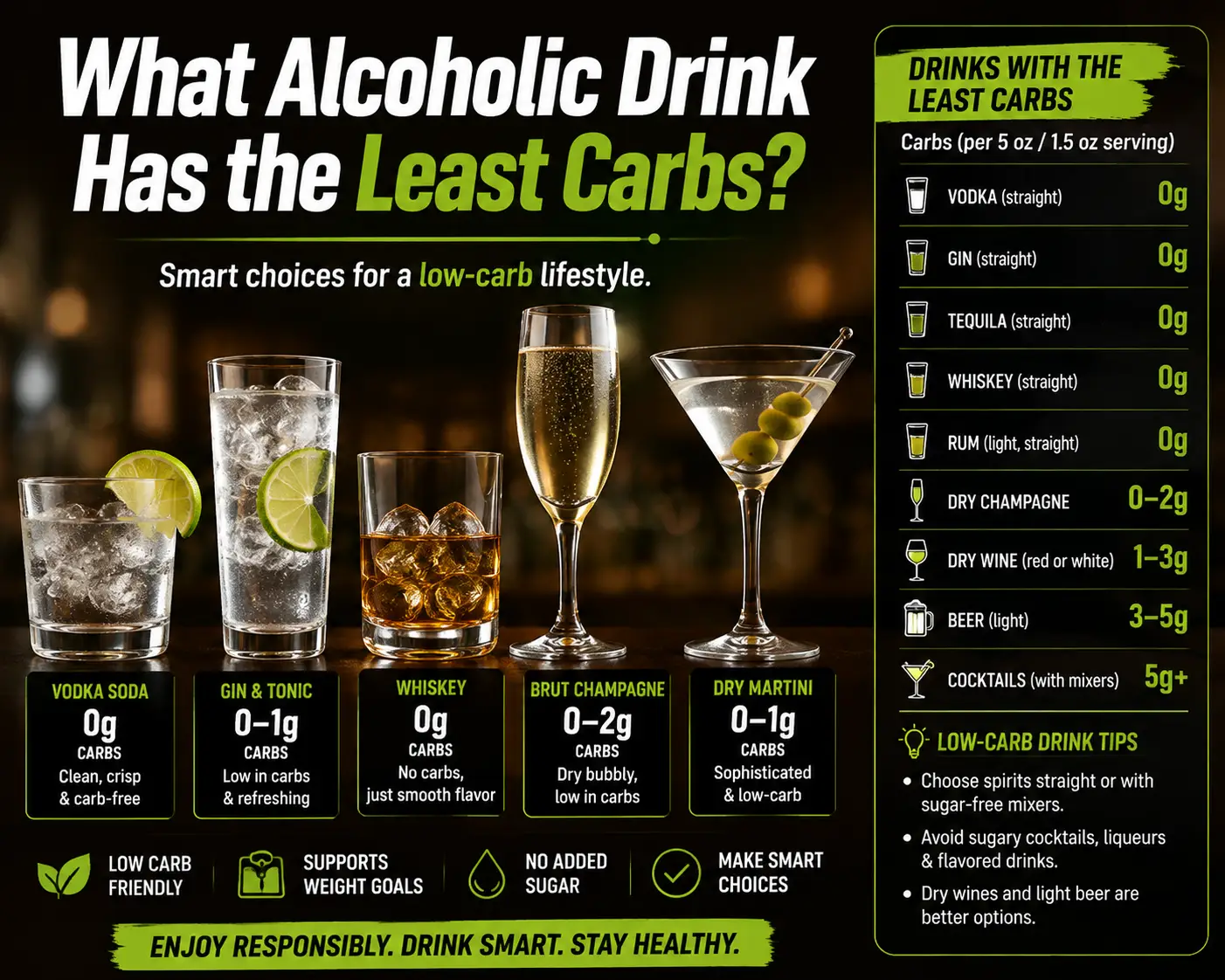
The alcoholic drinks with the fewest carbohydrates are generally plain, unflavored distilled spirits. Vodka, gin, tequila, rum, whiskey, brandy and cognac generally contain about 0g of carbohydrates per 1.5-ounce serving when unflavored and consumed without sugary additions.
Dry wines and some light beers contain small amounts of carbohydrate. The final carb count can change substantially when a spirit is combined with juice, regular soda, syrup, sweetened tonic or a sugary liqueur.
Plain spirits
Unflavored distilled spirits generally have about 0g carbohydrates per standard 1.5-ounce serving.
Dry styles
Dry red, dry white and dry sparkling wines are generally lower in carbs than sweet wines.
Light options
Light and ultra-light beers can contain substantially fewer carbs than many regular beers.
The Lowest-Carb Alcoholic Drinks at a Glance
The lowest-carb choice depends on whether you’re comparing spirits, wine, beer or a mixed drink. For pure spirits, carbohydrate content is generally 0g per 1.5-ounce serving. Dry wines and some light beers contain small amounts.
| Drink | Typical serving | Approx. carbs |
|---|---|---|
| Plain vodka | 1.5 oz | 0g |
| Plain gin | 1.5 oz | 0g |
| Plain tequila | 1.5 oz | 0g |
| Plain rum | 1.5 oz | 0g |
| Plain whiskey | 1.5 oz | 0g |
| Plain brandy | 1.5 oz | 0g |
| Dry white wine | 5 oz | About 3–4g |
| Dry red wine | 5 oz | About 3–4g |
| Light beer | 12 oz | About 3–6g |
| Regular beer | 12 oz | Often 10g+ |
| Sweet cocktails | Varies | Can exceed 10–30g |
Why Plain Spirits Have the Fewest Carbs
Distilled spirits are produced by fermenting and then distilling an alcoholic liquid. Finished, unflavored spirits generally contain little to no carbohydrate, even when the original ingredients included grains, fruit, sugarcane or other fermentable materials.
The important distinction is between the spirit itself and the finished beverage. A plain spirit may contain essentially no carbs, while a mixed drink can gain carbohydrates from juice, regular soda, syrup, tonic or liqueurs.
Plain spirit
Generally about 0g carbs per standard serving.
Sugary mixer
Can add substantial carbohydrate independently of the spirit.
Flavored product
Check the specific label because flavoring and formulation can change nutrition.
Best Zero-Carb Spirits
For carbohydrate comparison, unflavored distilled spirits are usually the simplest category to understand.
- Vodka: generally about 0g carbs
- Gin: generally about 0g carbs
- Tequila: generally about 0g carbs
- Rum: generally about 0g carbs
- Whiskey: generally about 0g carbs
- Bourbon: generally about 0g carbs
- Brandy: generally about 0g carbs
- Cognac: generally about 0g carbs
- Scotch: generally about 0g carbs
Mixed Drinks: Why the Mixer Matters
A mixed drink’s carbohydrate content can be driven more by the mixer than by the distilled spirit. Plain carbonated water contains no carbohydrates, while regular soda, juice, syrup and sweetened tonic can add considerably more.
Lower-carb mixer categories
- Plain club soda
- Plain seltzer
- Unsweetened sparkling water
- Unsweetened tea
- Small amounts of fresh citrus
- Fresh herbs or cucumber
Higher-carb mixer categories
- Regular tonic water
- Regular cola
- Orange or pineapple juice
- Sweetened cranberry drinks
- Simple syrup
- Agave syrup
- Sweet-and-sour mix
- Sweet liqueurs
Lowest-Carb Wines
Wine cannot compete with plain spirits on carbohydrate content, but dry wines are among the lower-carb fermented alcoholic beverages. Current nutrition references commonly place dry red and white wine around 3–4g of carbohydrates per 5-ounce serving, although exact values vary.
Dry white choices
- Sauvignon Blanc
- Pinot Grigio
- Dry Chardonnay
Dry red choices
- Pinot Noir
- Cabernet Sauvignon
- Merlot
The key term is dry. Sweeter wines generally contain more residual sugar and may therefore contain more carbohydrate.
Is Champagne Low in Carbs?
Dry Champagne and other dry sparkling wines can be relatively low in carbohydrates, but exact amounts depend on sweetness level and serving size.
| Style | General sweetness comparison |
|---|---|
| Brut Nature | Very dry |
| Extra Brut | Very dry |
| Brut | Dry |
| Extra Dry | Sweeter than Brut |
| Demi-Sec | Noticeably sweeter |
| Doux | Sweetest category |
Serving size matters. A standard 5-ounce comparison is different from a large restaurant pour.
Lowest-Carb Beer Options
Beer generally contains more carbohydrates than pure spirits because brewing begins with carbohydrate-containing grains. However, light and ultra-light beers can be considerably lower in carbs than many regular beers.
- Michelob ULTRA
- Miller Lite
- Budweiser Select 55
- Coors Light
- Bud Light
- Other ultra-light lagers
- Other light lagers
Low-Carb Hard Seltzers and Canned Alcoholic Drinks
Hard seltzers can be relatively low in carbohydrates, but “hard seltzer” is a category, not a nutrition guarantee.
- Check total carbohydrate, not only sugar.
- Check the complete serving size.
- Compare cans with the same volume.
- Look for added juice or sweeteners.
- Check flavored versions separately.
- Don’t assume every seltzer has 0g carbs.
- Compare calories when relevant.
Alcoholic Drinks That Tend to Be Higher in Carbs
Many high-carb cocktails are high in carbohydrates because of added sugar, juice, syrup or sweet liqueurs, rather than because the distilled spirit itself contains carbohydrates.
Sweet cocktails
Piña coladas, frozen margaritas, daiquiris and sweet sangria can contain substantial carbohydrate.
Sweet mixers
Regular cola, fruit juice, regular tonic and sweetened cranberry drinks can raise carbs quickly.
Sweet alcohol products
Dessert wines, cream liqueurs and fruit-flavored liqueurs can contain considerably more carbohydrate than plain spirits.
Carbs, Sugar, Calories and Alcohol Are Different
This is one of the most important distinctions in any low-carb alcohol comparison: zero carbs does not mean zero calories, and low sugar does not mean low alcohol.
Alcohol itself provides about 7 calories per gram. A plain spirit can therefore contain zero carbohydrates while still contributing calories and a meaningful amount of alcohol.
| Term | What it means |
|---|---|
| Carbohydrates | A nutrient found in many mixers and fermented drinks. |
| Sugar | One type of carbohydrate. |
| Calories | Energy supplied by alcohol and other nutrients. |
| Alcohol | Provides about 7 calories per gram. |
| ABV | Shows alcohol concentration. |
| Serving size | Determines how much alcohol and nutrition you consume. |
Choosing a Lower-Carb Option by Category
The “best” nutritional choice depends on the category you already prefer. There is no need to treat a low-carb label as a health claim.
Fewest carbs
Plain, unflavored distilled spirits generally have about 0g carbs per standard serving.
Wine preference
Dry red, dry white and dry sparkling wines generally contain less carbohydrate than sweet wines.
Beer preference
Compare light and ultra-light beers using current labels.
Convenience
Check hard-seltzer labels rather than assuming all products have the same nutrition.
Low-Carb Alcohol Does Not Mean Healthy Alcohol
A drink can be low in carbohydrates while still carrying the risks associated with alcohol. Reducing carbs changes one nutritional feature; it does not remove alcohol-related risks.
Low-carb, low-sugar and wellness-style claims can create a health halo. Those claims should not be treated as proof that an alcoholic beverage is healthy.
Frequently Asked Questions
What alcoholic drink has the least carbs?
Plain distilled spirits generally have the fewest carbohydrates, often about 0g per 1.5-ounce serving. The finished drink can have much more carbohydrate if juice, regular soda, syrup, tonic or sweet liqueurs are added.
What alcohol has zero carbs?
Unflavored distilled spirits such as vodka, gin, tequila, rum, whiskey and brandy generally contain about 0g of carbohydrates per standard serving. That does not mean zero calories or zero alcohol.
What is the lowest-carb beer?
There is no permanent single winner because formulas and serving sizes differ. Some ultra-light beers contain around 2–3g of carbohydrates per serving, while other light beers contain more. Check the current label.
Is wine lower in carbs than beer?
Dry wine is often lower in carbohydrates than regular beer, with many dry wines providing roughly 3–4g per 5-ounce serving. Some light beers can also fall within a similar or lower range.
Does tonic water have carbs?
Regular tonic water contains carbohydrates because it is typically sweetened. Zero-sugar tonic products can have a different nutrition profile, so check the current label.
Can you drink alcohol on a low-carb or keto diet?
Some adults choose relatively low-carb alcoholic beverages while following a low-carbohydrate eating pattern. Plain spirits, dry wine and selected light beers contain relatively few carbohydrates, but alcohol still provides calories and carries risks unrelated to carbohydrate intake.
Conclusion
If the only nutritional variable you’re comparing is carbohydrates, plain distilled spirits are generally the lowest-carb alcoholic category, at about 0g per standard 1.5-ounce serving when unflavored and without sugary additions.
Dry wine is generally a lower-carb fermented option, while light and ultra-light beers can be lower in carbs than regular beer. For mixed drinks, the ingredients added to the spirit can make the largest difference.
Read More:
What Can I Drink After a Tooth Extraction
100 Fruit Drink Recipes: Juices, Smoothies & Mocktails
16 Best Non-Alcoholic After Dinner Drinks for Any Evening
Best Places for Non-Alcoholic Drinks in Las Vegas: 2026 Guide
Bob Marley Mocktail: Easy Non-Alcoholic Layered Drink
Liquid Maria Juana Drink: Easy Tropical Cocktail Recipe
Gasolina Drink: Flavors, ABV, Ingredients & More