Plant-Based Energy Drinks: Ingredients, Caffeine, Safety & Best Caffeine-Free Options
Learn what plant-based energy drinks contain, which plants naturally provide caffeine, how to read beverage labels, and how to choose flavorful caffeine-free alternatives.
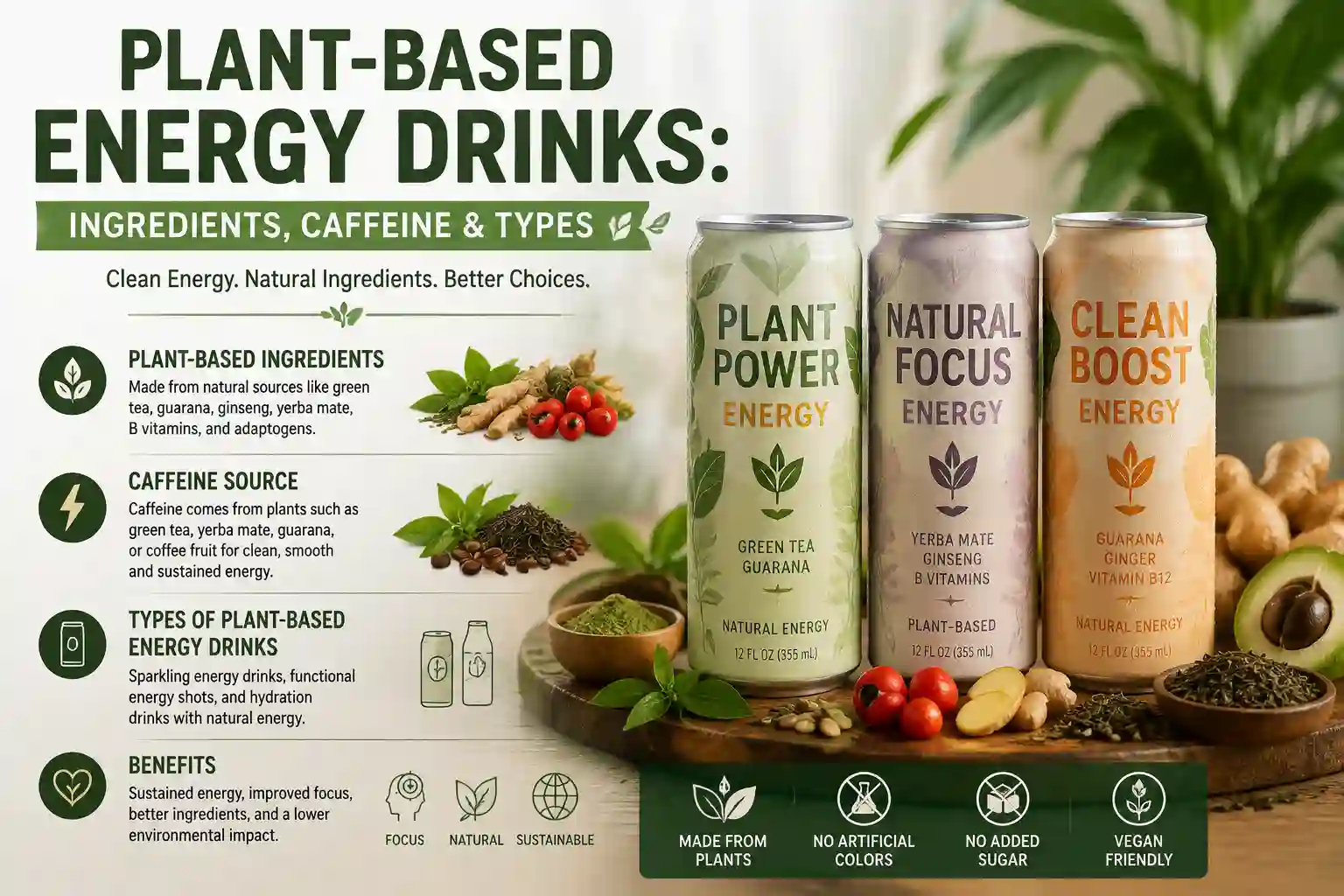
Plant-based energy drinks are beverages built around ingredients that come from plants, such as tea, coffee, yerba mate, guarana, fruit, herbs, and botanical extracts. Some contain caffeine naturally supplied by those plants, while others use plant ingredients mainly for flavor, color, or formulation.
That distinction matters. Plant-based does not automatically mean caffeine-free, vegan, organic, low-sugar, or appropriate for every age group. For children and teens, the American Academy of Pediatrics recommends avoiding caffeine, and the FDA says medical experts advise against energy drinks for this age group.
This guide explains how the category works, what ingredients commonly appear, how to understand labels, and how to choose caffeine-free plant-based beverages when appropriate.
Quick Answer
Plant-based energy drinks use plant-derived ingredients such as green tea, coffee, yerba mate, guarana, fruit, and botanicals. Some contain caffeine, so “plant-based” does not mean caffeine-free.
For children and teens, the American Academy of Pediatrics recommends avoiding caffeine and energy drinks. Caffeine-free options like sparkling water, fruit-infused water, and herbal tea are better choices.
What Is a Plant-Based Energy Drink?
A plant-based energy drink is generally a beverage that uses one or more plant-derived ingredients as part of its formulation. The term doesn’t describe one standardized recipe, caffeine level, or nutrition profile.
Some formulations center on tea or botanical extracts. Others use fruit flavors, sparkling water, plant-derived sweeteners, or combinations of several botanical ingredients. The word plant-based describes the source of ingredients, not automatically the effect of the finished drink.
That’s why two beverages can both use plant ingredients while having very different formulations. One may contain naturally occurring caffeine, while another may be caffeine-free.
What Ingredients Are Commonly Used?
The ingredient list is where the real story begins. Plant-based beverages can contain familiar foods, concentrated extracts, botanical ingredients, sweeteners, acids, flavors, and added nutrients.
Common plant sources associated with caffeine include coffee, tea, guarana, yerba mate, kola nuts, and cacao. Other plant ingredients may contribute flavor without providing caffeine.
| Ingredient Group | Examples | Main Role |
|---|---|---|
| Tea | Green tea, black tea, matcha | Flavor and natural caffeine |
| Coffee | Coffee, green coffee | Flavor and caffeine |
| Botanicals | Yerba mate, guarana, guayusa | Botanical character and sometimes caffeine |
| Fruit | Berry, citrus, pineapple, apple | Flavor and acidity |
| Herbs | Mint, ginger, basil | Flavor and aroma |
| Sweeteners | Sugar, syrups, alternative sweeteners | Sweetness |
| Acids | Citric acid, malic acid | Tartness and formulation |
| Carbonation | Carbonated water | Texture and mouthfeel |
Plant Sources of Caffeine Explained
Several plants naturally produce caffeine. This is one reason the phrase “plant-powered” should never be treated as a synonym for “caffeine-free.”
Green Tea
Green tea comes from Camellia sinensis. It naturally contains caffeine, although the amount varies according to the tea, processing, preparation, and serving.
Black Tea
Black tea also comes from Camellia sinensis. Its flavor is generally more robust than green tea, and it naturally contains caffeine.
Yerba Mate
Yerba mate comes from Ilex paraguariensis. It has a distinctive herbal character and naturally contains caffeine.
Guarana
Guarana comes from Paullinia cupana. Its seeds are naturally rich in caffeine, making guarana an important ingredient to recognize when reading labels.
Coffee
Coffee beans naturally contain caffeine. Coffee-derived ingredients can appear in beverages that emphasize a roasted or coffee-like flavor.
Cacao
Cacao naturally contains caffeine as well as other compounds. It can appear in chocolate-flavored beverages.
Plant-Based vs. Vegan vs. Organic
These terms are often used together, but they don’t mean the same thing.
- Plant-based: focuses on plant-derived ingredients.
- Vegan: focuses on avoiding animal-derived ingredients.
- Organic: relates to certified production standards.
- Natural: is a separate labeling concept and doesn’t mean caffeine-free.
- Botanical: generally describes plant ingredients or extracts.
These categories can overlap, but none should be used as a substitute for reading the complete label.
Natural Caffeine vs. Added Caffeine
“Natural caffeine” and “added caffeine” may sound like completely different substances, but the important distinction is their source, not a magical difference in how caffeine works in the body.
The FDA states that the body does not handle naturally occurring caffeine differently from caffeine added to products simply because one originated in a plant.
- Plant-based does not mean caffeine-free.
- Natural caffeine does not mean caffeine-free.
- Botanical does not mean stimulant-free.
- Vegan does not mean caffeine-free.
- Organic does not mean caffeine-free.
- Sugar-free does not mean caffeine-free.
How to Read a Plant-Based Beverage Label
A good label-reading habit starts at the top of the Nutrition Facts panel.
FDA guidance says to first look at serving size and the number of servings per container. Nutrition information is generally based on one serving.
Why Serving Size Matters
Serving size is one of the easiest details to overlook. FDA explains that nutrient amounts displayed on the Nutrition Facts panel generally apply to the stated serving.
Quick Label Check
- Find the serving size.
- See how many servings are in the package.
- Read the ingredient list.
- Check added sugars.
- Look for caffeine information.
- Check allergens if relevant.
Added Sugar in Plant-Based Energy Drinks
Plant-based ingredients don’t tell you how much sugar a beverage contains. A fruit-flavored drink can contain added sugar, naturally occurring sugar, or both.
FDA explains that added sugars include sugars added during processing, including sugars from syrups, honey, and concentrated fruit or vegetable juices.
- Look at added sugars, not just total sugars.
- Check serving size first.
- Compare beverages using the same serving basis.
- Don’t assume fruit flavor means low sugar.
- Don’t assume plant-based means unsweetened.
⚠️ Caffeine and Teens: Important Safety Information
Energy drinks are not recommended for children and teens. The American Academy of Pediatrics recommends avoiding caffeine for children and teens, while the FDA says medical experts advise against energy drinks for this age group.
Caffeine can affect sleep and may cause effects such as restlessness, anxiety, nausea, and changes in heart rate.
For younger people, caffeine-free beverages are the better direction.
Family-Friendly Caffeine-Free Alternatives
Plant-Based Energy Drinks and Other Caffeinated Foods
Caffeine doesn’t only come from energy drinks. FDA notes that caffeine can also appear in coffee, tea, chocolate, soft drinks, energy or protein bars, dietary supplements, chewing gum, and some over-the-counter medicines.
| Source | May Contain Caffeine? |
|---|---|
| Coffee | Yes |
| Tea | Yes |
| Chocolate | Yes |
| Energy drinks | Yes |
| Some sodas | Yes |
| Certain supplements | Possible |
| Some medications | Possible |
Flavor Profiles in Plant-Based Beverages
Citrus-Forward
Lemon, lime, orange, grapefruit, and other citrus flavors can create a tart, bright profile.
Berry-Forward
Strawberry, raspberry, blueberry, blackberry, and mixed berries create sweeter fruit notes.
Tropical
Pineapple, mango, passion fruit, and coconut can create a tropical profile.
Herbal
Mint, basil, ginger, hibiscus, and other botanicals can create more complex flavors.
Tea-Forward
Green tea and herbal tea can provide lighter, layered flavors without requiring heavy sweetness.
Plant-Based Beverage Formats
| Format | Typical Characteristics |
|---|---|
| Sparkling drink | Fizzy, crisp, often fruit-forward |
| Tea-based drink | Tea flavor with hot or chilled preparation |
| Fruit beverage | Sweet, tart, or tropical |
| Herbal drink | Botanical and aromatic |
| Infused water | Light flavor and simple ingredients |
| Powdered beverage | Mixed with water before serving |
| Concentrate | Diluted before drinking |
Common Botanical Ingredients Beyond Caffeine Sources
Hibiscus
Hibiscus has a naturally tart flavor and deep red color. It works especially well in chilled caffeine-free drinks.
Ginger
Ginger provides a warm, spicy note and pairs well with lemon, lime, apple, and sparkling water.
Mint
Mint adds a cooling aroma and works well with cucumber and citrus.
Basil
Basil provides a fresh herbal note that pairs especially well with berries and citrus.
Citrus and Berries
Lemon, lime, orange, strawberries, raspberries, blueberries, and blackberries can add natural fruit flavor and color to caffeine-free beverages.
Plant-Based Energy Drinks and Allergens
“Plant-based” should never be treated as an allergy guarantee. Plant-derived ingredients can include soy, nuts, sesame, coconut, or other ingredients that matter to people with allergies.
Allergy Reminder
If you have an allergy, read the allergen statement and ingredient list carefully. When information is unclear, ask a parent, guardian, or healthcare professional for help.
- Nuts
- Peanuts
- Soy
- Sesame
- Coconut
- Milk ingredients
- Flavorings
- Shared manufacturing information
Plant-Based Energy Drinks vs. Caffeine-Free Plant Drinks
These two categories shouldn’t be treated as identical. A plant-based energy drink may contain caffeine from tea, coffee, yerba mate, guarana, or another botanical source.
| Feature | Caffeinated Plant-Based Beverage | Caffeine-Free Plant Beverage |
|---|---|---|
| Plant ingredients | Often | Often |
| Caffeine | May contain | None when properly formulated |
| Tea extracts | Possible | Usually caffeine-free herbal varieties |
| Yerba mate | Possible | Usually absent |
| Guarana | Possible | Usually absent |
| Fruit flavors | Common | Common |
| For children and teens | Energy drinks are not recommended | Generally more appropriate |
| Label checking | Important | Still important |
Caffeine-Free Homemade Plant-Based Drink Ideas
🍓 Strawberry Lemon Sparkling Water
Combine chilled sparkling water with sliced strawberries and lemon. Add mint for a fresh herbal finish.
🥒 Cucumber Lime Water
Add cucumber slices, lime wedges, and mint to cold water. Refrigerate briefly before serving.
🫐 Berry Basil Spritzer
Add crushed berries and basil to sparkling water. A small amount of lemon adds extra brightness.
🍍 Pineapple Coconut Cooler
Combine chilled coconut water with pineapple pieces and lime for a refreshing tropical drink.
🌺 Hibiscus Citrus Tea
Brew caffeine-free hibiscus tea, chill it, then add orange or lemon slices.
🍎 Apple Ginger Cooler
Combine chilled apple juice with sparkling water and a small amount of fresh ginger.
Plant-Based Drinks for Parties
A good party beverage doesn’t need caffeine. Create a simple drink station with sparkling water, fruit, herbs, citrus, and caffeine-free herbal tea.
Easy Party Setup
- Chilled sparkling water
- Still water
- Lemon and lime wedges
- Strawberries and berries
- Orange slices
- Cucumber
- Fresh mint
- Basil
- Caffeine-free herbal tea
- Clearly labeled ingredients
Seasonal Plant-Based Drink Ideas
| Season | Flavor Combination |
|---|---|
| Spring | Strawberry, lemon, basil, sparkling water |
| Summer | Watermelon, cucumber, lime, mint |
| Fall | Apple, cinnamon, ginger, caffeine-free herbal tea |
| Winter | Orange, ginger, cranberry, warm herbal tea |
| Holidays | Cranberry, citrus, mint, sparkling water |
How to Evaluate a Plant-Based Beverage
When evaluating any packaged plant-based drink, separate the marketing from the facts. Start with the ingredient list, then move to the Nutrition Facts panel.
A Useful Five-Step Check
- Identify the main plant ingredients. Look for tea, coffee, fruit, herbs, or botanical extracts.
- Look for caffeine-related ingredients. Tea, coffee, guarana, and yerba mate can naturally contain caffeine.
- Check the serving size. Nutrition information applies to the listed serving.
- Check added sugars. Look for the Added Sugars line on the Nutrition Facts label.
- Check allergens. Don’t assume plant-based means allergy-safe.
What “Natural” Really Tells You
The word natural is often used alongside plant-based marketing, but it shouldn’t be interpreted as a guarantee about caffeine, sugar, calories, or suitability.
A drink can contain natural ingredients and still contain caffeine. It can also contain natural flavors or fruit ingredients while being relatively sweet.
What “Energy” Means on a Beverage Label
The word energy can create confusion because nutrition science uses “energy” to describe calories, while beverage marketing may use the word to describe alertness or stimulation.
Those are not the same thing. Calories represent energy supplied by carbohydrate, fat, protein, and alcohol. Caffeine, meanwhile, is a stimulant.
| Term | What It Refers To |
|---|---|
| Calories | Energy supplied by nutrients |
| Caffeine | A stimulant that can increase alertness |
| Plant-based | Description of ingredient sources |
| Caffeine-free | No caffeine when properly formulated and labeled |
What to Look for in a Caffeine-Free Alternative
If your goal is a caffeine-free plant-based drink, don’t focus on the word “energy.” Instead, build flavor around fruit, herbs, citrus, spices, and carbonation.
Frequently Asked Questions About Plant-Based Energy Drinks
What makes an energy drink plant-based?
There is no single recipe that defines the category. In general, plant-based energy drinks use plant-derived ingredients such as tea, coffee, fruit, herbs, yerba mate, or guarana.
Plant-based describes ingredients rather than caffeine level.
Are plant-based energy drinks caffeine-free?
No. Tea, coffee, yerba mate, and guarana can naturally contain caffeine. Always check the ingredient and nutrition information.
Is natural caffeine different from added caffeine?
The source can differ, but caffeine itself remains caffeine. FDA explains that the body does not handle naturally occurring caffeine differently simply because it came from a plant.
Are energy drinks recommended for teens?
No. The American Academy of Pediatrics recommends avoiding caffeine for children and teens, and FDA says medical experts advise against energy drinks for this age group.
What plants naturally contain caffeine?
Common examples include coffee, tea, guarana, yerba mate, cacao, and kola nuts.
Does plant-based mean vegan?
Not necessarily. “Plant-based” and “vegan” are related but different claims. If avoiding animal-derived ingredients matters, check the complete ingredient list and appropriate certification.
What are the best caffeine-free plant-based drink alternatives?
Simple choices include water, sparkling water, fruit-infused water, and caffeine-free herbal tea.
How do I check added sugar?
Look for the Added Sugars line on the Nutrition Facts label. Also check the serving size because the listed amount applies to that serving.