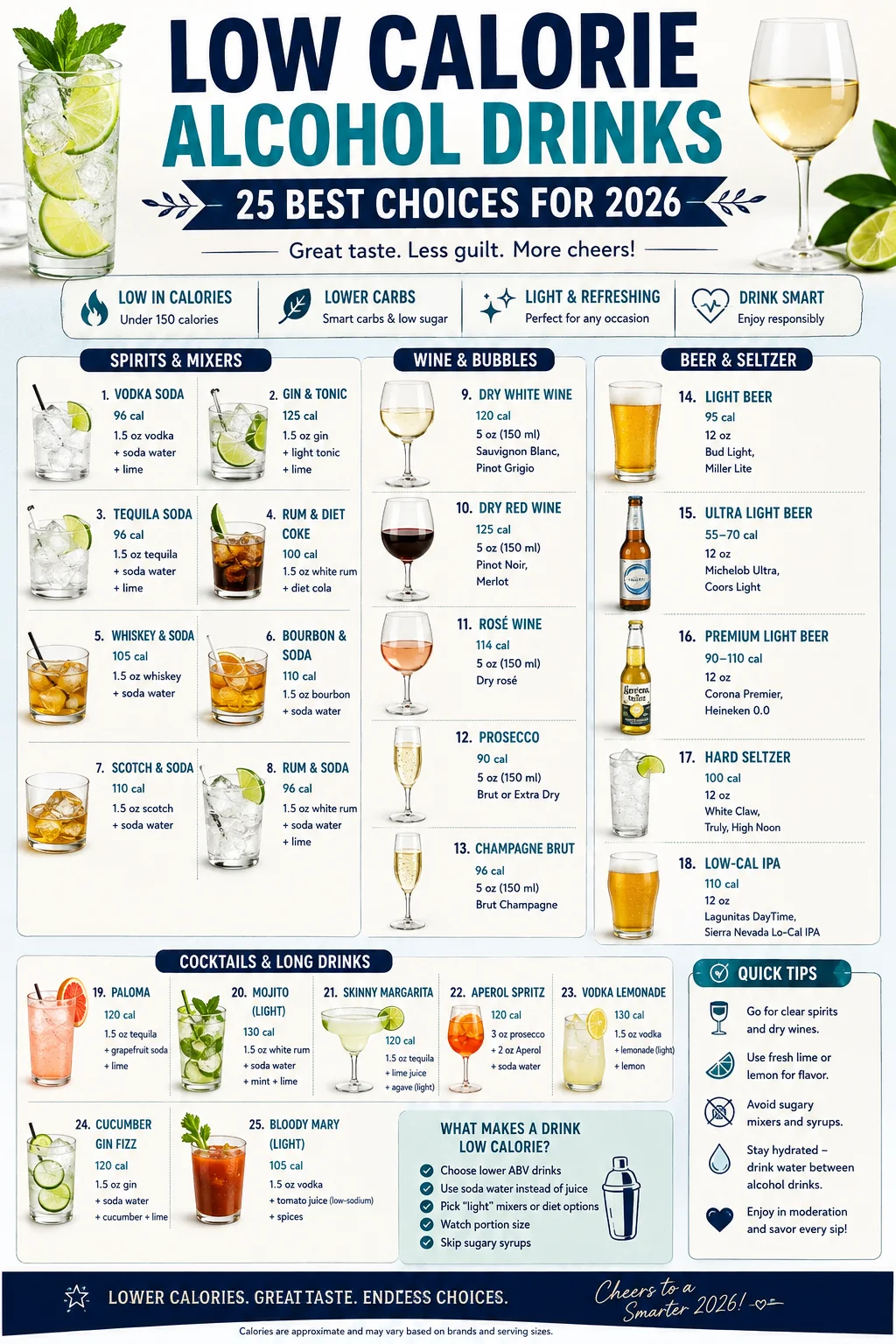
25 Low Calorie Alcohol Drinks: Best Choices, Calories & Easy Cocktails
If you’re looking for low calorie alcohol drinks, the biggest calorie savings usually don’t come from choosing vodka over tequila. They come from controlling the pour size, alcohol strength, mixer, and added sugar.
A simple spirit with soda can stay near 100 calories, while a creamy or syrup-heavy cocktail can contain several times that amount. This guide compares real serving sizes, explains what makes drinks lighter, and gives practical choices for bars, parties, brunch, and home.
Some of the simplest lower-calorie choices are 80-proof spirits with soda water, light beer, Champagne, wine spritzers, and drinks made with zero-calorie mixers. A 1.5-ounce serving of 80-proof vodka, gin, rum, or whiskey contains about 97 calories before mixers. A 12-ounce light beer contains about 103 calories, while a four-ounce serving of Champagne is about 85 calories.
Low calorie does not automatically mean low alcohol. Serving size and ABV still matter.
Low-Calorie Alcohol Drinks at a Glance
The figures below use common serving sizes from MedlinePlus. Homemade estimates are rounded and assume unsweetened or zero-calorie mixers unless noted. Actual bar pours and packaged drinks can vary.
| Drink | Typical Serving | Approx. Calories | Why It Can Stay Lighter |
|---|---|---|---|
| 1 oz 80-proof spirit + soda | 1 oz spirit | ~65 | Smaller spirit pour, zero-calorie mixer |
| White wine spritzer | 2.5 oz wine + soda | ~64 | Half wine, half sparkling water |
| Red wine spritzer | 2.5 oz wine + soda | ~63 | Smaller wine portion |
| Mimosa | 4 oz | 75 | Smaller overall serving |
| Champagne | 4 oz | 85 | Modest pour |
| Vodka soda | 1.5 oz vodka + soda | ~100 | Mixer adds little or no calories |
| Tequila soda | 1.5 oz tequila + soda | ~100 | No syrup required |
| Gin and soda | 1.5 oz gin + soda | ~100 | Unsweetened mixer |
| Whiskey soda | 1.5 oz whiskey + soda | ~100 | Simple two-ingredient build |
| Rum and diet cola | 8 oz | 100 | Diet mixer replaces regular cola |
| Light beer | 12 oz | 103 | Lower than many regular beers |
| Highball | 8 oz | 110 | Long drink with a light mixer |
| Bloody Mary | 4.5 oz | 120 | Savory rather than syrup-heavy |
| Red table wine | 5 oz | 125 | Controlled pour |
| White table wine | 5 oz | 128 | Controlled pour |
| Whiskey sour | 3 oz | 125 | Moderate serving, recipe dependent |
| Mojito | 6 oz | 143 | Sugar raises calories |
| Regular beer | 12 oz | 153 | More calories than light beer |
| Margarita | 4 oz | 168 | Sweetener and liqueur add calories |
| Rum and regular cola | 8 oz | 185 | Sugary soda adds calories |
| Vodka tonic | 7 oz | 189 | Regular tonic contains sugar |
| Piña colada | 7 oz | 380 | Coconut cream and sweet mixers add up |
How Alcohol Calories Really Work
Four things determine whether a drink is relatively light or calorie-heavy: how much alcohol is poured, its proof or ABV, the mixer, and added ingredients.
Alcohol Itself Contains Calories
A cocktail can contain zero added sugar and still contain around 100 calories because alcohol itself contributes energy. A 1.5-ounce 80-proof spirit is about 97 calories.
Higher Proof Adds Calories
Higher proof means more alcohol in the same volume. MedlinePlus lists about 97 calories at 80 proof versus 116 at 94 proof for 1.5 ounces.
Serving Size Matters
A double can nearly double alcohol calories. A jigger makes home estimates much more reliable.
Added Ingredients Matter
Soda, tonic, juice, syrups, liqueurs, cream, and coconut ingredients can add substantial calories.
What Counts as One Standard Drink?
A U.S. standard drink contains about 14 grams of pure alcohol.
- 12 oz regular beer at 5% ABV
- 5 oz wine at 12% ABV
- 1.5 oz spirits at 40% ABV
A stronger beverage may contain more than one standard drink even if the container looks like one serving. A 12-ounce beer at 10% ABV contains about two standard drinks.
Best Low-Calorie Mixed Drinks
The easiest lighter cocktails usually use one measured spirit, an unsweetened mixer, fresh citrus, and plenty of ice.
Vodka Soda
Build: 1.5 oz 80-proof vodka, soda water, ice, lime or lemon.
Best for: A clean, dry, bubbly drink.
About 100 caloriesTequila Soda
Build: 1.5 oz tequila, soda water or mineral water, fresh lime, ice.
Add cucumber or a small jalapeño slice for extra flavor.
About 100 caloriesRanch Water
Build: 1.5 oz tequila, fresh lime, sparkling mineral water, plenty of ice.
Skip agave syrup if your goal is to keep it light.
Gin Rickey
Build: 1.5 oz gin, fresh lime juice, soda water, ice.
Roughly 100 caloriesWhiskey Highball
Build: 1.5 oz whiskey, chilled soda water, ice, lemon peel.
About 100–110 caloriesRum and Diet Cola
Rum with regular cola is about 185 calories in the MedlinePlus table, versus about 100 with diet cola.
About 100 caloriesLight Paloma
Use 1.5 oz tequila, zero-sugar grapefruit soda or sparkling water, a small splash of fresh grapefruit, lime, and ice.
Vodka Ginger Fizz
Use 1.5 oz vodka, zero-sugar ginger beer, fresh lime, and ice. Check the ginger beer label because brand formulas differ.
Low-Calorie Wine and Wine Spritzers
Wine does not automatically become high-calorie. The bigger issue is often how much is poured. Five ounces of red table wine is about 125 calories, and white table wine about 128.
White Wine Spritzer
2.5 oz white wine + 2.5–4 oz sparkling water + ice + lemon.
~64 calories from wineRed Wine Spritzer
2.5 oz light-bodied red wine + 3 oz soda water + orange peel + ice.
~63 calories from wineMedlinePlus lists a four-ounce Champagne serving at about 85 calories. Sweet sparkling wines, oversized pours, syrups, and fruit purées can change the total.
Light Beer, Hard Seltzer, and Canned Drinks
A 12-ounce light beer is about 103 calories, regular beer about 153, and higher-alcohol craft beers can run much higher.
- Check container size.
- Check ABV.
- Check calories per serving, when listed.
- Check servings per container.
- Check sugar or carbohydrate information when available.
Low-Calorie Cocktails Under 100 Calories
One-Ounce Vodka Soda
1 oz 80-proof vodka + soda + lime.
About 65 caloriesOne-Ounce Tequila Soda
1 oz tequila + sparkling water + lime.
About 65–70 caloriesHalf-Wine Spritzer
2.5 oz white wine + 3 oz sparkling water.
About 64 caloriesRed Wine Spritzer
2.5 oz red wine + 3 oz soda.
About 63 caloriesFour-Ounce Champagne
About 85 caloriesFour-Ounce Mimosa
About 75 caloriesLow-Calorie vs. Low-Sugar vs. Low-Carb Alcohol
Low Calorie
Refers to total energy content. Alcohol itself contributes calories.
Low Sugar
Means little sugar. A vodka soda can have almost no added sugar and still contain about 100 calories from the liquor.
Low Carb
Few carbohydrates do not mean few calories because alcohol still supplies energy.
Best Low-Calorie Mixers
| Mixer | Good Choice For | What to Know |
|---|---|---|
| Club soda | Vodka, tequila, gin, whiskey | Unsweetened and simple |
| Plain seltzer | Almost any spirit | Adds volume and bubbles |
| Sparkling mineral water | Tequila, vodka | Great for ranch water |
| Unsweetened flavored seltzer | Vodka, gin, tequila | Check label for sweeteners |
| Zero-sugar tonic | Gin | Much lighter than regular tonic |
| Zero-sugar cola | Rum, whiskey | Removes most soda calories |
| Zero-sugar ginger beer | Vodka, rum, whiskey | Brand formulas vary |
| Unsweetened iced tea | Whiskey, rum | Adds flavor without syrup |
| Fresh lemon or lime | Almost any cocktail | Adds acidity and aroma |
| Cucumber | Gin, vodka, tequila | Fresh flavor without sweetness |
| Mint or basil | Rum, gin, vodka | Adds aroma |
| Small fruit portions | Spritzers and highballs | Use fruit for flavor, not cups of juice |
Best Low-Calorie Alcoholic Drinks to Order at a Bar
- “Vodka soda with lime, single.”
- “Tequila soda with fresh lime.”
- “Gin and soda with lemon.”
- “Whiskey soda, single pour.”
- “Rum and diet cola with lime.”
- “Dry wine, five-ounce pour.”
- “Light beer, 12-ounce bottle.”
- “Wine spritzer with extra soda.”
Easy Low-Calorie Cocktails to Make at Home
Home mixing gives you one major advantage: you control every ingredient and every ounce. Use a jigger rather than free-pouring if you want the estimate to mean anything.
Cucumber Vodka Soda
1.5 oz vodka, 4 oz soda water, cucumber, lime, ice.
About 100 caloriesClassic Ranch Water
1.5 oz tequila, fresh lime, 4–6 oz sparkling mineral water, ice.
Around 100 caloriesGin Rickey
1.5 oz gin, fresh lime, 3–4 oz soda water, ice.
Roughly 100–105 caloriesLemon Whiskey Highball
1.5 oz whiskey, 4–5 oz soda water, lemon peel, ice.
About 100–110 caloriesHalf-Wine Citrus Spritzer
2.5 oz white wine, 3 oz soda water, lemon or orange slice, ice.
About 64 calories from wineHow to Estimate Calories in Almost Any Cocktail
- Measure the alcohol. Find the ounces of spirits, wine, beer, or liqueur.
- Check proof or ABV. Higher-proof liquor contains more alcohol in the same volume.
- Add mixer calories. Include soda, tonic, ginger beer, juice, lemonade, coconut products, cream, and mixes.
- Add syrups and liqueurs. Include simple syrup, agave, honey, triple sec, coffee liqueur, cream liqueur, and fruit purée.
- Add everything together. Use current product labels when exact numbers matter.
How This Guide Calculates and Compares Calories
The calorie benchmarks in this article use MedlinePlus for generic beer, wine, spirits, and cocktail values. U.S. standard-drink definitions come from the National Institute on Alcohol Abuse and Alcoholism (NIAAA).
Calculated recipes use the stated portion of a published generic beverage value. Garnishes and brand-specific ingredients can change the result.
Responsible Drinking and Current U.S. Guidance
Choosing a drink with fewer calories does not make alcohol risk-free.
The Dietary Guidelines for Americans, 2025–2030 state that consuming less alcohol is better for overall health. Alcohol should be avoided during pregnancy and by people unable to control their drinking, those recovering from alcohol use disorder, and people whose medications or medical conditions can interact with alcohol.
NIAAA also warns that drink strength can be difficult to judge from glass or container size alone and that people should not drive or take part in potentially dangerous activities after drinking.
If you choose to drink, calories should never be the only factor you consider.
Frequently Asked Questions About Low-Calorie Alcohol Drinks
Which alcohol has the fewest calories?
At the same proof and serving size, common distilled spirits are very similar. A 1.5-ounce serving of 80-proof vodka, gin, rum, or whiskey is about 97 calories. The bigger differences usually come from proof, serving size, and mixers.
Is vodka lower in calories than tequila?
Not meaningfully when both are served at the same proof and portion. Choose the spirit you enjoy, then control the mixer and pour.
What is the best low-calorie alcoholic drink at a bar?
A single vodka soda, tequila soda, gin and soda, or whiskey soda is one of the easiest options to estimate. Light beer and a measured wine spritzer are also practical choices.
Can an alcoholic drink be under 100 calories?
Yes. Smaller spirit-and-soda drinks, half-wine spritzers, four ounces of Champagne, and some small mimosas can come in under 100 calories. Many also contain less alcohol than a full standard drink.
Is hard seltzer lower in calories than beer?
Sometimes, but not automatically. Compare can size, calories, and ABV rather than assuming every seltzer is light.
Are zero-sugar alcoholic drinks calorie-free?
No. A standard 1.5-ounce serving of 80-proof liquor contains around 97 calories before any mixer is added.
Does higher-proof alcohol have more calories?
Yes, when comparing the same serving size. A 94-proof spirit has more alcohol and generally more calories than an equal 80-proof pour.
Conclusion
The best low calorie alcohol drinks are usually the least complicated ones. A measured spirit with soda, a light beer, a modest wine pour, or a wine spritzer is much easier to manage than a cocktail loaded with syrups, juice, liqueurs, or cream.
The most useful rule is to watch four things: serving size, proof or ABV, mixer calories, and added sweetness. Choose drinks you genuinely enjoy, measure pours when possible, and remember that fewer calories do not mean fewer alcohol-related risks.
