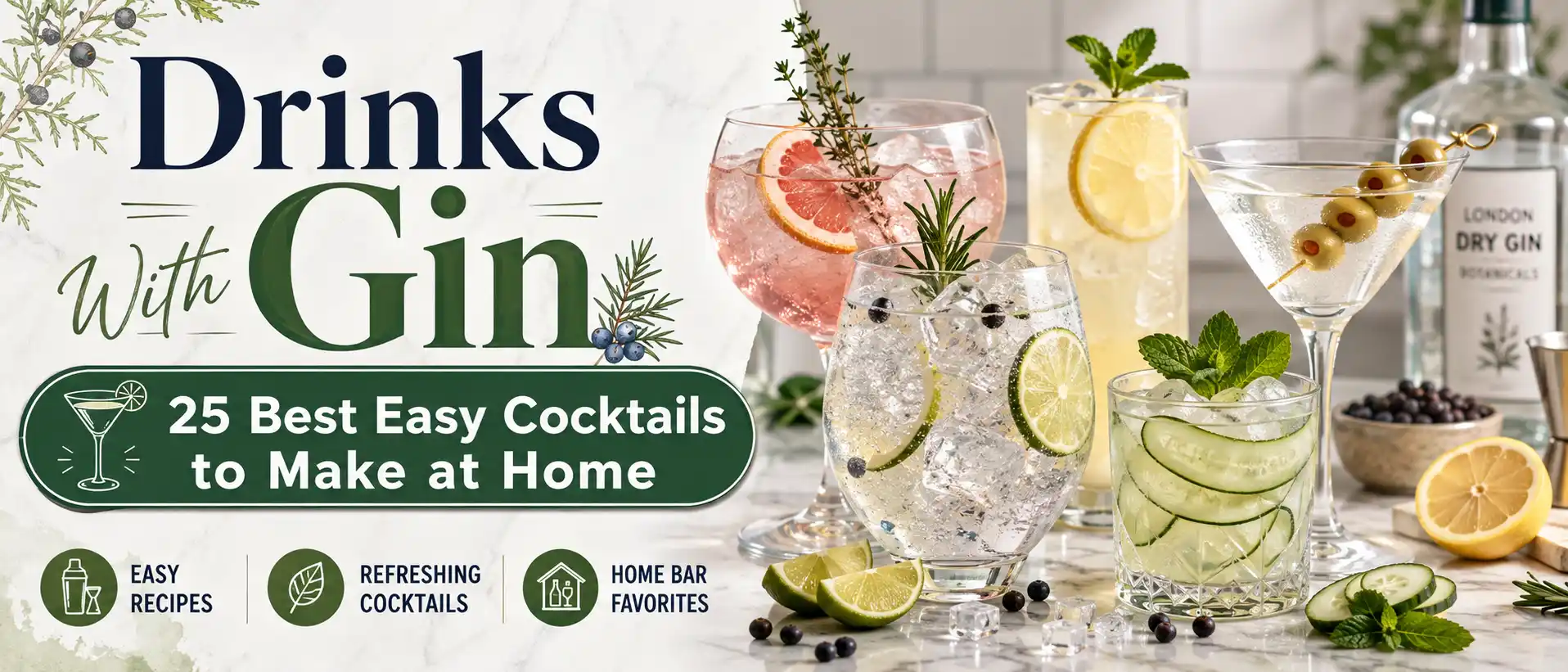
The best drinks with gin range from crisp two-ingredient highballs to citrusy sours, bitter classics, sparkling brunch cocktails, and fruit-forward party drinks. You do not need a professional bar setup to make most of them well at home.
This guide gives you 25 practical gin cocktails, including the Gin & Tonic, Martini, Negroni, Gimlet, Tom Collins, French 75, Bee’s Knees, Aviation, Bramble, and more. You will also learn which mixers work with gin, how to choose the right style of gin, how to fix an unbalanced cocktail, and which drinks work best for parties.
Quick Answer
The easiest drinks with gin are the Gin & Tonic, Gin Soda, Gin Lemonade, Gin Rickey, Gimlet, and Gin Mule. For classic cocktails, start with a Martini, Negroni, Tom Collins, Bee’s Knees, or French 75.
If you prefer sweeter drinks, try fruit, honey, elderflower, or lemonade. For a drier drink, use soda water, dry vermouth, tonic, grapefruit, or bitter aperitifs.
TL;DR
- Gin & Tonic is the easiest all-around gin drink.
- Gimlet is ideal for simple citrus cocktails.
- Martini suits drinkers who prefer dry, spirit-forward flavors.
- Negroni is bold, bitter, and herbal.
- French 75 is the best sparkling option.
- Gin Rickey is one of the best less-sweet choices.
- Bramble and Clover Club suit fruit-forward drinkers.
- Fresh citrus, cold mixers, and plenty of ice improve almost every gin drink.
Responsible serving note: Cocktail strength varies by recipe and pour size. In the United States, a standard drink contains about 14 grams, or 0.6 fluid ounces, of pure alcohol. About 1.5 ounces of 80-proof spirits equals one U.S. standard drink.
Best Drinks With Gin at a Glance
Gin works especially well with citrus, tonic, soda, herbs, berries, vermouth, ginger, bitter aperitifs, and sparkling wine. The best choice depends more on your preferred flavor than on cocktail complexity.
Beginners usually do best with a Gin & Tonic, Tom Collins, Gimlet, or Gin Mule. Experienced cocktail drinkers may prefer a Martini, Negroni, Aviation, or Last Word.
| Gin Drink | Flavor | Difficulty | Best For |
|---|---|---|---|
| Gin & Tonic | Crisp, bitter, botanical | Easy | Beginners |
| Gin Soda | Dry, clean, light | Easy | Less-sweet drinks |
| Gin Lemonade | Sweet-tart, citrusy | Easy | Summer |
| Gin Mule | Spicy, citrusy | Easy | Casual parties |
| Gin Grapefruit Highball | Tart, bittersweet | Easy | Brunch |
| Dry Martini | Dry, herbal, strong | Medium | Cocktail enthusiasts |
| Negroni | Bitter, herbal, orange | Easy | Aperitif hour |
| Gimlet | Tart, clean, bright | Easy | Citrus lovers |
| Tom Collins | Lemon, bubbly, balanced | Easy | Warm weather |
| Gin Rickey | Tart, dry, fizzy | Easy | Low-sweetness preference |
| Bee’s Knees | Honey, lemon, floral | Easy | Beginners |
| Gin Fizz | Tart, soft, sparkling | Medium | Classic cocktail fans |
| Southside | Minty, citrusy | Easy | Summer |
| French 75 | Bright, bubbly, dry-sweet | Medium | Brunch and celebrations |
| Gin Spritz | Light, herbal, sparkling | Easy | Afternoon gatherings |
| Cucumber Gin Fizz | Cool, crisp, botanical | Easy | Spring and summer |
| Bramble | Berry, lemon, sweet-tart | Medium | Fruit lovers |
| Clover Club | Raspberry, silky, tart | Medium | Dinner parties |
| Strawberry Basil Gin Smash | Fruity, herbal | Easy | Summer |
| Pineapple Gin Cooler | Tropical, citrusy | Easy | Parties |
| Aviation | Floral, tart, aromatic | Medium | Cocktail enthusiasts |
| Last Word | Herbal, tart, complex | Medium | Bold flavors |
| Elderflower Collins | Floral, lemony, bubbly | Easy | Brunch |
| Rosemary Grapefruit Gin Highball | Herbal, tart, dry | Easy | Dinner aperitif |
| Gin Daisy | Citrus, lightly sweet | Easy | Casual sipping |
What Makes Gin So Good in Cocktails?
Gin brings more flavor to a mixed drink than a neutral spirit because its defining character comes from juniper and other botanicals. Citrus peel, coriander, herbs, roots, flowers, spices, and fruit can all appear in different gin profiles.
Under current U.S. federal regulations, gin must derive its main characteristic flavor from juniper berries and must be bottled at at least 40% alcohol by volume, or 80 proof.
That botanical character explains why gin works with such a wide range of mixers. Lemon makes juniper feel sharper, tonic adds bitterness, vermouth adds herbal depth, berries emphasize fruit notes, and sparkling water makes a botanical gin feel lighter.
The practical rule is simple: do not bury gin under too many strong ingredients. A good gin cocktail usually gives the spirit enough room to remain recognizable.
Easy Gin Drinks With Two or Three Main Ingredients
You do not need syrups, specialty liqueurs, or complicated techniques to make a good gin drink. A quality gin, a chilled mixer, fresh ice, and one garnish can be enough.
These drinks are ideal for beginners, weeknight mixing, and gatherings where you do not want to spend the entire evening using a cocktail shaker.
Gin & Tonic
The Gin & Tonic is crisp, botanical, lightly bitter, and highly customizable. A juniper-forward gin creates a more classic profile, while citrus or floral gins make the drink softer.
Ingredients
- 1½–2 ounces gin
- 4–5 ounces chilled tonic water
- Plenty of ice
- Lime, lemon, grapefruit, or cucumber
Method
Fill a highball or balloon glass generously with ice. Add the gin, pour the tonic slowly down the side, and stir once or twice.
Best tip: Taste your tonic before adding extra citrus. Some tonics are sweet enough that a large lime squeeze can make the drink feel unbalanced.
Gin Soda
Gin and soda is one of the driest and simplest ways to mix gin. It allows more of the spirit’s botanicals to remain noticeable than sweet tonic or juice.
- 1½ ounces gin
- 4–5 ounces chilled club soda
- Lemon or grapefruit peel
- Ice
Build over ice and stir gently. Express the citrus peel over the top for aroma.
Gin Lemonade
Gin and lemonade is approachable because lemon connects naturally with juniper and citrus botanicals. Choose a lemonade that is tart rather than heavily sweet.
- 1½ ounces gin
- 4 ounces chilled lemonade
- 1–2 ounces soda water, optional
- Lemon wheel
- Ice
Build over ice. Adding soda makes the drink lighter and less sweet.
Gin Mule
A Gin Mule replaces vodka with gin, creating more herbal character behind the ginger.
- 1½ ounces gin
- ½ ounce fresh lime juice
- 4 ounces ginger beer
- Ice
- Lime wedge
Add gin and lime to an ice-filled glass, top with ginger beer, and stir once.
Gin Grapefruit Highball
Grapefruit brings acidity, light bitterness, and fruit flavor without turning gin into a sugary cocktail.
- 1½ ounces gin
- 2 ounces grapefruit juice
- 2–3 ounces soda water
- Ice
- Grapefruit wedge
Build over ice and stir gently. Add a small amount of simple syrup only if the grapefruit is unusually tart.
Classic Gin Cocktails Everyone Should Know
Gin has an unusually deep classic-cocktail catalog. The International Bartenders Association currently includes gin standards such as the Dry Martini, Negroni, Gin Fizz, Aviation, Last Word, Clover Club, and John Collins among its recognized cocktails.
You do not need to memorize dozens of formulas. Mastering a few structures—spirit-forward, sour, Collins, and bitter aperitif—makes many other gin drinks easier to understand.
Dry Martini
A Dry Martini should taste cold, clean, botanical, and aromatic rather than simply strong. The balance between gin and dry vermouth is a matter of preference.
Ingredients
- 2½ ounces gin
- ½ ounce dry vermouth
- Ice
- Lemon twist or olive
Method
Stir gin and vermouth with plenty of ice until very cold. Strain into a chilled cocktail glass and garnish.
The IBA’s current Dry Martini specification also uses gin and dry vermouth, with lemon peel or olive as garnish.
Negroni
The Negroni is built around equal parts gin, Campari, and sweet vermouth in its classic form. It is bitter, herbal, orange-scented, and spirit-forward.
Ingredients
- 1 ounce gin
- 1 ounce Campari
- 1 ounce sweet vermouth
- Orange peel
- Ice
Method
Stir the three liquids with ice, then strain over a large cube or serve directly over fresh ice.
Beginner tip: Do not judge a Negroni like a sweet mixed drink. Its bitterness is intentional.
Gimlet
A good Gimlet has a clear gin flavor supported by sharp lime and restrained sweetness.
- 2 ounces gin
- ¾ ounce fresh lime juice
- ½ ounce simple syrup
- Ice
Shake with ice and strain into a chilled coupe. Add a little more syrup only when your lime is especially acidic.
Tom Collins
The Tom Collins is essentially a tall gin sour finished with soda. It tastes brighter and slightly sweeter than a Gin Rickey.
- 2 ounces gin
- 1 ounce fresh lemon juice
- ½–¾ ounce simple syrup
- 2–3 ounces soda water
- Ice
Shake gin, lemon, and syrup with ice. Strain over fresh ice, top with soda, and garnish with lemon.
The IBA’s Collins entry similarly combines gin, lemon, simple syrup, and soda and notes Old Tom gin for a Tom Collins variation.
Gin Rickey
The Gin Rickey leaves out the syrup used in a Collins, giving it a much drier profile.
- 2 ounces gin
- ¾ ounce fresh lime juice
- 3–4 ounces club soda
- Ice
- Lime wedge
Build over ice and stir. It is one of the strongest choices for anyone who wants a gin cocktail without much sweetness.
Bright Citrus Gin Cocktails
Gin and citrus naturally reinforce each other. Lemon tends to make botanical flavors feel crisp and clean, while lime produces a sharper, greener profile.
Fresh juice matters more in simple cocktails because there are fewer ingredients to hide dull or oxidized flavors. Squeeze citrus close to serving whenever practical.
Bee’s Knees
The Bee’s Knees combines gin, lemon, and honey for a softer sour.
- 2 ounces gin
- ¾ ounce fresh lemon juice
- ½–¾ ounce honey syrup
- Ice
- Lemon twist
Shake with ice and fine-strain into a chilled glass.
Honey syrup: Mix equal parts honey and warm water, then cool before using.
Gin Fizz
A Gin Fizz combines gin, lemon, sweetness, and carbonation. The IBA version uses gin, fresh lemon juice, simple syrup, and a splash of soda.
- 1½ ounces gin
- 1 ounce fresh lemon juice
- ½ ounce simple syrup
- Soda water
Shake everything except soda with ice. Strain into a tall glass and add soda.
Southside
The Southside is a minty gin sour that sits somewhere between a Gimlet and a mint cocktail.
- 2 ounces gin
- ¾ ounce lime or lemon juice
- ½ ounce simple syrup
- 6 mint leaves
- Ice
Shake gently with mint and ice, then fine-strain. Avoid pulverizing the mint, which can make the drink taste grassy.
Sparkling Gin Drinks for Brunch and Celebrations
Sparkling ingredients make gin cocktails feel lighter even when the drink still contains a full spirit measure. They work especially well at brunches, weddings, dinners, and warm-weather gatherings.
The key is to add sparkling wine or soda last. Aggressive shaking or stirring after carbonation is added wastes bubbles.
French 75
The French 75 combines gin, lemon, sugar, and Champagne or dry sparkling wine. The current IBA formula uses those same four components.
- 1 ounce gin
- ½ ounce fresh lemon juice
- ½ ounce simple syrup
- 2½–3 ounces dry sparkling wine
Shake gin, lemon, and syrup with ice. Strain into a flute or coupe and top with sparkling wine.
Important: It drinks easily but contains both spirit and wine, so measure pours carefully.
Gin Spritz
A lighter spritz lets bubbles stretch the botanical flavors.
- 1½ ounces gin
- 2 ounces dry sparkling wine
- 2 ounces soda water
- ½ ounce fresh lemon juice
- Ice
Build in a wine glass over ice and stir once.
Cucumber Gin Fizz
Cucumber works particularly well with softer botanical gins.
- 1½ ounces gin
- 3 cucumber slices
- ¾ ounce lemon juice
- ½ ounce simple syrup
- 2 ounces soda
- Ice
Gently press the cucumber, shake it with gin, lemon, syrup, and ice, then strain over fresh ice and add soda.
Fruity Gin Drinks That Still Taste Like Gin
Fruit can make gin easier for beginners, but too much juice can erase the spirit’s character. Use fruit as a supporting flavor rather than filling the entire glass with sweetness.
Berries, grapefruit, pineapple, pear, peach, and stone fruit can all work. Acid from lemon or lime is often what keeps a fruit-heavy drink balanced.
Bramble
A Bramble combines gin, lemon, sugar, and blackberry flavor. Its tart berry profile makes it approachable without losing the gin completely.
- 2 ounces gin
- 1 ounce fresh lemon juice
- ½ ounce simple syrup
- ½ ounce blackberry liqueur
- Crushed ice
Shake gin, lemon, and syrup. Strain over crushed ice and drizzle blackberry liqueur over the top.
Clover Club
The Clover Club combines gin, raspberry, lemon, and traditionally egg white for a silky texture. It appears on the IBA’s current classic list.
- 1½ ounces gin
- ½ ounce raspberry syrup
- ¾ ounce lemon juice
- Small amount of pasteurized egg white or aquafaba
- Ice
Shake first without ice to build foam, then shake again with ice and fine-strain.
Allergy note: Skip egg entirely or use an appropriate alternative when serving guests with egg allergies.
Strawberry Basil Gin Smash
This drink works best when ripe strawberries provide most of the fruit flavor.
- 2 strawberries
- 2 basil leaves
- 1½ ounces gin
- ¾ ounce lemon juice
- ½ ounce simple syrup
- Soda water, optional
Gently muddle the fruit and basil, then shake with gin, lemon, syrup, and ice. Strain over fresh ice.
Pineapple Gin Cooler
Pineapple is assertive, so keep the quantity controlled.
- 1½ ounces gin
- 2 ounces pineapple juice
- ¾ ounce lime juice
- 2 ounces soda water
- Ice
Shake the first three ingredients and pour over ice. Add soda and garnish with lime.
Floral and Herbal Gin Cocktails
Botanical drinks show why gin is different from neutral spirits. Floral liqueurs, herbs, mint, rosemary, and aromatic bitters can amplify flavors that already exist in the spirit.
The danger is overcomplication. Too many botanical ingredients can make the drink taste medicinal or perfumed, so measure them carefully.
Aviation
The Aviation combines gin, maraschino liqueur, lemon, and a small amount of crème de violette. The IBA’s current formula uses the same four-part flavor structure.
- 1½ ounces gin
- ½ ounce maraschino liqueur
- ½ ounce fresh lemon juice
- 1 bar spoon crème de violette
- Ice
Shake with ice and strain into a chilled cocktail glass.
Common mistake: Too much violet liqueur overwhelms both the gin and citrus.
Last Word
The Last Word is one of the most distinctive equal-parts gin cocktails. The official IBA formula combines gin, Green Chartreuse, maraschino liqueur, and lime in equal measures.
For a home serving, combine equal parts of those four ingredients, shake with ice, and strain into a chilled coupe.
The result is herbal, tart, sweet, and powerful, so this drink suits people who already enjoy assertive cocktails.
Elderflower Collins
Elderflower softens gin with floral sweetness while lemon keeps the drink bright.
- 1½ ounces gin
- ½ ounce elderflower liqueur
- ¾ ounce lemon juice
- 2–3 ounces soda water
- Ice
Build over ice after briefly shaking the gin, elderflower liqueur, and lemon.
Rosemary Grapefruit Gin Highball
Rosemary and grapefruit give gin an aromatic but relatively dry profile.
- 1½ ounces gin
- 2 ounces grapefruit juice
- ¼–½ ounce rosemary syrup
- 2 ounces soda
- Ice
Shake the first three ingredients, strain over ice, and top with soda.
Sweet Gin Drinks for Beginners
Some people think they dislike gin when they actually dislike a very dry Martini or a strongly bitter tonic. Starting with a softer sweet-tart cocktail can make gin easier to understand.
The goal should still be balance. A sweet gin drink needs enough citrus, bitterness, carbonation, or herbal character to keep it from tasting syrupy.
Gin Daisy
The Gin Daisy is a flexible citrus cocktail with a slightly sweeter profile than a Gimlet.
- 1½ ounces gin
- ¾ ounce lemon juice
- ½ ounce orange liqueur
- ¼–½ ounce simple syrup
- Soda water
- Ice
Shake everything except soda. Strain over ice, top with soda, and garnish with orange.
Raspberry Gin Lemonade
Combine gin with tart lemonade and a small amount of raspberry.
- 1½ ounces gin
- 3 ounces lemonade
- ½ ounce raspberry syrup
- 1–2 ounces soda water
- Ice
Build over ice and taste before adding more syrup.
Peach Gin Fizz
Peach works best as an accent rather than the dominant flavor.
- 1½ ounces gin
- 1½ ounces peach nectar
- ¾ ounce lemon juice
- 2 ounces soda water
- Ice
Shake everything except soda. Pour over ice and finish with bubbles.
Dry and Less-Sweet Gin Drinks
You do not need sugar-free syrups or artificial sweeteners to make a less-sweet gin cocktail. The easiest approach is to build around soda water, citrus, dry vermouth, bitter ingredients, and measured mixer portions.
Keep in mind that tonic water, ginger beer, vermouth, liqueurs, and bottled juices vary significantly in sweetness. Check the package when sugar content matters to you.
Best Less-Sweet Choices
- Gin Rickey: gin, lime, and soda
- Gin Soda: gin, club soda, citrus peel
- Dry Martini: gin and dry vermouth
- Gin Sonic: part tonic, part soda water
- Grapefruit Gin Highball: gin, grapefruit, soda
- Negroni: bitter rather than conventionally sweet
Gin Sonic
The Gin Sonic is especially useful when regular tonic tastes too sweet.
Use:
- 1½ ounces gin
- 2 ounces tonic water
- 2 ounces soda water
- Ice
- Citrus peel
Build over ice and stir once. The soda reduces sweetness while preserving some quinine bitterness from tonic.
Best Mixers for Gin
A good mixer should complement the gin rather than automatically cover it. Start with one mixer, taste, and then decide whether the drink actually needs syrup, herbs, fruit, or extra citrus.
This approach also makes home bartending cheaper because you can create several drinks from the same bottle of gin without buying a shelf of specialty liqueurs.
| Mixer | Flavor Effect | Good Starting Drink |
|---|---|---|
| Tonic water | Bitter, lightly sweet | Gin & Tonic |
| Club soda | Dry, neutral, sparkling | Gin Soda |
| Lemon juice | Bright, sharp | Tom Collins |
| Lime juice | Tart, fresh | Gimlet |
| Grapefruit juice | Tart, bittersweet | Grapefruit Highball |
| Ginger beer | Spicy, sweet | Gin Mule |
| Lemonade | Sweet-tart | Gin Lemonade |
| Dry vermouth | Herbal, dry | Martini |
| Sweet vermouth | Herbal, rich | Negroni |
| Sparkling wine | Dry, fruity, bubbly | French 75 |
| Elderflower liqueur | Floral, sweet | Elderflower Collins |
| Berry syrup or liqueur | Fruity, sweet-tart | Bramble |
| Pineapple juice | Tropical, sweet | Pineapple Gin Cooler |
| Mint | Cool, herbal | Southside |
Which Type of Gin Is Best for Cocktails?
There is no single “best gin” for every drink. The better question is whether the gin’s botanical profile matches the other ingredients.
In the United States, all products labeled gin still need juniper as their main characteristic flavor, but individual brands can taste dramatically different because of their botanical choices and production methods.
London Dry Gin
Choose London Dry-style gin when you want assertive juniper, citrus, and spice to remain obvious.
It works especially well in:
- Martini
- Negroni
- Gimlet
- Gin & Tonic
- Collins drinks
Old Tom Gin
Old Tom gin tends to create a rounder profile and has long associations with historic cocktails. The IBA specifically notes Old Tom gin for the Tom Collins and uses it in drinks such as the Tuxedo.
Try it in:
- Tom Collins
- Martinez-style drinks
- Gin Daisy
- Spirit-forward historic cocktails
Contemporary Botanical Gin
Modern botanical gins often emphasize citrus, flowers, cucumber, herbs, or other aromatics alongside juniper.
They work particularly well in:
- Elderflower Collins
- Cucumber Gin Fizz
- Gin Spritz
- Berry cocktails
- Floral highballs
Stronger Gin
Higher-proof gin can stand up well to bitter ingredients, vermouth, citrus, and dilution. However, higher proof also means more alcohol, so measure carefully and do not treat a strong gin as interchangeable with a standard 80-proof pour.
How to Balance Gin Cocktails at Home
A cocktail recipe is only a starting point because citrus, syrups, tonic, fruit, and even ice vary. Learning to taste and adjust is more valuable than following every measurement blindly.
Make small changes rather than pouring in large amounts of another ingredient. A quarter ounce can significantly change a short cocktail.
A Simple Gin Sour Formula
A useful starting point is:
- 2 parts gin
- ¾ part fresh citrus
- ½–¾ part sweetener
Shake with ice, taste the result, and adjust the next serving.
If the Drink Is Too Sweet
Try one of these fixes:
- Add a little fresh lemon or lime.
- Reduce syrup on the next drink.
- Add soda water to lengthen the drink.
- Use a drier mixer.
- Check whether the liqueur already provides enough sugar.
If the Drink Is Too Sour
Do not immediately double the syrup. Add a small amount, stir, and taste again.
Very acidic citrus can vary from fruit to fruit, which is why tasting matters.
If the Drink Tastes Too Strong
More syrup is not always the answer. Proper chilling and dilution from ice can soften alcohol heat without making the cocktail sweeter.
If the Drink Tastes Flat
Fresh citrus, colder ingredients, better carbonation, or an aromatic garnish may help more than another ounce of liquor.
Shake or Stir? The Technique Matters
Cocktail technique affects texture, temperature, dilution, and appearance. You do not need professional tools, but choosing the correct technique makes a noticeable difference.
As a general home rule, shake cocktails containing juice, fruit, syrup, egg white, or other cloudy ingredients. Stir spirit-forward combinations built mostly from gin, vermouth, bitters, or liqueurs.
Shake These
- Gimlet
- Bee’s Knees
- Aviation
- Clover Club
- Southside
- Gin Fizz
- Bramble base
Stir These
- Martini
- Negroni
- Martinez-style drinks
- Other spirit-forward gin-and-vermouth cocktails
Build These Directly in the Glass
- Gin & Tonic
- Gin Soda
- Gin Rickey
- Gin Mule
- Gin Sonic
Gin Drinks for Parties and Batching
Gin works well for parties because citrus, syrups, tea, fruit, and non-carbonated mixers can usually be prepared before guests arrive. The important part is knowing what not to batch too early.
Do not add tonic, sparkling wine, soda water, or ginger beer hours in advance. Carbonated ingredients lose their fizz, while ice slowly waters down the entire batch.
Best Gin Drinks for a Party
Choose cocktails with simple service:
- Tom Collins
- Gin Lemonade
- Gin Mule
- Elderflower Collins
- Rosemary Grapefruit Highball
- Gin Spritz
- French 75
- Berry gin punch
Simple Batch Method
For 8 servings, multiply the still ingredients in a single-drink recipe by eight. Chill that mixture in a sealed container rather than leaving it over ice.
At serving time:
- Fill individual glasses with fresh ice.
- Measure the chilled base into each glass.
- Add tonic, soda, ginger beer, or sparkling wine.
- Garnish immediately.
This method gives every guest fresher carbonation and prevents the last drink from becoming much weaker than the first.
Best Gin Drinks by Occasion
The most useful cocktail menu is not the one with the most choices. Pick two or three drinks with different flavor profiles so guests can make an easy decision.
A dry option, a fruit-forward option, and an alcohol-free drink usually provide more variety than five nearly identical sweet cocktails.
Summer
Choose:
- Gin & Tonic
- Gin Rickey
- Southside
- Cucumber Gin Fizz
- Bramble
- Grapefruit Gin Highball
Brunch
Choose:
- French 75
- Elderflower Collins
- Gin Spritz
- Grapefruit Gin Highball
Dinner
Choose:
- Martini
- Negroni
- Aviation
- Rosemary Grapefruit Gin Highball
Casual Parties
Choose:
- Gin Mule
- Gin Lemonade
- Tom Collins
- Pineapple Gin Cooler
Date Night
Choose:
- Clover Club
- Aviation
- French 75
- Bee’s Knees
More Classic Gin Cocktails Worth Knowing
Once you have mastered the drinks above, several other classics are worth exploring. They introduce bitter amari, vermouth, herbal liqueurs, complex citrus combinations, and historic cocktail structures.
The point is not to collect recipes for their own sake. Learning these drinks helps you understand how gin behaves across very different combinations.
- Ramos Gin Fizz: creamy, citrusy, frothy, and more technique-heavy
- Corpse Reviver No. 2: tart, herbal, citrus-forward classic
- Singapore Sling: long, fruity, complex cocktail
- Martinez: gin, sweet vermouth, maraschino, and bitters
- Hanky Panky: gin, sweet vermouth, and Fernet
- Tuxedo: Old Tom gin, dry vermouth, maraschino, absinthe, and bitters
The IBA’s current list includes several of these historic gin cocktails, including the Martinez, Hanky Panky, and Tuxedo.
Common Gin Cocktail Mistakes and How to Fix Them
Most disappointing homemade cocktails do not fail because of expensive ingredients. They fail because of warm mixers, too little ice, excessive sweetness, poor dilution, or too many competing flavors.
Correcting those fundamentals usually improves a drink more than buying another bottle of gin.
Using Too Little Ice
A half-filled glass does not necessarily keep a drink stronger. The remaining ice often melts faster as it warms.
Use plenty of firm, cold ice whenever the recipe is served on the rocks.
Pouring Warm Tonic Over Gin
Warm tonic loses carbonation quickly and creates a flat Gin & Tonic.
Keep mixers refrigerated and open them close to serving.
Using Too Much Syrup
Sweetness hides botanical detail faster than most home bartenders expect.
Start conservatively. You can always add another small amount.
Shaking Carbonated Ingredients
Never shake tonic, soda water, sparkling wine, or ginger beer in a sealed cocktail shaker.
Add carbonation after shaking the still ingredients.
Over-Muddling Herbs
Mint and basil need gentle pressure to release aroma.
Grinding them aggressively creates unattractive fragments and can introduce harsh vegetal flavors.
Using One Gin for Every Cocktail
A robust juniper-heavy gin can be excellent in a Negroni yet overpower a delicate cucumber drink.
Match the gin’s intensity to the other ingredients.
Ignoring the Garnish
A garnish should contribute aroma or flavor rather than exist only for decoration.
Fresh citrus peel, mint, basil, cucumber, rosemary, and berries can change what you smell before the first sip.
FAQs About Drinks With Gin
What are the best drinks to mix with gin?
The most versatile gin mixers are tonic water, soda water, lemon, lime, grapefruit juice, ginger beer, lemonade, dry vermouth, sweet vermouth, and sparkling wine.
For beginners, start with tonic, lemonade, or ginger beer. Choose soda, grapefruit, or dry vermouth when you prefer less sweetness.
What is the easiest gin cocktail to make?
A Gin & Tonic is one of the easiest because it needs only gin, tonic, ice, and an optional garnish. Gin Soda and Gin Lemonade are equally simple.
If you have a cocktail shaker, a Gimlet is an excellent next step because it teaches the basic balance between spirit, citrus, and sweetness.
What juice goes best with gin?
Lemon, lime, and grapefruit are the most reliable choices because their acidity works well with juniper and other botanicals. Pineapple, orange, cranberry, and berry juices can also work when used in balanced amounts.
For fruitier drinks, add fresh citrus as well. It keeps the finished cocktail from becoming overly sweet.
Can you mix gin with soda instead of tonic?
Yes. Gin and soda is drier and less sweet than a typical Gin & Tonic because plain soda water does not have tonic’s characteristic bitterness and sweetness.
Add lemon, lime, grapefruit peel, cucumber, or herbs if you want more aroma without introducing much sweetness.
What gin cocktails are not very sweet?
Good less-sweet choices include a Dry Martini, Gin Rickey, Gin Soda, Gin Sonic, grapefruit highball, and some Negroni variations.
Remember that bottled mixers differ. Check tonic, ginger beer, juice, and flavored soda labels when added sugar is important to you.
What are the most famous classic gin cocktails?
The Martini, Negroni, Gin Fizz, Collins family, Aviation, Clover Club, and Last Word are among the established gin cocktails represented in the International Bartenders Association’s current cocktail catalog.
Other widely recognized gin drinks include the Gimlet, Gin & Tonic, Bee’s Knees, Bramble, Ramos Gin Fizz, Singapore Sling, and Corpse Reviver No. 2.
What type of gin is best for beginners?
A balanced gin that is not excessively high-proof is easier to use across several recipes. Start with a bottle you enjoy in a simple Gin & Tonic because that lets you understand its botanical profile.
Once you know whether you prefer strong juniper, citrus, flowers, herbs, or softer botanicals, choosing gin for Martinis, Negronis, Collins drinks, and fruit cocktails becomes much easier.
Conclusion
The best drinks with gin are not necessarily the most complicated ones. A Gin & Tonic, Gimlet, Tom Collins, Martini, or Gin Rickey can show off the spirit better than a recipe overloaded with syrups, juices, and garnishes.
Start with the flavor profile you already enjoy. Choose a Gin & Tonic for crisp bitterness, a Gimlet for tart citrus, a Bee’s Knees for softer sweetness, a Negroni for bitterness, or a French 75 for bubbles. Once you understand that basic balance, changing the citrus, mixer, gin style, herbs, or fruit gives you dozens of useful variations without needing an entirely new recipe every time.