Adaptogen drinks are now everywhere: cafés, wellness markets, sober bars, grocery aisles, and home kitchens. Some are sparkling mocktails. Some are mushroom coffees. Others are herbal teas, creamy lattes, smoothies, or low-sugar botanical tonics.
The appeal is easy to understand. Many people want drinks that feel more interesting than soda, less intense than alcohol, and more balanced than sugary energy drinks. Adaptogen drinks fit that space because they combine herbs, roots, mushrooms, spices, fruit, tea, and sparkling water in creative ways.
This guide focuses on flavor, recipes, practical use, and smart buying tips. It does not promise that a drink can treat stress, anxiety, sleep problems, or any medical condition. Adaptogens are often sold as dietary supplement ingredients, and the FDA advises consumers to read labels and speak with healthcare professionals before using supplements, especially when medications or health conditions are involved.
Quick Answer: What Are Adaptogen Drinks?
Adaptogen drinks are beverages made with herbs, roots, mushrooms, teas, or botanical powders commonly used in wellness-focused drinks. Popular ingredients include ashwagandha, reishi, lion’s mane, rhodiola, maca, tulsi, cordyceps, and ginseng. They appear in mocktails, mushroom lattes, herbal teas, smoothies, sparkling tonics, and low-caffeine coffee alternatives.
What Are Adaptogen Drinks?
Adaptogen drinks are beverages that include ingredients commonly called adaptogens. Cleveland Clinic describes adaptogens as plants and mushrooms that may affect how the body deals with stress, fatigue, and overall balance.
In practical drink terms, adaptogens are used for three main reasons:
• Flavor — earthy, bitter, floral, nutty, woody, or herbal notes
• Routine — morning drinks, evening teas, alcohol-free social drinks
• Function positioning — brands often market them around calm, focus, energy, or mood support
A smart way to think about adaptogen drinks is simple: they are functional-style beverages, but they should still taste good first.
Why Adaptogen Drinks Are Trending in 2026
Adaptogen drinks are part of a larger movement toward functional beverages and alcohol-free social drinking. Beverage trend reporting in 2026 points to consumer interest in drinks that go beyond taste, with functional ingredients, multisensory experiences, traditional flavors, mood support, and natural botanicals shaping innovation.
Restaurants are also watching this category. The National Restaurant Association’s 2026 beverage trend coverage highlights mood and mental wellness beverages, including drinks with adaptogenic and mushroom essences such as lion’s mane.
For readers, the trend shows up in everyday ways:
• Alcohol-free mocktails that feel grown-up
• Mushroom lattes as coffee alternatives
• Sparkling botanical drinks for social settings
• Low-sugar wellness tonics with fruit and herbs
• Tea-based drinks for simple daily routines
The best adaptogen drinks in 2026 are not just “healthy-looking.” They are balanced, flavorful, attractive, and easy to fit into real life.
Best Adaptogens for Drinks
Not every adaptogen works in every drink. Some taste earthy. Some taste bitter. Some work better with fruit, while others need cocoa, spice, or creamy milk.
| Adaptogen | Flavor Profile | Best Pairings | Best Drink Types |
|---|---|---|---|
| Ashwagandha | Earthy, nutty, slightly bitter | Banana, cacao, cinnamon, vanilla | Smoothies, warm lattes |
| Reishi | Woody, bitter, deep | Cocoa, maple, oat milk, cinnamon | Hot chocolate, mushroom lattes |
| Lion’s Mane | Mild, earthy, soft | Coffee, oat milk, vanilla, matcha | Lattes, coffee alternatives |
| Rhodiola | Tart, floral, lightly bitter | Berries, citrus, hibiscus | Sparkling drinks, iced teas |
| Maca | Toasty, nutty, caramel-like | Banana, coconut, cacao, dates | Smoothies, shakes |
| Tulsi | Herbal, peppery, fresh | Lemon, mint, honey, ginger | Teas, coolers |
| Cordyceps | Mild earthy flavor | Orange, ginger, pineapple | Morning tonics, smoothies |
| Ginseng | Sharp, herbal, slightly bitter | Grapefruit, lime, honey | Mocktails, teas |
Which adaptogen is easiest for beginners?
For most beginners, maca, lion’s mane, and tulsi are easier to enjoy than strong reishi or ginseng. Maca blends well with smoothies. Lion’s mane works in creamy lattes. Tulsi tastes natural in tea.
Which adaptogen tastes the strongest?
Reishi is usually one of the strongest-tasting options. It can taste woody and bitter. Use small amounts and pair it with cocoa, cinnamon, vanilla, maple, or oat milk.
Best Adaptogen Drinks for Beginners
Beginners should start with drinks that naturally hide bitterness and soften earthy flavors. The easiest bases are frozen fruit, oat milk, cocoa, citrus, ginger, and vanilla.
What should beginners try first?
Start with these simple adaptogen drinks:
| Beginner Drink | Why It Works | Best Time |
| Mango Maca Smoothie | Sweet fruit softens maca | Breakfast or afternoon |
| Vanilla Lion’s Mane Latte | Creamy and mild | Morning |
| Blackberry Tulsi Sparkler | Bright berry flavor balances herbs | Brunch |
| Reishi Hot Chocolate | Cocoa covers bitterness | Evening |
| Coconut Lime Cooler | Lime keeps it fresh | Summer |
| Strawberry Hibiscus Refresher | Fruity, tart, and colorful | Parties |
What is the best starter formula?
Use this easy formula:
1 adaptogen + 1 fruit + 1 acid + 1 texture + 1 garnish
Example:
• Maca
• Frozen mango
• Lime juice
• Coconut milk
• Mint garnish
This keeps the drink focused instead of muddy.
Homemade Adaptogen Drink Recipes
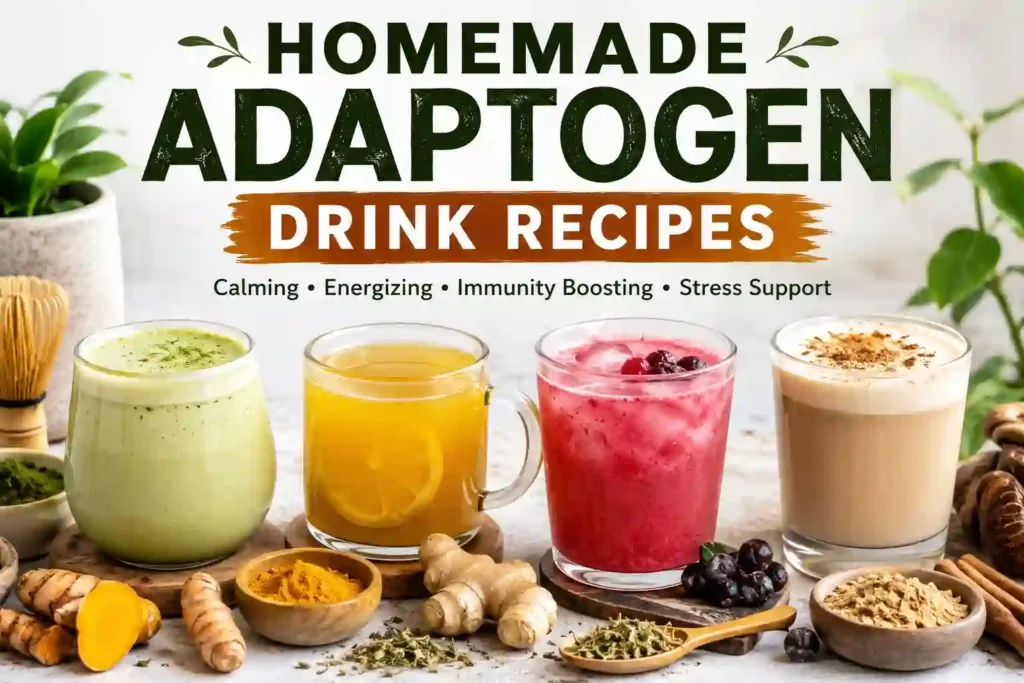
These recipes are written for flavor first. Start with small amounts of adaptogen powder and follow the serving directions on the product label.
Blackberry Rosemary Adaptogen Spritz
This drink is bright, lightly tart, and elegant enough for brunch or dinner.
Flavor profile: Berry, citrus, herbal, sparkling
Ingredients:
• ½ cup fresh blackberries
• 1 rosemary sprig
• 1 teaspoon adaptogen blend
• 1 tablespoon lemon juice
• ½ teaspoon honey or maple syrup, optional
• Sparkling mineral water
• Ice
Method:
• Muddle blackberries gently.
• Add lemon juice and optional sweetener.
• Stir in the adaptogen blend until smooth.
• Fill a glass with ice.
• Pour the mixture over the ice.
• Top with sparkling mineral water.
• Clap the rosemary sprig once and add it as garnish.
Tip: Do not crush rosemary too hard. Over-muddled rosemary can turn bitter.
Creamy Reishi Hot Chocolate
Reishi can taste woody, so cocoa and cinnamon are the best partners.
Flavor profile: Rich, warm, chocolate-forward, lightly earthy
Ingredients:
• 1 cup unsweetened oat milk
• 1 tablespoon cocoa powder
• ¼ to ½ teaspoon reishi powder
• ¼ teaspoon cinnamon
• ½ teaspoon vanilla extract
• 1 teaspoon maple syrup, optional
Method:
• Warm oat milk over low heat.
• Whisk in cocoa and reishi powder.
• Add cinnamon and vanilla.
• Sweeten lightly if needed.
• Serve warm, not boiling hot.
Tip: Use less reishi at first. A small amount is easier to balance.
Pineapple Ginger Adaptogen Fizz
This is one of the best adaptogen drinks for summer.
Flavor profile: Tropical, citrusy, spicy, refreshing
Ingredients:
• ½ cup pineapple juice
• 1 tablespoon lime juice
• 2 thin ginger slices
• 1 serving adaptogen blend
• Sparkling water
• Ice
• Pinch of sea salt, optional
Method:
• Stir pineapple juice, lime juice, and adaptogen blend.
• Add ginger and let it sit for 3–5 minutes.
• Fill a glass with ice.
• Pour in the mixture.
• Top with sparkling water.
• Add a tiny pinch of sea salt if the drink tastes too sweet.
Mango Maca Smoothie
Maca works beautifully with creamy, tropical flavors.
Flavor profile: Sweet, creamy, tropical, lightly nutty
Ingredients:
• 1 cup frozen mango
• ½ banana
• ¾ cup coconut milk or oat milk
• 1 teaspoon maca powder
• 1 teaspoon lime juice
• Pinch of cinnamon
Method:
• Blend all ingredients until smooth.
• Add more milk if needed.
• Taste and adjust lime for brightness.
Tip: Lime prevents the smoothie from tasting flat.
Adaptogen Mocktails for Parties
Adaptogen mocktails work best when they feel like real drinks, not wellness chores. Use clear glassware, fresh herbs, citrus wheels, crushed ice, and sparkling mixers.
What makes an adaptogen mocktail taste sophisticated?
A sophisticated mocktail needs contrast:
• Acid from lemon, lime, grapefruit, or yuzu
• Bitterness from herbs, tea, citrus peel, or tonic-style botanicals
• Texture from bubbles, coconut milk, or whipped foam
• Aroma from mint, basil, rosemary, lavender, or citrus zest
• A clean finish without too much syrup
Best adaptogen mocktail ideas
| Mocktail | Best Flavor Base | Best Adaptogen Pairing |
| Grapefruit Rosemary Cooler | Grapefruit, lime, rosemary | Ginseng or rhodiola |
| Strawberry Basil Sparkler | Strawberry, basil, lemon | Tulsi or maca |
| Blood Orange Botanical Fizz | Blood orange, mint, sparkling water | Rhodiola |
| Peach Thyme Refresher | Peach, lemon, thyme | Lion’s mane blend |
| Coconut Citrus Cooler | Coconut, lime, pineapple | Maca |
| Blackberry Mint Spritz | Blackberry, mint, lemon | Tulsi |
Best Adaptogen Tea Drinks
Tea is one of the easiest ways to try adaptogens because it already has natural bitterness, aroma, and structure.
| Tea Base | Adaptogen Pairing | Flavor Style |
| Green tea | Tulsi or lion’s mane | Fresh, grassy, herbal |
| Rooibos | Reishi | Warm, earthy, caffeine-free |
| Hibiscus | Rhodiola | Tart, fruity, bright |
| Chai | Ashwagandha | Spiced, cozy, creamy |
| Chamomile | Lion’s mane or tulsi | Soft, floral, mild |
| Peppermint | Ginseng or tulsi | Cooling, sharp, clean |
How do you make adaptogen tea taste better?
Use one of these flavor fixes:
• Add lemon to brighten herbal notes.
• Add honey only if the tea tastes too sharp.
• Add oat milk to soften bitter powders.
• Add ginger for warmth.
• Chill hibiscus tea and serve it over ice.
Mushroom Drinks and Mushroom Lattes
Mushroom drinks are a major part of the adaptogen drink trend. Common ingredients include reishi, lion’s mane, cordyceps, chaga, and mushroom coffee blends.
Food and beverage publishers have also covered mushroom coffee and adaptogenic drinks as part of the growing alcohol-free and functional beverage space.
Which mushroom works best in lattes?
Lion’s mane is usually the easiest mushroom for lattes because it has a milder flavor than reishi. It pairs well with oat milk, vanilla, cinnamon, coffee, and matcha.
Best mushroom latte ideas
| Latte | Best For | Flavor Notes |
| Vanilla Lion’s Mane Latte | Beginners | Creamy, mild, smooth |
| Reishi Mocha | Chocolate lovers | Deep, earthy, rich |
| Maple Cinnamon Mushroom Latte | Cozy drinks | Warm, spiced, sweet |
| Cordyceps Vanilla Latte | Morning routine | Mild, earthy, bright |
| Matcha Lion’s Mane Latte | Tea drinkers | Grassy, creamy, balanced |
Reishi Mocha Recipe
Ingredients:
• 1 cup oat milk
• 1 shot espresso or ½ cup strong brewed coffee, optional
• 1 tablespoon cocoa powder
• ¼ teaspoon reishi powder
• ½ teaspoon vanilla extract
• Cinnamon
• Maple syrup, optional
Method:
• Warm oat milk gently.
• Whisk in cocoa, reishi, vanilla, and cinnamon.
• Add coffee if using.
• Sweeten lightly.
• Serve warm.
Tip: Reishi tastes better in chocolate drinks than in plain water.
Low-Sugar Adaptogen Drinks
A good low-sugar adaptogen drink does not need to taste dull. Use acid, herbs, bubbles, spice, and cold temperature to create flavor.
| Low-Sugar Pairing | Why It Works |
| Grapefruit + rosemary | Bitter, bright, aromatic |
| Blackberry + mint | Naturally fruity without syrup |
| Lemon + ginger | Sharp and refreshing |
| Cucumber + lime | Crisp and cooling |
| Hibiscus + orange peel | Tart and colorful |
| Cacao + cinnamon | Warm without heavy sugar |
How can you reduce sugar without ruining flavor?
• Use sparkling mineral water instead of soda.
• Choose unsweetened plant milk.
• Add frozen berries instead of syrup.
• Use citrus zest for aroma.
• Chill drinks well before serving.
• Add a small pinch of salt to fruit drinks.
Cold drinks often taste smoother when fully chilled, especially if the adaptogen has earthy or bitter notes.
How to Choose High-Quality Adaptogen Ingredients
Adaptogen powders, blends, and canned drinks vary widely. Some are simple. Others include long ingredient lists, sweeteners, caffeine, nootropics, vitamins, minerals, or other supplement ingredients.
What should you look for on the label?
Look for:
• Clearly named adaptogens
• Serving size and amount per serving
• Low added sugar, if that matters to you
• Caffeine content, if included
• Third-party testing, when available
• Simple ingredient lists
• No disease-cure claims
NIH’s Office of Dietary Supplements notes that supplement labels list active ingredients and amounts per serving, but many supplements need more study to determine their value. It also explains that dietary supplements do not require FDA approval before marketing in the same way medicines do.
What should you avoid?
Avoid products with:
• Vague “proprietary blend” claims
• No clear serving directions
• Very high caffeine if you are caffeine-sensitive
• Overly aggressive health promises
• Artificial flavor overload
• Gritty powders that do not mix well
• Many adaptogens stacked together without a clear purpose
Common Mistakes When Making Adaptogen Drinks
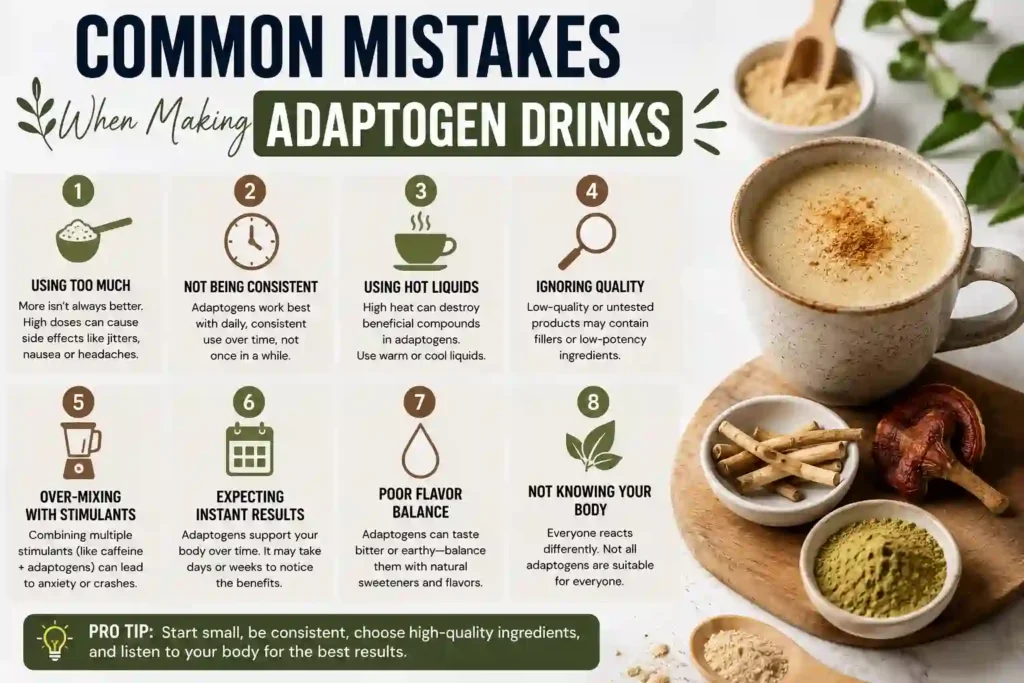
Using too much powder
This is the most common mistake. More powder does not always mean a better drink. It often means more bitterness, grit, and aftertaste.
Start small and follow the label.
Mixing too many adaptogens
A drink with six adaptogens, three herbs, two fruits, and a sweetener can taste muddy. Most good recipes need one main adaptogen and one clear flavor direction.
Forgetting acid
Lemon, lime, grapefruit, and hibiscus help brighten earthy flavors. Without acid, many adaptogen drinks taste heavy.
Ignoring texture
Texture matters. Oat milk, coconut milk, foam, crushed ice, or bubbles can make the drink feel more complete.
Treating adaptogen drinks like medicine
Adaptogen drinks are beverages. They should not replace medical care, sleep, nutrition, hydration, or stress management. For supplement questions, talk with a qualified healthcare professional.
Are Adaptogen Drinks Safe?
For many healthy adults, occasional adaptogen drinks may fit into a normal beverage routine. But safety depends on the specific ingredient, dose, product quality, medical history, medications, pregnancy status, caffeine level, and frequency of use.
FDA advises consumers to talk with a doctor, pharmacist, or healthcare professional before using dietary supplements because some can interact with medicines or other supplements.
NIH also notes that supplements may have active ingredients with strong effects, and side effects are more likely when people take high doses, combine many products, or use supplements instead of prescribed medicines.
Reishi is one example where caution matters. Memorial Sloan Kettering advises people to talk with healthcare providers before taking reishi supplements, especially if they use blood thinners or immunosuppressants.
Who should be more careful?
Be extra cautious if you:
• Are pregnant or breastfeeding
• Take prescription medication
• Use blood thinners
• Take immune-suppressing medication
• Have liver, kidney, thyroid, heart, or autoimmune concerns
• Are sensitive to caffeine
• Are buying high-dose powders or extracts
• Plan to use adaptogens daily
This article is for food and beverage education, not medical advice.
Best Adaptogen Drinks by Occasion
| Occasion | Best Drink Style | Good Flavor Direction |
| Brunch | Sparkling mocktail | Citrus, berry, mint |
| Morning routine | Mushroom latte | Vanilla, oat milk, cinnamon |
| Summer party | Tropical fizz | Pineapple, lime, ginger |
| Cool evening | Reishi cocoa | Cocoa, maple, cinnamon |
| Workday break | Iced tea | Hibiscus, tulsi, lemon |
| Dinner party | Botanical spritz | Grapefruit, rosemary, blackberry |
| Low-sugar routine | Sparkling cooler | Cucumber, lime, mint |
Serving and Storage Tips
Adaptogen drinks taste best when they are made with fresh ingredients and served at the right temperature.
How should you serve adaptogen mocktails?
• Use lots of ice.
• Add herbs right before serving.
• Use clear glassware for colorful drinks.
• Add citrus wheels or zest for aroma.
• Stir powders fully before adding bubbles.
• Add sparkling water last.
How long do homemade adaptogen drinks last?
| Drink Type | Storage Time | Best Practice |
| Smoothies | Up to 24 hours | Shake before drinking |
| Herbal teas | 2–3 days | Store covered in fridge |
| Sparkling mocktails | Best immediately | Add bubbles last |
| Latte concentrate | Up to 2 days | Reheat gently |
| Citrus coolers | 1–2 days | Store without ice |
| Fresh herb drinks | Same day | Add herbs at serving |
Practical Tips for Better Adaptogen Drinks
Use these quick rules when building your own recipes:
• Pair earthy adaptogens with cocoa, banana, oat milk, or cinnamon.
• Pair bitter adaptogens with citrus, honey, maple, or berries.
• Pair floral adaptogens with hibiscus, lavender, peach, or blackberry.
• Pair sharp herbal adaptogens with grapefruit, lime, mint, or ginger.
• Use sparkling water for lighter drinks.
• Use oat milk for creamy drinks.
• Use frozen fruit when you want sweetness without syrup.
• Use small servings when trying a new ingredient.
Quick Summary: Key Takeaways
• Adaptogen drinks include mocktails, teas, mushroom lattes, smoothies, and sparkling botanical drinks.
• The best adaptogen drinks balance flavor first, not just wellness branding.
• Maca, lion’s mane, and tulsi are beginner-friendly options.
• Reishi tastes stronger and works best with cocoa, cinnamon, vanilla, and creamy bases.
• Low-sugar drinks taste better with citrus, herbs, spice, bubbles, and cold temperature.
• Read labels carefully because many adaptogen drinks include caffeine, sweeteners, or supplement blends.
• Speak with a healthcare professional if you take medication, are pregnant, or have health conditions.
Conclusion
Adaptogen drinks can be a fun, flavorful way to upgrade your drink routine in 2026. The best options are not built on hype. They are built on good flavor balance, smart ingredient pairing, careful serving sizes, and clear labels.
If you are new to adaptogens, start with simple recipes like a mango maca smoothie, vanilla lion’s mane latte, blackberry tulsi sparkler, or reishi hot chocolate. These drinks use fruit, cocoa, oat milk, citrus, and spices to make stronger herbal flavors easier to enjoy.
For social occasions, adaptogen mocktails can feel polished without alcohol. For daily routines, tea-based drinks and mushroom lattes are usually easier to prepare. Keep your approach simple, avoid overloading recipes, and treat adaptogen drinks as enjoyable beverages rather than medical solutions.
Start with one recipe, adjust the flavor, and build your own drink style from there.
Frequently Asked Questions
What do adaptogen drinks taste like?
Adaptogen drinks can taste fruity, herbal, earthy, bitter, floral, creamy, spicy, or sparkling. The flavor depends on the adaptogen and the base. Citrus, cocoa, berries, oat milk, ginger, and vanilla can make them taste smoother.
What are the best adaptogen drinks for beginners?
The best beginner options are mango maca smoothies, vanilla lion’s mane lattes, blackberry tulsi sparklers, strawberry hibiscus refreshers, and reishi hot chocolate with a small amount of reishi.
Are adaptogen drinks caffeinated?
Some are caffeinated and some are not. Drinks made with coffee, matcha, green tea, black tea, yerba mate, or added caffeine will contain caffeine. Mushroom lattes, herbal teas, and sparkling mocktails can be caffeine-free if made without those ingredients.
Can adaptogen drinks replace alcohol?
Adaptogen mocktails can work as alcohol-free alternatives for parties, brunches, Dry January, and evening routines. They do not copy alcohol exactly, but they can offer a more sophisticated option than soda or juice.
Why do adaptogen drinks taste bitter?
They often taste bitter because too much powder was used, the drink lacks acid, or the recipe does not include enough texture. Add lemon, lime, berries, cocoa, oat milk, ginger, or sparkling water to improve balance.
Which adaptogens work best in smoothies?
Maca, ashwagandha, and lion’s mane work well in smoothies. Pair them with frozen mango, banana, berries, cocoa, coconut milk, oat milk, cinnamon, or vanilla.
Which adaptogen works best in mushroom lattes?
Lion’s mane is usually the easiest mushroom for lattes because it has a milder flavor. Reishi also works well, but it needs cocoa, cinnamon, vanilla, or maple to soften bitterness.
Are adaptogen drinks safe every day?
Daily use depends on the ingredient, dose, product quality, health history, medications, and caffeine level. Read labels carefully and speak with a healthcare professional before using adaptogen supplements regularly.