10 Best Healthy Electrolyte Drinks in 2026: Best Picks for Workouts, Heat & Dehydration
Compare healthy electrolyte drinks, powders, tablets, bottled beverages, sports formulas, natural options, and oral rehydration solutions by sodium, sugar, intended use, and hydration needs.
Healthy electrolyte drinks can be useful after heavy sweating, during long workouts, in extreme heat, or when illness causes fluid loss. However, the healthiest choice is not always the drink with the most minerals.
A high-sodium powder designed for an endurance athlete may be excessive for someone sitting at a desk. A zero-sugar drink may suit a short workout, while carbohydrates can be useful during prolonged exercise.
This guide compares natural electrolyte drinks, powders, tablets, bottled beverages, sports formulas, and oral rehydration solutions. It explains who each option suits, how much sodium and sugar it contains, and when plain water is still the smarter choice.
The best electrolyte drink depends on why you need it.
Ultima Replenisher is a practical zero-sugar option for light daily use. Nuun Sport offers moderate sodium at a relatively low cost. Skratch Labs Sport Hydration Mix combines electrolytes with carbohydrates for longer exercise. LMNT provides a very high sodium dose for people with substantial sweat losses, but it is not appropriate for casual hydration.
For vomiting, diarrhea, or illness-related dehydration, use a properly formulated oral rehydration solution, such as Pedialyte, rather than treating an ordinary sports drink as a medical product. Water remains the best everyday drink for most healthy people.
- Water is enough for most normal days and short workouts.
- Electrolytes become more useful after prolonged or heavy sweating.
- High sodium is not automatically healthier.
- Sugar can support long exercise but may be unnecessary for routine use.
- Coconut water is rich in potassium but generally lower in sodium.
- Oral rehydration solutions and sports drinks serve different purposes.
- People with kidney, heart, or blood pressure conditions need extra caution.
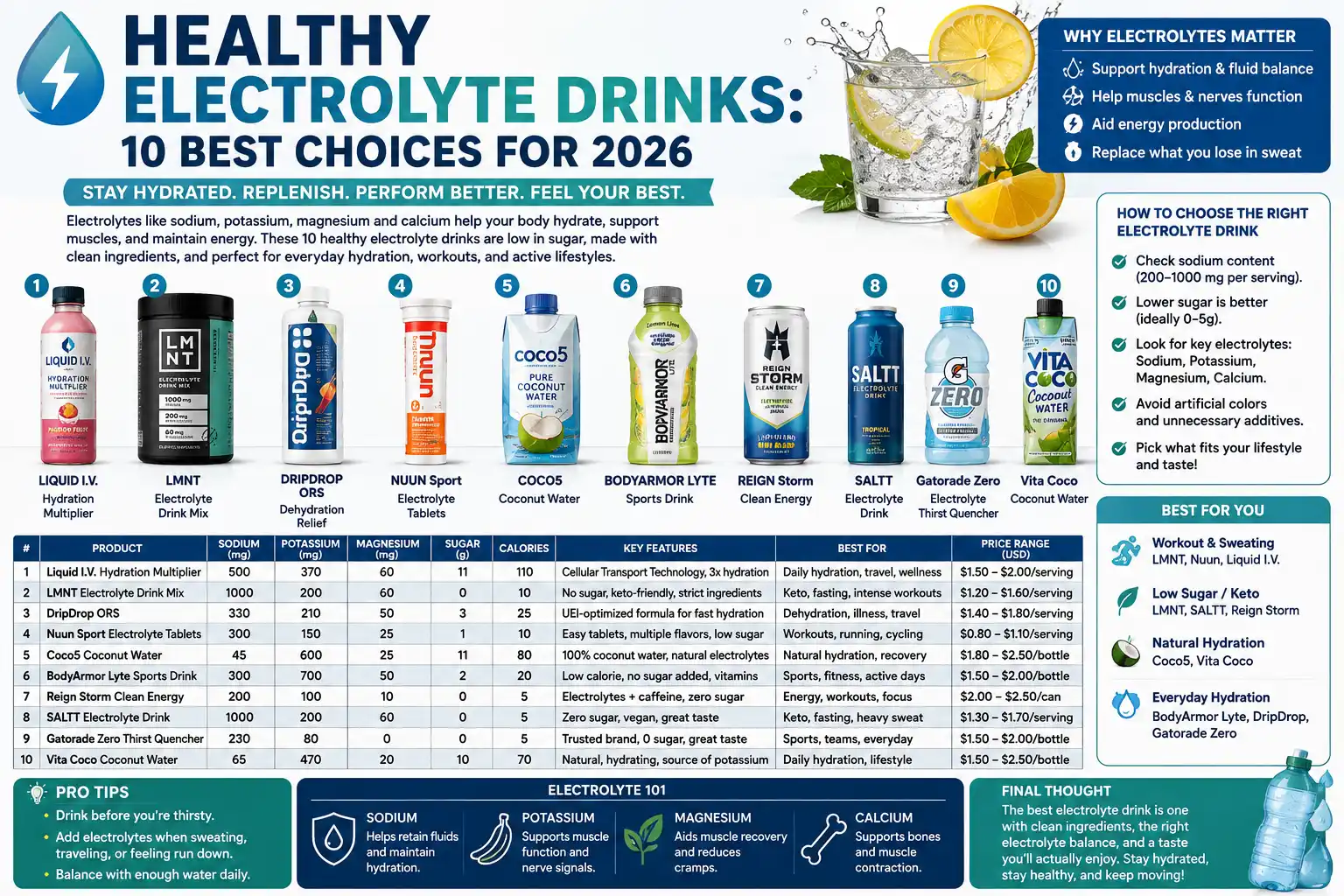
Best Healthy Electrolyte Drinks at a Glance
The values below reflect current manufacturer information reviewed on August 6, 2026. Nutrition may vary by flavor, format, preparation, and serving size.
| Best For | Drink | Sodium | Potassium | Sugar | Approx. Cost |
|---|---|---|---|---|---|
| Light daily use | Ultima Replenisher | 55 mg | 250 mg | 0 g | $1.05 |
| Low-sugar tablet | Nuun Sport | 300 mg | 150 mg | 1 g | $0.75 |
| Long exercise | Skratch Labs Sport Hydration Mix | 400 mg | Label varies | 18–19 g | $1.20 |
| Heavy sweating | Gatorlyte Powder | 490 mg | 350 mg | 10 g | $1.33 |
| Certified athletes | Thorne Catalyte | 485 mg | 96 mg | 3 g | Varies |
| High-sodium, zero-sugar use | LMNT | 1,000 mg | 200 mg | 0 g | $1.50 |
| Illness-related fluid loss | Pedialyte Classic | 244 mg per 8 oz | 184 mg per 8 oz | About 6 g | Varies |
| Low-added-sugar bottle | Gatorade Fit | 230 mg | 60 mg | 0 g added | About $1.90 |
| Natural potassium source | Unsweetened coconut water | Varies; usually low | Usually high | Natural sugar | Varies |
| Food-based recovery | Plain milk | Varies | About 380–410 mg per cup | Natural lactose | Varies |
Official-site prices exclude discounts, subscriptions, shipping, and retailer promotions. Ultima, Nuun, Skratch, Gatorlyte, and LMNT prices were calculated from current standard packages.
How We Evaluated These Electrolyte Drinks
This guide does not pretend that every electrolyte product serves the same purpose. We evaluated each option according to its most realistic use.
- Sodium per prepared serving
- Potassium and magnesium content
- Added sugar and total carbohydrates
- Presence of caffeine or stimulants
- Intended use and serving instructions
- Suitability for everyday use or sustained exercise
- Third-party sport certification
- Current official-site cost where available
- Convenience, portability, and preparation
- Clear limitations and safety concerns
Product details were taken from current manufacturer labels and official product information. Independent health guidance came from organizations including the FDA, CDC, NIDDK, National Athletic Trainers’ Association, American Academy of Pediatrics, National Kidney Foundation, and NSF Certified for Sport.
These products were not purchased or taste-tested for this article. Flavor, aftertaste, stomach tolerance, and dissolvability can differ between people. Manufacturer performance claims were not treated as independent medical evidence.
The 10 Best Healthy Electrolyte Drinks
Ultima Replenisher: Best for Light Daily Use
Ultima Replenisher is a zero-calorie, zero-sugar powder with a relatively low amount of sodium. One current serving provides 55 milligrams of sodium, 250 milligrams of potassium, 100 milligrams of magnesium, 47 milligrams of calcium, and 78 milligrams of chloride.
This makes Ultima better suited to people who want flavored water with several minerals than to athletes trying to replace substantial sodium losses.
Why It Stands Out
- Zero added sugar
- Zero calories and carbohydrates
- Six electrolyte minerals
- Relatively high magnesium and potassium
- Plant-based stevia sweetener
- Approximately $1.05 per serving
Main Limitation
The 55-milligram sodium level is low compared with exercise-focused formulas. It may not be enough after hours of heavy or salty sweating.
Light activity, routine flavored hydration, limiting added sugar, and people who prefer a low-sodium formula.
Not Ideal ForEndurance events, heavy outdoor work, or people with high sweat-sodium losses.
Ultima’s current label lists zero sugar, 55 milligrams of sodium, 250 milligrams of potassium, and 100 milligrams of magnesium per serving.
Nuun Sport: Best Low-Sugar Electrolyte Tablet
Nuun Sport offers a useful middle ground between very light electrolyte waters and high-sodium endurance products.
One tablet prepared in water provides 300 milligrams of sodium, 150 milligrams of potassium, 25 milligrams of magnesium, 13 milligrams of calcium, and one gram of added sugar.
Why It Stands Out
- Only one gram of sugar
- Five electrolyte minerals
- Portable tablet tube
- Easy to keep in a gym bag or travel bag
- Around $0.75 per serving
- No caffeine in the standard Nuun Sport formula
Main Limitation
The tablet creates an effervescent drink, which some people may not enjoy. It also contains stevia, which can produce an aftertaste for sensitive drinkers.
Gym sessions, moderate sweating, hiking, travel, short-to-medium workouts, and portable hydration.
Not Ideal ForAthletes needing substantial carbohydrate fuel, people avoiding stevia, or severe illness-related dehydration.
Nuun lists 300 milligrams of sodium, 150 milligrams of potassium, 25 milligrams of magnesium, and one gram of added sugar per tablet. Its official price was $7.49 for ten servings when checked.
Skratch Labs Sport Hydration Mix: Best for Long Workouts
Skratch Labs Sport Hydration Drink Mix combines electrolytes with carbohydrates. Unlike zero-sugar powders, it is designed to provide both fluid replacement and a modest amount of exercise fuel.
A current serving contains 400 milligrams of sodium, 19–20 grams of carbohydrates, 18–19 grams of sugar, and 80 calories.
Why It Stands Out
- Meaningful sodium for exercise
- Carbohydrates for longer activity
- Flavored with real fruit
- No artificial sweeteners or added colors
- Designed for use before and during exercise
- Approximately $1.20 per serving
Main Limitation
This is not a low-sugar everyday beverage. Its carbohydrates are useful when exercise demands them but unnecessary for casual sipping.
Cycling, distance running, long hikes, tournaments, and workouts extending beyond one hour.
Not Ideal ForDesk hydration, short walks, people seeking zero sugar, or anyone who dislikes sweetened sports drinks.
Skratch instructs users to mix one scoop with 12–16 fluid ounces of water and advises drinking according to thirst. Its current formula contains 400 milligrams of sodium and about 19 grams of sugar per serving.
Gatorlyte Powder: Best for Heavy Sweating
Gatorlyte Powder contains five major electrolytes and more minerals than standard sports drinks. It is designed for people losing substantial fluid and electrolytes through sweat.
One current packet provides 490 milligrams of sodium, 350 milligrams of potassium, 105 milligrams of magnesium, 120 milligrams of calcium, and 1,040 milligrams of chloride. It also contains 10 grams of sugar.
Why It Stands Out
- Five-electrolyte blend
- Higher potassium and magnesium than many sports drinks
- Moderate carbohydrate content
- No artificial sweeteners or flavors
- Available as powder or ready-to-drink bottles
- Approximately $1.33 per powder packet
Main Limitation
The mineral dose is unnecessarily high for routine indoor hydration. The drink also contains sugar, although less than many traditional sports drinks.
Heavy or salty sweaters, hot outdoor practices, long summer workouts, demanding physical work, and post-exercise rehydration.
Not Ideal ForRoutine office use, sodium-restricted diets, or medically managed dehydration requiring a true oral rehydration solution.
Thorne Catalyte: Best for Competitive Athletes
Thorne Catalyte is notable because it appears in the NSF Certified for Sport database. That certification matters to competitive athletes who need greater confidence that a supplement has been screened under a recognized sport-certification program.
One scoop contains 485 milligrams of sodium, 96 milligrams of potassium, 40 milligrams of magnesium, 80 milligrams of calcium, three grams of sugar, five grams of carbohydrates, and 20 calories.
Why It Stands Out
- NSF Certified for Sport
- Moderate-to-high sodium level
- Only three grams of sugar
- Includes magnesium, calcium, chloride, and potassium
- Contains additional vitamins and minerals
- Designed for training and recovery
Main Limitation
Catalyte contains more ingredients than a simple electrolyte-only powder, including vitamins, taurine, zinc, and chromium. People already using fortified supplements should review total daily intake.
Tested athletes, organized sports, moderate-to-heavy sweating, training camps, and tournaments.
Not Ideal ForPeople who only need lightly flavored water or readers wanting the shortest possible ingredient list.
LMNT: Best High-Sodium Zero-Sugar Formula
LMNT provides the highest sodium level among the main products in this guide. Each stick contains 1,000 milligrams of sodium, 200 milligrams of potassium, and 60 milligrams of magnesium with zero sugar.
That makes LMNT a specialized option rather than the universal “healthiest” drink.
Why It Stands Out
- 1,000 milligrams of sodium
- Zero sugar
- Simple Raw Unflavored version
- Potassium and magnesium included
- Suitable for people who intentionally require high sodium
- Approximately $1.50 per stick
Main Limitation
One packet contains about 43% of the FDA Daily Value for sodium. That amount may be excessive for someone who is not losing substantial salt through sweat or following individualized professional advice.
The FDA Daily Value for sodium is less than 2,300 milligrams. A serving providing 20% Daily Value or more is considered high. A 1,000-milligram packet should not be treated as ordinary flavored water.
Documented heavy or salty sweaters, long endurance events, very hot conditions, and individualized high-sodium strategies.
Not Ideal ForCasual daily hydration, low-sodium diets, uncontrolled hypertension, certain kidney or heart conditions, or anyone assuming more sodium is automatically healthier.
Pedialyte Classic: Best for Illness-Related Fluid Loss
Pedialyte Classic is an oral electrolyte solution rather than an ordinary workout beverage. It contains a deliberate balance of glucose and electrolytes intended for mild-to-moderate dehydration.
An eight-fluid-ounce serving provides approximately 244 milligrams of sodium, 184 milligrams of potassium, and 294 milligrams of chloride. Pedialyte lists 25 grams of sugar per liter, equal to roughly six grams per eight ounces.
Why It Stands Out
- Designed as an oral electrolyte solution
- Balanced glucose and electrolyte formula
- Suitable for adults and children when used correctly
- Available as liquid, powder, and freezer pops
- More appropriate than ordinary sports drinks for many illness situations
Main Limitation
Pedialyte is not a casual wellness drink. Some products are labeled for use under medical supervision, and infants or people with certain medical conditions require professional guidance.
Vomiting, diarrhea, food poisoning, reduced fluid intake during illness, and mild-to-moderate dehydration.
Not Ideal ForEveryday flavored hydration, replacing normal meals, severe dehydration requiring medical care, or infants without pediatric guidance.
Older adults and people with diabetes, kidney disease, or other health conditions should seek professional advice when dehydration is significant. Severe dehydration can require medical treatment rather than an over-the-counter drink.
Gatorade Fit: Best Low-Added-Sugar Bottled Option
Gatorade Fit is a ready-to-drink option for people who want a lighter formula without added sugar or artificial sweeteners.
A 16.9-fluid-ounce serving provides 230 milligrams of sodium, 60 milligrams of potassium, three grams of carbohydrates, and about 10–15 calories, depending on flavor.
Why It Stands Out
- No added sugar
- No artificial sweeteners
- No caffeine
- Ready to drink
- Moderate sodium level
- Easy to find in single bottles or multipacks
Main Limitation
It provides less sodium and potassium than products designed for heavy sweating. Its vitamin content does not make it a substitute for a balanced diet.
Moderate activity, on-the-go hydration, short outdoor sessions, and people who dislike mixing powders.
Not Ideal ForLong endurance events, heavy salt losses, or illness-related dehydration.
Unsweetened Coconut Water: Best Natural Potassium Option
Unsweetened coconut water naturally contains potassium and smaller amounts of sodium, magnesium, and calcium. Its mild sweetness makes it appealing after light exercise or as an alternative to soda.
However, coconut water should not be treated as a direct replacement for a high-sodium sports drink.
Why It Stands Out
- Naturally rich in potassium
- No added sugar when unsweetened
- Widely available
- Simple single-ingredient options
- Useful for light exercise or warm weather
Main Limitation
Coconut water is typically much lower in sodium than exercise formulas. It also contains natural sugar, and its potassium level may be inappropriate for some people with kidney disease.
Light workouts, warm-weather snacks, smoothies, natural beverages, or pairing with a salty post-workout meal.
Not Ideal ForHeavy sodium losses, long endurance activity by itself, or potassium-restricted diets.
Plain Milk: Best Food-Based Recovery Drink
Plain milk provides fluid, protein, carbohydrates, potassium, calcium, phosphorus, and sodium. It can be more useful after a workout than during one because it also supports refueling and muscle recovery.
One cup of cow’s milk generally supplies roughly 380–410 milligrams of potassium and more than 300 milligrams of calcium, although values vary by fat level and brand.
Why It Stands Out
- Provides electrolytes and protein
- Contains carbohydrates for recovery
- Widely available
- More filling than electrolyte water
- Lactose-free versions are available
- Fortified soy milk can be an alternative
Main Limitation
Milk is not practical during intense exercise. It can cause digestive discomfort for people with lactose intolerance and is unsafe for anyone with a milk allergy.
Post-workout recovery, strength training, refueling after games, and people who want protein and fluid together.
Not Ideal ForDrinking during hard exercise, milk allergies, some kidney diets, or anyone needing a clear oral rehydration solution.
What Makes an Electrolyte Drink Healthy?
There is no single mineral level that makes every electrolyte drink healthy. A responsible evaluation should consider purpose, serving size, sodium, sugar, caffeine, total diet, and medical needs.
For Everyday Hydration
- Little or no added sugar
- No caffeine or stimulants
- A moderate mineral concentration
- Clear preparation directions
- A flavor you enjoy without encouraging excess fluid intake
For Long Exercise
- More sodium when sweat losses are high
- Carbohydrates when fuel is useful
- An appropriate serving volume
- A formula tested during training
- Good gastrointestinal tolerance
For Illness
- A recognized oral rehydration solution
- Preparation exactly as directed
- A controlled glucose-electrolyte balance
- Age-appropriate guidance
- Medical care when dehydration becomes severe
Marketing Claims to Question
- “Sugar-free”
- “Natural”
- “Alkaline”
- “Vitamin-enhanced”
- “High electrolyte”
“Sugar-free,” “natural,” “alkaline,” “vitamin-enhanced,” and “high electrolyte” are marketing descriptions, not proof that a drink fits your individual hydration needs.
When Do You Actually Need Electrolytes?
Most healthy people obtain electrolytes through food. Water generally handles routine hydration, normal office work, errands, meals, and short periods of light exercise.
Electrolyte drinks become more relevant when you lose substantial fluid and salt.
Situations Where Electrolytes May Help
- Exercise lasting longer than about one hour
- Repeated games or training sessions
- Heavy sweating in hot or humid weather
- Long-distance running or cycling
- Physically demanding outdoor work
- Vomiting or diarrhea
- Reduced food intake during illness
- An individualized hydration plan from a qualified professional
Situations Where Water Is Usually Enough
- A short walk
- A normal desk day
- Light household work
- A short gym session with limited sweating
- Casual sipping between meals
- Routine hydration for most children
The CDC advises water for moderate activity in heat lasting less than two hours and suggests balanced sports drinks when sweating continues for several hours.
How Much Sodium Should an Electrolyte Drink Have?
Sodium is one of the most important minerals to compare because formulas range from about 55 milligrams to 1,000 milligrams per serving.
That difference is not a minor label detail. It changes who the product suits.
Low Sodium: Under About 100 mg
Examples include lighter everyday formulas such as Ultima.
Best suited to:- Flavoring water
- Light activity
- People who already eat enough sodium
- Heavy sweating
- Endurance sports
Moderate Sodium: About 200–500 mg
This range includes products such as Nuun Sport, Skratch, Gatorade Fit, Gatorlyte, and Thorne Catalyte.
- Moderate-to-long workouts
- Warm weather
- Noticeable sweating
- Post-exercise replacement
High Sodium: Around 1,000 mg
LMNT is a prominent example.
- Significant salt losses
- Selected endurance athletes
- Individualized high-sodium strategies
This level is generally not necessary for casual everyday hydration.
FDA Sodium Context
The FDA Daily Value for sodium is less than 2,300 milligrams per day.
Five percent Daily Value or less is considered low, while 20% or more is considered high.
Sugar-Free vs. Electrolyte Drinks With Sugar
Sugar is not automatically bad in an electrolyte drink. Its value depends on the reason for drinking it.
When Sugar May Be Unnecessary
- Routine hydration
- Short workouts
- When you have already eaten before exercise
- Low-calorie beverage preferences
- When monitoring added sugar
When Carbohydrates Can Be Useful
- Long workouts
- Endurance competition
- Repeated sporting events
- Exercise performed without recent food
- Simultaneous hydration and fueling
This is why a product such as Skratch contains considerably more sugar than Ultima. They are designed for different jobs.
What About Artificial or Alternative Sweeteners?
Common sweeteners include:
- Stevia
- Monk fruit
- Sucralose
- Allulose
- Sugar alcohols
These can reduce calories, but they do not suit everyone. Some people notice an aftertaste, while larger quantities of certain sugar alcohols may cause digestive discomfort.
A drink you tolerate during an ordinary day may feel different during hard exercise. Test new products during training, not on race day.
Electrolyte Drinks for Workouts and Hot Weather
The best workout drink depends on duration, intensity, temperature, clothing, acclimatization, body size, and sweat rate.
Short Workouts
For an easy session under one hour, water is usually sufficient. A low-sugar electrolyte drink can still be convenient, but it is rarely essential when:
- The weather is mild
- Sweating is limited
- You ate a normal meal
- You begin the workout well hydrated
Long or Demanding Workouts
Consider a sports formula when:
- Exercise continues beyond an hour
- The environment is hot or humid
- Sweat is heavy
- You see salt marks on clothing
- You are completing repeated sessions
- Carbohydrates would support performance
Avoid Overdrinking
Drinking too much water or sports drink can be dangerous. Excessive fluid intake during prolonged exercise can contribute to exercise-associated hyponatremia, particularly when body weight is maintained or increases.
Hydration plans should be individualized. Athletes should not automatically drink as much as possible.
Simple Sweat-Rate Estimate
- Weigh yourself before exercise in minimal dry clothing.
- Record how much fluid you drink.
- Exercise for a known amount of time.
- Dry off and weigh yourself again.
- Account for fluid consumed and any urine produced.
This estimate can help identify whether your current plan under-replaces or over-replaces fluid. A sports dietitian or athletic trainer can help interpret the result.
Heat Safety Matters More Than the Drink
An electrolyte beverage cannot replace:
- Shade
- Rest breaks
- Cooler training times
- Heat acclimatization
- Appropriate clothing
- Medical attention
Stop activity and move to a cool place if you feel faint or weak during heat exposure. A sports drink should never be used to push through potentially serious heat illness.
Sports Drinks vs. Oral Rehydration Solutions
These products are often placed in the same category, but they are not identical.
| Feature | Sports Drink | Oral Rehydration Solution |
|---|---|---|
| Main Purpose | Exercise hydration and sometimes fuel | Replace fluids and electrolytes during dehydration |
| Carbohydrates | Often higher for energy | Controlled amount for absorption |
| Sodium | Varies widely | Deliberately balanced |
| Best Use | Prolonged exercise and heavy sweating | Vomiting, diarrhea, or illness-related fluid loss |
| Examples | Skratch, Gatorlyte, Nuun | Pedialyte and other recognized ORS products |
Sports drinks can be useful during exercise. They should not automatically replace an oral rehydration solution for significant vomiting or diarrhea.
Seek Medical Help for Warning Signs
- Confusion
- Fainting
- Severe weakness
- Very low urine output
- Inability to keep fluids down
- Persistent vomiting
- Blood in vomit or stool
- Severe abdominal pain
- Signs of dehydration in an infant
Electrolyte drinks do not treat the underlying cause of serious illness.
Are Electrolyte Drinks Safe for Children?
For most children, water and plain milk should be the main drinks.
Electrolyte-supplemented drinks may be useful when vigorous exercise lasts beyond one hour or a child is sweating heavily. Routine sports drinks can add unnecessary sugar and encourage a preference for sweet beverages.
| Situation | Generally Appropriate Choice |
|---|---|
| Normal school day or casual play | Water |
| Short sports practice | Water |
| Long, vigorous practice in heat | Water plus an age-appropriate sports drink when needed |
| Vomiting or diarrhea | Pediatric oral rehydration solution as directed |
| Infant dehydration | Contact a pediatrician |
| Energy drinks | Avoid |
Energy drinks may contain caffeine and other stimulants and are not appropriate hydration products for children.
Who Should Be Careful With Electrolyte Drinks?
Speak with a qualified healthcare professional before regularly using concentrated electrolyte drinks when you have:
- Kidney disease
- Heart failure
- High blood pressure
- Fluid restrictions
- A sodium-restricted diet
- A potassium-restricted diet
- Diabetes
- A history of low blood sodium
- Medicines that affect fluid or electrolyte balance
People with kidney disease may have difficulty managing sodium, potassium, phosphorus, and fluid. A product promoted as “healthy” for athletes may be unsuitable for someone with impaired kidney function.
Older adults, people with weakened immune systems, and those with chronic conditions should also seek advice when illness causes meaningful dehydration.
How to Read an Electrolyte Drink Label
Do not judge an electrolyte drink from the front of the package. Start with the Nutrition Facts or Supplement Facts panel.
1. Check the Serving Size
A bottle may contain more than one serving. A packet may be intended for 8, 16, 20, or 32 ounces of water.
Using less water than directed creates a more concentrated drink. Using more water changes the flavor and mineral concentration.
2. Compare Sodium
- Is this for everyday use or heavy sweating?
- How much sodium is already in my diet?
- Am I using more than one serving?
- Do I have a medical reason to limit sodium?
3. Check Added Sugar
Separate total sugar from added sugar. Coconut water and milk contain naturally occurring sugar. A sports powder may contain added sugar for flavor and exercise fuel.
4. Look for Caffeine
Standard hydration products do not need caffeine. Some product lines sell both ordinary electrolyte formulas and caffeinated “energy” versions. Check the exact flavor and product name rather than assuming every item from the brand is caffeine-free.
5. Review Potassium and Magnesium
More potassium or magnesium is not always better. Large amounts may be inappropriate for some medical conditions. Magnesium can also cause digestive discomfort in sensitive people.
6. Check the Ingredient List
- Allergens
- Artificial or alternative sweeteners
- Sugar alcohols
- Food dyes
- Herbal extracts
- Added vitamins
- Multiple stimulants
7. Verify Sport Certification
Competitive athletes should look for a current independent certification rather than relying only on phrases such as “athlete approved.”
Recognized programs include:
- NSF Certified for Sport
- Informed Sport
- Informed Choice
Certification does not prove that a product will improve performance. It provides additional quality-control information relevant to tested athletes.
Easy Homemade Electrolyte Drinks
Homemade drinks can be affordable and useful for light activity. However, a kitchen recipe is not automatically equivalent to a medically formulated oral rehydration solution.
Simple Citrus Hydration Drink
Ingredients
- 2 cups cold water
- 2 tablespoons fresh lemon or lime juice
- 1–2 teaspoons honey or sugar
- A small pinch of table salt
- Ice, optional
Method
- Add all ingredients to a clean jar or bottle.
- Shake until the salt and sweetener dissolve.
- Taste and dilute if necessary.
- Refrigerate promptly.
Best Use
Suitable for light exercise, warm weather, or flavored everyday hydration.
This homemade drink is not a substitute for a commercial oral rehydration solution during significant vomiting, diarrhea, or serious dehydration.
Coconut-Lime Cooler
Ingredients
- 1 cup unsweetened coconut water
- 1 cup cold water
- Fresh lime juice
- Ice
- A small pinch of salt, optional
Best Use
This option provides potassium with a lighter sweetness. Adding a small amount of salt increases sodium, but it does not create a standardized medical formula.
Post-Workout Banana Milk
Ingredients
- 1 cup plain milk or lactose-free milk
- ½ banana
- Ice
- Cinnamon, optional
Best Use
This is a recovery drink rather than an exercise drink. It provides carbohydrates, protein, potassium, calcium, and fluid.
Common Electrolyte Drink Mistakes
Drinking High-Sodium Products Without a Reason
A 1,000-milligram sodium packet is not automatically better than a 300-milligram tablet. Choose according to actual losses.
Treating Every Workout Like an Endurance Event
A short indoor workout usually does not require a high-calorie sports drink.
Assuming Zero Sugar Means Healthier
Zero sugar may be helpful for routine use, but carbohydrates can serve a purpose during long exercise.
Ignoring Serving Size
Using two packets doubles the sodium, sugar, calories, vitamins, and sweeteners.
Confusing Sports Drinks With Medical Rehydration
A regular sports beverage may not have the appropriate glucose-to-electrolyte balance for illness-related dehydration.
Drinking Beyond Thirst During Long Events
More fluid is not always safer. Excessive intake can dilute blood sodium.
Ignoring Food
Meals and snacks supply sodium, potassium, magnesium, calcium, and carbohydrates. A balanced post-workout meal may reduce the need for a concentrated drink.
How to Choose the Right Electrolyte Drink
Use this quick decision guide.
Choose Water When:
- Your day is mostly sedentary
- Exercise is short and light
- The weather is mild
- You are eating normal meals
Choose a Light Electrolyte Drink When:
- You want flavored hydration
- You are doing moderate activity
- You prefer little or no added sugar
- Sweat loss is limited
Good options: Ultima Replenisher, Nuun Sport, or Gatorade Fit.
Choose a Moderate-Sodium Sports Drink When:
- Exercise lasts longer
- Sweating is noticeable
- Conditions are warm
- You need some carbohydrate fuel
Good options: Skratch Labs, Gatorlyte, or Thorne Catalyte.
Choose a High-Sodium Formula When:
- You have substantial salt losses
- Training is prolonged
- Conditions are demanding
- The strategy has been tested during practice
Possible option: LMNT.
Choose an Oral Rehydration Solution When:
- Vomiting or diarrhea causes fluid loss
- Drinking water alone is not maintaining hydration
- A clinician recommends it
Possible option: Pedialyte or another recognized oral rehydration solution.
Match the sodium, carbohydrate content, and serving size to the reason you are drinking it rather than choosing the product with the biggest electrolyte number on the package.
Frequently Asked Questions
What Is the Healthiest Electrolyte Drink?
The healthiest choice is the one that matches your actual needs without adding unnecessary sodium, sugar, caffeine, or vitamins.
For routine hydration, water is usually healthiest. For light activity, a low-sugar formula such as Nuun or Ultima may be suitable. Long endurance exercise may justify a drink containing more sodium and carbohydrates.
Are Electrolyte Drinks Better Than Water?
Not for every situation. Water is generally enough for normal daily hydration and short exercise. Electrolyte drinks may be more useful during prolonged sweating, extreme heat, repeated activity, vomiting, or diarrhea.
Which Electrolyte Is Lost Most Through Sweat?
Sodium is the main electrolyte targeted in most sweat-replacement strategies.
Sweat volume and sodium concentration vary greatly between individuals, so hydration guidance should account for the person, activity, environment, and tolerance rather than rely on one fixed formula.
Can You Drink Electrolytes Without Exercising?
Yes, but most healthy people do not require a concentrated electrolyte drink during an ordinary day.
A lightly mineralized beverage is different from consuming one or more high-sodium packets. Check the sodium level before making a product part of your daily routine.
Are Sugar-Free Electrolyte Drinks Better?
They are better for some situations, not all. Sugar-free drinks can suit short exercise and routine low-calorie hydration. Drinks containing carbohydrates may be more useful during long or intense activity when the body also needs fuel.
Is Coconut Water a Good Electrolyte Drink?
Coconut water is a useful natural source of potassium and fluid. It can work well after light exercise or as part of a snack.
Its sodium content is usually much lower than sweat-replacement products, so it may not be sufficient by itself after heavy or prolonged sweating.
Is Pedialyte Better Than Gatorade?
They are designed for different uses. Pedialyte is an oral electrolyte solution with a controlled glucose-and-electrolyte balance. Traditional sports drinks are usually designed to support exercise hydration and provide carbohydrate fuel.
Can Electrolyte Drinks Contain Too Much Sodium?
Yes. A drink can provide more sodium than you need, especially when combined with a sodium-rich diet. People with hypertension, kidney disease, heart conditions, or sodium restrictions should seek personalized advice.
Can Children Drink Electrolyte Beverages?
Children may use age-appropriate electrolyte drinks during prolonged vigorous exercise, heavy sweating, or illness.
Water should remain the routine choice. Oral rehydration products should be used according to pediatric guidance, especially for infants and young children.
Do Electrolyte Powders Need Third-Party Testing?
Third-party certification is especially valuable for competitive athletes subject to drug testing.
Certification does not guarantee better hydration or taste, but it can provide additional assurance about manufacturing and screened substances.
Conclusion
Healthy electrolyte drinks are tools, not daily requirements for everyone. Water and balanced meals remain the foundation of normal hydration.
Choose a light, low-sugar formula for moderate use, a sodium-and-carbohydrate drink for long exercise, and a proper oral rehydration solution for illness-related fluid loss. Always compare the serving size, sodium, sugar, caffeine, and intended use before deciding which drink belongs in your routine.
The most important rule is simple: match the drink to the loss. Do not use an endurance formula for a desk day, and do not rely on flavored sports water when significant illness requires medical guidance.