Healthy Drinks Besides Water: Best Everyday Choices
Simple, practical drink choices for flavor, protein, caffeine, hydration, and variety.
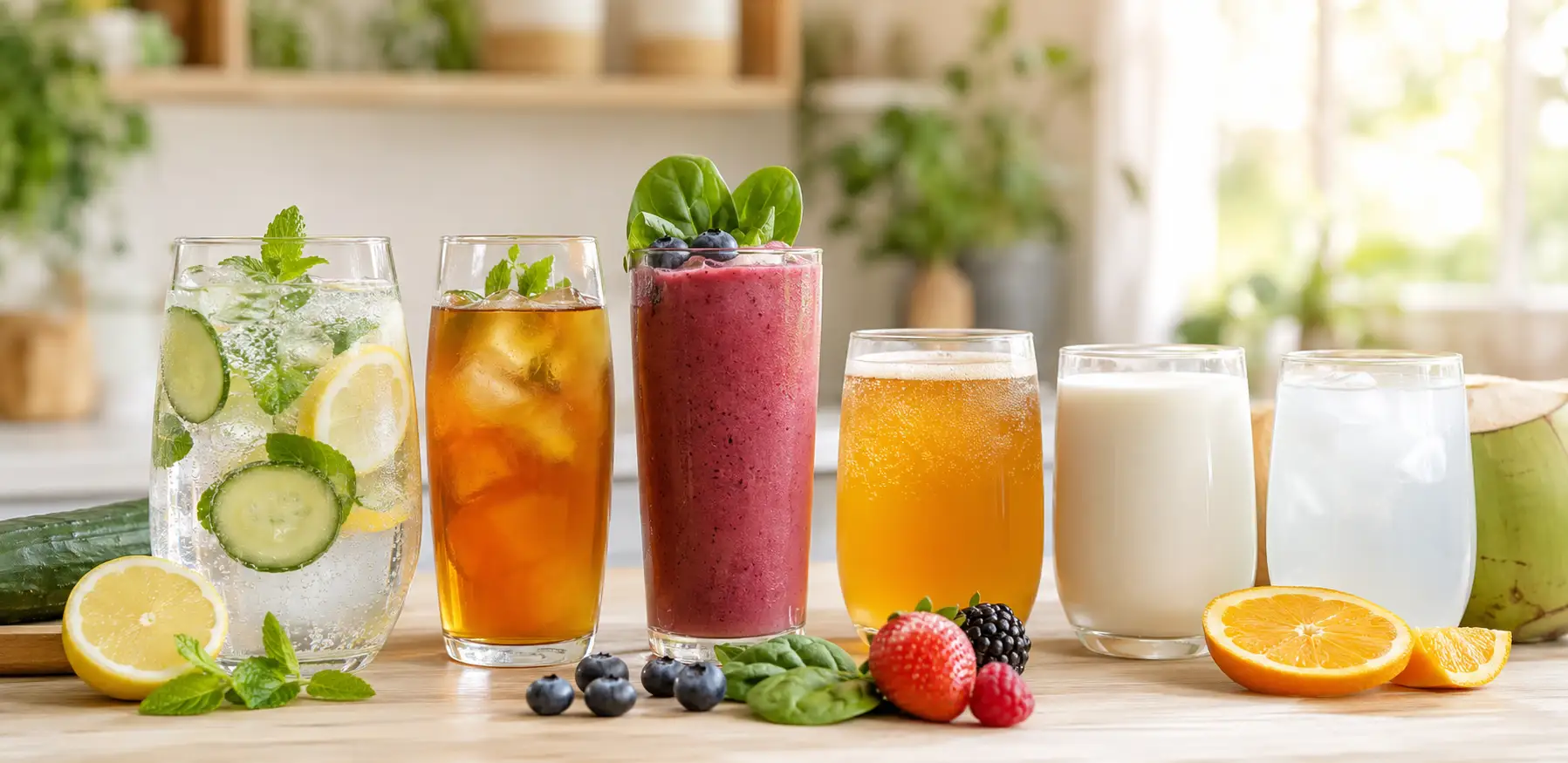
Water remains the simplest drink for everyday hydration, but it does not have to be your only choice. Several healthy drinks besides water can add flavor, protein, calcium, caffeine, or variety without excessive added sugar.
The best choice depends on why you want a drink. Unsweetened tea may suit an afternoon break, while milk could complement a meal. A smoothie can function more like a snack, while an electrolyte beverage is usually situational.
Quick Answer
The best everyday drinks besides water are unsweetened tea, plain coffee, plain milk, lactose-free milk, and unsweetened fortified soy milk. Plain seltzer, small servings of 100% juice, homemade smoothies, and plain kefir can also fit, depending on your needs.
TL;DR
- Best overall: Unsweetened tea
- Best morning choice: Plain coffee
- Best for protein: Dairy or fortified soy milk
- Best soda replacement: Plain flavored seltzer
- Best substantial option: A balanced homemade smoothie
- Best rule: Check added sugar before buying
What Makes a Drink a Better Choice?
Calling a drink “healthy” without context is misleading. Tea, milk, juice, coffee, and smoothies provide different nutrients and serve different purposes.
A better everyday drink generally limits added sugar and uses a sensible serving size. Caffeine, protein, sodium, allergens, and fortification also matter.
Look for These Qualities
- Little or no added sugar
- A serving size that matches your needs
- Useful nutrients when the drink contains calories
- A caffeine amount you tolerate comfortably
- Limited sodium unless electrolytes are needed
- Ingredients compatible with allergies and medications
- No unsupported promises about weight, immunity, or detoxification
- Clear preparation and refrigeration instructions
The FDA’s Daily Value for added sugar is 50 grams on a 2,000-calorie diet. Five percent Daily Value or less is considered low, while 20% or more is high. These figures are reference points, not personalized targets. Source: FDA added-sugar guidance
Best Healthy Drinks Besides Water at a Glance
This comparison separates everyday choices from drinks that work better in specific situations. Nutrition varies by product, recipe, and serving size.
Packaged drinks change often, so verify the current label. Pay special attention to added sugar, protein, caffeine, sodium, and serving size.
| Drink | Best use | Added-sugar goal | Main advantage | Main caution |
|---|---|---|---|---|
| Unsweetened tea | Everyday variety | 0 grams | Flavor with few calories | Caffeine varies |
| Herbal tea | Evening drink | 0 grams | Usually caffeine-free | Herbs may interact with medicines |
| Plain coffee | Morning beverage | 0 grams | Flavor and caffeine | Sweet add-ins change it |
| Plain milk | Meals | 0 grams added | Protein and key nutrients | Dairy allergy or intolerance |
| Lactose-free milk | Meals | 0 grams added | Dairy nutrition without standard lactose | Still contains milk proteins |
| Fortified soy milk | Dairy-free meals | 0 grams added | Protein and fortification | Soy allergy |
| Pea-protein milk | Dairy-free meals | 0 grams added | Often protein-rich | Formulas vary |
| Plain seltzer | Soda replacement | 0 grams | Carbonation without sugar | Acidity may bother teeth |
| Juice spritzer | Occasional variety | 0 grams added | Fruit flavor with less juice | Naturally occurring sugar |
| Balanced smoothie | Snack or light meal | 0 grams added | Whole ingredients and fiber | Portions can become large |
| Plain kefir | Snack or meal | 0 grams added | Protein and live cultures | Dairy and lactose vary |
| Coconut water | Heavy sweating | 0 grams added | Fluid and potassium | Not necessary for most days |
Best Everyday Drinks Besides Water
The strongest everyday options are simple, unsweetened, and easy to portion. They do not require specialty powders or wellness claims.
These choices can contribute fluid, but they should complement water rather than push it out completely. Individual needs still differ.
Unsweetened Green Tea
Green tea provides strong flavor without added sugar. Brew it gently because boiling water and long steeping can create harsh bitterness.
Add lemon, mint, cucumber, or fresh peach instead of syrup. Choose decaffeinated green tea when caffeine interferes with sleep.
Unsweetened Black Tea
Black tea has a stronger flavor than green tea. It works well with lemon, orange peel, cinnamon, or a small milk splash.
Bottled tea can contain substantial added sugar. Look for 0 grams of added sugar when choosing an everyday version.
Caffeine-Free Herbal Tea
Peppermint, rooibos, ginger, chamomile, and hibiscus offer distinct flavors. Most common herbal infusions are caffeine-free, but blended products may contain tea or yerba mate.
Check ingredients during pregnancy or when taking medicines. Herbal ingredients are active plant substances, not automatically harmless flavorings.
Plain Coffee
Plain coffee contains very few calories before milk, cream, sugar, or syrup. A modest milk addition can soften bitterness without turning it into dessert.
For most adults, the FDA cites 400 milligrams of caffeine daily as an amount not generally associated with negative effects. Sensitivity varies considerably. Source: FDA caffeine guidance
Coffee With Plain Milk
Coffee with plain dairy or unsweetened soy milk offers a more balanced alternative to heavily flavored café drinks. Measure sweetener rather than pouring freely.
A “coffee drink” can range from plain coffee to a large dessert beverage. Cup size, syrup, whipped cream, and sweetened creamer determine the difference.
Plain Dairy Milk
Milk supplies protein, calcium, potassium, and vitamin D when fortified. Fat level should reflect personal preferences and professional guidance.
Plain milk contains naturally occurring lactose, but that is not added sugar. People with milk-protein allergies need a truly dairy-free alternative.
Lactose-Free Dairy Milk
Lactose-free milk retains dairy protein and many of the same nutrients as regular milk. Lactase breaks lactose into simpler sugars, which can make it taste sweeter.
It is not safe for a milk-protein allergy. Choose a plant-based beverage when dairy proteins must be avoided.
Unsweetened Fortified Soy Milk
Unsweetened fortified soy milk generally provides more protein than almond, coconut, oat, or flax drinks. Exact amounts differ between manufacturers.
Shake the carton before pouring because added nutrients may settle. Compare protein, calcium, vitamin D, and added sugar on the label.
Unsweetened Pea-Protein Milk
Pea-protein beverages often provide protein levels closer to dairy or soy milk. However, ingredients and fortification differ between products.
Check for added oil, flavoring, sodium, sweeteners, calcium, and vitamin D. A plant-based label alone does not establish nutritional quality.
Plain or Naturally Flavored Seltzer
Plain seltzer offers carbonation without the added sugar in regular soda. Naturally flavored varieties can help when plain water feels repetitive.
Some sparkling drinks contain juice, caffeine, sodium, or sweeteners. Read the Nutrition Facts panel instead of relying on the word “sparkling.”
Nutrient-Containing Drinks to Use Thoughtfully
Some drinks provide nutrients but also contribute calories, natural sugar, sodium, or a substantial portion size. That does not make them bad.
The key question is whether the drink fills a useful role. Juice, smoothies, and cultured beverages should not become automatic all-day hydration.
One Hundred Percent Fruit Juice
Choose a product labeled 100% juice, not juice drink, cocktail, or punch. Whole fruit generally supplies more fiber and chewing satisfaction.
Juice is easy to drink quickly. Measure a small serving or dilute it with plain or sparkling water.
Low-Sodium Vegetable Juice
Vegetable juice can supply nutrients with less sweetness than fruit juice. Sodium may be high, especially in tomato-based blends.
Compare sodium per serving rather than assuming every vegetable drink is similar. People limiting potassium or sodium need personalized advice.
A Balanced Homemade Smoothie
A smoothie can retain fiber when made from whole fruit. It becomes less balanced when built from juice, sweetened yogurt, syrup, and several fruit portions.
A simple formula is:
- One cup frozen fruit
- Half a cup plain yogurt or soft tofu
- Half to three-quarters cup unsweetened milk
- Ice or water as needed
- Optional chia, oats, or nut butter if suitable
A smoothie is closer to food than flavored water. Count it as part of a meal or snack rather than unlimited hydration.
Plain Kefir
Kefir is cultured milk made with bacteria and yeast. Products vary in added sugar, fat, protein, lactose, and culture composition.
Choose plain kefir when possible. Blend it with berries or cinnamon if the tart taste feels too sharp.
Unsweetened Drinkable Yogurt
Drinkable yogurt may supply protein and cultured dairy. Many flavored varieties also contain substantial added sugar.
Compare plain products first. Refrigerate them promptly and do not leave cultured dairy warm for extended periods.
Situational Drinks That Are Not Necessary Every Day
A drink can be useful without being an ideal all-day beverage. Electrolytes, fermented tea, juice concentrates, and broth fit specific situations.
These options require closer label reading. Sugar, sodium, caffeine, potassium, and portion sizes vary widely.
Lower-Sugar Kombucha
Kombucha is fermented sweetened tea. Finished products may contain residual sugar, caffeine, live cultures, and trace alcohol.
Evidence for many commercial wellness claims remains limited. Choose it because you enjoy the flavor, not because it promises broad health changes.
Unsweetened Coconut Water
Coconut water contains naturally occurring potassium and some sodium. It may be useful after heavy sweating, but most people do not need it throughout an ordinary day.
People with kidney disease, potassium restrictions, or certain medication concerns should ask a clinician before using it regularly.
Electrolyte Drinks
Short, easy activity usually does not require a specialty electrolyte drink. Longer exercise, extreme heat, vomiting, diarrhea, or medical needs can change fluid requirements.
Do not double powder scoops or improvise a medical rehydration formula. Oral rehydration solutions and sports drinks serve different purposes.
Low-Sodium Broth
Broth provides fluid and sodium, which may suit certain circumstances. Regular products can be very salty, so compare labels carefully.
Broth is not a universal substitute for water. People managing blood pressure, kidney disease, or sodium restrictions need individualized guidance.
A Low-Sugar Homemade Mocktail
A homemade mocktail can be lighter than bottled punch or soda. Build it with unsweetened tea, seltzer, herbs, citrus, and a modest juice portion.
Try this simple formula:
- Four ounces unsweetened hibiscus tea
- Two ounces plain seltzer
- One ounce pomegranate juice
- Half an ounce fresh lime juice
- Mint or orange peel for garnish
The result remains festive without requiring syrup. Citrus can be acidic, so avoid sipping it continuously throughout the day.
Best Drink for Each Need
A ranked list is only useful when it matches the reader’s goal. The drink with the fewest calories is not always the one with the most protein.
Use this guide as a starting point. Medical conditions, age, pregnancy, activity, and medication can change the best choice.
| Need | Strong starting choice | Why |
|---|---|---|
| No added sugar | Unsweetened tea | Flavor with little energy |
| No caffeine | Herbal tea | Warm or iced options |
| Morning caffeine | Plain coffee | Simple and unsweetened |
| More protein | Milk or unsweetened soy milk | Substantial protein per cup |
| Lactose intolerance | Lactose-free dairy milk | Retains dairy protein |
| Dairy-free | Fortified soy or pea milk | Protein and possible fortification |
| Soda replacement | Plain flavored seltzer | Carbonation without added sugar |
| More substantial snack | Balanced smoothie | Whole fruit plus protein |
| Savory drink | Low-sodium vegetable juice | Less sweet than fruit juice |
| After heavy sweating | Situation-specific electrolyte drink | Replaces fluid and electrolytes |
| Evening drink | Caffeine-free herbal tea | Avoids late caffeine |
| Party drink | Low-sugar mocktail | Social presentation without alcohol |
Tea, Coffee, and Caffeine
Tea and coffee contribute fluid, but caffeine remains an important difference from water. Serving size and brewing method can change caffeine substantially.
The FDA notes that 400 milligrams daily is not generally associated with negative effects for most adults. This is not a target, and some people need much less. Source: FDA
Consider reducing caffeine when it causes:
- Trouble falling or staying asleep
- Restlessness or shakiness
- A racing heartbeat
- Headaches
- Stomach discomfort
- Dependence followed by withdrawal symptoms
- Anxiety or uncomfortable alertness
Pregnancy, certain medical conditions, and some medications may require different limits. Ask a qualified clinician for personalized guidance.
Milk Versus Plant-Based Milk
Plant beverages are not nutritionally interchangeable with dairy milk. Some provide useful protein and fortification, while others function mainly as light beverages.
Compare cartons within the same category because brands differ. Organic, natural, and plant-based claims do not reveal protein or added-sugar content.
What to Compare Per Cup
- Protein: Soy and pea beverages often provide more than almond or coconut drinks.
- Added sugar: Choose unsweetened products for everyday use.
- Calcium: Look at milligrams and percent Daily Value.
- Vitamin D: Confirm fortification on the label.
- Sodium: Amounts vary between products.
- Total calories: A useful comparison, but not the only one.
- Allergens: Check dairy, soy, tree nuts, and cross-contact statements.
- Ingredients: Oils, gums, flavorings, and sweeteners vary.
Shake fortified plant drinks before serving. Follow refrigeration directions after opening.
Smoothies Versus Juice
Smoothies and juice both contain fruit, but they are not identical. Smoothies can retain fiber when whole ingredients remain in the blender.
Juice removes much of the intact fruit structure and is easier to consume quickly. Neither drink needs to be unlimited.
Choose a Smoothie When You Want
- A more substantial snack
- Whole fruit rather than strained liquid
- Plain yogurt, tofu, or milk for protein
- Oats, seeds, or nut butter when suitable
- Greater control over ingredients
Choose Juice When You Want
- A small fruit-based drink with a meal
- A measured ingredient in a spritzer
- A flavor base for an unsweetened mocktail
- A product with a simple 100% juice label
Avoid restaurant-sized smoothies built from juice, sweetened yogurt, frozen dessert, and syrup. They can function more like meals or desserts than beverages.
How Much Added Sugar Is in Your Drink?
Sweetened beverages are a major source of added sugar. The American Heart Association reports that Americans consume nearly 17 teaspoons of added sugar daily on average.
A 12-ounce regular soda contains about 150 calories and 10 teaspoons of added sugar, according to the AHA. Source: American Heart Association
How to Read the Label
Check the serving size.
Check the servings per container.
Find Total Sugars.
Find Includes Added Sugars.
Compare the percent Daily Value.
Review the ingredient list for syrups and sweeteners.
Compare similar products using the same serving size.
The FDA uses 5% Daily Value or less as low and 20% or more as high for a nutrient. Use the same framework when comparing added sugar between products. Source: FDA Nutrition Facts guidance
No Added Sugar, Sugar-Free, and Unsweetened
These phrases do not mean the same thing. Understanding them prevents confusion when comparing juice, milk, tea, and specialty drinks.
Naturally occurring sugar from fruit or milk can appear under Total Sugars without appearing as Added Sugars.
- Unsweetened: No sweetener was added, although natural sugar may remain.
- No added sugar: No sugar was added during processing, but natural sugar may be present.
- Sugar-free: Meets a specific low-sugar labeling standard and may contain sweeteners.
- Reduced sugar: Contains less sugar than a referenced regular product.
- 100% juice: Comes from fruit or vegetables but can remain naturally concentrated.
- Diet or zero: Usually uses one or more high-intensity sweeteners.
A sugar-free drink is not automatically more nutritious. It may still contain caffeine, acids, sodium, or ingredients that do not suit everyone.
Are Diet Drinks Better Than Regular Soda?
A diet drink generally contains less sugar and fewer calories than regular soda. That can make it a useful transition for someone replacing a large sugary-drink habit.
However, it does not need to become the final everyday choice. Unsweetened tea, plain coffee, milk, or seltzer may offer a simpler long-term routine.
A practical transition can look like this:
Replace one daily regular soda with a diet or lower-sugar version.
Replace another serving with flavored seltzer or unsweetened tea.
Gradually reduce sweeteners in tea and coffee.
Keep cold unsweetened drinks ready and visible.
Reserve regular soda for occasional enjoyment.
The goal is not dietary perfection. It is reducing habitual added sugar without creating an unrealistic plan.
Healthy Drinks for Kids and Teens
Children are not small adults when it comes to beverages. Coffee, energy drinks, stimulant beverages, and adult wellness products are inappropriate default choices.
A 2025 expert consensus from major U.S. health organizations recommends that children ages 5–18 mostly drink water and plain pasteurized milk, with limited 100% juice. It recommends avoiding sugar-sweetened, caffeine-containing, and non-sugar-sweetened drinks. Source: Healthy Eating Research
Better Household Choices
- Plain water
- Plain pasteurized dairy milk
- Age-appropriate amounts of 100% juice
- Fortified plant milk when medically or culturally appropriate
- Whole-fruit smoothies without syrup
- Caffeine-free herbal drinks cleared for the child
- Fruit-infused water without sweetener
- Milk served with meals rather than constant sipping
For ages 5–8, the 2025 recommendations limit 100% juice to 4–6 fluid ounces daily. Suggested maximums rise with age, but whole fruit remains important. Source: Age-specific guidance
Parents should discuss allergies, growth, restrictive diets, and milk alternatives with a pediatrician or registered dietitian.
Who Should Be Careful With Certain Drinks?
General beverage lists cannot account for every medical need. A drink that suits one person may be inappropriate for another.
Personalized advice matters when fluid, caffeine, sodium, sugar, potassium, or protein needs are medically restricted.
Seek Individual Guidance If You Have
- Kidney disease or potassium restrictions
- Heart failure or a prescribed fluid limit
- Diabetes or medicines affecting blood sugar
- High blood pressure requiring sodium control
- Pregnancy or breastfeeding
- Food allergies
- Significant lactose intolerance
- Digestive sensitivity to added fiber
- Medication interactions with caffeine or herbs
- Recurrent dehydration caused by illness
Do not use a general internet recipe as a substitute for a medically recommended oral rehydration solution.
Common Beverage Mistakes
A drink can look nutritious while hiding added sugar, an oversized serving, or high caffeine. Front labels often highlight one appealing feature.
Use the complete label and serving context. No single vitamin, herb, culture, or electrolyte determines the whole product.
Treating Juice Like Unlimited Water
Juice is concentrated and easy to drink quickly. Measure it and choose whole fruit more often.
Assuming Every Plant Milk Is Similar
Protein and fortification vary sharply. Compare soy, almond, oat, coconut, and pea beverages carefully.
Turning Coffee Into Dessert
Large portions, flavored syrup, sweetened creamer, and whipped toppings can dominate the drink.
Assuming Fermented Means Proven
Kombucha and cultured drinks vary. Fermentation does not guarantee a specific health outcome.
Using Electrolytes Every Day
Most ordinary routines do not require a specialty electrolyte drink. Use them for a clear purpose.
Ignoring Bottle Size
A single bottle may contain more than one listed serving. Calculate the whole-container amount when drinking all of it.
Confusing Natural Sugar With Added Sugar
Milk and fruit contain naturally occurring sugars. The Added Sugars line identifies sugar introduced during processing.
Replacing Meals With Thin Drinks
A lightly flavored beverage does not provide the protein, fat, fiber, and energy of a balanced meal.
A Seven-Day Soda-Swap Plan
Reducing sweetness gradually can feel more realistic than quitting every sweet drink at once. Keep your favorite flavors while changing their concentration.
This plan is flexible. Repeat a day when needed rather than treating one setback as failure.
Day One
Measure how much soda, sweet tea, or sweetened coffee you normally drink. Change nothing yet.
Day Two
Replace one serving with cold flavored seltzer. Choose a flavor similar to your usual drink.
Day Three
Mix half sweet tea with half unsweetened tea. Add lemon for stronger flavor.
Day Four
Order one fewer syrup pump in a coffee drink. Keep the milk and coffee unchanged.
Day Five
Make a juice spritzer with one part juice and three parts seltzer.
Day Six
Try an unsweetened iced tea, cold brew, or caffeine-free herbal drink.
Day Seven
Choose the two swaps you enjoyed most. Keep those ingredients ready for the next week.
Frequently Asked Questions
What is the healthiest drink besides water?
Unsweetened tea is one of the strongest everyday choices because it adds flavor without added sugar. Plain coffee can also fit for adults who tolerate caffeine.
Plain milk and fortified unsweetened soy milk offer protein and important nutrients. The best choice depends on the drink’s role.
What can I drink every day besides water?
Unsweetened tea, plain coffee, plain milk, lactose-free milk, and unsweetened fortified soy milk can fit many daily routines.
Water should still provide much of your fluid intake. Juice, smoothies, kombucha, and electrolyte drinks are more situational.
Do coffee and tea count toward fluid intake?
Coffee and tea contribute fluid. Their caffeine content still matters, especially when consumed in large servings.
Choose decaffeinated coffee or herbal tea if caffeine affects sleep, causes discomfort, or conflicts with professional guidance.
Which drinks besides water contain no added sugar?
Unsweetened tea, plain coffee, plain milk, unsweetened plant beverages, and plain seltzer can contain no added sugar.
Always verify the Nutrition Facts label. Flavored versions may include syrup, concentrates, or other sweeteners.
Is coconut water healthier than an electrolyte drink?
Neither is universally better. Coconut water usually contains more potassium and less sodium than many sports drinks.
The right choice depends on sweat loss, activity, heat, diet, and medical needs. Ordinary daily activity may require neither.
Which plant-based milk has the most protein?
Unsweetened soy and pea-protein beverages often contain more protein than almond, oat, coconut, or flax drinks.
Brands vary. Compare protein per cup, calcium, vitamin D, sodium, and added sugar before buying.
Are smoothies healthy to drink every day?
A modest smoothie made with whole fruit, unsweetened milk, and protein can fit a balanced diet. It should not automatically accompany a full meal.
Avoid stacking juice, several fruits, sweetened yogurt, syrup, and dessert ingredients in one oversized drink.
What can people with diabetes drink besides water?
Unsweetened tea, plain coffee, and suitable unsweetened milk alternatives may fit, but needs vary. Juice, smoothies, sweetened coffee, and some specialty drinks can affect blood sugar.
A clinician or registered dietitian can provide advice based on medicines, glucose patterns, and total diet.
What are suitable drinks during pregnancy?
Water and pasteurized milk are common choices, while caffeine limits require attention. Herbal teas and supplements are not automatically pregnancy-safe.
Ask a prenatal clinician about caffeine, herbs, fortified drinks, and individual medical needs.
Are prebiotic sodas healthy?
Prebiotic sodas may contain added fiber and less sugar than regular soda. They can still contain sweeteners, acids, caffeine, or ingredients that cause bloating.
Treat them as optional packaged beverages rather than a replacement for fiber-rich foods.
Conclusion
The best healthy drinks besides water are not exotic or expensive. Unsweetened tea, plain coffee, milk, fortified soy milk, and seltzer cover most everyday needs.
Start with the drink you consume most often and check its added sugar, serving size, and caffeine. Replace one heavily sweetened serving this week with an option you genuinely enjoy.