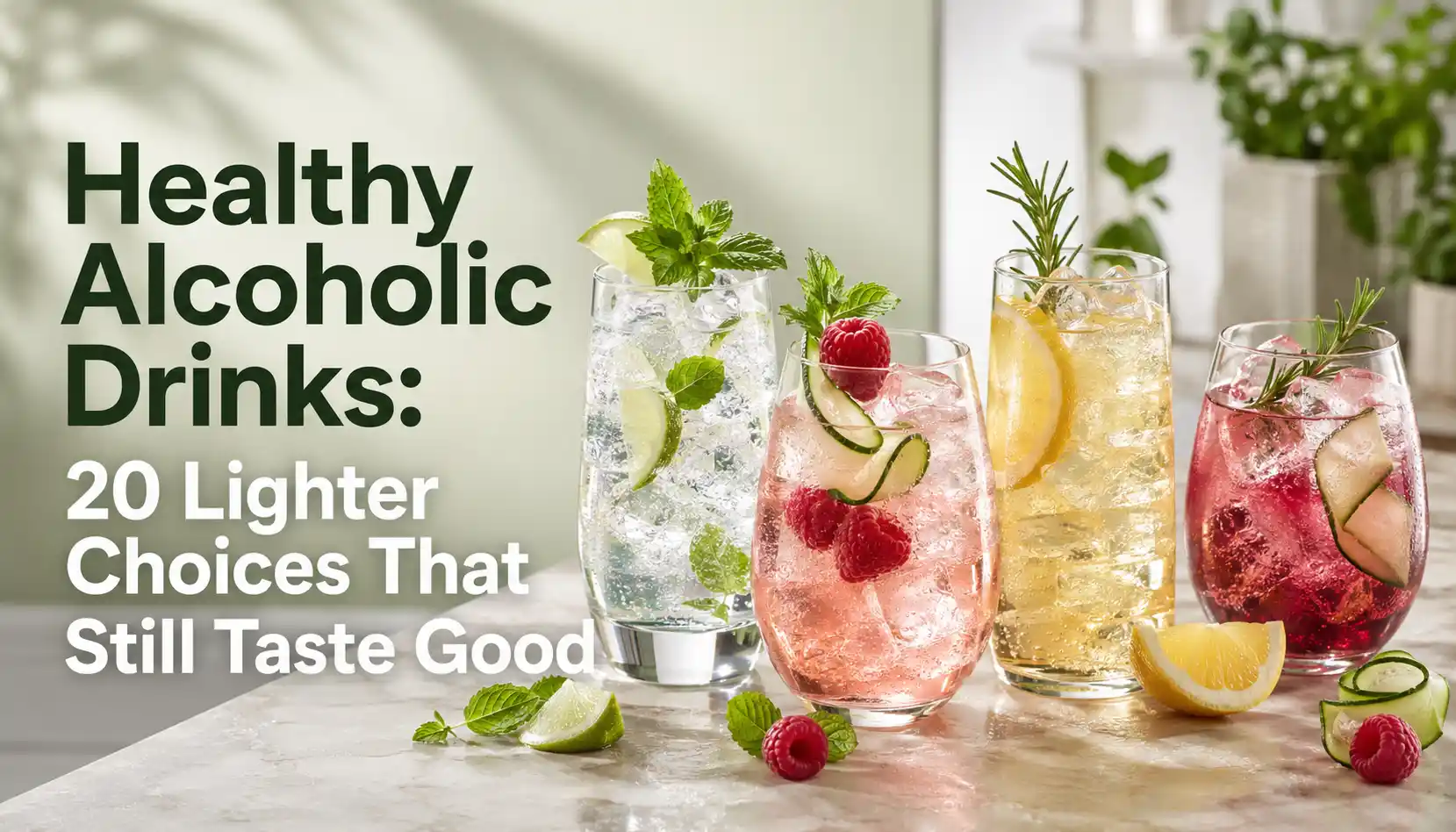
Searching for healthy alcoholic drinks usually means you want something lighter in calories, sugar, or alcohol. You may also want a simple drink that won’t overwhelm your meal or taste like liquid candy.
Here is the honest answer: no alcoholic drink is truly healthy or risk-free. The current Dietary Guidelines for Americans recommends consuming less alcohol for better overall health. The CDC also notes that drinking less—or not drinking—is healthier than drinking more.
Still, adults who choose to drink can make more informed decisions. A measured pour, lower alcohol level, unsweetened mixer, and slower pace can reduce calories and total alcohol intake.
This guide compares low-calorie alcoholic drinks, low-sugar cocktails, wines, beers, spirits, spritzes, canned drinks, and easy bar orders. It also explains which popular cocktails are heavier than they look.
Quick Answer: What Are the Healthiest Alcoholic Drinks?
The better choices are usually drinks with one measured serving of alcohol, little or no added sugar, and a calorie-free mixer.
Good options include:
• Vodka soda with lime
• Tequila soda or ranch water
• Gin and soda with cucumber
• Dry white wine spritzer
• Brut sparkling wine
• Light beer
• Lower-ABV spritzes
• Hard seltzer with a moderate ABV
• A small Bloody Mary without bottled sweet mix
• Alcohol-free beer, wine, or mocktails
The most important factor is not whether the base is vodka, wine, or tequila. The amount of alcohol in the glass matters more than the drink’s wellness image.
Are Any Alcoholic Drinks Actually Healthy?
Alcohol does not become a health food because it contains lime, berries, herbs, kombucha, or red wine. Those ingredients may add flavor, but they do not remove the effects of ethanol.
Alcohol also contributes calories without supplying meaningful amounts of essential nutrients. It provides about 7 calories per gram, and one U.S. standard drink contains about 14 grams of pure alcohol. That means a standard serving provides roughly 98 calories from alcohol before mixers are counted.
The healthier choice is always less alcohol, not a particular brand or spirit.
For an adult who already chooses to drink, a lighter drink generally has:
• A measured single pour
• A lower alcohol-by-volume level
• Little or no added sugar
• No cream, ice cream, or sweet liqueur
• A reasonable serving size
• A mixer such as soda water or unsweetened tea
• Enough ice and dilution for slower sipping
• No caffeine or energy-drink mixer
Best Healthy Alcoholic Drinks at a Glance
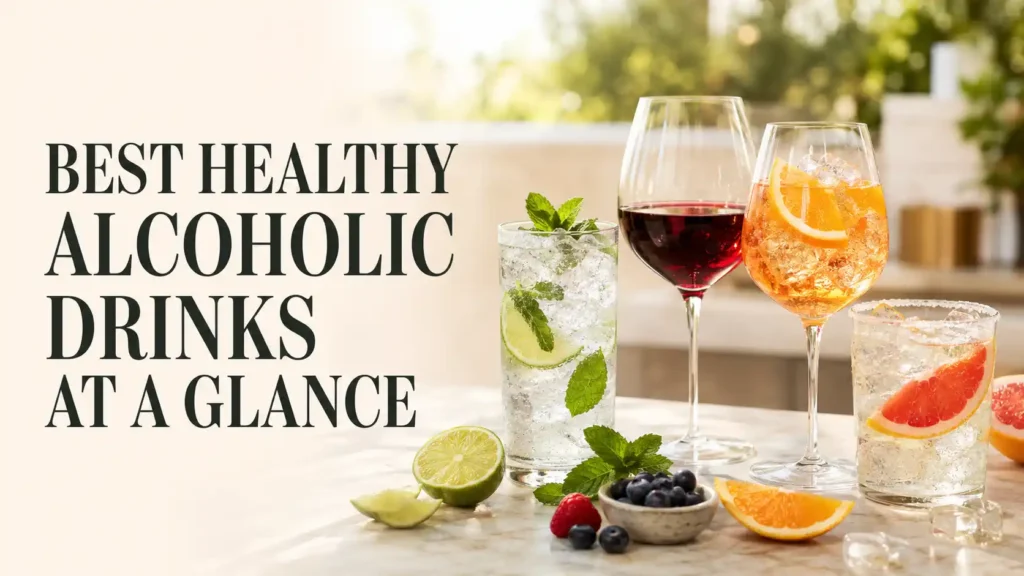
The following figures are estimates based on standard portions. Restaurant pours and canned drinks can be much larger or stronger.
| Drink | Example Serving | Estimated Calories | Added Sugar | Approximate Standard Drinks |
|---|---|---|---|---|
| Vodka soda | 1.5 oz 80-proof vodka plus soda | About 97 | 0 g when unsweetened | 1 |
| Gin and soda | 1.5 oz 80-proof gin plus soda | About 97 | 0 g when unsweetened | 1 |
| Tequila soda | 1.5 oz 80-proof tequila plus soda | About 97 | 0 g when unsweetened | 1 |
| Whiskey on ice | 1.5 oz 80-proof whiskey | About 97 | 0 g in plain whiskey | 1 |
| Light beer | 12 oz | About 103 | Varies | About 0.8–1 |
| Dry red wine | 5 oz | About 121–125 | Usually no added sugar | About 1 |
| Dry white wine | 5 oz | About 128 | Usually no added sugar | About 1 |
| White wine spritzer | 3 oz wine plus soda | About 75–80 | Usually none | About 0.6 |
| Mimosa | 4 oz | About 75 | Varies with juice | Varies |
| Simple highball | 8 oz | About 110 | Low if mixer is unsweetened | About 1 |
| Bloody Mary | 4.5 oz | About 120 | Varies | About 1 |
| Whiskey sour | 3 oz | About 125 | Usually contains some sugar | About 1 |
| Hard seltzer | 12 oz | Check label | Varies | Depends on ABV |
| Low-ABV spritz | 6–10 oz | Recipe dependent | Varies | Often below 1 |
MedlinePlus lists about 97 calories for 1.5 ounces of an 80-proof spirit, 103 for a 12-ounce light beer, 121–128 for five ounces of table wine, and 75 for a four-ounce mimosa. Real drinks may differ substantially.
Healthy, Low-Calorie, Low-Sugar, and Low-ABV Are Not the Same
These labels are often treated as interchangeable. They describe different features.
Low-Calorie
A low-calorie drink contains fewer total calories. It may achieve that through a smaller pour, lower alcohol level, or unsweetened mixer.
Low-Sugar
A low-sugar drink contains little sugar, but it can still be high in alcohol and calories. A large dry martini may contain almost no sugar while delivering several ounces of liquor.
Low-ABV
A low-ABV drink has a lower percentage of alcohol by volume. Wine spritzers, session beers, vermouth spritzes, and some canned aperitifs may fit this group.
Low-Carb
Distilled spirits with soda water can be very low in carbohydrates. Beer, wine, juice, tonic water, and sweet mixers may add varying amounts.
The Better Goal
Instead of chasing one label, look for a drink that combines:
- A smaller alcohol serving
- A moderate or low ABV
- Little added sugar
- A clearly defined portion
Lowest-Calorie Alcoholic Drinks
Most of the calories in a simple spirit-and-soda drink come from the alcohol itself. Replacing sweet soda, tonic, syrup, or juice with sparkling water keeps the total closer to the base spirit.
Vodka Soda
A vodka soda is one of the most predictable lighter bar orders. Plain soda water adds fizz without sugar or calories.
Order it like this: “One vodka soda in a tall glass, plenty of ice, with fresh lime.”
Avoid flavored vodka unless you have checked whether it contains added sugar.
Tequila Soda
Tequila soda has a stronger flavor than vodka soda, which makes it satisfying without syrup. Lime, grapefruit peel, or cucumber can add aroma.
Order it like this: “Blanco tequila, soda water, lime, and no sweetener.”
Gin and Soda
Gin brings juniper, citrus, and herbal flavors. It works well with soda water because the spirit already has a strong aromatic profile.
Try cucumber, lemon peel, basil, or rosemary as garnish.
Whiskey on Ice
A measured whiskey served over one large cube contains no sugary mixer. The strong flavor also encourages slower sipping.
The tradeoff is that the drink is concentrated. A generous home or restaurant pour can easily exceed one standard drink.
Light Beer
A 12-ounce light beer averages about 103 calories in the MedlinePlus comparison. Strong craft beers may range much higher, especially when alcohol content rises.
Check both the can size and ABV before comparing products.
White Wine Spritzer
A spritzer made with three ounces of dry white wine and three ounces of sparkling water has roughly 40% less wine than a standard five-ounce serving.
Serve it with lemon peel, cucumber, mint, or frozen grapes.
Brut Sparkling Wine
A small serving of brut sparkling wine is usually less sweet than demi-sec or sweet sparkling wine. “Brut” describes sweetness, not calorie-free status.
Keep the pour modest and avoid topping it with sweet liqueur.
Simple Highball
A highball combines a measured spirit with a large amount of nonalcoholic mixer. Soda water, unsweetened tea, and zero-sugar ginger beer are common choices.
The glass may be tall, but the alcohol portion should remain measured.
Lowest-Sugar Alcoholic Drinks
Plain distilled spirits generally contain little or no sugar before sweeteners and flavorings are added. Most cocktail sugar comes from the mixer.
Common sources include:
• Simple syrup
• Agave syrup
• Honey syrup
• Regular tonic water
• Soda
• Sweet-and-sour mix
• Fruit juice concentrate
• Grenadine
• Flavored liqueurs
• Cream liqueurs
• Sweet wines
• Premade margarita mix
Best Low-Sugar Choices
• Vodka with soda water
• Tequila with soda and lime
• Gin with soda or unsweetened tonic alternative
• Whiskey served neat or on ice
• Dry red or white wine
• Brut sparkling wine
• Dry vermouth with soda
• Light beer with lower carbohydrates
• Hard seltzer with no added sugar
• Savory tomato cocktails without sweet bottled mix
What About Diet Mixers?
A diet mixer may reduce sugar and calories, but some people dislike the flavor or experience digestive discomfort from certain sweeteners.
The 2025–2030 Dietary Guidelines advises limiting beverages with low-calorie non-nutritive sweeteners. Plain soda water is the simplest option when you want neither sugar nor alternative sweeteners.
Best Low-ABV Alcoholic Drinks
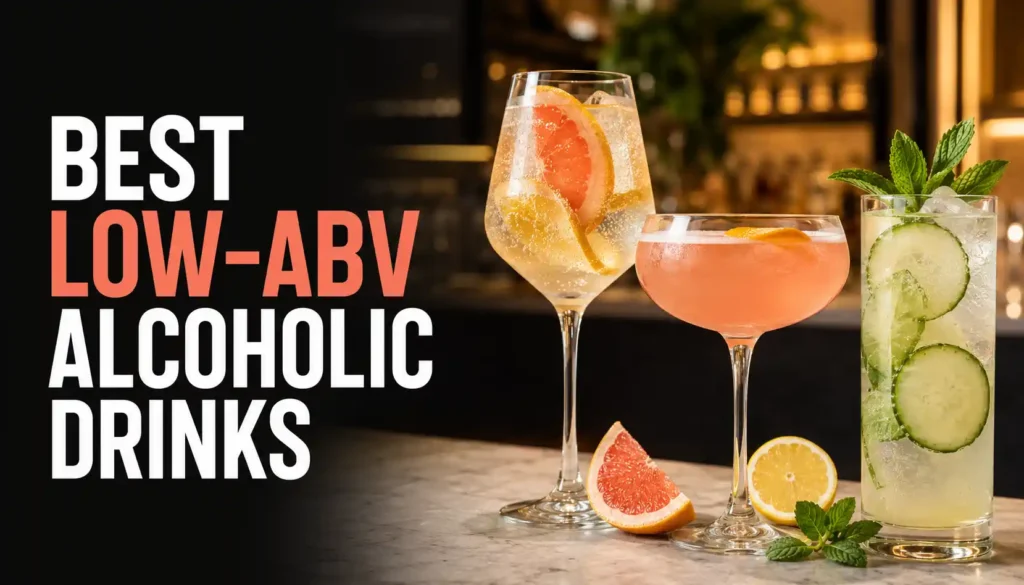
A lower-alcohol drink can be a better choice when you want a longer social drink with less total ethanol. However, “session,” “light,” or “spritz” does not guarantee low strength.
Always check the recipe or package.
White Wine Spritzer
Mix equal parts dry white wine and sparkling water. Add ice and lemon.
This reduces the amount of wine in each glass while keeping the drink crisp.
Dry Vermouth and Soda
Dry vermouth is fortified wine, not liquor. Pour two ounces over ice, add four ounces of soda, and garnish with lemon or olives.
The flavor is herbal, dry, and slightly bitter.
Sherry Cobbler
Use dry sherry, crushed ice, orange peel, and a few berries. Skip the traditional sugar or use only a small amount.
Choose fino or manzanilla for a dry finish.
Sake Highball
Combine two ounces of dry sake with four ounces of soda water. Add cucumber and lemon peel.
The result is delicate, lightly savory, and less spirit-forward.
Session Beer
Session beers are designed to deliver beer flavor at a more moderate strength. Check the label because the term is not a guarantee of a specific ABV.
Aperitif Spritz
Use a small pour of a bitter aperitif, plenty of soda, and a modest amount of sparkling wine.
Many restaurant spritzes become stronger or sweeter through oversized pours. Ask for extra soda when you want a lighter version.
Dry Cider Spritz
Mix dry cider with sparkling water over ice. Add apple slices and thyme.
Check the label because some ciders contain significant sugar.
Best Healthy Alcoholic Drinks to Order at a Bar
A good bar order should be easy to explain. Complicated requests are more likely to be misunderstood during a busy service.
Use one of these scripts.
For the Lowest Added Sugar
“One tequila with soda water and fresh lime. No syrup or sweetened soda.”
For a Lighter Wine Drink
“A dry white wine spritzer with equal parts wine and soda water.”
For a Botanical Drink
“Gin and soda in a tall glass with cucumber and lemon.”
For a Savory Brunch Drink
“A single Bloody Mary with no premade sweet mix and light salt.”
For Lower Alcohol
“Dry vermouth and soda with lemon, served over plenty of ice.”
For Easy Portion Control
“A 12-ounce light beer. Could I see the ABV?”
For a Canned Drink
Check:
• Container size
• Calories per can
• Servings per container
• Alcohol by volume
• Total carbohydrates
• Added sugar
• Caffeine
• Whether the can contains liquor, wine, or fermented malt
Do not assume a slim can contains one standard drink. Some canned cocktails contain double-digit alcohol percentages and multiple servings.
Eight Easy Lighter Cocktail Recipes
These recipes use measured pours and unsweetened mixers. Calorie totals remain estimates because brands and ingredient amounts vary.
Classic Vodka Soda With Lime
Taste: Clean, tart, and dry
Difficulty: Very easy
Best for: Bars, dinners, and warm weather
Ingredients
• 1½ ounces 80-proof vodka
• 4–6 ounces chilled soda water
• ½ ounce fresh lime juice
• Ice
• Lime wheel
Method
- Fill a tall glass with ice.
- Add vodka and lime juice.
- Top with soda water.
- Stir once and garnish.
Estimated calories: About 100–105
Ranch Water
Taste: Tart, mineral, and lightly peppery
Difficulty: Very easy
Best for: Cookouts and summer gatherings
Ingredients
• 1½ ounces blanco tequila
• ½ ounce fresh lime juice
• 4–6 ounces sparkling mineral water
• Ice
• Lime wedge
Method
- Fill a tall glass with ice.
- Pour in tequila and lime juice.
- Add mineral water.
- Stir gently.
Optional variation: Add cucumber, grapefruit peel, or one jalapeño slice.
Cucumber Gin Highball
Taste: Herbal, crisp, and savory
Difficulty: Easy
Best for: Brunch or garden parties
Ingredients
• 1½ ounces dry gin
• 4–5 ounces soda water
• 3 cucumber slices
• 1 lemon wedge
• Ice
Method
- Gently press two cucumber slices in the glass.
- Add ice, gin, and lemon juice.
- Top with soda.
- Garnish with the final cucumber slice.
Practical tip: Do not heavily mash the cucumber. Too much pulp makes the drink watery and cloudy.
White Wine Spritzer
Taste: Light, crisp, and gently fruity
Difficulty: Very easy
Best for: Brunch, lunch, and summer parties
Ingredients
• 3 ounces dry white wine
• 3 ounces chilled sparkling water
• Ice
• Lemon peel or frozen grapes
Method
- Add ice to a wine glass.
- Pour in the wine.
- Add sparkling water.
- Stir gently and garnish.
Estimated calories: About 75–80, depending on the wine.
Dry Vermouth Spritz
Taste: Herbal, dry, and slightly bitter
Difficulty: Very easy
Best for: Pre-dinner drinks
Ingredients
• 2 ounces dry vermouth
• 4 ounces soda water
• Ice
• Lemon twist
• Optional green olive
Method
- Fill a wine glass with ice.
- Add vermouth and soda.
- Stir gently.
- Garnish with lemon or an olive.
Refrigerate opened vermouth. It is wine-based and loses freshness after opening.
Lighter Bloody Mary
Taste: Savory, tangy, and spicy
Difficulty: Easy
Best for: Brunch
Ingredients
• 1½ ounces vodka
• 3 ounces low-sodium tomato juice
• ½ ounce lemon juice
• Dash of Worcestershire sauce
• Black pepper
• Hot sauce to taste
• Ice
• Celery or cucumber garnish
Method
- Add all liquid ingredients to an ice-filled glass.
- Stir until cold.
- Season with pepper and hot sauce.
- Garnish without loading the glass with salty snacks.
Check Worcestershire sauce for fish allergens if that is a concern.
Light Mimosa Spritz
Taste: Bright, citrusy, and lightly sweet
Difficulty: Very easy
Best for: Brunch and showers
Ingredients
• 2½ ounces brut sparkling wine
• 1 ounce fresh orange juice
• 1½ ounces sparkling water
• Orange twist
Method
- Pour the sparkling wine into a flute.
- Add orange juice.
- Top with sparkling water.
- Stir very gently.
This version uses less wine and juice than many restaurant mimosas.
Unsweetened Tea Whiskey Highball
Taste: Toasty, citrusy, and dry
Difficulty: Easy
Best for: Cookouts and fall gatherings
Ingredients
• 1½ ounces whiskey
• 3 ounces chilled unsweetened black tea
• 2 ounces soda water
• Lemon peel
• Ice
Method
- Fill a tall glass with ice.
- Add whiskey and tea.
- Top with soda.
- Express the lemon peel over the glass.
Use decaffeinated tea when avoiding caffeine.
Wine vs. Beer vs. Liquor: Which Is the Healthiest?
There is no universal winner. Each category can be served lightly or heavily.
Liquor
Advantages:
• Easy to measure
• Contains little sugar when unflavored
• Pairs well with calorie-free mixers
Drawbacks:
• Concentrated
• Easy to overpour
• Martinis and doubles may contain multiple servings
Wine
Advantages:
• Standard serving is easy to define
• Dry styles usually contain less sugar than sweet wine
• Can be diluted into a spritzer
Drawbacks:
• Large restaurant glasses may hold more than five ounces
• Sweet and fortified wines can be higher in sugar or alcohol
• “Natural” or “organic” does not mean lower alcohol
Beer
Advantages:
• Packaged portions are easier to track
• Light and session styles can have lower strength
• Usually consumed more slowly than shots
Drawbacks:
• Can sizes range widely
• Craft beer may exceed 8% or 10% ABV
• Some large cans contain several standard drinks
A 12-ounce beer at 5% ABV represents about one standard drink. The same size beer at 10% ABV represents about two.
Is Tequila Healthier Than Vodka?
Tequila is not inherently healthier than vodka.
A 1.5-ounce serving of 80-proof tequila and the same serving of 80-proof vodka contain roughly the same amount of alcohol and calories. The main difference is flavor.
Tequila’s stronger vegetal and peppery character can make it enjoyable with only soda and lime. Vodka is neutral and works with almost any mixer.
The healthier choice depends on:
• Pour size
• Alcohol proof
• Mixer
• Added sugar
• Number of servings
• Drinking pace
Claims that tequila burns fat, improves digestion, or acts as a probiotic should not be treated as established health guidance.
Are Clear Liquors Healthier Than Dark Liquors?
Clear liquor is not automatically safer, lower in calories, or lower in alcohol.
Vodka, gin, tequila, whiskey, and rum have similar calorie levels when they contain the same proof and serving size. MedlinePlus lists about 97 calories per 1.5 ounces for 80-proof gin, rum, vodka, and whiskey.
Dark spirits may contain congeners created during fermentation and aging. These compounds can affect flavor and may influence hangover symptoms for some people.
However, the most important factors remain:
• Total alcohol consumed
• Speed of drinking
• Food intake
• Sleep
• Hydration
• Individual sensitivity
Switching from whiskey to vodka does not protect you from intoxication or alcohol-related harm.
Is Red Wine Actually Good for Your Heart?
Red wine has a long-standing health halo because it contains plant compounds such as polyphenols. That does not mean people should drink wine to improve their health.
The American Heart Association does not recommend drinking wine or any other alcohol to gain health benefits. It notes that research has not proven that alcohol directly causes better heart health.
The CDC also states that all alcoholic beverages—including red wine, white wine, beer, and liquor—raise cancer risk.
You can obtain polyphenols from alcohol-free foods and drinks, including:
• Grapes
• Berries
• Plums
• Tea
• Cocoa
• Nuts
• Colorful vegetables
A five-ounce dry red wine can fit into an adult’s personal drinking decision. It should not be presented as a heart treatment.
Alcoholic Drinks to Limit
Some cocktails combine several servings of alcohol with sugar, cream, large glasses, or sweet liqueurs.
MedlinePlus estimates around 380 calories for a seven-ounce piña colada, 418 for a small chocolate martini, and 568 for an eight-ounce White Russian. Actual restaurant versions can be larger.
Frozen Margaritas
Premade mixes may contain substantial sugar. Restaurant glasses may also hold more tequila than expected.
Lighter swap: Ranch water or tequila soda with fresh lime.
Piña Coladas
Coconut cream, pineapple juice, rum, and large serving sizes can create a high-calorie drink.
Lighter swap: White rum, pineapple seltzer, lime, and a small pineapple splash.
Long Island Iced Teas
These drinks combine several spirits and a sweet mixer. One glass may contain multiple standard drinks.
Lighter swap: Unsweetened iced tea with one measured spirit and lemon.
White Russians and Mudslides
Cream, coffee liqueur, chocolate, and vodka add calories quickly.
Lighter swap: Coffee-flavored sparkling water with a measured vodka pour. Avoid caffeine when it is late or personally unsuitable.
Sweet Sangria
Bottled sangria may include sugar, juice concentrate, and added spirits.
Lighter swap: Dry wine, fresh fruit, and sparkling water.
Oversized Martinis
A martini may contain little sugar but still hold two or more spirit servings.
Lighter swap: Request a smaller glass or a single measured pour over ice.
Regular Tonic Cocktails
Tonic water is not the same as soda water. Regular tonic commonly contains sugar.
Lighter swap: Soda water, light tonic, or a half-tonic, half-soda combination.
Strong Craft Beer
A large double IPA can contain much more alcohol than a standard light beer.
Lighter swap: A 12-ounce session beer or nonalcoholic beer.
How to Read a Canned Cocktail Label
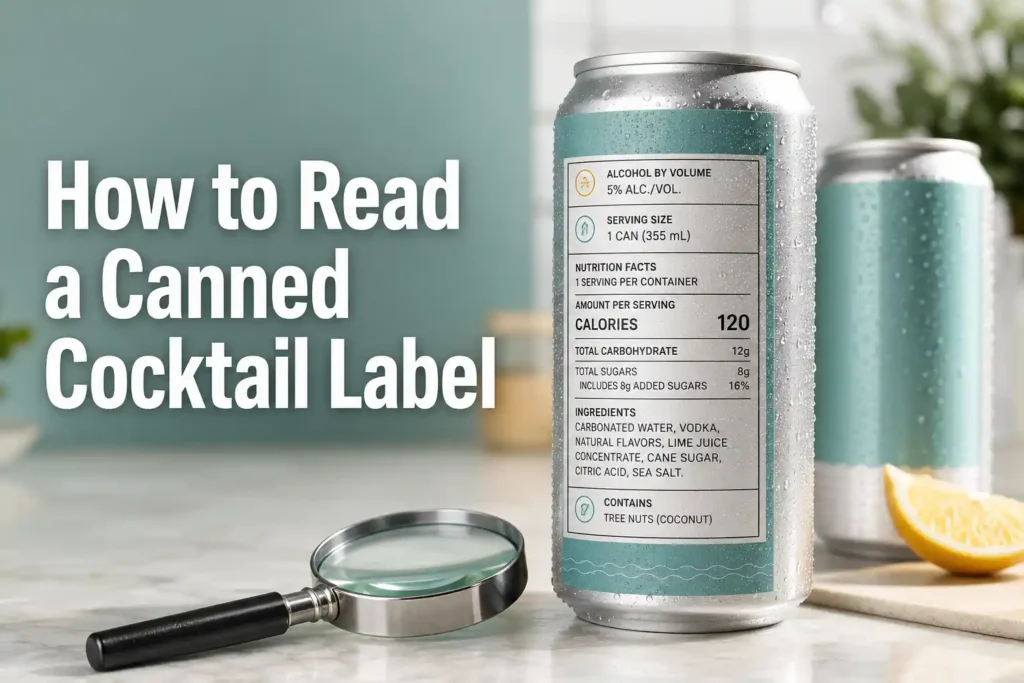
Canned cocktails, hard seltzers, wine spritzers, and hard teas vary widely. The front of the package may emphasize zero sugar, natural flavors, electrolytes, or low carbohydrates.
Those claims do not tell you the total alcohol content.
Check the Can Size
A 16-ounce or 24-ounce can is not the same as a 12-ounce serving.
Find the ABV
Use this formula to estimate standard drinks:
Container ounces × ABV as a decimal ÷ 0.6
Examples:
• 12 ounces × 5% ÷ 0.6 = 1 standard drink
• 16 ounces × 8% ÷ 0.6 = about 2.1 standard drinks
• 12 ounces × 10% ÷ 0.6 = 2 standard drinks
NIAAA warns that customary containers may hold more than one standard drink.
Read Calories Per Container
Nutrition information may be listed per serving rather than for the whole can. Check the servings-per-container line.
Look Beyond “Zero Sugar”
A zero-sugar cocktail still contains calories from alcohol. It may also contain artificial sweeteners or a high alcohol level.
Check for Caffeine
Hard coffee, hard tea, and energy-style canned cocktails may include caffeine. The CDC warns that caffeine can make people drink more and does not reduce alcohol’s effects.
Lighter Drinks for Different Occasions
The best drink also depends on the setting. A slow dinner drink may not work well at a hot outdoor event.
Summer
Choose drinks with plenty of ice and unsweetened sparkling water.
Good options include:
• Ranch water
• Cucumber gin highball
• White wine spritzer
• Berry vodka soda
• Dry cider spritz
• Alcohol-free sparkling tea
Alcohol does not hydrate you. Keep cold water available and drink it throughout the event.
Brunch
Brunch drinks often hide alcohol behind juice, coffee, or tomato mix.
Better choices include:
• Light mimosa spritz
• Small savory Bloody Mary
• Rosé spritzer
• Sake and tomato highball
• Alcohol-free citrus spritz
Eat a meal before or while drinking.
Holiday Parties
Spices and citrus can create seasonal flavor without heavy cream or syrup.
Try:
• Cranberry gin soda
• Light hot toddy
• Dry mulled wine
• Apple whiskey spritz
• Brut sparkling wine with rosemary
• Warm alcohol-free spiced tea
Large Gatherings
Batched drinks need clear measurements.
Label every pitcher as:
• Alcoholic or alcohol-free
• Number of servings
• Alcohol used
• Approximate strength
• Time prepared
Add sparkling ingredients immediately before serving. Refrigerate fruit, juice, wine, and uncarbonated batches until needed.
How to Make Any Cocktail Lighter
Small technique changes can improve a drink without stripping away its flavor.
- Measure the alcohol. Use a jigger instead of free-pouring.
- Choose a tall glass. A highball creates room for ice and mixer.
- Add more ice. Cold drinks need less sweetness to taste balanced.
- Use soda water. It adds volume without sugar.
- Reduce juice. Use one-half ounce instead of several ounces.
- Use citrus zest. Peel adds aroma without much liquid.
- Add herbs carefully. Mint and basil can be pressed gently.
- Use unsweetened tea. Tea adds bitterness, tannin, and depth.
- Skip syrup first. Taste before adding any sweetener.
- Avoid double pours. More liquor does not improve balance.
- Choose lower-proof alcohol. Proof affects both calories and strength.
- Offer a matching mocktail. Guests should not receive an inferior option because they skip alcohol.
Alcohol-Free Alternatives That Feel Like Real Drinks
An alcohol-free option is the lowest-risk choice for alcohol-related harm. It can also help guests pace themselves during a long event.
Sparkling Tea Spritz
Combine chilled black, green, white, or herbal tea with soda water and citrus.
Verjus and Soda
Verjus is pressed juice from unripe grapes. It has wine-like acidity without the same alcohol content as wine.
Hop Water
Hop water offers some beer-like bitterness without a full beer.
Nonalcoholic Beer
Check the label because “nonalcoholic” can still mean a small amount of alcohol. People avoiding alcohol completely should choose a product labeled 0.0% ABV.
Alcohol-Free Wine
Chill it well and serve it in proper glassware. Some products contain added sugar, so review the label.
Bittersweet Citrus Mocktail
Mix grapefruit, lime, soda water, and a nonalcoholic bitter aperitif.
Cucumber Herb Cooler
Combine cucumber, mint, lemon, chilled water, and seltzer.
Alcohol-free products may not suit everyone recovering from alcohol use disorder because familiar flavors or packaging can trigger cravings. Personal circumstances matter.
Responsible Drinking and Standard Serving Sizes
One U.S. standard drink contains approximately 0.6 fluid ounces or 14 grams of pure alcohol.
That is approximately:
• 12 ounces of 5% beer
• 5 ounces of 12% wine
• 1½ ounces of 40% or 80-proof spirits
These examples are not universal serving sizes. Strong beer, generous wine pours, and large cocktails may contain multiple standard drinks.
The CDC describes moderate drinking as up to one drink in a day for women and up to two for men. These are limits, not targets, and even moderate drinking can carry health risks. The 2025–2030 Dietary Guidelines takes a simpler position: consume less alcohol for better overall health.
Practical harm-reduction steps include:
• Decide your limit before the event
• Measure drinks made at home
• Eat before and during drinking
• Alternate alcohol with water
• Avoid drinking games and shots
• Do not mix alcohol with energy drinks
• Arrange transportation before drinking
• Never drive after drinking
• Do not swim, boat, or supervise children while impaired
• Stop when judgment, balance, speech, or coordination changes
Who Should Avoid Alcohol Completely?
The Dietary Guidelines and CDC identify several situations where alcohol should be avoided.
Do not drink alcohol if you:
• Are younger than 21
• Are pregnant or may be pregnant
• Are recovering from alcohol use disorder
• Cannot control how much you drink
• Have a medical condition that interacts with alcohol
• Take medication that interacts with alcohol
• Plan to drive or operate machinery
• Need full attention for safety-sensitive work
• Have been advised not to drink by a health professional
The CDC states that there is no known safe amount, safe time, or safe type of alcohol during pregnancy.
Alcohol can also interact dangerously with opioids, sleep medicines, anti-anxiety medicines, antihistamines, and other drugs. Check with a doctor or pharmacist rather than guessing.
Common Myths About Healthy Alcoholic Drinks
“Organic Wine Is Healthier”
Organic production describes farming or processing practices. It does not remove alcohol or its associated risks.
“Clear Liquor Has No Calories”
Plain clear liquor may contain no sugar, but alcohol itself supplies calories.
“A Martini Is Better Than a Margarita”
A martini may contain less sugar. It may also contain much more alcohol.
“Hard Seltzer Is Basically Water”
Hard seltzer contains alcohol. A stronger or larger can may hold more than one standard drink.
“Red Wine Protects the Heart”
Current evidence does not justify starting to drink red wine for heart health.
“Coffee Sobers You Up”
Caffeine can increase alertness, but it does not remove alcohol from the body or reverse impairment.
“Eating After Drinking Cancels the Alcohol”
Food may slow absorption when eaten before or while drinking. It does not erase alcohol already consumed.
Frequently Asked Questions
What is the healthiest alcoholic drink to order?
No alcoholic drink is truly healthy. A single spirit with soda water, a dry wine spritzer, or a lower-ABV drink is usually lighter than a sweet or creamy cocktail.
The best order combines a measured pour, little added sugar, and a clearly defined serving.
Which alcohol has the fewest calories?
Equal 1.5-ounce servings of 80-proof vodka, gin, rum, and whiskey each contain about 97 calories. Tequila at the same proof is similar.
The mixer determines whether the finished drink remains near 100 calories or rises much higher.
Which alcohol has the least sugar?
Plain unflavored distilled spirits contain little or no sugar before mixers are added.
Use soda water, citrus, herbs, or unsweetened tea instead of syrup, regular tonic, soda, or sweet juice.
Is vodka soda a healthy drink?
A vodka soda is not a health drink. It is simply one of the more predictable low-sugar, lower-calorie cocktails when made with a single measured pour.
A double vodka soda can contain twice the alcohol and nearly twice the calories.
Is tequila healthier than vodka?
No. Tequila and vodka contain similar alcohol and calorie levels when proof and serving size are equal.
Tequila may need fewer sweet ingredients because it has a stronger natural flavor.
Is red wine healthier than beer?
Red wine is not recommended as a health treatment. Beer and wine both contain alcohol, and both can increase health risks.
Choose based on serving size, ABV, personal preference, and medical guidance—not health-halo claims.
Are hard seltzers healthier than beer?
Some hard seltzers contain fewer calories or carbohydrates than regular beer. Others contain more alcohol, larger servings, or added sweeteners.
Compare the entire can rather than relying on the product category.
What cocktail has the least sugar?
A spirit mixed with plain soda water and citrus usually contains no added sugar.
Examples include vodka soda, tequila soda, gin soda, and whiskey with soda.
What alcoholic drinks should I avoid when cutting calories?
Limit creamy cocktails, frozen drinks, sweet punches, oversized martinis, syrup-heavy margaritas, and strong craft beers.
A single restaurant cocktail can contain several hundred calories, depending on its size and ingredients.
Can alcohol fit into a weight-loss plan?
Alcohol contains calories and may make it harder to stay within a calorie target. It can also affect food choices, sleep, and exercise plans.
The simplest way to reduce alcohol calories is to drink less often, choose smaller servings, or select alcohol-free drinks.
Does alcohol help you sleep?
Alcohol may make you feel sleepy at first, but it can fragment sleep and cause earlier waking.
Using alcohol as a sleep aid can create more problems than it solves.
Can I mix alcohol with coffee or energy drinks?
It is safer not to combine alcohol with energy drinks. Caffeine can make you feel more alert without reducing impairment.
The CDC warns that mixing caffeine and alcohol may encourage more drinking and raise the risk of harm.
Final Takeaway
The best healthy alcoholic drinks are better described as lighter alcoholic choices. No spirit, wine, beer, or cocktail becomes healthy simply because it is low in sugar, clear, organic, or garnished with fruit.
For adults who choose to drink, start with a measured serving. Use soda water, citrus, herbs, or unsweetened tea. Avoid oversized pours, sugary mixes, and high-ABV cans.
Most importantly, remember that less alcohol means less alcohol-related risk. An attractive alcohol-free drink is always worth including, whether you are hosting a party, ordering brunch, or making a quiet drink at home.