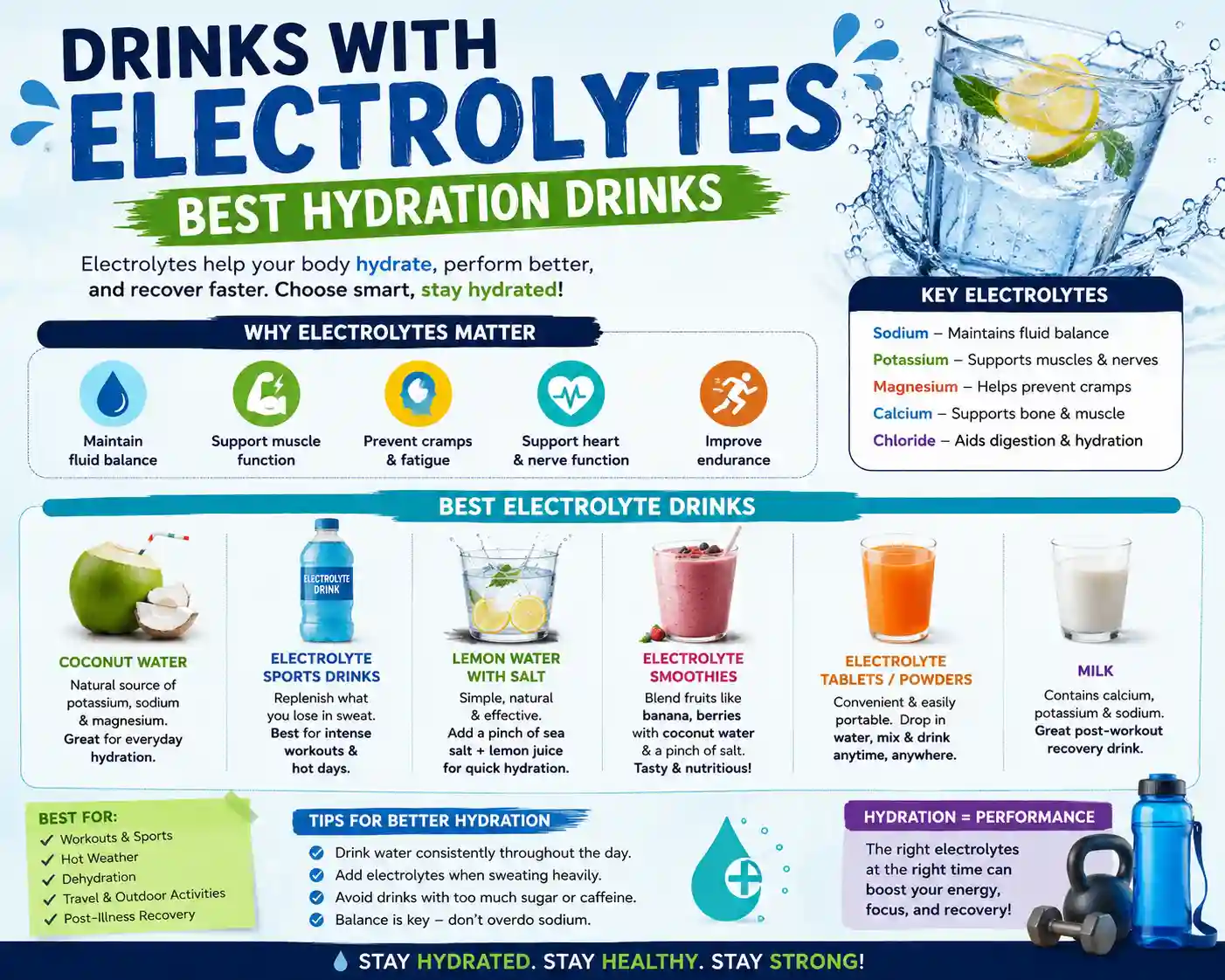
Staying hydrated takes more than water during workouts, hot weather, heavy sweating, travel, or illness. In these situations, the body can lose important minerals called electrolytes, including sodium, potassium, magnesium, and calcium.
This guide explains the best drinks with electrolytes, when you actually need them, how to choose low-sugar options, and which homemade hydration drinks work best for everyday energy and recovery.
Quick Answer / TL;DR:
The best drinks with electrolytes include coconut water, milk, low-sugar sports drinks, oral rehydration solutions, electrolyte powders, smoothies, and homemade citrus-salt drinks. They are most useful after heavy sweating, long workouts, hot weather, vomiting, diarrhea, or travel. For normal daily hydration, plain water is still enough for most people.
What Are Drinks With Electrolytes?
Drinks with electrolytes are beverages that contain minerals such as sodium, potassium, magnesium, calcium, chloride, and phosphate. These minerals help the body manage fluid balance, muscle contractions, nerve signals, and normal hydration.
Water hydrates the body, but it does not contain meaningful amounts of electrolytes on its own. That matters when the body loses fluid through sweat, illness, heat, or long exercise.
The main goal is not to drink electrolyte beverages all day. The goal is to use the right drink at the right time.
In practice, the best hydration strategy is simple:
• Use water for normal daily hydration.
• Use electrolyte drinks during heavy sweating, heat, illness, or endurance activity.
• Choose low-sugar options unless you need carbohydrates for long exercise.
• Prioritize sodium when sweat loss is high.
• Use potassium-rich natural drinks for light hydration and recovery.
This guide explains the best drinks with electrolytes, when they help, how to read labels, and how to make effective homemade options.
Best Drinks With Electrolytes for Hydration
Not every electrolyte drink works the same way. Some are best for everyday sipping. Others are better for workouts, illness, travel, or heat.
Which drinks with electrolytes are best overall?
The best overall options are:
• Coconut water for natural potassium
• Milk for calcium, potassium, sodium, protein, and carbs
• Low-sugar sports drinks for exercise and sweat loss
• Oral rehydration solutions for vomiting, diarrhea, or dehydration risk
• Electrolyte powders or tablets for travel and convenience
• Homemade citrus-salt drinks for affordable hydration
• Smoothies for post-workout recovery
• Watermelon or orange-based drinks for light mineral support
Each option serves a different purpose. A gym beginner does not need the same drink as a marathon runner, outdoor worker, or child recovering from a stomach bug.
What is the healthiest electrolyte drink?
The healthiest electrolyte drink depends on the situation.
For everyday use, the best choice is usually water plus electrolyte-rich foods. For light hydration, unsweetened coconut water or a homemade citrus drink with a small pinch of salt works well.
For true fluid loss from vomiting or diarrhea, an oral rehydration solution is usually more appropriate because it is designed with sodium, glucose, and fluid balance in mind.
For long workouts, a sports drink with sodium and carbohydrates may help more than plain water.
The healthiest option is the one that matches the body’s actual fluid loss.
What Do Electrolytes Do in the Body?
Electrolytes are charged minerals that help the body maintain normal function. They are not just “sports drink ingredients.” They are essential nutrients.
Which electrolytes matter most for hydration?
The most important electrolytes for hydration include:
| Electrolyte | Main Function | Common Drink Sources |
|---|---|---|
| Sodium | Helps regulate fluid balance and nerve function | Sports drinks, oral rehydration drinks, salted homemade drinks |
| Potassium | Supports muscles, heart function, and cells | Coconut water, banana smoothies, orange juice |
| Magnesium | Supports muscles, nerves, and heart function | Smoothies, leafy greens, mineral drinks |
| Calcium | Supports muscles, nerves, bones, and teeth | Milk, yogurt smoothies |
| Chloride | Helps fluid balance and blood volume | Salt-containing drinks and foods |
Sodium deserves special attention because it is the main electrolyte lost in sweat. Potassium is important too, but many natural drinks are high in potassium and low in sodium.
That is why coconut water can feel refreshing but may not be enough after long, sweaty exercise.
Do electrolyte drinks give you energy?
Electrolyte drinks do not create energy like caffeine does. They may help you feel better when fatigue comes from dehydration, heat, sweat loss, or poor fluid balance.
Some sports drinks also contain carbohydrates. Those carbs can provide fuel during long workouts.
For everyday tiredness, an electrolyte drink may help only if low fluid intake or sweating is part of the problem.
When Do You Actually Need Drinks With Electrolytes?
Most people do not need electrolyte drinks all day. Regular water works well for normal routines.
Electrolyte drinks become more useful when the body loses more fluid or minerals than usual.
When are electrolyte drinks better than water?
Electrolyte drinks may be better than water during:
• Workouts longer than 60–90 minutes
• Outdoor exercise in hot weather
• Heavy sweating
• Fever, vomiting, or diarrhea
• Long flights or travel days
• Physically demanding outdoor jobs
• Sports tournaments with repeated activity
• Sauna use or heat exposure
For short indoor workouts, water is usually enough. For long or hot sessions, sodium replacement becomes more important.
Sports nutrition guidance often focuses on longer exercise because sweat loss increases over time. For activity lasting more than about 1.5 hours, fluid, sodium, and carbohydrates can all matter.
Who should be careful with electrolyte drinks?
Some people should be cautious with high-sodium electrolyte drinks, including those with:
• High blood pressure
• Kidney disease
• Heart failure
• Fluid restrictions
• A sodium-restricted diet
• Certain medications that affect potassium or fluid balance
These readers should ask a qualified healthcare professional before using strong electrolyte powders or high-sodium hydration mixes.
Best Natural Drinks With Electrolytes
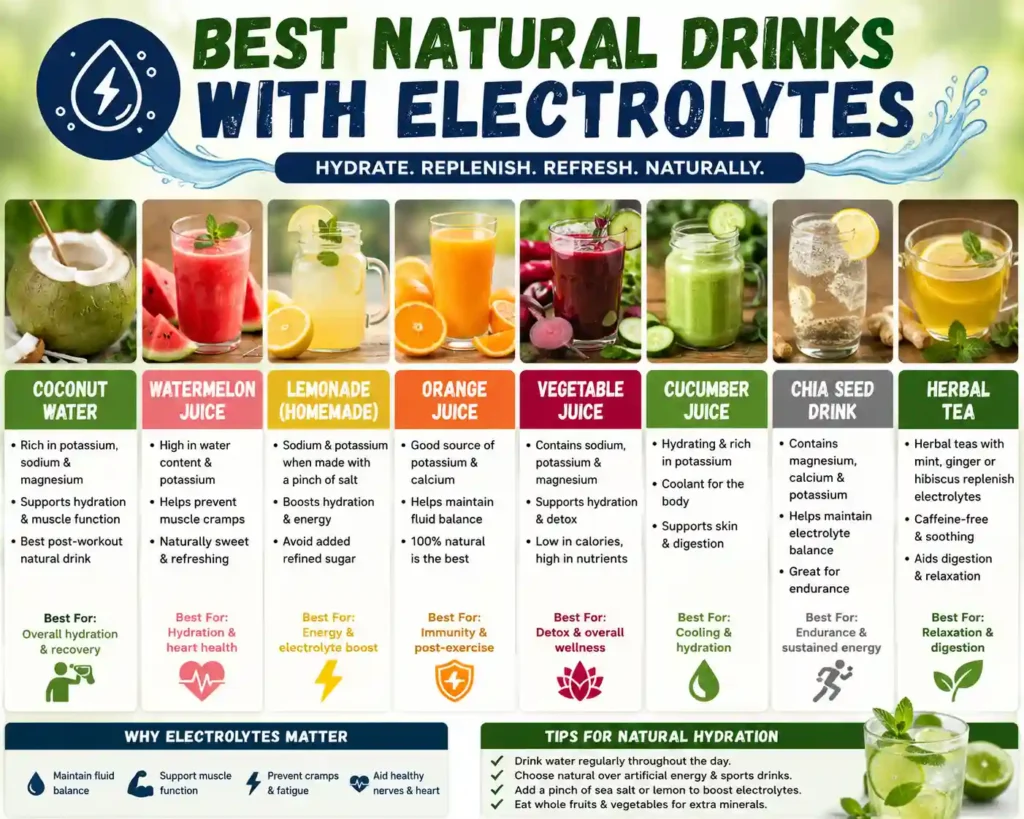
Natural electrolyte drinks are popular because they often taste lighter and contain fewer artificial ingredients. They are useful for mild hydration, smoothies, breakfast, and summer drinks.
Is coconut water a good electrolyte drink?
Yes, coconut water is one of the most popular natural drinks with electrolytes. It is especially known for potassium.
Best for:
• Light workouts
• Hot afternoons
• Smoothies
• Mild everyday hydration
• People who dislike sports drinks
Limitations:
Coconut water is usually lower in sodium than sports drinks. After long runs, heavy sweat, or outdoor labor, sodium matters more than potassium alone.
A simple fix is adding a tiny pinch of salt to coconut water after heavy sweating.
Is milk good for hydration and recovery?
Yes, milk can be a strong recovery drink because it contains fluid, calcium, potassium, sodium, carbohydrates, and protein.
Best for:
• Post-workout recovery
• Teen athletes
• Breakfast smoothies
• Strength training days
• People who want protein with hydration
Low-fat milk and chocolate milk are often used after workouts because they combine fluid, carbs, and protein. People with lactose intolerance can choose lactose-free milk.
Is watermelon juice high in electrolytes?
Watermelon juice is mostly water and provides some potassium and magnesium. It is refreshing but naturally low in sodium.
Best for:
• Summer hydration
• Family drinks
• Light workouts
• Frozen slushies
• Low-fat refreshers
Try blending watermelon with lime and a small pinch of salt. That creates a better balance for sweat recovery.
Are fruit juices good electrolyte drinks?
Some 100% juices contain potassium and other minerals. Orange juice, watermelon juice, tart cherry juice, and pineapple juice can support hydration.
The drawback is sugar concentration. Juice is best diluted with water, ice, or sparkling water.
A good ratio is:
• 1 part juice
• 2 parts water
• Small pinch of salt after heavy sweating
• Lemon or lime for flavor
This keeps flavor high and sugar lower.
Best Drinks With Electrolytes for Workouts
Workout hydration depends on sweat rate, workout length, temperature, and intensity.
A 30-minute strength session in an air-conditioned gym does not require the same drink as a 90-minute run in summer heat.
Which electrolyte drink is best before exercise?
Before exercise, the goal is to start hydrated.
Good pre-workout options include:
• Water with a balanced meal
• Coconut water for light sessions
• Electrolyte water for hot weather
• Low-sugar electrolyte tablets for travel or morning workouts
• A sodium-containing drink before long outdoor training
For heat training or long exercise, sodium before activity may help the body retain fluid better.
Which electrolyte drink is best during exercise?
During exercise, choose the drink based on duration.
| Workout Type | Best Drink Choice |
| 30–45 minute easy workout | Water |
| 45–60 minute moderate workout | Water or coconut water |
| 60–90 minute sweaty workout | Low-sugar electrolyte drink |
| 90+ minute endurance session | Sports drink with sodium and carbs |
| Outdoor summer run | Sodium-rich electrolyte drink |
| Strength training | Water, then smoothie after |
| Team sports tournament | Electrolyte drink plus water |
If the workout is long, hot, or sweaty, sodium matters more. If the workout is short, plain water usually works.
Which electrolyte drink is best after exercise?
After exercise, the best drink should replace fluid and support recovery.
Good post-workout options include:
• Milk
• Chocolate milk
• Coconut water plus a salty snack
• Banana yogurt smoothie
• Low-sugar electrolyte drink
• Homemade citrus-salt drink
• Water plus a balanced meal
A recovery drink works better when paired with food. A salty meal, fruit, yogurt, or protein source can replace minerals without relying only on bottled drinks.
Best Low-Sugar Drinks With Electrolytes
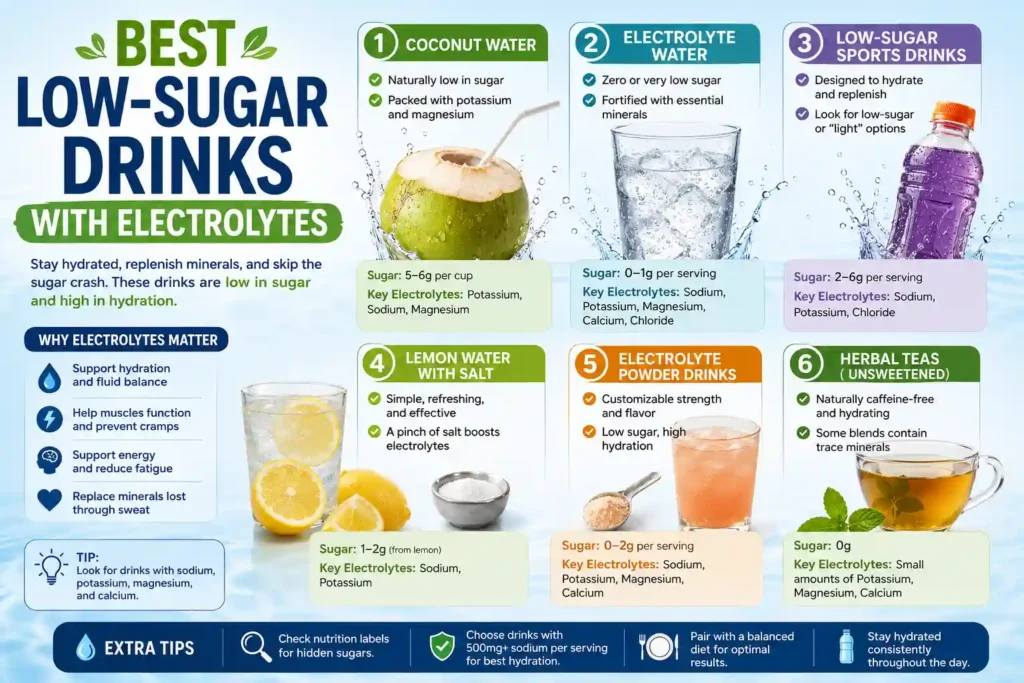
Many people want hydration without a syrupy sports drink. That is a smart goal for casual daily use.
Which electrolyte drinks have the least sugar?
Low-sugar options include:
• Unsweetened coconut water
• Electrolyte tablets with no added sugar
• Electrolyte powders labeled sugar-free
• Lemon water with a pinch of salt
• Sparkling mineral water with lime
• Herbal iced tea with citrus and salt
• Diluted orange or watermelon juice
• Homemade cucumber-lime electrolyte water
Low sugar is helpful for daily hydration. During long endurance workouts, however, some carbohydrates may help fuel performance.
How much sugar is too much in an electrolyte drink?
For everyday hydration, look for 0–5 grams of added sugar per serving.
For long exercise, sugar is not always bad. A sports drink with carbohydrates can help during endurance activity.
The mistake is using high-sugar sports drinks for short desk days, casual errands, or light indoor workouts.
How to Read Electrolyte Drink Labels
Label reading is one of the easiest ways to separate useful hydration drinks from expensive flavored water.
What should you look for on an electrolyte label?
Check these five things first:
• Sodium: important for sweat replacement
• Potassium: useful for muscle and cell function
• Added sugar: should match your activity level
• Serving size: packets and bottles often differ
• Extras: caffeine, vitamins, artificial colors, or sweeteners
For heavy sweating, sodium should not be too low. For everyday hydration, very high sodium may be unnecessary.
What is a good sodium range for electrolyte drinks?
A light daily electrolyte drink may contain modest sodium. A workout drink should usually contain more.
Sports nutrition guidance often recommends sodium-containing drinks for longer exercise. Some sports drink guidance uses ranges around 400–1,100 mg sodium per liter for longer activity, along with carbohydrates.
For most casual drinkers, that level may not be needed. Choose based on sweat, heat, and workout length.
Are zero-sugar electrolyte drinks always better?
Not always.
Zero-sugar electrolyte drinks can be useful for daily hydration, low-carb diets, and casual sipping. But endurance athletes may need carbohydrates during long training or races.
The better question is not “sugar or no sugar?” It is “Does this drink match the situation?”
Homemade Drinks With Electrolytes
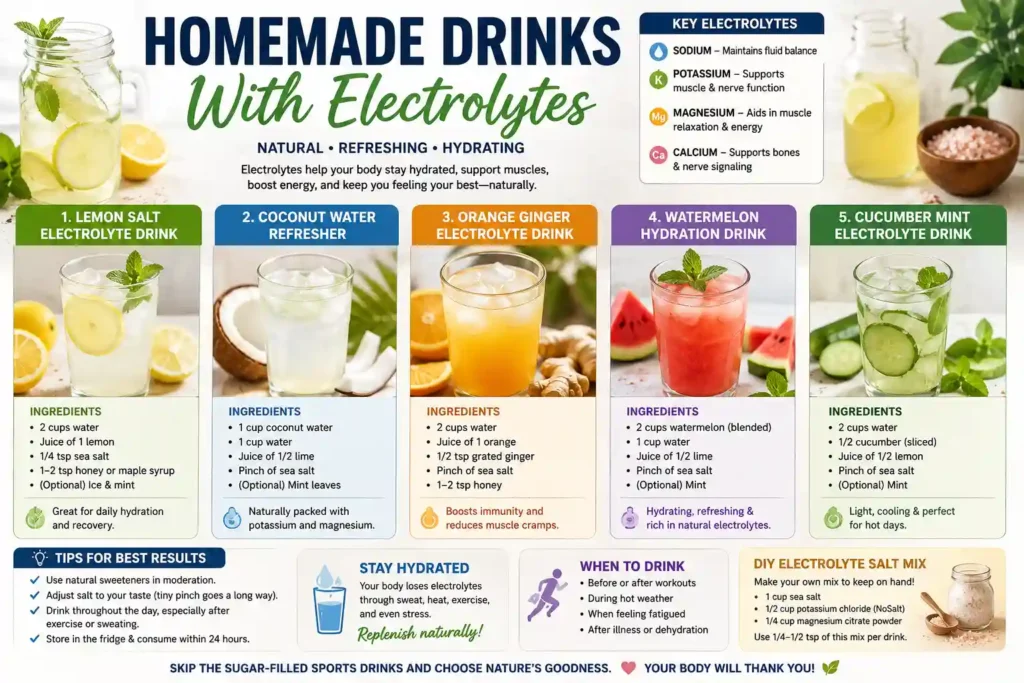
Homemade electrolyte drinks are affordable, flexible, and easy to adjust. They also let you control sodium, sugar, and flavor.
How do you make a simple homemade electrolyte drink?
Simple Citrus Electrolyte Drink
Ingredients:
• 2 cups cold water
• 1/2 cup orange juice
• 2 tablespoons lemon juice
• 1 small pinch sea salt
• 1 teaspoon honey, optional
• Ice
Instructions:
• Add all ingredients to a bottle or pitcher.
• Shake or stir well.
• Taste and adjust lemon or water.
• Serve cold.
Best for: warm days, light workouts, travel, and mild sweat loss.
How do you make a coconut lime electrolyte drink?
Coconut Lime Cooler
Ingredients:
• 1 cup unsweetened coconut water
• 1 cup cold water
• Juice of 1 lime
• Small pinch of salt
• Mint leaves
• Ice
Instructions:
• Mix coconut water and cold water.
• Add lime juice and salt.
• Stir until dissolved.
• Serve over ice with mint.
Best for: summer hydration, light exercise, and people who dislike sweet sports drinks.
How do you make a watermelon electrolyte drink?
Watermelon Salt-Lime Refresher
Ingredients:
• 2 cups cold watermelon cubes
• 1 cup cold water
• Juice of 1 lime
• Small pinch of salt
• Ice
Instructions:
• Blend watermelon, water, lime, and salt.
• Strain if desired.
• Pour over ice.
• Serve immediately.
Best for: heat, cookouts, family drinks, and post-walk hydration.
How do you make a post-workout electrolyte smoothie?
Banana Berry Recovery Smoothie
Ingredients:
• 1 banana
• 1 cup coconut water
• 1/2 cup Greek yogurt
• 1/2 cup frozen berries
• Ice
Instructions:
• Blend until smooth.
• Add more coconut water if needed.
• Drink after exercise, not during intense activity.
Best for: strength training recovery, breakfast, and post-workout fullness.
Electrolyte Drinks vs Sports Drinks
Electrolyte drinks and sports drinks overlap, but they are not identical.
A sports drink usually contains fluid, sodium, and carbohydrates. An electrolyte drink may contain minerals without much sugar or fuel.
What is the difference between electrolyte drinks and sports drinks?
| Drink Type | Best For | Main Benefit | Main Drawback |
| Water | Daily hydration | Cheap, calorie-free | No meaningful electrolytes |
| Coconut water | Light hydration | Natural potassium | Lower sodium |
| Milk | Recovery | Protein, carbs, electrolytes | Not ideal during exercise |
| Sports drink | Long workouts | Sodium plus fuel | Often too sugary for daily use |
| Electrolyte powder | Travel and workouts | Portable and adjustable | Quality varies |
| ORS drink | Illness fluid loss | Designed for rehydration | Not needed for casual use |
| Smoothie | Recovery meals | Filling and nutrient-rich | Too heavy during exercise |
| Homemade drink | Budget hydration | Ingredient control | Requires prep |
Sports drinks can be useful. They are just not necessary for every hydration situation.
Are sports drinks bad for you?
Sports drinks are not automatically bad. They are often misused.
They make sense during long, intense, or hot exercise. They make less sense as a daily replacement for water.
For casual hydration, choose water, low-sugar electrolyte drinks, or homemade options instead.
Best Drinks With Electrolytes for Summer Heat
Heat increases sweat loss and raises hydration needs. The hotter the day, the more important timing becomes.
What should you drink in hot weather?
Good hot-weather hydration options include:
• Water
• Coconut water
• Low-sugar electrolyte drinks
• Homemade citrus-salt drinks
• Watermelon lime drinks
• Cold herbal tea with lemon
• Electrolyte tablets during long outdoor activity
Do not wait until extreme thirst hits. Drink before, during, and after heat exposure.
What are the best electrolyte drinks for outdoor workers?
Outdoor workers may need more sodium than people sitting indoors. Construction workers, landscapers, roofers, delivery workers, and farm workers often sweat for hours.
Good options include:
• Water plus salty meals
• Electrolyte powder with sodium
• Low-sugar sports drink
• Homemade citrus-salt drink
• Coconut water plus salty snack
• Cold broth after work
For long hot shifts, alternating water and electrolyte drinks can work better than drinking only plain water.
Best Electrolyte Drinks for Kids and Families
Children often need hydration support during sports, heat, fever, vomiting, or diarrhea. They do not need sugary sports drinks as everyday beverages.
Can kids drink electrolyte drinks?
Yes, children can drink electrolyte drinks in the right situations. The best choices depend on age, activity, and health needs.
For everyday hydration, water and milk are usually best.
For sports or heat, lower-sugar electrolyte drinks may help.
For vomiting or diarrhea, parents should follow pediatric guidance and use an appropriate oral rehydration solution when needed.
What are kid-friendly electrolyte drink ideas?
Family-friendly options include:
• Strawberry coconut splash
• Watermelon lime cooler
• Banana berry yogurt smoothie
• Diluted orange electrolyte drink
• Frozen fruit slush
• Pineapple coconut cooler
Serve drinks cold and use fruit slices for better taste. Kids often drink more when the flavor feels fresh and light.
Common Electrolyte Drink Mistakes
Electrolyte drinks are useful, but they can be overused.
What mistakes should you avoid?
Avoid these common mistakes:
• Drinking electrolyte drinks all day without a reason
• Choosing high-sugar sports drinks for short workouts
• Ignoring sodium after heavy sweating
• Assuming coconut water replaces every electrolyte
• Using strong electrolyte powders without checking sodium
• Forgetting water and relying only on supplements
• Drinking too much plain water during very long endurance events
• Not adjusting hydration for heat, sweat, and illness
The best hydration plan is flexible. It changes with activity, weather, sweat loss, and health status.
Myths vs Facts About Drinks With Electrolytes
Electrolyte marketing can be confusing. These simple facts help readers make better choices.
Are electrolyte drinks necessary every day?
Myth: Everyone needs electrolyte drinks every day.
Fact: Most people can hydrate well with water and a balanced diet.
Is coconut water better than sports drinks?
Myth: Coconut water is always better.
Fact: Coconut water is high in potassium but usually lower in sodium. Sports drinks may work better for long, sweaty exercise.
Are all electrolyte powders healthy?
Myth: All powders are clean and healthy.
Fact: Some contain high sodium, added sugar, caffeine, artificial sweeteners, or unnecessary megadose vitamins.
Does more electrolytes mean better hydration?
Myth: More is always better.
Fact: The body needs balance. Too much sodium or potassium may be risky for some people.
Can electrolyte drinks replace water?
Myth: Electrolyte drinks should replace water.
Fact: Water should still provide most daily hydration for most people.
Step-by-Step: How to Choose the Best Electrolyte Drink
Choosing the right drink is easier when you start with the reason.
How do you pick the right drink for your needs?
Step 1: Identify the situation.
Are you drinking for daily hydration, exercise, heat, illness, travel, or recovery?
Step 2: Check sweat level.
Heavy sweat usually means sodium matters more.
Step 3: Match sugar to activity.
Choose low sugar for daily use. Choose carbs for long endurance exercise.
Step 4: Read sodium per serving.
A drink with almost no sodium may not help much after heavy sweating.
Step 5: Avoid unnecessary extras.
Watch for caffeine, dyes, high sweetener levels, or large vitamin doses.
Step 6: Test taste and tolerance.
The best drink is one you can drink comfortably without stomach upset.
People Also Ask: Drinks With Electrolytes FAQs
Are drinks with electrolytes better than water?
Drinks with electrolytes are better than water only in specific situations, such as heavy sweating, long workouts, hot weather, vomiting, diarrhea, or dehydration risk. For normal daily hydration, water is usually enough.
What drink has the most electrolytes?
Oral rehydration solutions and some sports hydration drinks usually contain stronger electrolyte profiles than coconut water or fruit juice. The exact amount depends on the brand and serving size.
What is the best natural electrolyte drink?
Coconut water is one of the best natural electrolyte drinks for potassium. Milk is also strong because it contains fluid, sodium, potassium, calcium, carbohydrates, and protein.
Is coconut water enough after a workout?
Coconut water can work after short or moderate workouts. After long, hot, or sweaty workouts, it may need extra sodium from a salty snack or a small pinch of salt.
Can you drink electrolytes without working out?
Yes, but most people do not need them daily. Electrolyte drinks may help during heat, travel, illness, or poor fluid intake. Water remains the main hydration drink for everyday use.
What are the best low-sugar drinks with electrolytes?
The best low-sugar choices include electrolyte tablets, sugar-free electrolyte powders, unsweetened coconut water, lemon water with salt, mineral water with lime, and homemade citrus-salt drinks.
Are electrolyte drinks good when sick?
Electrolyte drinks can help when illness causes vomiting, diarrhea, fever, or poor fluid intake. Oral rehydration solutions are often better suited for illness than regular sports drinks.
Can electrolyte drinks cause problems?
Yes. High-sodium or high-potassium drinks may be risky for people with kidney disease, heart issues, blood pressure concerns, or certain medications. These people should ask a healthcare professional first.
Key Takeaways
• Drinks with electrolytes are most useful after sweat, heat, illness, travel, or long workouts.
• Water is still the best everyday hydration drink for most people.
• Sodium is the key electrolyte for heavy sweating, while coconut water mainly provides potassium.
• Low-sugar electrolyte drinks are better for casual hydration, but endurance workouts may need carbs.
• Homemade electrolyte drinks are affordable and let you control sugar, sodium, and flavor.
• The best electrolyte drink is situation-specific, not the same for every person.
Final Thoughts
The best drinks with electrolytes are not always the most expensive powders or brightest sports drinks. The best choice is the one that fits your activity, sweat level, heat exposure, and health needs.
For everyday hydration, drink water and eat mineral-rich foods. For hard workouts, hot weather, illness, or heavy sweating, use an electrolyte drink that provides the right balance of fluid, sodium, potassium, and sugar.
Start with your real need, read the label, and choose the simplest drink that solves the problem.