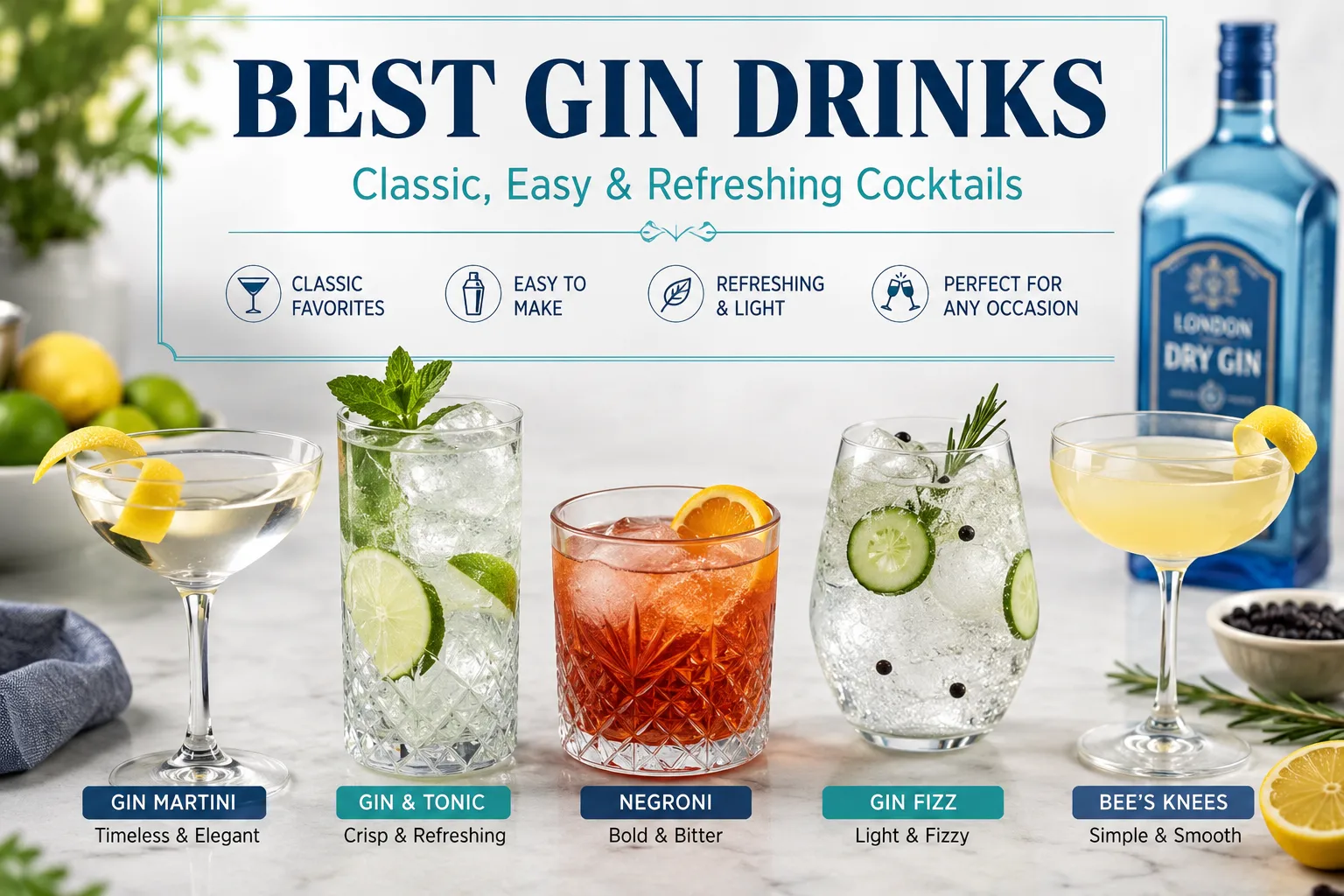
Discover the best gin drinks for every taste, from timeless Martinis and Negronis to easy highballs, fruity summer cocktails, sparkling brunch drinks, and sophisticated spirit-forward classics.
If you have a bottle of gin at home, you have far more options than a Gin and Tonic. The best gin drinks range from crisp highballs and tart sours to bitter aperitifs, elegant stirred cocktails, fruity summer drinks, sparkling brunch cocktails, and warming winter serves.
What makes gin so versatile is its combination of juniper, citrus, herbs, spices, and other botanicals. A London Dry Gin can make a sharp Martini or Negroni, while a floral or contemporary gin can shine with elderflower, cucumber, berries, or sparkling wine. Plymouth Gin, Old Tom Gin, Navy Strength Gin, Sloe Gin, and barrel-aged gin can each change the character of a familiar recipe.
This guide covers 50+ of the best gin drinks, including classic gin cocktails, easy gin drinks for beginners, fruity and floral options, cocktails without tonic, party pitchers, brunch drinks, low-sugar choices, and sophisticated spirit-forward classics.
Quick Answer: What Are the Best Gin Drinks?
Some of the best-known and most useful gin cocktails to learn are the Gin and Tonic, Martini, Negroni, Gimlet, Tom Collins, Gin Fizz, French 75, Bee’s Knees, Gin Rickey, Bramble, Clover Club, Aviation, Southside, Last Word, and Gin Gin Mule.
For a beginner, start with a Gin and Tonic, Gin Rickey, Gin Lemonade, or Tom Collins. For something dry, choose a Dry Martini or Gibson. If you like bitter flavors, make a Negroni. For fruit, try a Bramble or Strawberry Gin Cocktail. If you want bubbles, a French 75 is hard to beat.
Best Gin Drinks by Taste
| If you want… | Try… | Flavor |
|---|---|---|
| Crisp and simple | Gin and Tonic | Botanical, bitter, refreshing |
| Dry and strong | Dry Martini | Cold, aromatic, spirit-forward |
| Tart and fresh | Gimlet | Lime, crisp, zesty |
| Bitter and complex | Negroni | Bitter, herbal, rich |
| Fruity | Bramble | Blackberry, citrus, gin |
| Sweet-tart | Bee’s Knees | Lemon, honey, botanical |
| Sparkling | French 75 | Citrus, crisp, bubbly |
| Very dry | Gin Rickey | Lime, gin, soda |
| Herbal | Gin Basil Smash | Basil, lemon, gin |
| Floral | Aviation | Floral, citrus, aromatic |
| Spicy | Gin Mule | Ginger, lime, mint |
| Berry-forward | Clover Club | Raspberry, lemon, silky |
| Sophisticated | Last Word | Herbal, tart, complex |
| Brunch-friendly | Elderflower Gin Cocktail | Floral, citrusy, sparkling |
| Party-friendly | Gin Punch | Fruity, refreshing, easy to batch |
Classic Gin Cocktails Everyone Should Know
Classic gin cocktails provide the best foundation for understanding how gin, citrus, sweeteners, vermouth, bitters, liqueurs, and carbonation work together.
These recipes also make a practical home-bar collection. Once you understand a few basic formulas, you can create dozens of variations without memorizing every cocktail recipe.
1 Gin and Tonic
Ingredients
- 2 oz gin
- 4 oz chilled Tonic Water
- Ice
- Lime wheel or lemon wheel
Method
- Fill a Highball Glass with Cocktail Ice.
- Add the gin.
- Top slowly with tonic water.
- Give it one gentle stir.
- Add a Lime Wheel or citrus garnish.
Best for: Beginners, warm weather, casual entertaining.
Flavor: Crisp, bitter, botanical, citrusy, refreshing.
A London Dry Gin emphasizes juniper particularly well, while a contemporary gin with stronger citrus botanicals can produce a softer, brighter highball. The tonic matters too; different tonic waters vary considerably in sweetness and bitterness.
2 Dry Martini
Ingredients
- 2½ oz gin
- ½ oz Dry Vermouth
- 1 dash Orange Bitters, optional
- Lemon twist or olive
Method
- Chill a Martini Glass or Nick and Nora Glass.
- Add gin, vermouth, and bitters to a Mixing Glass.
- Fill with ice.
- Stir with a Bar Spoon until thoroughly chilled.
- Strain into the chilled glass.
- Finish with a Lemon Twist or olive.
Flavor: Dry, cold, aromatic, juniper-forward.
The amount of dry vermouth can be adjusted. A Martini with more vermouth tastes softer and more wine-driven, while a very dry version puts greater emphasis on the gin.
3. Dirty Martini
A Dirty Martini adds olive brine to the Martini formula.
- 2½ oz gin
- ½ oz dry vermouth
- ¼–½ oz olive brine
- Green olives
Stir the gin, vermouth, and brine with ice in a Mixing Glass, then strain into a chilled Martini Glass and garnish with olives.
Flavor: Dry, savory, salty, aromatic.
4. Gibson
The Gibson follows the Martini family but uses a cocktail onion as its defining garnish.
Make it with gin and dry vermouth, stir thoroughly with ice, strain into a chilled Cocktail Glass, and garnish with a cocktail onion.
It is an excellent choice when you want something dry and savory without olive brine.
5 Gin Gimlet
Ingredients
- 2 oz gin
- ¾ oz fresh lime juice
- ½ oz Simple Syrup
- Lime wheel
Method
- Add gin, lime juice, and simple syrup to a Cocktail Shaker.
- Fill with ice.
- Shake until cold.
- Strain into a chilled Coupe Glass.
- Garnish with lime.
Flavor: Tart, bright, zesty, botanical.
Fresh lime juice gives the drink a much livelier aroma than many bottled alternatives.
6 Negroni
Ingredients
- 1 oz gin
- 1 oz Campari
- 1 oz Sweet Vermouth
- Orange peel
- Large ice cube
Method
- Add all ingredients to a Mixing Glass with ice.
- Stir until chilled.
- Strain over a Large Ice Cube in a Rocks Glass.
- Express an Orange Peel over the surface.
Flavor: Bitter, herbal, citrusy, rich, sophisticated.
The familiar equal-parts structure makes the Negroni easy to remember. Gin + Campari + sweet vermouth creates one of the most recognizable relationships in classic cocktail making.
7 Tom Collins
Ingredients
- 2 oz gin
- 1 oz Lemon Juice
- ¾ oz simple syrup
- 2–3 oz Club Soda
- Lemon wheel
- Ice
Method
Shake the gin, lemon juice, and syrup with ice. Strain into a Collins Glass filled with fresh ice, top with club soda, and stir gently.
Flavor: Tart, lightly sweet, sparkling, refreshing.
8. Gin Fizz
Ingredients: 2 oz gin, ¾ oz lemon juice, ½ oz simple syrup, 1 oz soda water, ice.
Shake the gin, lemon, and syrup with ice. Strain into a chilled Highball Glass and top with Soda Water.
Flavor: Tart, lightly sweet, bubbly.
9. French 75
Ingredients: 1 oz gin, ½ oz lemon juice, ½ oz simple syrup, 3 oz chilled Sparkling Wine, lemon twist.
Shake gin, lemon, and syrup with ice. Strain into a Coupe Glass and top with sparkling wine.
Flavor: Bright, citrusy, crisp, sparkling.
10. Gin Rickey
Ingredients: 2 oz gin, ½ oz fresh lime juice, club soda, lime wheels, ice.
Build the drink in a Highball Glass over ice and top with club soda.
Flavor: Dry, tart, crisp, refreshing.
Easy Gin Drinks for Beginners
You don’t need an extensive home bar to make excellent gin cocktails. A Jigger, Cocktail Shaker, Mixing Glass, Bar Spoon, and Cocktail Strainer are enough for most recipes.
If you’re new to mixing, begin with simple combinations that make the relationship between spirit, acid, sweetness, dilution, and carbonation easy to understand.
11. Gin and Lemonade
Ingredients: 2 oz gin, 5–6 oz lemonade, ice, lemon, mint.
Build over ice and stir gently.
Flavor: Sweet-tart, citrusy, easygoing.
12. Gin and Soda
Combine 2 oz gin with 4–6 oz Soda Water over plenty of ice. Add lemon or lime.
One of the best Two-Ingredient Gin Cocktails for anyone who wants minimal sweetness.
13. Gin and Grapefruit
Combine 2 oz gin with about 3 oz Grapefruit Juice and a splash of soda.
Flavor: Tart, bitter, citrusy.
14. Gin and Ginger Ale
Combine 2 oz gin with 4 oz Ginger Ale over ice and finish with lime.
Flavor: Sweet, lightly spicy, botanical.
15. Gin and Orange
A simple Orange Gin Cocktail needs only gin, Orange Juice, ice, and an orange garnish.
Use about 2 oz gin to 4 oz orange juice for a brunch-friendly drink.
16. Gin and Apple
Combine gin with chilled Apple Juice and a small amount of lemon juice.
Flavor: Crisp, fruity, lightly tart.
17. Gin and Cranberry
Combine 2 oz gin with 3 oz Cranberry Juice, ½ oz lime juice, and ice.
Flavor: Tart, bright, fruity.
18. Gin and Pineapple
Combine 2 oz gin, 3 oz Pineapple Juice, and ½ oz lime juice. Shake with ice and strain over fresh ice.
Flavor: Tropical, sweet-tart, botanical.
Gin Cocktails Without Tonic
If you don’t enjoy tonic’s bitterness, you are not limited to sugary juice drinks. Gin Cocktails Without Tonic can be dry, tart, herbal, fruity, or sparkling.
Dry
Club Soda keeps gin drinks crisp without adding significant sweetness.
Spicy
Ginger Beer adds spice, sweetness, and carbonation.
Citrusy
Lemonade or fresh citrus can provide acidity and sweetness.
Elegant
Sparkling wine creates celebratory, refined drinks.
Spirit-forward
Vermouth builds sophisticated, lower-mixer cocktails.
Fruity
Fruit juices create fuller, softer cocktails.
Gin Gin Mule
Ingredients
- 2 oz gin
- ¾ oz lime juice
- ½ oz simple syrup
- 6–8 mint leaves
- 3 oz ginger beer
- Ice
Method & Flavor
Shake gin, lime, syrup, and mint with ice. Strain over fresh ice and top with ginger beer.
Flavor: Minty, spicy, tart, refreshing.
Salty Dog
A Salty Dog combines 2 oz gin, 4 oz grapefruit juice, salt, a grapefruit wedge, and ice. The result is tart, bitter, citrusy, and slightly savory.
Gin Lemonade Pitcher
For a simple crowd drink, combine 2 oz gin with approximately 6 oz lemonade per serving.
For eight drinks: 16 oz gin, 48 oz lemonade, lemon slices, fresh mint, and ice.
Chill the still ingredients first and add ice shortly before serving.
Fruity Gin Cocktails
Fruit can soften the sharper botanical character of gin without completely hiding it. Berry, citrus, tropical, stone-fruit, apple, and watermelon combinations all work particularly well.
19. Bramble
Shake 2 oz gin, ¾ oz lemon juice, and ½ oz simple syrup. Strain over crushed ice and drizzle ½ oz Crème de Cassis over the top. Garnish with blackberries.
Flavor: Tart, fruity, blackberry-rich.
20. Clover Club
Shake 2 oz gin, ¾ oz lemon juice, ½ oz raspberry syrup, and 1 egg white without ice, then shake again with ice. Strain into a chilled Coupe Glass.
Flavor: Silky, tart, fruity, lightly floral.
21. Strawberry Gin Cocktail
Muddle fresh strawberries with gin, lemon juice, and simple syrup. Shake with ice and strain over fresh ice.
Flavor: Fresh, tart, fruity, summery.
22. Raspberry Gin Fizz
Combine gin, lemon juice, raspberry syrup, and ice. Shake, strain over ice, and top with soda.
Flavor: Raspberry-forward, tart, sparkling.
23. Blueberry Gin Sour
Shake gin, fresh blueberries, lemon juice, and simple syrup with ice. Double-strain if you want a smoother texture.
Flavor: Fruity, tart, aromatic.
24. Peach Gin Cocktail
Combine gin, peach nectar, lemon juice, and soda.
Flavor: Soft peach, bright citrus, lightly sparkling.
25. Watermelon Gin Cocktail
Shake gin with fresh watermelon juice and lime. Strain over ice and add a splash of soda.
Flavor: Juicy, refreshing, lightly tart.
26. Apple Gin Cocktail
Combine gin, apple juice, lemon juice, and a small amount of honey syrup.
Flavor: Crisp, fruity, autumn-friendly.
27. Cranberry Gin Cocktail
Shake gin, cranberry juice, lime juice, and simple syrup with ice.
Flavor: Tart, bright, festive.
28. Grapefruit Gin Cocktail
Combine gin, grapefruit juice, lime juice, and soda.
Flavor: Bitter, tart, crisp.
29. Orange Gin Cocktail
Combine gin, orange juice, and a small amount of Cointreau or Triple Sec for extra orange character.
Flavor: Citrusy, smooth, lightly sweet.
30. Lemon Gin Cocktail
Build a simple lemon sour using gin, fresh lemon juice, and sugar syrup.
Flavor: Zesty, tart, balanced.
31. Lime Gin Cocktail
A lime-forward drink can use gin, fresh lime juice, and simple syrup. For a drier version, replace some sweetness with soda.
Flavor: Green, tart, crisp.
Citrus Gin Cocktails
Citrus is one of gin’s most reliable partners.
Lemon provides sharp acidity, lime gives a greener character, grapefruit introduces bitterness, and orange contributes softer sweetness.
Bee’s Knees
Shake 2 oz gin, 1 oz lemon juice, and ¾ oz Honey Syrup with ice. Strain into a chilled Coupe Glass and garnish with a lemon twist.
Flavor: Bright, honeyed, tart.
Gin Sour
Use 2 oz gin, ¾ oz lemon juice, and ¾ oz Sugar Syrup. Shake with ice and strain into a chilled glass.
White Lady
Shake 1½ oz gin, ¾ oz Cointreau, and ¾ oz lemon juice with ice. Strain into a chilled Coupe Glass.
Flavor: Dry, citrusy, smooth.
Blood Orange Gin Sour
Combine gin, blood orange juice, lemon juice, and simple syrup. Shake and strain into a coupe.
Grapefruit Gin Rickey
Use gin, grapefruit juice, lime juice, and soda for a more bitter version of the classic Rickey.
Orange Gin Spritz
Combine gin, orange juice, sparkling wine, and soda over ice.
Herbal and Botanical Gin Cocktails
Gin’s character comes largely from botanicals, with juniper berries traditionally providing the defining piney backbone. Other common botanicals can include coriander, angelica root, orris root, cardamom, fennel, citrus peel, and spices such as cinnamon.
That complexity explains why fresh herbs can work so well with gin.
Gin Basil Smash
Ingredients
- 2 oz gin
- ¾ oz lemon juice
- ½ oz simple syrup
- 6–8 basil leaves
- Ice
Method
- Gently muddle the basil with simple syrup.
- Add gin and lemon juice.
- Fill a Cocktail Shaker with ice.
- Shake vigorously.
- Strain into a Rocks Glass over fresh ice.
- Garnish with basil.
Flavor: Herbal, citrusy, aromatic, refreshing.
Southside
The Southside combines gin, lime, mint, and sweetness. Shake gin, lime juice, simple syrup, and fresh mint with ice. Strain into a chilled Cocktail Glass.
Flavor: Minty, tart, refreshing.
Cucumber Gin Cocktail
Muddle cucumber with gin, lime juice, and simple syrup. Shake with ice and strain over fresh ice.
Flavor: Crisp, cool, botanical.
Elderflower Gin Cocktail
Combine gin with Elderflower Liqueur such as St-Germain, lemon juice, and sparkling wine or soda.
Flavor: Floral, citrusy, elegant.
Rosemary Gin Rickey
Add a rosemary sprig to the gin, lime, and soda structure of a Rickey.
Flavor: Dry, herbal, aromatic.
Thyme Gin Sour
A small amount of thyme syrup can turn a standard Gin Sour into a more savory herbal drink.
Lavender Gin Collins
Add a restrained amount of lavender syrup to a Tom Collins.
Too much lavender can make a drink taste perfumed, so use it carefully.
Berry Gin Drinks
Berries add color, aroma, and natural fruitiness while citrus provides the acidity needed for balance.
- Strawberry Gin Cocktail with lemon
- Raspberry Gin Cocktail with lemon
- Blackberry Gin Cocktail with lime
- Blueberry Gin Cocktail with lemon
- Cherry gin with lemon
- Mixed berries with sparkling wine
Blackberry Gin Cocktail
Muddle blackberries with gin, lime juice, and simple syrup, then shake and strain over fresh ice.
Raspberry Gin Cocktail
Use raspberry syrup or fresh raspberries with gin, lemon, and soda.
Blueberry Gin Sour
Blend or muddle blueberries with gin, lemon, and syrup before shaking.
Berry Gin Spritz
Combine mixed berry puree, gin, lemon, and sparkling wine.
Sweet and Fruity Gin Drinks
A cocktail should still be balanced. Fruit juice, liqueurs, syrups, and sweet mixers can quickly overwhelm gin.
Passion Fruit Gin Cocktail
Combine gin, passion fruit puree, lime juice, and simple syrup.
Flavor: Tropical, intensely fruity, sharply acidic.
Mango Gin Cooler
Mix gin with mango nectar, lime juice, and soda.
Pineapple Gin Sour
Shake gin, pineapple juice, lemon juice, and simple syrup with ice.
Peach Gin Smash
Muddle fresh peach with gin, lemon, and basil.
Cherry Gin Fizz
Combine gin, cherry syrup, lemon, and soda.
Pear Gin Fizz
Use pear nectar, gin, lemon, and soda with a small amount of rosemary or thyme syrup.
Dry and Spirit-Forward Gin Cocktails
When there is little juice or soda to hide mistakes, temperature and dilution become especially important.
32. 50/50 Martini
Use approximately equal parts gin and dry vermouth.
Flavor: Softer, wine-driven, aromatic, less aggressive than a very dry Martini.
33. Last Word
The Last Word combines gin, Chartreuse, Maraschino Liqueur, and lime juice. Use equal parts, shake with ice, and strain into a chilled Coupe Glass.
Flavor: Herbal, tart, complex, slightly sweet.
34. Aviation
The Aviation combines gin, maraschino liqueur, lemon juice, and Crème de Violette.
Flavor: Floral, citrusy, aromatic.
35. Corpse Reviver No. 2
This classic uses gin, Cointreau, Lillet Blanc, lemon juice, and a small amount of absinthe.
It is bright, sharp, aromatic, and considerably more complex than a basic gin sour.
36. Ramos Gin Fizz
The Ramos Gin Fizz takes the Gin Fizz in a richer direction with cream, egg white, citrus, and orange flower water.
It requires more shaking and technique but rewards the effort with a creamy, foamy texture.
37. Pegu Club
The Pegu Club combines gin, orange liqueur, lime juice, and bitters.
Flavor: Dry, citrusy, aromatic, slightly bitter.
38. Martinez
The Martinez sits closer to the sweeter, richer side of the Martini family and works particularly well with Old Tom Gin.
A typical structure combines gin, sweet vermouth, maraschino liqueur, and bitters.
39. Hanky Panky
The Hanky Panky combines gin and sweet vermouth with a small amount of Fernet-Branca.
Flavor: Herbal, bitter, aromatic, sophisticated.
40. Vesper
The Vesper is a strong Martini-style cocktail traditionally combining gin with vodka and Lillet Blanc.
It is best approached as a deliberately strong, spirit-forward drink.
41. Bijou
The Bijou combines gin, sweet vermouth, Green Chartreuse, and orange bitters.
Flavor: Herbal, rich, aromatic.
42. Casino
The Casino combines gin with maraschino liqueur, lemon juice, and orange bitters.
It is bright, dry, citrusy, and subtly fruity.
43. Pink Gin
Pink Gin is a simple combination of gin and aromatic bitters, traditionally emphasizing the botanical character of the spirit.
44. Floradora
The Floradora combines gin, raspberry, lime, and ginger ale.
Flavor: Fruity, tart, lightly spicy, refreshing.
45. Red Snapper
The Red Snapper is a gin-based Bloody Mary variation, typically combining gin with tomato juice, citrus, and savory seasonings.
More Classic Gin Cocktails Worth Exploring
Singapore Sling
The Singapore Sling is a tall, fruit-forward gin cocktail associated with a complex combination of fruit juice, cherry flavor, citrus, and liqueurs.
It is ideal when you want a fruity, refreshing, tropical-style gin drink rather than a dry Martini.
Gin Mule
A Gin Mule uses gin, lime, and ginger beer. Add mint for a more aromatic version.
Elderflower Gin Cocktail
Gin and elderflower make a natural pairing. St-Germain, an elderflower liqueur, can add floral sweetness to lemon, lime, cucumber, or sparkling wine.
Sloe Gin Cocktail
Sloe Gin is fruitier and sweeter than standard gin and can be used in sparkling drinks, sours, and winter cocktails.
Fruit Gin Cocktail
A Fruit Gin or flavored gin can be paired with soda, tonic, citrus, berries, or sparkling wine. Because sweetness and flavor intensity vary, reduce additional syrup when necessary.
Best Gin Styles for Cocktails
Choosing the right gin can make a bigger difference than buying an expensive mixer.
London Dry Gin
London Dry Gin generally emphasizes juniper and has a dry, structured character.
Best for: Dry Martini, Gin and Tonic, Negroni, Gimlet, Gin Rickey, Tom Collins.
Plymouth Gin
Plymouth Gin has historically been associated with a softer, rounder botanical profile.
It can work particularly well in Martinis, Gimlets, Collins-style drinks, and other classic recipes.
Old Tom Gin
Old Tom Gin is generally sweeter and rounder than London Dry Gin.
Best for: Tom Collins, Martinez, fruit-forward cocktails, older-style recipes.
Navy Strength Gin
Navy Strength Gin is bottled at a higher alcohol strength than standard gin. Its greater intensity makes it useful in cocktails where the spirit needs to remain noticeable after dilution or mixing.
Measure it carefully.
Contemporary Gin
A Contemporary Gin may emphasize citrus, floral, fruit, spice, or other botanicals instead of making juniper the dominant flavor.
These styles are excellent for modern spritzes, fruit cocktails, and lighter highballs.
Botanical Gin
The term Botanical Gin highlights the broader botanical profile of the spirit. Look for notes of juniper, coriander, cardamom, citrus peel, herbs, and spices.
Flavored Gin
Flavored Gin can emphasize fruits, herbs, spices, or other flavors. These products can simplify cocktail making because some of the flavor work is already built into the bottle.
Sloe Gin
Sloe Gin is made with sloe fruit and tends to be sweeter and fruitier than dry gin.
It works particularly well in sparkling cocktails and berry-forward drinks.
Barrel-Aged Gin
Barrel-Aged Gin gains additional flavors from time spent in wood. Vanilla, oak, spice, and caramel-like notes can make it interesting in stirred cocktails.
Genever
Genever is a traditional juniper-based spirit from the Netherlands and Belgium and is distinct from modern dry gin.
Its maltier character makes it particularly interesting in historical-style cocktails such as the Martinez.
Gin, Juniper, and Botanicals: What Actually Creates the Flavor?
Juniper berries provide the defining botanical identity of gin. Depending on the recipe, the spirit may also contain coriander, angelica root, orris root, cardamom, fennel, citrus peel, cinnamon, and other botanicals.
That is why two bottles of gin can taste completely different even when both are labeled gin.
A strongly juniper-driven gin may work beautifully in a Dry Martini or Negroni. A citrus-heavy gin may be better suited to a French 75 or Gimlet. Floral gin can pair naturally with elderflower, cucumber, lemon, and sparkling wine.
How to Match Gin With Mixers
| Gin style | Best mixers | Good cocktails |
|---|---|---|
| London Dry Gin | Tonic, soda, vermouth, citrus | Martini, G&T, Negroni |
| Plymouth Gin | Citrus, vermouth, soda | Gimlet, Martini, Collins |
| Old Tom Gin | Lemon, vermouth, fruit | Tom Collins, Martinez |
| Navy Strength Gin | Citrus, vermouth, tonic | Martini, Negroni |
| Contemporary Gin | Citrus, elderflower, fruit | Spritzes, sours |
| Floral Gin | Elderflower, cucumber, lemon | Floral gin cocktails |
| Sloe Gin | Lemon, berries, sparkling wine | Sloe gin fizz |
| Barrel-Aged Gin | Sweet vermouth, bitters | Stirred cocktails |
| Genever | Vermouth, bitters, citrus | Martinez-style drinks |
Best Gin Cocktails by Flavor
Citrus Gin Drinks
- Gimlet
- Bee’s Knees
- French 75
- White Lady
- Gin Sour
- Tom Collins
These emphasize lemon, lime, grapefruit, or orange.
Herbal Gin Drinks
- Gin Basil Smash
- Southside
- Last Word
- Bijou
- Rosemary Gin Rickey
These highlight basil, mint, rosemary, Chartreuse, or other botanicals.
Floral Gin Drinks
- Aviation
- Elderflower Gin Cocktail
- Elderflower Gin Spritz
- Lavender Gin Collins
These work especially well with floral or citrus-forward gin.
Fruity Gin Drinks
- Bramble
- Clover Club
- Strawberry Gin Cocktail
- Blackberry Gin Cocktail
- Peach Gin Cocktail
- Pineapple Gin Cocktail
- Watermelon Gin Cocktail
- Cranberry Gin Cocktail
Bitter Gin Drinks
- Negroni
- Pegu Club
- Hanky Panky
- Pink Gin
Campari, bitters, grapefruit, and herbal liqueurs can add bitterness without making a drink simply taste sugary.
Gin Cocktails for Summer
The best Summer Gin Cocktails tend to combine cold ice, citrus, fresh herbs, seasonal fruit, and carbonation.
Cucumber Gin Cooler
Gin, cucumber, lime, simple syrup, and soda.
Strawberry Gin Lemonade
Gin, lemonade, fresh strawberry, mint, and ice.
Grapefruit Gin Highball
Gin, grapefruit juice, soda, and ice.
Peach Gin Fizz
Gin, peach nectar, lemon, and soda.
Watermelon Gin Spritz
Gin, watermelon juice, lime, and sparkling wine.
Berry Gin Soda
Fresh berries, gin, lemon, and soda.
Pineapple Gin Cooler
Gin, pineapple juice, lime, and soda.
Winter Gin Cocktails
Gin can work surprisingly well in Winter Gin Cocktails when paired with apple, pear, cranberry, ginger, honey, rosemary, and warm spices.
Apple Gin Toddy
Combine gin with warm apple cider, lemon juice, and honey syrup. Add cinnamon as a garnish.
Cranberry Gin Sour
Gin, cranberry juice, lemon, and simple syrup create a bright winter sour.
Pear Rosemary Gin Cocktail
Combine gin, pear nectar, lemon juice, and rosemary syrup.
Ginger Honey Gin Cocktail
Shake gin, lemon, and honey syrup, then add ginger beer over ice.
Cranberry Gin Spritz
Combine gin, cranberry juice, and sparkling wine over ice.
Rosemary Gin Sour
Gin, lemon juice, and rosemary syrup make a simple aromatic winter cocktail.
Holiday and Christmas Gin Cocktails
For Holiday Gin Cocktails and Christmas Gin Cocktails, use flavors such as cranberry, orange, rosemary, apple, pear, cinnamon, ginger, and sparkling wine.
Christmas Gin Punch
Ingredients
- Gin
- Cranberry juice
- Orange juice
- Lemon juice
- Sparkling wine
- Rosemary
- Orange wheels
Serve
Combine the non-carbonated ingredients ahead of time. Add sparkling wine shortly before serving, then garnish with rosemary and orange wheels.
The result is festive without requiring complicated preparation.
Brunch Gin Cocktails
The best Brunch Gin Cocktails tend to be bright, sparkling, fruity, or citrus-forward.
- French 75
- Orange Gin Spritz
- Grapefruit Gin Spritz
- Strawberry Gin Fizz
- Elderflower Gin Cocktail
- Cucumber Gin Cooler
- Blood Orange Gin Spritz
- Mint Citrus Gin Cooler
Sparkling wine makes brunch cocktails feel celebratory, while soda keeps them lighter and more refreshing.
Gin Cocktails for Dinner
For Gin Cocktails for Dinner, consider the food as well as the drink.
A dry Martini works well before a meal because it is clean and spirit-forward. A Negroni can provide bitterness and herbal depth before richer food. A Gin Rickey is a better choice when you want something lighter.
For dessert or after-dinner service, richer options such as the Hanky Panky, Bijou, or barrel-aged gin cocktail can provide more depth.
Low-Sugar and Low-Calorie Gin Cocktails
A cocktail’s calorie content depends on the ingredients and serving size, so avoid assuming that every gin drink has the same nutritional profile.
For Low-Sugar Gin Cocktails, prioritize drinks built with:
- Soda water
- Fresh citrus
- Dry vermouth
- Dry tonic
- Bitters
- Small amounts of syrup
Gin Rickey
Gin, fresh lime, and soda with no added sugar in the classic structure.
Gin and Soda
A simple, low-sweetness option when paired with unsweetened soda water.
Dry Martini
Gin and dry vermouth create a spirit-forward drink without sugary mixers.
Gibson
A dry Martini variation with a savory cocktail onion.
50/50 Martini
Equal parts gin and dry vermouth for a softer, wine-driven drink.
Grapefruit Gin Rickey
Gin, grapefruit, lime, and soda provide citrus flavor without relying on heavy syrup.
For a lower-calorie approach, the biggest variable is often the mixer rather than the gin itself. Sugary tonic, lemonade, syrups, and fruit liqueurs can increase the drink’s total calories quickly.
Strong Gin Cocktails
If you’re looking for Strong Gin Cocktails, spirit-forward drinks naturally tend to feel more intense because they contain less dilution from juice, soda, or other mixers.
- Dry Martini
- Dirty Martini
- Gibson
- Negroni
- Last Word
- Vesper
- Bijou
- Navy Strength Gin cocktails
A stronger cocktail should be measured carefully. Navy Strength Gin can make a drink noticeably more powerful than the same recipe made with standard-strength gin.
Two-Ingredient Gin Cocktails
Gin and Tonic
Gin + tonic water.
Gin and Soda
Gin + soda water.
Gin and Lemonade
Gin + lemonade.
Gin and Grapefruit
Gin + grapefruit juice.
Gin and Orange
Gin + orange juice.
Gin and Ginger Ale
Gin + ginger ale.
Gin and Ginger Beer
Gin + ginger beer.
A citrus garnish is optional but can add useful aroma.
Three-Ingredient Gin Cocktails
Gin Rickey
Gin + lime juice + soda.
Gin Sour
Gin + lemon juice + simple syrup.
Bee’s Knees
Gin + lemon juice + honey syrup.
Gimlet
Gin + lime juice + simple syrup.
Gin Fizz
Gin + lemon juice + simple syrup, followed by soda.
These are some of the best Easy Gin Cocktails because the formulas are easy to understand and adjust.
How to Make Better Gin Cocktails at Home
Good cocktails depend more on technique than expensive equipment.
Measure With a Jigger
A Jigger gives you repeatable ratios. This matters especially when making sours, Martinis, and cocktails with multiple liqueurs.
Shake Citrus Cocktails
Use a Cocktail Shaker for drinks containing lemon juice, lime juice, fruit juice, simple syrup, honey syrup, or egg white.
Shaking chills the drink and incorporates the ingredients while adding controlled dilution.
Stir Spirit-Forward Cocktails
Use a Mixing Glass and Bar Spoon for Martinis, Negronis, and similar drinks.
Stirring creates controlled dilution while preserving a clear, silky texture.
Strain Properly
Use a Cocktail Strainer after shaking or stirring when you want to remove ice, fruit pulp, herbs, or other solids.
Use the Right Ice
- Large Ice Cubes for spirit-forward drinks
- Standard ice for shaken cocktails
- Crushed Ice for drinks such as a Bramble
Choosing the Right Glass
Glassware affects presentation and, to a smaller extent, how you experience aroma.
| Cocktail style | Recommended glass |
|---|---|
| Martini | Martini Glass |
| Short stirred cocktail | Rocks Glass / Lowball Glass |
| Elegant sour | Coupe Glass |
| Martini-style classic | Nick and Nora Glass |
| Tall highball | Highball Glass |
| Tom Collins | Collins Glass |
| Negroni | Rocks Glass |
| Bramble | Rocks Glass |
| Gin and Tonic | Highball or large wine-style glass |
The glass should support the drink rather than become an excuse for unnecessary equipment.
Garnishes That Actually Improve Gin Drinks
A good Garnish contributes aroma, flavor, or visual information.
Citrus
- Lemon Twist
- Lime Wheel
- Orange Peel
- Grapefruit wedges
- Blood orange slices
Fresh Herbs
- Mint
- Basil
- Rosemary
- Thyme
Fruit
- Berries
- Apple slices
- Peach wedges
- Pineapple
- Watermelon
- Cucumber
A Cucumber Garnish is particularly useful with fresh, floral, and citrus-forward gin drinks.
A Cocktail Cherry works naturally with certain fruit-forward and classic cocktails, particularly when the recipe already contains cherry or maraschino flavors.
How to Batch Gin Cocktails for a Crowd
Gin Cocktails for a Crowd should be simple enough to prepare ahead and stable enough to hold briefly.
Batch These First
- Gin
- Fruit juices
- Lemon juice
- Lime juice
- Simple syrup
- Honey syrup
- Non-carbonated liqueurs
Add These Later
- Tonic water
- Soda water
- Ginger beer
- Sparkling wine
- Champagne
- Ice
Example: Eight Gin Sours
Per Drink
- 2 oz gin
- ¾ oz lemon juice
- ½ oz simple syrup
For Eight Drinks
- 16 oz gin
- 6 oz lemon juice
- 4 oz simple syrup
Combine, chill, and taste before serving. Add a small amount of water if necessary to account for the dilution normally produced by shaking.
How to Balance a Gin Cocktail
Use this framework as a starting point rather than a rigid formula. Taste and adjust based on the ingredients you’re using.
Too sweet?
- More lemon or lime
- Less syrup
- Soda
- A drier tonic
Too sour?
- Simple syrup
- Honey syrup
- Fruit juice
- A small amount of liqueur
Too strong?
The cocktail may need dilution, not just more mixer. Shake or stir properly with enough ice before changing the recipe.
Too bitter?
Try a sweeter mixer, more citrus, or a less bitter ingredient.
Too flat?
Check the citrus first. Fresh Lemon Juice or Lime Juice can make a dramatic difference.
Gin Cocktail Substitutions
No tonic water?
Use soda water, lemonade, or sparkling wine.
No simple syrup?
Use Sugar Syrup or another liquid sweetener. Honey syrup works particularly well in a Bee’s Knees.
No fresh lime?
Lemon can work in many sour-style drinks, although the flavor will change.
No Cointreau?
Triple Sec can provide orange flavor in many recipes.
No elderflower liqueur?
A floral syrup can work in some drinks, although it will usually be sweeter and less complex than St-Germain.
No sparkling wine?
Use soda water when the goal is simply to add carbonation, though the finished cocktail will be lighter and less wine-like.
Common Gin Cocktail Mistakes
Using too much mixer
A large amount of mixer can completely hide a delicate gin.
Ignoring dilution
A cocktail that tastes harsh may simply be under-diluted.
Using warm mixers
Chilled tonic, soda, ginger beer, and sparkling wine produce better highballs.
Over-garnishing
A dozen herbs and fruit pieces rarely improve a drink.
Shaking carbonated ingredients
This is both unnecessary and potentially messy. Add carbonation after shaking.
Over-sweetening fruit cocktails
Fruit juice already contributes sugar. Taste before adding more syrup.
Gin Drinks for Beginners: Where Should You Start?
If you’re new to gin, don’t begin with the most complicated cocktail in the book.
- Gin and Soda — Learn the basic botanical character.
- Gin and Tonic — Experience bitterness and carbonation.
- Gin Rickey — Learn how lime changes the drink.
- Gin Sour — Understand acidity and sweetness.
- Gimlet — Explore lime and a more concentrated format.
- Tom Collins — Learn how dilution and carbonation lengthen a cocktail.
- Bee’s Knees — Try honey with citrus.
- Negroni — Explore bitterness and vermouth.
- French 75 — Add sparkling wine.
- Last Word — Move into complex herbal cocktails.
This progression makes it easier to identify which flavors you actually enjoy.
Non-Alcoholic Gin Cocktails
If you want the botanical style of gin without alcohol, use a non-alcoholic gin alternative rather than standard gin.
Non-alcoholic Gin and Tonic
A botanical alternative with tonic and citrus garnish.
Non-alcoholic Gin Rickey
Botanical spirit alternative, lime, and soda.
Botanical Gin and Soda
A crisp, low-sweetness option.
Cucumber Botanical Cooler
Cucumber, citrus, botanical spirit, and soda.
Lemon Botanical Spritz
Lemon, botanical alternative, and sparkling water.
Berry Botanical Fizz
Berry, citrus, botanical spirit, and soda.
Because alcohol-free gin alternatives vary considerably in bitterness, sweetness, and botanical intensity, adjust the citrus and sweetener after tasting the base.
Frequently Asked Questions
What are the best gin drinks for beginners?
The best Gin Drinks for Beginners include the Gin and Tonic, Gin Rickey, Gin and Lemonade, Gimlet, Bee’s Knees, and Tom Collins. They require relatively few ingredients and make it easy to understand how gin reacts to citrus, sweetness, and carbonation.
What can I mix with gin besides tonic?
You can mix gin with soda water, lemonade, ginger beer, ginger ale, grapefruit juice, orange juice, pineapple juice, apple juice, cranberry juice, sparkling wine, dry vermouth, or sweet vermouth. For a dry drink, choose soda or dry vermouth. For something fruity, use juice. For spice, use ginger beer.
What is the easiest gin cocktail?
The Gin and Tonic is probably the easiest classic. Gin and soda, Gin and lemonade, and Gin Rickey are also excellent Easy Gin Drinks.
What are the best gin cocktails without tonic?
Try a Gin Rickey, Gimlet, Tom Collins, Bee’s Knees, Gin Fizz, Gin Gin Mule, Bramble, Southside, French 75, or Gin Sour.
Which gin cocktails are the least sweet?
Good Low-Sugar Gin Cocktails include the Gin Rickey, Dry Martini, Gibson, Gin and Soda, 50/50 Martini, and Negroni.
What gin is best for a Martini?
A London Dry Gin is a classic choice because its juniper character works particularly well with dry vermouth. Plymouth Gin can provide a softer alternative.
What gin is best for a Negroni?
A juniper-forward London Dry Gin is an excellent starting point. However, contemporary and citrus-forward gins can create interesting variations.
What is the difference between a Gimlet and a Gin Sour?
A Gimlet traditionally emphasizes lime, while a Gin Sour generally emphasizes lemon. Modern recipes vary, but the citrus distinction is a useful practical guide.
What is the difference between a Gin Rickey and a Tom Collins?
A Gin Rickey is typically made with gin, lime, and soda without added sugar. A Tom Collins usually contains gin, lemon juice, sweetener, and soda. The Rickey is therefore generally drier, while the Collins is sweeter and rounder.
What is the difference between gin and genever?
Genever is a traditional juniper-based spirit associated with the Netherlands and Belgium. Modern gin generally has a more pronounced botanical and juniper-driven profile, while genever can have a distinctive malty character.
What botanicals are commonly found in gin?
Common gin botanicals include juniper, coriander, angelica root, orris root, cardamom, citrus peel, fennel, and various herbs and spices. Every gin uses its own botanical recipe.
Can I use Old Tom Gin in a Martini?
You can, but the result will generally be softer and sweeter than a Martini made with a dry London Dry Gin. Old Tom Gin is especially useful in cocktails such as the Martinez and Tom Collins.
What is Navy Strength Gin?
Navy Strength Gin is a higher-strength style of gin. Because of its greater alcohol concentration, it can produce a more intense cocktail and should be measured carefully.
Can I make gin cocktails ahead of time?
Yes. Batch the gin, juices, syrups, and non-carbonated ingredients ahead of time. Add tonic water, soda, ginger beer, sparkling wine, or Champagne immediately before serving.
Should gin cocktails be shaken or stirred?
Shake cocktails containing citrus, juices, syrups, or egg white. Stir spirit-forward cocktails such as Martinis, Negronis, and other clear stirred drinks.
What glass should I use for a gin cocktail?
Use a Highball Glass for tall drinks such as a Gin and Tonic or Tom Collins, a Rocks Glass for drinks such as a Negroni, and a Martini Glass, Coupe Glass, or Nick and Nora Glass for elegant short cocktails.
What are the best gin drinks for summer?
The best Refreshing Gin Cocktails for summer include the Gin Rickey, Gin and Tonic, Cucumber Gin Cocktail, Gin Basil Smash, Bramble, Watermelon Gin Cocktail, Strawberry Gin Cocktail, Tom Collins, and French 75.
What are the best gin drinks for Christmas?
For Christmas and other winter celebrations, try Cranberry Gin Cocktails, Cranberry Gin Spritzes, Apple Gin Toddies, Pear Rosemary Gin Cocktails, Ginger Honey Gin Cocktails, and Holiday Gin Punches.
Are fruity gin cocktails always sweet?
No. Fruit can contribute sweetness, but lemon, lime, grapefruit, bitters, and soda can restore balance. A Raspberry Gin Rickey, for example, can remain relatively dry despite its fruit flavor.
What are the best gin cocktails for a party?
For parties, choose drinks that can be batched, such as Gin Lemonade Pitchers, Berry Gin Punch, Cranberry Gin Punch, Peach Gin Punch, Citrus Gin Punch, and Gin Spritz Pitchers.
How much gin goes into a cocktail?
Many classic recipes use between 1½ and 2½ oz of gin per serving, although the correct amount depends on the specific cocktail. Measure with a jigger until you understand your preferred ratios.
Final Thoughts
The best gin drinks are not limited to one style. Gin can be dry, bitter, tart, sweet, fruity, floral, herbal, spicy, sparkling, refreshing, or intensely spirit-forward depending on the bottle and the ingredients around it.
Start with the classics. A Gin and Tonic teaches you about botanicals and bitterness. A Gimlet demonstrates the importance of lime and sweetness. A Tom Collins shows how soda changes dilution and texture. A Negroni introduces bitter complexity, while a French 75 demonstrates how gin works with sparkling wine.
From there, explore Plymouth Gin, Old Tom Gin, Navy Strength Gin, Sloe Gin, contemporary gin, barrel-aged gin, and botanical styles. Pair them with lemon, lime, grapefruit, orange, cucumber, basil, mint, rosemary, berries, ginger, elderflower, vermouth, Campari, Chartreuse, or sparkling wine.
If you want something easy, make a Gin Rickey. If you want something fruity, try a Bramble or Strawberry Gin Cocktail. For a floral drink, reach for an Aviation or Elderflower Gin Cocktail. For a serious classic, make a Dry Martini, Negroni, Last Word, or Gibson.
The real advantage of learning these formulas is that you stop depending on a single recipe. Once you understand gin, citrus, sweetness, dilution, carbonation, ice, and botanicals, you can build balanced gin drinks that suit almost any occasion.
Read More:
What Can I Drink After a Tooth Extraction
100 Fruit Drink Recipes: Juices, Smoothies & Mocktails
16 Best Non-Alcoholic After Dinner Drinks for Any Evening
Best Places for Non-Alcoholic Drinks in Las Vegas: 2026 Guide
Bob Marley Mocktail: Easy Non-Alcoholic Layered Drink
Liquid Maria Juana Drink: Easy Tropical Cocktail Recipe
Gasolina Drink: Flavors, ABV, Ingredients & More