Mango Monster Energy Drink: Mango Loco Caffeine, Sugar, Calories & Ingredients
Discover what Mango Monster Energy Drink really is, how Mango Loco tastes, how much caffeine and sugar it contains, what fruits are included, and how it compares with Ultra Fiesta Mango.
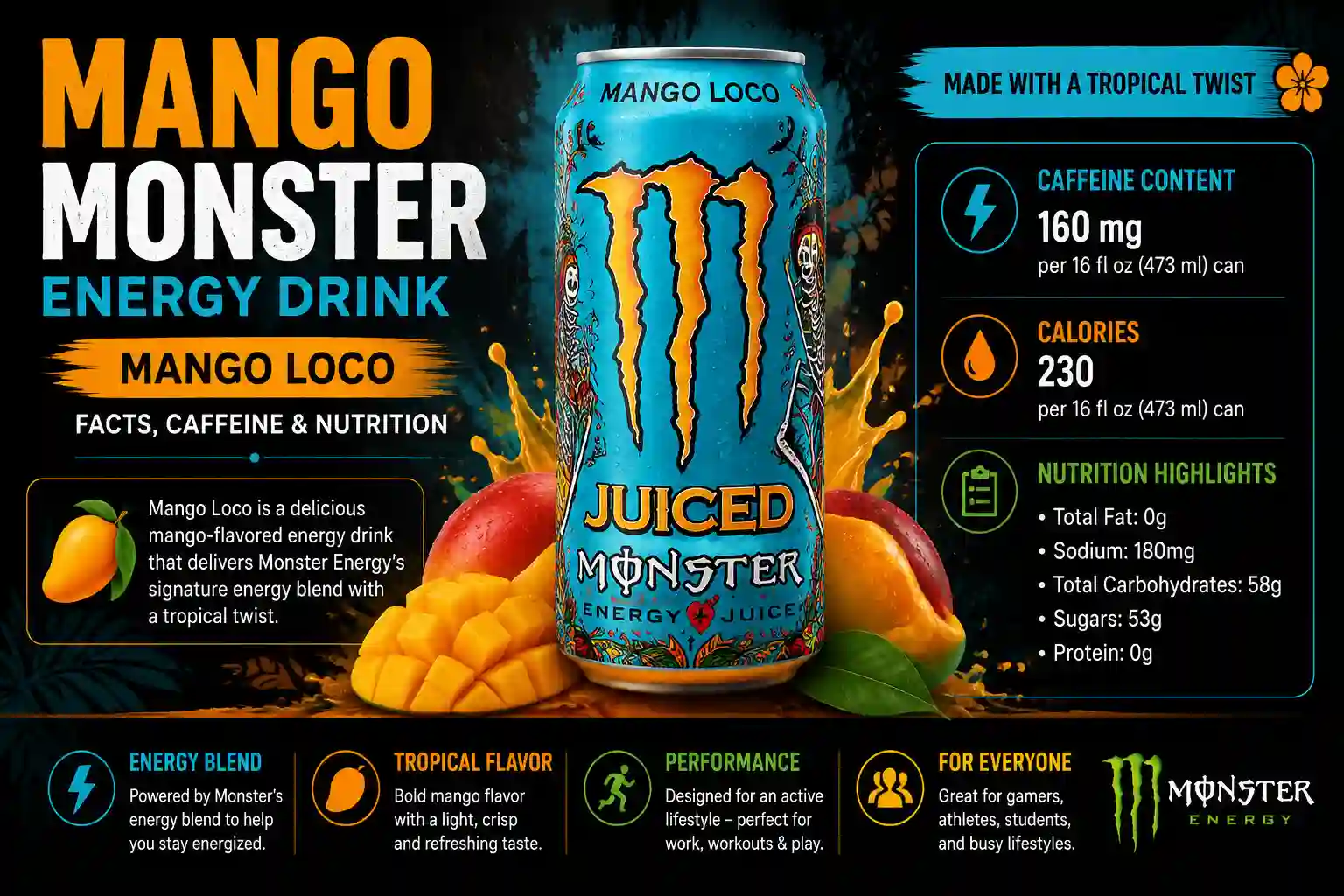
If you’re looking up Mango Monster Energy Drink, you’re most likely referring to Monster Energy Mango Loco, the mango-flavored drink in Monster’s Juice Monster line.
The current U.S. product listing identifies a 16-ounce can with 150 mg of caffeine and 250 calories. Current U.S. package information also lists 60 g of total sugar.
This guide explains the Mango Loco flavor, ingredients, caffeine, sugar, calories, fruit blend, branding, and differences from Ultra Fiesta Mango. It also explains why nutrition figures can differ between countries and highlights important caffeine considerations for young people.
What Is Mango Monster Energy Drink?
Mango Monster Energy Drink usually refers to Monster Mango Loco, a carbonated Juice Monster beverage with a juicy mango flavor and multiple fruit ingredients.
What Is Mango Monster Energy Drink?
Mango Monster Energy Drink is commonly used to describe Mango Loco, a Juice Monster beverage from Monster Energy. The product combines mango with real fruit juice and Monster’s energy-drink formulation.
Brand
Monster Energy
Product
Mango Loco
Product Family
Juice Monster
Flavor
Juicy Mango
U.S. Size
16 fl oz
Beverage Type
Carbonated energy drink
It is not the same thing as ordinary mango juice. Mango Loco is a carbonated energy drink containing caffeine, added sugar, fruit ingredients, and other components associated with Monster’s formulation.
What Does Mango Loco Taste Like?
Monster describes Mango Loco as Juicy Mango. However, the ingredient list reveals a broader fruit combination that includes mango, guava, white grape, apple, pineapple, apricot, peach, orange, passionfruit, and lemon components.
Mango
The primary flavor identity and the reason the drink has its name.
Guava
Adds a tropical fruit character to the blend.
Pineapple
Contributes a sharper tropical note.
Peach & Apricot
Provide softer fruit notes.
Citrus
Helps provide acidity and balance.
Passionfruit
Adds another tropical dimension to the fruit profile.
Overall, tropical fruit punch is a useful way to describe the flavor. Mango leads the profile, while the broader fruit blend creates a more layered taste than a simple mango beverage.
Mango Loco Nutrition Facts
The current U.S. information provides a useful snapshot of a 16-ounce Mango Loco can.
| Nutrition Detail | Current U.S. Listing |
|---|---|
| Serving size | 1 can, 16 fl oz |
| Calories | 250 |
| Total carbohydrate | 64 g |
| Total sugars | 60 g |
| Added sugars | 46 g |
| Sodium | 90 mg |
| Potassium | 370 mg |
| Caffeine | 150 mg |
Label Tip
Nutrition information can vary by country and can size. When comparing products, use the current Nutrition Facts label on the specific can whenever possible.
How Much Caffeine Is in Mango Loco?
Monster currently lists 150 mg of caffeine per 16-fluid-ounce U.S. can.
⚠️ Caffeine Matters
Caffeine sensitivity varies from person to person. Caffeine can affect sleep and may cause unwanted effects in some people.
For children and adolescents, the concern is especially important. The CDC cites American Academy of Pediatrics guidance recommending that adolescents avoid energy drinks.
Mango Loco should therefore not be treated like ordinary fruit juice simply because it contains fruit ingredients. It remains a caffeinated energy drink.
How Much Sugar Is in Mango Loco?
Current U.S. package information lists 60 grams of total sugar and 46 grams of added sugar in a 16-ounce can.
Total Sugar vs. Added Sugar
The 46 grams of added sugar are included within the 60 grams of total sugar. They are not added on top of the total.
- Total sugars: 60 g
- Added sugars: 46 g
- Added sugar is already included in total sugar
- The drink is not a zero-sugar product
- Fruit juice contributes to the beverage’s fruit character
- Check the current package label when comparing cans
What Ingredients Are in Mango Loco?
Mango Loco contains considerably more than mango. Current U.S. ingredient information identifies carbonated water, sugar, mango juice from concentrate, guava puree, white grape juice concentrate, glucose, apple juice concentrate, pineapple ingredients, natural flavors, apricot puree, peach puree, orange juice concentrate, passionfruit juice concentrate, lemon juice concentrate, caffeine, taurine, inositol, L-carnitine L-tartrate and B vitamins, among other ingredients.
Why the Ingredient List Matters
Calling Mango Loco simply “mango juice” would be inaccurate. It is a formulated, carbonated energy beverage containing fruit ingredients, caffeine, sweeteners, and other components.
What Fruits Are in Mango Loco?
The current U.S. ingredient listing identifies a multi-fruit blend rather than mango alone.
This broad fruit combination helps explain why Mango Loco is better described as a mango-forward tropical fruit drink rather than straight mango juice.
Why Is Mango Loco Associated With Día de los Muertos?
Mango Loco has distinctive Día de los Muertos-themed branding. Current product information connects its visual identity with the October 31 celebration and imagery involving marigolds, memories, food, and drink.
Branding vs. Nutrition
The Día de los Muertos theme is a branding concept. It does not change the beverage’s caffeine, sugar, calorie, or ingredient information.
Mango Loco vs. Ultra Fiesta Mango
Mango Loco and Ultra Fiesta Mango are different products. Both have mango-focused flavor profiles, but their nutritional formulations differ significantly.
| Feature | Mango Loco | Ultra Fiesta Mango |
|---|---|---|
| Product family | Juice Monster | Monster Ultra |
| Flavor description | Juicy Mango | Cool Mango |
| Listed size | 16 oz | 16 oz |
| Caffeine | 150 mg | 150 mg |
| Calories | 250 | 10 |
| Sugar | 60 g total | 0 g |
| Fruit juice | Yes | Different zero-sugar formulation |
Mango Loco vs. Regular Mango Juice
Mango Loco is not the same as mango juice. It contains fruit juice but also includes carbonation, caffeine, added sugar, and other ingredients associated with energy drinks.
Mango Loco
- Carbonated
- Contains caffeine
- Contains added sugar
- Contains multiple fruit ingredients
Mango Juice
- May or may not be carbonated
- Often caffeine-free
- Formulations vary
- May contain added sugar
Whole Mango
- Whole fruit
- No added caffeine
- Different nutritional profile
- Not a beverage
Does Mango Loco Change by Country?
Yes. Mango Loco can have different nutrition information depending on the market and package size.
The current U.S. product information lists 150 mg caffeine and 250 calories for a 16-ounce can. A European listing for a 500 mL version reports different nutrition figures.
When Comparing Cans, Check:
- Country
- Can size
- Serving size
- Current ingredient panel
- Current Nutrition Facts label
Is Mango Loco an Alcoholic Drink?
No — Mango Loco Is Non-Alcoholic
Mango Loco is a non-alcoholic energy beverage. Its stimulant component is caffeine rather than alcohol.
It should therefore be distinguished from alcoholic mango cocktails, hard beverages, and other adult drinks that use similar fruit flavors.
Is Mango Loco Recommended for Teens?
⚠️ Important Caffeine Guidance
Energy drinks are not recommended for adolescents. The CDC cites American Academy of Pediatrics guidance advising that adolescents should not consume energy drinks.
This applies to the energy-drink category rather than only Mango Loco. For children and teenagers, caffeine-free beverages are more appropriate.
What Should You Check on the Can?
Online product information can change, and formulations can differ by market. The physical package is therefore the best final reference for a specific can.
Nutrition
- Serving size
- Calories
- Total carbohydrate
- Total sugars
- Added sugars
Energy Ingredients
- Caffeine
- Taurine
- B vitamins
- Other listed ingredients
Product Details
- Ingredient list
- Allergen information
- Package size
- Country-specific labeling
Where Does Mango Loco Fit in the Monster Lineup?
Mango Loco belongs to Monster’s Juice Monster range rather than the original Monster Energy or Monster Ultra lines.
Other fruit-focused Monster products include varieties such as Pipeline Punch, Pacific Punch, Rio Punch, Voodoo Grape, Strawberry Lemonade, and Viking Berry.
Why the Comparison Matters
Different Monster products can have very different calorie, sugar, caffeine, and flavor profiles. Comparing only the caffeine number doesn’t tell the whole story.
Caffeine and Energy Drink Safety
Mango Loco contains 150 mg of caffeine per 16-ounce U.S. can. That makes caffeine an important part of understanding the beverage.
What to Keep in Mind
- Individual caffeine sensitivity varies.
- Caffeine can interfere with sleep.
- Some people may experience unwanted effects from caffeine.
- Energy drinks can contain substantial amounts of caffeine.
- Energy drinks should not be confused with ordinary fruit drinks.
- Adolescents are advised to avoid energy drinks according to pediatric guidance cited by the CDC.
Frequently Asked Questions About Mango Monster Energy Drink
What flavor is Mango Monster Energy Drink?
The product commonly meant by this phrase is Mango Loco, which Monster describes as Juicy Mango. Its current U.S. ingredient list also includes several other fruit components.
How much caffeine is in Mango Loco?
Monster currently lists 150 mg of caffeine in a 16-ounce U.S. can. Other markets and package sizes can differ.
How much sugar is in Mango Loco?
Current U.S. package information lists 60 grams of total sugar, including 46 grams of added sugar, in one 16-ounce can.
Is Mango Loco the same as Ultra Fiesta Mango?
No. Mango Loco is a Juice Monster product containing fruit juice, while Ultra Fiesta Mango is a Monster Ultra zero-sugar product.
Does Mango Loco contain real mango?
Yes. The current U.S. ingredient list identifies mango juice from concentrate.
Is Mango Loco a fruit juice?
No. Although it contains fruit juice, Mango Loco is a carbonated caffeinated energy drink.
Is Mango Loco safe for teenagers?
Energy drinks are not recommended for adolescents. The CDC cites American Academy of Pediatrics guidance advising adolescents not to consume energy drinks.
Conclusion
Mango Monster Energy Drink usually means Monster Mango Loco, a Juice Monster beverage built around a juicy mango flavor and a broader fruit blend.
The current U.S. 16-ounce listing shows 150 mg of caffeine and 250 calories, while current U.S. package information lists 60 grams of total sugar and 46 grams of added sugar.
The key distinction is that Mango Loco isn’t simply mango juice in a can. It is a caffeinated, carbonated energy drink containing mango and multiple other fruit ingredients.
It is also different from Ultra Fiesta Mango, and international versions may have different nutrition information. Because formulas and labels can change, the current can in your hand should take priority over an older online listing.
For young people, the caffeine issue is especially important: pediatric guidance cited by the CDC recommends that adolescents avoid energy drinks.
In short, Mango Loco is mango-forward, fruit-based, caffeinated, carbonated, and different from ordinary mango juice or Ultra Fiesta Mango.