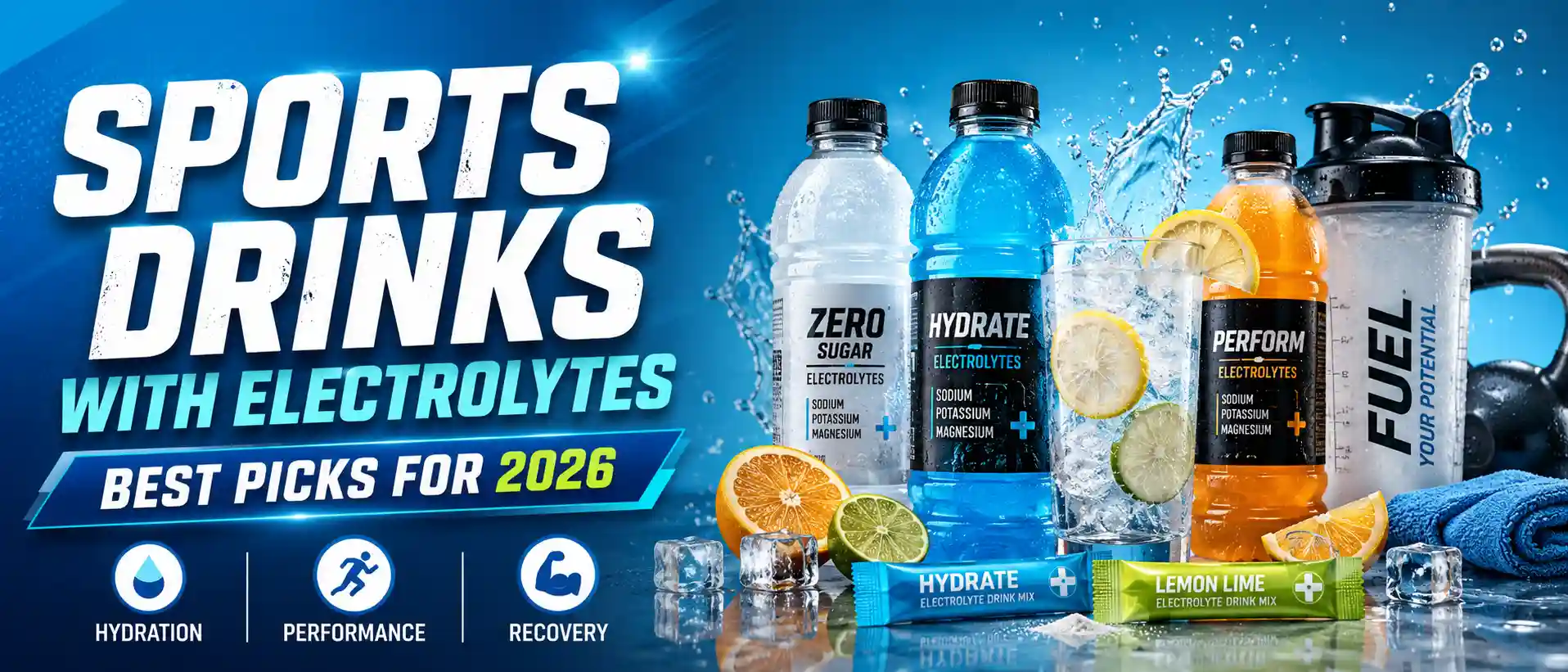
The best sports drinks with electrolytes are not simply the bottles with the longest mineral lists. A good choice should match how long you exercise, how much you sweat, whether you need carbohydrate fuel, and where you train.
That is why a sugar-free electrolyte tablet can be excellent for a short, sweaty workout but a poor choice for a three-hour bike ride if it is your only fuel source. Likewise, a drink containing 1,000 mg of sodium may make sense for some heavy sweaters but can be unnecessary for casual exercise.
This updated 2026 guide compares the major options by sodium, sugar, carbohydrate content, format and intended use. It also explains how to estimate your sweat losses, when water is enough, and what athletes should look for on a sports-drink label.
Quick Answer
For most people, water remains the best starting point for short and moderate workouts. Sports drinks become more useful during longer, hotter or especially sweaty exercise when fluid, sodium and sometimes carbohydrates need replacing.
For endurance exercise, Skratch Sport Hydration Mix is one of the stronger all-in-one options because one serving supplies 400 mg sodium and 20 g carbohydrate. Nuun Sport works better when you want lower sugar, while LMNT is a specialized high-sodium choice rather than an automatic everyday winner.
TL;DR
- Water is enough for many shorter workouts.
- Sodium matters most when sweat losses become significant.
- Carbohydrates can be useful fuel during longer exercise.
- Zero-sugar electrolyte drinks are hydration tools, not complete endurance fuel.
- Higher sodium is not automatically better.
- Choose your drink based on the workout, not the marketing.
Best Sports Drinks With Electrolytes at a Glance
Sports drinks now cover a huge range. Some are traditional carbohydrate-electrolyte drinks, while others are essentially flavored electrolyte water.
The most useful comparison is therefore not simply “which has the most electrolytes?” It is what problem each drink solves.
| Drink | Sodium | Sugar/Carb Style | Best For | Main Tradeoff |
|---|---|---|---|---|
| Skratch Sport Hydration Mix | 400 mg | 20 g carbs, 19 g sugar | Long workouts and endurance | Not ideal if you want zero sugar |
| Nuun Sport | 300 mg | 4 g carbs, 1 g sugar | Low-sugar everyday training | Provides little exercise fuel |
| Gatorlyte | 490 mg | Higher-electrolyte formula | Heavy sweating and recovery | More electrolytes than many casual users need |
| LMNT | 1,000 mg | Zero sugar | Selected heavy sweaters | Very high sodium |
| Gatorade Thirst Quencher | 270 mg per 20 oz | Carbohydrate-containing | Long or intense workouts | Sugar may be unnecessary for short activity |
| POWERADE Zero | 240–250 mg per 12 oz | Zero sugar, zero carbs | Shorter workouts and sugar-free hydration | Uses non-sugar sweeteners |
| POWERADE Power Water | 520 mg per 20 oz | Zero sugar, zero carbs | Higher-sodium ready-to-drink hydration | No carbohydrate fuel |
| Gatorade Fit | 230 mg per 16.9 oz | 1 g sugar, no added sugar | Low-calorie workouts | Minimal carbohydrate fuel |
| Liquid I.V. Sugar-Free | At least 500 mg | Sugar-free | Portable higher-electrolyte hydration | Sodium may be high for casual use |
| Pedialyte Sport | 1,380 mg per liter | Up to 14 g sugar per liter | Specialized rehydration | Not a routine everyday sports drink |
Current manufacturer information confirms 400 mg sodium and 20 g carbs for Skratch, 300 mg sodium for Nuun Sport, 490 mg for Gatorlyte, 1,000 mg for LMNT, and 270 mg per 20 ounces for Gatorade Thirst Quencher.
POWERADE Zero provides roughly 240–250 mg sodium per 12 ounces depending on flavor, while Power Water provides 520 mg per 20-ounce bottle. Gatorade Fit provides 230 mg sodium per 16.9 ounces.
Important: Formulas, flavors and serving sizes can change. Always check the package you are actually drinking.
How We Chose These Sports Drinks
This guide uses a label-based editorial comparison, not fabricated hands-on testing. Product specifications were checked against current U.S. manufacturer information on August 14, 2026.
We evaluated drinks using factors that actually affect athletes instead of rewarding products for having the largest ingredient list.
What we looked at
- Sodium per serving — the main electrolyte to examine when replacing sweat losses.
- Carbohydrate content — important when a drink must also provide exercise fuel.
- Added and total sugar — useful in context, rather than automatically treated as bad.
- Serving size — because comparing a 12-ounce serving with a one-liter bottle is misleading.
- Potassium and other electrolytes — useful secondary information.
- Workout purpose — short exercise, endurance, heat or heavy sweating.
- Format — ready-to-drink bottle, powder, packet or tablet.
- Ingredient preferences — including zero-sugar and artificial-sweetener-free choices.
- Third-party certification — particularly relevant to competitive athletes using sports nutrition products.
- Potential drawbacks — because every useful recommendation needs a reason someone might skip it.
We did not independently laboratory-test these products or claim personal taste-testing where none was performed. Nutrition facts and formulations should always be confirmed on the current label.
Best Sports Drinks With Electrolytes in 2026
There is no credible single “best sports drink” for every athlete. Your best choice changes when the workout changes.
A useful ranking therefore assigns each drink to the situation where its formula makes the most sense.
Skratch Sport Hydration Mix — Best for Long Workouts
Best for: running, cycling and longer endurance sessions.
Skratch supplies 400 mg sodium, 20 g carbohydrate and 19 g sugar per serving. That makes it fundamentally different from zero-calorie electrolyte powders because it delivers both fluid-supporting electrolytes and usable carbohydrate.
That combination can be useful when you want some of your workout fuel in the bottle rather than getting everything from gels or food.
Why it stands out:
- 400 mg sodium per serving
- 20 g carbohydrate
- Designed around endurance hydration
- Combines hydration and fuel
- Powder format is easy to adjust
Skip it if: You already have a complete carbohydrate plan and specifically want a zero-sugar drink.
Nuun Sport — Best Low-Sugar Tablet
Best for: gym sessions, travel and athletes who want moderate sodium without much sugar.
A Nuun Sport tablet provides 300 mg sodium, 150 mg potassium, 4 g carbohydrate and 1 g sugar when prepared as directed.
The tablet format also makes it easy to carry several servings without hauling bottles or bulky powder tubs.
Why it stands out:
- Moderate 300 mg sodium dose
- Only 1 g sugar
- Compact tablet
- Includes potassium and magnesium
- Useful when food supplies your carbohydrate
Skip it if: You expect your sports drink to provide meaningful endurance fuel.
Gatorlyte — Best Higher-Electrolyte Mainstream Option
Best for: harder workouts, hot days and heavier sweating.
Gatorlyte contains 490 mg sodium and 350 mg potassium, plus calcium, magnesium and chloride.
Its electrolyte profile is substantially stronger than standard Gatorade, making it a more logical Gatorade-family choice when replacing sweat minerals is the priority.
Why it stands out:
- 490 mg sodium
- Five listed electrolytes
- Ready-to-drink and powder formats
- Widely recognizable brand
- More electrolyte-focused than regular sports drink
Skip it if: Your workout is short and you are barely sweating.
LMNT — Best High-Sodium Option for Selected Heavy Sweaters
Best for: people with substantial sodium losses who specifically need a high-sodium formula.
Each LMNT serving contains 1,000 mg sodium, 200 mg potassium and 60 mg magnesium with no sugar.
That sodium number is the reason to buy it—and also the reason not to recommend it universally.
Why it stands out:
- 1,000 mg sodium
- Zero sugar
- Simple high-sodium positioning
- Easy packet format
- Useful when carbohydrates come from another source
Skip it if: You are doing casual exercise, have low sweat losses or have been told to limit sodium.
Gatorade Thirst Quencher — Best Traditional Sports Drink
Best for: longer, moderate-to-high-intensity workouts where carbohydrate is useful.
A 20-ounce Gatorade Thirst Quencher contains about 270 mg sodium and supplies carbohydrates for working muscles. Gatorade itself positions the drink for longer-duration and moderate-to-high-intensity activity.
That distinction matters. Its sugar is not automatically a nutritional flaw when you are actively using the carbohydrate as part of an endurance-fueling plan.
Why it stands out:
- Easy to find in the U.S.
- Contains sodium and potassium
- Provides carbohydrate
- Simple option for tournaments and events
- Available in many formats and flavors
Skip it if: You are drinking it during a short desk-to-gym session where you do not need extra carbohydrate.
POWERADE Zero — Best Familiar Zero-Sugar Sports Drink
Best for: athletes who prefer a traditional sports-drink taste without carbohydrate.
Depending on flavor, a 12-ounce serving contains roughly 240–250 mg sodium and 80 mg potassium, with zero sugar and zero carbohydrate.
It works better as an electrolyte drink than an endurance fuel.
Why it stands out:
- Zero sugar
- Zero carbohydrate
- Roughly 240–250 mg sodium per 12 ounces
- Widely available
- Familiar sports-drink format
Skip it if: The drink needs to provide carbohydrates during a long workout.
POWERADE Power Water — Best Zero-Sugar Higher-Sodium Bottle
Best for: people who want substantially more sodium than typical flavored water.
A 20-ounce bottle provides 520 mg sodium, zero carbohydrate and zero sugar. Some flavors list about 150–170 mg potassium.
That makes it an interesting middle ground between lightly fortified water and very salty powder formulas.
Why it stands out:
- 520 mg sodium per 20 ounces
- Zero sugar
- Zero carbohydrate
- Ready to drink
- Higher sodium than many mainstream options
Skip it if: You want calories or carbohydrate for endurance performance.
Gatorade Fit — Best Low-Calorie Mainstream Choice
Best for: lighter workouts when you want electrolytes without much sugar.
Gatorade Fit provides 230 mg sodium and 60 mg potassium per 16.9-ounce bottle, with about 1 g sugar and no added sugar. The company also states that it contains no artificial flavors or sweeteners.
It makes more sense for hydration-focused use than long endurance fueling.
Why it stands out:
- 230 mg sodium
- No added sugar
- No artificial sweeteners
- Low calorie
- Ready-to-drink format
Skip it if: You need meaningful carbohydrate calories during exercise.
Liquid I.V. Sugar-Free — Best Portable Higher-Electrolyte Packet
Best for: travel, hot days and people who prefer single-serving packets.
Liquid I.V. states that its Sugar-Free formula provides at least 500 mg sodium and 350 mg potassium per serving.
It is convenient, but its relatively high sodium content means it should not automatically replace plain water every time you feel thirsty.
Why it stands out:
- 500+ mg sodium
- 350+ mg potassium
- Sugar-free
- Small portable packet
- Easy to keep in a gym or travel bag
Skip it if: You want a very light everyday electrolyte drink.
Pedialyte Sport — Best Specialized High-Electrolyte Rehydration Option
Best for: situations where substantial fluid and electrolyte replacement is needed.
Pedialyte Sport contains 1,380 mg sodium per liter and no more than 14 g sugar per liter. Its manufacturer describes it as a higher-electrolyte product for athletes and instructs consumers to use it under medical supervision.
It should therefore be treated as a specialized rehydration product rather than your default bottle for a casual workout.
Why it stands out:
- Very high electrolyte concentration
- Five listed electrolytes
- Lower sugar concentration than conventional sports drinks
- Designed specifically around rehydration
Skip it if: You simply need routine hydration during normal daily activity.
Water vs. Sports Drinks: When Do You Actually Need Electrolytes?
The simplest rule is also the most useful: do not turn every workout into a supplementation problem.
For many shorter sessions, water plus normal meals is enough. The case for sports drinks becomes stronger as exercise lasts longer, sweat loss rises, temperature climbs or carbohydrate needs increase. Johns Hopkins notes that athletes can lose substantial fluid and sodium through sweat, especially during endurance exercise.
Water usually makes sense for:
- Walking
- Light gym sessions
- Short strength workouts
- Easy cycling
- Short recreational exercise
- Everyday hydration
- Low-sweat activity in cool conditions
Consider an electrolyte drink when:
- Exercise is prolonged
- Your clothes become soaked with sweat
- You train in hot or humid conditions
- You have repeated games or practices
- You finish with visible salt residue on clothing
- You are an endurance athlete
- You struggle to replace fluids during long activity
ACSM notes that heavy sweaters may lose roughly 500–700 mg sodium during an hour of vigorous exercise, although actual losses vary widely between individuals.
That is why a 1,000 mg sodium packet can be sensible for one athlete and excessive for another.
Sports Drinks vs. Electrolyte Drinks: They Are Not the Same Thing
The terms are often used interchangeably, but they should not be.
A traditional sports drink is usually designed to provide three things:
- Water
- Electrolytes
- Carbohydrates
An electrolyte drink may contain almost no calories or carbohydrates.
That difference becomes important during endurance exercise.
A zero-sugar drink can replace sodium and fluid, but it cannot provide meaningful carbohydrate energy if it contains no carbohydrate. Gatorade makes the same distinction with Gatorade Zero, recommending an alternate carbohydrate source for longer-duration activity.
A simple decision
Hydration only: Choose water or a lower-calorie electrolyte drink.
Hydration + endurance fuel: Choose a carbohydrate-containing sports drink or add gels, chews or food separately.
How Much Sodium Should a Sports Drink Have?
There is no universally correct amount because sweat rate and sweat sodium concentration vary from person to person.
Some products contain around 200–300 mg per serving. Others contain 500 mg or more. LMNT reaches 1,000 mg per packet.
A practical way to think about sodium
Lower range: Useful when sweat losses are modest.
Moderate range: Often more practical for longer or sweatier training.
High range: Better reserved for athletes with a clear reason for needing more sodium.
FDA uses 2,300 mg sodium per day as the Daily Value for general food labeling and considers 20% DV or more per serving high in sodium.
That daily reference is not an individualized exercise prescription. An endurance athlete sweating for hours and someone sitting in an office have very different circumstances.
Signs you may be a heavier salt loser
These clues do not replace proper sweat testing, but they can justify paying more attention:
- White salt marks on dark clothing
- Salt crystals on skin
- Very salty-tasting sweat
- Repeatedly soaked clothing
- Long training in heat
- High overall sweat rate
Johns Hopkins recommends that people wanting precise sodium-loss information consider sweat testing with a qualified sports dietitian, athletic trainer or other certified professional.
How to Estimate Your Sweat Rate
You do not need laboratory equipment to get a useful estimate of how much fluid you lose.
A simple field test can make your hydration plan far more personal than choosing a drink because an influencer recommended it.
Basic one-hour sweat-rate test
- Weigh yourself before training in minimal, dry clothing.
- Exercise for about one hour in conditions similar to your normal training.
- Track how much fluid you drink.
- Weigh yourself again afterward in dry clothing.
- Account for the weight difference and fluid consumed.
As a rough practical guide, one pound of body-weight loss represents about 16 ounces of fluid. The American Academy of Pediatrics has also used pre/post-exercise body weight as a practical way for athletes to estimate sweat rate.
Example
Suppose you:
- Start at 170 pounds
- Finish at 169 pounds
- Drink 16 ounces during the workout
You lost about one pound, or roughly 16 ounces, plus the 16 ounces you drank.
Your estimated sweat loss was therefore around 32 ounces during that hour.
Repeat the test under different weather conditions. A cool spring run and a humid August run can produce very different results.
Sugar in Sports Drinks: Bad Ingredient or Useful Fuel?
Calling every gram of sugar in a sports drink “bad” misses the reason sports drinks exist.
During prolonged exercise, carbohydrate can be part of the performance strategy. It supplies fuel while the drink also provides fluid and electrolytes. Gatorade Thirst Quencher and Skratch Sport Hydration are both explicitly designed around this combination.
The problem comes when people drink carbohydrate-rich sports beverages while sitting at a desk or completing activity that does not need additional fuel.
Choose carbohydrate-containing sports drinks when:
- Training lasts well beyond a short session
- You are running or cycling for endurance
- You have multiple games in one day
- You need calories during exercise
- You prefer drinking some of your fuel
Choose low- or zero-sugar drinks when:
- Training is shorter
- You are already eating enough carbohydrate
- Gels or chews provide your workout fuel
- Your main goal is replacing fluid and sodium
- You prefer a lower-calorie drink
Zero sugar is not automatically healthier, and sugar is not automatically better. Context decides.
Isotonic, Hypotonic and Hypertonic Sports Drinks Explained
These terms sound technical, but they describe the concentration of carbohydrates and electrolytes in a drink.
Johns Hopkins currently groups sports drinks into isotonic, hypotonic and hypertonic formulas.
Isotonic Sports Drinks
An isotonic drink has a concentration relatively similar to body fluids.
Many conventional sports drinks fall into this category because they combine water, electrolytes and carbohydrate.
Best fit: general endurance sport where hydration and carbohydrate are both useful.
Hypotonic Drinks
A hypotonic drink has a lower concentration of carbohydrate and electrolytes.
These tend to emphasize fluid intake more than calorie delivery.
Best fit: athletes prioritizing hydration while getting fuel somewhere else.
Hypertonic Drinks
A hypertonic product has a higher concentration of carbohydrate or dissolved substances.
Gels and concentrated fueling products are closer to this end of the spectrum.
Best fit: carbohydrate delivery, usually alongside adequate water rather than as your only hydration source.
When to Drink Electrolytes: Before, During or After Exercise?
There is no rule saying electrolytes must be consumed at one specific moment.
Hydration works best as a continuous strategy built around the session.
Before Exercise
Start the workout already hydrated.
For hot conditions, sodium consumed with normal food and fluids before exercise can help some athletes begin with better fluid balance. ACSM discusses pre-exercise sodium as one strategy for people exercising in heat.
During Exercise
During longer sessions, sip regularly enough to replace part of what you are losing without trying to replace every drop at once.
Your drink should match the job:
- Short workout: water
- Long, sweaty workout: electrolytes
- Long endurance workout: electrolytes plus carbohydrate or separate fuel
- Heavy sweater: greater attention to sodium
After Exercise
Recovery can include water, electrolytes and normal food.
You do not necessarily need a branded recovery drink. Salty foods, meals, milk, fruit and other foods can contribute fluids and minerals alongside regular hydration.
ACSM specifically notes that commercial electrolyte products are often a matter of convenience and that food can also replace sodium after sweaty exercise.
Best Electrolyte Strategy for Running, Cycling, Gym and Team Sports
The sport itself does not determine your hydration needs. Duration, heat, intensity, sweat rate and opportunities to drink matter more.
Still, different sports create different practical problems.
Running
A runner cannot comfortably carry unlimited fluid.
For shorter runs, water may be enough. During long runs, a compact hydration belt, handheld bottle or aid-station strategy becomes more useful.
Good fit: Nuun for lower-carbohydrate hydration; Skratch or Gatorade when carbohydrate is useful.
Cycling
Cyclists can carry bottles easily, making regular drinking and carbohydrate delivery simpler.
Good fit: carbohydrate-electrolyte mixes for long rides; zero-sugar electrolytes when fuel comes from gels or bars.
Strength Training
Most standard lifting sessions do not automatically require a sports drink.
If the gym is hot or you sweat heavily, a lighter electrolyte drink may be reasonable.
Good fit: water, Nuun Sport, Gatorade Fit or a similar lower-calorie option.
Soccer, Basketball and Tournament Sports
The challenge is often limited drinking opportunities plus repeated activity.
A traditional sports drink can be useful when fluid, sodium and carbohydrate all need replacing between games.
Hiking
Powders and tablets have a major practical advantage: they weigh less than carrying several prepared bottles.
For long hot hikes, pay particular attention to total water access and sodium intake.
Third-Party Testing: Does NSF Certified for Sport Matter?
For casual consumers buying ordinary bottled sports drinks, certification may not be the deciding factor.
For competitive athletes using powders, supplements or sports-nutrition products, third-party testing deserves more attention.
NSF says its Certified for Sport program tests sports nutrition and supplement products for substances banned by major athletic organizations. USADA recognizes NSF Certified for Sport as a program athletes can use to reduce supplement risk.
What certification can help with
- Label verification
- Contaminant risk
- Banned-substance screening
- Manufacturing quality
- Competitive-athlete peace of mind
What certification does not prove
A certification logo does not automatically mean:
- The drink is right for your sweat rate
- It will improve performance
- It has the ideal amount of sodium for you
- It tastes good
- It is nutritionally superior to every uncertified product
Certification is a trust and risk-management signal, not a substitute for choosing the right formula.
Sports Drinks With Electrolytes for Kids and Teen Athletes
Young athletes do not need sports drinks simply because they are wearing a uniform.
The American Academy of Pediatrics emphasizes water as the main everyday hydration choice, with additional attention to fluids during vigorous activity and sweating.
Sports drinks can have a place during prolonged vigorous exercise, hot-weather competition or repeated games, but they should not become everyday soft drinks.
Parents should focus on:
- Providing water before activity
- Making drinks easily accessible during practice
- Watching for excessive heat
- Using sports drinks selectively
- Checking sugar and serving size
- Avoiding caffeinated energy drinks for hydration
- Encouraging recovery meals after exercise
Sports drinks and energy drinks are not the same category. Electrolyte replacement does not require stimulant ingredients.
Homemade Sports Drink With Electrolytes
You can make a simple carbohydrate-electrolyte drink without buying a commercial powder.
Johns Hopkins publishes a homemade sports-drink formula built around water, fruit juice, carbohydrate and salt.
Simple Homemade Citrus Sports Drink
Ingredients
- 1 liter cold water
- 1/4 to 1/2 cup orange or pineapple juice
- 1 to 2 tablespoons sugar or honey
- 1/4 teaspoon table salt
- Lemon or lime juice to taste
Method
- Add everything to a large bottle or pitcher.
- Shake or stir until the salt and sugar dissolve.
- Chill before drinking.
- Adjust citrus flavor rather than adding excessive salt.
Lower-Carbohydrate Variation
Use:
- 1 liter water
- Lemon or lime juice
- 1/4 teaspoon salt
- A small amount of sweetener if desired
This works more like a simple electrolyte beverage and less like an endurance fuel.
Storage: Keep homemade drinks refrigerated and prepare fresh batches regularly.
Important: A homemade sports drink is not the same as a medically formulated oral rehydration solution used for illness or significant dehydration.
How to Read a Sports Drink Label Like an Athlete
Ignore the front of the bottle for a moment.
The Nutrition Facts panel tells you far more than words such as “advanced,” “performance,” “rapid,” or “premium.”
Check these eight things
1. Serving Size
A 28-ounce bottle may list nutrition per 12 ounces.
That means the entire bottle can contain more than twice the numbers you first see.
2. Sodium
This is usually the first electrolyte worth checking for sweat replacement.
Compare milligrams per amount you will actually drink.
3. Carbohydrates
Ask whether the drink is supposed to hydrate you, fuel you or both.
4. Sugar
Look at total and added sugar in context.
For endurance exercise, carbohydrate may be useful. For casual hydration, you may not need it.
5. Potassium
Potassium is useful, but a high potassium number does not automatically make a product superior for replacing salty sweat.
6. Caffeine
A standard hydration product does not need caffeine.
Check carefully because some sports and electrolyte product lines also sell caffeinated versions.
7. Sweeteners
Zero-sugar drinks may use:
- Sucralose
- Acesulfame potassium
- Stevia
- Allulose
- Other non-sugar sweeteners
Choose what you tolerate comfortably during exercise.
8. Third-Party Certification
Competitive athletes should pay special attention when using powders or sports supplements.
Common Sports Drink Mistakes
Sports drinks are simple products, but people often use them in the wrong situation.
Drinking Them Automatically
You do not need electrolytes simply because you walked into a gym.
Assuming More Sodium Means Better Hydration
A 1,000 mg sodium formula is not automatically superior to a 300 mg formula.
The better drink is the one that better matches your losses.
Choosing Zero Sugar During Long Exercise Without Another Fuel Source
This is one of the biggest mistakes.
If your drink contains no carbohydrate, endurance fuel must come from somewhere else.
Ignoring Serving Size
Compare sodium and sugar using the amount you actually consume.
Trying a New Product on Race Day
Training is where you test:
- Flavor
- Sweetness
- Concentration
- Stomach comfort
- Drinking schedule
Race day is not the time to discover that a drink tastes unbearably salty when warm.
Drinking Too Much Plain Water During Very Long Exercise
Overconsuming plain water during prolonged activity can dilute blood sodium. ACSM specifically warns against excessive plain-water intake during extended exercise.
The solution is not to panic and consume huge amounts of salt. It is to use a sensible hydration strategy matched to your exercise.
Confusing Sports Drinks With Medical Rehydration Products
A standard sports drink, a high-sodium electrolyte powder and an oral rehydration solution are designed for different purposes.
Treat them accordingly.
Who Should Be Careful With High-Electrolyte Drinks?
Many sports beverages are ordinary foods and drinks, but concentrated electrolyte products can contain substantial sodium.
People who have been instructed to limit sodium, follow a medically prescribed diet or manage a condition affected by fluid and electrolyte intake should ask their healthcare professional before routinely using high-sodium formulas.
FDA’s general Daily Value for sodium is 2,300 mg, while a single high-sodium electrolyte packet can supply a meaningful percentage of that amount.
Also seek medical attention rather than relying on a sports drink if someone develops signs of serious heat illness, confusion, fainting or severe dehydration.
FAQs
What sports drink has the most electrolytes?
There is no useful answer based solely on total electrolyte count because serving sizes and formulas differ.
Among the options compared here, LMNT is particularly high in sodium at 1,000 mg per packet, while Pedialyte Sport contains 1,380 mg sodium per liter. Those amounts do not make either product the best choice for every workout.
Is Gatorade or POWERADE better for electrolytes?
It depends on the product and serving size.
Regular POWERADE lists 240 mg sodium and 80 mg potassium per 12 ounces, while Gatorade Thirst Quencher lists about 270 mg sodium per 20 ounces. Direct comparison requires normalizing the serving size, and carbohydrate preferences also matter.
For zero-sugar choices, both brands now offer several alternatives.
Are electrolyte drinks better than water?
Not automatically.
Water is often enough for ordinary daily hydration and shorter exercise. Electrolyte drinks become more useful as exercise duration, sweat loss, heat exposure and sodium loss rise.
What is the healthiest sports drink with electrolytes?
There is no universal healthiest product.
For a short workout, a low-sugar moderate-sodium drink may fit best. For endurance exercise, a carbohydrate-containing formula may be more useful. For a heavy sweater, sodium becomes more important.
The healthiest decision is matching the formula to the actual need.
Should a sports drink have sugar?
It depends on the workout.
Sugar supplies carbohydrate, which can be useful fuel during prolonged exercise. If your workout is short or your carbohydrates come from food, gels or chews, a sugar-free electrolyte drink may make more sense.
Are zero-sugar sports drinks good for athletes?
Yes, when the goal is mainly fluid and electrolyte replacement.
They become incomplete as an all-in-one endurance strategy if you also need carbohydrate and do not consume it elsewhere. Gatorade specifically recommends pairing its zero-sugar option with another carbohydrate source during longer activity.
How much sodium should be in an electrolyte drink?
There is no universal amount.
Current products range from roughly 200–300 mg per serving to 1,000 mg or more, reflecting very different use cases. Sweat rate, temperature, workout duration and individual sodium loss should guide the decision.
Can you drink electrolyte sports drinks every day?
You can consume many electrolyte beverages as part of a normal diet, but most people do not need concentrated sports drinks for routine daily hydration.
If your product contains substantial sodium, remember to consider the rest of your diet as well.
What’s the best electrolyte drink for heavy sweaters?
Heavy sweaters should prioritize sodium concentration rather than the total number of minerals on the label.
Products such as LMNT, Gatorlyte, Powerade Power Water and certain specialized rehydration formulas provide more sodium than lightly fortified waters. The right amount still depends on your actual losses.
Are electrolyte powders better than bottled sports drinks?
Not nutritionally by default.
Powders are lighter, easier to carry and often more customizable, while bottled drinks are more convenient when you need something immediately.
Formula matters more than format.
Conclusion
The best sports drinks with electrolytes are the ones that match a real training need. For a short workout, that may mean plain water. For a hot two-hour run, it could mean a moderate-to-high-sodium drink. For a long cycling session, the smartest option may combine sodium with carbohydrate fuel.
Start by asking three questions: How long am I exercising? How much do I sweat? Do I need carbohydrate from my drink? Then compare serving size, sodium and carbs instead of choosing the product with the loudest hydration claims.
For most athletes, that simple process is more useful than searching for one universal “best” sports drink.