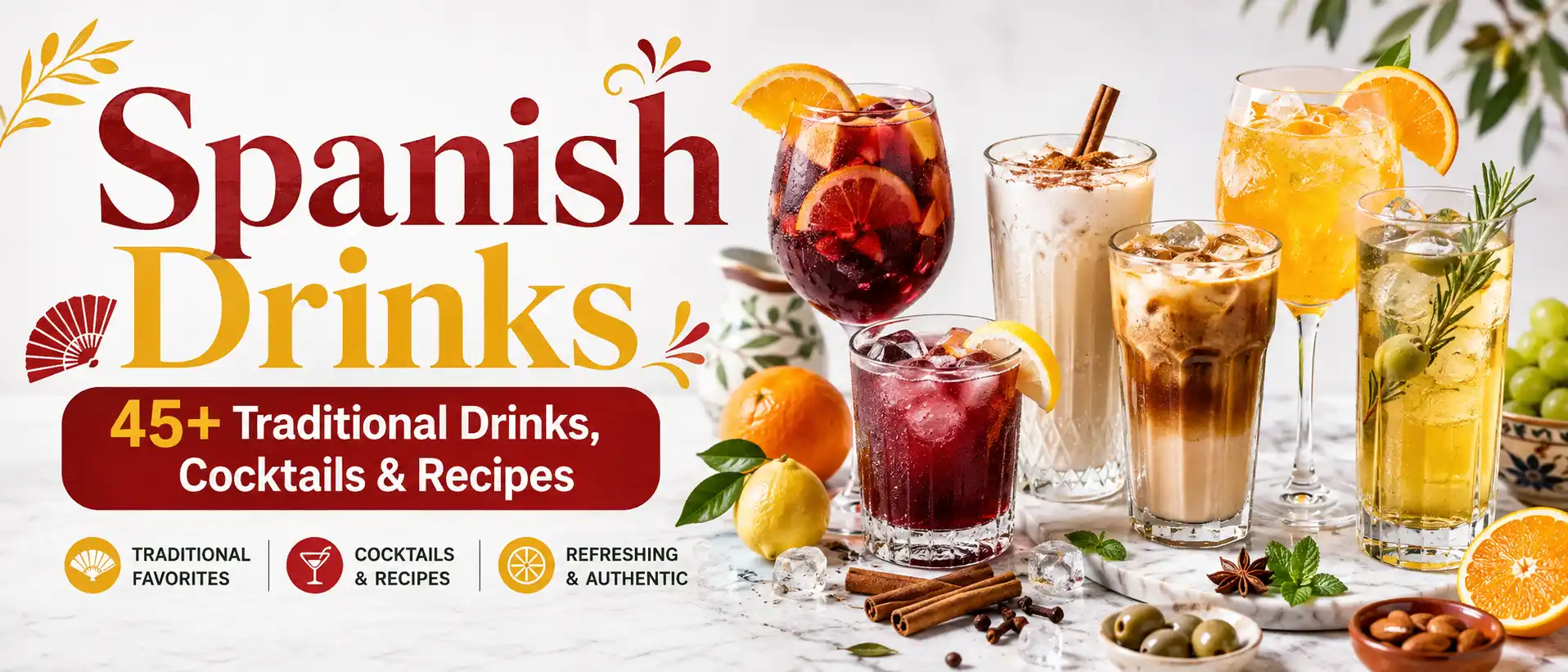
Spanish drinks tell you a surprising amount about Spain. A glass of vermouth before lunch, icy tinto de verano on a hot terrace, horchata in Valencia, cider poured from height in Asturias, or a tiny coffee after a meal all belong to different moments of Spanish life.
And Spain has much more to offer than sangria. This guide covers traditional Spanish drinks, cocktails, non-alcoholic beverages, coffee, wine, cider, beer, regional specialties, and easy recipes you can make at home. It also explains what people commonly order, where famous drinks come from, and how to choose the right one for your taste.
Quick Answer
The best-known Spanish drinks include sangria, tinto de verano, Cava, vermouth, horchata de chufa, sidra, café con leche, rebujito, Agua de Valencia, Sherry, clara, and kalimotxo.
For something alcohol-free, start with horchata, mosto, café con hielo, café con leche, chocolate caliente, or cerveza sin. For an easy alcoholic summer drink, tinto de verano is one of the simplest choices.
TL;DR
- Best easy summer drink: Tinto de verano
- Best famous pitcher drink: Sangria
- Best alcohol-free specialty: Horchata de chufa
- Best pre-lunch drink: Spanish vermouth
- Best sparkling choice: Cava
- Best regional experience: Asturian sidra
- Best coffee choice: Café con leche
- Best Andalusian cocktail: Rebujito
Best Spanish Drinks to Try at a Glance
There is no single drink that represents all of Spain. Drinking habits change by region, season, meal, and time of day, which is why a good Spanish drinks guide needs to go beyond one famous pitcher of sangria.
Spain’s official tourism site highlights beer, wine, cider, vermouth, sangria, tinto de verano, and other regional choices as part of the country’s food-and-drink culture.
| Spanish Drink | Type | Flavor | Best For | Alcohol? |
|---|---|---|---|---|
| Tinto de verano | Wine mixer | Light, fruity, fizzy | Summer lunch | Yes |
| Sangria | Wine punch | Fruity, citrusy | Parties | Usually |
| Horchata de chufa | Tiger-nut drink | Creamy, lightly sweet | Hot afternoons | No |
| Vermut | Fortified/aromatized wine | Herbal, bittersweet | Aperitivo | Yes |
| Cava | Sparkling wine | Crisp, bubbly | Celebrations | Yes |
| Sidra asturiana | Apple cider | Tart, fresh | Regional tasting | Yes |
| Café con leche | Coffee | Smooth, milky | Breakfast | No alcohol |
| Café con hielo | Iced coffee | Strong, crisp | Summer | No alcohol |
| Rebujito | Sherry highball | Dry, citrusy | Festivals | Yes |
| Agua de Valencia | Cava cocktail | Citrusy, fruity | Sharing | Yes |
| Kalimotxo | Wine mixer | Sweet, fruity | Casual gatherings | Yes |
| Clara | Beer mixer | Light, lemony | Warm weather | Yes |
| Fino Sherry | Fortified wine | Dry, saline | Tapas | Yes |
| Pacharán | Sloe liqueur | Fruity, herbal | After dinner | Yes |
| Chocolate caliente | Hot chocolate | Thick, rich | Cold weather | No |
Spanish Drinks vs. Drinks From Spanish-Speaking Countries
One common mistake is treating every drink with a Spanish-language name as a drink from Spain.
A Spain-focused list should concentrate on beverages that originated in Spain or have a strong place in Spanish food and drinking culture. That includes tinto de verano, horchata de chufa, Cava, Sherry, sidra, rebujito, pacharán, vermouth culture, and Spanish coffee drinks.
Drinks from Mexico, Cuba, Puerto Rico, and other Spanish-speaking places belong to their own culinary traditions. Keeping those traditions separate makes a guide more useful and culturally accurate.
What Do People Actually Drink in Spain?
What people order depends heavily on context. A morning café order looks nothing like a Saturday vermouth stop, and summer terrace drinks differ from what you might have with dinner in Galicia or Asturias.
Beer and wine remain familiar choices, while official Spanish tourism guidance also points visitors toward cider, vermouth, sangria, tinto de verano, and regional wines. A small draft beer called a caña is especially useful vocabulary for visitors.
For Breakfast
Coffee dominates many café orders.
Common choices include:
- Café solo — espresso-style black coffee
- Cortado — espresso softened with a small amount of milk
- Café con leche — coffee with more milk
- Descafeinado — decaffeinated coffee
Before Lunch
This is where vermouth culture becomes important.
The phrase tomar el vermú refers to more than the drink itself. Spain’s official tourism authority describes it as spending time with friends or family over a drink and tapas before lunch.
You may also see:
- Beer
- Wine
- Sherry
- Cava
- Small tapas or pintxos alongside the drink
With Lunch or Dinner
Wine and beer are easy choices, but the region can steer the decision.
A seafood meal in Galicia might suggest Albariño, while the Basque Country is closely associated with Txakoli. Rioja and Ribera del Duero offer important red-wine options.
In Hot Weather
Look for:
- Tinto de verano
- Clara
- Café con hielo
- Horchata
- Sangria
- Kalimotxo
- Rebujito
Official Spanish tourism guidance specifically identifies tinto de verano, sangria, clara, kalimotxo, and café con hielo as warm-weather options.
Traditional Spanish Non-Alcoholic Drinks
You do not need alcohol to explore Spain through its drinks. Some of the country’s most interesting beverages come from coffee shops, horchaterías, bakeries, and cafés rather than bars.
These options are also useful when you’re hosting a mixed group. Keep caffeine, dairy, and individual dietary needs in mind when choosing.
Horchata de Chufa
Horchata de chufa is one of Spain’s most distinctive alcohol-free drinks.
The Valencian version is made from chufa, or tiger nuts, rather than the rice commonly used in Mexican horchata. Spain’s official tourism site identifies it as a traditional Valencian soft drink.
Expect a cool, creamy, gently earthy, lightly sweet flavor.
Mosto
Mosto generally refers to grape must or unfermented grape juice.
It is useful when you want something wine-adjacent without ordering regular wine. Serve it cold and treat it as a fruit beverage rather than an alcohol substitute designed to mimic spirits.
Café con Leche
Strong coffee and hot milk create one of the easiest Spanish-style café drinks to understand.
It is smoother than a café solo and generally milkier than a cortado.
Café con Hielo
This is refreshingly straightforward.
You receive hot coffee and a separate glass containing ice. Sweeten the hot coffee first if desired, then pour it over the ice. Spain’s tourism authority specifically describes this serving method.
Chocolate Caliente
Spanish-style chocolate caliente is often much thicker than standard American hot cocoa.
Its rich texture makes it particularly suited to cooler weather and sweet breakfasts or snacks.
Leche Merengada
This chilled milk drink is commonly flavored with cinnamon and citrus.
Some versions are served almost frozen, giving it a dessert-like texture.
Cerveza Sin Alcohol
Alcohol-free beer is a practical option for social meals and tapas.
For a lighter mixed drink, it can also be combined with lemon soda for a zero-alcohol clara-style serve.
Sangria: Spain’s Most Famous Wine Punch
Few Spanish drinks have greater international recognition than sangria. Its fame, however, can make it seem like the only Spanish wine drink worth knowing.
A typical sangria begins with wine and fruit. Sugar, citrus, spices, juice, spirits, or sparkling mixers can appear depending on the recipe and venue. Spain’s tourism authority notes that regional and venue-specific variations are common.
What Does Sangria Taste Like?
Good sangria should still taste like wine.
Fruit and citrus add aroma and freshness, while sweetness should support rather than bury the base wine.
Classic Red Sangria
Ingredients
- 1 bottle dry, fruity red wine
- 1 orange, sliced
- 1 lemon, sliced
- 1 apple, chopped
- 1 to 2 tablespoons sugar or simple syrup, optional
- 1/2 cup orange juice
- 1 cup sparkling water or lemon soda
- Ice for serving
Method
Add the wine, fruit, orange juice, and optional sweetener to a pitcher.
Chill for at least one hour so the fruit can flavor the wine. Add sparkling water shortly before serving.
Best Tip
Use a young, fruit-forward wine, not an expensive aged bottle. Sangria benefits more from freshness than complexity.
White Sangria
Replace red wine with a dry white wine and use:
- Peaches
- Green apple
- Grapes
- Lemon
- Orange
Cava Sangria
Use Cava as the sparkling base.
Add it only shortly before serving so you preserve its carbonation.
Alcohol-Free Sangria
Combine:
- Red or white grape juice
- Orange
- Lemon
- Apple
- Berries
- Sparkling water
Keep sweetness modest because grape juice already contains plenty of natural sugar.
Tinto de Verano, Kalimotxo, and Easy Wine Mixers
If sangria requires planning, tinto de verano is the opposite. It is quick, casual, cold, and built for hot weather.
Spain’s official tourism site describes tinto de verano as red wine combined with a fizzy lemonade-style mixer. It also highlights kalimotxo, red wine mixed with cola.
Tinto de Verano vs. Sangria
| Feature | Tinto de Verano | Sangria |
|---|---|---|
| Preparation | Immediate | Usually prepared ahead |
| Fruit | Optional garnish | Often substantial |
| Base | Red wine | Usually wine |
| Mixer | Fizzy lemonade/gaseosa | Varies |
| Sweetness | Light to moderate | Can vary widely |
| Best use | Casual glass | Pitcher or party |
Easy Tinto de Verano Recipe
Ingredients
- 3 ounces young red wine
- 3 ounces lemon soda or gaseosa-style mixer
- Ice
- Lemon or orange slice
Method
Fill a wine glass with ice.
Add the red wine and mixer. Stir once and garnish with citrus.
Less-Sweet Version
Replace half the lemon soda with plain sparkling water.
Kalimotxo
Kalimotxo combines red wine and cola.
PUNCH and Spanish tourism coverage connect wine-and-cola drinking with Spanish casual drinking culture, while kalimotxo is especially associated with northern Spain and the Basque Country.
For an easy version:
- 3 ounces red wine
- 3 ounces cola
- Ice
- Lemon wedge
This is not a drink that demands premium wine. Its appeal is simplicity.
Spanish Vermouth and the Tradition of Tomar el Vermú
Leaving vermouth out of a serious Spanish drinks guide creates a major cultural gap.
In Spain, vermut or vermú can refer both to the aromatized wine and the ritual of gathering for a pre-lunch drink. Spain’s official tourism site describes tomar el vermú as spending time with friends and family over a drink and tapas before eating.
What Does Spanish Vermouth Taste Like?
Styles vary, but red vermouth commonly brings:
- Herbal notes
- Citrus peel
- Warm spices
- Bitterness
- Caramel-like sweetness
The balance is what makes it work with salty tapas.
How Spanish Vermouth Is Served
A simple serving can include:
- Vermouth
- Ice
- Orange slice
- Olive
Some people add a splash of sifón or soda water.
What to Eat With Vermouth
Try it with:
- Olives
- Anchovies
- Potato chips
- Conservas
- Jamón
- Cheese
- Croquetas
- Tortilla española
Spain’s tourism authority even highlights vermouth alongside Txakoli and regional pintxos in northern Spain.
Why Vermouth Matters
Vermouth shows why Spanish drinking culture is not simply a catalog of cocktails.
The occasion itself matters: sitting down, sharing small plates, talking, and easing into lunch.
Classic Spanish Cocktails Worth Knowing
Spain’s cocktail identity includes both nationally recognized drinks and deeply regional combinations.
Many rely on uncomplicated components: wine, Sherry, fruit juice, soda, gin, coffee, or local liqueurs. Their simplicity makes them especially practical at home.
Rebujito
Region: Andalusia
Flavor: Dry, crisp, citrusy
Base: Fino or Manzanilla Sherry
Spain’s tourism authority describes rebujito as a typical Andalusian combination of Fino or Manzanilla and a fizzy lemonade-style mixer.
Easy Rebujito
- 2 ounces chilled Fino or Manzanilla
- 4 ounces lemon-lime soda
- Ice
- Mint, optional
Build it over ice and stir gently.
Agua de Valencia
Region: Valencia
Flavor: Orange-forward, sparkling, deceptively strong
Agua de Valencia combines orange juice and Cava, traditionally with spirits such as gin and vodka. Official tourism coverage identifies it as a Valencian specialty.
Easy Agua de Valencia
For a small pitcher, combine:
- 2 cups fresh orange juice
- 2 cups chilled Cava
- 2 ounces gin
- 2 ounces vodka
Stir the orange juice and spirits first. Add the Cava last.
Important: The orange juice can disguise the strength, so serve moderate portions.
Spanish-Style Gin-Tonic
Spain did not invent gin and tonic, but the Spanish gin-tonic serving style became distinctive.
A large copa-style glass, substantial ice, tonic, and carefully chosen aromatic garnish are common characteristics. PUNCH includes the Spanish gin-tonic among its classic Spanish cocktail selections.
Try:
- Gin
- Quality tonic
- Large ice cubes
- Lemon or grapefruit peel
- One restrained aromatic garnish
Avoid turning the glass into a fruit salad. Aroma should support the gin.
Pomada
Pomada is strongly associated with Menorca.
It combines gin and lemon, producing a tart, easygoing drink especially suited to warm-weather celebrations. PUNCH includes it among Spain’s regional cocktail classics.
Butano
This lesser-known Navarrese drink combines pacharán and orange soda.
PUNCH traces it to Pamplona’s San Fermín festival culture in the 1980s.
Horchata de Chufa and Spanish Summer Drinks
On a hot afternoon, Spain’s beverage culture becomes especially easy to understand. Cold wine mixers, beer with lemon, coffee over ice, horchata, and frozen citrus drinks all make sense in the heat.
Official tourism guidance specifically recommends tinto de verano, sangria, clara, horchata, and café con hielo for summer drinking.
Horchata de Chufa
Valencian horchata deserves more than a passing mention.
It is made with tiger nuts, water, and sugar, creating a chilled plant-based drink with a smooth texture.
Horchata and Fartons
In Valencia, horchata is famously paired with fartons, long, soft pastries designed for dipping.
Visit Valencia notes that fartons were created in Alboraya specifically to accompany horchata.
Easy Homemade Horchata de Chufa
Ingredients
- 1 cup dried tiger nuts
- 4 cups cold water, divided
- Sugar to taste
- Pinch of cinnamon, optional
Method
Soak the tiger nuts overnight.
Drain, rinse, and blend them thoroughly with fresh water. Strain through a fine cloth, sweeten lightly, and refrigerate until very cold.
Homemade horchata is perishable. Keep it refrigerated and make smaller batches rather than storing it for long periods.
Granizado de Limón
A granizado has a loose frozen texture somewhere between crushed ice and a slush.
For a home lemon version, combine:
- Fresh lemon juice
- Water
- Sugar to taste
- Ice
Blend until icy rather than completely smooth.
Clara
For something alcoholic but lighter-tasting, mix chilled beer with a lemon soda or lemonade-style mixer.
Spain’s official tourism site specifically lists clara among typical summer choices.
Spanish Coffee Drinks: What to Order
Coffee is one of the most useful parts of Spanish beverage vocabulary because it comes up constantly during travel, breakfast, café stops, and the end of meals.
The differences usually involve coffee strength, milk quantity, temperature, and occasionally liquor.
Café Solo
Think of café solo as a small, strong espresso-style coffee.
Choose it when you want coffee without milk.
Cortado
A cortado softens espresso with a modest amount of milk.
It remains coffee-forward rather than becoming a large milky drink.
Café con Leche
This is the easiest option if you prefer coffee with plenty of milk.
It works well at breakfast or during a relaxed café stop.
Café con Hielo
Order hot coffee with a separate glass of ice.
Sweeten first if desired, then pour the coffee over the ice. This serving method is specifically highlighted by Spain’s official tourism authority.
Café Bombón
Café bombón combines espresso with sweetened condensed milk.
It is considerably sweeter and richer than café con leche.
Carajillo
A carajillo combines coffee with liquor.
The spirit varies by region and venue, so ask what is used rather than assuming every carajillo is identical.
Barraquito
The barraquito is one of Spain’s most visually distinctive coffee drinks.
Associated with Tenerife in the Canary Islands, it layers espresso, condensed milk, milk, Licor 43, lemon peel, and cinnamon. Food & Wine documents its strong connection to Tenerife’s local café culture.
Because barraquito contains both alcohol and caffeine, it belongs in a different category from an ordinary café con leche.
Spanish Hot Chocolate and Café Favorites
Not every Spanish café drink needs coffee.
Chocolate caliente brings a thick, rich alternative, while several milk-based and dessert-like drinks fill the gap between beverage and treat.
Spanish Chocolate Caliente
For a simple homemade version:
Ingredients
- 2 cups whole milk or suitable plant milk
- 4 ounces dark chocolate, finely chopped
- 1 teaspoon cornstarch
- 1 tablespoon sugar, optional
Method
Reserve a small amount of cold milk and whisk it with the cornstarch.
Heat the remaining milk gently, add the chocolate, then whisk in the cornstarch mixture. Cook until smooth and noticeably thick.
How Is It Different From Regular Hot Cocoa?
Spanish-style hot chocolate is often:
- Thicker
- More chocolate-forward
- Less watery
- Served in smaller portions
Leche Merengada
For warm months, leche merengada offers a very different direction.
Its combination of milk, cinnamon, citrus, and cold temperature makes it closer to a fragrant dessert beverage.
Café Asiático
Cartagena in Murcia has another important coffee specialty: café asiático.
It combines coffee with condensed milk, brandy, Licor 43, cinnamon, and citrus. A 2025 El País travel feature identifies the drink as a Cartagena specialty with deep local associations.
Cava, Sherry, Rioja, and Other Spanish Wines
You cannot cover Spanish drinks properly without giving wine real space.
Spain produces everything from powerful reds to saline fortified wines and crisp coastal whites. The useful approach is not memorizing hundreds of labels; it is learning a few regions and styles.
Cava
Cava is Spanish sparkling wine produced under its own regulated designation.
It is made using a second fermentation in the bottle, the traditional method used to create its bubbles.
Cava works well:
- As an aperitif
- With seafood
- With tapas
- At brunch
- With many desserts
- In sparkling cocktails
The D.O. Cava’s latest 2025 global summary reports 190 million bottles sold, showing that Cava remains a major commercial category rather than a niche regional curiosity.
Sherry
Sherry is not one flavor.
The official Sherry regulatory organization identifies major dry styles including:
- Fino
- Manzanilla
- Amontillado
- Oloroso
- Palo Cortado
Fino
Light, dry, fresh, and often saline.
Try it chilled with:
- Olives
- Almonds
- Seafood
- Fried foods
- Jamón
Manzanilla
Also dry and delicate.
It is particularly associated with Sanlúcar de Barrameda and works beautifully with seafood.
Amontillado
More complex and nutty than fino, combining biological and oxidative aging.
Oloroso
Fuller and richer, with more pronounced oxidative, nutty character.
Rioja
Rioja is one of Spain’s best-known wine names.
Red Rioja is a logical choice when you enjoy savory red wines and meals built around meat, cheese, or richer tapas. Spain’s tourism authority describes Rioja as one of the country’s internationally recognized wine regions.
Ribera del Duero
Another major Spanish red-wine region.
Its wines make sense when you want a structured red beside roasted or grilled foods.
Albariño
For seafood, look toward Albariño, especially from Galicia and Rías Baixas.
Spain’s tourism authority specifically recommends its fresh, fruity character with Galician seafood.
Verdejo From Rueda
Verdejo offers another useful white-wine route.
Official Spanish tourism guidance pairs Rueda Verdejo with foods such as anchovies and pickled tapas.
Txakoli
In the Basque Country, Txakoli is a regional wine worth seeking out.
It works especially well with seafood and pintxos.
Spanish Spirits and Liqueurs
Spain’s spirits deserve far more attention than they receive in most beginner drinks lists.
Several are tied closely to a specific region, ingredient, or after-meal tradition.
Pacharán
Pacharán is strongly associated with Navarre.
It is made around sloe fruit and anise flavors, producing a fruity, herbal liqueur often enjoyed after a meal or over ice.
Orujo
Orujo is a grape-based spirit associated particularly with northern Spain.
You may also encounter crema de orujo, a sweeter, cream-based version. Spain’s official summer-drinks guidance even suggests crema de orujo or pacharán after a meal.
Licor 43
Licor 43 comes from Cartagena.
Spain’s official tourism site describes it as a liqueur born in Cartagena more than 75 years ago and connected with a recipe built around 43 natural ingredients, including citrus, herbs, and vanilla notes.
Its sweet citrus-vanilla profile works especially well with coffee.
Brandy de Jerez
Brandy de Jerez represents another major Spanish spirit tradition.
The official Consejo Regulador describes brandy as a wine distillate aged in oak, while the protected Jerez category operates under its own regulatory system.
It can be enjoyed neat or used in cocktails, but its flavor deserves tasting on its own before mixing.
Spanish Beer, Caña, Clara, and Cerveza Sin
You do not need to know dozens of beer brands to order confidently in Spain.
It is often more useful to understand the serving vocabulary.
What Is a Caña?
A caña is a small draft beer.
Spain’s official tourism site notes that a caña is often around 20 cl, while other serving formats include a doble, botellín, and jarra.
A smaller glass has one obvious practical advantage: the beer can stay colder while you eat tapas.
What Is a Clara?
A clara mixes beer with a lemon-flavored soft drink or similar fizzy mixer.
It is especially appealing in hot weather.
Easy Clara Recipe
- 4 ounces cold lager
- 4 ounces chilled lemon soda
- Lemon wedge, optional
Pour gently into a cold glass and serve immediately.
Cerveza Sin
Ask for cerveza sin alcohol when you want alcohol-free beer.
It also provides an easy base for a zero-alcohol clara.
Useful Beer Words
- Caña: small draft beer
- Doble: larger draft serving
- Botellín: small bottle
- Jarra: larger mug or serving
Exact sizes can vary by bar, so treat the terms as practical ordering vocabulary rather than rigid measurements.
Regional Spanish Drinks Worth Traveling For
One of the biggest mistakes in Spanish drink coverage is presenting regional specialties as if every Spaniard drinks them in the same way.
Spain’s beverage culture becomes much more interesting when you connect drinks to place.
| Region | Drink | What Makes It Interesting |
|---|---|---|
| Valencia | Horchata de chufa | Tiger-nut drink served very cold |
| Valencia | Agua de Valencia | Orange and Cava cocktail |
| Asturias | Sidra natural | Traditional cider-pouring culture |
| Andalusia | Rebujito | Sherry and citrus mixer |
| Jerez area | Sherry | Fino, Manzanilla, Amontillado, Oloroso |
| Navarre | Pacharán | Sloe and anise liqueur |
| Menorca | Pomada | Gin and lemon |
| Basque Country | Kalimotxo | Red wine and cola |
| Basque Country | Txakoli | Regional wine |
| Canary Islands | Barraquito | Layered coffee with Licor 43 |
| Cartagena | Café asiático | Coffee, brandy, Licor 43, condensed milk |
Asturian Sidra
Few Spanish drinks combine beverage and ritual as clearly as Asturian cider.
Traditional natural cider is poured using escanciado, with the bottle held high and the glass low. This aerates a small amount before it is drunk.
Asturian tourism authorities note that Asturian Cider Culture was added to UNESCO’s Intangible Cultural Heritage list in 2024. The same source says Asturias produces about 80% of Spain’s cider and more than 40 million bottles annually.
This makes sidra much more than another alcoholic drink. It is part of regional identity, food culture, and social ritual.
Andalusian Rebujito
Rebujito makes more sense once you understand southern Spain’s Sherry tradition.
Fino or Manzanilla provides the dry wine base, while citrus soda makes the drink easier and lighter to drink in warm weather.
Menorcan Pomada
Gin and lemon make pomada one of the simplest regional drinks on the list.
Its strong association with Menorca also makes it a good example of why location matters when discussing Spanish cocktails.
Canary Islands Barraquito
A barraquito is not just “Spanish coffee.”
It is specifically tied to Tenerife, where its layers of condensed milk, Licor 43, espresso, milk, lemon, and cinnamon give it a strong visual and regional identity.
Easy Spanish Drinks to Make at Home
You do not need a professional bar setup to make many of Spain’s best-known drinks.
A bottle of wine, citrus, sparkling mixer, coffee, ice, and a few specialty ingredients can cover a surprising amount of ground.
Easy Tinto de Verano
Ingredients
- 3 ounces red wine
- 3 ounces lemon soda
- Ice
- Lemon slice
Method
Build over ice, stir gently, and serve.
Difficulty: Very easy
Best for: Summer lunches
Easy Kalimotxo
Ingredients
- 3 ounces red wine
- 3 ounces cola
- Ice
- Lemon wedge
Method
Pour both liquids over ice and stir.
Difficulty: Very easy
Best for: Casual parties
Easy Rebujito
Ingredients
- 2 ounces Fino or Manzanilla
- 4 ounces lemon-lime soda
- Ice
- Mint
Method
Build over ice and garnish with mint.
Difficulty: Easy
Best for: Warm-weather gatherings
Easy Clara
Ingredients
- Equal parts lager and lemon soda
Method
Combine in a chilled glass and serve immediately.
Difficulty: Very easy
Best for: Hot afternoons
Café con Hielo
Ingredients
- 1 shot espresso or strong coffee
- Sugar, optional
- Glass of ice
Method
Sweeten the coffee while hot, then pour it over fresh ice.
Difficulty: Very easy
Best for: Afternoon coffee in warm weather
Café con Leche
Ingredients
- Strong coffee or espresso
- Hot milk
Method
Combine according to your preferred coffee-to-milk balance.
Difficulty: Easy
Best for: Breakfast
Alcohol-Free Sangria
Ingredients
- 3 cups red grape juice
- 1 cup sparkling water
- 1 orange
- 1 lemon
- 1 apple
- Berries, optional
Method
Chill the juice with fruit. Add sparkling water immediately before serving.
Difficulty: Easy
Best for: Family gatherings and parties
Homemade Horchata de Chufa
Soak tiger nuts overnight, blend them with fresh water, strain thoroughly, and lightly sweeten.
Serve very cold and keep homemade horchata refrigerated.
How to Order Drinks in Spain
Knowing a few Spanish drink terms can be more useful than memorizing an enormous cocktail list.
A simple, polite order works well:
“Quisiera…” — I would like…
or
“Una/Un ___, por favor.” — A ___, please.
Quick Spanish Drink Ordering Guide
| What You Want | What to Ask For |
|---|---|
| Small draft beer | Una caña, por favor |
| Beer with lemon | Una clara, por favor |
| Red summer wine drink | Un tinto de verano |
| Coffee with milk | Un café con leche |
| Espresso | Un café solo |
| Espresso with a little milk | Un cortado |
| Coffee with ice | Un café con hielo |
| Vermouth | Un vermut |
| Glass of red wine | Una copa de vino tinto |
| Sparkling water | Agua con gas |
| Still water | Agua sin gas |
| Alcohol-free beer | Una cerveza sin alcohol |
What to Order With Tapas
Beer and wine are dependable choices, while vermouth, cider, Sherry, and regional wines offer more character.
Official Spanish tourism guidance highlights beer, wine, cider, vermouth, and sangria as familiar tapas companions and notes that wine styles vary widely across Spain’s regions.
What to Order by Region
Valencia: Horchata or Agua de Valencia
Asturias: Sidra natural
Andalusia: Fino, Manzanilla, or rebujito
Galicia: Albariño or regional wines
Basque Country: Txakoli or kalimotxo
Navarre: Pacharán
Menorca: Pomada
Tenerife: Barraquito
Cartagena: Café asiático or Licor 43
Frequently Asked Questions About Spanish Drinks
What is the most famous drink in Spain?
Sangria is probably Spain’s most internationally famous drink, but that does not mean it is the only drink worth ordering.
Inside Spain, you will also encounter beer, regional wine, vermouth, tinto de verano, coffee, cider, Sherry, Cava, and local specialties. Official tourism guidance describes beer and wine as particularly common choices and also highlights cider, vermouth, and sangria.
What do locals drink in Spain instead of sangria?
There is no universal substitute because habits depend on the region and occasion.
In warm weather, tinto de verano is an important alternative. Beer, wine, vermouth, sidra, Sherry, and regional wines are also common choices depending on location and meal.
What is the difference between sangria and tinto de verano?
Tinto de verano is simpler. It typically combines red wine with a fizzy lemon or gaseosa-style mixer and can be prepared immediately.
Sangria usually involves wine, fruit, and additional flavorings and is often made as a pitcher.
What is Spanish horchata made from?
Valencian horchata de chufa is based on tiger nuts, water, and sugar.
That distinguishes it from rice-based horchata styles associated with other countries.
What is a caña in Spain?
A caña is a small draft beer.
Spain’s tourism authority notes a common serving of around 20 cl, although serving sizes can differ by establishment.
What is vermouth culture in Spain?
Tomar el vermú refers to the social custom of meeting for a pre-lunch drink, often accompanied by tapas.
It is about the occasion as much as the beverage itself.
What is Agua de Valencia?
Agua de Valencia is a Valencian cocktail built around orange juice and Cava, commonly joined by gin and vodka.
Because it tastes fruity and sparkling, its alcoholic strength can be easy to underestimate.
What is rebujito?
Rebujito is an Andalusian highball made with Fino or Manzanilla Sherry and a fizzy citrus mixer.
It is particularly suited to warm weather and festive occasions.
What are the best non-alcoholic Spanish drinks?
Good options include:
- Horchata de chufa
- Mosto
- Café con leche
- Cortado
- Café con hielo
- Chocolate caliente
- Leche merengada
- Cerveza sin alcohol
For summer, horchata and café con hielo are especially useful choices.
What Spanish drink goes best with tapas?
There is no single correct pairing.
Try Fino or Manzanilla with seafood and salty tapas, vermouth with olives or conservas, Albariño with seafood, Txakoli with pintxos, Cava with lighter tapas, or a cold caña with casual bar food. Official Spanish tourism guidance specifically connects regional wines with local tapas traditions.
Is Cava the same as Champagne?
No. Cava and Champagne are separate protected wine categories from different places.
Cava is Spanish and uses the traditional bottle-fermentation method. Its producers work under the D.O. Cava regulations.
What is the best Spanish drink for summer?
For simplicity, tinto de verano is hard to beat.
If you prefer beer, try a clara. For an alcohol-free drink, choose cold horchata de chufa or café con hielo. All appear in Spain’s official warm-weather drink guidance.
Are all Spanish drinks alcoholic?
No.
Spain has many alcohol-free choices, including horchata, coffee, mosto, hot chocolate, leche merengada, alcohol-free beer, and fruit-based drinks.
Conclusion
The world of Spanish drinks is much richer than sangria alone. Tinto de verano captures the ease of a Spanish summer, vermouth explains the pleasure of the pre-lunch aperitivo, horchata reflects Valencia, sidra tells part of Asturias’ story, and Sherry, Cava, Rioja, Albariño, and Txakoli reveal how closely drinking traditions follow geography.
If you’re exploring these drinks at home, start with tinto de verano, sangria, café con hielo, horchata de chufa, and a simple rebujito. If you’re traveling in Spain, go one step further: order what fits the region, learn a few café and bar terms, and pay attention to when and how a drink is served, not just what is in the glass.
For alcoholic drinks, keep portions moderate, serve food and water alongside them, and never drink before driving.