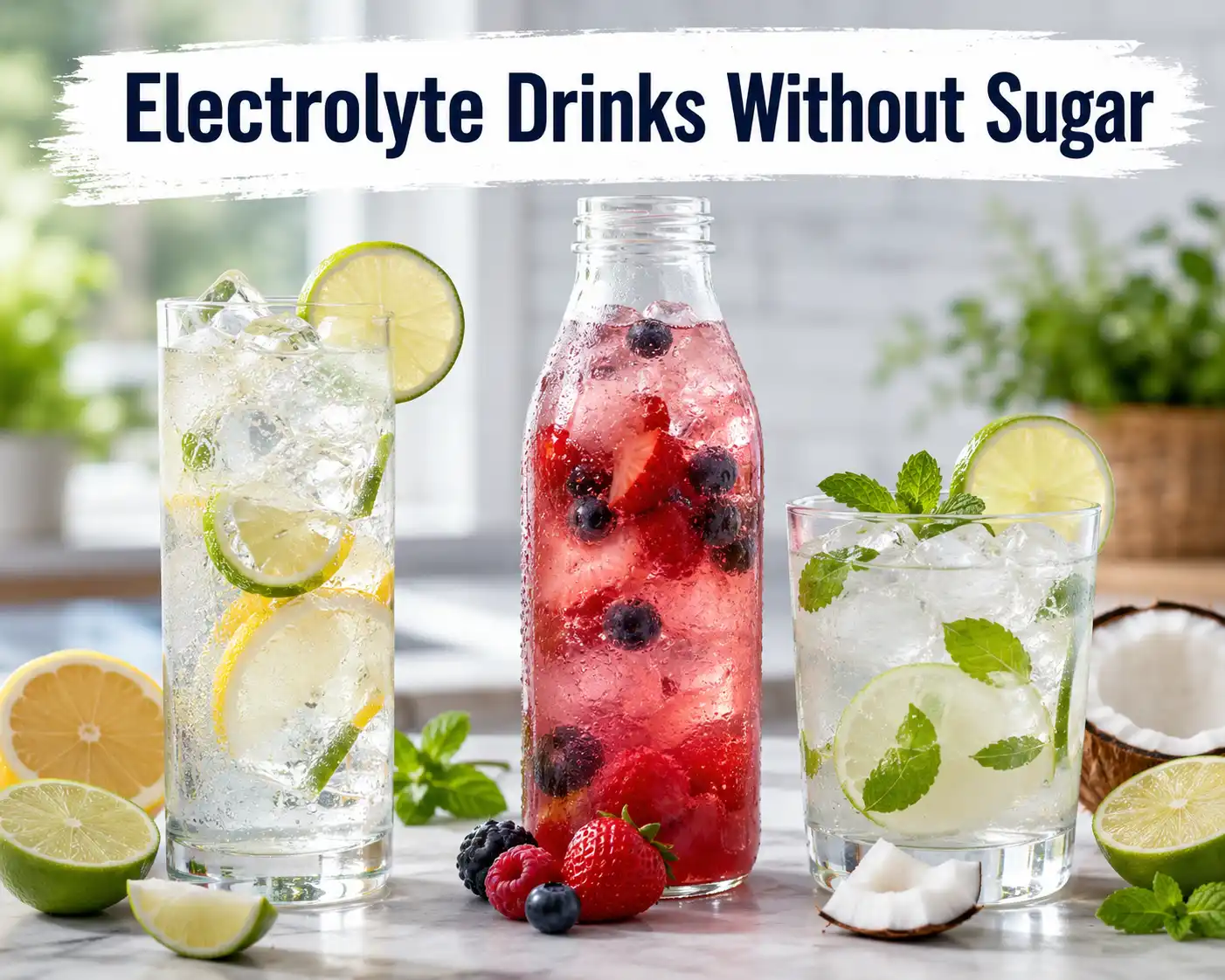
Electrolyte drinks without sugar can provide sodium, potassium, magnesium, and other minerals without the added sugar found in many traditional sports drinks. They can be useful after heavy sweating, during workouts, in hot weather, while traveling, or when following a low-carb diet.
The best choice depends on how much you sweat, how active you are, and how much sodium and other electrolytes you already get from food. This guide explains the best sugar-free options, what to look for on a nutrition label, and how to choose between powders, tablets, drops, ready-to-drink options, and homemade electrolyte drinks.
Quick Answer: What Are the Best Electrolyte Drinks Without Sugar?
The best electrolyte drinks without sugar provide sodium for fluid retention, potassium for fluid balance, and magnesium for muscle and nerve function without added sugar. For most people, the best choice is a zero-sugar electrolyte powder, tablet, drops, unsweetened mineral drink, or homemade lemon-salt drink matched to activity level, sweat loss, and health needs.
TL;DR: Best Sugar-Free Electrolyte Drink Choices
• Best for daily hydration: low-sodium electrolyte water or mineral drops
• Best for workouts: powder with 300–1,000 mg sodium per serving
• Best for keto: higher-sodium, zero-carb electrolyte mix
• Best for travel: single-serve powder sticks or tablets
• Best clean-label option: unflavored electrolyte drops or unsweetened mineral water
• Best homemade option: cold water, lemon juice, sea salt, and optional magnesium drops
• Best family option: caffeine-free, mild-flavored electrolyte drink with no artificial colors
What Are Electrolyte Drinks Without Sugar?
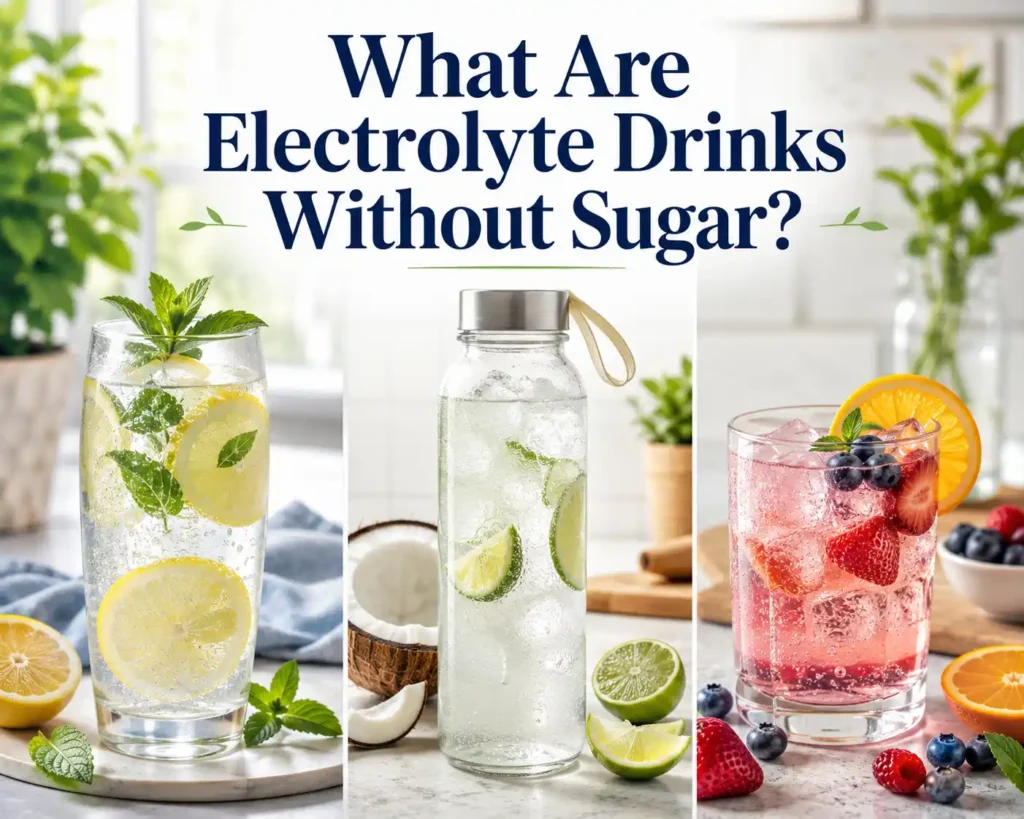
Electrolyte drinks without sugar are beverages, powders, tablets, or drops that provide minerals without added sugar. These minerals carry an electrical charge in body fluids and help regulate hydration, muscle contraction, nerve signaling, and fluid balance.
The main electrolytes in hydration drinks are:
• Sodium
• Potassium
• Magnesium
• Chloride
• Calcium
A product may be called sugar-free, zero sugar, no added sugar, or unsweetened, but those terms do not always mean the same thing.
What Does “Sugar-Free” Mean on Electrolyte Drinks?
In U.S. labeling, sugar-free generally means the product contains less than 0.5 grams of sugar per serving. This matters because some drinks can legally say “sugar free” while still containing tiny trace amounts.
A smart shopper should check:
• Total sugars
• Added sugars
• Total carbohydrates
• Serving size
• Sweetener type
• Electrolyte amount per serving
What Is the Difference Between Sugar-Free and No Added Sugar?
Sugar-free means the drink contains almost no sugar per serving. No added sugar means sugar was not added during processing, but the drink may still contain natural sugar.
For example:
• Unsweetened mineral water can be sugar-free and no added sugar.
• Plain coconut water has no added sugar but still contains natural sugar.
• A zero-sugar electrolyte powder may use stevia, monk fruit, sucralose, or no sweetener.
This difference is important for people following keto, low-carb, diabetes-conscious, or lower-sugar eating patterns.
Why Do People Choose Electrolyte Drinks Without Sugar?
People choose electrolyte drinks without sugar because they want hydration support without the sweetness, calories, or blood sugar impact of standard sports drinks.
Traditional sports drinks often combine water, sugar, sodium, potassium, flavoring, and color. That formula can be useful during long endurance events, but it is not always needed for daily hydration.
When Are Sugar-Free Electrolyte Drinks Most Useful?
Sugar-free electrolyte drinks are most useful when fluid and mineral losses increase.
Common situations include:
• Hot weather
• Heavy sweating
• Long workouts
• Outdoor labor
• Hiking or camping
• Long flights
• Low-carb or keto diets
• Sauna use
• Illness-related fluid loss
• Busy days with low food intake
In practice, the right drink depends on how much a person sweats, how long the activity lasts, and how much sodium is already in the diet.
Who May Not Need Electrolyte Drinks Every Day?
Not everyone needs electrolyte drinks daily. Many healthy adults get enough electrolytes from regular meals and plain water.
Daily use may be unnecessary for people who:
• Do light activity indoors
• Eat balanced meals
• Rarely sweat heavily
• Already consume high-sodium foods
• Prefer plain water and feel well hydrated
People with kidney disease, heart failure, high blood pressure, fluid restrictions, or medication-related electrolyte concerns should ask a healthcare professional before using high-sodium electrolyte drinks often.
What Should the Best Electrolyte Drinks Without Sugar Contain?
The best electrolyte drinks without sugar should contain enough minerals to match the use case. A casual daily drink does not need the same formula as an endurance workout drink.
How Much Sodium Should a Sugar-Free Electrolyte Drink Have?
Sodium is the most important electrolyte for sweat-heavy hydration because sweat contains sodium and chloride. Sodium also helps the body retain fluid instead of losing it quickly through urine.
A practical sodium guide:
| Use Case | Suggested Sodium Range Per Serving | Best For |
|---|---|---|
| Light daily hydration | 50–250 mg | Office, errands, light activity |
| Moderate workouts | 250–500 mg | Gym, walks, short runs |
| Heavy sweating | 500–1,000 mg | Hot weather, endurance, sauna |
| Very salty sweaters | 1,000 mg+ | Long events, heat training, specialist use |
A higher sodium drink is not automatically better. It should match sweat loss, climate, activity length, and personal health status.
Why Does Potassium Matter in Electrolyte Drinks?
Potassium helps support normal fluid balance inside cells. Many electrolyte drinks include 100–300 mg potassium per serving.
Potassium is useful, but more is not always better. People with kidney disease or potassium-related medication concerns should avoid high-potassium supplements unless a clinician approves them.
Why Is Magnesium Added to Electrolyte Drinks?
Magnesium supports muscle and nerve function. Many zero-sugar electrolyte powders include 25–100 mg magnesium per serving.
Magnesium can be helpful in hydration formulas, but high supplemental magnesium may cause digestive discomfort in some people. A moderate dose is usually easier to tolerate.
Should Electrolyte Drinks Include Calcium or Chloride?
Some formulas also include calcium and chloride. Chloride often appears with sodium as sodium chloride, while calcium appears in some sports hydration formulas.
These minerals can be useful, but sodium, potassium, and magnesium usually matter most when comparing sugar-free electrolyte drinks.
What Are the Best Electrolyte Drinks Without Sugar by Category?
The best choice depends on the setting. A blogger, athlete, parent, traveler, or low-carb reader may need different recommendations.
Best Daily Electrolyte Drinks Without Sugar
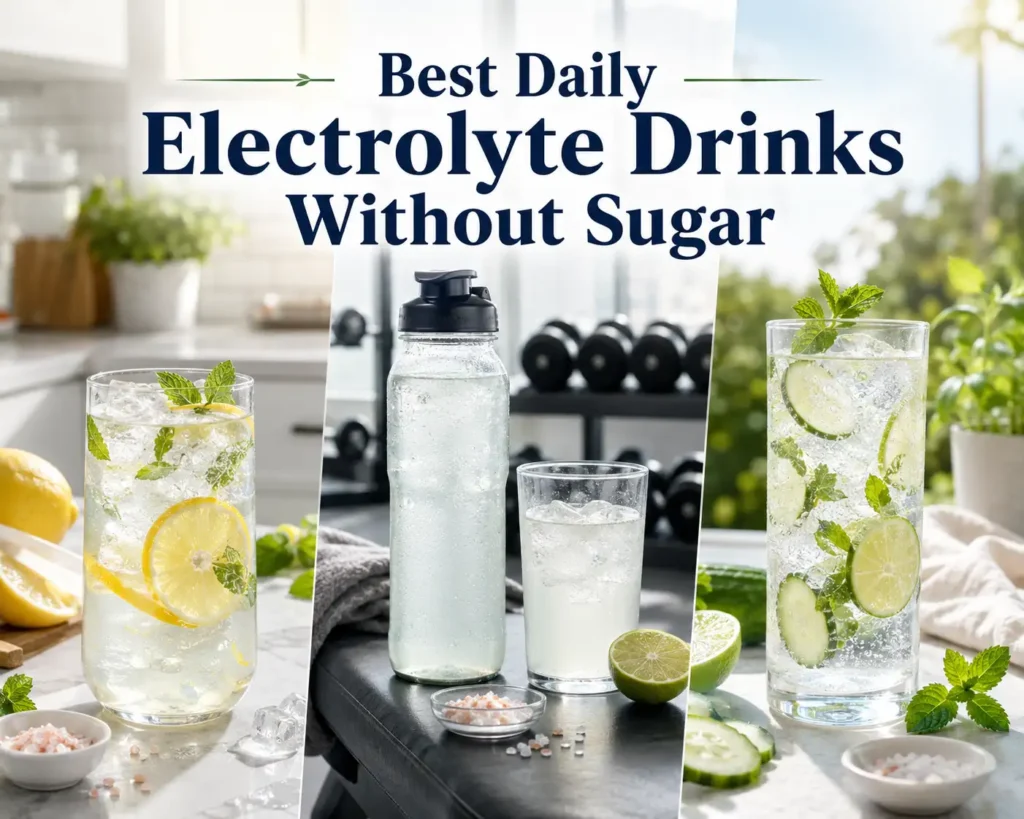
Daily hydration drinks should taste clean, mix easily, and avoid excessive sodium.
Good daily options include:
• Unsweetened electrolyte water
• Mineral water with electrolyte drops
• Low-sodium electrolyte tablets
• Lemon water with a small pinch of sea salt
• Cucumber mint electrolyte water
• Unsweetened herbal iced tea with mineral drops
• Sparkling mineral water with added electrolytes
Best label target:
• 0 g added sugar
• 50–250 mg sodium
• No caffeine for evening use
• No artificial colors
• Mild flavor
Best Electrolyte Powders Without Sugar
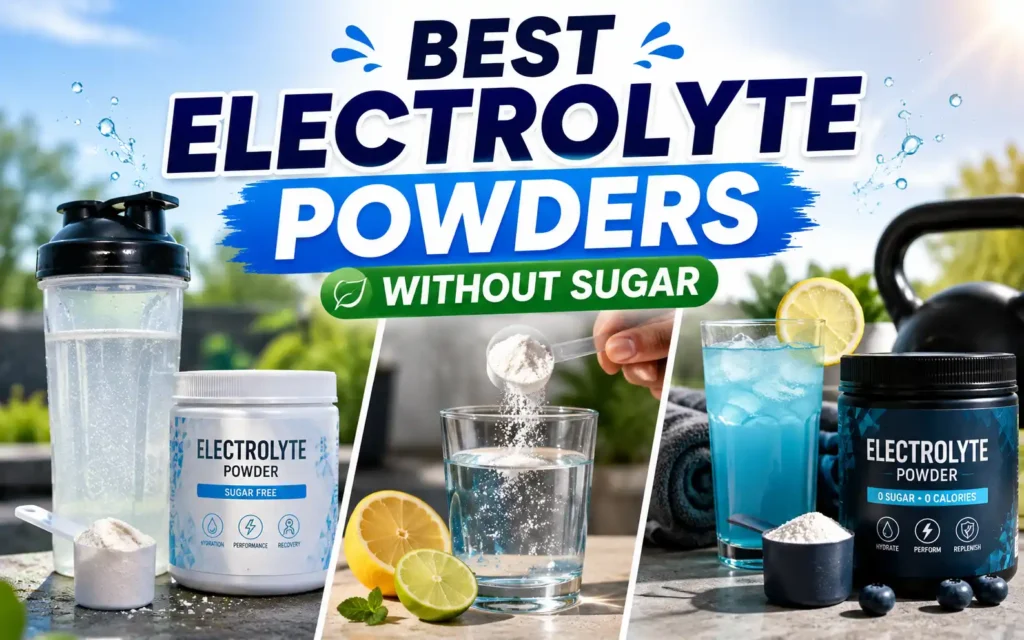
Electrolyte powders are often the most flexible option because they are portable, lightweight, and easy to dose.
Look for powders with:
• 0 g added sugar
• Clear sodium amount
• Potassium and magnesium listed
• No proprietary mineral blend
• No unnecessary artificial dyes
• Serving directions for 12–32 oz water
Best uses:
• Workouts
• Hiking
• Road trips
• Flights
• Keto routines
• Summer hydration
• Gym bags
A good powder should dissolve cleanly and taste balanced, not syrupy or overly salty.
Best Electrolyte Tablets Without Sugar
Electrolyte tablets are convenient for reusable bottles. They often create a lightly fizzy drink and take up less space than a tub of powder.
They work well for:
• Carry-ons
• Office drawers
• Gym bags
• Hiking packs
• Road trips
• Emergency hydration kits
Check whether the tablet contains sugar alcohols, caffeine, artificial colors, or high sodium before using it daily.
Best Electrolyte Drops Without Sugar
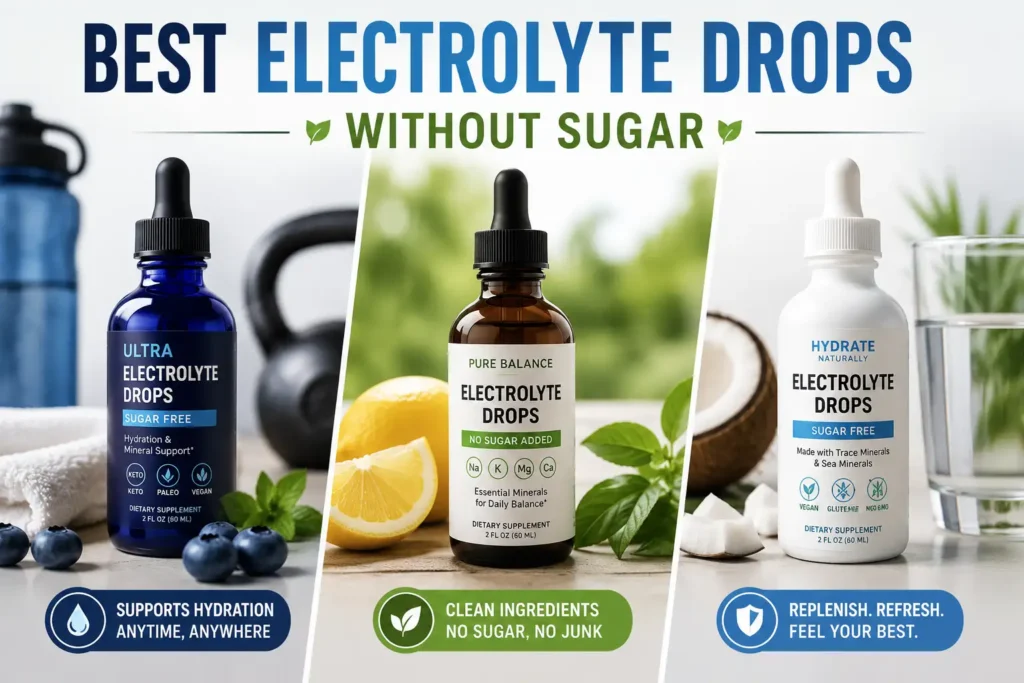
Electrolyte drops are concentrated liquid minerals. They are usually unflavored or lightly salty.
They are best for people who want:
• No sweeteners
• No flavors
• Flexible dosing
• Minimal ingredients
• Easy mixing into water, tea, or smoothies
Drops can taste salty if overused. Start with the label’s smallest serving and adjust slowly.
Best Sparkling Electrolyte Drinks Without Sugar
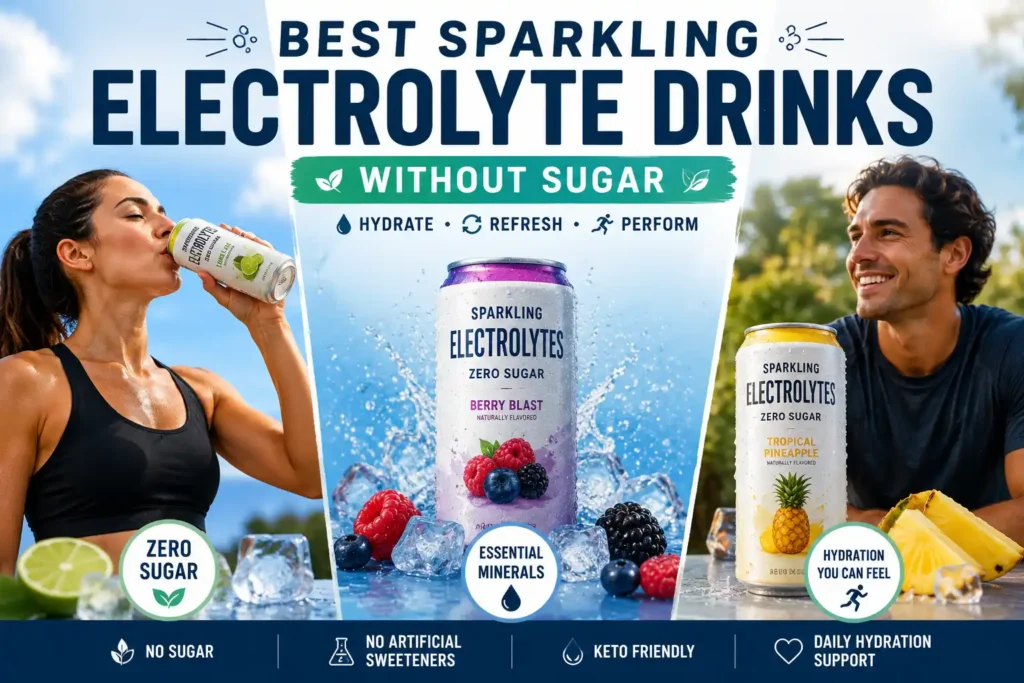
Sparkling electrolyte drinks are ideal for people who find plain water boring. They feel refreshing during warm weather and social occasions.
Best sparkling options include:
• Sparkling mineral water with electrolyte drops
• Lemon-lime sparkling electrolyte drink
• Grapefruit electrolyte spritzer
• Berry sparkling water with zero added sugar
• Cucumber mint sparkling mineral drink
Avoid sparkling electrolyte drinks that hide sweeteners behind strong flavoring or use excessive sodium for casual sipping.
Best Homemade Electrolyte Drinks Without Sugar
Homemade electrolyte drinks are affordable and easy to customize. They also help avoid artificial flavors, colors, and sweeteners.
Simple Homemade Sugar-Free Electrolyte Drink
Ingredients
• 2 cups cold water
• 1–2 tablespoons fresh lemon or lime juice
• Small pinch of sea salt
• Optional: 2–4 drops liquid magnesium
• Ice cubes
Method
• Add water to a bottle or glass.
• Stir in lemon or lime juice.
• Add a small pinch of salt.
• Mix until the salt dissolves.
• Serve cold over ice.
Homemade Flavor Variations
• Lemon cucumber mint
• Lime ginger
• Orange slice mineral water
• Berry basil sparkling water
• Grapefruit rosemary spritzer
• Watermelon mint with a pinch of salt
Use homemade drinks within 24 hours and keep them refrigerated.
How Do You Choose Electrolyte Drinks Without Sugar?
Choosing electrolyte drinks without sugar becomes easier when the label matches the use case.
Step 1: Check Added Sugar First
Start with the Nutrition Facts panel.
Look for:
• Added sugars: 0 g
• Total sugars: 0 g or very low
• Total carbs: 0–2 g for low-carb needs
For keto or strict low-carb routines, total carbohydrates matter more than marketing claims.
Step 2: Match Sodium to Sweat Level
A light daily hydration drink should not contain the same sodium level as an endurance workout drink.
Use this simple rule:
• Light sweat: lower sodium
• Moderate sweat: moderate sodium
• Heavy sweat: higher sodium
• Long heat exposure: higher sodium plus steady fluids
High-sodium drinks can be useful, but they are not ideal for everyone.
Step 3: Read the Sweetener Line
Sugar-free electrolyte drinks may use:
• Stevia
• Monk fruit
• Sucralose
• Acesulfame potassium
• Aspartame
• Sugar alcohols
• No sweetener
People sensitive to aftertaste or digestion should start with small packs before buying a large tub.
Step 4: Avoid Unclear “Proprietary Blends”
A good electrolyte drink should show the exact amounts of sodium, potassium, magnesium, and other minerals.
Avoid labels that say only:
• “Electrolyte blend”
• “Hydration complex”
• “Performance minerals”
• “Trace mineral matrix”
Clear labels build trust and make comparison easier.
Step 5: Choose the Right Format
| Format | Best For | Main Advantage | Main Drawback |
| Powder sticks | Travel, workouts | Portable and dose-friendly | Can taste strong |
| Tablets | Bottles, hiking | Compact and convenient | May fizz slowly |
| Drops | Clean labels | No sweetener needed | Salty taste |
| Ready-to-drink | Convenience | No mixing needed | Costs more |
| Homemade | Budget | Full ingredient control | Short shelf life |
| Sparkling | Enjoyment | Refreshing texture | Less ideal during intense exercise |
Which Electrolyte Drinks Without Sugar Are Best for Workouts?
Workout hydration depends on exercise duration, heat, sweat rate, and whether the person also needs carbohydrates for performance.
Best for Short Workouts Under 60 Minutes
For most short indoor workouts, plain water may be enough. A light electrolyte drink can still help if the person sweats heavily.
Best options:
• Low-sodium electrolyte water
• Light electrolyte tablet
• Lemon water with a pinch of salt
• Unsweetened mineral water
Best for Long Workouts Over 60 Minutes
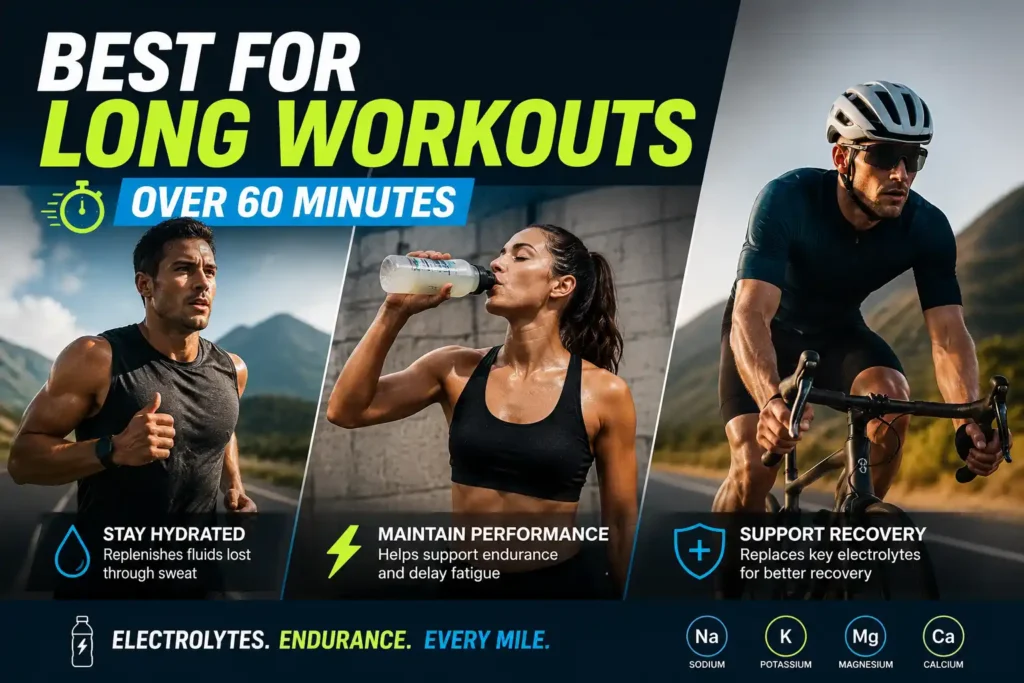
Long workouts increase fluid and sodium loss. A stronger electrolyte mix may help, especially in heat.
Best options:
• Powder with 300–700 mg sodium
• Tablet with sodium and potassium
• High-sodium mix for heavy sweaters
• Sugar-free drink plus separate fuel if carbs are needed
Important note: zero-sugar drinks replace minerals, not workout fuel. Long endurance sessions may still require carbohydrates from food, gels, or sports fuel.
Best for Hot Weather Training
Heat increases sweat loss and dehydration risk. A cold sugar-free electrolyte drink can be easier to finish than plain water.
Best options:
• Lemon-lime electrolyte slush
• Cold high-sodium electrolyte powder
• Frozen electrolyte cubes in water
• Sparkling electrolyte drink after training
• Watermelon mint drink with a pinch of salt
Are Electrolyte Drinks Without Sugar Good for Keto and Low-Carb Diets?
Yes, electrolyte drinks without sugar often fit keto and low-carb diets because they can provide sodium, potassium, and magnesium without added carbohydrates.
People starting keto may lose more water early because lower carbohydrate intake reduces stored glycogen and associated water. This can make sodium intake more important for some people.
Best Keto Electrolyte Drink Features
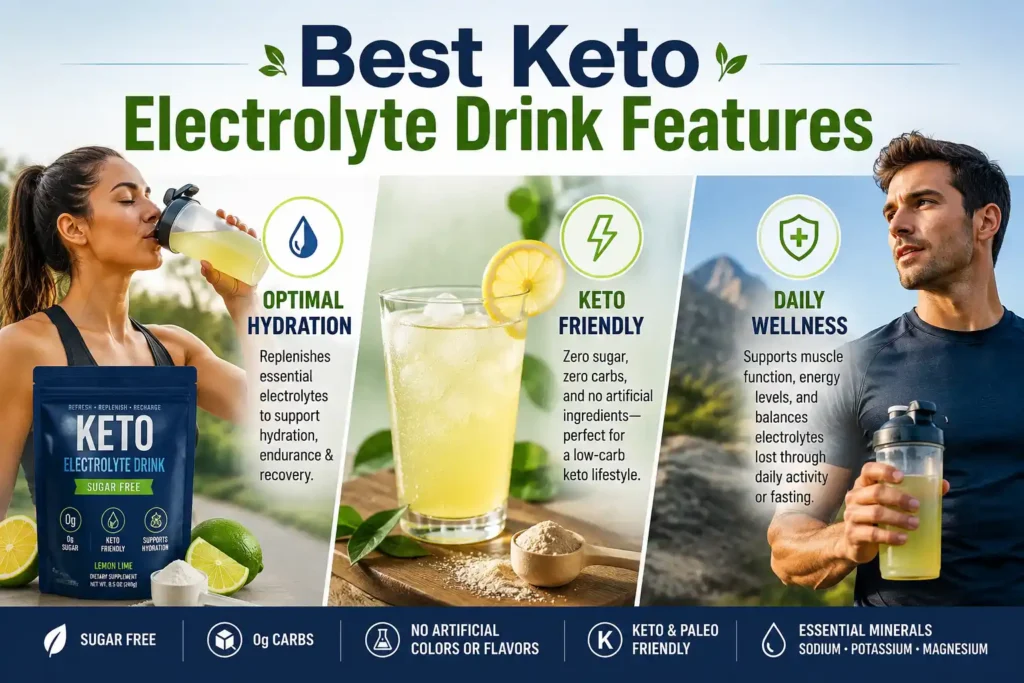
Look for:
• 0 g added sugar
• 0–2 g total carbs
• 500–1,000 mg sodium for higher-sweat needs
• Potassium and magnesium included
• No maltodextrin if strict keto
• No juice concentrates
Keto-Friendly Drink Ideas
• Lemon salt water with magnesium drops
• Unflavored electrolyte powder in ice water
• Sparkling lime electrolyte water
• Cucumber mint mineral drink
• Berry electrolyte powder with stevia
• Iced herbal tea with electrolyte drops
Are Electrolyte Drinks Without Sugar Good for Travel?
Yes. Travel can reduce hydration because of dry cabin air, long sitting periods, irregular meals, and limited drink access.
The most travel-friendly options are small, lightweight, and easy to mix.
Best Travel-Friendly Electrolyte Options
• Single-serve powder sticks
• Small tube of electrolyte tablets
• Concentrated electrolyte drops
• Ready-to-drink electrolyte water after arrival
• Caffeine-free packets for evening flights
Travel Hydration Tips
• Pack electrolyte packets in a zip pouch.
• Use a reusable bottle after airport security.
• Avoid relying on caffeine as the only drink.
• Choose mild flavors to reduce nausea risk.
• Keep powders away from heat and moisture.
Are Electrolyte Drinks Without Sugar Safe for Kids and Families?
Some sugar-free electrolyte drinks can be family-friendly, but parents should choose carefully. Children do not need adult high-sodium formulas for normal daily thirst.
Best family features include:
• Caffeine-free
• Mild flavor
• No artificial colors
• Low to moderate sodium
• Clear allergen labeling
• Pediatric-use directions when relevant
For illness, dehydration, vomiting, or diarrhea, parents should follow medical advice and use oral rehydration products as directed.
What Are the Common Mistakes When Buying Electrolyte Drinks Without Sugar?
Many people buy electrolyte drinks based on front-label claims instead of the Nutrition Facts panel.
Mistake 1: Assuming “No Added Sugar” Means No Sugar
A drink can have no added sugar but still contain natural sugar from coconut water, fruit juice, or dairy.
Check total sugars and total carbohydrates.
Mistake 2: Choosing Too Much Sodium for Daily Sipping
A high-sodium drink may help heavy sweaters, but it may be unnecessary for casual hydration.
Use lower sodium for normal days and higher sodium for heat or exercise.
Mistake 3: Ignoring Sweeteners
Sugar-free does not mean sweetener-free. Some people dislike sucralose, stevia, monk fruit, or sugar alcohols.
Try small packs first.
Mistake 4: Using Electrolytes Instead of Water
Electrolyte drinks should support hydration, not replace plain water completely.
Most people still need regular water throughout the day.
Mistake 5: Forgetting About Carbohydrates During Endurance Sports
Zero-sugar electrolyte drinks replace minerals, but they do not provide energy.
For long endurance events, athletes may need separate carbohydrates.
Myths vs. Facts About Electrolyte Drinks Without Sugar
| Myth | Fact |
| Sugar-free electrolyte drinks are always healthier. | They can help reduce added sugar, but sodium and sweeteners still matter. |
| More electrolytes always mean better hydration. | The right amount depends on sweat loss, diet, activity, and health status. |
| Everyone needs electrolyte drinks daily. | Many people hydrate well with water and balanced meals. |
| No added sugar means zero sugar. | Natural sugars may still be present. |
| All electrolyte drinks work for keto. | Some contain juice powder, maltodextrin, or hidden carbs. |
| Sparkling electrolyte drinks are best for workouts. | They are refreshing, but flat drinks may be easier during intense exercise. |
What Is the Best Homemade Electrolyte Drink Without Sugar?
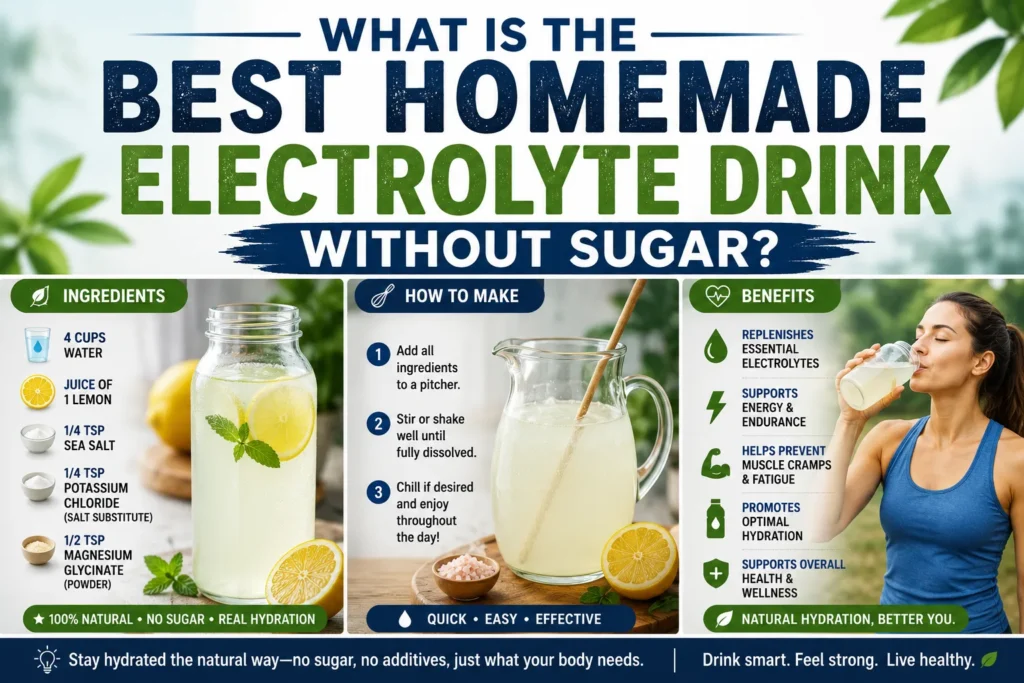
The best homemade version is simple, cold, and lightly salted.
Basic Recipe
Ingredients
• 3 cups cold water
• 2 tablespoons lemon juice
• 1 tablespoon lime juice
• 1 small pinch sea salt
• Optional: magnesium drops
• Optional: cucumber slices or mint
Instructions
• Add all ingredients to a bottle or pitcher.
• Stir until salt dissolves.
• Chill for 10–20 minutes.
• Serve over ice.
• Use within 24 hours.
When Homemade Works Best
Homemade electrolyte drinks are best for:
• Light hydration
• Warm weather
• Budget-friendly routines
• Low-sweetness preferences
• Clean-label drink ideas
• Family pitchers
They are not ideal when exact electrolyte dosing is needed for endurance sports, medical rehydration, or heavy sweat replacement.
What Are the Best Electrolyte Drinks Without Artificial Sweeteners?
People who dislike artificial sweeteners should choose unsweetened or naturally flavored options.
Best options include:
• Unflavored electrolyte drops
• Plain mineral water
• Unsweetened electrolyte powder
• Homemade lemon-salt water
• Herbal iced tea with mineral drops
• Sparkling water with cucumber and lime
• Coconut water diluted with mineral water
Check the ingredient list for:
• Sucralose
• Acesulfame potassium
• Aspartame
• Sugar alcohols
• Artificial colors
• “Natural flavors” if avoiding vague flavor blends
How Can Bloggers Make This Topic More Useful for Readers?
For bloggers, the strongest content angle is not just listing products. The best content helps readers choose by use case.
Useful comparison angles include:
• Daily hydration vs workout hydration
• Keto vs non-keto hydration
• Powder vs tablet vs drops
• Sweetened vs unsweetened formulas
• High sodium vs low sodium
• Travel vs home use
• Adult vs family-friendly options
A strong article should include label examples, sodium ranges, safety notes, and recipe options. That gives readers practical value beyond a basic product roundup.
FAQs About Electrolyte Drinks Without Sugar
Are electrolyte drinks without sugar better than regular sports drinks?
Electrolyte drinks without sugar are better for people who want minerals without added sugar or extra calories. Regular sports drinks may be better during long endurance activity when the body also needs carbohydrates for fuel.
Can I drink sugar-free electrolyte drinks every day?
Some people can drink them daily, but it depends on sodium level, health status, diet, and activity. Low-sodium options are better for casual hydration. High-sodium formulas should be used more selectively.
What electrolytes matter most for hydration?
The most important electrolytes in hydration drinks are sodium, potassium, magnesium, and chloride. Sodium is especially important during heavy sweating because it helps replace salt lost through sweat.
Do electrolyte drinks without sugar help with keto?
Yes. Keto-friendly electrolyte drinks can help replace sodium and other minerals without adding carbohydrates. Choose products with 0 g added sugar, low total carbs, and no maltodextrin.
Are sugar-free electrolyte drinks safe for people with diabetes?
Sugar-free options may reduce added sugar intake, but people with diabetes should still check total carbohydrates, sweeteners, sodium, and serving size. Medical guidance is best for frequent use.
What is the cleanest electrolyte drink without sugar?
The cleanest option is usually plain mineral water, unflavored electrolyte drops, or a homemade lemon-salt drink. These options avoid added sugar, artificial colors, and heavy sweeteners.
Is coconut water a sugar-free electrolyte drink?
No. Plain coconut water usually has no added sugar, but it contains natural sugar. It can be diluted with mineral water, but it is not usually considered a true sugar-free electrolyte drink.
Do I need electrolytes if I only walk or do light exercise?
Most light exercise does not require electrolyte drinks. Plain water and regular meals are usually enough unless the weather is hot, the walk is long, or the person sweats heavily.
What is the best electrolyte drink without sugar for summer?
The best summer option is a cold, caffeine-free drink with sodium, potassium, and light flavor. Good choices include lemon-lime electrolyte powder, mineral drops in ice water, or homemade citrus salt water.
Key Takeaways
• Electrolyte drinks without sugar can support hydration without the added sugar found in many sports drinks.
• Sodium is the most important electrolyte for sweat-heavy hydration.
• Potassium and magnesium add balance but should not be overused.
• Sugar-free, no added sugar, and unsweetened mean different things.
• Powders, tablets, drops, sparkling drinks, and homemade recipes all serve different needs.
• People with medical conditions should be careful with high-sodium or high-potassium products.
Conclusion: How to Choose the Best Electrolyte Drinks Without Sugar
The best electrolyte drinks without sugar are not necessarily the ones with the most electrolytes. The right choice depends on your activity level, sweat loss, diet, and intended use. Low-sodium options can work for everyday hydration, while higher-sodium formulas may be more appropriate for prolonged exercise or heavy sweating.
Before choosing a product, check added sugar, total carbohydrates, sodium, potassium, magnesium, serving size, caffeine, and sweeteners. Remember that sugar-free does not automatically mean better for everyone, and people with certain medical conditions should be cautious with high-sodium or high-potassium products.
For most readers, the simplest approach is to match the electrolyte formula to the situation: choose a light option for everyday use, a stronger formula for heavy sweating, and a convenient powder, tablet, or drops when portability matters.